

U1556 on 2014-2018 GMC Sierra 1500: Service Trailer Brake System Causes and Fixes
The U1556 code on a 2014-2018 GMC Sierra 1500 almost always indicates a problem with the Trailer Brake Power Module (TBPM), usually due to corrosion in its electrical connector. The module is located on the frame above the spare tire, making it vulnerable to water and road debris. The most common fix is to inspect, clean, or replace the module's electrical connector and, if necessary, the module itself.
- U1556 means the Trailer Brake Power Module has stopped communicating, usually due to a bad connection.
- The first and most important step is to lower the spare tire and inspect the module and its connector for corrosion.
- Cleaning the connector may solve the problem, but if corrosion is severe or the module is water-damaged internally, replacement of the connector and/or module is necessary.
- Do not tow a trailer with electric brakes until this fault is repaired.
- Before replacing any parts, check the related fuses and the vehicle's battery health.
What's Unique About the 2014-2018 Gmc SIERRA 1500

On this generation of GMC Sierra and its platform-mate, the Chevrolet Silverado (K2XX platform), the Trailer Brake Power Module is mounted on the frame rail directly above the spare tire. This location makes it highly susceptible to water, salt, and dirt intrusion from road spray, leading to severe corrosion on the module's connector pins. General Motors issued Technical Service Bulletins (TSBs) PIT5529 and PIT5529A, which specifically highlight this issue, noting that moisture can get past the connector seals, especially if cavity plugs are missing or dislodged, causing communication failures.
Diagnostic Flowchart
Tap your situation to follow the diagnostic path that matches what you're seeing on this vehicle.
Symptoms You May Notice
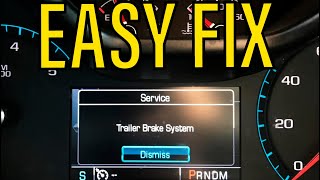
- "Service Trailer Brake System" message on the driver information center (DIC).
- "Check Trailer Wiring" message on the DIC.
- Trailer connection is not recognized by the truck.
- Audible chime or alarm when the message appears, which can be persistent and annoying.
- The gain adjustment buttons for the trailer brake controller are inoperative or do not respond.
- The trailer brake system works intermittently, often failing in wet or rainy conditions.
- Replacing the in-dash trailer brake control switch. While this switch can fail, it is far less common than issues with the module located at the rear of the truck. The U1556 code specifically points to a communication loss with the rear module (TBPM), not the dash switch. A failure of the dash switch typically does not set a U-series communication code.
Most Likely Causes

- Corroded Trailer Brake Power Module (TBPM) Connector 🔴 High Probability The module is located above the spare tire, exposing it to constant road spray, salt, and moisture, which compromises the connector seals over time. TSBs PIT5529A and PIT5529 directly call this out as the primary cause, often due to missing or improperly seated cavity plugs in the connector allowing water to enter.
How to confirm: Lower the spare tire to gain access. Disconnect the electrical connector from the Trailer Brake Power Module. Visually inspect for green or white corrosion, bent pins, or signs of water intrusion. The connector and module pins should be clean and dry.
Typical fix: Clean the connector terminals with electrical contact cleaner and a small brush. Apply dielectric grease to the connector before reassembly to prevent future moisture intrusion. If corrosion is severe, the connector pigtail and/or the module itself must be replaced. Ensure all cavity plugs are properly seated in the connector to prevent future water entry.
Est. part cost: $20-$60 for a connector pigtail. - Faulty Trailer Brake Power Module (TBPM) 🟡 Medium Probability Internal failure of the module is common, often as a direct result of prolonged water intrusion that corrodes the internal circuit board. The module itself can also fail electronically.
How to confirm: After confirming the connector has clean power, ground, and a good LIN bus signal (requires an oscilloscope or advanced scan tool), the module is condemned. If the connector is visibly full of water or severely corroded, the module has likely failed. Often, replacing the module is the only way to confirm after ruling out wiring.
Typical fix: Replace the Trailer Brake Power Module. This is a plug-and-play part that does not require reprogramming. It is held in place by two screws.
Est. part cost: $70-$150 for an OEM part. - Low Battery Voltage or Poor Battery Health ⚪ Low Probability Sensitive electronic modules can malfunction or set communication codes when system voltage is low, especially during engine cranking.
How to confirm: Test the battery's state of health using a professional battery tester. TSB PIT5529A specifically recommends checking the battery before performing other diagnostics.
Typical fix: Recharge or replace the vehicle's battery. Clean any corrosion from the battery terminals.
Est. part cost: $150-$300 - Blown Fuse ⚪ Low Probability A short in the trailer wiring or an internal short in the TBPM can cause the fuse to blow.
How to confirm: Check the fuses related to the trailer brake system in the under-hood fuse block. Specifically, check the 30-amp fuses in slots F1 and F2 (or F17) labeled for the trailer brake system.
Typical fix: Replace the blown fuse. If the fuse blows again immediately, it indicates a persistent short circuit that must be diagnosed.
Est. part cost: $1-$5
Rare But Worth Checking
- Damaged Wiring Harness: The wiring harness leading to the TBPM can become chafed or damaged where it runs along the frame. One owner found a corroded power wire inside the harness near the running board motor. A visual inspection and continuity test of the power, ground, and LIN bus wires from the module connector to the Chassis Control Module may be necessary.
Diagnosis Steps

- Read the fault codes with an OBD-II scanner to confirm U1556 is present and current.
- Check the health of the vehicle's battery and inspect the battery terminals for corrosion, as recommended by TSB PIT5529A.
- Inspect the trailer brake related fuses in the under-hood fuse block, particularly the 30-amp fuses for the trailer brake system.
- Lower the spare tire to access the Trailer Brake Power Module (TBPM) on the frame rail, just above where the spare tire sits.
- Disconnect the electrical connector from the TBPM. This connector has a red sliding lock tab that must be disengaged first. Carefully inspect the module pins and the connector terminals for any signs of green or white corrosion, moisture, or pushed-out pins.
- If corrosion is found, clean the terminals thoroughly with an electrical contact cleaner and a small brush. Apply a liberal amount of dielectric grease before reconnecting. If damage is severe, replace the connector pigtail.
- If the connector is clean and dry, the next step is to verify power, ground, and the LIN bus signal at the connector using a multimeter and oscilloscope. The LIN bus wire should show a data signal when the ignition is on.
- If power, ground, and signal are all present and correct at the connector, the Trailer Brake Power Module itself is faulty and should be replaced.
Parts You'll Likely Need

- Trailer Brake Power Module
(OEM #85073617)— This module is the most common point of failure, either from internal corrosion due to water intrusion or electronic failure. The original part may have been a different number, as this is a revised part from GM. It supersedes part numbers 23104453, 23114650, and 23337305.
Trusted brands: ACDelco, GM Genuine
OEM price range: $100-$150
Aftermarket price range: $70-$120 - Trailer Brake Power Module Connector
(OEM #ACDelco PT2781 (unverified) or GM 23184088 (harness extension))— The connector itself is often damaged beyond repair by corrosion and requires replacement to ensure a good connection to the new module. Finding the exact pigtail can be difficult, but some aftermarket options exist.
Trusted brands: ACDelco, Dorman, EFI Connection
OEM price range: $40-$60
Aftermarket price range: $20-$40
Related Codes That Often Appear With This One
- C1112, C1113, C1114, C111B, U1505 — These are other trailer brake system-related codes that GM lists in the same TSBs (PIT5529A, PIT5529) as being caused by the same corroded connector issue. TSB PIT5509 also discusses C1114 in relation to trailer wiring faults.
Technical Service Bulletins (TSBs) & Recalls
- PIT5529A: Addresses 'Service Trailer Brake' messages and codes including U1556, pointing to corroded terminals at the Trailer Brake Power Module connector and/or low battery voltage. This TSB supersedes PIT5529.
Platform-Specific Known Issues
- GM Technical Service Bulletin PIT5529A identifies corroded terminals on both the battery and the Trailer Brake Power Module connector as the primary cause for code U1556 and the 'Service Trailer Brake' message.
- The bulletin also notes that missing or improperly seated cavity plugs in the module's connector can allow water to enter, leading to the failure. A phenomenon called 'hydro-locking' can occur where plugging in the connector builds up pressure and pushes the plugs out.
- The Trailer Brake Power Module (TBPM) is located next to the Fuel Pump Driver Control Module, and they look nearly identical. It's important to verify wire colors against a schematic to ensure you are diagnosing the correct module.
Mechanic-Grade Diagnostic Values
- LIN Bus Voltage at Rest (Key On, Engine Off, module disconnected) — expected: Approximately 12 Volts (or 1V less than battery system voltage). Failure: A reading of 0V or significantly below 11V indicates a problem with the LIN circuit wiring or the master module (CCM).
- LIN Bus Voltage While Communicating (multimeter set to Peak Min/Max) — expected: A fluctuating signal with a MAX reading of ~12V and a MIN reading of ~1V.. Failure: A flat line at 12V or 0V, or readings that do not span this range, indicate a communication failure. If the meter is not on a peak-capture setting, it may read an average of 7-9V, which can be misleading.
- Chassis Control Module Auxiliary (CCMA) Power Supply — expected: Battery voltage at Pin 1 of the CCMA connector.. Failure: 0V at Pin 1, even with a good fuse (Fuse 19 underhood), points to a break or corrosion in the power feed wire (circuit 2040).
Scan Tool Commands That Help
- GDS2 (GM Global Diagnostic System 2): Data Display: Chassis Control Module (CCM/BSCM) -> "Trailer Brake Control Output Circuit" — After confirming the U1556 communication code, this parameter helps determine if the master module is detecting a specific electrical fault on the output circuit to the trailer. It will display states like 'Okay', 'Short to Ground', or 'Short to Power', which can pinpoint wiring issues separate from the LIN bus communication failure.
- GDS2 (GM Global Diagnostic System 2): Data Display: Chassis Control Module (CCM/BSCM) -> "Trailer Brake Type" — Use this to see how the system is identifying the trailer brakes ('Electro-magnetic', 'Electro-over hydraulic', or 'Undefined'). If it's 'Undefined' with a trailer connected, it confirms a detection issue. This is useful when troubleshooting intermittent trailer connection symptoms that accompany the U1556 code.
Wiring & Ground Locations
- G401 — Mounted to the left rear body mount, behind the left rear tire on the frame.. This is a primary chassis ground point in the immediate vicinity of the Trailer Brake Power Module (TBPM) and the trailer harness connector. A poor connection at G401 can cause various electrical issues in the rear of the vehicle, potentially affecting the trailer brake system's reference voltage or power stability.
- Circuit 2040 (Power Feed to CCMA) — Runs from the underhood fuse block (Fuse 19, Connector J2, Pin G4) to the Chassis Control Module Auxiliary (Pin 1).. A documented failure point is corrosion on this wire inside the main harness, often near the driver's side running board motor. A break here will kill power to the master module responsible for communicating with the TBPM, directly causing a U1556 code even if the TBPM and its local wiring are perfect.
Real Owner Repair Stories
- YouTube channel 'DadsGarage Diagnostic Specialist' (2017 Chevrolet Suburban (K2XX Platform)) — "Service Trailer Brake System" message, DTC U1556 current in the Chassis Control Module.
❌ Tried (didn't work) Checking fuses, which were good.
✅ What actually fixed it After verifying good power, ground, and a valid LIN signal were present at the module connector, the Trailer Brake Power Module (TBPM) was replaced. The new module was plug-and-play and did not require programming. - YouTube channel 'Repairs and Rides' (2017 GM Truck 1500 4x4) — "Service Trailer Brake System" message, loss of communication with the Chassis Control Module Auxiliary.
❌ Tried (didn't work) Checking fuse 19, which was good., Inspecting the module and connector at the rear of the truck.
✅ What actually fixed it The technician found no power on the battery feed wire (circuit 2040) at the Chassis Control Module Auxiliary. The wire was found to be corroded and broken inside the wiring harness near the running board motor. Repairing the wire with a solder splice restored communication and fixed the issue. - Reddit user 'kungfujuice' on r/gmc (2014-2017 GMC Sierra) — Persistent "Service Trailer Brake System" message, especially on cold mornings.
❌ Tried (didn't work) Initial assumption was a faulty sensor or module.
✅ What actually fixed it Replacing the vehicle's main battery. Another user confirmed their 2017 model had the same symptom as the first sign of battery failure before it died completely.
"I Checked Everything" — The Actual Cause
- In the context of electrical diagnosis, a common pattern is 'all wiring tests good at the connectors, but the fault persists.' One documented case of U1556 found that while the fuse was good and the module connector appeared clean, the actual cause was a corroded power feed wire (circuit 2040) hidden inside the main wiring harness loom near the driver's side running board. The external insulation was intact, masking the internal break. This required physically unwrapping the harness to find the damage after confirming no power was reaching the master control module.
OEM Part Supersession History
23104453, 23114650, 23337305→85073617— Part has been updated by the manufacturer to integrate new materials or technologies.
Heads up: A new OEM module (85073617) is typically plug-and-play for this fault. However, installing a used module from another vehicle may require programming by a dealer or a shop with advanced tools.
Model Year Variations Within This Range
- 2014-2018: No significant variations related to the cause or diagnosis of code U1556 have been identified within this model year range, despite a mid-cycle refresh in 2016. The location of the Trailer Brake Power Module and its vulnerability to corrosion remain consistent across all years.
Helpful Videos
Used OEM Parts in Stock



New Aftermarket Parts Available

The information in this article is provided for general reference and educational purposes only. Vehicle specifications, procedures, and part compatibility can vary by production date, trim level, and region. Always consult your vehicle's factory service manual and verify part numbers before purchasing or performing repairs. Safety-critical components such as airbags, seat belts, and braking systems should be installed by a qualified professional.
- Gmc SIERRA 1500:
- 🎬 Helpful Videos
- 🛍️ Shop This Part
- What's Unique About the 2014-2018 Gmc SIERRA 1500
- Diagnostic Flowchart
- Symptoms You May Notice
- Most Likely Causes
- Rare But Worth Checking
- Diagnosis Steps
- Parts You'll Likely Need
- Related Codes That Often Appear With This One
- Technical Service Bulletins (TSBs) & Recalls
- Platform-Specific Known Issues
- Mechanic-Grade Diagnostic Values
- Scan Tool Commands That Help
- Wiring & Ground Locations
- Real Owner Repair Stories
- "I Checked Everything" — The Actual Cause
- OEM Part Supersession History
- Model Year Variations Within This Range
- 🎟️ Get 5% Off