

U1556 on 2014-2018 Chevrolet Silverado 1500: Trailer Brake Communication Fault Causes and Fixes
U1556 indicates a communication loss with the Trailer Brake Power Module (TBPM). This is almost always caused by corrosion in the module's electrical connector, which is located on the frame rail near the spare tire. Inspecting and cleaning or replacing this connector is the most common fix. Applying dielectric grease to the new or cleaned connector is a critical preventative step.
- U1556 on a 2014-2018 Silverado almost always points to a problem with the Trailer Brake Power Module (TBPM) system.
- Before buying any parts, lower the spare tire and visually inspect the TBPM's electrical connector for corrosion. This is the most common cause.
- Cleaning the connector or splicing in a new pigtail is a much cheaper first step than replacing the entire module.
- Also check the related fuses in the under-hood fuse block and the condition of the main battery terminals.
- Do not tow a trailer with electric brakes until this fault is corrected, as it disables a critical safety system.
What's Unique About the 2014-2018 Chevrolet Silverado 1500
On this generation of Silverado (K2XX platform), the Trailer Brake Power Module is mounted on the frame rail above the spare tire. This location makes its main electrical connector extremely vulnerable to moisture, road salt, and dirt kicked up by the rear wheels. This design flaw is the primary reason for the high frequency of this code, a fact acknowledged by GM in technical service bulletins that point directly to corrosion at this specific connector. The module is also visually identical to the nearby Fuel Pump Driver Module, so care must be taken to identify the correct module by wire color before servicing.
Diagnostic Flowchart
Tap your situation to follow the diagnostic path that matches what you're seeing on this vehicle.
Symptoms You May Notice
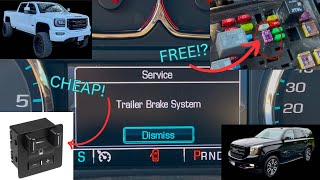
- "Service Trailer Brake System" message on the driver information center.
- "Check Trailer Wiring" message on the dash.
- Trailer is not detected or recognized by the truck when connected.
- ABS, Stabilitrak, and other warning lights may illuminate in some cases.
- The message on the dash appears and disappears intermittently.
- Replacing the entire Trailer Brake Power Module when only the inexpensive connector pigtail is corroded and needs to be replaced.
- Replacing the in-dash trailer brake controller switch. While this switch can fail, it typically sets different codes (like C1117) and is not the cause for a U1556 communication code.
Most Likely Causes
- Corroded Trailer Brake Power Module (TBPM) Connector 🔴 High Probability The module is located on the frame rail near the spare tire, exposing the connector to constant moisture and road debris, leading to corrosion. This is a well-documented issue in GM TSBs PIT5529 and PIT5529A. Missing or unseated cavity plugs in the connector can accelerate this water intrusion.
How to confirm: Lower the spare tire to access the module. Disconnect the electrical connector and visually inspect the pins and terminals for green or white corrosion, moisture, or bent pins. In some cases, a wire may be visibly broken or corroded right at the back of the connector.
Typical fix: If corrosion is minor, clean the connector terminals with a specialized contact cleaner and a small brush. If corrosion is severe, the connector pigtail must be cut off and a new one spliced in using heat-shrink butt connectors. 🎬 Watch: How to replace a corroded trailer brake connector pigtail. Ensure all cavity plugs are present and seated, and apply a liberal amount of dielectric grease to the connector face before reassembly to prevent future water intrusion.
Est. part cost: $20-$60 - Failed Trailer Brake Power Module (TBPM) 🟡 Medium Probability The module itself can fail due to internal corrosion from moisture intrusion or from electrical surges caused by a shorted connector. Its exposed location makes it prone to failure.
How to confirm: After confirming the connector and wiring are good (have proper power, ground, and a clean LIN bus signal), the module is the remaining point of failure. This is best verified with a multimeter and oscilloscope. 🎬 Watch: Advanced LIN bus diagnosis using a lab scope. A technician in one documented case confirmed good power, ground, and LIN signal at the connector, proving the module itself was faulty.
Typical fix: Replace the Trailer Brake Power Module. The new module is typically plug-and-play and does not require programming. It is held on by two nuts.
Est. part cost: $40-$150 - Blown Fuse ⚪ Low Probability A short circuit in the trailer wiring, the TBPM circuit, or a faulty trailer can cause a fuse to blow.
How to confirm: Check the fuses related to the trailer brake system in the under-hood fuse block. Specifically, check fuses F1 (Trailer Battery), F2 (Trailer B+), F14, F15, and F17. A YouTube video documented a case where a blown #2 30-amp fuse was the sole cause of the issue. 🎬 See how a simple blown fuse can cause this message.
Typical fix: Replace the blown fuse. If the fuse blows again immediately, a short circuit exists that must be diagnosed.
Est. part cost: $1-$5 - Damaged Chassis Wiring Harness ⚪ Low Probability The wiring harness that runs along the frame to the rear of the truck can be damaged by road debris, chafing against the frame, or corrosion from water intrusion, causing opens or shorts. One technician found the power feed wire corroded and broken inside the harness near the running board motor.
How to confirm: Visually inspect the entire length of the harness from the fuse block to the TBPM for chafing, cuts, or corrosion. This may require removing protective loom. A continuity test with a multimeter can confirm an open circuit.
Typical fix: Repair the damaged section of wire using appropriate solder and heat-shrink techniques or weatherproof butt connectors.
Est. part cost: $5-$25
Rare But Worth Checking
- Corroded Battery Terminals: TSB #PIT5529A specifically adds inspecting the battery terminals as a diagnostic step. Poor power and ground connections at the battery can cause unpredictable communication issues with various modules due to low system voltage.
- Poor Connection at 7-Way Trailer Plug: While this typically causes trailer-specific codes like C1114, GM TSB 21-NA-155 notes that excessive wear, corrosion, or the use of non-compliant aftermarket trailer plugs can lead to various 'Service Trailer Brake' messages. Inspecting the truck-side and trailer-side 7-way connectors for damage or corrosion is a valid diagnostic step.
Diagnosis Steps
- Read all Diagnostic Trouble Codes (DTCs) with an OBD-II scanner to see what other codes are present.
- Check under-hood fuses related to the trailer brake system (F1, F2, F14, F15, F17).
- Lower the spare tire to gain access to the Trailer Brake Power Module (TBPM) located on the driver's side frame rail.
- Identify the correct module. The TBPM and Fuel Pump Driver Module look identical and are mounted near each other. Verify wire colors against a schematic to ensure you are servicing the correct component.
- Disconnect the main electrical connector from the TBPM. Thoroughly inspect the connector and the module's pins for any signs of green/white corrosion, moisture, or physical damage.
- Per TSB #PIT5529A, inspect the vehicle's main battery terminals for corrosion and ensure they are clean and tight.
- If corrosion is found on the TBPM connector, clean it with electrical contact cleaner. If the damage is severe (corroded-through pins or broken wires), replace the connector pigtail. Always apply dielectric grease to the connector seal before reconnecting.
- If the connector is clean, use a multimeter to verify battery voltage and a solid ground at the connector pins. Use a lab scope to verify the LIN bus signal wire is actively toggling voltage, indicating a valid communication signal from the master module.
- If power, ground, and the LIN bus signal are all confirmed to be good at the connector, the Trailer Brake Power Module itself is the cause of the failure.
- After repair, clear the codes and test the system, preferably with a trailer connected, to confirm the fix.
Parts You'll Likely Need
- Trailer Brake Module Connector Pigtail
(OEM #PT3727)— This is the most common failure point. The original connector succumbs to corrosion due to its location. Replacing it is often the definitive fix.
Trusted brands: ACDelco, Dorman
OEM price range: $40-$60
Aftermarket price range: $20-$40 - Trailer Brake Power Module
(OEM #23114650 (superseded by 85073617))— If the connector and wiring are good, the module itself has likely failed, often from internal water damage. Part number 23114650 has been superseded by 85073617.
Trusted brands: ACDelco, Dorman (601-237)
OEM price range: $100-$150
Aftermarket price range: $40-$90 - Dielectric Grease — Essential for preventing future corrosion. Should be applied to the connector seal after cleaning or replacement to keep moisture out.
Trusted brands: Permatex, CRC
OEM price range: $5-$10
Aftermarket price range: $5-$10
Related Codes That Often Appear With This One
- C1112, C1113, C1114, C111B — These codes are all related to the trailer brake control system and are listed alongside U1556 in GM service bulletins PIT5529 and PIT5529A as resulting from the same common causes.
- U1505 — This is another communication code that is often set with U1556, indicating a broader issue on the communication bus, often stemming from the same corroded connector.
- U0137 — This code for 'Lost Communication With Trailer Brake Control Module' can also be set in the ABS module when the TBPM goes offline.
Technical Service Bulletins (TSBs) & Recalls
- PIT5529A: Advises technicians to inspect the battery and Trailer Brake Power Module connector for corroded terminals when encountering a 'Service Trailer Brake' message with code U1556. It specifically mentions to check that all connector cavity plugs are present and fully seated to prevent water intrusion.
- PIT5529: An earlier version of the bulletin that also identifies the Trailer Brake Power Module connector as the likely source of the problem due to water intrusion and missing cavity plugs.
- 18-NA-144: Discusses how damage to the chassis wiring harness can cause multiple electrical issues, including setting code U1556.
- 21-NA-155: While focused on code C1114, this TSB is relevant as it discusses how poor connections at the 7-way trailer plug due to wear or non-standard plugs can cause 'Service Trailer Brake' messages.
Platform-Specific Known Issues
- The location of the Trailer Brake Power Module (K133) above the spare tire makes its connector highly susceptible to water intrusion, especially if any of the cavity plugs are missing or not fully seated. This is a known pattern failure addressed by GM TSBs PIT5529 and PIT5529A.
- A user on gm-trucks.com forum detailed their experience: 'Got the Service Trailer Brake message... dropped the spare tire and the connector was full of green corrosion. I cut it off, spliced in a new pigtail from Dorman, filled it with dielectric grease, and the code has been gone for a year.'
- A YouTube video by 'Rainman Ray's Repairs' shows a similar failure on a Tahoe where the brake vacuum pump failed, but the diagnostic process for the trailer brake system highlights the commonality of these electrical issues across the platform.
Mechanic-Grade Diagnostic Values
- LIN Bus Voltage Range (Active Communication) — expected: Toggling between approximately 1V (dominant state) and up to 12V (recessive state, or 1V less than system voltage).. Failure: A steady voltage (e.g., stuck at 12V or 0V) or no voltage indicates a communication failure, short, or open circuit.
- LIN Bus Voltage at Rest (Key On, No Communication) — expected: A steady voltage of approximately 12V (system voltage).. Failure: Voltage significantly lower than system voltage or 0V suggests a short to ground or an issue with the master/slave module.
- Power Supply Pin at TBPM Connector — expected: Battery Voltage (12-14V). Failure: Low or no voltage indicates a blown fuse or a break in the power supply wire.
- Ground Pin at TBPM Connector — expected: Near 0 Ohms resistance to a known good chassis ground.. Failure: High resistance (OL) indicates a broken or corroded ground wire.
Scan Tool Commands That Help
- GDS2 (Global Diagnostic System 2): Data Display > 'Trailer Brake Type' — To verify if the Chassis Control Module (CCM) is correctly identifying the type of trailer brakes connected (or 'Undefined' if none). This helps rule out issues with trailer detection logic.
- GDS2 (Global Diagnostic System 2): Data Display > 'Trailer Brake Control Output Circuit' — This parameter shows the status of the output circuit (Circuit 47) as 'Okay', 'Short to Ground', or 'Short to Power', which is useful for diagnosing codes like C1114 that often accompany U1556.
Wiring & Ground Locations
- K133 — The Trailer Brake Power Module (TBPM) itself, mounted on the frame rail crossmember above the spare tire.. This is the slave module that is losing communication. Its location is the primary reason for the common corrosion failures.
- X411 — The main electrical connector for the Trailer Brake Power Module (K133).. This is the single most common failure point for code U1556. All power, ground, and LIN bus signals for the module pass through this connector, which is highly prone to corrosion.
- G401 — The primary ground for the rear frame section, typically located on the driver's side frame rail, near the K133 module.. A corroded or loose G401 ground can cause intermittent communication issues for the TBPM and other rear-mounted modules, even if the connector (X411) appears clean.
- Circuit 4114 — The LIN Bus signal wire running between the Chassis Control Module (CCM) and the Trailer Brake Power Module (TBPM).. This is the specific data wire that carries the communication signal. A break or short on this wire will directly cause a U1556 code.
Real Owner Repair Stories
- YouTube channel 'Customer States' (2017 Chevrolet Suburban) — 'Service Trailer Brake System' message on the DIC, with DTC U1556 ('Lost Communication with Device on LIN Bus') stored as a current code in the Chassis Control Module.
❌ Tried (didn't work) The technician immediately focused on testing rather than replacing parts.
✅ What actually fixed it The technician accessed the TBPM connector above the spare tire. Using a multimeter and oscilloscope, he verified good power and ground at the connector. He then scoped the LIN bus wire (Circuit 4114) and confirmed a clean, active signal was being sent from the master module. Since power, ground, and signal were all good going into the module, the Trailer Brake Power Module (TBPM) itself was condemned and replaced, which resolved the code. - YouTube channel 'BryGuy Garage' (2014 Chevrolet Silverado) — Intermittent 'Service Trailer Braking System' error on the driver information center.
❌ Tried (didn't work) An aftermarket in-dash trailer brake controller switch was installed, but it failed shortly after the video was posted.
✅ What actually fixed it The user updated the video description to state the aftermarket switch failed and recommended using only the GM Genuine Part to fix the issue, acknowledging the in-dash switch as a potential cause for the service message (though less common for a U-code). - YouTube channel 'Fix It All' (2014-2018 GM Truck/SUV) — 'Service Trailer Brake' message on the dash.
❌ Tried (didn't work) Replacing the in-dash trailer brake controller module did not fix the issue.
✅ What actually fixed it After checking all related fuses and finding them good except for one, the problem was traced to a blown #2 30-amp fuse for the 'Trailer Battery' system in the under-hood fuse block. Replacing this single fuse cleared the code.
When the Usual Fixes Don't Work
- While the corroded connector at the Trailer Brake Power Module is the most frequent cause, several owner-documented repairs show this is not always the case. In one instance, replacing the in-dash controller did not work, but a blown 30-amp fuse (#2) in the under-hood fuse block was the actual culprit. In another diagnostic video, a technician proved with an oscilloscope that the module itself had failed internally despite receiving perfect power, ground, and LIN bus signal from a clean connector and harness. These cases highlight the importance of performing a full electrical diagnosis (checking fuses, power, ground, and signal) before defaulting to replacing the connector pigtail.
OEM Part Supersession History
23114650→85073617— Standard part revision and consolidation by the manufacturer.
Heads up: Part number 85073617 also replaces older part numbers 23104453 and 23337305. It is the current correct service part.
Model Year Variations Within This Range
- 2014-2016 vs 2017-2019: The under-hood fuse block layout changed slightly between these year groups. For example, the trailer lights relay is in position 64 for 2014-2016 models and position 63 for 2017-2019 models, though the physical location is the same.
Helpful Videos
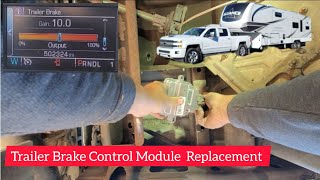
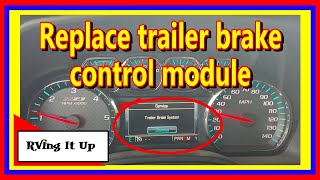
Used OEM Parts in Stock



New Aftermarket Parts Available

The information in this article is provided for general reference and educational purposes only. Vehicle specifications, procedures, and part compatibility can vary by production date, trim level, and region. Always consult your vehicle's factory service manual and verify part numbers before purchasing or performing repairs. Safety-critical components such as airbags, seat belts, and braking systems should be installed by a qualified professional.
- Chevrolet SILVERADO 1500:
- 🎬 Helpful Videos
- 🛍️ Shop This Part
- What's Unique About the 2014-2018 Chevrolet Silverado 1500
- Diagnostic Flowchart
- Symptoms You May Notice
- Most Likely Causes
- Rare But Worth Checking
- Diagnosis Steps
- Parts You'll Likely Need
- Related Codes That Often Appear With This One
- Technical Service Bulletins (TSBs) & Recalls
- Platform-Specific Known Issues
- Mechanic-Grade Diagnostic Values
- Scan Tool Commands That Help
- Wiring & Ground Locations
- Real Owner Repair Stories
- When the Usual Fixes Don't Work
- OEM Part Supersession History
- Model Year Variations Within This Range
- 🎟️ Get 5% Off