

U1504 on 2015-2017 Jeep Cherokee: Steering Sensor Communication Fault Guide
On a 2015-2017 Jeep Cherokee, code U1504 is most often caused by a software glitch in the Powertrain Control Module (PCM). Before replacing any parts, have a dealership check for and perform any available software updates, which typically costs between $100 and $250. This is a known issue covered by multiple Technical Service Bulletins (TSBs) that address false positives for this code.
- For a 2015-2017 Jeep Cherokee, U1504 is most likely a software bug.
- Your first step should always be to check with a dealer for an available PCM software update before replacing any parts.
- A weak or recently replaced battery can also trigger this code; ensure your battery and charging system are healthy.
- This code can disable your stability control system, so drive with extra care until it is resolved.
- If software and battery issues are ruled out, the Steering Angle Sensor itself is the next most likely part to have failed.
What's Unique About the 2015-2017 Jeep CHEROKEE

For this specific generation of Jeep Cherokee (KL), the U1504 code is frequently a false positive triggered by a software bug. Jeep has issued numerous Technical Service Bulletins (TSBs) acknowledging that the PCM can erroneously set this code, often along with a host of other seemingly unrelated codes. This makes it crucial to rule out a simple software update before assuming a hardware component has failed. This issue is also seen on platform mates like the Chrysler 200.
🎬 Watch: A quick guide to clearing the U1504 code.Diagnostic Flowchart

Tap your situation to follow the diagnostic path that matches what you're seeing on this vehicle.
Symptoms You May Notice

- Check Engine Light (Malfunction Indicator Lamp) is on
- Electronic Stability Control (ESC) or Traction Control warning light is on
- ABS warning light is on
- "Service Power Steering" message may appear on the instrument cluster
- In some cases, the vehicle may stall, not start, or exhibit extended crank times.
- Pulsing interior and exterior lights, which can be a sign of an underlying battery or charging system issue triggering the code.
- Replacing the Steering Angle Sensor when the actual problem is a software issue that requires a PCM flash.
- Replacing the PCM when the issue is just a weak battery or a simple wiring fault.
- Replacing the battery without checking for loose or corroded terminals, which can cause the same voltage drop issues.
Most Likely Causes

- Powertrain Control Module (PCM) Software Update Needed 🔴 High Probability Multiple manufacturer TSBs (e.g., 18-110-20, 18-066-20) confirm that outdated PCM software has overly sensitive logic that incorrectly flags a U1504 code. The updates revise the diagnostic parameters to prevent these false positives.
How to confirm: A Jeep dealership or a well-equipped independent shop using a tool like wiTECH can check your vehicle's VIN and current software calibration ID against their database for open TSBs and available updates.
Typical fix: Reprogramming (flashing) the PCM with the latest software version. This typically takes less than an hour.
Est. part cost: $0 - Low Battery Voltage or Failing Battery 🟡 Medium Probability Modern vehicles with complex electronic modules are sensitive to voltage fluctuations. A weak or dying battery can cause communication errors between modules, leading to various 'U' (network) codes. Some FCA vehicles also use battery terminals that are prone to stretching and loosening over time, creating a poor connection that mimics a failing battery.
How to confirm: Test the battery with a digital multimeter or an electronic battery tester. A healthy, resting battery should be at approximately 12.6 volts. Crucially, perform a load test; voltage should not drop below 10 volts while cranking. Also, physically check if the battery terminals are tight and free of corrosion.
Typical fix: Recharge or replace the vehicle's battery. If terminals are loose, they may need to be replaced with a more robust aftermarket style.
Est. part cost: $150-$350 - Faulty Steering Angle Sensor (SAS) ⚪ Low Probability While less common than software issues on this platform, the sensor itself can fail and send corrupt data. It is an electronic component subject to wear and tear.
How to confirm: Using an advanced scan tool, monitor the live data stream from the steering angle sensor while turning the steering wheel. The degree reading should be smooth, logical, and return to near-zero when centered. Jumps, freezes, or no signal indicate a faulty sensor.
Typical fix: Replace the steering angle sensor, which is integrated into the clockspring assembly in the steering column. After replacement, a recalibration procedure is required.
Est. part cost: $150-$300 - Wiring or Connector Issue ⚪ Low Probability Damage to the wiring harness or a loose/corroded connector between the SAS and the PCM can interrupt communication. This is more likely if other recent work has been performed under the dash or in the engine bay.
How to confirm: Visually inspect the wiring harness leading to the steering column. Check for secure connections at the SAS and the PCM. A multimeter can be used to check for continuity and shorts in the circuit, following the factory wiring diagram.
Typical fix: Repair the damaged wire or clean/replace the faulty connector.
Est. part cost: $5-$50
Rare But Worth Checking
- Faulty Aftermarket Remote Starter: Poorly installed or incompatible aftermarket remote start systems can interfere with the vehicle's CAN bus network, sometimes triggering a U1504 code. One owner reported the code appeared immediately after using a new plug-and-play remote start system.
Diagnosis Steps
- Check Battery Health & Terminals: Before any other steps, ensure the battery is fully charged and healthy. Test voltage at rest (~12.6V) and perform a load test during cranking (should not drop below 10V). Physically wiggle the battery terminals to ensure they are tight; this is a known weak point on FCA vehicles.
- Scan for All Codes: Use an OBD-II scanner to read codes from all modules (PCM, BCM, ABS, etc.), not just the engine computer. Note all codes present, as accompanying codes like U1424 are strong indicators of a software issue.
- Check for TSBs: This is the most critical step. Have a dealer or use an online service to check your VIN for applicable Technical Service Bulletins, especially 18-110-20, 18-064-20, 18-085-17, and 18-066-20. If any apply, a PCM software update is the prescribed fix.
- Attempt SAS Recalibration: Some sources suggest a simple recalibration procedure: with the engine running, turn the steering wheel fully to the left, then fully to the right, then return to center. While this may work for temporary glitches after a battery disconnect, it is unlikely to fix the underlying software bug on this platform.
- Inspect Wiring: If no TSBs apply and the battery is good, visually inspect the wiring and connectors at the base of the steering column and at the PCM for any signs of damage, corrosion, or looseness.
- Monitor Live Data: Use an advanced scan tool to view the live data from the Steering Angle Sensor. If the data is erratic, absent, or doesn't change when turning the wheel, and the wiring is confirmed to be good, the sensor itself is likely faulty.
- Test the Sensor: If live data is inconclusive, the sensor can be tested directly, but this typically requires removal and specific service manual instructions.
Parts You'll Likely Need
- Steering Angle Sensor / Clockspring
(OEM #68459489AA (supercedes 56046497AA, AB, AC, AD, AE, AF))— If the cause is not software or battery-related, the sensor itself is the component that has failed. It is sold as an assembly with the clockspring. Part number may vary by specific options, always confirm with VIN.
Trusted brands: Mopar, Dorman, Standard Motor Products
OEM price range: $250-$480
Aftermarket price range: $100-$250
Related Codes That Often Appear With This One
- U1424 — Implausible Engine Torque Signal. This code is frequently listed alongside U1504 in TSBs that are resolved with a PCM software update.
- U0428 — Implausible Data Received From Steering Angle Sensor Module. This is a closely related code also pointing to a SAS communication issue and is mentioned in the same TSBs as U1504.
- P1D83 — Implausible Engine Oil Temperature Signal Received. Its appearance with U1504 is a strong indicator of the software glitch described in TSB #18-085-17 and #18-066-20.
- P0556 — Brake Booster Pressure Sensor Circuit Performance. Also bundled in TSBs pointing to a PCM software fix.
Technical Service Bulletins (TSBs) & Recalls
- 18-110-20: Flash: PCM Updates, addresses U1504, U1424-00, and misfire codes for 2017 2.4L models.
- 18-064-20: Flash: PCM Updates, addresses U1504 and notes U1424 as a 'DTC False Failure' for 2016 models.
- 18-085-17: Flash: PCM Updates, addresses U1504, U1424, and P1D83 for 2015 3.2L models.
- 18-066-20: Flash: PCM Updates, addresses U1504, U0428, and other codes for 2017 models.
- 18-013-17: Flash: PCM Updates, addresses U1504 and U0428.
Platform-Specific Known Issues
- A high number of TSBs issued by Jeep for the 2015-2017 Cherokee confirm a known software issue within the PCM that can cause it to falsely report code U1504, often in conjunction with other network and sensor codes. The primary fix is a software reflash, not part replacement.
Mechanic-Grade Diagnostic Values
- CAN C Bus Network Resistance — expected: ~60 Ohms. Failure: A reading of ~120 Ohms indicates an open circuit or a missing terminating resistor. A reading near 0 Ohms indicates a short between the CAN High and Low wires.
- CAN C High (CAN-H) Voltage — expected: ~2.6 Volts (Key On, Engine Off). Failure: Voltage that is stuck high, low, or at 0V points to a short to power, short to ground, or an open circuit.
- CAN C Low (CAN-L) Voltage — expected: ~2.4 Volts (Key On, Engine Off). Failure: Voltage that is stuck high, low, or at 0V points to a short to power, short to ground, or an open circuit.
Scan Tool Commands That Help
- wiTECH, AlfaOBD, Autel (high-end): Proxy Alignment (Proxi Configuration) — This is a critical FCA-specific function to use after replacing any module on the CAN bus, or if multiple 'U' codes are present. It forces the Body Control Module (BCM) to rediscover all network modules and synchronize their configurations. A flashing odometer is a key indicator that a Proxy Alignment is needed.
- wiTECH, Autel, Launch, etc.: Steering Angle Sensor (SAS) Calibration — This must be performed after replacing the steering angle sensor or clockspring. It should also be done after a wheel alignment or if the steering column has been disassembled, as this resets the sensor's zero-point.
Wiring & Ground Locations
- STAR Connector (CAN Bus Hub) — Typically located behind the driver's side dash panel, near the kick panel or instrument cluster. It is a junction block where multiple CAN bus wires connect.. A poor connection or corrosion at this central hub can disrupt communication for multiple modules simultaneously, leading to codes like U1504. It's a primary point to check for network-wide faults.
- Ground Point G905A — Located on the left side of the engine compartment.. This is a major ground point for several modules in the engine bay. Corrosion or looseness at this ground can introduce electrical noise and voltage drops, causing communication errors on the CAN bus.
- Steering Angle Sensor Connector — At the base of the steering column, connected to the clockspring assembly.. This is the direct connection for the sensor. Check for pushed-out pins or damage to the harness, especially if any work has been done under the dashboard.
Real Owner Repair Stories
- Owner reports on forums and YouTube (2015 Jeep Cherokee) — Intermittent no-start, multiple communication codes including U1504, ABS/ESC lights.
❌ Tried (didn't work) Replacing the battery., Clearing codes (they would return immediately).
✅ What actually fixed it The negative battery terminal clamp was replaced. The original clamp was stretched or internally corroded, causing a poor connection and significant voltage drop under load that wasn't apparent with a simple voltage test. - Technician report on CarComplaints.com (2014 Jeep Cherokee Longitude 3.2L V6) — No-start condition with a phonebook of fault codes, including U1504 and others related to steering and ABS modules.
❌ Tried (didn't work) Clearing codes., Charging and boost-starting the battery., Tapping the starter motor.
✅ What actually fixed it The primary no-start issue was a failed starter motor (a small copper bridge inside had blown apart). The tech noted the U1504 and other communication codes were likely secondary 'garbage' codes triggered by the electrical chaos of the failing starter and underlying software sensitivity.
When the Usual Fixes Don't Work
- While the most common cause of U1504 on this platform is a software glitch fixed by a PCM update, it is not the only cause. There are confirmed cases where the code was ultimately resolved by addressing hardware issues completely unrelated to the Steering Angle Sensor. One notable example involved replacing a faulty ABS module that was corrupting the CAN bus network. In another case, a corroded negative battery terminal was causing widespread voltage issues, triggering the U1504 code as a secondary symptom. These instances highlight the importance of performing a full network and power supply diagnosis before defaulting to a PCM flash, especially if other unusual electrical symptoms are present.
OEM Part Supersession History
56046497AA through 56046497AF→68459489AA— The newer part number is an updated design intended for improved robustness and reliability, likely to address premature failures in earlier versions.
Model Year Variations Within This Range
- 2015-2017: The specific Technical Service Bulletin (TSB) for the PCM software update varies by model year and engine. For example, TSB #18-085-17 applies to 2015 models with the 3.2L engine, while TSB #18-110-20 applies to 2017 models with the 2.4L engine. It is critical to verify the correct TSB using the vehicle's VIN.
Helpful Videos
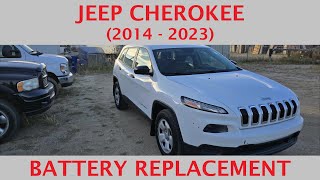
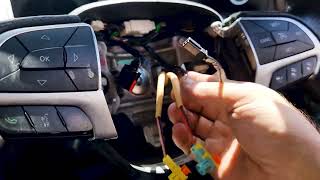
Used OEM Parts in Stock
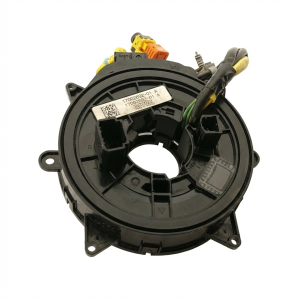
New Aftermarket Parts Available


The information in this article is provided for general reference and educational purposes only. Vehicle specifications, procedures, and part compatibility can vary by production date, trim level, and region. Always consult your vehicle's factory service manual and verify part numbers before purchasing or performing repairs. Safety-critical components such as airbags, seat belts, and braking systems should be installed by a qualified professional.
- Jeep CHEROKEE:
- 🎬 Helpful Videos
- 🛍️ Shop This Part
- What's Unique About the 2015-2017 Jeep CHEROKEE
- Diagnostic Flowchart
- Symptoms You May Notice
- Most Likely Causes
- Rare But Worth Checking
- Diagnosis Steps
- Parts You'll Likely Need
- Related Codes That Often Appear With This One
- Technical Service Bulletins (TSBs) & Recalls
- Platform-Specific Known Issues
- Mechanic-Grade Diagnostic Values
- Scan Tool Commands That Help
- Wiring & Ground Locations
- Real Owner Repair Stories
- When the Usual Fixes Don't Work
- OEM Part Supersession History
- Model Year Variations Within This Range
- 🎟️ Get 5% Off