

U1500 on 2015-2024 Volvo XC90: Understanding Network Communication Faults
Code U1500 on a 2015-2024 Volvo XC90 indicates a LIN bus or inter-device communication failure. While the generic code doesn't specify the module, on this platform it is overwhelmingly caused by low voltage from a failing main or support battery. Always start by load testing both batteries and checking the charging system before considering more complex repairs.
- U1500 is a LIN bus communication fault; its specific meaning on an XC90 requires a professional scan, but it points to a communication problem between a master module and a component.
- Before any other diagnosis, fully load test BOTH the main 12V AGM battery and the smaller support battery. This is the most common fix.
- Software updates can resolve many communication glitches on the SPA platform; always check if the vehicle's software is current.
- If batteries and software are good, the fault could be a failed module (like the VCM) or a wiring issue, which requires professional diagnosis.
What's Unique About the 2015-2024 Volvo XC90
The second-generation XC90 (2015-2024) is built on Volvo's Scalable Product Architecture (SPA), which relies heavily on complex communication networks (like CAN, LIN, and FlexRay) between dozens of control modules. These systems are highly sensitive to battery voltage. A weak or failing 12V main battery or the smaller support battery can cause widespread communication faults, triggering various 'U' codes without an actual hardware failure in a specific module. This is a very common experience for owners of SPA-platform vehicles, where seemingly major electronic failures are often resolved simply by replacing a battery.
Symptoms You May Notice
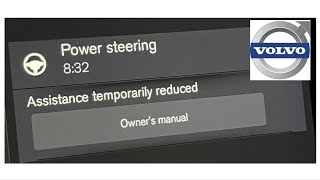
- Warning messages on the driver display (e.g., 'Power Steering Service Required', 'Volvo On Call Service Required', '12V System Service Required')
- Loss of function in a specific system (e.g., power steering assist, infotainment, cameras, Start/Stop system)
- Check Engine Light or other warning lamps illuminated
- Unpredictable electrical issues (e.g., screen freezing, blank instrument cluster)
- Rapid battery drain when the vehicle is off (parasitic draw)
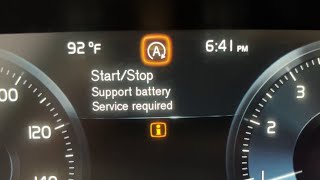
- Start/Stop functionality becoming unavailable
- Replacing a major component (like a power steering rack or infotainment head unit) without first verifying the health of BOTH the main and support batteries and checking for available software updates. Many communication issues on this platform are resolved with new batteries or a software flash.
Most Likely Causes
- Low Battery Voltage or Failing Battery (Main or Support) 🔴 High Probability The SPA platform's numerous control modules are extremely sensitive to voltage drops, which can cause communication errors that appear as 'U' codes. Both the main AGM battery and the smaller support battery are critical.
How to confirm: Perform a load test on both the main 12V AGM battery (located in the cargo area) and the smaller support battery (located in the engine bay cowl). Check the charging system output (typically 13.8-14.8 volts). A simple voltage check is insufficient; a load test is required.
Typical fix: Recharge or replace the weak or failing battery. It is often recommended to replace both if they are of similar age.
Est. part cost: $320-$650 (for both batteries) - Software Inconsistency 🟡 Medium Probability Volvo frequently issues software updates to fix communication bugs between modules. A Technical Journal for a similar code (PSCM-U300094) was resolved with a software update. In other cases, a TCAM (Telematics and Connectivity Antenna Module) software bug could cause a parasitic drain, leading to low voltage and U-codes.
How to confirm: A Volvo dealer or specialist with a VIDA subscription can check if the vehicle's modules have the latest software.
Typical fix: Update the software for the affected control module(s). This often requires a dealer visit.
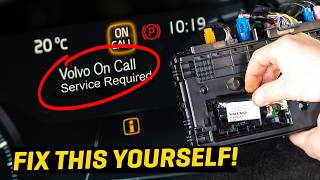
Est. part cost: $0-$250 - Failing Control Module ⚪ Low Probability While less common than battery or software issues, any of the dozens of modules on the network can fail internally. The VCM (Vehicle Connectivity Module) is a known point of failure, often due to its internal backup battery dying, 🎬 Watch how to fix the Volvo On Call service required warning. which can set codes like VCM-U105000.
How to confirm: A diagnostic scan with a professional tool will show which module is not communicating. The technician can then perform targeted tests on that module's power, ground, and network connections.
Typical fix: Replace the faulty control module and program the new one to the vehicle.
Est. part cost: $400-$2000+ - Wiring or Connector Issue ⚪ Low Probability
How to confirm: Visually inspect the wiring harness and connectors leading to the suspected module (identified by a scan tool). A documented case on a similar platform involved a CAN bus wire shorting to a metal bracket behind the radio, causing widespread electrical failure.
Typical fix: Repair the damaged wiring or clean/replace the faulty connector.
Est. part cost: $10-$300
Rare But Worth Checking
- Faulty Aftermarket Alternator:
Diagnosis Steps
- Read all Diagnostic Trouble Codes (DTCs) from all modules using a Volvo-compatible scanner (VIDA is preferred). Note which specific module is logging the U1500 code and any other accompanying codes.
- Perform a load test on the main 12V AGM battery in the cargo area. A battery that shows good voltage but fails a load test is weak and must be replaced.
- Perform a load test on the 12V support battery located under the plastic cowl on the passenger side of the engine bay. 🎬 See how to replace the Volvo support battery.
- Start the engine and verify the alternator is charging correctly (typically 13.8-14.8 volts).
- If batteries are replaced, the Battery Monitoring System (BMS) may need to be reset. Some owners report success by disconnecting the BMS sensor connector for 5 seconds after starting the vehicle.
- If the battery and charging system are healthy, check for any available software updates for the module that stored the code. This requires a dealer or specialist with a VIDA subscription.
- If software is up to date, inspect the wiring and connectors for the affected module for any visible damage, corrosion, or looseness. Check for potential shorts to ground, such as wiring rubbing on metal brackets.
- If all the above checks pass, the module itself is the most likely cause of the fault.
Parts You'll Likely Need
- 12V AGM Main Battery (H7/94R)
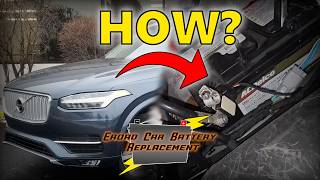
(OEM #31652975)— A weak main battery is the most common trigger for network communication faults on this vehicle platform. It is located in the rear cargo area. 🎬 Watch this step-by-step Volvo XC90 battery replacement guide.
Trusted brands: Genuine Volvo, Bosch, Interstate, Duracell
OEM price range: $350-$500
Aftermarket price range: $250-$400 - Support Battery
(OEM #30659531)— The small support battery, located in the engine bay cowl, is critical for maintaining stable voltage for vehicle electronics and the Start/Stop system. Its failure can cause numerous electrical faults.
Trusted brands: Genuine Volvo
OEM price range: $90-$150
Aftermarket price range: $70-$120
Related Codes That Often Appear With This One
- U3003-16 — This code often accompanies other module faults and indicates that the module's supply voltage is below the acceptable threshold, reinforcing the high likelihood of a battery or charging system problem.
- PSCM-U300094 — This is a known code for the Power Steering Control Module related to low voltage during certain maneuvers, showing a pattern of PSCM network faults being tied to power supply. It is often fixed with a software update per TJ 34519.
- VCM-U105000 — This code specifically points to the Vehicle Connectivity Module's internal backup battery reaching the end of its life, causing a 'Volvo on Call Service Required' message.
Technical Service Bulletins (TSBs) & Recalls
- TJ 34519.2.0: Addresses a similar code (PSCM-U300094) related to reduced power steering assistance caused by low voltage, often fixed with a software update.
- TJ 31233: While not directly related to U1500, this TSB addresses excessive oil consumption on some 4-cylinder Drive-E engines due to piston ring design, a major issue for 2015-2016 models.
Platform-Specific Known Issues
- A known issue documented in Volvo Technical Journal 34519 involves temporary loss of power steering assist due to the support battery voltage dropping during heavy maneuvering, which sets a PSCM network code and is fixed with a software update.
- A parasitic drain caused by the Telematics and Connectivity Antenna Module (TCAM) failing to shut down was a known issue on earlier software versions, leading to dead batteries and communication faults.
Mechanic-Grade Diagnostic Values
- CAN Bus Network Termination Resistance — expected: Approximately 60 Ohms. Failure: A reading of 120 Ohms indicates a break in the bus or a missing terminating resistor in a module. A reading significantly less than 60 Ohms suggests a short between the CAN High and CAN Low wires.
- CAN Bus Voltage (Key On, Engine Off) — expected: CAN High (Pin 6): ~2.5-3.5V; CAN Low (Pin 14): ~1.5-2.5V. The sum of both voltages should be approximately 5V.. Failure: Voltages that are stuck high, low, or at 0V indicate a short to power or ground. If CAN High voltage is lower than CAN Low, the wires may be reversed.
Hidden / Shadow Codes Worth Checking
- U210993: TCAM (Telematics and Connectivity Antenna Module) Backup Battery - Component Failures - Internal Failure. This is a common hidden cause for 'SOS Service Required' messages and can lead to broader network instability. (see via This code is visible with Volvo's VIDA diagnostic software. A generic OBD-II scanner will not see this level of detail.)
Scan Tool Commands That Help
- Volvo VIDA: Fault Trace — After an initial vehicle readout, the 'Fault Trace' function provides a step-by-step guided diagnostic plan. For network issues, it prioritizes checking the most likely faulty network segments and components first.
- Volvo VIDA: Network Page — To get a graphical overview of the entire vehicle network, showing which modules are communicating, which have DTCs, and which are unresponsive. This is essential for quickly identifying the scope of a communication failure.
- Volvo VIDA: Software Download / CEM Reload — Used after replacing a module or when a Technical Journal advises a software update to fix a bug. A 'CEM Reload' can resolve configuration corruption that may cause communication faults. This requires an active VIDA subscription and a VOE adapter for SPA platform vehicles.
- Volvo VIDA: Control Module Adaptation — After replacing certain modules like the TCM, this function is used to reset learned values and allow the new module to calibrate to the specific vehicle, preventing performance and communication issues.
Wiring & Ground Locations
- Main Engine Bay Ground Points — Located on the driver and passenger side strut towers. These are multi-wire ground points for numerous systems.. Corrosion or looseness at these primary grounds can introduce electrical noise and voltage instability, disrupting network communication. These are critical checks after verifying battery health.
- Interior Ground Points — Behind the kick panels in the driver and passenger footwells, there are multiple earth points screwed to the chassis.. The Central Electronic Module (CEM) and other interior modules rely on these grounds. A loose or corroded ground in the footwell can cause intermittent and hard-to-trace network faults originating from the CEM.
- Battery Ground — The main battery is in the rear cargo area. The primary ground connection is to the chassis nearby.. While seemingly obvious, the main battery ground connection point should be inspected for corrosion or looseness, as a poor ground here affects the entire vehicle's electrical stability.
- Engine Harness Chafe Point — The wiring harness running over the top of the engine, under the plastic cover.. High heat can cause the protective plastic loom to become brittle and break, exposing wires. Wires can then chafe against the engine or body, causing shorts that can bring down a network.
Real Owner Repair Stories
- Reddit user u/geedarnoc (2020 Volvo XC90 T6, 30k miles) — Instrument cluster display became garbled and unreadable, showing graphical glitches and artifacts.
❌ Tried (didn't work) A software update performed by the dealer did not resolve the issue.
✅ What actually fixed it The Volvo service department replaced the entire instrument cluster panel and reprogrammed it under warranty. This indicates the module itself had an internal hardware failure, not just a software or communication issue with other modules.
OEM Part Supersession History
30659531→32238082— Standard part evolution and potential supplier changes.
Heads up: Both part numbers refer to the same specification of 12V 10Ah support battery and are interchangeable.
Model Year Variations Within This Range
- 2015-~2021: These models are equipped with the Sensus infotainment system. The telematics module is the Vehicle Connectivity Module (VCM). The 'Volvo on Call Service Required' message is often caused by the failure of the VCM's internal, non-rechargeable backup battery, setting code VCM-U105000.
- ~2022-2024: These models feature the Android Automotive Operating System (AAOS). The telematics function is handled by the Telematics and Connectivity Antenna Module (TCAM). The TCAM is a more common source of connectivity faults (loss of GPS/LTE, 'SOS Service Required') on these later models. These issues are often software-related and may be fixed with a TCAM restart or software update, rather than module replacement.
Diagnostic Flowchart
Other Known Issues on This Vehicle
Issues unrelated to this code that are worth knowing about as an owner of this generation:
- Excessive Oil Consumption (Drive-E Engines) 🔴 High — Common on 2015-2016 models with 4-cylinder Drive-E engines, typically appearing between 30k-60k miles. Caused by faulty piston ring design. (Ref: Volvo issued an extended warranty (8 years/100k miles) and Technical Journal TJ 31233, but many vehicles are now outside this coverage.)
- Air Suspension Failure 🟠 Medium — Compressor or air strut failure is a known, expensive issue, often occurring outside of warranty around 80k-100k miles.
- Sensus Infotainment Screen Failure 🟠 Medium — Screens can suffer from delamination ('bubbling'), freezing, or going blank. Often requires replacement, which must be programmed by a dealer. (Ref: NHTSA Recall R10333 addresses rearview camera software issues, but not hardware failures like delamination.)
- Sunroof Leaks 🟠 Medium — Sunroof drain tubes can become clogged, leading to water leaking into the cabin and potentially damaging electronics in the headliner or dashboard.
- Premature Brake Wear 🟡 Low — Non-hybrid models are noted to have higher-than-average brake pad and rotor wear, sometimes accompanied by brake squeal. (Ref: A TSB may exist for certain brake noise complaints, but wear is generally considered a maintenance item.)
Used vs. New Parts: Buying Guide for This Vehicle
When a used part is the smart pick: A used part is generally not recommended for fixing a U1500 code due to the nature of the components. The only exception might be for a simple wiring harness connector or pigtail if the original is physically damaged, but even then, sourcing a new repair terminal from Volvo is a better option.
Donor-vehicle mileage cap: roughly under 50000 miles for the part to have meaningful remaining life.
What to inspect on the donor part:
- For a wiring connector, check for any signs of corrosion (green or white powder), melted plastic, or brittle wires.
- Ensure all locking tabs on the connector are intact.
- Avoid parts from vehicles with signs of water damage or fire.
OEM-only on this vehicle (don't cheap out):
- Central Electronic Module (CEM)
- Vehicle Connectivity Module (VCM)
- Telematics and Connectivity Antenna Module (TCAM)
- Power Steering Control Module (PSCM)
- Alternator
- Support Battery
Aftermarket brands forum-validated for this vehicle:
- Bosch (for main AGM battery)
- Interstate (for main AGM battery)
- Duracell (for main AGM battery)
Brands owners have reported issues with on this vehicle:
- Any non-OEM alternator. The LIN bus communication protocol used by the charging system is specific to the genuine Volvo part and aftermarket units are a known cause of network communication codes.
Real Owner Stories
Aggregated from forums and TSBs cited above. Mileages and costs reflect what owners reported in those sources.
2017 Volvo S90
Symptoms: Widespread electrical codes and communication faults.
What fixed it: Replacement of the VCM (Vehicle Connectivity Module) internal backup battery.
Source hint: Reddit thread r/Volvo regarding VCM-U105000 and widespread codes
2018 Volvo XC60
Symptoms: Widespread electrical failure.
What fixed it: Repair of a CAN bus wire that was shorting to a metal bracket behind the radio.
Source hint: Snap-On case study
2016 Volvo XC90 Drive-E — ~45000 miles
Symptoms: Excessive oil consumption.
What fixed it: Service per TJ 31233 involving piston ring design issues.
Source hint: TJ 31233
Related OBD-II Codes
Frequently Asked Questions
My 2016 XC90 is consuming a lot of oil; is this related to the U1500 communication code?
Can a weak support battery in the engine bay cause power steering issues on my XC90?
I'm seeing 'Volvo On Call Service Required' and '12V System Service Required' messages. What should I check first?
Could a problem with the TCAM module be causing my battery to drain and throw U-codes?
Do I need to go to a dealer to fix a U1500 code caused by a software inconsistency?
Is there a specific wiring issue I should look for if my batteries test fine?
Helpful Videos
We Have This Part in Stock


The information in this article is provided for general reference and educational purposes only. Vehicle specifications, procedures, and part compatibility can vary by production date, trim level, and region. Always consult your vehicle's factory service manual and verify part numbers before purchasing or performing repairs. Safety-critical components such as airbags, seat belts, and braking systems should be installed by a qualified professional.
- Volvo XC90:
- 🎬 Helpful Videos
- 🛍️ Shop This Part
- What's Unique About the 2015-2024 Volvo XC90
- Symptoms You May Notice
- Most Likely Causes
- Rare But Worth Checking
- Diagnosis Steps
- Parts You'll Likely Need
- Related Codes That Often Appear With This One
- Technical Service Bulletins (TSBs) & Recalls
- Platform-Specific Known Issues
- Mechanic-Grade Diagnostic Values
- Hidden / Shadow Codes Worth Checking
- Scan Tool Commands That Help
- Wiring & Ground Locations
- Real Owner Repair Stories
- OEM Part Supersession History
- Model Year Variations Within This Range
- Diagnostic Flowchart
- Other Known Issues on This Vehicle
- Used vs. New Parts: Buying Guide for This Vehicle
- Real Owner Stories
- 2017 Volvo S90
- 2018 Volvo XC60
- 2016 Volvo XC90 Drive-E — ~45000 miles
- Related OBD-II Codes
- Frequently Asked Questions
- 🎟️ Get 5% Off