

U1500 on 2008-2016 Volvo V70: LIN Bus Communication Fault Causes and Fixes
Code U1500 on a 2008-2016 Volvo V70 indicates a communication failure on the LIN bus, a secondary data network. There is no single common cause, but likely culprits include a faulty alarm siren module or alternator. Professional diagnosis with a Volvo-specific scan tool is required to identify the non-communicating component.
- U1500 is a generic network code for a LIN bus fault; it does not name the specific failed part.
- Diagnosis with a professional, Volvo-specific scan tool (VIDA) is essential to avoid replacing incorrect parts.
- The two most probable causes to investigate first are the Alarm Siren Module (especially if you see an alarm service message) and the Alternator (if you have battery/charging warnings).
- This is not a DIY-friendly repair for beginners due to the need for advanced diagnostic tools and electrical testing.
What's Unique About the 2008-2016 Volvo V70
While the U1500 code is generic for a LIN bus fault, Volvo does not publicly document a single common cause for this specific vehicle. Unlike on GM vehicles where this code often points to the OnStar module, on a P3 platform Volvo like the V70, diagnosis is key. Technicians often have to use a process of elimination to find the faulty 'slave' module on the network, with the alarm siren and alternator being common starting points due to their known failure rates on Volvos of this era. A Volvo-specific scan tool like VIDA is needed to see which modules are on which LIN bus and which one is offline.
Symptoms You May Notice
- Check Engine Light is on
- "Alarm System Service Required" message on the dashboard (if the siren module is the cause)
- Charging system warning light, "12V System Service required" message, or battery drain (if the alternator is the cause).
- Features controlled by the failed module may not work (e.g., alarm siren doesn't sound, or goes off randomly).
- Parasitic battery drain, causing a dead battery after the car sits for several days.
- Replacing the battery without testing the charging system. A faulty LIN-controlled alternator can cause battery drain, but a new battery won't fix the root cause.
- Replacing the Central Electronic Module (CEM). A master module failure is possible but far less likely than a failure of a slave device or wiring on the network.
- Replacing the entire alternator when only the voltage regulator has failed.
Most Likely Causes
- Failed Alarm Siren Module (SCM) 🟡 Medium Probability The internal rechargeable battery in the siren module is a well-documented failure point on many Volvo models. The battery can leak acid onto the circuit board, destroying the module and causing communication to cease. This can also cause a significant parasitic battery drain.
How to confirm: A technician can use a Volvo-specific scan tool to check for communication with the SCM. If the module is unresponsive and other LIN devices are online, the SCM is the likely culprit. Physically inspecting the module for battery leakage is another confirmation. Sometimes, simply pulling the fuse for the alarm will stop a parasitic drain, pointing to the SCM as the cause.
Typical fix: Replace the alarm siren module. This part is located behind the front passenger-side wheel well liner and requires drilling out rivets for access. Some owners attempt to repair the module by cutting it open and soldering in a new battery pack.
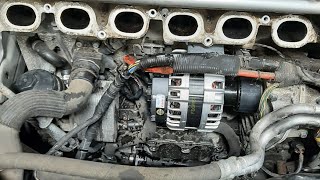
Est. part cost: $150-$250 - Failed Alternator / Voltage Regulator 🎬 Watch this video on diagnosing a 2010 Volvo V70 alternator charging issue 🟡 Medium Probability Modern alternators are 'smart' devices controlled by the ECU over the LIN bus to manage the vehicle's charging system. Failure of the internal voltage regulator (also called the Alternator Control Module or ACM) or its communication circuit can take it offline. An overcharge event from a failed regulator can also damage the LIN driver circuit within the main Engine Control Module (ECM), causing the U1500 code to persist even after alternator replacement.
How to confirm: Check for charging system-related codes alongside U1500. Test the battery and charging system output. A technician can monitor the LIN bus signal at the alternator to see if it is communicating. If the alternator is charging at a constant ~13.5V, it is likely in 'fallback mode' due to lost LIN communication. Volvo Technical Journal TJ 26897 provides detailed diagnostic steps for the LIN-controlled charging system.
Typical fix: In many cases, only the voltage regulator/ACM needs to be replaced, not the entire alternator assembly. However, if the alternator itself has failed or if the ECM's LIN driver was damaged, further repairs are needed.
Est. part cost: $300-$600 - Wiring Harness or Connector Issue ⚪ Low Probability The LIN bus is a single-wire circuit. A short to ground, short to power, or an open circuit (break) in this wire will bring down communication for the affected module. Pins can also become corroded or back out of connectors, especially after collision repair.
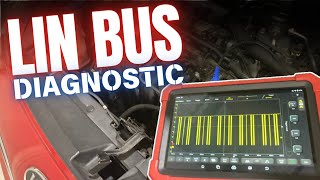
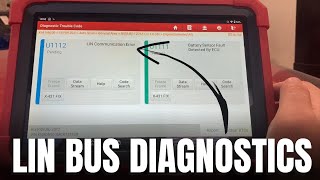
How to confirm: This requires advanced diagnostics. A technician would identify the non-communicating module, then inspect the LIN wire from that module back to the master controller for damage, corrosion, or breaks. An oscilloscope can be used to check for a valid LIN signal. 🎬 See how to perform LIN bus diagnostic testing step-by-step A LIN line held constantly low indicates a short to ground or a failed driver in a module.
Typical fix: Repair the damaged section of the wiring harness or clean/replace the corroded connector.
Est. part cost: $10-$100 in materials, but labor-intensive
Rare But Worth Checking
- Failed Engine Control Module (ECM) LIN Driver:
Diagnosis Steps
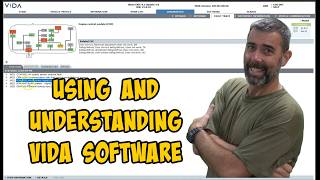
- Connect a Volvo-specific diagnostic tool (like VIDA) to perform a full vehicle scan. 🎬 Watch a beginner's guide to understanding and using Volvo VIDA software Generic OBD-II readers will not be sufficient.
- Identify which module(s) are reporting a 'no communication' status. The U1500 code is general; the scan tool should point to the specific slave device that is offline.
- If the Alarm Siren Module (SCM) is not communicating, it is the primary suspect. Proceed with inspecting and likely replacing it. Check for the 'Alarm System Service Required' message.
- If the alternator is not communicating or if charging system codes are present, test the battery and charging system output thoroughly. Check if voltage is stuck around 13.5V, indicating fallback mode.
- If a specific module is identified, inspect the single LIN bus wire and connector going to that module for any visible damage, corrosion, or looseness. Check for backed-out pins in connectors.
- Using a multimeter or oscilloscope, a technician can test the LIN bus for proper voltage and signal activity to confirm a wiring fault or module failure.
- Disconnect slave modules one by one to see if communication on the bus is restored. If unplugging a specific module allows others to communicate again, that module is likely shorting out the network.
- If an alternator fault is suspected, follow the diagnostic procedures in Volvo Technical Journal TJ 26897.
Parts You'll Likely Need
- Alarm Siren Module
(OEM #31268348)— This is a very common failure item on P2 and P3 platform Volvos due to internal battery leakage. If the 'Alarm System Service Required' message is present, this is the most likely cause.
Trusted brands: Volvo (Genuine OE)
OEM price range: $150-$250
Aftermarket price range: $100-$180 - Alternator — If charging system warnings are present, the LIN communication portion of the alternator may have failed.
Trusted brands: Bosch, Denso, Valeo
OEM price range: $500-$700
Aftermarket price range: $300-$500 - Alternator Voltage Regulator / ACM — Often the point of failure on a LIN-controlled alternator, and can be replaced separately from the entire unit.
Trusted brands: Bosch (Genuine OE)
OEM price range: $80-$150
Aftermarket price range: $50-$100
Related Codes That Often Appear With This One
- CEM-U018100 — A more specific Volvo code for 'Lost Communication With Siren Control Module (SCM)' which would confirm the SCM as the fault.
- ECM-P056200 — A code for 'System Voltage Low' could indicate a problem with the alternator's ability to charge, possibly related to a LIN communication failure.
- ECM-U012D87 — Lost Communication with Generator. This is a specific code indicating the ECM cannot communicate with the alternator over the LIN bus.
Technical Service Bulletins (TSBs) & Recalls
- TJ 26897: Voltage Regulator Replacement Guide. Provides diagnostic procedures for LIN-controlled alternators and recommends replacing the regulator instead of the whole unit.
- TJ 31233: Piston and Ring replacement for excessive oil consumption on Drive-E engines. [2
Mechanic-Grade Diagnostic Values
- LIN Bus Signal Voltage (Oscilloscope) — expected: A square wave that toggles between a low near 1V (dominant) and a high near battery voltage (~12V, recessive).. Failure: A flat line near 0V indicates a short to ground. A flat line at battery voltage indicates a short to power or an open circuit. A degraded signal (e.g., 0.16V) can indicate a faulty module driver pulling the bus down.
- LIN Bus Signal Voltage (Multimeter) — expected: Using a 'Peak Min/Max' function (1ms record), readings should be approximately 1V min and 12V max.. Failure: Using a standard DC volt setting may show a misleading average of 7-9V. The key is to see the full voltage swing. Lack of this swing indicates a fault.
- Alternator Output Voltage (in Fallback Mode) — expected: Approximately 13.5V, constant.. Failure: This steady, lower-than-normal voltage indicates the alternator has lost LIN communication with the ECM and has reverted to a default, non-managed charging state.
Scan Tool Commands That Help
- Volvo VIDA: Network Vehicle Scan / Topology View — This is the first step to get a visual overview of all control modules. It will show which modules are communicating (typically green) and which are offline (typically red or yellow), immediately pointing to the source of the LIN bus fault.
- Volvo VIDA: CCM > LIN bus modules identification — If the fault is suspected to be on the LIN bus managed by the Climate Control Module (CCM), this function can be used to query the status of slave devices on that specific network segment, such as stepper motors or certain sensors.
Wiring & Ground Locations
- Alarm Siren Module (SCM) — Located in the front passenger-side wheel well, ahead of the wheel and behind the fender liner.. This is a primary slave module on the LIN bus and a very common failure point. Access requires removing the wheel and drilling out plastic rivets holding the liner. The module itself is held by a security shear bolt that must be cut or carefully backed out.
- Central Electronic Module (CEM) — Typically located in the passenger compartment, often in the driver or passenger footwell area.. The CEM is the master control unit for many LIN bus networks. The LIN wire from the failed module (e.g., SCM or Alternator) terminates here. Verifying the signal at the CEM connector pin is a key step in diagnosing a wiring fault vs. a module fault.
- Main Ground Studs — Located on the left and right side bulkheads in the engine bay.. A poor ground connection for a master module like the CEM or ECM can cause a wide range of communication issues, including LIN bus faults. Verifying grounds is a fundamental step in any network diagnosis.
Real Owner Repair Stories
- Device Repair Guy Blog (2013 Volvo XC90 3.2 (P3 Platform)) — Charging system warning light ~30 seconds after engine start. Alternator operating in fallback mode at ~13.5V. DTC for lost communication with generator.
❌ Tried (didn't work) Replacing the alternator with an incorrect (150A vs 180A) unit., Installing a new genuine Bosch LIN-compatible voltage regulator on the original alternator.
✅ What actually fixed it The root cause was a damaged LIN driver circuit inside the Engine Control Module (ECM), which was caused by a voltage spike from the original failing alternator. The ECM itself had to be sent out for repair. - YouTube channel 'TheRepairer' (Volvo V70 P3) — Car alarm going off randomly.
❌ Tried (didn't work) Temporarily disabling the alarm by pulling fuses.
✅ What actually fixed it The internal battery in the alarm siren module (SCM) was replaced. The owner cut open the SCM housing, desoldered the old battery, and soldered in a new one. This resolved the random alarms and would clear any associated communication fault codes.
"I Checked Everything" — The Actual Cause
- In the context of this network code, the equivalent of a 'smoke test clean' scenario is when all modules and wiring appear to be good, yet the fault persists. A documented case on a P3 platform vehicle found that after replacing the alternator and regulator, the U1500-related code for generator communication remained. The actual cause was a damaged LIN driver circuit within the Engine Control Module (ECM) itself, which was only found after exhausting all other possibilities.
OEM Part Supersession History
30659882→31268348, 30659883, 31623972— Part revisions and updates by the manufacturer.
Heads up: These part numbers are generally interchangeable for the P3 platform alarm siren module, but it is always best to confirm fitment with a VIN.
Diagnostic Flowchart
Other Known Issues on This Vehicle
Issues unrelated to this code that are worth knowing about as an owner of this generation:
- Excessive Oil Consumption (Piston Rings) 🔴 High — Common on 2013-2016 models with 4-cylinder Drive-E and some 5-cylinder engines, often starting after 60,000 miles. Can consume over 1 quart per 1,000 miles. (Ref: Volvo TSB TJ 31233; Extended Warranty Program P10207.)
- Electronic Parking Brake (EPB) Failure 🟠 Medium — The actuator motors on the rear calipers can fail or seize, causing 'Parking Brake Service Required' messages and a stuck brake.
- PCV System Diaphragm Failure 🟠 Medium — The diaphragm in the PCV/oil trap housing tears, causing a loud whistling or screeching noise at idle due to excessive crankcase vacuum.
- Front Fender Rust 🟡 Low — A foam baffle behind the fender liner traps moisture and debris, causing rust to bubble under the paint at the fender edge.
- Front Seat Belt Cable Fatigue 🔴 High — Affects a wide range of P3 vehicles. The steel cable connecting the seatbelt to the seat can fatigue and break, failing to restrain the occupant in a crash. (Ref: NHTSA Recall 20V378000)
- Rear Trailing Arm Bushing Failure 🟠 Medium — Bushings are known to separate after 80,000-120,000 km, causing squeaking over bumps and a vague feeling from the rear suspension.
Used vs. New Parts: Buying Guide for This Vehicle
When a used part is the smart pick: For the alternator assembly, a used part from a verified low-mileage donor vehicle can be a cost-effective option. However, for the alarm siren module, buying used is strongly discouraged.
Donor-vehicle mileage cap: roughly under 75000 miles for the part to have meaningful remaining life.
What to inspect on the donor part:
- For a used alternator, check for minimal corrosion on the casing.
- Ensure the pulley spins freely without noise or roughness.
- Ask for the donor vehicle's mileage and accident history if possible.
OEM-only on this vehicle (don't cheap out):
- Alarm Siren Module (SCM): The failure is due to a finite-life internal battery. A used part has an unknown and likely limited remaining lifespan, making it a poor value.
Aftermarket brands forum-validated for this vehicle:
- Bosch (for Alternator or Voltage Regulator)
- Denso (for Alternator)
- Valeo (for Alternator)
Brands owners have reported issues with on this vehicle:
- Unbranded, no-name alarm siren modules from online marketplaces may have quality control issues. For the alternator, ensure any aftermarket unit is specified as LIN-bus compatible for this vehicle.
Real Owner Stories
Aggregated from forums and TSBs cited above. Mileages and costs reflect what owners reported in those sources.
2017 Volvo XC70
Symptoms: Random alarms going off, 'ALARM SERVICE REQUIRED' message on the dash, and a parasitic battery drain.
What fixed it: Pulling the fuse for the alarm was used as a temporary fix to stop the drain; permanent fix involves replacing the siren module.
Source hint: https://www.volvoxc.com/forums/showthread.php?36251-siren-alarm-module-defective-Action
2015.5 Volvo S80 T6
Symptoms: Electronic Parking Brake stuck and 'Parking Brake Service Required' message.
What fixed it: Replacement of the actuator motors on the rear calipers which had seized.
Source hint: https://www.reddit.com/r/Volvo/comments/wz971j/electronic_parking_brake_stuck_20155_volvo_s80_t6/
2008-2016 Volvo V70
Symptoms: No alarm sound when triggered and communication failure with the SCM module.
What fixed it: Replacing the alarm siren module by drilling out the rivets in the wheel well to access the unit.
Source hint: https://www.volvoforums.org.uk/showthread.php?t=93358
Related OBD-II Codes
Frequently Asked Questions
My V70 is showing 'Alarm System Service Required' and the battery dies if it sits. Is this related to U1500?
Can I just replace the voltage regulator instead of the whole alternator on my 2008-2016 V70?
Where is the Alarm Siren Module located on the V70 if I need to inspect it for U1500?
Why is my alternator charging at exactly 13.5V while the U1500 code is active?
Does the Drive-E engine oil consumption TSB (TJ 31233) apply to my 2015 V70?
Can a failed alarm siren cause my car to not start after a few days?
Helpful Videos
We Have This Part in Stock



The information in this article is provided for general reference and educational purposes only. Vehicle specifications, procedures, and part compatibility can vary by production date, trim level, and region. Always consult your vehicle's factory service manual and verify part numbers before purchasing or performing repairs. Safety-critical components such as airbags, seat belts, and braking systems should be installed by a qualified professional.
- Volvo V70:
- 🎬 Helpful Videos
- 🛍️ Shop This Part
- What's Unique About the 2008-2016 Volvo V70
- Symptoms You May Notice
- Most Likely Causes
- Rare But Worth Checking
- Diagnosis Steps
- Parts You'll Likely Need
- Related Codes That Often Appear With This One
- Technical Service Bulletins (TSBs) & Recalls
- Mechanic-Grade Diagnostic Values
- Scan Tool Commands That Help
- Wiring & Ground Locations
- Real Owner Repair Stories
- "I Checked Everything" — The Actual Cause
- OEM Part Supersession History
- Diagnostic Flowchart
- Other Known Issues on This Vehicle
- Used vs. New Parts: Buying Guide for This Vehicle
- Real Owner Stories
- 2017 Volvo XC70
- 2015.5 Volvo S80 T6
- 2008-2016 Volvo V70
- Related OBD-II Codes
- Frequently Asked Questions
- 🎟️ Get 5% Off