

U1500 on 2015-2019 Subaru Legacy: Keyless Communication Failure Causes and Fixes
On a 2015-2019 Subaru Legacy, code U1500 almost always means there's a communication failure with the keyless entry and push-to-start system. The most likely cause is a bad wiring connection, but it could also be a failed Keyless Entry Module or the more expensive Body Integrated Unit (BIU). Diagnosis requires a Subaru-specific scan tool, as generic readers can misinterpret the code.
- U1500 on your Legacy means there's a problem with the keyless entry/start system communication.
- Before buying any parts, thoroughly check the wiring and connectors to the Keyless Entry Module (behind glove box/rear shelf) and the BIU (driver's footwell).
- A faulty Keyless Entry Control Module is a likely cause and is a straightforward DIY replacement that does not require programming.
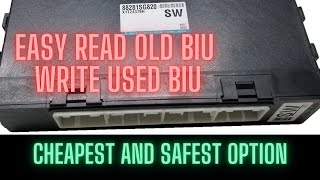
- If the Body Integrated Unit (BIU) is the cause, professional service is required for programming. Do not just swap a used one in, as the car will not start. A 'cloning' service is a viable alternative to expensive dealer programming.
- Always use a Subaru-specific scan tool for diagnosis, as generic readers can be misleading and confuse U1500 with B1500.
What's Unique About the 2015-2019 Subaru Legacy
The 2015-2019 Legacy belongs to a generation of Subarus (BN/BS chassis) where network communication codes became more common. While the official TSB (07-83-14) for this fault specifically names the WRX, Impreza, and Forester, the underlying electrical architecture and keyless system components are shared with the Legacy and its direct platform-mate, the Outback. The key issue is the UART communication between the BIU and other modules. This means a simple-looking code can lead to a complex diagnosis involving either a simple wiring fix or a very expensive, programming-required module replacement.
Symptoms You May Notice
- Keyless entry remote does not work
- Push-to-start button is unresponsive (no crank, no start)
- Car does not detect the key fob, even when inside the vehicle
- Security light may be flashing on the dashboard
- "Key Not Detected" message on the multi-function display
- Replacing the battery in the key fob. While a dead fob battery can prevent the car from starting, it will not typically set a U1500 communication code.
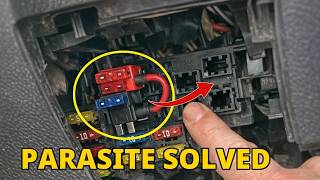
- Replacing the main car battery. Unless the battery is completely dead and causing widespread electrical issues, it's not the root cause of a specific communication code like this. However, it can be a related symptom of a larger issue like a failing BIU causing parasitic drain.
Most Likely Causes
- Poor Connection or Damaged Wiring 🔴 High Probability Vibrations and time can cause connectors to the Keyless Entry Module or the BIU to become loose or corroded. TSB 07-83-14 identifies poor contact as a primary area of investigation.
How to confirm: Visually inspect the wiring harnesses and connectors for the Keyless Entry Control Module (often behind the glove box or under the rear parcel shelf in the sedan) and the Body Integrated Unit (BIU) (in the driver's footwell, near the fuse box). Check for loose pins, corrosion, or obvious damage. The diagnostic procedure in TSB 07-83-14 involves disconnecting and reconnecting these modules to see if the code clears temporarily.
Typical fix: Clean the terminals with contact cleaner and securely reconnect. Repair any damaged wires.
Est. part cost: $0-$25 - Faulty Keyless Entry Control Module 🟡 Medium Probability Internal failure of the module's electronics can cause it to stop communicating. This is a common failure point after wiring is ruled out.
How to confirm: After confirming wiring is good, the next logical step is to test the module. This is typically done by swapping in a known-good module. A professional diagnosis with a Subaru Select Monitor can also help isolate the fault to the module by following the TSB flowchart.
Typical fix: Replace the Keyless Entry Control Module. This part is typically plug-and-play and does not require programming.
Est. part cost: $100-$250 - Failed Body Integrated Unit (BIU) ⚪ Low Probability The BIU is the master controller for many body functions and can fail internally, causing a wide range of electrical issues, including parasitic battery drain which is a known problem on this platform.
How to confirm: This is usually the last resort after all other possibilities (wiring, Keyless Entry Module) have been eliminated. Diagnosis requires a Subaru-specific scan tool to confirm the BIU is unresponsive or has internal faults.
Typical fix: Replace the Body Integrated Unit. CRITICAL: The BIU is part of the immobilizer system and MUST be programmed to the vehicle's VIN and keys by a Subaru dealer or a specialized shop with the correct equipment. The car will not start with an unprogrammed BIU. An alternative is to use a 'cloning' service that copies the immobilizer data from your old BIU to a used donor unit.
Est. part cost: $400-$800
Rare But Worth Checking
- Chronic Low Battery Voltage / Parasitic Drain:
Diagnosis Steps
- Verify the code with a professional-grade scan tool capable of reading Subaru-specific body codes (e.g., Subaru Select Monitor). A generic OBD-II reader may not see this code or may misinterpret it as B1500, or vice-versa.
- Check the battery in your key fob and try your spare key to rule out a simple key issue.
- Follow the diagnostic procedure in TSB 07-83-14. The first step is often to disconnect and reconnect the connectors for the BIU and Keyless Entry Module to check for simple poor contact.
- Inspect the wiring and connectors at the Keyless Entry Control Module, which is typically located behind the glove box or under the rear parcel shelf. Look for any signs of looseness, damage, or corrosion.
- Inspect the wiring and connectors at the Body Integrated Unit (BIU), which is located in the driver's side footwell area, near the fuse box.
- If wiring appears intact, the next most likely cause is a faulty Keyless Entry Control Module.
- If replacing the Keyless Entry Control Module does not resolve the issue, the fault likely lies with the Body Integrated Unit (BIU) itself.
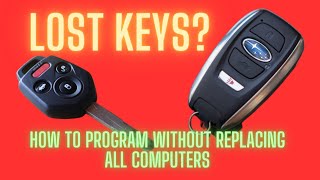
- BIU replacement requires programming by a Subaru dealer or a specialist with a Subaru Select Monitor tool. Do not attempt to simply swap this part. Be aware that the dealer may require all keys ever registered to the vehicle to program the new BIU, which can significantly complicate the repair if a key is lost. Alternatively, a 'cloning' service can be used if you supply your original BIU and a matching used part.
Parts You'll Likely Need
- Keyless Entry Control Module
(OEM #88035AL00B (example, verify by VIN))— This module is a common failure point in the keyless communication circuit and is less complex to replace than the BIU as it does not require programming.
Trusted brands: Subaru (OEM)
OEM price range: $150-$250
Aftermarket price range: $100-$200 - Body Integrated Unit (BIU)
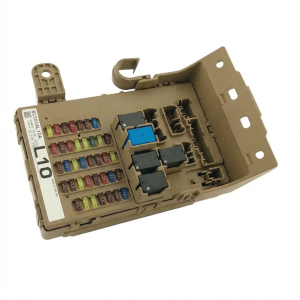
(OEM #Varies significantly by trim/options. Must match original part number exactly.)— If wiring and the Keyless Entry module are confirmed good, the BIU is the next likely culprit. Its replacement is the most expensive and complex fix.
Trusted brands: Subaru (OEM)
OEM price range: $400-$800
Aftermarket price range: $150-$300 (Used, requires cloning) - Key Fob (Smart Key)
(OEM #57497AL00A (supersedes 57497FJ230, 57497FJ020, 57497FJ021))— While not a cause of U1500, a lost or damaged key may need to be replaced as part of the overall diagnostic and repair process, especially if the BIU is replaced.
Trusted brands: Subaru (OEM)
OEM price range: $150-$325
Aftermarket price range: $50-$100
Related Codes That Often Appear With This One
- B1500 — According to Subaru TSB 07-83-14, B1500 is used for the same 'Keyless UART Communication Malfunction' on other models like the Forester and Impreza. A generic scan tool might misinterpret one code for the other, or a technician may see U1500 and need to follow the diagnostic path for B1500 per Subaru's documentation for certain models.
Technical Service Bulletins (TSBs) & Recalls
- 07-83-14 / 07-83-14R: Diagnostics for DTC B1500 and U1500 - This TSB is the primary source defining the code as a 'Keyless UART Communication Malfunction' and outlines the diagnostic procedure, clarifying which code applies to which vehicle (e.g., U1500 for WRX, B1500 for Forester/Impreza).
- Multiple TSBs (e.g., 07-178-21) exist to address parasitic drain testing, a known issue on this platform that can cause low voltage and trigger various communication codes.
Platform-Specific Known Issues
- Confusion with code B1500 is common. TSB 07-83-14 clarifies which code applies to which model for the 'Keyless UART Communication Malfunction', but generic scan tools can cause misdiagnosis.
Mechanic-Grade Diagnostic Values
- Keyless Entry Control Module Power Supply Voltage — expected: 10V or more. Failure: Voltage below 10V indicates a power supply circuit issue.
- Keyless Entry Control Module Ground Circuit Resistance — expected: 10 Ω or less. Failure: Resistance above 10 Ω indicates a poor ground connection.
- UART Communication Line Resistance (BIU to Keyless Module) — expected: Less than 1 Ω. Failure: Resistance greater than 1 Ω indicates an open or high resistance in the harness.
Scan Tool Commands That Help
- Subaru Select Monitor: Read DTC in Body Integrated Unit — This is the first step to confirm if U1500 or B1500 is present as a current or past fault.
- Subaru Select Monitor: {Each System Check} -> {Keyless access system} -> {Work Support} -> {System Operation Check Mode} — This function allows a technician to command specific parts of the keyless system to operate, such as turning on the push-button ignition switch light or activating power to various sensors, helping to isolate a fault.
- Subaru Select Monitor: {Each System Check} -> {Integ. unit mode} -> {Keyless ID registration} — This function is required after replacing a BIU or when adding new key fobs. It registers the unique ID of each transmitter to the vehicle's immobilizer system.
- Subaru Select Monitor: Clear Memory — Used after a repair is completed to erase the stored DTCs and verify the fix. The TSB diagnostic procedure requires clearing the code and rechecking to see if it returns.
Wiring & Ground Locations
- i84 / i171 — Connectors for the Body Integrated Unit (BIU), located on the left side of the dashboard, near the driver's kick panel.. The UART communication wire from the Keyless Entry Module terminates at one of these BIU connectors. A poor connection or corroded pin here is a primary cause of the U1500 code.
- R221 or R80 — Connector for the Keyless Entry Control Module. On the Legacy sedan, this is often located under the rear parcel shelf. On the Outback wagon, it's typically behind the glove box.. This is the main connector for the module. TSB 07-83-14R specifies checking Pin 4 for power (≥10V) and Pin 5 for ground (≤10Ω) at this connector.
- i171, Pin 11 — At the Body Integrated Unit (BIU) connector under the driver's dash.. This is the specific pin where the UART communication signal wire from the Keyless Entry Module arrives. It is a primary test point for checking harness continuity back to the keyless module.
- GB-3 / GB-4 — Chassis ground points located in the passenger compartment, typically under the dash or kick panels.. The BIU and other related modules rely on these chassis grounds. A loose or corroded ground bolt at these locations can cause intermittent communication faults across multiple systems, including the one that triggers U1500.
OEM Part Supersession History
88035AL00A→88035AL00B— Internal revision or component update by the manufacturer. The 'B' revision is the most current replacement part.
Heads up: The part number 88035AL000 is also listed for this vehicle range, but may be for different trim levels or model years. It is critical to verify the correct part number by VIN before ordering.
Model Year Variations Within This Range
- 2015-2017: Early models in this generation used a BIU that was particularly susceptible to developing internal faults leading to parasitic drain. While later models still had some issues, Subaru made internal changes to the BIU and released ECM software updates (like TSB 11-176-17) to improve battery management, which can indirectly affect the stability of module communication.
Diagnostic Flowchart
Other Known Issues on This Vehicle
Issues unrelated to this code that are worth knowing about as an owner of this generation:
- Parasitic Battery Drain 🔴 High — Widespread issue affecting many 2015-2020 models, including the Legacy. Can occur at any time. (Ref: Subject of class-action lawsuit (In re Subaru Battery Drain Products Liability Litigation).)
- Cracked Windshields 🟠 Medium — Common problem where small chips rapidly spread, often originating from the de-icer area. Affects 2015-2016 models most prominently. (Ref: TSB 12-192-15R; Subject of multiple class-action lawsuits leading to extended warranties.)
- Lineartronic CVT Reliability 🟠 Medium — Some owners report shuddering at low speeds (approx. 15-20 mph) under light acceleration. Less common than other issues but can be expensive to fix.
- STARLINK Infotainment System Glitches 🟡 Low — System may freeze, become unresponsive to touch, or fail to boot. Often requires a vehicle restart to resolve temporarily. (Ref: Multiple TSBs exist for software updates, such as #15-236-18R for 2019 models.)
- Denso Low-Pressure Fuel Pump Failure 🔴 High — Affects certain 2019 models, can lead to engine stalling. (Ref: Safety Recall WRD-20.)
- Rattling from EPS Steering Rack 🟡 Low — A rattling sound may be heard from the steering gearbox. Not detrimental to operation. (Ref: TSB 04-17-17R.)
Used vs. New Parts: Buying Guide for This Vehicle
When a used part is the smart pick: A used Keyless Entry Control Module is a smart choice as it is a plug-and-play part that does not require programming. A used Body Integrated Unit (BIU) is also a viable, cost-effective option, but ONLY if you use a cloning service to transfer the immobilizer data from your original unit to the donor unit.
Donor-vehicle mileage cap: roughly under 100000 miles for the part to have meaningful remaining life.
What to inspect on the donor part:
- For the BIU, match the part number EXACTLY. Even a one-digit difference can mean incompatibility.
- Inspect connectors on the used module for any signs of corrosion, bent pins, or heat damage.
- Avoid parts from vehicles with flood or fire damage, as this can cause hidden electronic issues.
- When buying a BIU for cloning, ensure the seller guarantees it is a functional, tested unit.
OEM-only on this vehicle (don't cheap out):
- Body Integrated Unit (BIU): While a used OEM part is viable with cloning, avoid aftermarket BIUs entirely. There are no reputable aftermarket manufacturers for this complex, vehicle-specific component.
Aftermarket brands forum-validated for this vehicle:
- For this specific repair, there are no widely recognized 'known good' aftermarket brands for the electronic modules. OEM or a cloned used OEM part is the standard, reliable fix.
Brands owners have reported issues with on this vehicle:
- Avoid any unbranded or 'no-name' BIUs or Keyless Entry Modules from online marketplaces. These often lack the correct software and quality control, and are unlikely to function correctly.
Real Owner Stories
Aggregated from forums and TSBs cited above. Mileages and costs reflect what owners reported in those sources.
2016 Subaru Crosstrek
Symptoms: No-crank, no-start condition where the vehicle would not start at all.
What fixed it: Replacement of the Body Integrated Unit (BIU). The repair was complicated because a third, lost key was still registered to the car, which the dealer required for standard programming.
Cost: $800-$3,000
Source hint: Reddit r/subaru
Related OBD-II Codes
Frequently Asked Questions
Does TSB 07-83-14 apply to my 2015-2019 Subaru Legacy regarding code U1500?
Can I just swap a used Body Integrated Unit (BIU) into my Legacy to fix this code?
Why does my scan tool show B1500 instead of U1500?
Is the Keyless Entry Control Module plug-and-play on the 2015-2019 Legacy?
Could my Legacy's battery drain issue be related to the U1500 code?
Where is the Keyless Entry Control Module located in my sedan?
Helpful Videos

We Have This Part in Stock





The information in this article is provided for general reference and educational purposes only. Vehicle specifications, procedures, and part compatibility can vary by production date, trim level, and region. Always consult your vehicle's factory service manual and verify part numbers before purchasing or performing repairs. Safety-critical components such as airbags, seat belts, and braking systems should be installed by a qualified professional.
- Subaru Legacy:
- 🎬 Helpful Videos
- 🛍️ Shop This Part
- What's Unique About the 2015-2019 Subaru Legacy
- Symptoms You May Notice
- Most Likely Causes
- Rare But Worth Checking
- Diagnosis Steps
- Parts You'll Likely Need
- Related Codes That Often Appear With This One
- Technical Service Bulletins (TSBs) & Recalls
- Platform-Specific Known Issues
- Mechanic-Grade Diagnostic Values
- Scan Tool Commands That Help
- Wiring & Ground Locations
- OEM Part Supersession History
- Model Year Variations Within This Range
- Diagnostic Flowchart
- Other Known Issues on This Vehicle
- Used vs. New Parts: Buying Guide for This Vehicle
- Real Owner Stories
- 2016 Subaru Crosstrek
- Related OBD-II Codes
- Frequently Asked Questions
- 🎟️ Get 5% Off