

U1500 on 2011-2021 Jeep Grand Cherokee: Causes and Fixes for Blind Spot System Failure
On a 2011-2021 Grand Cherokee (WK2), code U1500 almost always means one of the rear Blind Spot Sensor modules has failed, usually from water getting inside. The fix is to replace the faulty sensor, which costs between $200-$500 per sensor. This is a DIY-possible job if you're comfortable removing the rear bumper cover.
- Code U1500 on a WK2 Grand Cherokee points directly to a problem in the Blind Spot Monitoring system.
- The most likely cause is a failed blind spot sensor in the rear bumper, usually due to water damage.
- The fix involves replacing the faulty sensor, which requires removing the rear bumper cover.
- Always check for wiring damage and correct harness orientation before replacing the sensor.
- After replacement, a 'Proxy Alignment' is often needed with an advanced scan tool (like AlfaOBD) to get the new sensor recognized by the vehicle.
What's Unique About the 2011-2021 Jeep Grand Cherokee
The key issue on the WK2 Grand Cherokee is the physical location of the blind spot sensors. They are mounted in the lower rear corners of the vehicle, behind the bumper cover, where they are highly exposed to water, salt, and dirt kicked up by the rear tires. Over time, the seals on the sensor modules fail, allowing moisture to penetrate the electronics and cause corrosion, leading to failure and triggering the U1500 code. This is a very common point of failure for this specific vehicle platform and its sibling, the Dodge Durango.
Symptoms You May Notice
- "Service Blind Spot System" or "Blind Spot Detection Unavailable" message on the instrument cluster display.
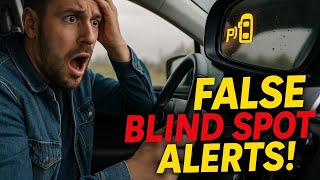
- The amber warning triangle in one or both side mirrors stays illuminated constantly.
- The blind spot warning lights in the mirrors do not illuminate when a vehicle is in the blind spot.
- The audible alert for blind spot detection does not sound when the turn signal is activated.
- Rear Cross-Path Detection system is disabled.
- Replacing the side mirror assembly. The warning light is in the mirror, but the sensor causing the problem is in the rear bumper. 🎬 See why your blind spot warning light stays on
- Assuming the issue is with a fuse without checking for codes first. While a fuse could be an issue, module failure is far more common for this specific code.
- Mistaking a faulty BCM when the issue is a single failed sensor. The U1500 code specifically points to a communication loss with a peripheral module, making the module itself the primary suspect.
Most Likely Causes
- Failed Blind Spot Sensor (SODAR Module) 🔴 High Probability The sensors are located in a vulnerable position behind the rear bumper cover, where they are exposed to constant moisture and road debris. The module seals degrade over time, allowing water intrusion which corrodes the internal circuit board.
How to confirm: Use a scan tool capable of reading BCM codes (like AlfaOBD or a high-end Autel) to see which sensor (Left or Right Side Object Detection) is reporting a fault or is not communicating. Visually inspect the sensor for signs of corrosion (white/green powder) or water damage after removing the rear bumper cover. The connector has 6 pins.
Typical fix: Replace the failed blind spot sensor module. It is highly recommended to use a genuine Mopar replacement part, as aftermarket quality can be inconsistent. After replacement, a 'Proxy Alignment' procedure is often required.
Est. part cost: $250-$550 - Damaged Wiring or Connector 🟡 Medium Probability The wiring harness to the sensors is also located in the rear bumper area and can be damaged by road debris, moisture, or improper repairs after a rear-end collision. In one documented case, a body shop reinstalled the bumper harness upside-down, which is physically possible but causes the system to fail.
How to confirm: After removing the bumper cover, inspect the wiring harness and connector pins for each sensor. Look for green/white corrosion, chafed or broken wires, and bent or pushed-out pins. Ensure the harness is oriented correctly and not flipped.
Typical fix: Repair the damaged section of wiring or replace the connector pigtail. Clean any corrosion from the pins using an electrical contact cleaner. Mopar and aftermarket connector repair kits are available.
Est. part cost: $30-$80 - Body Control Module (BCM) Fault ⚪ Low Probability
How to confirm: This is very unlikely if U1500 is the only code present. If multiple, unrelated modules are failing to communicate, and other strange electrical issues are present, the BCM or TIPM may be the issue. This requires advanced diagnostics by a professional.
Typical fix: Diagnose and potentially replace the Body Control Module. This requires programming by a dealer or qualified shop with appropriate tools.
Est. part cost: $400-$800
Diagnosis Steps
- Connect an OBD-II scanner capable of reading Body Control Module (BCM) and network codes. Tools like AlfaOBD or Autel are recommended.
- Scan for codes. Confirm if U1500 is active. Note if the scanner provides a more specific description, such as 'Lost Communication with Left/Right Side Object Detection Sensor', or if codes like C100A or C100B are present.
- Check the status of the Blind Spot Monitoring system in the Uconnect settings. Note if it's grayed out or reports an error.
- If a specific sensor is identified by the scan tool, proceed with visual inspection. This requires removing the rear bumper cover. 🎬 Watch: How to remove the rear bumper cover
- Once the bumper cover is off, locate the left and right SODAR modules in the corners, mounted to brackets.
- Disconnect the electrical connector from the suspect sensor. Inspect the 6-pin connector and the sensor's pins for any signs of corrosion (green or white powder), moisture, or physical damage.
- Inspect the wiring harness leading to the connector for any cuts, chafing, or breaks. Pay close attention to areas where the harness might rub against the bumper support.
- If wiring and connectors appear perfect, the sensor module itself is almost certainly the fault.
- If corrosion is found in the connector, clean it thoroughly with electrical contact cleaner and a small brush. Apply dielectric grease upon reassembly. Reconnect and clear codes to see if the problem is resolved before replacing the sensor.
- If the sensor is replaced, a 'Proxy Alignment' (also called Proxi Alignment or Configuration Restore) procedure is often necessary. This uses a scan tool to make the BCM recognize the new module and synchronize the vehicle's configuration.
- DIY-ers often use AlfaOBD software with a compatible OBD-II interface to perform the Proxy Alignment.
Parts You'll Likely Need
- Blind Spot Detection Sensor (SODAR Module)
(OEM #68418245AC)— This is the sensor module that fails due to water intrusion, causing the U1500 code. Part numbers have been superseded many times; always verify with a VIN. Known part numbers in order from oldest to newest include: 56038942AA, 68265570AB, 68265570AC, 68265570AD, 68265570AE, 68265570AF, 68418245AA, 68418245AB, and the latest is 68418245AC.
Trusted brands: Mopar
OEM price range: $250-$550
Aftermarket price range: $150-$350
Related Codes That Often Appear With This One
- U0101 — Lost Communication with TCM. While not directly related, network issues can sometimes cascade, and seeing multiple communication codes could point to a broader problem than just a single sensor.
- C100A-15 — Left Side Object Detection Sensor - Circuit Short to Battery or Open. This is a more specific code that often accompanies U1500 and points directly to the left sensor or its wiring.
- C100B-15 — Right Side Object Detection Sensor - Circuit Short to Battery or Open. Similar to C100A, this code points directly to a fault with the right sensor or its wiring.
Platform-Specific Known Issues
- The WK2 Grand Cherokee is widely known for issues with its Blind Spot Monitoring system, with many owners reporting the 'Service Blind Spot System' message. The failure is almost always attributed to water intrusion into the sensors located behind the rear bumper.
- Owner forums are filled with accounts of replacing these sensors, often after a car wash or heavy rain finally causes a complete failure of a long-degrading module.
Mechanic-Grade Diagnostic Values
- CAN Bus Resistance — expected: Approximately 60 Ohms. Failure: A reading of 120 Ohms indicates an open circuit or a missing terminating resistor (one of the modules is offline). A reading near 0 Ohms indicates a short between CAN High and CAN Low wires.
Scan Tool Commands That Help
- AlfaOBD / JScan / Autel: Proxy Alignment (or Proxi, Configuration Restore) — This procedure is mandatory after replacing a SODAR module, BCM, or other major network module. It synchronizes the vehicle's configuration across all modules. Failure to perform this will result in a flashing odometer and persistent communication codes, even with a new, functional part.
- AlfaOBD / JScan / Autel: Post-Alignment ECU/Bus Sleep — After a successful Proxy Alignment, the scan tool will instruct you to turn the ignition off, close all doors, and wait for 2-5 minutes. This allows the vehicle's CAN bus to go to sleep and fully initialize with the new configuration. Skipping this step can cause the alignment to fail or not take effect properly.
Wiring & Ground Locations
- CAN C Bus Wires — Throughout the vehicle, including the harness running to the rear bumper.. The SODAR modules communicate on the CAN C bus. Wires are typically twisted pairs. For example, Tan/White for CAN C (+) and Yellow for CAN C (-). Damage to these wires will cause communication loss. A visual inspection for chafing or pinching, especially where harnesses pass through the body or are secured, can solve complex communication issues.
- Rear Body Grounds (e.g., G300/G301 on older models) — Inside the vehicle, under the carpet near the B-pillars or C-pillars, or in the rear cargo area behind trim panels.. While specific WK2 ground point maps are scarce in public data, all rear electronics rely on clean body grounds. A corroded or loose ground stud (often a 10mm nut on a stud) in the rear of the vehicle can cause intermittent and strange behavior from multiple components, including the SODAR modules. It's a critical check if wiring to the sensor appears intact.
- Star Connector / CAN Bus Hub — Typically located behind the driver's side kick panel or behind the instrument cluster/headlight switch area.. This is a junction block where multiple CAN bus circuits meet. While not a common failure point for a single module fault, corrosion or a loose pin in this connector can cause widespread network issues, including U-codes for multiple modules. If you have U1500 along with many other communication codes, inspecting this hub is a valid next step.
Real Owner Repair Stories
- Synthesized from multiple JeepGarage.org and r/GrandCherokee threads (2015 Jeep Grand Cherokee Limited) — Persistent 'Service Blind Spot System' message on the EVIC. The warning light in the passenger side mirror was always on, even with the car off. The driver side worked intermittently. Eventually, both failed.
❌ Tried (didn't work) Disconnecting the battery for 30 minutes., Checking fuses related to the BCM and driver assistance systems., Clearing codes with a basic OBD-II scanner (code returned immediately).
✅ What actually fixed it A scan with AlfaOBD showed 'Lost Communication with Right Side Object Detection Sensor'. The owner removed the rear bumper cover and found the right-side SODAR module connector was filled with green corrosion. The module itself was swollen. The owner replaced the right-side sensor with a new Mopar part. After installation, the odometer began flashing. A 'Proxy Alignment' was performed using AlfaOBD, which resolved the flashing odometer and the U1500 code. The blind spot system returned to full functionality.
OEM Part Supersession History
56038942AA→Multiple revisions, with 68418245AC being the latest common replacement.— Revisions to improve sealing against water intrusion and potential electronics updates.
Heads up: Sensors for the Grand Cherokee (WK2) and Dodge Durango of the same era (approx. 2014-2021) are often physically identical and electronically compatible, increasing the pool of available used parts. Always match part numbers when possible.
Model Year Variations Within This Range
- 2011-2021: While the core blind spot system and its failure mode remained consistent, there were two key refreshes. The 2014 refresh introduced a new Uconnect system and updated aesthetics. The 2017/2018 refresh added more advanced driver-assistance features and Apple CarPlay/Android Auto. However, the physical location and vulnerability of the bumper-mounted SODAR sensors, which cause code U1500, did not change throughout the entire WK2 generation for the Grand Cherokee.
Diagnostic Flowchart
Other Known Issues on This Vehicle
Issues unrelated to this code that are worth knowing about as an owner of this generation:
- Leather Dashboard Delamination/Bubbling 🟠 Medium — Very common, especially in warmer climates. Often appears after 3-5 years or outside of the basic warranty period. Affects higher trim levels (Overland, Summit) with the leather dash option. (Ref: No official recall, but some owners have received goodwill repairs on a case-by-case basis. Known issue for many years across multiple Jeep models.)
- Quadra-Lift Air Suspension Failure 🔴 High — Common after 80,000 miles, especially in regions with harsh winters. Failures include leaking air springs, failing compressors, and bad height sensors, leading to a sagging vehicle and a harsh ride. (Ref: Multiple TSBs exist for software updates, but hardware failure is prevalent. Repair costs can be very high ($2,000+).)
- TIPM (Totally Integrated Power Module) Failure 🔴 High — Most prevalent in earlier 2011-2013 models. Can cause a wide range of bizarre electrical issues, including engine stalling, no-start conditions, fuel pump running continuously, or random activation of lights and horn. (Ref: Recalls were issued for some 2011-2013 models to address specific TIPM-related fuel pump relay issues, but broader problems persist.)
- 3.6L Pentastar Oil Filter Housing Leak 🟠 Medium — Extremely common on the 3.6L V6 engine. The plastic housing, located in the engine valley, cracks or warps from heat cycles, causing oil to pool under the intake manifold and leak down the back of the engine. (Ref: No recall, but it's a widely recognized design flaw. The common fix is to replace the plastic OEM part with a more durable aftermarket aluminum housing.)
- 5.7L HEMI Lifter/Camshaft Failure ('Hemi Tick') 🔴 High — A known issue for the 5.7L V8, particularly in 2011-2014 models. A ticking noise from the engine, especially on cold starts, can be a symptom of a collapsed lifter and subsequent camshaft damage, requiring extensive and costly engine repair.
Used vs. New Parts: Buying Guide for This Vehicle
When a used part is the smart pick: For this repair, a used OEM sensor from a reputable salvage yard or online seller is a very sensible choice. The high cost of new OEM parts makes used an attractive option, and since the failure is due to water intrusion, a part from a dry climate or a low-mileage, accident-free donor is likely to have significant life remaining.
Donor-vehicle mileage cap: roughly under 80000 miles for the part to have meaningful remaining life.
What to inspect on the donor part:
- Ask the seller for clear photos of the electrical connector pins. Look for any signs of white or green corrosion, or water marks.
- Inspect the black plastic casing for any cracks, swelling, or signs that it has been pried open.
- If possible, choose a part from a vehicle in a dry, non-salt-belt state.
- Verify the part number on the used sensor matches one of the compatible numbers for your vehicle.
OEM-only on this vehicle (don't cheap out):
- Blind Spot Sensor (SODAR Module) - While aftermarket sensors exist, their quality and compatibility can be very inconsistent. Given that a Proxy Alignment is required, sticking with a new or used OEM Mopar part is strongly recommended to avoid programming headaches.
Aftermarket brands forum-validated for this vehicle:
- No specific aftermarket brands are consistently recommended by forum veterans for this part; OEM (new or used) is the consensus.
Brands owners have reported issues with on this vehicle:
- Unnamed, low-cost brands from online marketplaces are frequently reported as being dead-on-arrival or failing to be recognized during a Proxy Alignment.
Real Owner Stories
Aggregated from forums and TSBs cited above. Mileages and costs reflect what owners reported in those sources.
2014 Jeep Grand Cherokee
Symptoms: The 'Service Blind Spot System' warning appeared along with a rear turn signal lamp out message. The amber warning triangle in the side mirror stayed illuminated constantly.
What fixed it: Replacement of the failed SODAR module in the rear bumper after finding corrosion on the internal circuit board.
Source hint: jeepgarage.org thread titled 'Service Blind Spot System / Rr turn signal lamp out'
2015 Jeep Grand Cherokee
Symptoms: The blind spot monitoring system failed completely after exposure to heavy rain; the Uconnect settings for the system became grayed out.
What fixed it: Replaced the blind spot sensor and performed a 'Proxy Alignment' using AlfaOBD software to synchronize the new module with the vehicle's BCM.
Source hint: reddit.com (r/GrandCherokee) discussions on 'blind spot sensor' replacement and proxy alignment
2018 Jeep Grand Cherokee
Symptoms: System failure occurred following a rear-end collision repair. The sensors were intact but the system would not communicate.
What fixed it: Corrected the bumper wiring harness, which had been reinstalled upside-down by the body shop.
Source hint: Common causes section regarding documented cases of improper harness orientation
Related OBD-II Codes
Frequently Asked Questions
Why is my 2011-2021 Jeep Grand Cherokee showing a 'Service Blind Spot System' message after a car wash?
Can I use an aftermarket sensor to fix the U1500 code on my Grand Cherokee?
Do I need special tools to program a new blind spot sensor on my WK2?
Is it possible the U1500 code is just a wiring issue in the rear bumper?
Will a failed blind spot sensor affect my Rear Cross-Path Detection?
Is there a recall for the blind spot sensors on the 2011-2021 Grand Cherokee?
Helpful Videos
We Have This Part in Stock



The information in this article is provided for general reference and educational purposes only. Vehicle specifications, procedures, and part compatibility can vary by production date, trim level, and region. Always consult your vehicle's factory service manual and verify part numbers before purchasing or performing repairs. Safety-critical components such as airbags, seat belts, and braking systems should be installed by a qualified professional.
- Jeep Grand Cherokee:
- 🎬 Helpful Videos
- 🛍️ Shop This Part
- What's Unique About the 2011-2021 Jeep Grand Cherokee
- Symptoms You May Notice
- Most Likely Causes
- Diagnosis Steps
- Parts You'll Likely Need
- Related Codes That Often Appear With This One
- Platform-Specific Known Issues
- Mechanic-Grade Diagnostic Values
- Scan Tool Commands That Help
- Wiring & Ground Locations
- Real Owner Repair Stories
- OEM Part Supersession History
- Model Year Variations Within This Range
- Diagnostic Flowchart
- Other Known Issues on This Vehicle
- Used vs. New Parts: Buying Guide for This Vehicle
- Real Owner Stories
- 2014 Jeep Grand Cherokee
- 2015 Jeep Grand Cherokee
- 2018 Jeep Grand Cherokee
- Related OBD-II Codes
- Frequently Asked Questions
- 🎟️ Get 5% Off