

U1500 on 2002-2009 Cadillac Escalade: OnStar and HVAC Communication Faults Explained
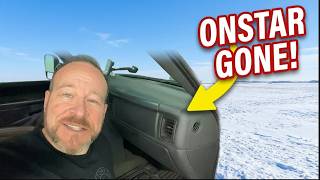
On a 2002-2009 Escalade, U1500 indicates a communication failure, most often with the OnStar module (VCIM), which may be obsolete due to the 2G network shutdown. On 2002-2006 models, it can also point to a communication loss with the rear HVAC module. The most common fix for the OnStar issue is to simply disconnect the module, which can also resolve related battery drain problems.
- U1500 on a 2002-2009 Escalade is a communication code, not an engine or transmission problem.
- The most likely cause is a faulty or obsolete OnStar module. A common, no-cost fix is to simply disconnect it.
- On 2002-2006 models, check your rear climate controls. If they are not working, the problem is likely in the HVAC communication circuit, not OnStar.
- Do not replace the Body Control Module (BCM) first; it is almost always just the messenger reporting the fault from another module.
What's Unique About the 2002-2009 Cadillac ESCALADE
This Escalade range spans two generations with different electronics. For the 2002-2006 models (GMT800), U1500 can point to either the OnStar system or the rear climate controls, requiring careful diagnosis based on symptoms. For all years, but especially 2007-2009 models (GMT900), the OnStar system is a major factor. Many of these vehicles were equipped with OnStar modules that relied on the 2G cellular network, which was officially sunset by providers around December 2022. This renders the module obsolete and causes it to set communication faults like U1500 as it can no longer connect to the network.
Diagnostic Flowchart
Tap your situation to follow the diagnostic path that matches what you're seeing on this vehicle.
Generation note: This range covers two Escalade generations with different common issues for this code: - 2nd Gen (GMT800, 2002-2006): U1500 can be caused by either a faulty OnStar module OR a communication breakdown between the front and rear HVAC control modules. Symptoms are key to diagnosis. The HVAC issue is specific to a dedicated communication bus between the front and rear units. - 3rd Gen (GMT900, 2007-2009): U1500 is almost exclusively related to the OnStar (VCIM) module. Many of these are digital units that became obsolete after the 2G cellular network sunset in 2022, leading to communication faults and, in some cases, a parasitic battery drain as the module fails to enter sleep mode.
Symptoms You May Notice
- Red light on the OnStar button panel
- "Phone Unavailable" audio message
- Inability to connect to OnStar services
- Rear climate controls are inoperative or uncontrollable from the front (2002-2006 models)
- Battery drain, where the battery dies after sitting for a few days (often caused by the obsolete OnStar module continuously searching for a network).
- Bluetooth for phone calls may be inoperative (if routed through the VCIM).
- Replacing the Body Control Module (BCM). The BCM is the module that reports the U1500 code, but it's usually not the cause. The BCM is simply stating that another module on the network is not communicating.
- Replacing the battery repeatedly without diagnosing the parasitic drain. A new battery will also be drained if a faulty VCIM is not disconnected.
Most Likely Causes
- Faulty or Obsolete OnStar Module (VCIM) 🔴 High Probability Many modules used the now-defunct 2G CDMA network. After the network was shut down around December 2022, the modules could no longer communicate, leading to internal faults and setting this code. The module may also fail to enter sleep mode, causing a parasitic battery drain. This is documented in GM Technical Service Bulletins. [PIC3718E, PIC3278F]
How to confirm: Check for a red OnStar light and "Phone Unavailable" messages. Perform a parasitic draw test; 🎬 Watch: How to find a parasitic battery drain with a multimeter a significant draw that disappears when the OnStar/VCIM fuse is pulled points to this module. The most definitive fix is to locate and disconnect the VCIM and see if the code can be cleared and does not return.
Typical fix: For obsolete units, the most common and cost-effective solution is to disconnect the module's electrical connectors. This often resolves associated battery drain issues. Replacement is expensive and offers no benefit as the 2G service is gone. Some owners physically remove the cellular chip from the VCIM circuit board as a more advanced solution.
Est. part cost: $0 (disconnect) - $400+ - Rear HVAC Communication Failure (2002-2006 Models) 🟡 Medium Probability These models use a dedicated communication bus between the front and rear HVAC controls, described as the 'driver HVAC control assembly signal and clock signal circuits'. A failure in the front control head, the rear module (often called the auxiliary HVAC control module), or the wiring between them can set U1500.
How to confirm: Verify that the rear climate controls are not responding to commands from the front control panel. Use a high-end scan tool to attempt to communicate directly with the rear HVAC module (AUX HVAC). If it doesn't respond, the issue is on this dedicated circuit.
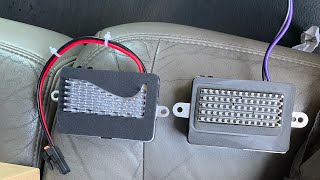
Typical fix: Requires diagnosis to pinpoint the fault. It could be the front HVAC control head, the rear HVAC control module, or the wiring in between. Replacement of the faulty component is necessary. Owners have reported success by replacing the rear module.
Est. part cost: $80-$300 - Wiring or Connector Damage ⚪ Low Probability
How to confirm: Visually inspect the wiring harness and connectors leading to the suspect module (either the OnStar VCIM or the rear HVAC module). Check for corrosion, chafing, or loose pins, particularly at the module connectors.
Typical fix: Repair the damaged section of the wiring harness or clean/replace the faulty connector.
Est. part cost: $10-$50
Diagnosis Steps
- Identify the primary symptom. Is the problem with the OnStar system (red light, error messages, battery drain) or the rear climate control (inoperative on 2002-2006 models)?
- If OnStar is the issue: Locate the Vehicle Communication Interface Module (VCIM).
- - GMT800 (2002-2006): Often located behind the instrument panel, to the right of the glove box.
- - GMT900 (2007-2009): Typically located deep in the center of the dashboard, behind and below the radio/climate control head unit. Access requires removing dash trim panels. Some forum users report finding it behind the glove box.
- Inspect the VCIM's connectors for corrosion or damage. If they look good, disconnect the module's electrical and antenna connectors.
- Clear the DTCs with a scan tool. Drive the vehicle and check if the U1500 code returns. If it does not, and any parasitic battery drain is gone, the obsolete VCIM was the cause.
- If Rear HVAC is the issue (2002-2006 models): Check fuses related to the HVAC system (consult owner's manual for specific fuse numbers).
- Using a capable scan tool, check for communication with both the front (HVAC) and rear (AUX HVAC) control modules.
- If the rear module doesn't communicate, inspect the wiring between the front and rear units for damage. The rear unit is located in the passenger side rear quarter panel area.
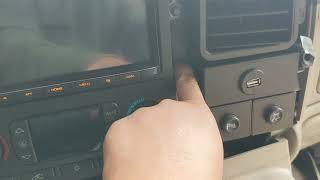
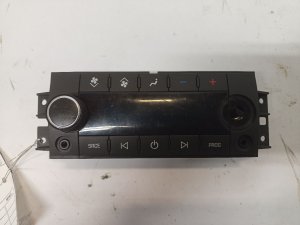
- If wiring is intact, the fault is likely with either the front or rear HVAC control module, requiring replacement of the faulty part. 🎬 Watch: How to replace the front climate control module
Parts You'll Likely Need
- Vehicle Communication Interface Module (OnStar)
(OEM #15106838 (Example for 2007, verify by VIN))— This module is the most frequent cause of U1500, either due to internal failure or obsolescence from the 2G network sunset. [PIC3718E] Disconnecting is the most common fix.
Trusted brands: ACDelco
OEM price range: $350-$500
Aftermarket price range: $200-$400 (Used/Remanufactured) - Rear HVAC Control Module (2002-2006)
(OEM #15201869 (Example, verify by VIN))— If symptoms point to a rear climate control failure on a 2002-2006 model, this module can fail and lose communication with the main HVAC unit.
Trusted brands: ACDelco, Dorman, TRQ
OEM price range: $150-$250
Aftermarket price range: $80-$150
Related Codes That Often Appear With This One
- B1000 — According to TSB PIC3278F, B1000 is another general electronic control unit (ECU) fault code that can be set alongside U1500 when the OnStar module has an internal failure.
Technical Service Bulletins (TSBs) & Recalls
- PIC3278F / PIC3278G: Notes that an internal fault in the OnStar module can cause a 'Phone Unavailable' message and set DTC U1500 or B1000.
- PIC3718E: Describes a 'no power or no connect' concern with a red OnStar LED and DTC U1500, advising replacement of the Vehicle Communication Interface Module.
- 11-08-44-003A: Discusses inoperative Generation 9 OnStar modules that can cause Bluetooth failure and battery discharge, requiring VCIM replacement.
Platform-Specific Known Issues
- OnStar 2G Network Sunset: The single most common reason for this code on this platform. GM issued multiple TSBs about OnStar communication failures. [PIC3278F, PIC3718E, PIC3278G] The modules are trying to connect to a network that was shut down in December 2022, causing them to fault, stay active, and drain the battery.
Mechanic-Grade Diagnostic Values
- GMLAN Bus Resistance — expected: 60 Ohms (Ω) +/- 5 Ohms. Failure: A reading of ~120 Ohms indicates an open in the circuit or a missing termination resistor. A reading near 0 Ohms indicates the GMLAN High and Low wires are shorted together.
- GMLAN Bus Voltage — expected: Each line should have a 2.5V bias relative to ground. During communication, GMLAN-High toggles to ~3.5V and GMLAN-Low toggles to ~1.5V.. Failure: Voltages stuck high, low, or at 0V indicate a short to power, a short to ground, or an open circuit. No toggling indicates no communication.
Hidden / Shadow Codes Worth Checking
- U1500 01: Inter-Device Dedicated Bus 1 Short to Battery. This indicates the communication line is shorted to a voltage source. (see via A professional scan tool like the GM Tech 2 or GDS2 is required to read symptom/sub-codes.)
- U1500 02: Inter-Device Dedicated Bus 1 Short to Ground. This indicates the communication line is shorted to ground. (see via A professional scan tool like the GM Tech 2 or GDS2 is required to read symptom/sub-codes.)
- U1500 31: Electronic Control Unit (ECU) Performance General Checksum Failure. This points to an internal module fault, most commonly in the VCIM. (see via A professional scan tool like the GM Tech 2 or GDS2 is required to read symptom/sub-codes.)
Scan Tool Commands That Help
- GM Tech 2: HVAC Actuator Test — If U1500 is suspected to be caused by the rear HVAC system on a 2002-2006 model, this command allows you to individually command each actuator motor to move. This helps determine if the fault is with the control module, wiring, or a specific actuator. The path is typically: Body > HVAC > Special Functions > Output Control > Actuator Tests.
- Manual Procedure (No Tool): HVAC System Recalibration — After replacing a battery, HVAC module, or actuator, the system may need to relearn the actuator positions. Turn all HVAC controls off, disconnect the battery for 10 minutes, reconnect, then start the engine and wait 5-10 minutes WITHOUT touching the HVAC controls. The system will cycle through and recalibrate all the doors.
Wiring & Ground Locations
- G410 — Located behind the right rear quarter panel trim.. This is a primary ground point for the rear body on GMT800 (2002-2006) models. The auxiliary/rear HVAC control module is in this area and often uses this ground. A corroded or loose G410 can cause communication loss with the rear HVAC module, triggering U1500.
- G200 / G201 — G200 is near the right 'A' pillar / HVAC case. G201 is behind the upper left end of the dashboard.. These are key instrument panel grounds for the GMT900 (2007-2009) models. The VCIM, BCM, and other modules that communicate on the GMLAN bus rely on these grounds. A fault at these locations can cause various communication codes, including U1500.
- C3 (X3) Connector — Located on the back of the left instrument panel junction block (fuse box).. This connector acts as a junction for the GMLAN bus. Disconnecting it effectively splits the bus into two halves. This is a critical diagnostic step to isolate which section of the vehicle's wiring or which group of modules contains the fault causing the communication failure.
- Splice Pack SP200 / SP201 — Located in the upper left corner of the passenger compartment, behind the instrument panel on GMT900 models.. These splice packs are junction points where the Low-Speed GMLAN serial data wires for multiple modules meet. Corrosion or a poor connection in these packs can interrupt communication for all modules downstream, including the VCIM, and set a U1500 code.
Real Owner Repair Stories
- 2CarPros Forum Post (2004 Cadillac Escalade ESV) — Rear heater not working.
✅ What actually fixed it The confirmed fix was replacing the auxiliary air temperature actuator (blend door motor) located in the rear auxiliary HVAC module in the right rear quarter panel. This is a common failure that causes control issues and can be associated with a U1500 communication code if the module loses its ability to control the bus.
Model Year Variations Within This Range
- Pre-2006 vs. 2006-onward: The OnStar system architecture changed. Early models used a two-module system (VIU and VCU). For these, U1500 often indicated a failure of the 3-wire bus between these two modules. Later models use a single integrated module (VCIM), where U1500 typically indicates an internal failure of the module itself rather than an external bus fault.
Helpful Videos

We Have This Part in Stock



The information in this article is provided for general reference and educational purposes only. Vehicle specifications, procedures, and part compatibility can vary by production date, trim level, and region. Always consult your vehicle's factory service manual and verify part numbers before purchasing or performing repairs. Safety-critical components such as airbags, seat belts, and braking systems should be installed by a qualified professional.
- Cadillac ESCALADE:
- 🎬 Helpful Videos
- 🛍️ Shop This Part
- What's Unique About the 2002-2009 Cadillac ESCALADE
- Diagnostic Flowchart
- Symptoms You May Notice
- Most Likely Causes
- Diagnosis Steps
- Parts You'll Likely Need
- Related Codes That Often Appear With This One
- Technical Service Bulletins (TSBs) & Recalls
- Platform-Specific Known Issues
- Mechanic-Grade Diagnostic Values
- Hidden / Shadow Codes Worth Checking
- Scan Tool Commands That Help
- Wiring & Ground Locations
- Real Owner Repair Stories
- Model Year Variations Within This Range
- 🎟️ Get 5% Off