

U1446 on 2017-2023 Ram 1500: Heated Steering Wheel & Switch Faults Explained
On 2017-2023 Ram 1500s, code U1446 indicates a problem with the heated steering wheel, usually causing it to not work. The most common causes are a faulty wiring splice (SD403) in the driver's door sill area, a failed steering wheel switch assembly, or an incorrectly configured replacement comfort module. Checking the splice first can be a no-cost fix.
- Code U1446 means your heated steering wheel isn't working because of a communication error with its temperature sensor.
- Before buying any parts, inspect the wiring splice (labeled SD403) in the driver's side door sill, as a simple repair here is a very common fix, especially on 2019+ models.
- If you recently replaced the Heated Seat Module (HSM) on a Ram Classic (DS model), the code is likely due to a configuration issue that can be fixed with a specific ignition-cycling procedure, not a faulty part.
- Repairing this code involves working near the driver's airbag, which is a significant safety risk. Professional service is strongly recommended.
What's Unique About the 2017-2023 Ram 1500

For this generation of Ram trucks, code U1446 is frequently tied to two well-documented, generation-specific issues. On fifth-generation (DT) models (2019+), a poor wiring splice (SD403) in the driver's door sill is a known cause of intermittent steering wheel control failures, including the heated wheel. For the fourth-generation (DS) models, including the 'Classic' (2017-2023), replacing the comfort control module (CSWM/HSM) requires a special ignition cycling procedure to prevent this code from appearing, as the new Mopar part is a universal replacement that must learn the vehicle's specific configuration.
Diagnostic Flowchart

Tap your situation to follow the diagnostic path that matches what you're seeing on this vehicle.
Generation note: The 2017-2023 period covers two Ram 1500 generations: the fourth-gen 'DS' (sold as Ram 1500 Classic from 2019-2023) and the fifth-gen 'DT' (2019-2023). TSB S1808000206 regarding the SD403 wiring splice is most relevant to the DT generation, affecting the heated wheel and other left-side switch functions. TSB S2308000101 about module replacement configuration specifically applies to the DS generation, as the universal replacement module must be configured for the vehicle's options.
Symptoms You May Notice
- Heated steering wheel does not work or turns off after a few seconds.
- Heated steering wheel button light illuminates briefly then goes out.
- Intermittent operation of other steering wheel-mounted controls, such as radio or EVIC buttons.
- Warning message on the instrument cluster.
- In some cases on Heavy Duty models, owners report the issue is intermittent and more likely to occur in cold weather.
- Replacing the entire steering wheel. A forum user reported a dealer replaced the steering wheel, but the issue persisted until the Heated Seat Module (HSM) was replaced. Another user on a Heavy Duty forum had the steering wheel replaced twice before the clockspring was identified as the actual cause.
- Replacing the Comfort Seat Wheel Module (CSWM) a second time. If a new CSWM is installed and sets this code, it likely needs configuration, not another replacement. TSB S2308000101 explicitly warns against this.
Most Likely Causes

- Corroded or Faulty Wiring Splice (SD403) 🔴 High Probability A manufacturer technical service bulletin (S1808000206) identifies a specific splice (SD403) located in the wiring harness under the driver's door sill trim that is prone to corrosion and intermittent connection issues. This single splice affects multiple steering wheel functions, including the heated wheel LIN bus signal.
How to confirm: Locate the splice in the wiring harness in the lower driver's door sill. Wiggle the harness while testing steering wheel functions to see if the problem can be duplicated. Visually inspect the splice by removing the protective heat shrink and checking for loose or corroded wires.
Typical fix: Clean and repair the splice connection using standard wiring procedures. 🎬 See this guide on repairing a damaged wiring harness. This is often a no-parts-required fix.
Est. part cost: $0 - Faulty Steering Wheel Switch Assembly 🟡 Medium Probability The temperature sensor is integrated into the right-side steering wheel switch pack. Failure of the switch assembly or its internal sensor will send an implausible signal, triggering the code. This is a common point of failure after wiring issues are ruled out.
How to confirm: After confirming wiring is intact, a technician can use a diagnostic scan tool to monitor the live data from the temperature sensor. If the reading is nonsensical (e.g., -40°F on a warm day) and does not change, the switch assembly is likely bad. Resistance checks can also be performed at the switch connector.
Typical fix: Replace the faulty steering wheel switch assembly (typically the right side). This requires disconnecting the battery and removing the driver's airbag for access.
Est. part cost: $80-$200 - Incorrect Comfort Seat Wheel Module (CSWM) Configuration 🟡 Medium Probability This specifically occurs after replacing the CSWM (also called the Heated Seat Module or HSM) on DS models. The replacement Mopar part is universal and comes configured for all options. It must learn the vehicle's actual configuration, otherwise it will set faults for features that aren't installed, like the heated steering wheel.
How to confirm: This cause should be suspected if code U1446 appears immediately after the CSWM/HSM was replaced. The module should not be replaced again for this concern.
Typical fix: Perform the module configuration procedure outlined in TSB S2308000101: Install the new module, cycle the ignition to RUN for 30 seconds (codes may be active), cycle ignition OFF for 30 seconds, then cycle to RUN again. The codes should change to 'Stored' and can then be cleared.
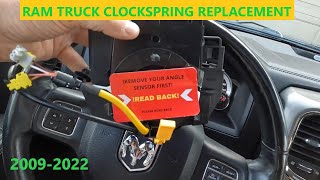
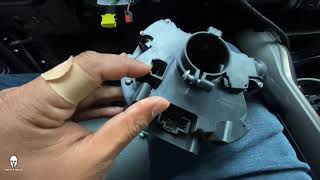
Est. part cost: $0 - Damaged Wiring in Steering Column (Clockspring) ⚪ Low Probability The wires that connect the steering wheel controls must flex every time the wheel is turned. Over time, these wires, often part of the clockspring assembly, can fatigue and break. A forum user on a Ram Heavy Duty reported that replacing the clockspring (part 68528303AA) resolved their intermittent heated steering wheel issue after two steering wheel replacements failed to fix it.
How to confirm: Check for an intermittent condition by rotating the steering wheel from lock to lock while monitoring function. A visual inspection of the wiring and connectors within the steering column would be required for a definitive diagnosis. If other steering wheel functions (airbag, horn) are also malfunctioning, the clockspring is a strong suspect.
Typical fix: Repair the broken wire or replace the clockspring assembly. This requires airbag removal.
Est. part cost: $150-$350
Diagnosis Steps
- Scan the vehicle for diagnostic trouble codes. Confirm U1446 is present and note any other codes, especially communication codes like U116A or U112D.
- Test the function of the heated steering wheel and other steering wheel-mounted buttons (radio, cruise control). Note if the heated wheel light turns on for a few seconds then off.
- If working on a 2019+ (DT) model, the first step should be to inspect the SD403 wiring splice. Following TSB S1808000206, locate the splice in the driver's side door sill harness, remove the heat shrink, and inspect for corrosion or loose wires. Wiggle the harness to check for intermittent connections. Repair if necessary.
- If the code appeared immediately after a module replacement on a DS/Classic model, perform the CSWM configuration procedure outlined in TSB S2308000101.
- If the splice is good, use a professional scan tool to view the live data stream for the 'Heated Steering Wheel Temperature Sensor'. Look for illogical or static values (e.g., stuck at -40 degrees). Compare with real-world temperatures if possible; functioning wheels often reach 90-110°F.
- If scan tool data is unavailable, test the LIN bus signal wire at the steering wheel switch connector. With a multimeter or oscilloscope, expect to see voltage toggling between approximately 1V (dominant) and 12V (recessive/at rest). A steady voltage or no voltage indicates a communication failure.
- If the data is implausible, the next step requires gaining access to the steering wheel internals. WARNING: Disconnect the battery and wait at least two minutes before proceeding to allow the airbag system to discharge.
- Remove the driver's airbag to access the steering wheel switches and connectors. Visually inspect all wiring and connectors for damage.
- Perform resistance checks based on service manual procedures. Check for continuity on the sensor signal circuit (expect <5.0 ohms) and for shorts to ground or other wires (expect >10k ohms).
- If wiring appears intact and resistance values are out of spec, the most likely cause is the right-side switch assembly that contains the temperature sensor. Replace the relevant switch pack.
- If rotating the steering wheel lock-to-lock reproduces the fault, the clockspring is the likely culprit.
- If all other steps fail, the issue may lie with the Steering Column Control Module (SCCM) or the Heated Seat Module (HSM).
Parts You'll Likely Need

- Steering Wheel Switch (Right Side)
(OEM #68526526AC (supersedes 68309592AD, 68526526AA, 68526526AB))— The temperature sensor is integrated into the right-side switch assembly. A failure of the sensor or the switch's internal circuitry is a common cause for this code when wiring is confirmed to be good.
Trusted brands: Mopar
OEM price range: $60-$90
Aftermarket price range: $40-$70 - Comfort Seat Wheel Module (CSWM) / Heated Seat Module (HSM)
(OEM #68394224AB)— Can be the root cause if wiring and the steering wheel switch/sensor are good. Also, a new module must be correctly configured on DS models to avoid this code.
Trusted brands: Mopar
OEM price range: $150-$250
Aftermarket price range: $100-$200 - Clockspring / Steering Column Control Module (SCCM)
(OEM #68528301AA)— The flexible ribbon cable inside can break from repeated steering, causing an open circuit for the temperature sensor signal. This is suspected when symptoms are intermittent and change while turning the wheel.
Trusted brands: Mopar
OEM price range: $150-$350
Aftermarket price range: $100-$200
Related Codes That Often Appear With This One
- B1EB4, B1EB3, B11DC — These codes may appear alongside U1446 when a new Comfort Seat Wheel Module (CSWM) is installed on a DS-generation truck and needs to be configured. They relate to other heated elements the universal module thinks are present.
- U116A — TSB S1808000206 notes that 'Lost Communication With Power Inverter Module' can occur along with U1446 when the SD403 wiring splice is failing, as it affects multiple systems that share the harness.
- U112D — Lost Communication With EVIC Steering Wheel Switches. This code can appear with U1446 when there is a general communication failure on the steering wheel LIN bus, pointing towards a wiring issue like the SD403 splice or a bad clockspring.
Technical Service Bulletins (TSBs) & Recalls
- S1808000206: Left Steering Wheel Switches, Radio Controls, Heated Steering Intermittently Operate, DTC U1446 Implausible Steering Wheel Temperature Received.
- S2308000101: The Replacement CSWM/HSM Sets DTC?s U1446-00, B1EB4-1B, B1EB3-1B, B11DC-13.
Platform-Specific Known Issues
- TSB #S1808000206: Documents that intermittent operation of the left steering wheel switches, radio controls, and heated steering (causing code U1446) can be caused by a poor wiring splice (SD403) in the driver's door sill on 2019+ DT models. The bulletin provides images for locating the splice and confirms that wiggling the harness can reproduce the issue.
- TSB #S2308000101: Explains that when replacing the Comfort Seat Wheel Module (CSWM/HSM) on DS models, the new Mopar part is a universal replacement that must learn the vehicle's configuration. Failure to perform the specified ignition cycling procedure will result in codes like U1446 for options the vehicle doesn't have.
Mechanic-Grade Diagnostic Values
- LIN Bus Voltage (Signal Wire to Ground) — expected: Toggling between approx. 1.0V (dominant/communicating) and 12V (recessive/at rest).. Failure: Steady voltage (e.g., 0V, 5V, or 12V) or no voltage, indicating a bus short, open, or module failure.
- HSW Temperature Sensor Signal Circuit (G110) Continuity — expected: Below 5.0 Ohms. Failure: Higher resistance reading, indicating an open or high resistance in the circuit between the sensor and the switch.
- HSW Temperature Sensor Signal Circuit (G110) Resistance to Ground — expected: Above 10,000 Ohms (10kΩ). Failure: Resistance below 10kΩ, indicating a short to ground.
- HSW Temperature Sensor Signal Voltage — expected: Below 3.5 Volts. Failure: Voltage reading above 3.5V between the sensor signal and return circuits, indicating a faulty sensor/heating element assembly.
- Heated Steering Wheel Surface Temperature — expected: Approx. 90°F - 115°F after 10-20 minutes of operation.. Failure: Temperature does not rise, or gets excessively hot. This is a plausibility check, not a direct electrical test.
Scan Tool Commands That Help
- AlfaOBD: Proxy Alignment — After replacing a major control module like the BCM or SCCM to ensure all modules on the vehicle's network are correctly configured and communicating. A flashing odometer is a key indicator that a proxy alignment is needed.
- AlfaOBD / Professional Scan Tool: Active Diagnostics / Output Tests — To command specific components on or off, verifying the integrity of the control circuit from the module to the component. For example, commanding other LIN bus devices on the same circuit to test the master module's function.
- Professional Scan Tool: Initialize Steering Angle Sensor — This calibration is required after replacing the clockspring or Steering Column Control Module (SCCM) to ensure the vehicle's stability control system knows the exact position of the steering wheel.
Wiring & Ground Locations
- SD403 — In the main wiring harness located under the plastic trim of the lower driver's side door sill.. This is a factory splice that is a known weak point prone to corrosion. It bundles circuits for multiple steering wheel controls, including the LIN bus for the heated wheel. A failure here can cause U1446 and other intermittent switch-related faults.
- BCM (Body Control Module) — Under the driver's side dashboard, typically high up and inboard of the steering column, past the parking brake assembly.. The BCM is a central hub for body functions. It can be a master module for the LIN bus or process data from it. Its location makes it vulnerable to water intrusion from windshield leaks, which can cause this and other bizarre electrical faults.
- Main Body Ground — A common ground point is located in the engine bay, connecting the negative battery terminal to the body, often above the driver's side headlight.. A poor main body ground can cause floating voltages and unpredictable behavior in sensitive electronic modules that rely on a stable ground reference, potentially leading to communication codes like U1446.
Real Owner Repair Stories
- RamForum.com user (2016 Ram 1500) — Heated steering wheel not working.
❌ Tried (didn't work) Replacing the entire heated steering wheel assembly.
✅ What actually fixed it The dealer replaced the Heated Seat Module (HSM) after the new steering wheel did not resolve the issue. - YouTube channel 'Phillip Bailey' (2016 Ram 1500 4x4) — Multiple lighting failures (no left low beam, right front turn signal, etc.) and wipers inoperative.
❌ Tried (didn't work) Replacing the Body Control Module (BCM) with a pre-programmed unit.
✅ What actually fixed it The problem returned after the BCM replacement. The actual root cause was a poor connection at the terminals for a 40-amp BCM power feed fuse (Fuse 14) in the underhood fuse panel. Repairing the power supply fixed the issue permanently. - 5thGenRams.com user (2019+ Ram 1500) — Strobe-like headlights/taillights, multiple warning lights, non-functional turn signals, tailgate ajar warning.
❌ Tried (didn't work) Letting the truck run to charge the battery., Disconnecting/reconnecting the battery., Dealer replaced the battery.
✅ What actually fixed it The issue was caused by water from a windshield tint installation dripping onto the Body Control Module (BCM). The ultimate fix is drying out and often replacing the water-damaged BCM.
When the Usual Fixes Don't Work
- In one documented case, a dealer replaced the steering wheel assembly to fix a heated wheel fault, but the code returned. The final repair required replacing the Heated Seat Module (HSM), indicating that the fault logic can sometimes point to the wrong component and that the HSM can be the ultimate cause even when wiring and the wheel sensor seem to be the primary suspects.
OEM Part Supersession History
68309592AD, 68526526AA, 68526526AB→68526526AC— Part revision and consolidation by manufacturer.Unknown→68528301AA— Updated part for Clockspring / Steering Column Control Module.
Heads up: Ensure the correct part is ordered based on whether the vehicle has a heated steering wheel, as different clocksprings are used.
Model Year Variations Within This Range
- 2017-2018 (DS Generation): The communication path may involve the Steering Column Control Module (SCCM) as the LIN bus master, which then communicates to the HSM/BCM via the main CAN bus.
- 2019-2023 (DT Generation): The communication path may involve the instrument cluster (CCN) as the LIN bus master. These models are specifically prone to the SD403 splice issue documented in TSB S1808000206.
Helpful Videos
We Have This Part in Stock



The information in this article is provided for general reference and educational purposes only. Vehicle specifications, procedures, and part compatibility can vary by production date, trim level, and region. Always consult your vehicle's factory service manual and verify part numbers before purchasing or performing repairs. Safety-critical components such as airbags, seat belts, and braking systems should be installed by a qualified professional.
- Ram 1500:
- 🎬 Helpful Videos
- 🛍️ Shop This Part
- What's Unique About the 2017-2023 Ram 1500
- Diagnostic Flowchart
- Symptoms You May Notice
- Most Likely Causes
- Diagnosis Steps
- Parts You'll Likely Need
- Related Codes That Often Appear With This One
- Technical Service Bulletins (TSBs) & Recalls
- Platform-Specific Known Issues
- Mechanic-Grade Diagnostic Values
- Scan Tool Commands That Help
- Wiring & Ground Locations
- Real Owner Repair Stories
- When the Usual Fixes Don't Work
- OEM Part Supersession History
- Model Year Variations Within This Range
- 🎟️ Get 5% Off