

OBD-II Code U1442: Implausible Data from Body Control Module
The Ultimate Guide to What U1442 Means, Why It Triggers, and How to Fix It for Good
- Code U1442 flags a CAN bus network communication failure, meaning you should never replace the $600+ Body Control Module without testing the wiring first.
- Load-test both the main and auxiliary batteries before any other diagnostic step, as voltage drops below 10.0V during cranking cause 80% of these communication errors.
- Expect dramatic symptoms like the sudden loss of electric power steering and a blank instrument cluster, making the vehicle unsafe to drive.
- On 2018+ Jeep Wranglers and Gladiators, inspect the CAN bus 'star connector' behind the glovebox; replacing this $60 plastic hub fixes the issue for many owners.
- Verify network health by measuring resistance between OBD-II pins 6 and 14 with the battery disconnected; a reading of exactly 60 Ohms confirms the physical wiring is intact.
What Does U1442 Mean?

Trouble code U1442 means your vehicle's main computers received illogical or corrupt data from the Body Control Module (BCM). The BCM controls body electronics like lights, windows, and the security system. When it broadcasts bad data onto the Controller Area Network (CAN bus), other modules cannot function correctly and trigger this fault code.
Technical definition: For Chrysler, Dodge, Jeep, and Ram vehicles, U1442 translates to 'Implausible Data Received From Body Control Module'. This indicates a CAN bus communication failure where BCM messages are corrupt or missing. On Hyundai vehicles, it means 'Ring Break Between TV Unit and Amplifier Unit', indicating a break in the MOST (Media Oriented Systems Transport) fiber-optic network.
Can I Drive With U1442?
No — Do Not Drive. Do not drive. The U1442 code precedes sudden failures of critical systems. You will likely experience a complete loss of power steering or engine stalling in traffic. The instrument cluster also goes blank, leaving you without a speedometer or warning indicators. Continuing to drive risks a serious accident and cascading electrical damage.
Common Causes


- Weak or Failing Batteries (Very Common) — Low system voltage is the primary cause of module communication errors. A dying battery cranks the engine but fails to maintain the stable 10.0V+ required for network communication. On dual-battery Jeeps, a dead auxiliary battery triggers a cascade of network codes.
- Poor Ground Connections (Common) — A loose or corroded ground strap for the battery, chassis, or BCM prevents reliable communication. Electrical signals require a clean path back to the negative terminal; a bad ground disrupts this flow and creates electronic chaos.
- Faulty CAN Bus Wiring or Connectors (Common) — Modules communicate over a twisted-pair CAN bus network. A single corroded pin, loose connector, or chafed wire corrupts data signals. The 'star connector' hub behind the glove box is a notorious failure point on Jeep JL and JT models. 🎬 Watch: How to replace the star connector on your Jeep.
- Failing Alternator (Common) — A faulty alternator produces unstable voltage and excessive AC ripple that disrupts the CAN bus. This causes flickering lights, erratic gauges, and communication codes as modules struggle with inconsistent power.
- Faulty ABS Module (Common) — The ABS module is a critical CAN network node. Internal failures cause it to broadcast corrupt data or drop offline entirely, triggering U1442 in other modules and instantly disabling the power steering.
- Faulty Totally Integrated Power Module (TIPM) (Less Common) — Internal corrosion or failing relays in the TIPM (smart fuse box) send erroneous signals and disrupt network traffic on Chrysler, Dodge, and Ram vehicles.
- Aftermarket Accessories (Less Common) — Improperly installed remote starters, LED lighting, or stereos interfere with the CAN bus. Tapping the wrong wires introduces electrical noise and data conflicts.
- Faulty Body Control Module (BCM) (Rare) — The BCM itself rarely fails. It usually receives bad information or lacks proper power and ground. Rule out all wiring and voltage issues before replacing this expensive, programmable module.
Symptoms

- Multiple Warning Lights on Dashboard — The dashboard illuminates with ABS, traction control, airbag, and check engine warnings simultaneously.
- Loss of Power Steering — The electric power steering shuts down instantly, making the vehicle dangerous to steer. A 'Service Power Steering' message appears.
- Instrument Cluster Failure — The instrument panel flickers, gauges drop to zero, and the screen goes black, removing your speedometer and critical alerts.
- Erratic Electronics — The infotainment screen freezes or reboots. Power windows, locks, and interior lights fail intermittently.
- Engine Stalling or No-Start — The engine cranks but won't start, or stalls unexpectedly while driving (often immediately after hitting a bump).
Diagnostic Flowchart
Tap your situation to follow the diagnostic path that matches what you're seeing on this code.
Common Fixes & Costs
- Replace Main and Auxiliary Batteries — Parts: $300-$450, Labor: $150-$300, ~1.5 hr book time (Intermediate)
- Clean or Repair Ground Connections — Parts: $0-$25, Labor: $125-$250, ~0.5 hr book time (DIY)
- Replace CAN Bus Star Connector (Jeep) — Parts: $50-$70, Labor: $150-$250, ~1.0 hr book time (DIY)
- Repair or Replace ABS Module — Parts: $800-$1,200, Labor: $300-$500, ~2.0 hr book time (Professional)
- Replace Body Control Module (BCM) — Parts: $400-$700, Labor: $200-$400, ~2.5 hr book time (Professional)
Used vs. New Parts: Buying Guide
When a used part is worth it: For electronic modules like the ABS or BCM, a used part from a low-mileage vehicle is cost-effective for older vehicles where new parts are unavailable. Ensure the part can be reprogrammed.
Donor-vehicle mileage cap: roughly under 80000 miles for the part to have meaningful remaining life.
Donor quality checklist:
- Match the part number exactly; a single letter difference indicates incompatibility.
- Source parts from vehicles scrapped due to accidents, not electrical or flood damage.
- Visually inspect connector pins for corrosion or moisture before purchasing.
Decision logic:
- If The part is a BCM or ABS module for a 2018+ Stellantis vehicle → Favor new or a professional rebuild service. Used modules have security lockouts that make reprogramming impossible for dealers.
- If Vehicle is over 10 years old and budget is the primary concern → A tested, used module with a warranty from a reputable seller is a reasonable choice.
- If The part is a simple connector or wiring pigtail → Used is perfectly acceptable and cost-effective.
Warranty tradeoff: Used parts come with a 30-90 day warranty. Remanufactured modules carry a 1-year to lifetime warranty. New OEM parts have a 1-2 year warranty if installed by a dealer.
Worst-case if a used part fails: $500-$1000 if a used module fails after installation, requiring repeat labor for removal and programming.
What Happens If You Wait — Timeline
- 0-1 month: Intermittent 'Christmas tree' dashboard with multiple warning lights that clear after restarting the vehicle. No other consistent symptoms. (MPG impact: 0%% · Added cost: $0)
- 1-3 months: Symptoms become frequent. Sudden but brief loss of power steering occurs. Infotainment screen randomly reboots. The underlying cause puts strain on the electrical system. (MPG impact: 0-2%% · Added cost: $50 in wasted diagnostic time if chasing symptoms instead of the root cause.)
- 3-6 months: Vehicle stalls intermittently when hitting bumps. The instrument cluster goes blank while driving. Voltage instability risks damage to other modules. (MPG impact: 2-5%% · Added cost: $500-$1500 (Risk of secondary module failure from voltage spikes).)
- 6+ months: Vehicle fails to start or becomes completely undrivable due to immediate power steering failure. Cascading electrical damage requires extensive harness repairs. (MPG impact: N/A (vehicle likely undrivable)% · Added cost: $1500-$3000+ (Cost of replacing multiple modules and extensive diagnostic labor).)
Cost of Not Fixing It
- Immediate: Sudden loss of power steering or engine stalling in traffic poses a significant safety risk. (Added cost: $1000+ (Cost of an accident deductible or towing))
- 1-3 months: Ongoing voltage instability causes premature failure of expensive electronic modules like the PCM or ABS module. (Added cost: $800-$2500 (Cost to replace a secondary failed module))
- 3+ months: A persistent network issue leads to a no-start condition. Cascading electrical failures require extensive diagnostic time and harness repairs. (Added cost: $1500-$3000+ (Depending on the extent of electrical damage))
Diagnosis Steps
- Test the Battery System (Main and Auxiliary)
Load-test both the main and auxiliary batteries. A healthy battery reads 12.6V at rest and stays above 10.0V during cranking. On Jeep models, a failure in the small auxiliary battery is the primary cause of this code.
Tools: Digital Multimeter, Electronic Battery Tester (Beginner) - Inspect All Critical Ground Connections
Inspect the main battery-to-chassis and engine-to-chassis ground straps. Clean with a wire brush and retighten. A voltage drop above 0.2V between the negative post and chassis indicates a poor ground.
Tools: Socket Set, Wire Brush, Digital Multimeter (Beginner) - Perform a Hard Reset
Disconnect the negative battery terminal for 30 minutes and press the brake pedal to drain residual power. This forces a cold reboot of all modules and clears temporary software glitches.
Tools: Wrench or Socket Set (Beginner) - Inspect the CAN Bus 'Star Connector' (Jeep Specific)
On Jeep JL/JT models, locate the CAN bus star connector behind the glove box. Wiggle the twisted wire pairs while the vehicle is running; if symptoms change or clear instantly, the connector block is faulty.
Tools: Trim Removal Tools, Flashlight (Intermediate) - Visually Inspect Wiring Harnesses
Check harnesses near the BCM, ABS module, and TIPM for chafed, melted, or corroded wires. Pay special attention to areas near exhaust components or recent repairs.
Tools: Flashlight, Inspection Mirror (Intermediate) - [PRO TIP] Test CAN Bus Network Resistance
With the battery disconnected, measure resistance between OBD-II pins 6 and 14. A healthy network reads exactly 60 Ohms. A reading of 120 Ohms means a terminating resistor is offline; near 0 Ohms means a direct short between the wires.
Tools: High-Quality Digital Multimeter (Advanced) - [PRO TIP] Test Alternator for AC Ripple
Set a multimeter to AC Volts. With the engine running and headlights on, measure across the battery terminals. A reading above 0.1V AC indicates a failing alternator diode that is injecting noise into the CAN bus.
Tools: Digital Multimeter with AC Volts setting (Advanced) - [PRO TIP] Analyze the CAN Bus Signal with an Oscilloscope
Connect an oscilloscope to CAN High (Pin 6) and CAN Low (Pin 14). Look for the standard 2.5V idle and 1.5V/3.5V active mirror-image waveform. Distorted signals pinpoint shorts or open circuits.
Tools: Automotive Oscilloscope (Advanced) - Isolate the Faulty Module
If CAN resistance is not 60 Ohms, unplug modules (ABS, radio, etc.) one by one. When resistance returns to 60 Ohms, the last unplugged module (or its wiring connector) is the source of the fault.
Tools: Professional Scan Tool, Socket Set (Advanced)
When This Code Triggers (Freeze-Frame Conditions)
- Engine Coolant Temp: 180-210°F (The fault often appears when the engine is fully warmed up and has been running for some time.)
- RPM: 1200-2500 (The code is frequently set during steady-state cruising or light acceleration, not typically at idle.)
- Vehicle Speed: 35-65 mph (Triggered during city or highway driving when multiple modules are actively communicating.)
- Control Module Voltage: 13.5-14.5V (The code logs when system voltage is in the normal charging range, ruling out an immediate alternator failure at the exact moment the code set.)
Related Codes
- U0401 — Means 'Invalid Data Received from ECM/PCM'. Seeing U1442 and U0401 together confirms a widespread network failure. Diagnosing the root cause of U1442 resolves U0401.
- U0121 — 'Lost Communication With Anti-Lock Brake System'. Indicates the ABS module is the faulty node bringing down the network. Investigate the ABS module and its wiring first.
- U0140 — 'Lost Communication With Body Control Module'. A severe version of U1442. The BCM has gone completely offline, pointing directly to a power, ground, or internal failure at the BCM.
- B22A9 — 'ECU Mismatch.' Indicates an internal BCM problem, such as incorrect programming or memory corruption. The BCM itself is a much stronger suspect here.
Climate & Environmental Factors
- High Humidity: Moisture causes condensation inside modules and connector pins. This accelerates corrosion, increases electrical resistance, and causes intermittent CAN bus shorts.
- Cold Weather: Extreme cold reduces battery cranking power. A weak battery fails to maintain the 10V minimum required by modules during startup, triggering communication codes.
- Road Salt: Salt spray creates a highly corrosive environment for under-vehicle wiring harnesses and ground connections, leading to network communication failures.
How to Talk to a Mechanic About This Code
Say this: "I have a U1442 code and other network communication faults. I've already checked the battery and main grounds. Please start by checking the charging system for AC ripple and testing the CAN bus resistance at the OBD-II port."
This signals you are an informed customer. It directs the technician to perform logical diagnostic steps for a network code, preventing them from blindly replacing the expensive BCM.
Avoid saying:
- 'My dashboard is lit up like a Christmas tree.'
- 'My car is doing weird electrical things, can you fix it?'
- 'Just replace the Body Control Module, I read online that's the problem.'
Questions to ask before authorizing the repair:
- What was the result of the CAN bus resistance test and the alternator AC ripple test?
- Can you show me the bad part or a picture of the wiring issue you found?
- If a module needs to be replaced, is the new part OEM and what is the warranty?
- Will the diagnostic fee be applied to the final repair cost?
Where to Take It: Dealer vs Independent vs Chain
- Dealer:
A reasonable choice if the vehicle is newer (2018+) and requires proprietary software like wiTECH for module replacement. Expensive if the issue is a simple wiring fix.
Best for: Vehicles still under warranty, Complex software flashing or module programming is required, Known manufacturer-specific issues covered by a Technical Service Bulletin (TSB)
Downsides: Significantly higher labor rates, May default to replacing entire assemblies instead of pinpointing a smaller wiring fault (Typical cost: +50% vs. baseline) - Independent Shop:
Best fit, provided you find a shop with strong electrical diagnostic skills. Ask if they use an oscilloscope and are comfortable with CAN bus troubleshooting.
Best for: Out-of-warranty vehicles where cost is a factor, Shops that specialize in electrical diagnostics, Common U1442 causes like battery, alternator, or ground faults
Downsides: Quality and expertise vary widely; vet shops carefully, May lack the latest dealer-level tools for programming brand new models (Typical cost: +0% vs. baseline) - Chain Shop:
AVOID for diagnosis. They can test and replace a battery, but their diagnostic process is not suited for complex CAN bus electrical faults.
Best for: Battery testing and replacement
Downsides: Technicians are not equipped for complex network diagnostics, High pressure to sell parts leads to incorrect 'fixes' like a new BCM (Typical cost: -10% vs. baseline)
When to Walk Away From the Repair
If the estimated repair cost for the electrical fault exceeds 40% of the car's private-party value, seriously consider selling it due to the risk of recurring electrical problems.
- Car worth $5000, fix is $2800: Walk away. The repair cost is over half the car's value, and the electrical problem could return.
- Car worth $15000, fix is $1500: Fix it. The repair is only 10% of the vehicle's value and well below the threshold.
- Car worth $3000, fix is $1200: Borderline. This is a 40% cost-to-value ratio. Get a second opinion. If the car has other pending issues, walk away.
What Scan Tool You Need for This Code

Minimum: A scanner that reads manufacturer-specific codes from all modules (BCM, ABS, TCM) and displays live data.
A cheap $20 code reader will not see a 'U' code at all. You need access to the BCM and ABS modules to see the entire network's health.
Budget: BlueDriver Pro / OBDLink MX+ (~$120) — These Bluetooth dongles read codes from all modules, provide freeze-frame data, and graph live sensor data. This is the minimum required to see which modules are faulting.
Mid-range: AlfaOBD (with OBDLink MX+) (~$170) — For Stellantis vehicles, AlfaOBD is near-dealer-level software. It offers full bidirectional control, allowing you to perform active tests on modules and perform resets that basic scanners cannot.
Professional: Autel MaxiCOM MK808 / Launch CRP919 (~$500-700) — These bidirectional scan tools provide comprehensive diagnostic capabilities, including active tests, module coding, and advanced special functions used by professional shops.
Rent vs buy: Auto parts stores rent basic scanners, but they are rarely capable enough for this code. Buying a capable scanner like the BlueDriver or OBDLink MX+ pays for itself by avoiding a single diagnostic fee.
How to Clear the Code After You Fix It
- Reconnect the battery if it was disconnected for the repair.
- Use an OBD-II scan tool to clear all Diagnostic Trouble Codes (DTCs) from all modules.
- Perform a complete drive cycle to allow the vehicle's readiness monitors to run their self-tests.
Drive cycle (~30 minutes): Start the vehicle after it sits for 8 hours. Idle for 3 minutes. Drive for 20 minutes with a mix of stop-and-go and steady 60 mph highway driving. Allow the vehicle to cool down completely.
Readiness monitors affected: Clearing a network code resets all emissions monitors., The Catalyst and EVAP monitors are the most difficult to set and require specific drive cycle conditions.
Watch out for:
- Clearing the code without performing a drive cycle leaves readiness monitors incomplete, resulting in an emissions test failure.
- The U1442 code returns immediately if the root cause (weak battery, bad ground) is not fixed.
Will This Fail Emissions / State Inspection?
Yes — this code typically fails an OBD-II emissions inspection.
- California: An active U-code illuminating the MIL causes an automatic failure. All readiness monitors must be complete (except EVAP), requiring a proper drive cycle after repair.
- New York: An illuminated Check Engine Light and the presence of a U1442 code results in an immediate emissions failure.
- Texas: In emissions-testing counties, an illuminated MIL and a stored U-code causes the vehicle to fail the OBD inspection.
Most Commonly Affected Vehicles
- Jeep Wrangler (JL) & Gladiator (JT) (2018-2024) — Extremely common due to failures in the dual-battery system and poor connections in the CAN bus 'star connector' behind the glovebox.
- Jeep Cherokee (KL) (2014-2021) — Prone to widespread electrical issues and parasitic drains that cause module communication loss.
- Ram 1500 (2014-2023) — Often experiences network codes related to faulty wiring, grounds, or the ABS module. Uconnect radio software issues also cause battery drains.
- Ford F-150, Expedition (2015-2020) — Network issues often relate to the Transfer Case Control Module (TCCM) or corroded wiring harnesses.
- Dodge Grand Caravan (2013-2020) — Suffers from corroded wiring harnesses in the sliding doors, causing shorts that bring down the entire network.
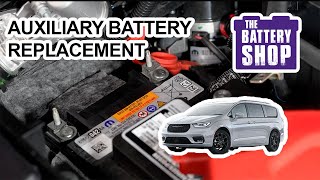
- Chrysler Pacifica (2017-2022) — The dual-battery system in non-hybrid models is a known point of failure, leading to network trouble codes similar to the Jeep Wrangler.
- Hyundai Various (2015-2023) — U1442 is defined as 'Ring Break Between TV Unit and Amplifier Unit'. This is a fault on the MOST fiber optic network and causes audio issues, not chassis symptoms.
- Toyota / Lexus Various (2010-2024) — These brands do not use the U1442 code. Owners often confuse it with B1442, which is an HVAC damper motor fault completely unrelated to network communication.
Manufacturer-Specific Notes
- Jeep: The dual-battery system in JL/JT models is the primary source of this code. The smaller auxiliary battery fails silently and brings down the entire electrical network.
- Ram / Dodge / Chrysler: The main wiring harness corrodes internally where moisture collects. Wires short together, causing a loss of the 5-volt reference signal and a flood of communication codes.
- Jeep: The CAN bus 'star connector' behind the glovebox consolidates communication wires. Poor pin fit inside this plastic block causes intermittent network failures sensitive to bumps.
- Stellantis (Chrysler, Dodge, Jeep, Ram): Extended warranty programs (Mopar Maximum Care) cover the diagnosis and repair of complex electrical issues, including the BCM, ABS module, and related wiring.
Real Owner Stories
2018 Jeep Wrangler JL with 62K miles
Experienced multiple random warning lights, intermittent loss of power steering, and the speedometer dropping to zero after hitting bumps.
What they tried:
- Cleaned and reseated the ABS module connector, providing a two-week temporary fix.
- Cleaned chassis grounds and the CAN bus star connector behind the glove box.
Outcome: The temporary fix after cleaning the ABS connector proved the problem was localized to that specific wiring harness connection, not a failed module.
Lesson: Intermittent symptoms sensitive to bumps strongly point to a physical connection issue. Wiggling the ABS module connector or the star connector behind the glove box is a highly effective diagnostic test.
2021 Chrysler Pacifica (Gas Model)
Suspected a bad auxiliary battery was draining the main battery and attempted to bypass it by disconnecting its negative terminal.
What they tried:
- Disconnected the negative terminal of the auxiliary battery only.
Outcome: The vehicle's electronics failed completely. It wouldn't start, the horn died, and multiple 'service' messages appeared. Reconnecting the auxiliary battery restored function.
Lesson: Never simply disconnect the auxiliary battery on modern dual-battery systems. The network requires both batteries to complete the circuit. If the aux battery fails, replace it immediately.
2019 Ram 1500 Classic with intermittent electrical issues
The truck experienced a 'no start' condition with 'Service Electronic Stability Control' and 'Service Shifter' error messages.
What they tried:
- Unplugged an aftermarket OBD-II device (AMP steps), which worked temporarily.
- Physically inspected the battery connections.
Outcome: Found a loose positive battery terminal left by a glass repair shop. Tightening the connection resolved all electronic error messages and starting problems.
Lesson: Always check the most basic components first. A loose battery terminal creates the exact same symptoms as a failing module or complex network fault.
How to Prevent This Code From Triggering
- Perform a periodic battery and charging system test (Once per year (especially before winter)) — A weak battery or a failing alternator is the #1 cause of network communication codes. An annual load test catches a failing battery before it causes electrical gremlins.
- Clean battery terminals and main ground connections (Every 1-2 years or during battery replacement) — Corrosion creates resistance, leading to voltage drops that destabilize electronic modules. Cleaning to bare metal and applying dielectric grease prevents this.
- Use a battery tender for extended parking (Anytime the vehicle is parked for more than 2-3 weeks) — Modern cars have a constant parasitic draw. A battery tender keeps the battery at an optimal charge, preventing low-voltage conditions on startup.
- Ensure regular, longer drives (At least one 20-30 minute drive per week) — Short trips do not allow the alternator to fully recharge the battery. Longer drives ensure the battery stays at a healthy state of charge.
- Protect wiring from moisture and corrosion (As needed) — Applying dielectric grease to critical connectors (ABS module, BCM, star connector) prevents moisture intrusion and CAN bus wire failure.
Frequently Asked Questions
Can I just replace the Body Control Module (BCM) to fix U1442?
No. This code is almost always caused by a problem with the power, ground, or wiring connected to the BCM, not the module itself. Replacing the BCM is expensive, requires professional programming, and rarely fixes the root cause.
My dashboard lit up with tons of warnings. Is my car dying?
It looks catastrophic, but it usually isn't. A single network communication failure prevents the computers from talking, so they all report an error at once. Fixing the one root cause—often a bad battery or ground wire—clears all the warnings.
Why did my power steering stop working?
Modern electric power steering relies on a constant stream of data from the BCM and ABS module. When the network goes down, the steering system shuts off as a safety precaution, making the wheel very heavy.
Can a bad alternator cause a U1442 code?
Yes. A failing alternator introduces AC ripple (electrical noise) onto the DC system, disrupting sensitive control modules. A multimeter reading over 0.1V AC across the battery terminals confirms a bad alternator diode, which triggers the U1442 code.
I just replaced my battery and now I have a U1442 code. What happened?
The original battery may have failed due to an underlying parasitic drain that is now affecting the new battery. Alternatively, disconnecting power triggered a sensitive module. Perform a hard reset by disconnecting the negative terminal for 30 minutes.
What is the 'star connector' on a Jeep and can I fix it myself?
The star connector is a small plastic block behind the glovebox where communication wires meet. They are known to have poor internal connections. Replacing the original connector with a new $70 OEM part is a common and highly effective DIY fix.
How much does it cost to diagnose this code?
Expect to pay a diagnostic fee of $125 to $250 at a qualified repair shop. This fee covers systematic electrical testing and is usually applied toward the final repair cost.
My Jeep has an auxiliary battery. Why does it matter so much?
The auxiliary battery powers the Engine-Start-Stop (ESS) feature and is wired directly into the main charging system. When it fails, it disrupts the entire vehicle's electrical stability, causing widespread issues including the U1442 code.
Is U1442 the same as B1442 or P0442?
No. 'U' codes relate to Network Communication. 'B' codes relate to Body electronics (like HVAC). 'P' codes relate to the Powertrain (like emissions leaks). Ensure you are diagnosing the correct letter.
Key Takeaways
- Code U1442 flags a CAN bus network communication failure, meaning you should never replace the $600+ Body Control Module without testing the wiring first.
- Load-test both the main and auxiliary batteries before any other diagnostic step, as voltage drops below 10.0V during cranking cause 80% of these communication errors.
- Expect dramatic symptoms like the sudden loss of electric power steering and a blank instrument cluster, making the vehicle unsafe to drive.
- On 2018+ Jeep Wranglers and Gladiators, inspect the CAN bus 'star connector' behind the glovebox; replacing this $60 plastic hub fixes the issue for many owners.
- Verify network health by measuring resistance between OBD-II pins 6 and 14 with the battery disconnected; a reading of exactly 60 Ohms confirms the physical wiring is intact.
Helpful Videos


The information in this article is provided for general reference and educational purposes only. Vehicle specifications, procedures, and part compatibility can vary by production date, trim level, and region. Always consult your vehicle's factory service manual and verify part numbers before purchasing or performing repairs. Safety-critical components such as airbags, seat belts, and braking systems should be installed by a qualified professional.
- 🎬 Helpful Videos
- What Does U1442 Mean?
- Can I Drive With U1442?
- Common Causes
- Symptoms
- Diagnostic Flowchart
- Common Fixes & Costs
- Used vs. New Parts: Buying Guide
- What Happens If You Wait — Timeline
- Cost of Not Fixing It
- Diagnosis Steps
- When This Code Triggers (Freeze-Frame Conditions)
- Related Codes
- Climate & Environmental Factors
- How to Talk to a Mechanic About This Code
- Where to Take It: Dealer vs Independent vs Chain
- When to Walk Away From the Repair
- What Scan Tool You Need for This Code
- How to Clear the Code After You Fix It
- Will This Fail Emissions / State Inspection?
- Most Commonly Affected Vehicles
- Manufacturer-Specific Notes
- Real Owner Stories
- 2018 Jeep Wrangler JL with 62K miles
- 2021 Chrysler Pacifica (Gas Model)
- 2019 Ram 1500 Classic with intermittent electrical issues
- How to Prevent This Code From Triggering
- Frequently Asked Questions
- Can I just replace the Body Control Module (BCM) to fix U1442?
- My dashboard lit up with tons of warnings. Is my car dying?
- Why did my power steering stop working?
- Can a bad alternator cause a U1442 code?
- I just replaced my battery and now I have a U1442 code. What happened?
- What is the 'star connector' on a Jeep and can I fix it myself?
- How much does it cost to diagnose this code?
- My Jeep has an auxiliary battery. Why does it matter so much?
- Is U1442 the same as B1442 or P0442?
- Key Takeaways
- 🎟️ Get 5% Off