

OBD-II Code U1431: Implausible Data from Cruise Control Module
The Ultimate 2026 Guide to Meaning, Causes, and Fixes
- U1431 is a Stellantis-specific network code indicating the engine computer is receiving invalid data from the cruise control or ABS system.
- Over 80% of U1431 codes are caused by a failed wheel speed sensor, a damaged wiring harness, or a faulty TIPM (fuse box).
- Driving with U1431 is possible, but your Anti-lock Braking System (ABS) and Electronic Stability Control (ESC) are completely disabled, increasing accident risk.
- Never replace the cruise control module without first scanning the ABS module for 'C' codes, which pinpoint the exact failing sensor.
What Does U1431 Mean?
U1431 is a network communication code predominantly found on Stellantis vehicles (Chrysler, Dodge, Jeep, Ram). It indicates the Powertrain Control Module (PCM) is receiving illogical or no data from the cruise control module. Because the cruise control system shares wheel speed data with the ABS and traction control systems over the CAN bus network, a fault in one of these related systems is almost always the true cause.
Technical definition: U1431 - Implausible Data Received From Cruise Control Module. The Powertrain Control Module (PCM) did not receive a valid network message from the Adaptive Cruise Control (ACC) or ABS module within a specific time frame, typically when the ignition is on and battery voltage is between 9 and 16 volts.
Can I Drive With U1431?
Yes, But With Caution. Yes, but drive with extreme caution. Key safety systems like the Anti-lock Braking System (ABS) and Electronic Stability Control (ESC) are disabled. This increases your risk of wheel lock-up and skidding during hard braking or evasive maneuvers, especially in wet or snowy conditions. Stopping distances will increase. Schedule a diagnosis immediately to restore safety features and avoid potential accident liability.
Common Causes
- Defective Wheel Speed Sensor (Very Common) — A bad wheel speed sensor sends incorrect speed data to the ABS module. The cruise control system relies on this data, so conflicting information triggers U1431 and disables ABS/traction control. Sensors fail from corrosion, debris buildup, or physical damage.
- Damaged or Corroded Wiring Harness (Very Common) — Wires chafe, corrode, or break, especially behind wheel wells or in minivan sliding doors. A wheel speed sensor wire rubbing against a tire or suspension component is a frequent culprit.
- Faulty Totally Integrated Power Module (TIPM) (Common) — The TIPM is the central fuse box and computer in many Chrysler, Dodge, and Jeep vehicles. Internal corrosion or failed relays disrupt communication signals, causing U1431 alongside strange electrical issues like continuous fuel pump operation or phantom wiper activation.
- Failing ABS Module (Common) — The ABS module processes wheel speed data. An internal failure, such as a cracked solder joint or failed power supply, corrupts outgoing data, triggering network codes like U1431 and U0121.
- Bad Wheel Hub Bearing (Less Common) — On vehicles where the tone ring is integrated into the hub bearing, excessive play causes the tone ring to wobble. This creates an erratic speed signal, triggering ABS and communication faults.
- Low Battery Voltage or Failing Alternator (Less Common) — Weak or unstable voltage causes unpredictable module behavior. A failing alternator sometimes triggers a specific U1431 definition on Jeeps: 'Control Module Supply Voltage Too High'.
- Faulty Steering Angle Sensor (SAS) (Rare) — If the SAS is miscalibrated or failing, it sends implausible directional data that conflicts with wheel speed information, disabling stability control and setting network codes.
- Faulty Adaptive Cruise Control (ACC) Module or Sensor (Rare) — The ACC module or front grille radar sensor can fail or become misaligned after minor front-end damage, directly causing this code.
Symptoms
- Cruise control does not work — The cruise control system cannot be activated or deactivates unexpectedly.
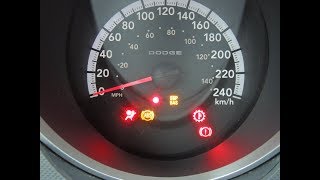
- ABS and Traction Control warning lights are on — The Anti-lock Braking System and Electronic Stability Control lights illuminate, indicating both safety systems are disabled.
- Service 4WD or AWD warnings — Because drivetrain modules share wheel speed data, a communication failure triggers warning messages for the four-wheel-drive system.
- Erratic electrical behavior (TIPM failure) — If the TIPM is failing, wipers turn on by themselves, power windows fail, or the fuel pump stays on after the vehicle is turned off.
Diagnostic Flowchart
Tap your situation to follow the diagnostic path that matches what you're seeing on this code.
Common Fixes & Costs
- Replacing a faulty wheel speed sensor — Parts: $30-$120, Labor: $130-$200, ~1 hr book time (DIY)
- Repairing a damaged wiring harness — Parts: $10-$50, Labor: $150-$400, ~2.5 hr book time (Intermediate)
- Replacing or Repairing the TIPM — Parts: $250-$570 (Repair Service) or $800-$1200 (New OEM), Labor: $150-$300, ~1.5 hr book time (Professional)
- Replacing or Repairing the ABS module — Parts: $250-$400 (Repair Service) or $600-$1500 (New OEM), Labor: $200-$400, ~2 hr book time (Professional)
- Replacing the Adaptive Cruise Control (ACC) module/sensor — Parts: $500-$1,300, Labor: $200-$500, ~3 hr book time (Professional)
Used vs. New Parts: Buying Guide
When a used part is worth it: Buy new for simple sensors. Buy remanufactured with a warranty for expensive modules like the TIPM or ABS computer if the vehicle is over 10 years old.
Donor-vehicle mileage cap: roughly under 80000 miles for the part to have meaningful remaining life.
Donor quality checklist:
- Match the OEM part number exactly; superseded numbers often require dealer programming.
- Choose a reputable remanufacturer offering a 1-year warranty over a standard junkyard part.
- Avoid parts from vehicles in rust-belt states, as corrosion is the primary failure mode.
Decision logic:
- If The part is a wheel speed sensor → Buy new. Cost savings are minimal and not worth the risk of premature failure.
- If The part is a TIPM or ABS module and the vehicle is over 10 years old → Use a mail-in repair service or buy a remanufactured unit to save 50% over dealer prices.
Warranty tradeoff: Salvage yard parts have a 30-day warranty. Remanufactured parts offer 1-year to lifetime warranties. New OEM parts carry a 1-2 year manufacturer warranty.
Worst-case if a used part fails: $400-$1500 if a faulty used module fails, requiring repeat labor and a second replacement part.
What Happens If You Wait — Timeline
- Immediate: Code U1431 sets. ABS and Traction Control warning lights illuminate. Cruise control is disabled. (MPG impact: 0%% · Added cost: $0, but immediate loss of key safety systems.)
- 1-3 months: Driving without ABS/ESC increases stopping distances and the chance of losing control in an emergency. If the root cause is a bad wheel bearing, a humming noise begins. (MPG impact: 0-1%% · Added cost: $0, but continued high safety risk.)
- 3-6 months: If the cause is a failing TIPM, intermittent electrical issues appear (fuel pump fails, wipers activate randomly). A bad wheel bearing becomes louder and causes uneven tire wear. (MPG impact: 0-2%% · Added cost: $250-$1,500. The problem cascades, making diagnosis harder. A failed wheel bearing damages the hub assembly.)
- 6+ months: A completely failed TIPM leads to a no-start condition, leaving you stranded. A total ABS module failure requires a new unit costing over $1,500. (MPG impact: 0-2%% · Added cost: $500-$2,500+. The final repair becomes highly expensive, with a high chance of being stranded.)
Cost of Not Fixing It
- Immediate: Loss of Anti-lock Brakes (ABS) and Electronic Stability Control (ESC). This significantly increases the risk of wheel lock-up and losing control during emergency braking or evasive maneuvers. (Added cost: $0, but high safety risk)
- 1-6 months: If the root cause is a failing TIPM or ABS module, continued driving causes worsening electrical problems or complete module failure. A minor wiring short will eventually damage a costly computer. (Added cost: $500-$2000+)
- 6+ months: Operating with disabled safety systems poses a major safety hazard and increases insurance liability in an accident. A bad wheel bearing will eventually fail completely, destroying the hub and steering knuckle. (Added cost: Potentially thousands in accident damages or liability)
Diagnosis Steps
- Read All Trouble Codes from All Modules
Use an all-system OBD-II scanner to read codes from the PCM, ABS, and TIPM. U1431 is a symptom code; look for 'C' (Chassis) codes like C102A or 'U' (Network) codes like U0121 to pinpoint the root cause.
Tools: Advanced OBD-II Scanner (All-system capable) (Beginner) - Analyze Wheel Speed Sensor Live Data
View live data for all four wheel speed sensors while driving slowly in a straight line. All four readings must be identical. If one sensor reads 0 mph or is erratic, that sensor or its wiring is the culprit.
Tools: Advanced OBD-II Scanner (Intermediate) - Perform a Detailed Visual Inspection
Inspect the wiring harness going to all four wheel speed sensors. Look for wires rubbed through by a tire, corrosion on connectors, or loose connections. On Jeeps, check for water intrusion near the floorboards.
Tools: Flashlight (Beginner) - Check the Battery and Charging System
Ensure the battery is fully charged (12.4-12.6V engine off) and the alternator outputs 13.7-14.7V with the engine running. Spiking voltage above 15V causes network errors.
Tools: Multimeter (Beginner) - Inspect the TIPM / Fuse Box
Open the TIPM and look for white or green corrosion on the terminals. Check for non-factory jumper wires, which indicate a previous, failing repair for a fuel pump relay issue.
Tools: Flashlight, Socket Set (Intermediate) - PRO TIP: Test Wheel Speed Sensor Resistance
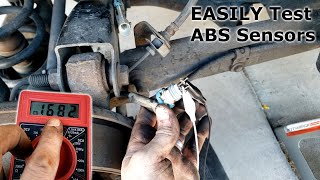
For passive 2-wire sensors, disconnect the sensor and measure resistance across its pins. Compare the reading to the sensor on the opposite side of the same axle; values must be within 10% of each other. Infinite or zero resistance indicates a failed sensor.
Tools: Multimeter (Advanced) - PRO TIP: Test Wheel Speed Sensor AC Voltage
Reconnect the passive sensor. Back-probe the wires with a multimeter set to AC Volts. Spin the raised wheel by hand at one revolution per second. It must generate at least 0.25V AC. Lower voltage points to a bad sensor or excessive air gap.
Tools: Multimeter, Back-probe pins, Jack and Jack Stands (Advanced) - PRO TIP: Perform a Voltage Drop Test on the Harness
If a new sensor fails to fix the issue, test the harness. Connect one multimeter lead to the battery negative. Back-probe the ground wire at the connected wheel speed sensor with the ignition on. A reading above 0.1V indicates high resistance in the harness.
Tools: Multimeter, Back-probe pins (Advanced) - Test the CAN Bus Network Resistance
With the battery disconnected, measure resistance between Pin 6 (CAN High) and Pin 14 (CAN Low) on the OBD-II port. A healthy network reads 60 ohms. 120 ohms indicates a broken wire; 0 ohms indicates a short circuit.
Tools: Multimeter (Advanced) - Test CAN Bus Voltages
With ignition on (engine off), measure DC voltage from OBD-II pins to chassis ground. CAN High (Pin 6) and CAN Low (Pin 14) should read approximately 2.5V at idle. Readings of 0V or 5V indicate a short to ground or power.
Tools: Multimeter (Advanced)
When This Code Triggers (Freeze-Frame Conditions)
- Engine Coolant Temp: 180-200°F (The engine has reached full operating temperature.)
- RPM: 1500-2500 (The engine is operating at a steady speed, typical of highway cruising.)
- Engine Load: 30-60% (The engine is under a moderate load, consistent with maintaining speed on a level road.)
- Vehicle Speed: 35-55 mph (The vehicle is being driven at a steady highway speed where cruise control is typically engaged.)
Related Codes
- C-codes (e.g., C102A, C0034) — These are wheel speed sensor codes. The 'C' code is the root cause; U1431 is the symptom. Always diagnose the 'C' code first.
- U0415 — 'Invalid Data Received From ABS Module'. Functionally identical to U1431. Both indicate an ABS system fault is polluting the network with bad data.
- U0121 — 'Lost Communication With ABS Module'. U1431 means bad data was received; U0121 means NO data was received. U0121 points to a dead ABS module, blown fuse, or severed wiring.
- U1417 / U1418 — 'Implausible Left/Right Wheel Distance Signal'. Points directly to a faulty wheel speed sensor, damaged tone ring, or mismatched tire sizes.
Climate & Environmental Factors
- High Humidity / Road Salt: Accelerates corrosion on wheel speed sensor connectors, wiring harnesses, and internal circuit boards. This is the primary cause of U1431 in 'Rust Belt' states.
- Extreme Cold: Makes aged plastic wiring insulation brittle, causing it to crack. Cold weather strains the battery, and low startup voltage triggers network communication codes.
- High Heat: Degrades electronic components. Internal, non-serviceable relays within the TIPM are highly susceptible to failure from repeated heat cycles.
How to Talk to a Mechanic About This Code
Say this: "I have a U1431 code with the ABS and traction control lights on. I'd like to schedule a diagnostic appointment. Please scan all modules, especially the ABS controller for any 'C' codes, and check the live data from all four wheel speed sensors."
This shows you know U1431 is a network code and the real fault is in the ABS system. It directs the technician to perform a proper diagnosis instead of guessing, preventing premature replacement of expensive modules.
Avoid saying:
- 'My check engine light is on, can you just fix it?'
- 'The internet says it's the TIPM, can you replace it?'
- 'Just do whatever you think is best.'
Questions to ask before authorizing the repair:
- Did you find any other codes in the ABS, TIPM, or Body Control Module?
- If you are recommending a wheel speed sensor replacement, can you show me the live data or test results that prove it failed?
- If you are recommending an expensive module (ABS, TIPM), what specific tests confirm it's not a wiring issue?
- Does this repair require module programming or calibration? Is that included in the quote?
Where to Take It: Dealer vs Independent vs Chain
- Dealer:
A safe but expensive bet. Necessary if the final fix is a new ABS or ACC module requiring OEM programming.
Best for: Vehicles under warranty., Complex repairs requiring module programming or calibration (e.g., ABS, ACC)., When independent shops fail to diagnose the electrical issue.
Downsides: Highest labor rates and part costs., Quick to replace entire expensive modules rather than exploring wiring fixes. (Typical cost: +50% vs. baseline) - Independent Shop:
Best fit for most U1431 situations. Find a trusted shop with good reviews for electrical diagnostics. This is the best value for 80% of repairs.
Best for: Out-of-warranty vehicles where cost is a factor., Common U1431 causes like wheel speed sensors and wiring harness repairs.
Downsides: Diagnostic capability varies widely. Ensure they have an 'all-system' scanner., May lack the software to program new modules. (Typical cost: +0% vs. baseline) - Chain Shop:
AVOID for diagnosis. Only use if you have a 100% confirmed diagnosis of a simple part failure and are just paying for labor.
Best for: Simple, pre-diagnosed part replacement (e.g., 'I know my right front wheel speed sensor is bad, please replace it').
Downsides: High risk of misdiagnosis on complex network codes., Technicians often lack in-depth electrical knowledge., High pressure to upsell unnecessary services. (Typical cost: -10% vs. baseline)
When to Walk Away From the Repair
If the estimated repair cost exceeds 50% of the vehicle's private-party value, seriously consider selling or trading it in.
- Car worth $4000, fix is $2200: Walk away. A $2,200 quote for a failed ABS module on a $4,000 vehicle is a poor investment.
- Car worth $12000, fix is $350: Fix it. A $350 repair for a bad wheel speed sensor is a routine maintenance cost.
- Car worth $8000, fix is $1800: Borderline. A $1,800 TIPM replacement is a major expense. Get a second opinion and investigate mail-in repair services to cut the cost in half.
What Scan Tool You Need for This Code
Minimum: A scanner that reads and clears codes from the ABS module and displays live sensor data. A basic engine-only code reader is NOT sufficient.
A $20 reader only checks the engine computer and shows 'U1431'. It cannot see the underlying ABS codes (like C0034) that are the true cause. You must see ABS codes and live wheel speed data to diagnose this correctly.
Budget: BlueDriver Pro or Autel AP200 (~$60-120) — These Bluetooth dongles read ABS codes and display live data from all four wheel speed sensors, allowing you to diagnose a bad sensor vs. a wiring issue.
Mid-range: Foxwell NT510 Elite or Launch CRP129 (~$150-300) — Provides a dedicated handheld device with full system diagnostics, including ABS and TIPM. The NT510 Elite performs bidirectional tests to command components.
Professional: Autel MaxiCOM MK808 / MK808BT (~$450-600) — A professional tablet with full bidirectional control, all-system diagnostics, and service functions like ABS module bleeding and SAS calibration.
Rent vs buy: Free rental scanners from auto parts stores are basic engine code readers and CANNOT read the ABS codes needed for this diagnosis. You must buy a capable scanner or pay for a professional diagnosis.
How to Clear the Code After You Fix It
- Reconnect battery if disconnected for repair
- Use an all-system OBD-II scan tool to clear codes from the PCM, ABS, and TIPM
- Perform a complete drive cycle to ensure the fault does not return
Drive cycle (~30 minutes): Start with a cold engine. Idle for 5 minutes. Drive for 15 minutes in mixed city/highway conditions, including several smooth accelerations and stops. Drive for 5-8 minutes at a steady highway speed (40-60 mph). Allow the vehicle to cool completely.
Readiness monitors affected: Catalyst monitor, O2 sensor monitor, EVAP monitor
Before emissions retest: drive at least 100 miles to fully set monitors.
Watch out for:
- Clearing the code without fixing the underlying hard fault guarantees the code will return immediately.
- Disconnecting the battery resets all readiness monitors, causing an automatic emissions test failure until a full drive cycle is completed.
Will This Fail Emissions / State Inspection?
No — by itself this code doesn't fail OBD inspection (but it can keep readiness monitors from setting, which causes a separate fail).
- California: Will NOT fail. An illuminated ABS light is a safety issue, not an emissions issue. However, the test fails if readiness monitors are not set to 'Ready'.
- New York: Will NOT fail. NY DMV inspection regulations state an illuminated ABS warning light is not a cause for rejection.
- Texas: Will NOT fail. Texas safety inspections only fail a vehicle for a red 'BRAKE' warning light, not an amber 'ABS' warning light.
Most Commonly Affected Vehicles
- Chrysler Town & Country (2011-2016) — Prone to failing TIPMs and wiring harness damage in the automatic sliding doors.
- Dodge Grand Caravan (2011-2019) — Shares the problematic TIPM with the Town & Country. Mail-in repair services are highly recommended.
- Jeep Wrangler (JK) (2007-2018) — Wheel speed sensors and wiring are frequently damaged during off-roading. TIPM failure is notorious on 2007-2015 models.
- Jeep Grand Cherokee (2011-2021) — Known for both TIPM failures and internal ABS module faults that disrupt CAN bus communication.
- Dodge / Ram 1500/2500/3500 (2010-2018) — U1431 frequently appears due to ABS module failures. Bad wheel bearings are also a common trigger.
Manufacturer-Specific Notes
- Stellantis (Chrysler, Dodge, Jeep, Ram): U1431 is almost exclusive to this manufacturer group. The root cause is consistently a bad TIPM, faulty wheel speed sensor, or failing ABS module.
- Jeep: On some models, U1431 translates to 'Control Module Supply Voltage Too High', pointing to a failing alternator rather than an ABS issue.
- Dodge: On older models (pre-2010), U1431 can mean 'Fuel Level Sensor Range or Performance', which points to a faulty fuel sending unit in the gas tank.
Real Owner Stories
2012 Dodge Grand Caravan at 115K miles - Easy Fix
ABS and Traction Control lights came on suddenly. Cruise control stopped working. U1431 and a C-code for the right front wheel speed sensor were present.
What they tried:
- Initially ignored the light, but the van felt unsafe in the rain.
- A local mechanic read the codes and identified the specific wheel speed sensor fault.
Outcome: Replaced the right front wheel speed sensor. The part cost $45 and labor was one hour. All lights went off and cruise control functionality returned.
Lesson: U1431 is often accompanied by a specific 'C' code. Use a scanner that reads ABS codes to pinpoint the exact source, which is frequently a simple wheel speed sensor.
2014 Jeep Wrangler JK at 85K miles - Misdiagnosis Story
ABS, ESC lights on, no cruise control. Only code was U1431. This happened after a day of moderate off-roading.
What they tried:
- Assuming a sensor was damaged, the owner replaced the left front wheel speed sensor. The code returned.
- Replaced the right front wheel speed sensor. The code still returned.
- Visually inspected the wiring harnesses to all four wheels but found no obvious damage.
Outcome: A specialist found the wiring harness for the rear left sensor had been snagged and was rubbing against the tire, causing an intermittent short. The shop repaired the wire for $250.
Lesson: Do not replace parts without a full diagnosis. A visual inspection of all related wiring is critical, especially after off-roading. Intermittent wiring faults won't always set a specific sensor code.
2011 Jeep Grand Cherokee at 130K miles - Complex TIPM Failure
Started with U1431 and ABS/ESC lights. Over a few weeks, wipers turned on by themselves, the fuel pump failed to prime, and the horn went off randomly.
What they tried:
- Checked the battery and alternator, which were both good.
- A shop diagnosed a failing ABS module and quoted $1,800.
- The owner researched online and found symptoms pointing to the TIPM.
Outcome: The owner opted for a mail-in TIPM repair service for $400. After reinstalling the repaired TIPM, all codes cleared and all electrical gremlins were resolved.
Lesson: If U1431 is accompanied by unrelated electrical problems, the root cause is the TIPM, not the ABS module. A TIPM repair service saves over $1,000 compared to a dealer replacement.
How to Prevent This Code From Triggering
- Apply Dielectric Grease to Connectors (During any brake job or tire rotation) — Applying dielectric grease to wheel speed sensor and ABS module connectors seals them from moisture and road salt, preventing corrosion and signal failure.
- Secure and Inspect Wiring Harnesses (Annually or during under-vehicle service) — Ensuring wiring harnesses are secured in their clips prevents them from rubbing against suspension parts or tires, avoiding chafing damage.
- Maintain Battery and Charging System Health (Every 6 months) — Testing battery and alternator output prevents low or unstable voltage, which causes random communication faults between the TIPM and ABS computer.
- Keep the TIPM/Fuse Box Dry (After heavy rain or car washes) — Checking for water intrusion around the TIPM prevents moisture from dripping onto the module and causing internal corrosion.
Frequently Asked Questions
Can I fix U1431 myself?
Yes, if the cause is a wheel speed sensor or damaged wire, it is a straightforward DIY repair. However, replacing a TIPM or ABS module requires professional programming.
Will clearing the code fix the problem?
No. U1431 is a hard fault. The code will return within seconds of driving until the underlying hardware issue is repaired.
Why are my ABS and traction control lights on if it's a cruise control code?
Cruise control, ABS, and traction control all rely on wheel speed data shared over the CAN bus. When one module sends bad data, the computers disable all related safety systems as a precaution.
The shop quoted me $1,500 to fix this. Is that a rip-off?
It depends on the diagnosis. $1,500 is accurate for a new ABS module or ACC sensor at a dealership. If the problem is just a wheel speed sensor, the total cost should be under $350.
Can a bad alignment or new tires cause a U1431 code?
A bad alignment won't, but failing to recalibrate the steering angle sensor afterward can. Mismatched tire sizes cause conflicting speed data, which triggers network codes.
What is the most common misdiagnosis for U1431?
Replacing the cruise control module itself. U1431 means the engine computer received bad data *from* that system, but the bad data almost always originates from a faulty wheel speed sensor or ABS module.
I replaced the wheel speed sensor but the code came back. What now?
The fault is in the wiring harness or the ABS module. Perform a voltage drop test on the harness to check for high resistance before condemning the expensive ABS computer.
Key Takeaways
- U1431 is a Stellantis-specific network code indicating the engine computer is receiving invalid data from the cruise control or ABS system.
- Over 80% of U1431 codes are caused by a failed wheel speed sensor, a damaged wiring harness, or a faulty TIPM (fuse box).
- Driving with U1431 is possible, but your Anti-lock Braking System (ABS) and Electronic Stability Control (ESC) are completely disabled, increasing accident risk.
- Never replace the cruise control module without first scanning the ABS module for 'C' codes, which pinpoint the exact failing sensor.
Helpful Videos


The information in this article is provided for general reference and educational purposes only. Vehicle specifications, procedures, and part compatibility can vary by production date, trim level, and region. Always consult your vehicle's factory service manual and verify part numbers before purchasing or performing repairs. Safety-critical components such as airbags, seat belts, and braking systems should be installed by a qualified professional.
- 🎬 Helpful Videos
- What Does U1431 Mean?
- Can I Drive With U1431?
- Common Causes
- Symptoms
- Diagnostic Flowchart
- Common Fixes & Costs
- Used vs. New Parts: Buying Guide
- What Happens If You Wait — Timeline
- Cost of Not Fixing It
- Diagnosis Steps
- When This Code Triggers (Freeze-Frame Conditions)
- Related Codes
- Climate & Environmental Factors
- How to Talk to a Mechanic About This Code
- Where to Take It: Dealer vs Independent vs Chain
- When to Walk Away From the Repair
- What Scan Tool You Need for This Code
- How to Clear the Code After You Fix It
- Will This Fail Emissions / State Inspection?
- Most Commonly Affected Vehicles
- Manufacturer-Specific Notes
- Real Owner Stories
- 2012 Dodge Grand Caravan at 115K miles - Easy Fix
- 2014 Jeep Wrangler JK at 85K miles - Misdiagnosis Story
- 2011 Jeep Grand Cherokee at 130K miles - Complex TIPM Failure
- How to Prevent This Code From Triggering
- Frequently Asked Questions
- Can I fix U1431 myself?
- Will clearing the code fix the problem?
- Why are my ABS and traction control lights on if it's a cruise control code?
- The shop quoted me $1,500 to fix this. Is that a rip-off?
- Can a bad alignment or new tires cause a U1431 code?
- What is the most common misdiagnosis for U1431?
- I replaced the wheel speed sensor but the code came back. What now?
- Key Takeaways
- 🎟️ Get 5% Off