

U1428 on 2018 Jeep Compass: Causes and Fixes for Inaccurate Engine Torque
Code U1428 on a 2018 Jeep Compass almost always indicates a software problem between the engine and transmission control modules, causing limp mode. The fix is typically a software update performed by a Jeep dealer, as detailed in Technical Service Bulletins (TSBs). A weak or failing battery is the second most common cause.
- U1428 on a 2018 Compass is a serious network code that can cause dangerous driving conditions due to sudden limp mode.
- The most common cause is a software glitch fixed by a dealer-installed PCM update, as outlined in TSB #18-091-19.
- A weak or failing main or auxiliary battery is the second most likely cause and should be professionally tested.
- Do not immediately replace expensive parts; the fix is almost always software or a battery.
- Check your VIN for recall 18V-524, which involves a free PCM replacement for affected vehicles.
What's Unique About the 2018-2018 Jeep COMPASS

For the 2018 Jeep Compass, this code is very frequently a software logic issue rather than a mechanical failure. Jeep has issued specific Technical Service Bulletins (TSBs), such as #18-091-19 and #18-082-22, that directly address this code. These bulletins instruct dealers to reprogram the Powertrain Control Module (PCM) with updated software to resolve the communication glitch between the modules. This makes it a known issue with a specific, documented fix that often does not require parts replacement.
Diagnostic Flowchart

Tap your situation to follow the diagnostic path that matches what you're seeing on this vehicle.
Symptoms You May Notice

- Check Engine Light illuminated
- Vehicle enters 'limp home mode' with limited power and RPM.
- Sudden loss of ability to accelerate, with the gas pedal becoming unresponsive. 🎬 Watch: Real-world example of a Compass in limp mode.
- Harsh or clunking shifts.
- Long engine cranking time before starting.
- Service Transmission warning light may appear on the dash.
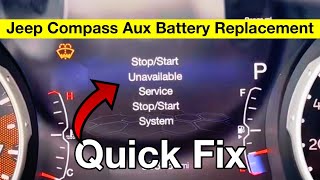
- Start/Stop system unavailable warning light ('A!') may appear.
- Transmission may seem stuck in a single gear (e.g., 3rd or 4th) after a restart.
- Replacing the throttle body
- Replacing the entire transmission
- Replacing the crankshaft position sensor without proper diagnosis
Most Likely Causes

- Outdated Powertrain Control Module (PCM) Software 🔴 High Probability This is a well-documented issue for this model year, with Jeep issuing multiple TSBs (#18-091-19 and #18-082-22) that call for a software update as the specific fix. The software logic incorrectly interprets certain data packets between the PCM and TCM, triggering the fault. The TSB explicitly states the fix is to reprogram the PCM with the latest software.
How to confirm: A Jeep dealer or a well-equipped independent shop must use a diagnostic scan tool (like wiTECH) to compare the vehicle's current software calibration ID against the latest version available from the manufacturer as specified in the TSBs.
Typical fix: Reprogramming (flashing) the PCM and/or TCM to the latest software version. The TSB notes that after flashing the PCM, the technician should also verify the TCM has the latest software. This is a non-mechanical repair performed with diagnostic tools.
Est. part cost: $0 - Weak or Failing Battery (Main or Auxiliary) 🟡 Medium Probability The 2018 Compass utilizes a start/stop system with both a main and an auxiliary battery. Modern vehicle modules are extremely sensitive to voltage. Low system voltage, especially during engine cranking or when the start/stop system engages, can cause temporary communication dropouts between the PCM and TCM, leading to network codes like U1428. Owners of platform-mates like the Jeep Renegade also report that low battery voltage is a primary cause of limp mode events.
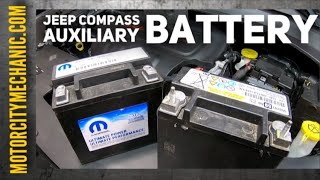
How to confirm: Test both the main and auxiliary batteries using a professional digital battery tester that measures state of health and cold cranking amps, not just voltage. A simple voltmeter should show at least 12.4-12.6 volts at rest and should not drop below 10 volts during cranking. The auxiliary battery is often the first to fail and can cause these issues even if the main battery seems fine. 🎬 Watch: Fixing the Start/Stop Unavailable warning by replacing the aux battery.
Typical fix: Replace the failing battery. It is often recommended to replace both the main and auxiliary batteries at the same time if they are original and several years old. 🎬 See how to replace both main and auxiliary batteries.
Est. part cost: $150-$400
Rare But Worth Checking
- Damaged Wiring or Connectors: While less common than software or battery issues, chafed wiring or a corroded connector in the CAN bus harness between the PCM and TCM can corrupt the signal and trigger this code. A visual inspection of the harness near the engine and transmission is a valid diagnostic step after software and battery issues are ruled out.
- Failing Powertrain or Transmission Control Module (PCM/TCM): Hardware failure of the modules themselves is rare. A recall (NHTSA 18V-524) was issued for some 2018 Compass models for a faulty voltage regulator chip inside the PCM, which could cause stalling and a no-start condition. An owner must check their VIN for this recall. The remedy is a complete PCM replacement, free of charge. Module replacement is a last resort after software, battery, and wiring have been confirmed good.
Diagnosis Steps
- Scan all vehicle modules for stored trouble codes. Note U1428 and any accompanying codes like P1DD2.
- Check the vehicle's VIN for open recalls or TSBs. Specifically look for TSBs #18-091-19 and #18-082-22, and recall NHTSA 18V-524.
- Perform a comprehensive test of the battery and charging system. Test BOTH the main and auxiliary batteries for voltage, load capacity, and state of health. Ensure resting voltage is above 12.4V and does not drop below 10V during cranking.
- If the battery system is healthy, the next step is to verify the PCM software version. This requires a dealer-level scan tool (wiTECH) to see if an update is available as prescribed by the TSBs.
- If a software update is available, have the dealer or a qualified shop perform the PCM reflash procedure. The TSB procedure specifies maintaining battery voltage between 13.2 and 13.5 volts during the flash. Ensure they also check for any necessary TCM updates as per the TSB.
- If the software is already up-to-date, perform a thorough visual inspection of the wiring harness and connectors between the PCM, TCM, and battery terminals. Look for any signs of corrosion, damage, or loose connections.
- If all other steps fail to resolve the issue, further diagnostics on the PCM or TCM hardware may be necessary. This is the least likely scenario.
Parts You'll Likely Need
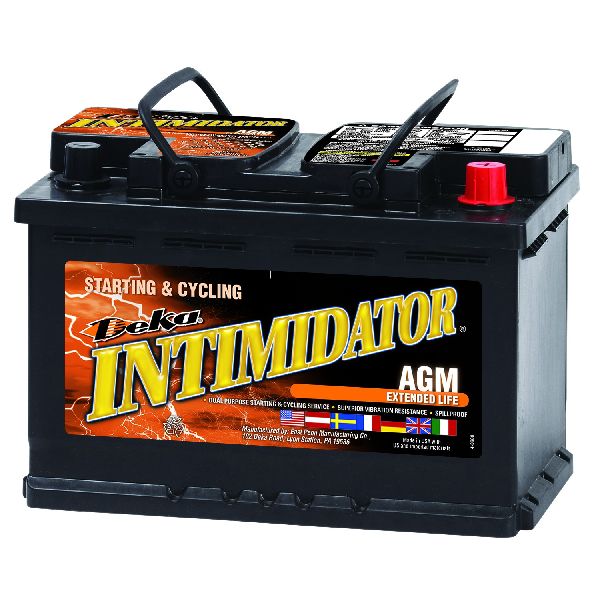
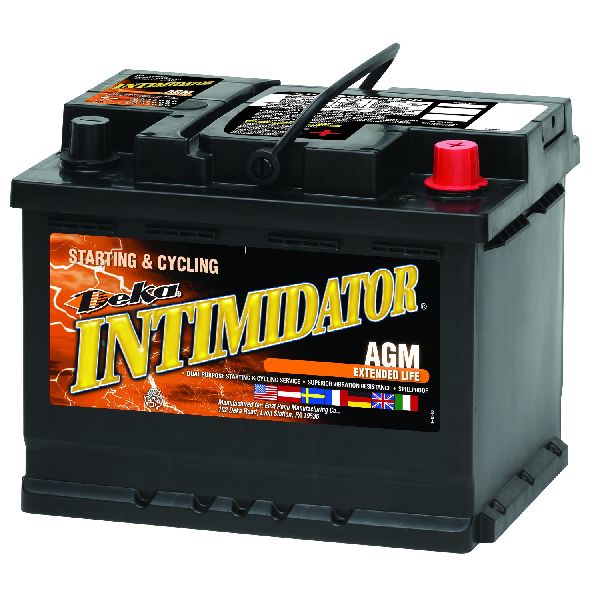
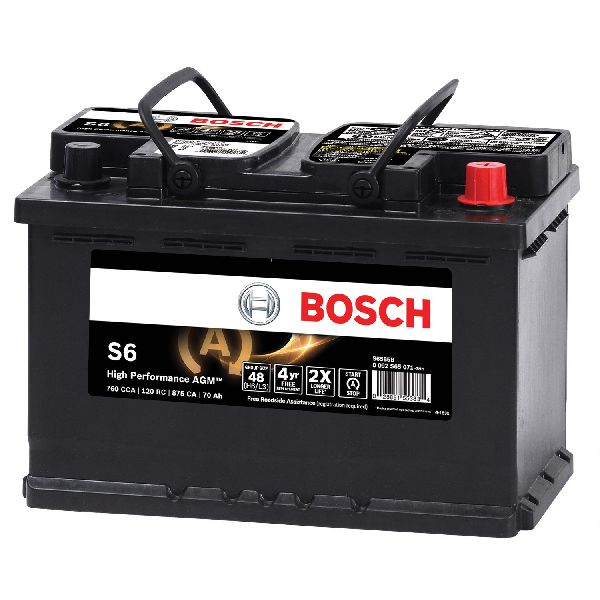
- Battery (Main)
(OEM #BB086525AA)— A weak main battery is a common cause of network communication faults on modern vehicles. Low voltage during startup can cause modules to communicate improperly.
Trusted brands: Mopar, Duralast, DieHard
OEM price range: $250-$350
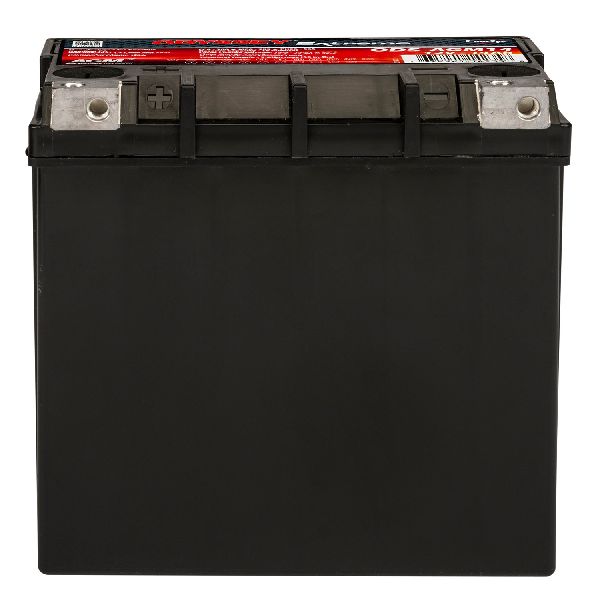
Aftermarket price range: $150-$250 - Battery (Auxiliary for Start/Stop)
(OEM #68647042AA or 56029759AB)— The auxiliary battery supports the vehicle's electronics during an auto-stop event. Its failure is very common and can cause a host of electrical gremlins, including communication codes like U1428, even if the main battery is healthy.
Trusted brands: Mopar, Odyssey
OEM price range: $75-$120
Aftermarket price range: $60-$100
Related Codes That Often Appear With This One
- P1DD2 — This code, 'Torque Request Signal From TCM Denied,' is explicitly mentioned alongside U1428 in Jeep's TSB #18-091-19. It is set by the TCM as a direct result of the implausible torque data received from the PCM, confirming the communication fault between the two modules.
Technical Service Bulletins (TSBs) & Recalls
- 18-091-19: Details the symptom of U1428 and P1DD2 causing limp mode and specifies reprogramming the PCM with the latest software as the fix. It also mentions other codes that the flash addresses, such as P06E9 (Engine Starter Performance).
- 18-082-22 (also cited as 18-082-22): Also addresses U1428 and limp mode, linking it to 'TCM Denied' messages (P1DD2) and recommending a PCM software update as the primary repair procedure.
Platform-Specific Known Issues
- This code is most often caused by a software logic issue that is well-documented by Jeep in Technical Service Bulletins #18-091-19 and #18-082-22. The official fix is a software update, not a part replacement.
- Some 2018 Compass models were subject to NHTSA recall 18V-524 for a faulty PCM that could cause stalling. An owner should verify if their VIN is affected, as the remedy is a free PCM replacement from the dealer.
- The dual-battery system is a frequent point of failure. Owners report that replacing only the main battery without addressing a faulty auxiliary battery often fails to resolve intermittent electrical issues.
Mechanic-Grade Diagnostic Values
- CAN Bus Resistance — expected: ~60 Ω. Failure: A reading of ~120 Ω indicates one of the two terminating resistors is offline. A reading significantly different from 60 or 120 Ω, or a reading of 0 Ω, indicates a wiring short or other network problem.
- Battery Voltage During PCM Flash — expected: 13.2 V - 13.5 V. Failure: Voltage dropping below 13.2V or climbing above 13.5V can interrupt the flash process and potentially corrupt the module.
- 5-Volt Sensor Reference Circuit — expected: 4.9 V - 5.1 V. Failure: A voltage significantly lower than 4.9V (e.g., 2.2V) indicates a sensor or wiring on that circuit is shorted to ground, which can corrupt data across multiple modules and cause limp mode.
Hidden / Shadow Codes Worth Checking
- P06E9: Engine Starter Performance. This code may not seem directly related, but TSB #18-091-19 lists it as one of the codes addressed by the same PCM software update that fixes U1428, indicating it can be part of the same software logic problem. (see via Standard OBD-II scanner.)
Scan Tool Commands That Help
- wiTECH: Reprogram PCM — This is the primary repair for code U1428 as specified by Jeep TSBs #18-091-19 and #18-082-22. It updates the module's software to correct the logic flaw causing the inaccurate torque calculation.
- wiTECH: Restore Vehicle Configuration — This function is used to rewrite the vehicle's factory configuration (sales codes, VIN, etc.) to a module. It is often required after replacing a major module like the PCM or BCM, or if the configuration is suspected to be corrupt, which can cause communication errors.
- wiTECH: Proxi Configuration Alignment — On Fiat-Chrysler platforms, a Proxi Alignment is necessary after replacing a module. This function polls all modules on the network and ensures they are all recognized and communicating correctly. A mismatch can cause network codes and functionality loss.
Wiring & Ground Locations
- TCM Power Supply Wire — In the wiring harness running between the radiator and the transmission.. A technician found a 2018 Compass with a no-start and U0101 (Lost Communication with TCM) had a corroded power wire from fuse F24 in this specific location. While a different code, a poor power supply to the TCM can easily cause data corruption codes like U1428 before failing completely.
- Crankshaft Position Sensor Wiring — In the main engine harness between the PCM and the crankshaft position sensor (located on the lower rear of the engine).. A confirmed repair for limp mode with multiple codes including U1428 was fixing an open circuit in this part of the harness. The PCM uses crank sensor data as a primary input for torque calculation; bad data from a wiring fault can lead to the TCM rejecting the value.
- CAN C Bus Wires — Throughout the vehicle, connecting major modules. At the Data Link Connector (OBD-II port), they are Pin 6 (CAN C High, typically Tan/White) and Pin 14 (CAN C Low, typically Yellow).. These are the specific wires that carry the torque data message between the PCM and TCM. Testing resistance and voltage on these pins is a fundamental step in diagnosing any U-code.
Real Owner Repair Stories
- YouTube user 'Hopefully, this helps someone' (2018 Jeep Compass) — After replacing both batteries, car went into limp mode (would not drive over 40 mph), every warning light on the dash illuminated (Service Engine, Service Transmission, Auto Start/Stop), hard shift from Park to Drive, and crank-no-start condition.
❌ Tried (didn't work) Replacing both batteries (this triggered the issue), Online research and consulting with online specialists
✅ What actually fixed it The dealership found and repaired an open circuit in the wiring harness between the Powertrain Control Module (PCM) and the crankshaft position sensor. The repair cost approximately $745 before tax. - Reddit user in r/JeepCompass (2018 Jeep Compass) — After having both batteries replaced, the auxiliary battery kept appearing dead. The auto parts store replaced the auxiliary battery three times.
❌ Tried (didn't work) Replacing the auxiliary battery multiple times.
✅ What actually fixed it A mechanic discovered the person who installed the original batteries had broken the wiring harness/fuse relay that sits on top of the primary battery and had attempted a temporary fix. Replacing the damaged harness/relay assembly resolved the charging issue.
"I Checked Everything" — The Actual Cause
- In one documented case, a 2018 Compass experiencing severe limp mode and a host of codes after a battery change was not fixed by software or further battery swaps. The root cause was an open circuit (broken wire) in the harness between the PCM and crankshaft position sensor, which required a dealer-level diagnostic process to trace and locate.
- On a similar FCA platform with limp mode, unplugging sensors one by one failed to isolate a fault. The actual cause was found to be multiple chafed and exposed wires within a harness segment near the oil pressure sensor, which were intermittently shorting the 5V reference circuit when the engine moved. The fix was to repair the damaged section of the harness, not replace any single component.
OEM Part Supersession History
68342095AA→68342095AB— Software/hardware revision update from the manufacturer.
Heads up: While aftermarket suppliers can program various part numbers, using the latest superseded part number from the dealer is always recommended to ensure all hardware and software updates are included.
Helpful Videos


We Have This Part in Stock


The information in this article is provided for general reference and educational purposes only. Vehicle specifications, procedures, and part compatibility can vary by production date, trim level, and region. Always consult your vehicle's factory service manual and verify part numbers before purchasing or performing repairs. Safety-critical components such as airbags, seat belts, and braking systems should be installed by a qualified professional.
- Jeep COMPASS:
- 🎬 Helpful Videos
- 🛍️ Shop This Part
- What's Unique About the 2018-2018 Jeep COMPASS
- Diagnostic Flowchart
- Symptoms You May Notice
- Most Likely Causes
- Rare But Worth Checking
- Diagnosis Steps
- Parts You'll Likely Need
- Related Codes That Often Appear With This One
- Technical Service Bulletins (TSBs) & Recalls
- Platform-Specific Known Issues
- Mechanic-Grade Diagnostic Values
- Hidden / Shadow Codes Worth Checking
- Scan Tool Commands That Help
- Wiring & Ground Locations
- Real Owner Repair Stories
- "I Checked Everything" — The Actual Cause
- OEM Part Supersession History
- 🎟️ Get 5% Off