

U1424 on 2013-2017 Ram 1500: Implausible Engine Torque Signal Fixes
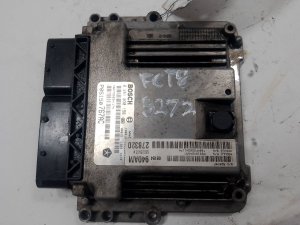
Code U1424 on a 2013-2017 Ram 1500 almost always means the Powertrain Control Module (PCM) needs a software update. This is a known issue covered by multiple Technical Service Bulletins (TSBs). A dealership can perform the update, which is the most common fix. If the software is current, the next most likely cause is a failing crankshaft or camshaft position sensor.
- U1424 means the transmission is getting nonsensical torque data from the engine computer.
- The most common cause is not a broken part, but outdated software in the Powertrain Control Module (PCM).
- Always check for other engine codes first. A bad camshaft/crankshaft sensor or an engine misfire is the next most likely cause.
- Do not replace the transmission. This code points to an information problem, not a mechanical failure of the gearbox.
- The definitive fix is often a software update performed by a Ram dealership.
What's Unique About the 2013-2017 Ram 1500

The fourth-generation Ram 1500 is particularly prone to this network communication error due to software logic. Chrysler (now FCA/Stellantis) released numerous Technical Service Bulletins (TSBs) over several years to address this specific code. This indicates the problem is rarely a major mechanical failure and is most often corrected by flashing the control modules with updated software from the manufacturer. This issue is also prevalent across other FCA products like the Dodge Durango and Jeep Grand Cherokee that use the same engines and control systems.
Diagnostic Flowchart

Tap your situation to follow the diagnostic path that matches what you're seeing on this vehicle.
Symptoms You May Notice

- Check Engine Light (Malfunction Indicator Lamp, MIL) is on.
- Vehicle enters 'limp mode' with reduced power and acceleration.
- Traction control light may illuminate.
- Erratic or harsh transmission shifting.
- In some cases, the transmission may not shift out of first gear.
- Sudden loss of power while driving at highway speeds.
- Replacing the transmission or transmission valve body. The code U1424 points to a data problem, not a mechanical transmission failure. The transmission is often just reacting to the bad information it's receiving.
Most Likely Causes

- Outdated Powertrain Control Module (PCM) Software 🔴 High Probability Multiple TSBs were issued by the manufacturer specifically to update software to resolve this code, indicating it's a widespread logic issue. TSB #18-103-16 REV. B directly lists U1424 as a code fixed by a PCM flash for 2014-2015 models.
How to confirm: A dealership or a qualified shop with a wiTECH scan tool can check the current software calibration level against the latest version available from the manufacturer by using your vehicle's VIN.
Typical fix: Reprogramming (flashing) the PCM with the latest software version. This is typically a 1-hour labor charge at a dealership.
Est. part cost: $0-$250 - Failing Camshaft or Crankshaft Position Sensor 🟡 Medium Probability A failing cam or crank sensor can send erratic data to the PCM. The PCM uses this data to calculate engine torque, so bad sensor data leads to an implausible torque signal being sent to the TCM. This is a very common failure point that directly triggers U1424.
How to confirm: Scan for other trouble codes, specifically P0335/P0339 (crankshaft sensor) or P0344/P0365 (camshaft sensor). The presence of these codes makes the sensor the primary suspect.
Typical fix: Replace the faulty camshaft or crankshaft position sensor. One owner on RamForumZ reported that replacing the crank sensor fixed the issue after a dealer PCM flash did not.
Est. part cost: $25-$80 - Wiring Harness or Connector Issues ⚪ Low Probability Corrosion or damage to the wiring between the PCM, TCM, or relevant sensors can corrupt the signal. The PCM connectors on the firewall can be susceptible to water intrusion, and technicians on ScannerDanner forums point to this as a potential cause, especially if the issue is intermittent with rain.
How to confirm: Visually inspect the main wiring harnesses and connectors for the PCM (on the firewall) and TCM for any signs of corrosion, damage, or loose pins. Check the wiring leading to the cam and crank sensors for chafing or heat damage.
Typical fix: Repair the damaged wiring or clean the affected connectors with an electronics cleaner and apply dielectric grease to prevent future moisture intrusion.
Est. part cost: $10-$100
Rare But Worth Checking
- Failing Powertrain Control Module (PCM) or Transmission Control Module (TCM): While rare, the module itself can fail. This should only be considered after all software, sensor, and wiring issues have been ruled out. A forum user mentioned a dealer recommended a PCM and wiring harness replacement.
- Low Battery Voltage: Modern vehicles can exhibit strange electronic issues, including network codes, when the battery is failing. One owner on Reddit reported that replacing a weak battery resolved recurring limp mode issues associated with U1424. A weak battery can cause modules to fail to communicate properly during startup.
Diagnosis Steps
- Scan for all codes in all modules. Pay close attention to any other codes that are present, especially from the PCM and TCM.
- Prioritize fixing other codes first. Codes for specific sensors (like P0335 for the crank sensor) or misfires (P0300) are often the root cause of U1424.
- Check for available software updates. Contact a Ram dealership with your VIN to see if any TSBs related to PCM or TCM software apply to your truck. This is the most common solution and should be the first step if no other specific fault codes are present.
- If sensor codes are present, inspect the sensor and its wiring. For example, if you have code P0344, inspect the camshaft position sensor and its connector for damage or corrosion before replacing the part.
- Inspect key wiring connectors. Check the main connectors at the PCM (located on the firewall) for any signs of water intrusion, corrosion, or damaged pins, as this is a known issue.
- Check Battery Health. Ensure the battery is fully charged and passes a load test. Low voltage can cause numerous communication errors in modern vehicles.
- If no other codes are present and the software is up to date, further diagnostics on the CAN bus network may be required by a professional to isolate a faulty module or intermittent wiring issue.
Parts You'll Likely Need
- Powertrain Control Module (PCM) Software Update — This is not a physical part, but a software reflash is the most common and manufacturer-recommended fix to correct the logic that triggers this code, as outlined in multiple TSBs.
Trusted brands: Mopar (Dealership Service)
OEM price range: $150-$250
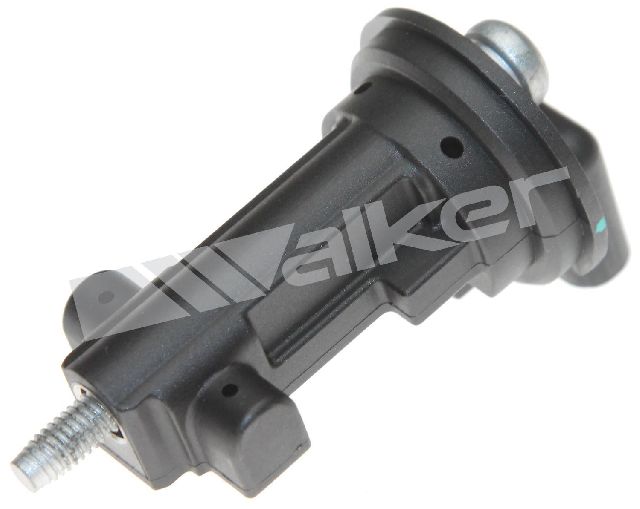
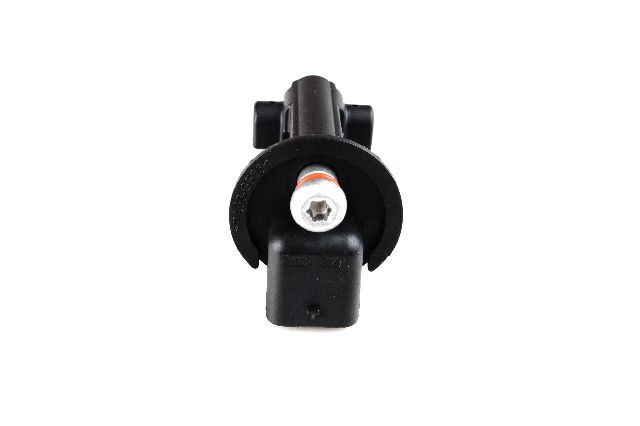
Aftermarket price range: N/A - Crankshaft Position Sensor
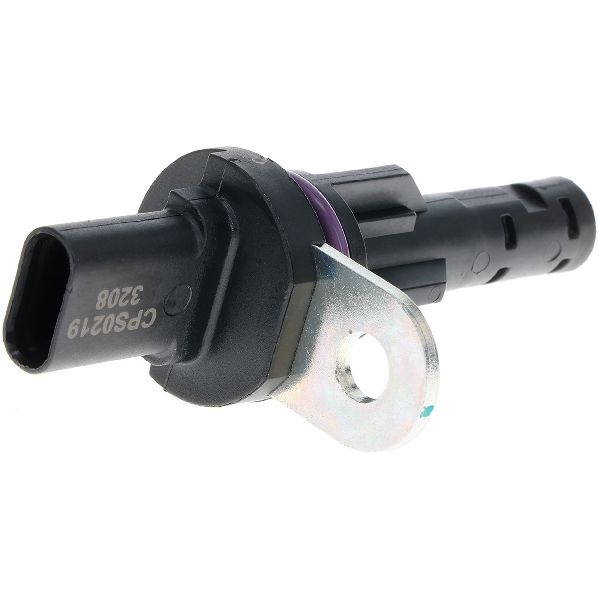
(OEM #68140678AB (superseded by 68477925AB))— A common hardware failure that can directly cause the U1424 code by providing incorrect engine speed data to the PCM. Often accompanied by code P0335 or P0339.
Trusted brands: Mopar, Bosch, NTK, Hitachi
OEM price range: $75-$115
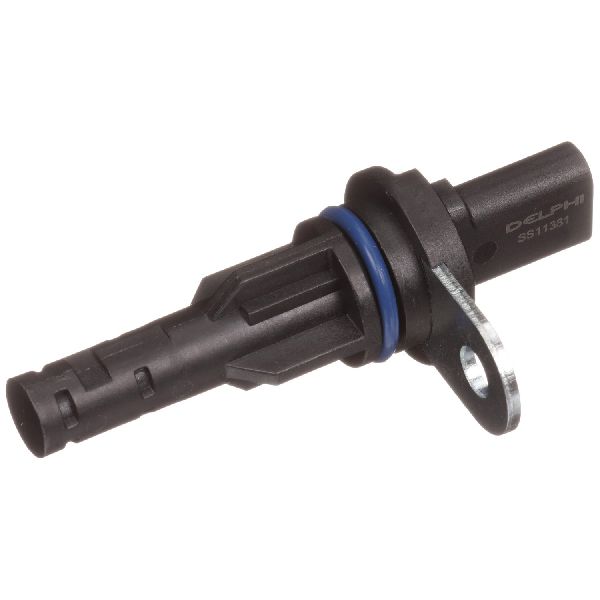
Aftermarket price range: $20-$50 - Camshaft Position Sensor
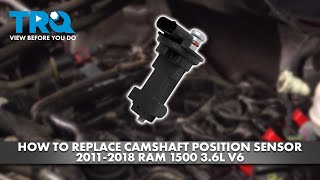
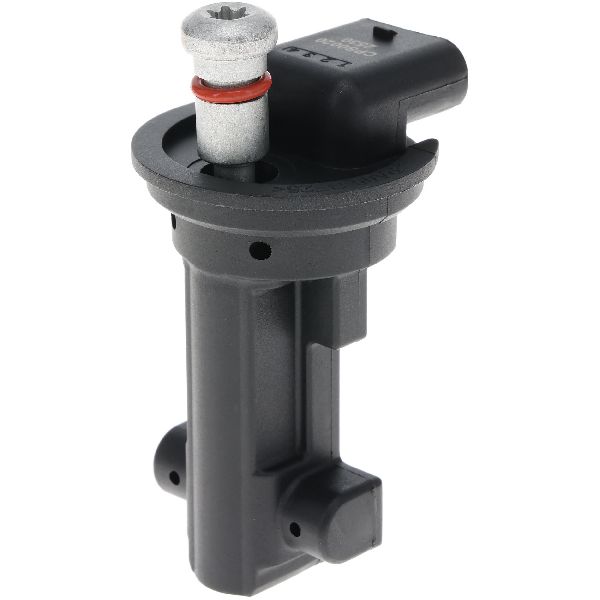
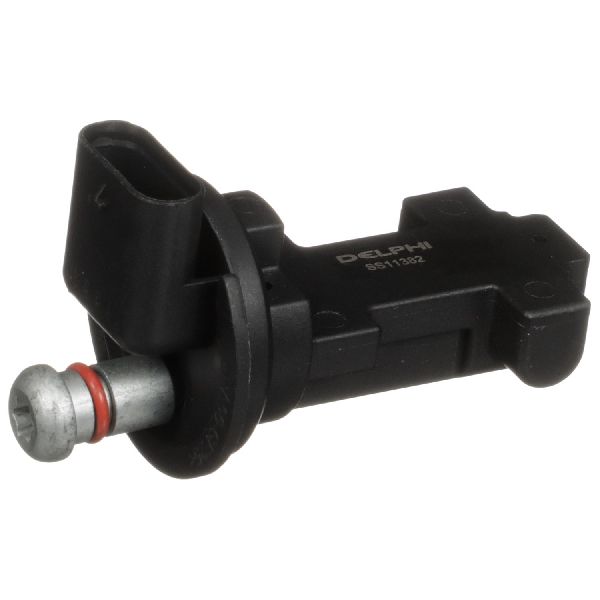
(OEM #5149141AF or 5149054AC (varies by year/engine configuration))— Similar to the crankshaft sensor, a faulty camshaft sensor can lead to implausible torque calculations. Often accompanied by codes like P0344.
Trusted brands: Mopar, Delphi, Standard Motor Products
OEM price range: $50-$100
Aftermarket price range: $15-$45
Related Codes That Often Appear With This One
- P1DD2 — This code means 'Torque Request Signal from TCM Denied'. It is the other side of the U1424 coin. The PCM detects an engine fault (like a bad sensor), denies the TCM's request for torque to protect the powertrain, and logs P1DD2. The TCM then logs U1424 because the torque value it receives is no longer plausible. Seeing them together strongly points to an engine-side root cause.
- P0335 / P0339 / P0344 — These codes indicate a fault with the Crankshaft or Camshaft Position Sensor, which provides critical data for torque calculation. A fault here is a direct and common root cause for the U1424 code.
- P062A — This code for 'Fuel Pump Control Performance' is mentioned alongside U1424 in TSB #18-031-17 REV. B, suggesting a broader powertrain management software issue that is resolved with a PCM update.
- P0300 — A 'Random/Multiple Cylinder Misfire' code can cause erratic engine operation, leading the PCM to calculate an implausible torque value. Professional technicians note that U1424 is often a symptom code and the misfire should be diagnosed first.
Technical Service Bulletins (TSBs) & Recalls
- 18-031-17 REV. B: For 2017 models, links U1424 with P062A (Fuel Pump Control) and rough cold idle, recommending a PCM software update.
- 18-103-16 REV. B: For 2013-2015 models, lists U1424 among a wide array of codes (including P0335 Crank Sensor) that can be resolved with a PCM software update.
- 18-001-16 REV. C: Notes that U1424 may be found in the TCM memory on 2016 3.0L Diesel models and relates to engine timing control issues, fixed by a PCM flash.
- 18-019-15 REV C: States U1424 may be set in the
Platform-Specific Known Issues
- A high number of Technical Service Bulletins (TSBs) were released by Ram/FCA for this specific code, indicating a known software issue that requires a dealer-installed update. Examples include #18-031-17 REV. B, #18-103-16 REV. B, and #18-001-16 REV. C.
Mechanic-Grade Diagnostic Values
- Camshaft Position Sensor (3.6L V6) Signal Voltage — expected: Approximately 5.0 volts with the key on, engine off. Should drop to 0 volts when a magnet or large metal object passes in front of the sensor.. Failure: Voltage does not switch between ~5V and 0V, or is stuck at 0V.
- Camshaft Position Sensor (3.6L V6) 5-Volt Supply Circuit Voltage — expected: Between 4.5 and 5.2 volts with ignition on, engine not running.. Failure: Voltage is outside this range, indicating a problem with the PCM or wiring.
- Camshaft Position Sensor Circuit Resistance to Ground — expected: Above 100 Ohms.. Failure: Resistance is below 100 Ohms, indicating a short to ground in the signal or supply circuit.
Hidden / Shadow Codes Worth Checking
- Permanent DTC (P-DTC): U1424 and its accompanying root-cause codes (like P0335) may be stored as 'Permanent' codes. These cannot be cleared by a standard scan tool or by disconnecting the battery. The vehicle's computer must run and pass its internal self-test for that monitor before the permanent code will be cleared automatically. (see via Most modern OBD-II scan tools can display permanent codes in a separate menu from active/stored codes.)
Scan Tool Commands That Help
- wiTECH (Dealer Tool): Read/Verify PCM Calibration Level — This is the first step to determine if a software update TSB applies. It compares the vehicle's current software to the latest version available from the manufacturer.
- wiTECH (Dealer Tool): Reprogram PCM — Used to perform the software update (flash) as prescribed by numerous TSBs to fix the logic that causes U1424.
- wiTECH or equivalent: POWERTRAIN VERIFICATION TEST / AS68RC VERIFICATION TEST — This is a guided procedure run after a repair (like replacing a sensor or flashing a module) to confirm that the fault has been rectified and all related systems are functioning correctly.
Wiring & Ground Locations
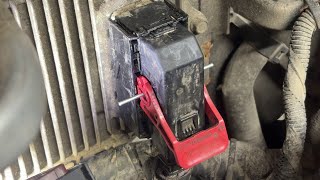
- PCM Connectors — On the firewall, typically on the driver's side of the engine bay.. These connectors are a known weak point for water intrusion, pin corrosion, and loose connections. A poor connection here can interrupt the torque signal between the PCM and TCM, directly causing U1424. Wiggling these connectors while the engine is running can often replicate the fault.
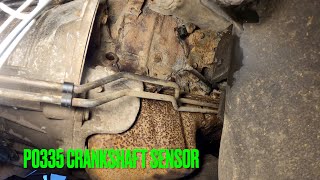
- Crankshaft Position Sensor — Beneath the vehicle on the passenger side of the engine, where the engine block meets the transmission bell housing.. The wiring to this sensor can be damaged by road debris or heat. A fault in the sensor or its wiring is a primary hardware cause of U1424.
- Body Control Module (BCM) — In the driver's side footwell, behind the lower dash trim.. While not a direct cause, forum users report that the connectors to the BCM can be kicked loose, causing a variety of communication codes (like U0140) and electrical issues that may occur alongside U1424.
Real Owner Repair Stories
- YouTube channel 'Eagle Motors' (Dodge Durango with 5.7L Hemi (shared powertrain)) — Check engine light, lack of power, wouldn't shift past 35-40 mph. Codes P0340, U1424, P1DD2.
❌ Tried (didn't work) Concerned it was a transmission issue.
✅ What actually fixed it Replaced the camshaft position sensor (P0340). This resolved all three codes, confirming U1424 and P1DD2 were symptoms of the bad sensor. - RamForum.com user (2015 Ram 1500) — Intermittent stalling, 'Service EBT' message, no-crank condition.
✅ What actually fixed it The user tracked the issue to the main PCM connector. Wiggling the connector caused the engine to stall. A temporary fix was using a zip tie to pull the connector tight against the PCM, indicating a permanent fix requires cleaning or repairing the connector pins. - DodgeForum.com user (2014 Dodge Durango 3.6L with 80k miles) — No start then rough running, hesitation, blinking CEL. Codes P0335, U1424, P1DD2, U0140.
✅ What actually fixed it The user was advised that the crankshaft position sensor code (P0335) was the root cause and that a failing battery could also contribute to the communication codes. The story highlights that the U-codes are symptoms of the primary sensor fault.
"I Checked Everything" — The Actual Cause
- In an analogous case on a Jeep with the 3.2L V6 (similar architecture to the 3.6L), codes P0018 and U1424 persisted after a dealership performed a PCM flash and replaced all four camshaft phasers and oil control valves for $3,500. An independent mechanic later found the true cause: the magnetic tone ring on the exhaust camshaft had physically slipped by a few millimeters. This subtle mechanical failure was sending incorrect timing data, which the PCM interpreted as an implausible signal, triggering the codes. This type of failure is missed by standard diagnostics that assume sensors and software are the only culprits.
When the Usual Fixes Don't Work
- While a PCM software update is the most common fix, it is not a silver bullet. In a documented case involving a Jeep with U1424, a dealer performed a PCM flash and replaced multiple hardware components (cam phasers) at great expense, but the code returned immediately. The actual problem was a mechanical failure (a slipped camshaft tone ring) that the software update could not address, requiring further, more invasive diagnosis. This demonstrates that if a PCM flash doesn't work, a deeper mechanical or wiring issue is likely the cause, rather than a faulty module.
OEM Part Supersession History
68140678AB→68477925AB— Updated part revision from manufacturer.
Heads up: The original part number 68140678AC also is superseded by 68477925AB. Always use the latest part number for replacement.
Model Year Variations Within This Range
- 2013-2015: TSB 18-021-17 and TSB 18-103-16 REV. B specifically call out these model years for a PCM software update to resolve U1424 among other codes.
- 2016: TSB 18-001-16 REV. C addresses U1424 in the TCM memory for 3.0L Diesel models related to engine timing control, fixed by a PCM flash.
- 2017: TSB 18-031-17 REV. B addresses U1424 along with P062A (Fuel Pump Control) for a PCM software update.
Helpful Videos
Used OEM Parts in Stock


New Aftermarket Parts Available

The information in this article is provided for general reference and educational purposes only. Vehicle specifications, procedures, and part compatibility can vary by production date, trim level, and region. Always consult your vehicle's factory service manual and verify part numbers before purchasing or performing repairs. Safety-critical components such as airbags, seat belts, and braking systems should be installed by a qualified professional.
- Ram 1500:
- 🎬 Helpful Videos
- 🛍️ Shop This Part
- What's Unique About the 2013-2017 Ram 1500
- Diagnostic Flowchart
- Symptoms You May Notice
- Most Likely Causes
- Rare But Worth Checking
- Diagnosis Steps
- Parts You'll Likely Need
- Related Codes That Often Appear With This One
- Technical Service Bulletins (TSBs) & Recalls
- Platform-Specific Known Issues
- Mechanic-Grade Diagnostic Values
- Hidden / Shadow Codes Worth Checking
- Scan Tool Commands That Help
- Wiring & Ground Locations
- Real Owner Repair Stories
- "I Checked Everything" — The Actual Cause
- When the Usual Fixes Don't Work
- OEM Part Supersession History
- Model Year Variations Within This Range
- 🎟️ Get 5% Off