

U1424 on 2015-2017 Jeep Renegade: Implausible Engine Torque Signal Fixes
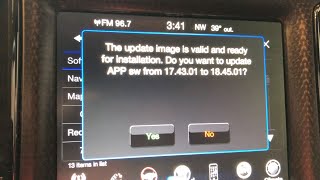
This code on a 2015-2017 Jeep Renegade is most often caused by a software glitch in the Powertrain Control Module (PCM). The primary fix is a software update performed by a Jeep dealer, which typically costs between $150 and $250 if out of warranty. It is frequently seen alongside the 2.4L Tigershark engine's excessive oil consumption problem, which can cause performance issues that trigger this code.
- Code U1424 on a 2015-2017 Renegade almost always points to a software issue.
- The first step in diagnosis should be checking with a Jeep dealer for available PCM/TCM software updates.
- If your Renegade has the 2.4L engine, check your oil level immediately, as this code is often linked to excessive oil consumption and related engine problems.
- Do not replace expensive parts like the PCM before confirming the software is up-to-date.
What's Unique About the 2015-2017 Jeep RENEGADE 🎬 Watch: Top 5 common problems with the first-gen Renegade

On the first-generation Jeep Renegade, U1424 is frequently a software issue rather than a hardware failure. Multiple Technical Service Bulletins (TSBs) have been issued by Jeep, indicating that the control modules' software can misinterpret sensor data, leading to this and other related codes. It's also commonly associated with the 2.4L Tigershark engine's known oil consumption problems, where engine performance issues like misfires can trigger this data fault. The complex 9-speed ZF automatic transmission (948TE) can also contribute to data conflicts between the TCM and PCM, setting this code.
Diagnostic Flowchart

Tap your situation to follow the diagnostic path that matches what you're seeing on this vehicle.
Symptoms You May Notice

- Check Engine Light (MIL) is on
- Electronic Throttle Control (ETC) or 'lightning bolt' light is on
- Vehicle may stall, especially after a cold start or when coming to a stop
- Rough or erratic shifting from the automatic transmission
- Loss of acceleration or vehicle entering 'limp mode', sometimes unable to exceed 40 mph
- Rough idle
- Vehicle may not shift gears, requiring a restart to temporarily fix
- Catalytic converter glowing red hot from unburnt fuel
- Replacing sensors without checking for software updates first.
- Replacing the PCM when only a re-flash is needed.
- Replacing the transmission or torque converter when the root cause is an engine performance issue or software glitch.
Most Likely Causes

- Outdated Powertrain Control Module (PCM) Software 🔴 High Probability Multiple TSBs (e.g., #21-021-16, #18-081-19, #18-062-17) were released by Jeep to fix this specific code with a software update, indicating it's a known logic flaw in how the PCM/TCM interprets data.
How to confirm: A Jeep dealer or a well-equipped independent shop must connect a wiTECH scan tool to check the current software calibration ID against the latest available updates listed in the TSBs.
Typical fix: Reprogramming ('flashing') the PCM and sometimes the Transmission Control Module (TCM) to the latest software version. This is a dealer-only procedure.
Est. part cost: $0 - Engine Mechanical Issues (especially on 2.4L Tigershark) 🟡 Medium Probability The 2.4L Tigershark engine is notorious for excessive oil consumption due to piston ring issues. When oil levels drop, it can cause misfires and erratic performance, leading the PCM to register an 'implausible' torque signal. TSB #18-081-19 directly links U1424 to misfire codes and oil consumption.
How to confirm: Check engine oil level immediately. If low, the dealer must perform an oil consumption test as outlined in TSBs like #09-006-20. Scan for misfire codes (P0300-P0304). Some owners report failing the test and receiving a new engine under warranty.
Typical fix: If oil consumption is severe and confirmed by a dealer test, the fix often requires piston ring replacement or a new engine long block, sometimes covered under extended warranty programs (XB1/W80). A software update was released as an initial 'fix' but often proved insufficient.
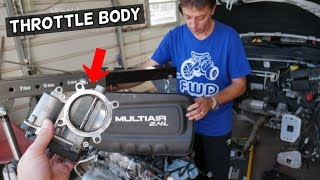
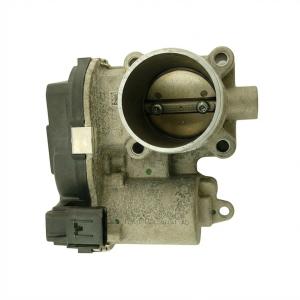
Est. part cost: $2000-$7000 - Failing Throttle Body ⚪ Low Probability While less common than software issues, a failing electronic throttle body can send erratic position signals, leading to an implausible torque calculation. TSB #18-062-17 lists U1424 alongside several throttle position sensor codes (P0122, P0222).
How to confirm: Scan for throttle-specific codes (e.g., P0122, P0222, P2110, P2112). Monitor throttle position sensor data on a scan tool for glitches or non-responsive behavior. A user on Reddit with stalling issues had throttle body codes P0123 and P0222.
Typical fix: Replacement of the electronic throttle body assembly. The OEM part number for the 2.4L engine is often cited as Mopar #68263322AA, though it's best to verify with a VIN.
Est. part cost: $150-$300 - Faulty Sensor (e.g., MAF, Crankshaft Position) ⚪ Low Probability The torque calculation relies on data from multiple sensors. A failing sensor can provide bad data, triggering the U1424 code as a secondary fault. TSBs mention U1424 alongside codes for the MAF sensor (P0101) and Crankshaft Position Sensor (P0335).
How to confirm: Diagnose any accompanying sensor-related DTCs first. A video on a similar Dodge platform showed that fixing a P0340 (Camshaft Position Sensor) cleared the U1424 and P1DD2 codes.
Typical fix: Replace the specific sensor that is confirmed to be faulty.
Est. part cost: $50-$200
Rare But Worth Checking
- CAN Bus Wiring Fault: A damaged wire or corroded connector between the PCM, TCM, or ABS module can corrupt the signal, but this is less likely than software or component issues. One owner found a damaged wire in the rear differential harness that was causing various electrical issues, including stalling. This should be investigated after all other possibilities are ruled out.
- Weak or Failing Battery/Alternator: Low system voltage can cause unpredictable behavior from various control modules. Some owners on forums report that seemingly unrelated electrical issues and stalling were resolved after replacing an aging battery.
Diagnosis Steps
- Check for and perform any available software updates for the PCM and TCM. This is the most critical first step. Insist the dealer checks for TSBs related to U1424, even if they initially suggest other repairs.
- If the vehicle has the 2.4L engine, check the engine oil level immediately. If it is low, even slightly, suspect excessive oil consumption. This is a known issue that directly causes this code.
- Scan all vehicle modules for other DTCs. Diagnose and fix them first, especially codes for misfires (P030x), camshaft/crankshaft sensors (P0335/P0340), or throttle body (P0122/P0222). Fixing the root cause often clears U1424.
- If software is up to date and oil is full, monitor live data from the throttle position sensor, MAF sensor, and engine speed (RPM) sensor to look for erratic or illogical readings during a test drive.
- Perform a battery and charging system test. A weak battery or failing alternator can cause numerous, seemingly unrelated electronic faults on this platform.
- Inspect the wiring harnesses and connectors between the PCM, TCM, and ABS module for any visible damage, corrosion, or loose connections. Pay attention to harnesses in exposed areas, like near the rear differential.
Parts You'll Likely Need
- Powertrain Control Module (PCM) Software Update — This is not a physical part, but a service. It is the most common and manufacturer-recommended fix for this code on the Renegade, as documented in multiple TSBs.
OEM price range: $150-$250
Aftermarket price range: N/A - Electronic Throttle Body
(OEM #68263322AA)— May be needed if the vehicle also has throttle-specific codes or if sensor data is erratic and a software update doesn't resolve the issue.
Trusted brands: Mopar, Bosch, Dorman
OEM price range: $250-$400
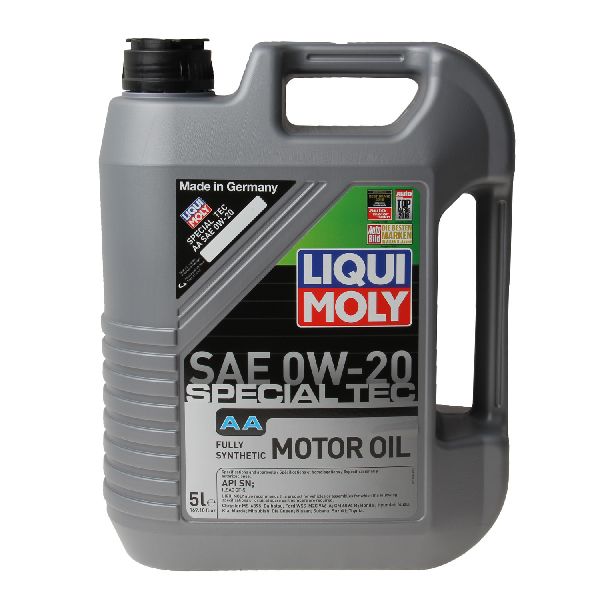
Aftermarket price range: $150-$300 - Engine Oil
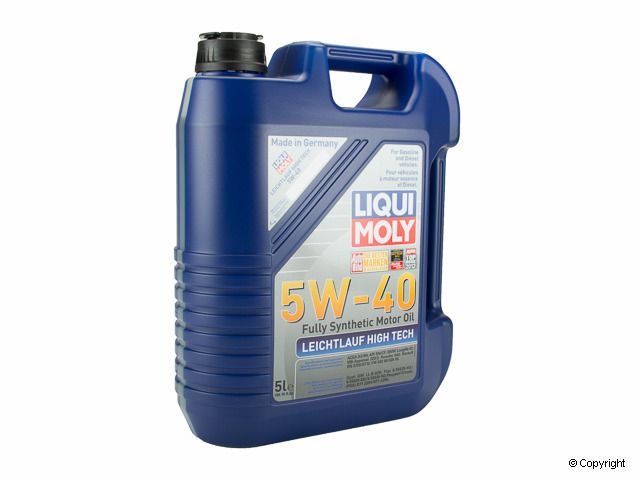
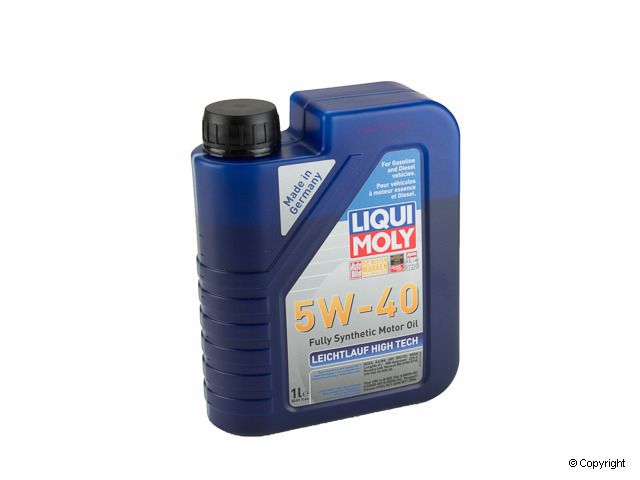
(OEM #68218950AC)— Due to the high likelihood of excessive oil consumption on the 2.4L engine, topping off the oil is a critical first step in diagnosis and may temporarily alleviate performance symptoms causing the code.
Trusted brands: Mopar, Pennzoil
OEM price range: $10-$15/quart
Aftermarket price range: $8-$12/quart
Related Codes That Often Appear With This One
- P1DD2 — Torque Request Signal From TCM Denied. This code is directly related, indicating a conflict between the engine and transmission torque requests. It is often fixed by the same software update and is a strong indicator that the issue is network-related, not a hard transmission part failure.
- U0402 — Invalid Data Received From TCM. This indicates a communication problem with the Transmission Control Module, often appearing with U1424 and fixed by the same PCM/TCM software updates.
- P0300-P0304 — Cylinder Misfire codes. These can be a direct cause of the implausible torque signal, especially if related to the 2.4L engine's oil consumption issue which leads to poor combustion.
- P0335 / P0340 — Crankshaft/Camshaft Position Sensor Circuit. A faulty signal from these sensors provides incorrect engine speed or timing data, which is a critical input for torque calculation, directly causing a U1424 code.
Technical Service Bulletins (TSBs) & Recalls
- 1805520: Lists U1424 with other implausible data codes from the TCM and brake system.
- 18-061-16 REV. C: Cites U1424-00 as a code resolved by a software update.
- 21-021-16: Explicitly states a software update for the TCM corrects U1424 and several transmission-related DTCs to improve shift quality.
- 18-081-19: Links U1424-00 with multiple cylinder misfires and excessive oil consumption, recommending a PCM software update for the 2.4L engine.
- 18-061-16: Also lists U1424-00 with various other DTCs that can be fixed with software updates.
- MC-10140187-9999: A Fiat TSB for the platform-mate 500X, also listing U1424 as fixed by a software update.
Platform-Specific Known Issues
- A primary cause for U1424 is faulty software logic that requires a PCM re-flash, as outlined in TSBs #18-081-19, #21-021-16, and #18-061-16 REV. C.
- On models with the 2.4L Tigershark engine, this code is often a secondary symptom of excessive oil consumption causing engine performance problems. TSB #18-081-19 explicitly links U1424-00 with multiple cylinder misfires and excessive oil consumption, recommending a PCM software update for the 2.4L engine.
- Problems with the 9-speed ZF 948TE automatic transmission's software can also lead to data conflicts that trigger this code, often in conjunction with drivability complaints like harsh shifting.
Mechanic-Grade Diagnostic Values
- CAN Bus Voltage (High-Speed CAN) — expected: CAN High (Pin 6 at DLC): ~2.5V recessive, ~3.5V dominant. CAN Low (Pin 14 at DLC): ~2.5V recessive, ~1.5V dominant.. Failure: Voltages stuck high or low, or not mirroring each other. No voltage or voltage outside these ranges indicates a wiring or module fault.
- System Voltage during PCM Flash — expected: Must be maintained between 13.2 and 13.5 volts.. Failure: Dropping below 13.2V or climbing above 13.5V can cause the flash to fail or corrupt the module.
Hidden / Shadow Codes Worth Checking
- U1424-00: The '-00' is a Failure Type Byte (FTB) indicating 'No Sub Type Information'. This is a generic suffix that often points to a general communication or logic fault rather than a specific circuit-high, circuit-low, or performance failure. Its presence strongly supports the diagnosis of a software update being the required fix. (see via A professional scan tool like wiTECH will display the code with its FTB. Basic OBD-II readers may only show 'U1424'.)
Scan Tool Commands That Help
- wiTECH: Reprogram PCM — This is the primary repair procedure outlined in multiple TSBs for U1424. It updates the module's software to correct logic flaws. The tool automatically checks for the latest software version.
- wiTECH: Clear All DTCs — This function must be used after reprogramming any module to ensure that stored faults from the flashing process are removed from all vehicle controllers.
- Generic OBD-II Scanner / Manual Procedure: Throttle Body Relearn/Reset — After cleaning or replacing the electronic throttle body, a relearn procedure is necessary to recalibrate the closed and wide-open throttle positions. If not performed, the engine may idle poorly or have erratic throttle response, which could potentially trigger a U1424 code.
Wiring & Ground Locations
- Data Link Connector (DLC) — Under the driver's side dashboard, typically to the left of the steering column.. This is the primary access point for network diagnostics. Pin 6 (CAN High) and Pin 14 (CAN Low) are used to test the high-speed CAN bus voltages and resistance.
- Body Control Module (BCM) Fuse Box — Located behind the driver's side dash panel, requiring removal of three Torx screws to access. It is in a difficult-to-reach position.. A video for a different Jeep model with U1424 pointed to a BCM-related circuit fault (Ignition Switched Power Run or Crank Relay Circuit). While the definition may vary by model, checking fuses in this hard-to-reach location is a valid, though difficult, diagnostic step.
Real Owner Repair Stories
- Reddit user in r/MechanicAdvice (2015 Jeep Cherokee Latitude (Similar platform and powertrain)) — Car would stall at a light after a cold start, then restart and run fine. Eventually, it began stalling every time it was cold. Codes U1424 and U11E9 appeared.
❌ Tried (didn't work) The user took it to a mechanic instead of the dealer who performed the recall.
✅ What actually fixed it The problem started three weeks *after* a dealership performed a PCM/TCM software recall. The user and their mechanic suspected the dealer's software update was the direct cause of the new fault codes and drivability issues. The resolution was not posted, but the timeline strongly implies a causal link to the dealer's flash. - YouTube video by Eagle Motors (Dodge Durango 5.7 HEMI (Different vehicle, but demonstrates the principle of related codes)) — Check engine light, lack of power, unable to accelerate past 35-40 mph. Codes U1424, P1DD2, and P0340 were present.
❌ Tried (didn't work) Diagnosing it as a primary transmission problem.
✅ What actually fixed it The root cause was the P0340 Camshaft Position Sensor Circuit fault. Replacing the camshaft position sensor for $25 resolved the engine performance issue, which in turn cleared the U1424 and P1DD2 codes. The video emphasizes that U1424 and P1DD2 are often symptoms driven by a primary engine performance fault. - Reddit user in r/JeepRenegade (2018 Jeep Renegade 2.4L) — Vehicle went into limp mode with 'Service Transmission' and 'Service Engine' lights.
✅ What actually fixed it Another user commented that they had the same issue and it was resolved by a dealer oil consumption test. After driving 1200-1500 miles, significant oil loss was confirmed, leading to an engine replacement under a recall/extended warranty. This confirms the direct link between the 2.4L's oil consumption and the U1424 code.
OEM Part Supersession History
68263322AA→N/A— Part number is for a 'Rear Suspension Retainer' on Ram ProMaster City, not the throttle body for a Jeep Renegade. The pass 2 data incorrectly associated this part number with the throttle body.
Heads up: The part number 68263322AA listed in pass 2 for the throttle body is incorrect. Multiple sources confirm this part is a suspension component for a different vehicle. The correct Mopar throttle body part number for the 2.4L Renegade needs to be verified using a VIN.
Model Year Variations Within This Range
- 2015-2018: The 2.4L Tigershark engine was a primary engine option during these years and is the engine most associated with the oil consumption issue that can lead to code U1424.
- 2019+: For the 2019 model year, the 1.3L Turbo engine was introduced as a replacement for the 1.4L, while the 2.4L remained available. The 2.4L was eventually discontinued for the US market in 2022. Vehicles from 2019 onward with the 1.3L engine are less likely to experience U1424 due to the specific 2.4L oil consumption issue.
Helpful Videos
Used OEM Parts in Stock



New Aftermarket Parts Available


The information in this article is provided for general reference and educational purposes only. Vehicle specifications, procedures, and part compatibility can vary by production date, trim level, and region. Always consult your vehicle's factory service manual and verify part numbers before purchasing or performing repairs. Safety-critical components such as airbags, seat belts, and braking systems should be installed by a qualified professional.
- Jeep RENEGADE:
- 🎬 Helpful Videos
- 🛍️ Shop This Part
- What's Unique About the 2015-2017 Jeep RENEGADE
- Diagnostic Flowchart
- Symptoms You May Notice
- Most Likely Causes
- Rare But Worth Checking
- Diagnosis Steps
- Parts You'll Likely Need
- Related Codes That Often Appear With This One
- Technical Service Bulletins (TSBs) & Recalls
- Platform-Specific Known Issues
- Mechanic-Grade Diagnostic Values
- Hidden / Shadow Codes Worth Checking
- Scan Tool Commands That Help
- Wiring & Ground Locations
- Real Owner Repair Stories
- OEM Part Supersession History
- Model Year Variations Within This Range
- 🎟️ Get 5% Off