

U1424 on 2014-2017 Jeep Cherokee: Implausible Engine Torque Signal Fixes
On a 2014-2017 Jeep Cherokee, code U1424 is almost always caused by outdated Powertrain Control Module (PCM) software. The fix is a software update performed by a Jeep dealer or qualified shop, typically costing between $150 and $300. This should be the first step before considering any hardware replacement.
- U1424 on your Jeep Cherokee is a communication error, not a broken part.
- The most likely cause by a wide margin is outdated PCM software, which can trigger a 'false' code.
- Do not replace expensive parts like the transmission or throttle body before having a dealer check for software updates.
- The fix is a software 'reflash' that must be done at a dealership or a shop with the correct equipment, typically costing $150-$300.
- Driving with this code can be unpredictable; the vehicle may lose power or shift poorly, so it should be addressed promptly.
What's Unique About the 2014-2017 Jeep CHEROKEE

The 2014-2017 Jeep Cherokee (KL generation) is particularly known for setting this code due to software sensitivity. Multiple Technical Service Bulletins (TSBs) have been issued by Fiat Chrysler Automobiles (FCA) specifically to correct this 'false failure'. [TSB #18-064-20, #18-110-20] This indicates the vehicle's control modules were originally programmed with logic that could too easily flag a torque signal as implausible, even when no actual hardware fault existed. The TSBs explicitly state the fix is to reprogram the PCM with updated software that can 'better address this DTC'. The primary fix is nearly always a software reflash, rather than a part replacement.
🎬 Watch: A professional PCM and TCM software programming walkthrough.Diagnostic Flowchart

Tap your situation to follow the diagnostic path that matches what you're seeing on this vehicle.
Symptoms You May Notice

- Check Engine Light is on
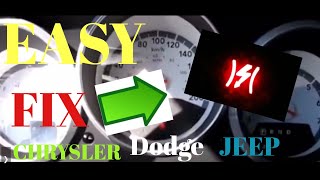
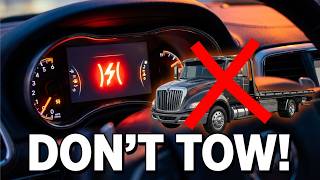
- Electronic Throttle Control (ETC) warning light (a red lightning bolt) may illuminate
- Vehicle may enter 'limp mode' with significantly reduced engine power.
- Transmission may not shift correctly or may feel stuck in one gear.
- Service message on the dashboard, such as 'Service Electronic Throttle Control'.
- Traction control light may illuminate.
- In rare cases, a no-crank or no-start condition.
- Engine may stall when coming to a stop.
- Replacing the transmission
- Replacing the throttle body without proper diagnosis
- Replacing the TCM without checking for PCM updates first
Most Likely Causes

- Outdated Powertrain Control Module (PCM) Software 🔴 High Probability Manufacturer has released multiple TSBs to correct overly sensitive diagnostic logic that causes this 'false failure'. TSBs are often specific to model year and engine: TSB #18-110-20 for 2017 2.4L, #18-085-17 for 2015 3.2L, and #18-093-16 REV. A for 2014 models.
How to confirm: A Jeep dealer or a well-equipped independent shop can check the current PCM software calibration ID against the latest available version using a wiTECH scan tool. The TSBs list the specific DTCs they are designed to fix.
Typical fix: Reprogramming (flashing) the PCM to the latest software version. Many TSBs also require ensuring the Transmission Control Module (TCM) is updated at the same time. A stable battery voltage (13.2-13.5V) must be maintained during the flash.
Est. part cost: $0
Rare But Worth Checking
- Failing or Faulty Sensor: While less common than a software issue, a sensor providing bad data (like a crankshaft position, camshaft position, or throttle position sensor) can cause the PCM to calculate an incorrect torque value, triggering the U1424 code. A video showed a slipped camshaft tone ring causing a U1424 along with a P0018 code.
- Internal Engine Mechanical Failure: In one documented case involving a 2015 Grand Cherokee with U1424 and other codes, the ultimate fix was replacing the camshafts and lifters due to a loss of oil pressure, even though the engine ran smoothly. This highlights that a mechanical issue can lead to this electronic code.
- CAN Bus Communication Wiring Issue: A damaged wire or poor connection in the vehicle's communication network (CAN bus) can corrupt the signal between the PCM and TCM, leading to this code. This is an advanced diagnosis that should only be pursued after a software update fails. Check for 60Ω of resistance between pins 6 and 14 of the OBD-II port with the battery disconnected.
- Failing Powertrain Control Module (PCM): In very rare instances where a software update does not fix the issue and all wiring and related sensors are confirmed to be good, the PCM itself may have an internal fault.
Diagnosis Steps
- Check for Active TSBs: The first and most important step is to check if the vehicle's VIN has an open Technical Service Bulletin related to PCM software. The manufacturer's TSBs are the most authoritative source for this code.
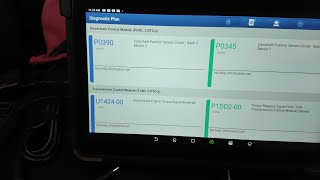
- Scan for All Codes: Use a professional OBD-II scanner (like wiTECH) to read all codes from all modules (PCM, TCM, ABS, BCM). The presence of other codes listed in the TSBs, especially P1DD2, strongly points toward a software issue.
- Verify PCM and TCM Software Versions: This must be done at a dealership or qualified shop with a wiTECH scan tool. They can confirm if the PCM and TCM software is outdated by comparing the installed calibration ID to the latest version available from FCA.
- Perform PCM/TCM Software Update: If the software is old, have the module(s) reprogrammed (flashed). This is the most common and direct fix. Ensure a stable battery charger is connected during the process.
- Clear Codes and Test Drive: After the update, clear all DTCs from all modules and perform a thorough test drive, including varied throttle inputs and gear changes, to ensure the U1424 code does not return.
- Inspect Related Sensors and Wiring: If the code returns after a software update, begin diagnostics on sensors that influence torque calculations (e.g., MAP, throttle position, crankshaft/camshaft sensors) and inspect the CAN bus wiring harness for damage or corrosion between the PCM, TCM, and ABS modules.
Parts You'll Likely Need
- PCM Software Update (Service) — This is a service, not a physical part. It is the most common fix specified by numerous manufacturer TSBs to correct false failures by updating the diagnostic logic.
Trusted brands: Mopar (Dealer Service)
OEM price range: $150-$300
Aftermarket price range: N/A - Powertrain Control Module (PCM)
(OEM #VIN Specific (e.g., RL051668AE, R8456649AI - examples only, must match VIN))— This is a rare fix, only to be considered if a software update fails and all wiring has been verified as good. A new PCM will also require programming by the dealer.
Trusted brands: Mopar
OEM price range: $550-$850
Aftermarket price range: $300-$600
Related Codes That Often Appear With This One
- P1DD2 — Torque Request Signal From TCM Denied. This code is a direct companion to U1424, as the TCM is actively rejecting the torque signal it received from the PCM.
- U1504 — Implausible Message Data Length Received From Steering Angle Sensor. Often addressed by the same PCM software update. [TSB #18-110-20, TSB #18-064-20, TSB #18-085-17].
- P0335 — Crankshaft Position Sensor Circuit. Often addressed by the same PCM software update. [TSB #18-085-17, TSB #18-093-16 REV. A].
- P2610 — PCM Internal Engine Off Timer Performance. Often addressed by the same PCM software update. [TSB #18-064-20, TSB #18-093-16 REV. A]
- P0456 — EVAP System Small Leak. Often addressed by the same PCM software update. [TSB #18-085-17, TSB #18-035-16 REV.A].
- U0402 — Implausible Data Received From TCM. This is another network code indicating a communication problem between the engine and transmission controllers, often fixed by the same PCM flash. [TSB #18-085-17, TSB #18-076-16].
Technical Service Bulletins (TSBs) & Recalls
- 18-110-20: For 2017 2.4L models. Addresses U1424-00, noting that in a limp mode condition, the transmission may remain in a fixed gear.
- 18-064-20: For 2016 models. Notes U1424 as a 'DTC False Failure' and recommends a software update.
- 18-085-17: For 2015 3.2L models. States that software has been updated to 'better address this DTC' and also requires a TCM software update.
- 18-093-16 REV. A: For 2014 models. Lists U1424 as one of several codes fixed by a PCM software update.
- 21-006-17 REV. A: For 2017 models. Includes U1424-00 as a code that may be set along with transmission-related faults like P0810-00.
- 18-076-16: For 2016 models. Groups U1424 with U0402 (Implausible Data from TCM), indicating a PCM flash resolves the communication fault.
- 18-035-16 REV.A: For 2015 models. Lists U1424 as a key code addressed by a PCM software update.
Platform-Specific Known Issues
- The 2014-2017 Jeep Cherokee platform is highly susceptible to setting U1424 due to software logic, as confirmed by numerous TSBs issued by the manufacturer to update the PCM. [TSB #18-110-20, TSB #18-064-20, TSB #18-085-17, TSB #18-093-16 REV. A, TSB #21-006-17 REV. A]
- TSB 18-085-17 specifically applies to the 2015 Cherokee with the 3.2L V6 engine and lists U1424 as a primary code fixed by the update.
- TSB 18-110-20 applies to the 2017 Cherokee with the 2.4L I4 engine and also addresses U1424.
- Many of the TSBs note that the Transmission Control Module (TCM) must also be checked and updated to the latest software after the PCM is flashed.
Mechanic-Grade Diagnostic Values
- CAN Bus Resistance (High-Speed) — expected: ~60 Ω. Failure: A reading of ~120 Ω indicates a missing terminating resistor (unplugged/failed module). A reading near 0 Ω indicates a short between the CAN High and CAN Low wires.
- CAN Bus Voltage (Key On, Engine Off) — expected: CAN_H to Ground: ~2.5V, CAN_L to Ground: ~2.5V. Failure: Significant deviation from 2.5V on either line points to a wiring short to power/ground or a faulty module transceiver.
Hidden / Shadow Codes Worth Checking
- U1424-00: The '-00' is a symptom byte visible on dealer-level scan tools like wiTECH. While not a completely separate code, it confirms the 'Implausible Engine Torque Signal Received' fault without adding more specific component information. Its presence is noted in multiple TSBs. (see via FCA wiTECH scan tool or other advanced diagnostic tool capable of reading manufacturer-specific symptom bytes.)
Scan Tool Commands That Help
- wiTECH or advanced aftermarket (e.g., Appcar DiagFCA): PROXI Alignment / Proxi Configuration Alignment — This procedure is required after replacing a major control module (like the BCM, PCM, or ABS module). It synchronizes the vehicle's configuration across all modules on the network. A flashing odometer is a primary symptom indicating a PROXI alignment is needed.
Wiring & Ground Locations
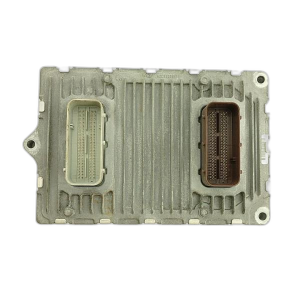
- PCM (Powertrain Control Module) — Located in the engine bay, on the driver's side, attached to the firewall/inner structure. It is typically held in place by three bolts.. The PCM is the source of the engine torque signal. All software updates are flashed to this module, and its ground connections are critical.
- TCM (Transmission Control Module) — Located on top of the transmission housing in the engine bay.. The TCM is often the module that receives the implausible torque signal from the PCM and requests the code be set. Its connection to the CAN bus is critical.
- PCM Engine Block Grounds (e.g., G102, G103) — Located on the engine block, often near the motor mounts or thermostat housing. There are typically two key ground studs for the PCM and transmission sensors.. A poor ground connection at the engine block can cause incorrect sensor readings and electrical noise, leading the PCM to calculate an erroneous torque value and broadcast it on the network.
- CAN Bus Star Connectors — These are junction points for the CAN bus wiring. Locations include under the center console and under the passenger side glovebox area.. Corrosion or loose connections at these junction points can disrupt communication between modules, leading to network codes like U1424.
Real Owner Repair Stories
- YouTube channel 'Eagle Motors' (Dodge Durango with 5.7L HEMI (similar FCA torque management strategy)) — Check engine light, lack of power, car won't accelerate past 35-40 mph.
❌ Tried (didn't work) Concern about a major transmission failure.
✅ What actually fixed it The vehicle also had a P0340 (Camshaft Position Sensor Circuit) code. Replacing the camshaft position sensor for $25 and clearing the codes resolved the U1424 and P1DD2 codes, restoring full engine power. - YouTube channel 'Online Mechanic Tips' (Chrysler 300 with 3.6L Pentastar V6 and ZF 8-speed transmission) — Poor idle, not shifting correctly, multiple codes including U1424, P1DD2, P06DD (oil pressure), and P0344 (camshaft sensor).
❌ Tried (didn't work) Focusing on the transmission as the source of the problem.
✅ What actually fixed it The mechanic identified the root cause as an engine drivability issue (VVT system fault related to low oil pressure). The U1424 code was a symptom, set because the compromised engine performance made the torque signal implausible to the TCM. The fix was to diagnose and repair the engine's oil pressure/VVT system.
"I Checked Everything" — The Actual Cause
- In the context of U1424, the equivalent of a 'smoke test clean' scenario is when a PCM software update does not fix the problem. In these cases, the root cause is often an underlying hardware failure that is making the engine's actual torque output differ from what the PCM expects. One documented case showed a faulty camshaft position sensor (P0340) was the true cause. Another case pointed to a mechanical engine issue related to the VVT system and low oil pressure (P06DD). Technicians should investigate any accompanying engine-specific DTCs before considering a second flash or replacing the PCM.
When the Usual Fixes Don't Work
- While the vast majority of U1424 instances on this platform are resolved with a PCM software update as per FCA's own technical service bulletins, there are documented cases where this is not the fix. If the code returns after a flash, or is accompanied by other engine-specific trouble codes, the issue is likely hardware-based. Real-world repairs have shown that a faulty camshaft position sensor or a problem within the engine's VVT/oil pressure system can be the true root cause. In these scenarios, the U1424 code is a symptom of a mechanical or sensor issue, not the cause. Therefore, if a software update fails to resolve the issue, the next step should be to diagnose any other active DTCs, not to simply replace the PCM.
Helpful Videos
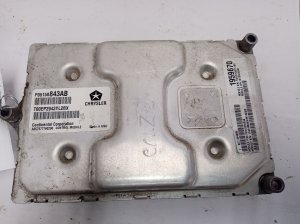
We Have This Part in Stock



The information in this article is provided for general reference and educational purposes only. Vehicle specifications, procedures, and part compatibility can vary by production date, trim level, and region. Always consult your vehicle's factory service manual and verify part numbers before purchasing or performing repairs. Safety-critical components such as airbags, seat belts, and braking systems should be installed by a qualified professional.
- Jeep CHEROKEE:
- 🎬 Helpful Videos
- 🛍️ Shop This Part
- What's Unique About the 2014-2017 Jeep CHEROKEE
- Diagnostic Flowchart
- Symptoms You May Notice
- Most Likely Causes
- Rare But Worth Checking
- Diagnosis Steps
- Parts You'll Likely Need
- Related Codes That Often Appear With This One
- Technical Service Bulletins (TSBs) & Recalls
- Platform-Specific Known Issues
- Mechanic-Grade Diagnostic Values
- Hidden / Shadow Codes Worth Checking
- Scan Tool Commands That Help
- Wiring & Ground Locations
- Real Owner Repair Stories
- "I Checked Everything" — The Actual Cause
- When the Usual Fixes Don't Work
- 🎟️ Get 5% Off