

U1424 on 2016-2017 Dodge Durango: Implausible Engine Torque Signal Fixes
On a 2017 Dodge Durango, code U1424 is almost always caused by a software glitch in the Powertrain Control Module (PCM). The official fix is a software update (reflash) from a Dodge dealer, as specified in TSB 18-024-17 Rev. C. This typically costs one hour of labor ($100-$200) and requires no new parts. For 2016 and other model years, the code may point to a failing crankshaft or camshaft sensor.
- For a 2017 Dodge Durango, U1424 is most likely a software bug.
- Before replacing any parts, check with a dealer if your vehicle needs the PCM software update mentioned in TSBs #18-049-20 and #18-024-17.
- The most common fix is a dealer-performed PCM reflash, which is relatively inexpensive.
- This code rarely appears alone; look for companion codes like P1DD2, P0556, or P0335 to help guide diagnosis.
- Do not immediately assume a transmission failure; this code points to a data problem, not a mechanical one.
What's Unique About the 2016-2017 Dodge DURANGO

For the 2017 Dodge Durango and its platform-mate, the Jeep Grand Cherokee, this code is well-documented by the manufacturer in multiple Technical Service Bulletins (TSBs). Specifically, TSB 18-024-17 Rev. C applies to vehicles built on or before March 6, 2017, with the 3.6L, 5.7L, or 3.0L engines. Unlike in many other vehicles where this code might trigger a complex diagnostic search for a failing sensor or wiring, on these specific 2017 models, it's a known software anomaly. The issue was addressed by Dodge with a PCM software update, making a trip to the dealer for a reflash the most direct and effective solution.
Diagnostic Flowchart

Tap your situation to follow the diagnostic path that matches what you're seeing on this vehicle.
Symptoms You May Notice

- Malfunction Indicator Lamp (MIL) is on
- Hesitation or lack of power during acceleration.
- Transmission may not shift properly or may feel like it's stuck in one gear (limp mode).
- Electronic Stability Control (ESC) light may illuminate.
- Engine may run rough or feel like it's misfiring.
- Flashing check engine light under load.
- Replacing the Transmission Control Module (TCM)
- Replacing the entire transmission due to shifting problems
- Replacing the throttle body or accelerator pedal sensor without checking for TSBs first
- Replacing a crankshaft or camshaft sensor on a 2017 model without first confirming if the required PCM software update has been performed
Most Likely Causes

- Outdated Powertrain Control Module (PCM) Software 🔴 High Probability This is a documented issue for 2017 model year Durangos and Grand Cherokees built on or before March 06, 2017, addressed by TSB 18-024-17 Rev. C. The original software calibration was overly sensitive and prone to setting this and other codes erroneously.
How to confirm: A Dodge dealer or a qualified shop with a wiTECH scan tool can check the current software calibration ID of the PCM and compare it to the latest version available. The TSB provides the new calibration part numbers that resolve the issue.
Typical fix: Reprogramming (flashing) the PCM with the updated software version specified in the TSB. The TSB also notes that the Transmission Control Module (TCM) must be updated to the latest software as well.
Est. part cost: $0 - Failing Crankshaft or Camshaft Position Sensor ⚪ Low Probability While less common for the 2017 model, on other years or if the software is already updated, a failing crank or cam sensor is a primary suspect. These sensors provide the core data for engine timing and speed; if their signal is erratic, the PCM will calculate an implausible torque value and send it over the network.
How to confirm: Monitor the sensor's data stream on a capable scan tool for dropouts or erratic readings. The presence of codes like P0335 (Crankshaft Position Sensor) or P0340/P0344 (Camshaft Position Sensor) alongside U1424 points strongly to this cause.
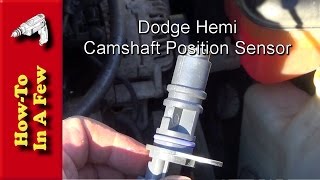
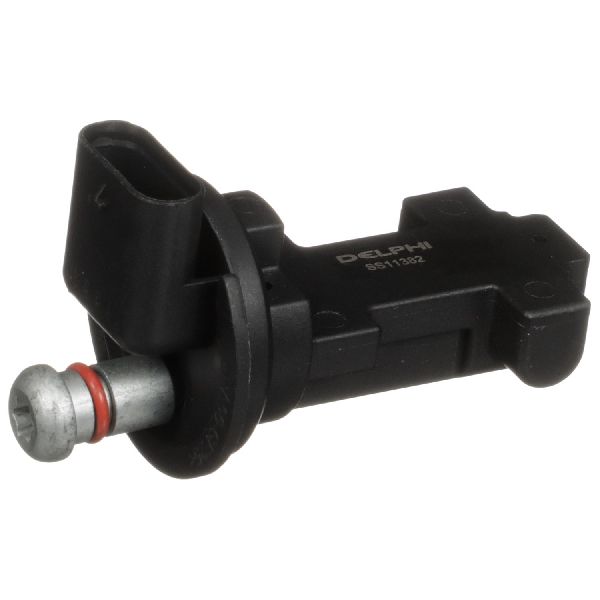
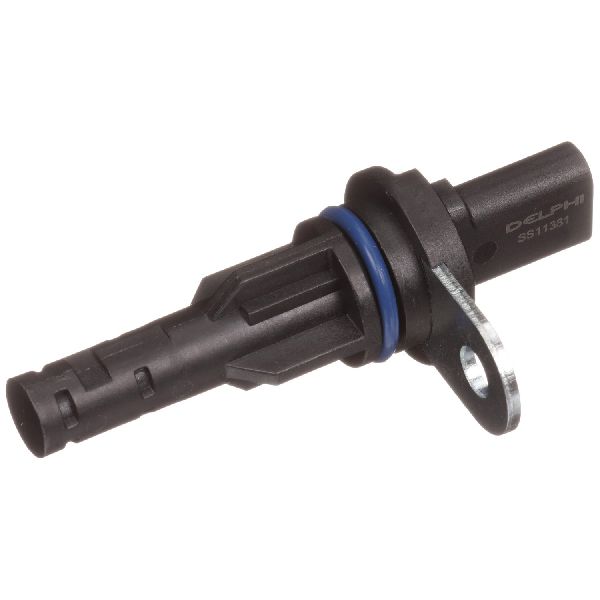
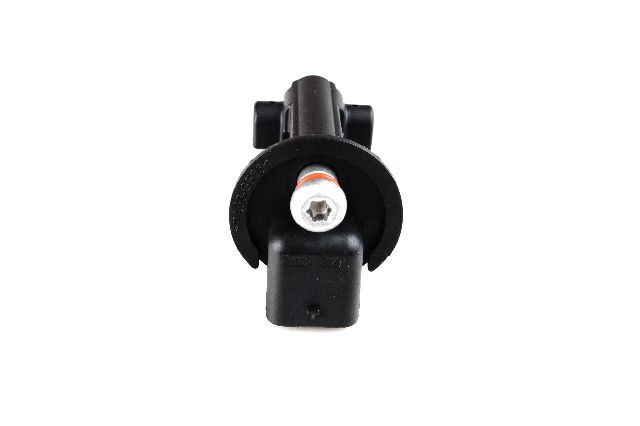
Typical fix: Replace the faulty sensor. A Mopar camshaft position sensor for the 3.6L engine is part number 68080819AD. 🎬 See this walkthrough for replacing a Hemi camshaft position sensor.
Est. part cost: $25-$90 - Low or Unstable Battery Voltage ⚪ Low Probability Modern vehicles are highly sensitive to battery voltage. A weak or failing battery can cause random communication errors between modules, especially during startup or when the engine's start-stop system is active. TSBs for this code also mention correcting conditions that lead to a shorter auxiliary battery life.
How to confirm: Perform a load test on the battery. Ensure battery terminals are clean and tight. Check the charging system voltage to ensure it's within specification (typically 13.5-14.5 volts when running).
Typical fix: Replace the vehicle's main and/or auxiliary battery.
Est. part cost: $150-$400
Rare But Worth Checking
- Failing Powertrain Control Module (PCM): If a software reflash does not resolve the code and all related sensor inputs and wiring have been verified as good, the PCM itself may have an internal fault. This is an expensive last resort, with replacement costs potentially exceeding $800.
- CAN Bus Network Wiring Issue: Damage to the vehicle's communication wiring (e.g., corrosion, chafing, or a loose pin in a connector between the PCM and TCM) can corrupt the signal, leading to this code. This requires careful inspection of the wiring harnesses, which can be labor-intensive. A faulty STAR connector, which links modules on the network, can also be a cause.
- Throttle Body Issues: In some cases on related platforms, issues with the electronic throttle body or accelerator pedal position sensor have been linked to U1424, as these are critical inputs for torque calculation. This is less common than the software or crank/cam sensor faults.
Diagnosis Steps
- Connect a professional scan tool (ideally a Mopar-specific wiTECH tool) capable of reading manufacturer-specific codes and software versions.
- Check for any Technical Service Bulletins (TSBs) related to U1424 for your vehicle's VIN. For a 2017 model, specifically look for TSB #18-024-17 Rev. C or later.
- If the TSB applies (vehicle built on or before March 06, 2017), instruct the dealer or shop to verify the current PCM software calibration ID against the new part numbers listed in the bulletin.
- If the software is outdated, have a dealer or qualified shop perform the PCM reflash. The TSB also mandates ensuring the TCM is updated to the latest software. This is the most likely fix for 2017 models.
- Clear all codes and perform a test drive, including several wide-open throttle shifts if safe, to confirm the fix.
- If U1424 returns, or if the vehicle is not a 2017 model, investigate accompanying codes. If P0335/P0339 or P0340/P0344 are present, diagnose the respective crank/cam sensor circuit. This is now the primary suspect.
- If no other codes are present, perform a comprehensive battery and charging system test, including the auxiliary battery if equipped, to rule out voltage issues.
- As a final step, inspect the CAN bus wiring harness between the PCM and TCM for any signs of damage, corrosion, or loose connections. If all else fails, the PCM itself may be faulty.
Parts You'll Likely Need

- Powertrain Control Module (PCM) Software Update — This is not a physical part, but a software reflash is the most common and manufacturer-recommended solution for the 2017 model year to correct calibration errors per TSB 18-024-17 Rev. C.
Trusted brands: Mopar (Dealer Service)
OEM price range: $100-$250
Aftermarket price range: N/A - Camshaft Position Sensor
(OEM #68080819AD)
Related Codes That Often Appear With This One
- P1DD2 — Stands for 'Torque Request Signal From TCM Denied'. This code is a direct companion to U1424, indicating the TCM is actively rejecting the PCM's torque signal because it's implausible. They almost always appear together. 🎬 Watch: How to fix U1424 and P1DD2 codes on a Hemi.
- P0335 / P0339 — Crankshaft Position Sensor Circuit Malfunction / Intermittent. If this code is present, the crank sensor itself is likely the root cause, leading the PCM to send out bad data. The software update TSB 18-024-17 changed this from a one-trip to a two-trip fault to reduce false positives.
- P0340 / P0344 — Camshaft Position Sensor Circuit Malfunction / Intermittent. Similar to the crank sensor, a faulty cam sensor can be the origin of the bad data causing U1424. This is a known issue on 3.6L and 5.7L engines.
- P0556 — Brake Booster Pressure Sensor Circuit Performance. This code is listed in the same TSB (18-024-17 Rev. C) as U1424 and is often resolved by the same PCM software update.
- P2681 — Engine Coolant Bypass Valve Control Circuit Open. This code is listed in TSB 18-024-17 for the 3.6L engine and is also resolved by the PCM reflash.
- P2299 — Brake Pedal Position / Accelerator Pedal Position Incompatible. Also listed in TSB 18-024-17, this code indicates a conflict in driver inputs that the software update helps resolve.
Technical Service Bulletins (TSBs) & Recalls
- 18-024-17 Rev. C: The key document for this issue. Supersedes previous versions and applies to 2016-2017 Durango and Grand Cherokee. It explicitly lists U1424 for 2017 models and confirms the fix is a PCM software update. It also lists several other DTCs resolved by the same flash.
- 18-049-20: Also mentions U1424 for 2017 MY and recommends a PCM software update to fix it along with other codes like P0556 and P040B. [NHTSA Source]
- 1802417 / 18-024-17 Rev. B: Earlier versions of the main TSB which also identify the software issue. Rev. C is the most current and comprehensive version to reference.
- 21-006-17 Rev. B: A TSB for the 2017 Jeep Cherokee that shows U1424 can also be set on other platforms and be related to a needed TCM (Transmission Control Module) update, not just a PCM update.
Platform-Specific Known Issues
- A well-documented software issue exists for the 2017 Dodge Durango (and Jeep Grand Cherokee) with 3.6L, 5.7L, and 3.0L engines, causing U1424 to be set. This applies to vehicles built on or before March 06, 2017. Dodge issued TSB 18-024-17 (with latest revision C) to resolve this by reprogramming the PCM and ensuring the TCM is also updated.
Mechanic-Grade Diagnostic Values
- Camshaft Position Sensor Voltage Test (3-wire Hall-effect type) — expected: With the ignition on and sensor connected, back-probing the signal wire should show the voltage switching between approximately 5V and 0V as a metal object is passed by the sensor tip. On the 3.6L Pentastar, which uses a 4-wire dual sensor, testing wires 1 and 2 with the ignition on should yield a 5V reading that drops to 0V when a magnet is brought near the sensor.. Failure: If the voltage does not switch and remains constant at 0V or 5V, the sensor is likely faulty.
- Crankshaft Position Sensor Voltage Supply — expected: With the ignition on and sensor disconnected, the supply wire in the connector should read 5V DC.. Failure: A reading significantly lower than 5V or no voltage indicates a problem in the wiring or the PCM's 5V reference circuit.
- Crankshaft Position Sensor Ground Connection — expected: With the ignition on and sensor disconnected, testing for voltage between the battery positive terminal and the ground pin in the connector should read battery voltage (approx. 12.6V).. Failure: No voltage or low voltage indicates a poor ground connection for the sensor circuit.
Scan Tool Commands That Help
- wiTECH (Mopar Dealer Tool): Reprogram PCM — This is the primary repair procedure for 2017 models as specified in TSB 18-049-20 and others. It flashes the PCM with updated software to correct the logic that falsely triggers U1424.
- wiTECH (Mopar Dealer Tool): Clear All DTCs — This function is required after reprogramming any module to ensure the system starts fresh and no old fault codes cause new issues. The wiTECH application automatically prompts this after a flash.
- wiTECH (Mopar Dealer Tool): Update TCM Software — Manufacturer TSBs mandate that after reprogramming the PCM for this issue, the Transmission Control Module (TCM) must also be updated to its latest software version to ensure compatibility.
Wiring & Ground Locations
- Crankshaft Position Sensor — Located on the lower passenger side of the engine block, near where the engine meets the transmission. It is accessed from underneath the vehicle.. A faulty crankshaft sensor is a primary cause of U1424 when it's not a software issue. Its signal is fundamental to the PCM's torque calculation.
- STAR Connector (CAN-C Bus) — Behind the passenger side kick panel / side panel, near the floor.. This is the central hub where modules on the CAN-C bus (including the PCM and TCM) communicate. A fault in this connector can disrupt the network and cause communication codes like U1424. Technicians can unplug individual modules here to isolate the source of a network failure.
- PCM Ground Wire — When reinstalling the PCM, a ground cable must be reattached to one of the mounting bolts. On a 2014 model, a key ground point is G901a, located on the left rear of the engine compartment.. A poor ground for the PCM can cause a wide range of erratic behavior and fault codes, including communication errors like U1424.
- Security Gateway Module (SGW) / 12+8 Connector — On 2018 and newer models, this is located behind the passenger side trim/carpet panel. While slightly outside the 2016-2017 range, its location is relevant for technicians working on adjacent model years. A bypass cable is needed here for most aftermarket scan tools to perform advanced functions.. For later models, this module must be bypassed to clear codes or reprogram other modules, a critical step in diagnosing and fixing codes like U1424.
Real Owner Repair Stories
- DodgeForum.com user (2014 Ram 1500 5.7L Hemi (Platform sharing similar electronics)) — Check engine light on, transmission would not shift out of first gear (limp mode), traction control light on.
✅ What actually fixed it The dealership found a bad camshaft position sensor (related to code P0344 which was also present) and also reprogrammed both the ECM (PCM) and TCM to resolve the issue. - YouTube user Eagle Motors (Dodge Durango with 5.7L Hemi engine) — Check engine light, lack of power, vehicle won't accelerate past 35-40 mph. Codes U1424, P1DD2, and P0340 (Camshaft Position Sensor Circuit) were present.
❌ Tried (didn't work) Initially suspecting a transmission issue due to the U1424 and P1DD2 codes.
✅ What actually fixed it The root cause was the camshaft position sensor, which triggered the P0340 code. Replacing the camshaft position sensor (a $25 part from AutoZone) and clearing the codes resolved all symptoms and codes, including the transmission-related ones.
OEM Part Supersession History
5033308AB, 68080819AB, 68080819AC→68080819AD— Standard part revision and consolidation over time.
Heads up: No known incompatibilities; 68080819AD is the current recommended replacement for the previous part numbers.
Model Year Variations Within This Range
- 2017: The primary cause for U1424 on 2017 models built on or before March 6, 2017, is a documented software issue in the PCM, fixed by a dealer reflash per TSB 18-024-17 Rev. C.
- 2016: For the 2016 model year, U1424 is more likely to be caused by a component failure, such as a crankshaft or camshaft position sensor, rather than the specific software glitch that affected the 2017 models. Diagnosis should focus more on sensor data and associated codes like P0335 or P0340.
Helpful Videos

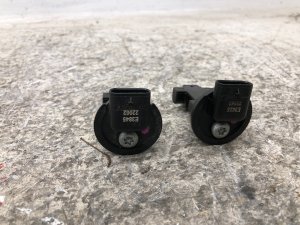
Used OEM Parts in Stock

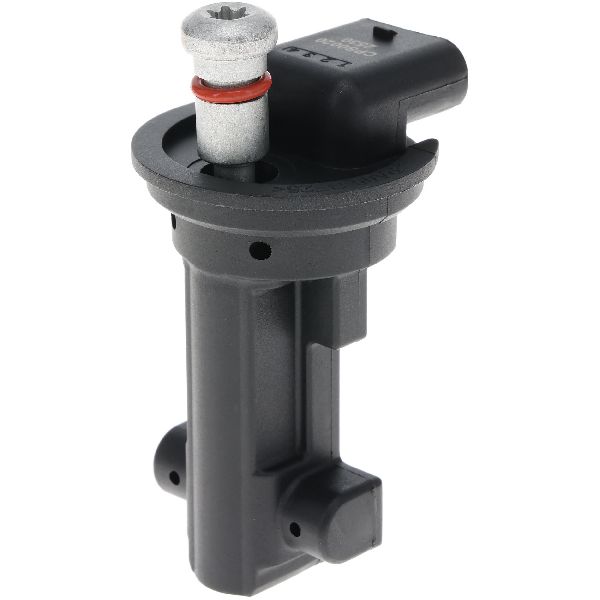
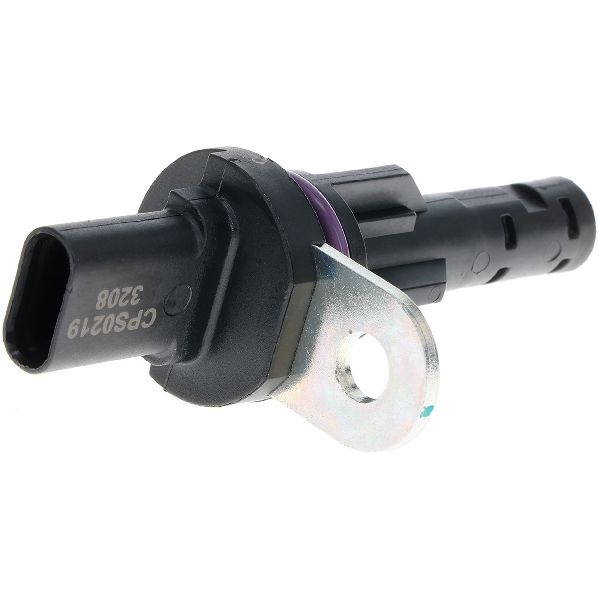
New Aftermarket Parts Available

The information in this article is provided for general reference and educational purposes only. Vehicle specifications, procedures, and part compatibility can vary by production date, trim level, and region. Always consult your vehicle's factory service manual and verify part numbers before purchasing or performing repairs. Safety-critical components such as airbags, seat belts, and braking systems should be installed by a qualified professional.
- Dodge DURANGO:
- 🎬 Helpful Videos
- 🛍️ Shop This Part
- What's Unique About the 2016-2017 Dodge DURANGO
- Diagnostic Flowchart
- Symptoms You May Notice
- Most Likely Causes
- Rare But Worth Checking
- Diagnosis Steps
- Parts You'll Likely Need
- Related Codes That Often Appear With This One
- Technical Service Bulletins (TSBs) & Recalls
- Platform-Specific Known Issues
- Mechanic-Grade Diagnostic Values
- Scan Tool Commands That Help
- Wiring & Ground Locations
- Real Owner Repair Stories
- OEM Part Supersession History
- Model Year Variations Within This Range
- 🎟️ Get 5% Off