

U1424 on 2013-2015 Dodge DART: Implausible Engine Torque Signal Fixes
On a 2013-2015 Dodge Dart, code U1424 almost always means the Powertrain Control Module (PCM) needs a software update from a dealer. This is a known issue addressed by Technical Service Bulletin (TSB) #18-022-17 REV. A. This dealer-performed reflash typically costs between $150 and $300. If the software is current, the next most likely causes are failing crankshaft or camshaft position sensors, which often set codes P0335 or P0340 respectively.
- Code U1424 on your Dart is a data problem, not usually a hard-part failure.
- The most likely fix is a one-time software update at a Dodge dealership, as outlined in TSB 18-022-17 REV. A.
- Do not replace the transmission; shifting problems are a symptom, not the cause.
- If a software update doesn't fix it, check for codes P0335 or P0340 and investigate the crankshaft and camshaft position sensors.
- Diagnosis and repair require professional tools, making this a difficult DIY fix.
What's Unique About the 2013-2015 Dodge DART
The Dodge Dart from this era, particularly models with the 2.4L Tigershark engine, is known for having sensitive powertrain software. Chrysler released several software updates to address falsely set trouble codes. U1424 is a prime example where the root cause is frequently not a faulty part, but overly sensitive diagnostic logic in the PCM. TSB #18-022-17 REV. A was issued specifically to correct this and other codes with a software reflash for the 2.4L engine.
Diagnostic Flowchart
Tap your situation to follow the diagnostic path that matches what you're seeing on this vehicle.
Symptoms You May Notice
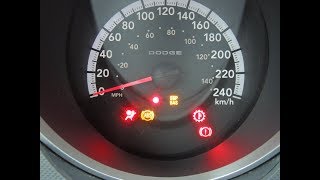
- Check Engine Light (MIL) illuminated
- Electronic Stability Control (ESC) or traction control light on
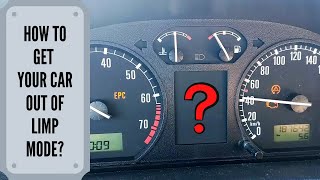
- Vehicle enters 'limp mode' with reduced power and acceleration
- Harsh or erratic automatic transmission shifting
- Transmission may seem stuck in one gear
- Poor or hesitant throttle response
- Engine may stall, especially after a cold start, and then run normally
- Replacing the transmission or torque converter. Shifting problems are often a symptom of the U1424 code, not the cause. The Transmission Control Module is simply reacting to the bad data it's receiving.
- Replacing the throttle body without proper diagnosis. While throttle position is a factor in torque calculation, it's less commonly the root cause on this platform compared to software or crank/cam sensors. Other TSBs do mention throttle position sensor codes alongside U1424, but the primary fix is still often a reflash.
Most Likely Causes
- Outdated Powertrain Control Module (PCM) Software 🔴 High Probability Manufacturer TSB #18-022-17 REV. A was specifically released to fix this code via a software update for the 2.4L engine. The original software calibrations were overly sensitive. This TSB also addresses a group of other related codes that can be set erroneously.
How to confirm: A Dodge dealer or a shop with a wiTECH scan tool can check the current software version on your PCM and compare it to the latest version available. This is done by connecting to the vehicle and checking the calibration ID against the manufacturer's database.
Typical fix: Reprogramming (flashing) the PCM with the updated software. This is a dealer or specialty shop repair that typically costs between $150 and $300.
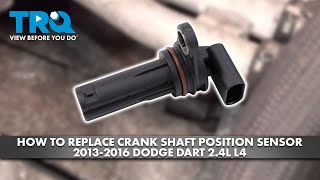
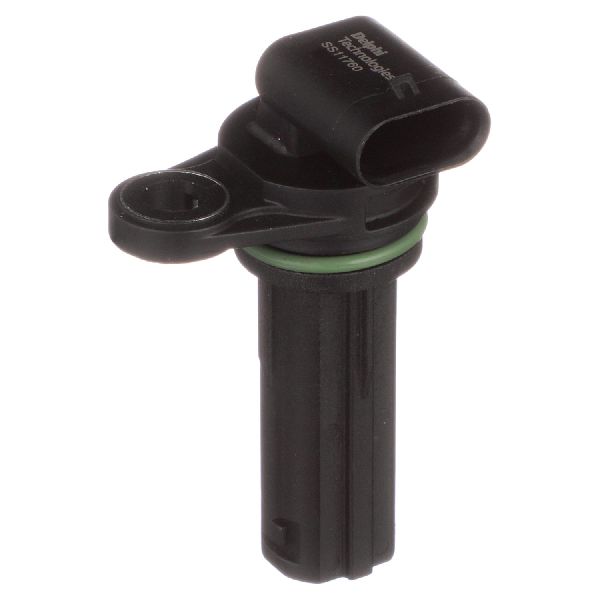
Est. part cost: $0 - Failing Crankshaft Position Sensor 🟡 Medium Probability The TSB for the PCM update also lists code P0335 (Crankshaft Position Sensor Circuit) as one of the codes fixed by the update, indicating a strong link. A failing sensor provides erratic engine speed data, a key input for torque calculation, which can cause the U1424 code even if the sensor hasn't failed completely.
How to confirm: Scan for additional codes; P0335 is a strong indicator. A technician can monitor the sensor's live data on a scan tool for dropouts or use an oscilloscope for definitive diagnosis. The sensor is located on the front of the engine block, near the transmission.
Typical fix: Replace the crankshaft position sensor. A 'crank variation relearn' or 'proxy alignment' procedure with a scan tool is required after replacement to ensure the new sensor is calibrated to the PCM.
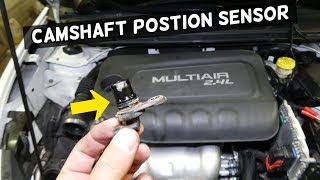
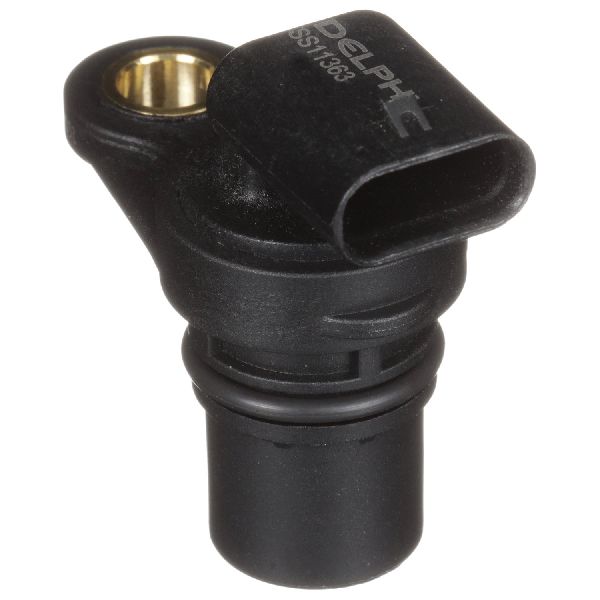
Est. part cost: $25-$75 - Failing Camshaft Position Sensor 🟡 Medium Probability Like the crank sensor, the camshaft sensor (related to code P0340) is also mentioned in the TSB group. Its failure can cause engine performance issues that lead the PCM to calculate an implausible torque value. The 2.4L engine has two camshaft sensors; one is easily accessible, but the rear sensor is notoriously difficult to replace, often requiring removal of the throttle body.
How to confirm: Check for code P0340 or P0344 (intermittent fault). Live data monitoring can reveal erratic signals. One owner recommended changing both sensors if one is found to be faulty.
Typical fix: Replace the faulty camshaft position sensor(s).
Est. part cost: $20-$60
Rare But Worth Checking
- Wiring Harness Damage: Chafing or corrosion on wires leading to the crank/cam sensors or between the PCM and TCM can cause intermittent and implausible signals. A known issue on some related platforms involves the engine harness chafing against the ECM/TCM bracket, upper control arm, or shock tower. A visual inspection of the harness in these areas is recommended.
- Major Vacuum Leak: A significant un-metered air leak (e.g., a snapped intake hose or faulty PCV valve) can cause a major discrepancy between throttle position and actual engine output, potentially triggering this code along with P2172 or P2173.
- Faulty Powertrain Control Module (PCM): In rare cases, if the software is up-to-date and all related sensors and wiring are confirmed good, the PCM itself may have an internal fault. A replacement PCM must be programmed with the vehicle's VIN.
- Low Engine Oil / VVT System Fault: On the 2.4L MultiAir engine, low oil level or pressure can affect the Variable Valve Timing (VVT) system. A malfunctioning VVT system can cause poor engine performance, which in turn makes the calculated torque value implausible to other modules, triggering U1424.
Diagnosis Steps
- Scan for all stored Diagnostic Trouble Codes (DTCs). Pay close attention to any other codes that accompany U1424, as they often point to the root cause (e.g., P0335, P1DD2).
- Contact a Dodge dealer with your Vehicle Identification Number (VIN) to check if TSB #18-022-17 REV. A is open for your vehicle and has not been performed.
- If the TSB is applicable, the first and most important step is to have the PCM reprogrammed (flashed) with the latest software. This is the most probable fix and should be done before replacing any parts.
- If the software is already up-to-date or the code returns, proceed to diagnose any other codes present, such as P0335 or P0340.
- Using a scan tool, monitor live data from the crankshaft and camshaft position sensors while the engine is running. Look for any signal dropouts or erratic readings, especially while wiggling the harness.
- Inspect the engine wiring harness for any signs of damage, corrosion, or looseness, paying special attention to known chafe points near the ECM/TCM bracket and driver's side shock tower.
- Check engine oil level and condition. Low or dirty oil can affect the MultiAir VVT system and indirectly cause this code.
- If all sensors and wiring are good and the software is current, more advanced diagnostics may be needed to test the PCM itself, which may involve a specialist.
Parts You'll Likely Need
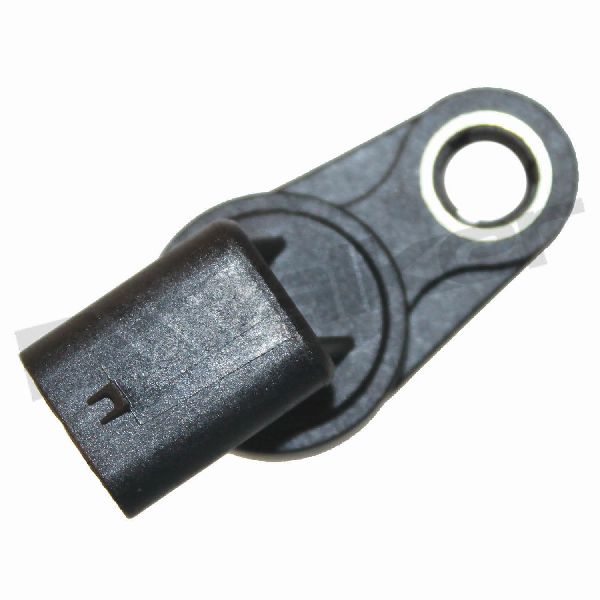
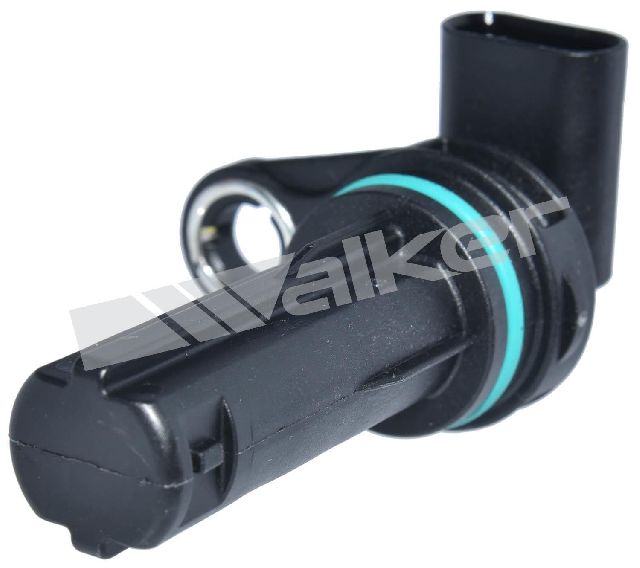
- Crankshaft Position Sensor
(OEM #68079375AD (supersedes 68079375AC, 68079375AB))— This is a common failure point that directly causes the PCM to calculate incorrect torque values, triggering U1424. It is often replaced if a PCM software update does not resolve the issue.
Trusted brands: Mopar, Delphi, NTK
OEM price range: $45-$75
Aftermarket price range: $25-$50 - Camshaft Position Sensor
(OEM #68080819AD (supersedes 68080819AB, 5033308AB))— Similar to the crankshaft sensor, a failing camshaft sensor can lead to engine performance issues that result in an implausible torque signal.
Trusted brands: Mopar, Duralast, Bosch
OEM price range: $40-$80
Aftermarket price range: $20-$45
Related Codes That Often Appear With This One
- P1DD2 — Means 'Torque Request Signal From TCM Denied'. This is the transmission's response to the U1424 fault; it's rejecting the engine's torque data. They almost always appear together.
- P0335 — Indicates a fault with the Crankshaft Position Sensor circuit. This is a primary input for torque calculation and a common root cause of U1424.
- P0340 / P0344 — Points to a fault in the Camshaft Position Sensor circuit. A faulty cam sensor can cause erratic engine operation, leading to an implausible torque calculation.
- U0402 — Means 'Implausible Data Received From TCM'. This code indicates a communication conflict originating from the transmission's side, often set in conjunction with U1424 as part of the same data rationality fault.
Technical Service Bulletins (TSBs) & Recalls
- 18-022-17 REV. A: The primary TSB for this issue. Recommends a PCM software update for 2013-2015 Dodge Darts with the 2.4L engine to resolve U1424 and a host of other DTCs, including P0335 and P0340.
- Multiple other TSBs for related platforms (Chrysler 200, Jeep Cherokee) also list U1424 as a code resolved by a PCM or TCM software update, confirming this is a widespread software issue across vehicles using the 2.4L engine.
Platform-Specific Known Issues
- The primary issue for the 2013-2015 Dart is the PCM's software sensitivity. TSB #18-022-17 REV. A was specifically released for vehicles with the 2.4L engine to update the PCM software, making its diagnostic parameters less sensitive and preventing U1
Mechanic-Grade Diagnostic Values
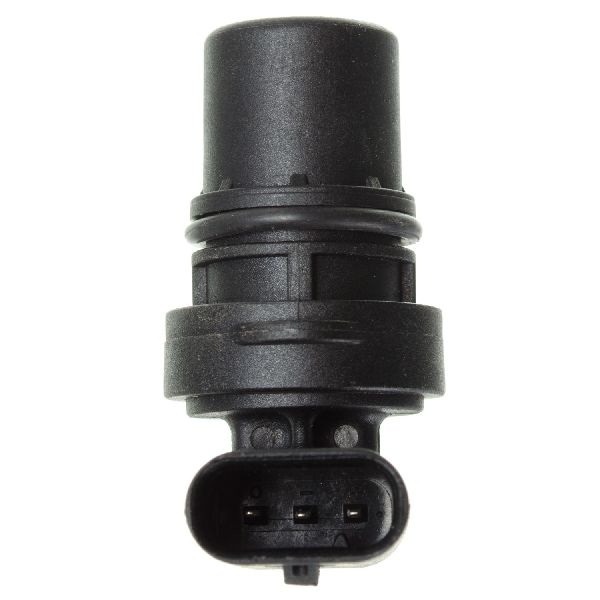
- Crank/Cam Sensor Connector Pin Test (Key On, Engine Off) — expected: The 3-wire Hall-effect sensor connector should have one pin with a 5-volt reference from the PCM, one pin for ground, and one for the signal.. Failure: Missing the 5V reference or ground indicates a wiring or PCM issue, not a sensor failure.
- Crank/Cam Sensor Resistance Test — expected: DO NOT TEST. These are Hall-effect sensors and should not be tested for resistance with a multimeter, as it can damage the internal electronics.. Failure: N/A - Incorrect test procedure.
- Live Data RPM Signal (During Cranking) — expected: A scan tool should display 100-500 RPM while cranking the engine.. Failure: A reading of 0 RPM indicates the PCM is not receiving a signal from the crankshaft position sensor or its circuit.
Hidden / Shadow Codes Worth Checking
- U1424-00: The '-00' is an FCA-specific Failure Type Code (FTC). For U-series (network) codes, it typically means 'No Sub Type Information' and serves as a general identifier for the fault description. It's what a technician sees on the wiTECH dealer scan tool. (see via Dealer-level scan tool (wiTECH) or advanced aftermarket scanner.)
Scan Tool Commands That Help
- wiTECH, AlfaOBD, Autel: Proxy Alignment (or Proxi Configuration Alignment) — This procedure synchronizes the configuration data across all modules on the CAN network. It is required after replacing a major module (PCM, BCM, ABS, etc.) or if the odometer is flashing, which indicates a configuration mismatch. A failed proxy alignment can cause communication codes like U1424.
- wiTECH: Reprogram PCM / Update Controller Software — This is the primary repair for U1424 when caused by overly sensitive software logic, as specified in TSB #18-022-17 REV. A. This should be the first step before replacing parts.
- Any professional scan tool: Throttle Body Relearn / Reset — After cleaning or replacing the throttle body, or if throttle response is erratic. The PCM needs to relearn the closed, open, and idle positions. An incorrect throttle position value can contribute to an implausible torque calculation.
Wiring & Ground Locations
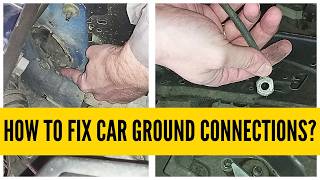
- Main Chassis Ground Stud — On the driver's side frame rail, accessible after removing the plastic splash guard in the wheel well. A cable runs from the battery to this stud, and another runs from the stud to the transmission/engine.. This is a critical grounding point for the powertrain. Corrosion on this stud (10mm and 13mm bolts) is a very common cause of no-start conditions and widespread electrical issues, including communication faults, as it creates an unstable ground reference for multiple modules.
- Engine Ground Strap — A ground strap is located on the passenger side of the engine, connecting the engine head to the passenger side strut tower.. A poor engine-to-chassis ground can cause electrical noise and voltage differentials, corrupting sensor signals and CAN bus communication, which can trigger U-codes.
- Engine Harness Chafe Points — Visually inspect the engine wiring harness for rubbing/chafing against the ECM/TCM bracket, the upper control arm, and the driver's side shock tower bolt/stud.. These are known contact points where engine movement can cause the harness to rub through, shorting wires for critical sensors or the CAN bus itself. An intermittent short here can cause random, difficult-to-diagnose codes like U1424.
Real Owner Repair Stories
- DodgeForum.com user (2014 Dodge Durango 3.6L (similar FCA electronics)) — Hesitant, rough running, blinking CEL, ESC light on. Codes P0335, U1424, P1DD2, U0140.
❌ Tried (didn't work) Initial thought was a major component failure.
✅ What actually fixed it The problem was suspected to be a weak battery. A voltage drop during a quick start/shift event likely caused modules to communicate incorrectly, setting a cascade of codes. The primary advice was to load test the battery and ensure connections are clean and tight before chasing other parts. - YouTube channel 'Eagle Motors' (Dodge with 5.7L HEMI (similar FCA logic)) — Limp mode, lack of power, won't speed past 35-40 mph. Codes P0340, U1424, P1DD2.
❌ Tried (didn't work) Worrying about a transmission failure.
✅ What actually fixed it The root cause was the P0340 (Camshaft Position Sensor). Replacing the faulty camshaft sensor for $25 from AutoZone resolved the engine issue, which in turn cleared the U1424 and P1DD2 'transmission' codes after a code clear. - YouTube channel 'Just a Dude' (2013 Dodge Dart) — No crank, no start, no power to anything.
❌ Tried (didn't work) Assuming a dead battery or starter.
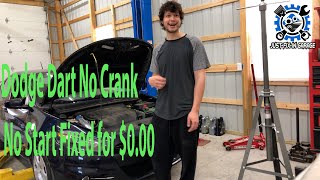
✅ What actually fixed it The problem was a corroded main ground connection on the driver's side frame rail. The fix involved removing the 10mm and 13mm bolts, cleaning the contact surfaces and terminals with a wire brush, and reassembling. This was a $0 fix that restored all electrical function. - YouTube channel 'Mercedesshop' (Vehicle with 3.6L Pentastar VVT engine (similar FCA logic)) — Transmission shifting issues, codes U1424, P1DD2, plus engine codes P0344, P06DD, P0349.
❌ Tried (didn't work) Diagnosing the transmission as the primary fault.
✅ What actually fixed it The mechanic identified the engine codes (camshaft position and oil pressure) as the root cause. A VVT system problem due to low oil pressure or a failing oil pump compromised engine performance. This made the engine's torque signal 'implausible' to the TCM, setting the U1424/P1DD2 codes as a symptom. The correct repair path is to fix the engine drivability issue first.
Helpful Videos
We Have This Part in Stock


The information in this article is provided for general reference and educational purposes only. Vehicle specifications, procedures, and part compatibility can vary by production date, trim level, and region. Always consult your vehicle's factory service manual and verify part numbers before purchasing or performing repairs. Safety-critical components such as airbags, seat belts, and braking systems should be installed by a qualified professional.
- Dodge DART:
- 🎬 Helpful Videos
- 🛍️ Shop This Part
- What's Unique About the 2013-2015 Dodge DART
- Diagnostic Flowchart
- Symptoms You May Notice
- Most Likely Causes
- Rare But Worth Checking
- Diagnosis Steps
- Parts You'll Likely Need
- Related Codes That Often Appear With This One
- Technical Service Bulletins (TSBs) & Recalls
- Platform-Specific Known Issues
- Mechanic-Grade Diagnostic Values
- Hidden / Shadow Codes Worth Checking
- Scan Tool Commands That Help
- Wiring & Ground Locations
- Real Owner Repair Stories
- 🎟️ Get 5% Off