

U1424 on 2013-2017 Dodge Charger: Implausible Engine Torque Fixes
Code U1424 on a 2013-2017 Dodge Charger means 'Implausible Engine Torque Signal Received' and is most often fixed with a Powertrain Control Module (PCM) software update from a dealer. This code indicates a conflict between what the engine sensors are reporting and what the PCM expects. If it's not a software issue, the next most likely causes are a faulty throttle body or a failing crankshaft position sensor, which directly impact the torque calculations that are critical for managing the engine
- U1424 is a communication code, not a direct mechanical failure. It means the computer is confused by the data it's receiving.
- Before replacing any parts, your first step should be to check with a dealer if your Charger needs a PCM software update, as this is the most common fix documented in multiple TSBs.
- If a software update doesn't apply or doesn't fix the issue, check for other codes that point to a specific sensor, most commonly the crankshaft position sensor or throttle position sensor.
- Symptoms like poor shifting are often a consequence of this code, not a sign of a bad transmission.
What's Unique About the 2013-2017 Dodge CHARGER

On this generation of Dodge Charger and its platform mates (Chrysler 300, Jeep Grand Cherokee), the U1424 code is very frequently addressed by manufacturer-issued Technical Service Bulletins (TSBs) that call for a PCM software update. This suggests the issue is often not a failed physical part, but rather overly sensitive diagnostic parameters in the original factory software that incorrectly flag minor sensor deviations. Owners should always check for available software updates with a dealer before replacing expensive components, as this is the most common and intended fix.
Diagnostic Flowchart

Tap your situation to follow the diagnostic path that matches what you're seeing on this vehicle.
Symptoms You May Notice
- Check Engine Light is on
- Electronic Throttle Control (ETC) or 'red lightning bolt' light may be illuminated
- Poor, harsh, or erratic automatic shifting.
- Vehicle hesitates, stumbles, or has a lack of power.
- Engine may stall, especially after a quick start-and-shift maneuver.
- Vehicle may enter 'limp mode' with severely reduced power.
- An unpleasant odor may be noticeable in some conditions (specifically mentioned for Pursuit models in TSB #18-073-20).
- Replacing the transmission or torque converter. While symptoms often include poor shifting, the U1424 code and its frequent companion P1DD2 point to a problem with the *engine torque signal* being sent to the transmission controller, not a mechanical failure within the transmission itself. 🎬 Watch: Why your transmission issues might actually be engine-related. The transmission is often just reacting to bad information from the engine.
Most Likely Causes

- Powertrain Control Module (PCM) Software Out of Date 🔴 High Probability Multiple TSBs (#1807120, #18-062-17, #18-073-20, etc.) were issued by Dodge to correct this specific code via a software reflash, indicating the original logic was too sensitive. This is the manufacturer's primary documented solution.
How to confirm: Contact a Dodge dealership or a shop with access to OEM service information and provide your vehicle's VIN. They can check if any open TSBs apply. A dealer reflash typically costs between $150-$250.
Typical fix: Reprogramming the PCM with the latest software version using the wiTECH diagnostic tool. This is typically a 30-60 minute procedure at a dealership.
Est. part cost: $0 - Faulty Crankshaft Position Sensor 🟡 Medium Probability TSBs #18-061-17 and #18-073-20 explicitly link U1424 with crankshaft sensor codes (P0335, P0339). A failing sensor provides incorrect or intermittent engine speed data, which is a fundamental input for torque calculation, causing a conflict that triggers U1424 and often P1DD2.
How to confirm: Scan for accompanying codes like P0335 or P0339. However, the sensor can begin to fail and cause U1424 before it throws its own specific code. A technician can monitor the sensor's signal with an oscilloscope for dropouts or noise under load.
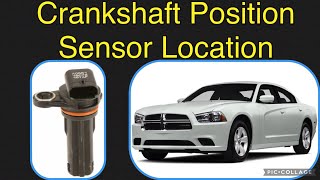
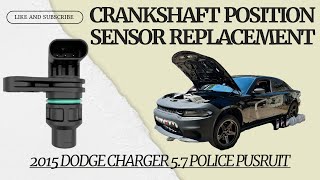
Typical fix: Replace the crankshaft position sensor and clear all fault codes. This is a common DIY or shop repair. 🎬 See this walkthrough for locating the crankshaft sensor on a 3.6L.
Est. part cost: $40-$100 - Faulty Throttle Body / Position Sensor 🟡 Medium Probability TSB #18-062-17 lists U1424 alongside several throttle position sensor codes (P0122, P0123, P0222, P0223). The PCM uses throttle angle as a primary input for calculating expected engine torque. A glitchy sensor reading will directly conflict with other engine parameters.
How to confirm: Check for related throttle body codes. Use a scan tool to graph the throttle position sensor voltage as you slowly press and release the accelerator pedal; the reading should be smooth with no spikes or dropouts. A relearn procedure is required after replacement.
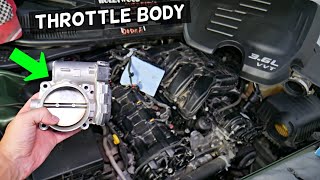
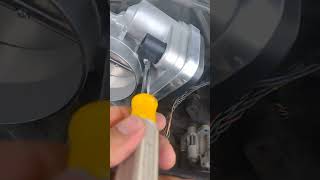
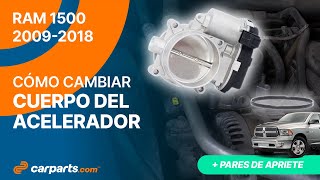
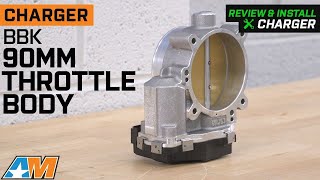
Typical fix: On modern Chargers, the sensor is integrated into the throttle body, requiring the replacement of the entire assembly. 🎬 Watch: Step-by-step guide to replacing the V6 throttle body.
Est. part cost: $150-$350
Rare But Worth Checking
- Wiring Harness Damage: Chafed or corroded wires leading to the PCM, throttle body, or crankshaft sensor can corrupt signals and cause this code. On related platforms like the Grand Caravan, the harness near the firewall is a known spot for issues. A visual inspection of the harness in the engine bay is a worthwhile step if the common causes don't resolve the issue.
- Weak or Failing Battery: Low system voltage during startup can cause communication errors between modules, sometimes triggering network codes like U1424. If your battery is over four years old, it's wise to have it load-tested. A user on DodgeForum.com noted this as a potential cause when U1424 appeared with other communication codes.
- Faulty Powertrain Control Module (PCM): This is the least likely cause. The PCM itself can fail, but this should only be considered after all software, sensor, and wiring issues have been definitively ruled out by a professional.
Diagnosis Steps
- Scan the PCM and all other modules for any stored trouble codes. Pay close attention to any codes that accompany U1424, as they provide critical clues (e.g., P1DD2, P0335).
- Using the vehicle's VIN, check with a Dodge dealer or use a professional service database to see if TSBs #1807120, #18-062-17, #18-061-17, #18-073-20, or #2101617 apply. If a software update is indicated, this should be the first repair step.
- If crankshaft or camshaft sensor codes (P0335/P0339, P0340/P0344) are present, inspect the sensor's wiring and connector. If the wiring is intact, the sensor itself is the likely culprit.
- If throttle body codes (P0122/P0123) are present, inspect the throttle body wiring. Use a scan tool to graph the throttle position sensor data to check for glitches or dropouts during a slow pedal sweep.
- If no other codes are present and the software is up-to-date, perform a thorough visual inspection of the main engine wiring harness, especially around the firewall and near hot or vibrating components, for any signs of chafing, melting, or corrosion.
- Test the battery and charging system to ensure stable voltage is being supplied to all modules. Low voltage can cause unpredictable network faults.
- If a new throttle body is installed, a 'Throttle Body Relearn' or 'Reset Adaptive Values' procedure must be performed with a bidirectional scan tool to ensure proper idle and performance.
Parts You'll Likely Need

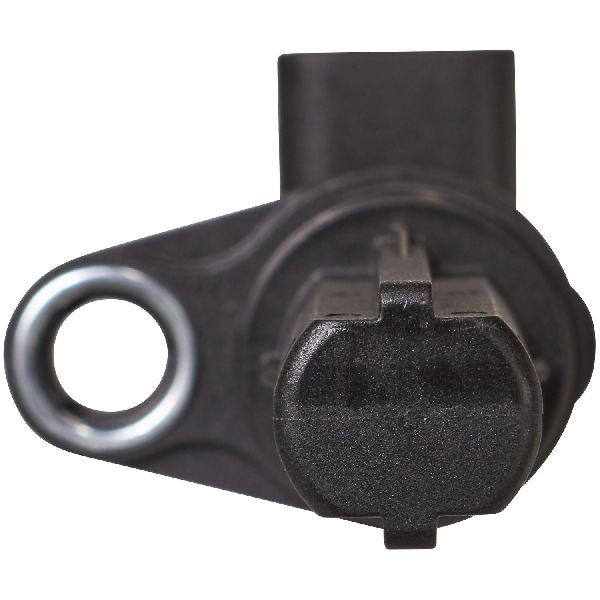
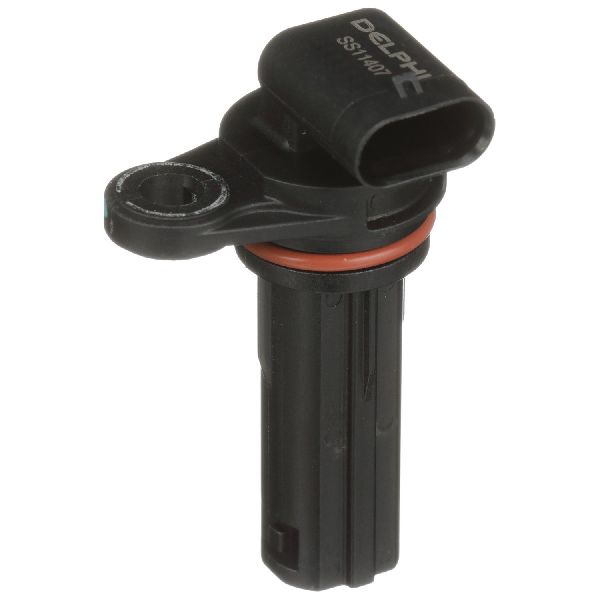
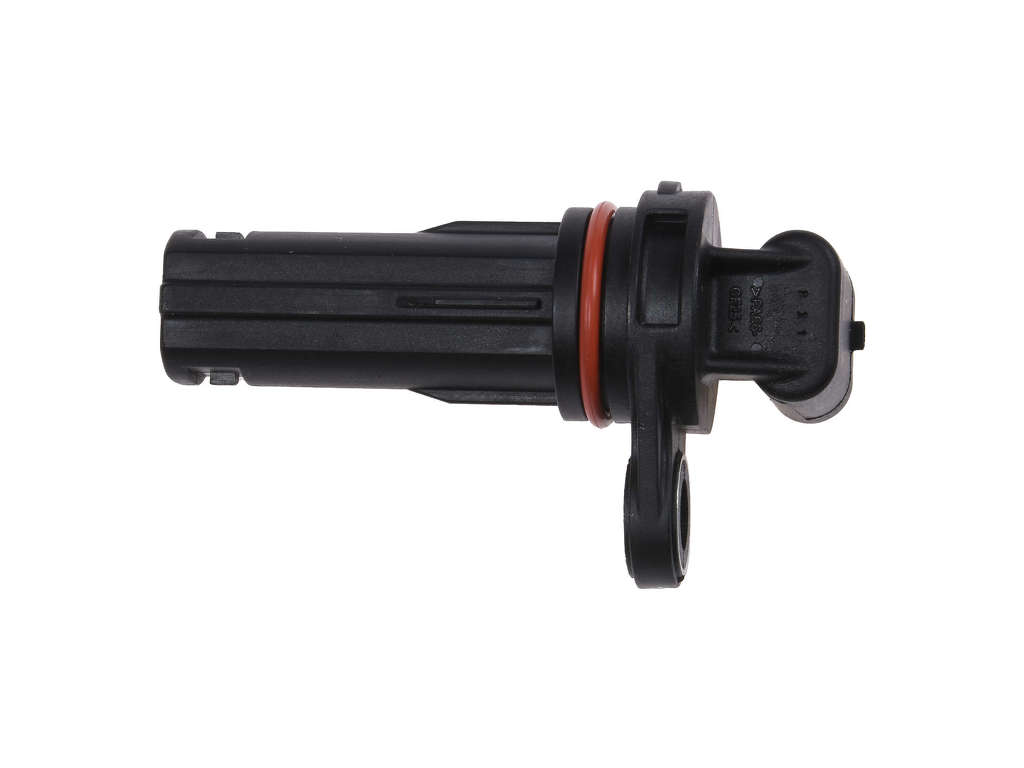
- Crankshaft Position Sensor
(OEM #5149167AF (for 3.6L V6), 5149230AA (for 5.7L/6.4L V8))— A common hardware failure point that directly causes implausible engine speed data, leading to the U1424 code, as noted in TSBs and multiple forum reports.
Trusted brands: Mopar, Bosch, NTK
OEM price range: $60-$100
Aftermarket price range: $40-$70 - Throttle Body Assembly
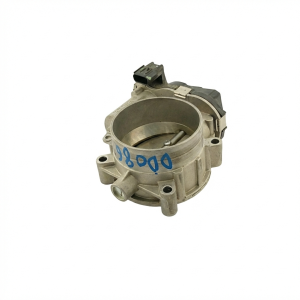
(OEM #4861661AB (for 3.6L V6, supersedes 4861661AA), check VIN for V8)— The integrated throttle position sensor can fail, providing incorrect data about driver demand and causing a torque calculation mismatch.
Trusted brands: Mopar, Hitachi, Standard Motor Products
OEM price range: $250-$400
Aftermarket price range: $150-$250
Related Codes That Often Appear With This One
- P1DD2 — This code means 'Torque Request Signal From TCM Denied'. It often appears with U1424 and indicates the Transmission Control Module (TCM) rejected the engine's torque signal because it was implausible. They are a classic pair.
- P0335 / P0339 — These codes indicate a fault with the Crankshaft Position Sensor, a key input for torque calculation.
- P0340 / P0344 — These codes point to the Camshaft Position Sensor. While not a direct input for torque, a faulty cam sensor can cause erratic engine performance that the PCM interprets as a torque plausibility issue, leading to U1424.
- P0122 / P0123 / P0222 / P0223 — These codes point to the Throttle Position Sensor, another critical input for determining expected engine torque.
- P2299 — Indicates 'Brake Pedal Position / Accelerator Pedal Position Incompatible'. This can trigger a torque plausibility fault if the computer sees conflicting inputs from the driver.
Technical Service Bulletins (TSBs) & Recalls
- 1807120: Addresses U1424 and an unpleasant odor, fixed by a PCM software update.
- 18-062-17: Links U1424 with throttle position sensor codes, fixed by a PCM software update.
- 18-061-17: Links U1424 with crankshaft position sensor and EVAP codes, fixed by a PCM software update.
- 18-073-20: Connects U1424 with various codes including crankshaft sensor and brake pedal position, fixed by a PCM reflash. Also includes other enhancements like changes to reverse gear lock-out speed.
- 2101617: Associates U1424 with unintended torque codes (P1DB8) and poor shifting, fixed by a PCM software update.
Platform-Specific Known Issues
- A primary issue for the 2013-2017 Charger is the PCM's software sensitivity. Dodge released multiple updates to widen the acceptable parameters for sensor data to prevent this code from being set erroneously.
- On Pursuit (police) models, TSB #18-073-20 notes that the U1424 code may be accompanied by an unpleasant odor under extreme ambient conditions.
Mechanic-Grade Diagnostic Values
- CAN Bus Network Resistance — expected: Approximately 60 Ω. Failure: A reading of 120 Ω indicates an open circuit or a missing terminating resistor. A reading significantly less than 60 Ω suggests a short between the CAN lines or an extra terminating resistor.
- CAN Bus Voltage (Key On, Engine Off) — expected: CAN High (Pin 6 to Ground): ~2.6V. CAN Low (Pin 14 to Ground): ~2.4V.. Failure: No voltage or voltage significantly outside this range indicates a wiring issue, module failure, or short to power/ground.
- Crankshaft Position Sensor (3-wire Hall Effect) Power — expected: 5V or 12V reference on one wire with key on, engine off.. Failure: No voltage on the reference wire indicates a wiring problem or a fault in the PCM's 5V/12V supply circuit.
Scan Tool Commands That Help
- wiTECH or equivalent professional scan tool: Throttle Relearn / Throttle Matching — This function is required after replacing the throttle body assembly. It allows the PCM to learn the new sensor's closed, open, and partial positions for accurate idle and throttle response.
- wiTECH: Reprogram PCM / Flash ECU — This is the primary fix specified by multiple TSBs for the U1424 code. It updates the diagnostic logic in the PCM to be less sensitive to minor sensor deviations. This should be the first step if a relevant TSB is open for the vehicle's VIN.
Wiring & Ground Locations
- OBD-II Port (DLC) — Under the driver's side dashboard, to the left of the steering column.. This is the primary access point for diagnosing the CAN bus network. Pin 6 (CAN High) and Pin 14 (CAN Low) can be tested here for resistance and voltage to verify the health of the entire communication network that the torque signal relies on.
Real Owner Repair Stories
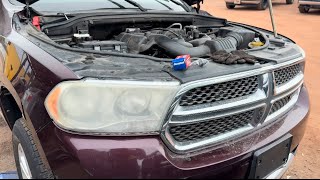
- YouTube channel 'Eagle Motors' (Dodge with 5.7L HEMI (Charger/Durango/Challenger)) — Check engine light, lack of power, won't accelerate past 35-40 mph. Codes U1424, P1DD2, and P0340 (Camshaft Position Sensor Circuit Bank 1 Sensor 1).
❌ Tried (didn't work) Concern about a transmission failure.
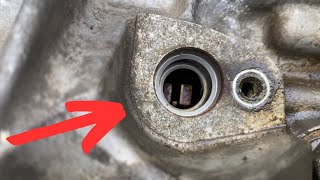
✅ What actually fixed it The user identified the P0340 as the root cause. Replacing the camshaft position sensor (located behind the thermostat housing) and clearing the codes resolved all symptoms and codes, including U1424 and P1DD2. - DodgeForum.com user 'moparman139' (2014 Ram 1500 5.7L Hemi with 38,000 miles (Related platform with same codes)) — Check engine light on, transmission would not shift out of first gear, traction control light on. Codes P1DD2, U1424, P0344 (Camshaft Position Sensor Intermittent).
✅ What actually fixed it The dealership found a bad camshaft sensor. The final repair was replacing the faulty cam sensor and reprogramming both the ECM (PCM) and TCM. - ScannerDanner Forum expert 'Tyler' (2015 Dodge Ram 1500 5.7L) — Low power, popping exhaust, multiple misfires. Codes P0308, P0300, and U1424.
✅ What actually fixed it This is a diagnostic insight rather than a repair story. The expert advice is that U1424 is a 'roadsign code' or a symptom, not the root cause. The PCM sets U1424 because the engine is not producing the torque it expects due to another problem (in this case, misfires). The fix is to diagnose and repair the root cause (P0300/P0308), which will then resolve the U1424 code.
OEM Part Supersession History
5149167AD, 5149167AE→5149167AF— Standard part revision and improvement by the manufacturer.4861661AA→4861661AB— Standard part revision and improvement by the manufacturer.
Helpful Videos
Used OEM Parts in Stock


New Aftermarket Parts Available


The information in this article is provided for general reference and educational purposes only. Vehicle specifications, procedures, and part compatibility can vary by production date, trim level, and region. Always consult your vehicle's factory service manual and verify part numbers before purchasing or performing repairs. Safety-critical components such as airbags, seat belts, and braking systems should be installed by a qualified professional.
- Dodge CHARGER:
- 🎬 Helpful Videos
- 🛍️ Shop This Part
- What's Unique About the 2013-2017 Dodge CHARGER
- Diagnostic Flowchart
- Symptoms You May Notice
- Most Likely Causes
- Rare But Worth Checking
- Diagnosis Steps
- Parts You'll Likely Need
- Related Codes That Often Appear With This One
- Technical Service Bulletins (TSBs) & Recalls
- Platform-Specific Known Issues
- Mechanic-Grade Diagnostic Values
- Scan Tool Commands That Help
- Wiring & Ground Locations
- Real Owner Repair Stories
- OEM Part Supersession History
- 🎟️ Get 5% Off