

U1424 on 2013-2017 Dodge Challenger: Implausible Engine Torque Signal Fixes
Code U1424 on a Dodge Challenger usually means the powertrain computer (PCM) is confused by conflicting sensor data. It's often set with other codes, and the most common fix is a PCM software update at a dealership, as outlined in multiple Technical Service Bulletins (TSBs). Less commonly, it can be caused by a failing crankshaft or camshaft sensor.
- U1424 means the engine computer is receiving conflicting information; it's a logic code, not always a broken part.
- Always check for other trouble codes. U1424 is often a symptom of another problem, like a bad crankshaft or throttle sensor.
- Before replacing any parts, check if your vehicle needs a PCM software update. This is the most common fix documented in multiple Dodge TSBs.
- This is not a simple DIY fix. Diagnosis and repair often require dealership-level tools to update the vehicle's software.
What's Unique About the 2013-2017 Dodge CHALLENGER

For this generation of Challenger and its platform mates (Charger, 300), Dodge issued numerous software updates via Technical Service Bulletins (TSBs) to address this specific code. The original PCM software was often too sensitive, causing it to set U1424 along with other sensor codes when no mechanical fault existed. This makes it a unique case where the most probable cause is not a faulty part, but rather software logic that needs updating. Many owners might needlessly replace parts if they are unaware of these bulletins.
🎬 Watch: A quick fix for U1424 and sensor codes on HEMI engines.Diagnostic Flowchart

Tap your situation to follow the diagnostic path that matches what you're seeing on this vehicle.
Generation note: This range covers the 2013-2014 models and the 2015+ facelift of the third-generation Challenger. The TSBs apply across these years, indicating the underlying PCM logic issue was present in both versions before software updates were released. The issue is also common on the related Dodge Charger and Chrysler 300. TSB #18-073-20 specifically calls out the U1424-00 code for the 2015 model year, indicating a known issue with the facelift models.
Symptoms You May Notice

- Check Engine Light (MIL) is on
- Electronic Stability Control (ESC) light may illuminate
- Vehicle may enter 'limp mode' with reduced power
- Poor or erratic automatic transmission shifting, or refusal to shift
- Struggles to accelerate or gain speed
- Unpleasant odor in the vehicle cabin under certain conditions, as noted in TSB 1807120
- Engine runs rough or feels like it's misfiring
- Replacing sensors like the crankshaft or throttle position sensor without first checking for PCM software updates. Many TSBs indicate a software reflash is the correct primary fix, even when other sensor codes are present.
- Assuming a transmission failure due to poor shifting symptoms. The U1424 code and related engine faults can cause the Transmission Control Module (TCM) to deny shift requests (code P1DD2), mimicking a transmission problem when the root cause is in the engine's sensor data.
Most Likely Causes

- Outdated Powertrain Control Module (PCM) Software 🔴 High Probability Multiple manufacturer TSBs explicitly recommend a software update as the primary fix for U1424, especially when it appears with a wide array of other codes. The original software calibration was overly sensitive.
How to confirm: A dealership or qualified shop can connect a diagnostic tool (wiTECH) to check the current software calibration ID and see if a newer version is available per TSBs like #18-062-17, #18-061-17, or #18-073-20.
Typical fix: Flashing (reprogramming) the PCM to the latest software version. The TSB repair procedure specifies using wiTECH and ensuring battery voltage is stable (between 13.2 and 13.5 volts) during the flash.
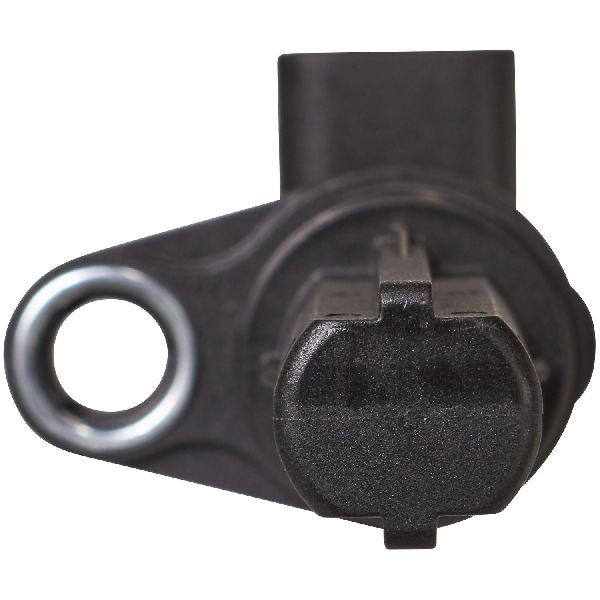
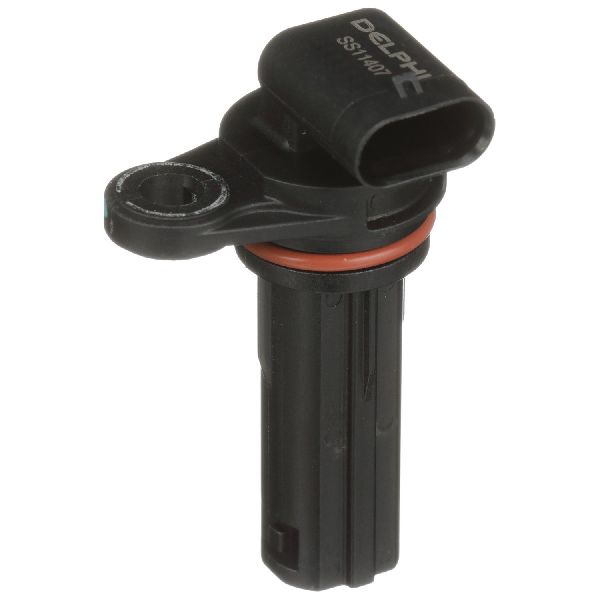
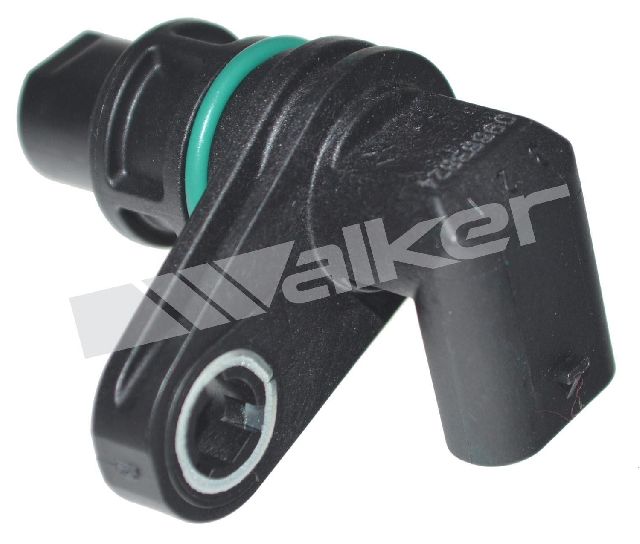
Est. part cost: $0 - Failing Crankshaft or Camshaft Position Sensor 🟡 Medium Probability TSB #18-061-17 and #18-073-20 directly link U1424 with crankshaft sensor code P0335. A faulty sensor provides erratic engine speed data, which the PCM sees as conflicting with throttle and transmission data, triggering the 'implausible torque' calculation. Forum and video evidence shows this is a common point of failure leading to U1424.
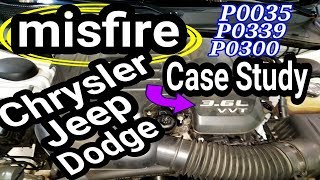
How to confirm: Check for associated codes like P0335, P0339 (crankshaft), or P0340/P0344 (camshaft). Monitor the sensor's signal on a live data scanner for dropouts during engine operation. A failing sensor often causes rough running, stalling, or a no-start condition.
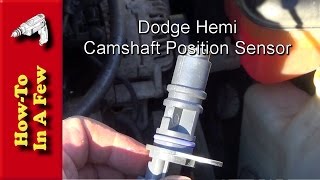
Typical fix: Replace the faulty crankshaft or camshaft position sensor. On the 3.6L V6 and 5.7L Hemi, these sensors are common failure points.
Est. part cost: $90-$135 - Failing Throttle Position Sensor (TPS) 🟡 Medium Probability TSB #18-062-17 lists throttle position sensor codes (P0122, P0123) alongside U1424. Since the driver's torque request comes directly from the accelerator pedal and throttle, a faulty TPS provides a primary piece of conflicting information that can trigger the code.
How to confirm: Check for associated codes like P0122 or P0123. Use a scan tool to graph the throttle position sensor voltage while slowly pressing the pedal; look for any glitches, spikes, or dead spots.
Typical fix: Replace the throttle body assembly, as the sensor is typically integrated. This repair can be costly.
Est. part cost: $200-$490
Rare But Worth Checking
- Brake Pedal / Accelerator Pedal Position Incompatibility: TSBs #18-061-17 and #18-073-20 mention code P2299 appearing with U1424. This occurs if the PCM sees signals from both the brake and accelerator at the same time, which it interprets as an implausible condition. This is often also a software logic issue fixed by a PCM flash.
- Wiring Harness Damage or Corrosion: A damaged or corroded wire to a key sensor (crank, cam, throttle) can create the intermittent and implausible signals that trigger this network code. Visually inspect harnesses for chafing against engine components or brackets, a common issue in many vehicles. This should be investigated after software and sensors are ruled out.
- Weak or Failing Battery: Low system voltage during startup can cause various modules to communicate improperly, leading to a cascade of communication codes, including U1424. One owner on a forum noted that a weak battery was a potential cause. If the battery is over 4-5 years old, it's worth load testing.
Diagnosis Steps
- Scan for all Diagnostic Trouble Codes (DTCs). U1424 is often a secondary code; the primary fault is usually indicated by other codes stored in the PCM or TCM. Prioritize fixing other codes first.
- Check for applicable TSBs. This is the most critical step. Contact a Dodge dealer with your VIN to see if TSBs like #18-073-20, #18-062-17, or #18-061-17 apply and if the PCM has the latest software.
- If a software update is available, have the PCM reprogrammed by a dealer or qualified shop. This is the most likely fix. The procedure requires a wiTECH scan tool and a stable power supply.
- If the PCM software is already up-to-date, proceed with standard diagnostics for any other codes present. For example, test the crankshaft sensor circuit if P0335 is present.
- If U1424 is the only code, inspect the wiring harnesses for major sensors (throttle body, crank/cam sensors) for any signs of damage, corrosion, or loose connections, paying close attention to areas where the harness might rub against the engine or chassis.
- Consider the battery's health. A weak battery can cause spurious communication codes. Perform a load test if the battery is old or if starting is slow.
Parts You'll Likely Need
- Powertrain Control Module (PCM) Software Update — This is not a physical part, but a service. It is the most common solution cited in manufacturer TSBs to correct faulty diagnostic logic that triggers U1424.
OEM price range: $150-$250 (Labor)
Aftermarket price range: N/A - Throttle Body Assembly
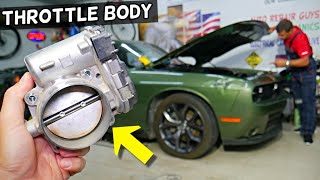
(OEM #53034251AD (For 5.7L/6.4L HEMI))— Often required if codes P0122/P0123 are present and a software update does not fix the issue. The throttle position sensor is integrated into the assembly. Fitment is for HEMI models.
Trusted brands: Mopar, Dorman, Cardone
OEM price range: $240-$350
Aftermarket price range: $150-$250 - Crankshaft Position Sensor
(OEM #5149167AF (For 3.6L V6))— This is the fix when U1424 is accompanied by crankshaft sensor codes like P0335 or P0339 and software is ruled out. This part is specific to the 3.6L V6.
Trusted brands: Mopar, NTK/NGK, Standard Motor Products
OEM price range: $90-$135
Aftermarket price range: $45-$80
Related Codes That Often Appear With This One
- P0335 / P0339 — Crankshaft Position Sensor codes. A faulty crank sensor provides bad engine speed data, a key input for torque calculation. TSB #18-061-17 confirms this link.
- P0340 / P0344 — Camshaft Position Sensor codes. Similar to the crank sensor, a bad cam signal disrupts the PCM's ability to verify engine timing and calculate torque.
- P0122 / P0123 — Throttle Position Sensor codes. A faulty throttle sensor gives incorrect data about the driver's request for power. TSB #18-062-17 confirms this link.
- P2299 — Brake Pedal Position / Accelerator Pedal Position Incompatible. The PCM sees conflicting inputs from the brake and gas pedals, which is directly related to torque management.
- P1DD2 — Torque Request Signal from TCM Denied. This is a direct result of U1424. The transmission computer is refusing to shift as requested because the engine computer is reporting an error.
- P0456 — EVAP System Small Leak. While seemingly unrelated, multiple TSBs (#18-061-17, #18-073-20) list this code alongside U1424 as being resolved by a PCM software update, indicating a software logic flaw.
Technical Service Bulletins (TSBs) & Recalls
- 18-073-20: Links U1424 with P0456 (EVAP Leak), P2299 (Pedal Incompatible), and P0335 (Crank Sensor) on 2013-2015 models, recommending a PCM software update.
- 18-062-17: Links U1424 to throttle position sensor codes (P0122, P0123) and others, recommending a PCM software update for 2016 models.
- 18-061-17: Links U1424 to EVAP (P0456) and crankshaft sensor codes (P0335, P0339) for 2015 models, with the fix being a software update.
- 1807120: Links U1424 to an unpleasant odor and MIL illumination, fixed by a PCM software update.
- 21-010-17: For 2017 models, this TSB addresses U1424 and P1DB8 (Unintended Torque in Neutral) to improve transmission shifting through a software update.
Platform-Specific Known Issues
- Multiple Technical Service Bulletins (TSBs) have been issued by Dodge for the 2013-2017 Challenger specifically to address U1424. These bulletins often recommend a simple PCM software update to correct over-sensitive diagnostic logic. Owners who take their vehicle to a shop that is unaware of these TSBs may pay for unnecessary sensor replacements.
- On platforms like the Dodge Durango with the 3.6L, a user on DodgeForum.com reported a cluster of codes including P0335, U1424, and P1DD2 after a quick start-and-shift event, pointing to the crankshaft position sensor as a likely culprit.
Mechanic-Grade Diagnostic Values
- Throttle Position Sensor (TPS) Signal Voltage — expected: Approximately 0.5V - 1.0V at closed throttle, smoothly increasing to ~4.5V at wide-open throttle (WOT).. Failure: Voltage that is erratic, has dropouts, or spikes when the throttle is opened slowly. No voltage or a stuck voltage reading.
- Two-Wire Crankshaft Position Sensor Resistance — expected: Typically between 200 and 1000 ohms, but can vary. One example for a similar vehicle showed a good sensor at ~540 ohms.. Failure: A reading of zero ohms indicates a short circuit, while an infinite (OL) reading indicates an open circuit. A reading far outside the expected range suggests a faulty sensor.
- PCM Flash Battery Voltage — expected: Must be maintained between 13.2 and 13.5 volts during the entire reprogramming process.. Failure: Voltage dropping below 13.2V or climbing above 13.5V can interrupt the flash and potentially damage the PCM.
Hidden / Shadow Codes Worth Checking
- U1424-00: The '-00' suffix is a Failure Type Code used by FCA (Dodge/Chrysler/Jeep). For this U-code, it generally means 'No Sub Type Information' or that the fault is the primary message itself (Implausible Signal Received) without a more specific circuit-level fault to report. Its presence is noted in multiple TSBs. (see via Most modern OBD-II scanners will display the full code with the failure type suffix.)
Scan Tool Commands That Help
- wiTECH: Reprogram PCM / Flash ECU — This is the primary repair step cited in multiple TSBs for U1424. It updates the PCM's software logic to correct overly sensitive fault triggers. The tool guides the technician through the process, which requires a stable internet connection and battery voltage.
- wiTECH: Learn ETC (Electronic Throttle Control) — This function is used after replacing the throttle body or reprogramming the PCM to recalibrate the throttle plate's closed and open positions. It can also be performed manually without a scan tool.
- wiTECH: Restore Vehicle Configuration — After flashing a module like the PCM, this function is used to re-synchronize the module with the rest of the vehicle's network and ensure all features work correctly.
- wiTECH: Check PCM VIN — When installing a new or used PCM, this function is used to write the vehicle's VIN into the module, which is required for it to communicate with other modules on the CAN bus.
Wiring & Ground Locations
- PCM (Powertrain Control Module) — Located in the engine bay on the passenger side, under a removable plastic panel bolted to the strut tower.. This is the central computer that sets code U1424. All related sensor wiring terminates here. Checking its connectors for corrosion or damage is a valid diagnostic step if software and sensors are ruled out.
Real Owner Repair Stories
- YouTube user 'Eagle Motors' (Dodge Durango with 5.7L HEMI (also applies to Challenger/Charger)) — Check engine light with codes U1424-00, P1DD2-00, and P0340 (Camshaft Position Sensor). Vehicle had a lack of power and would not accelerate past 35-40 mph.
❌ Tried (didn't work) The owner was concerned about a potential transmission issue due to the P1DD2 code.
✅ What actually fixed it The root cause was the camshaft position sensor fault (P0340). Replacing the camshaft position sensor (located behind the thermostat housing on the 5.7L HEMI) and clearing the codes resolved all three codes, including U1424 and P1DD2. - DodgeForum.com user (2014 Ram 1500 with 5.7L Hemi (platform shares electronics with Challenger)) — Check engine light, traction control light off, transmission would not shift out of first gear. Codes P1DD2, U1424, and P0344 (Camshaft Position Sensor Circuit Intermittent) were present.
❌ Tried (didn't work) The user was seeking advice before taking it to the dealer.
✅ What actually fixed it Another user advised that the U1424 and P1DD2 codes were a direct result of the P0344 cam sensor code, identifying the sensor or its wiring as the root cause to fix first.
OEM Part Supersession History
5149167AD, 5149167AE→5149167AF— Standard part revision by the manufacturer for improved reliability or sourcing.
Heads up: The newer part number (5149167AF) is the correct service replacement for the older versions and is fully compatible.53034251AB, 53034251AC→53034251AD— Standard part revision by the manufacturer for improved reliability or sourcing.
Heads up: The newer part number (53034251AD) is the correct service replacement for the older versions and is fully compatible for specified HEMI engines.
Model Year Variations Within This Range
- 2015+: The 2015+ model year Challengers feature a locked PCM from the factory. Tuning or replacing the PCM requires either sending the original unit to be unlocked or purchasing a pre-unlocked PCM from a vendor like DiabloSport. This is a critical difference from 2013-2014 models when performing advanced diagnostics or performance modifications.
Helpful Videos
Used OEM Parts in Stock



New Aftermarket Parts Available


The information in this article is provided for general reference and educational purposes only. Vehicle specifications, procedures, and part compatibility can vary by production date, trim level, and region. Always consult your vehicle's factory service manual and verify part numbers before purchasing or performing repairs. Safety-critical components such as airbags, seat belts, and braking systems should be installed by a qualified professional.
- Dodge CHALLENGER:
- 🎬 Helpful Videos
- 🛍️ Shop This Part
- What's Unique About the 2013-2017 Dodge CHALLENGER
- Diagnostic Flowchart
- Symptoms You May Notice
- Most Likely Causes
- Rare But Worth Checking
- Diagnosis Steps
- Parts You'll Likely Need
- Related Codes That Often Appear With This One
- Technical Service Bulletins (TSBs) & Recalls
- Platform-Specific Known Issues
- Mechanic-Grade Diagnostic Values
- Hidden / Shadow Codes Worth Checking
- Scan Tool Commands That Help
- Wiring & Ground Locations
- Real Owner Repair Stories
- OEM Part Supersession History
- Model Year Variations Within This Range
- 🎟️ Get 5% Off