

U1424 on 2013-2017 Chrysler 300: Implausible Engine Torque Signal Causes and Fixes
This code almost always indicates that your car's computer software is outdated. The fix is typically a Powertrain Control Module (PCM) or Transmission Control Module (TCM) software update performed by a Chrysler dealer or a qualified shop, which usually costs between $150 and $300. Before assuming a major failure, check for software updates.
- Code U1424 on your Chrysler 300 almost always means the powertrain software is out of date.
- Do not replace expensive parts like the transmission before checking for software updates.
- The fix is to have a dealer or qualified shop reprogram the Powertrain Control Module (PCM) and/or Transmission Control Module (TCM).
- This code is often accompanied by other codes; sometimes fixing the other code (like a misfire) will also resolve U1424.
- This is not a DIY-friendly repair due to the need for specialized programming tools.
What's Unique About the 2013-2017 Chrysler 300

On many vehicles, a network code like U1424 might point to a complex wiring or module failure. However, on the 2013-2017 Chrysler 300 and its platform mates (like the Dodge Charger and Challenger), this code is very frequently caused by a software logic glitch. Chrysler has issued multiple Technical Service Bulletins (TSBs) to address this exact code with simple software updates, making it a known issue with a straightforward, albeit dealer-dependent, solution.
Diagnostic Flowchart
Tap your situation to follow the diagnostic path that matches what you're seeing on this vehicle.
Symptoms You May Notice
- Check Engine Light (MIL) is on
- Poor or erratic transmission shifting.
- Vehicle may enter 'limp mode' with reduced power and an inability to accelerate properly.
- Unpleasant odor under extreme ambient conditions (noted in TSB 1807120 for some models).
- The electronic throttle control (ETC) or 'lightning bolt' warning light may illuminate.
- Traction control light may illuminate simultaneously.
- Replacing the transmission. Many symptoms of this code, like poor shifting and limp mode, can mimic a catastrophic transmission failure. Mechanics and owners may mistakenly condemn the transmission 🎬 See why your transmission might not be the actual problem. when the issue is purely electronic or software-related.
Most Likely Causes

- Outdated Powertrain or Transmission Control Module Software 🔴 High Probability Chrysler has released numerous TSBs specifically to correct the logic that triggers this code, indicating it was a common software issue from the factory. TSBs like 18-073-20 and 21-010-17 directly name U1424 as a primary code fixed by a software flash.
How to confirm: A dealer or shop with access to Chrysler's service information (wiTECH) can check your vehicle's current software calibration ID against the latest available versions listed in TSBs.
Typical fix: Reprogramming (flashing) the PCM and/or TCM to the latest software version. TSB 21-010-17 specifically notes this update also improves transmission shifting during limp mode.
Est. part cost: $0 - Underlying Engine Performance Issue 🟡 Medium Probability This code can be a symptom of another problem. A failing crankshaft (P0335) or camshaft (P0340/P0344) position sensor can send incorrect speed/timing data to the PCM. This data conflicts with other signals, causing the PCM to calculate an 'implausible' torque value and set U1424 as a secondary fault.
How to confirm: Diagnose and resolve any other accompanying engine-related DTCs first, especially camshaft or crankshaft sensor codes. If fixing the primary code (e.g., replacing a cam sensor) clears the U1424, that was the root cause.
Typical fix: Varies depending on the primary code. Could be spark plugs, an ignition coil, or more commonly, a crankshaft or camshaft position sensor.
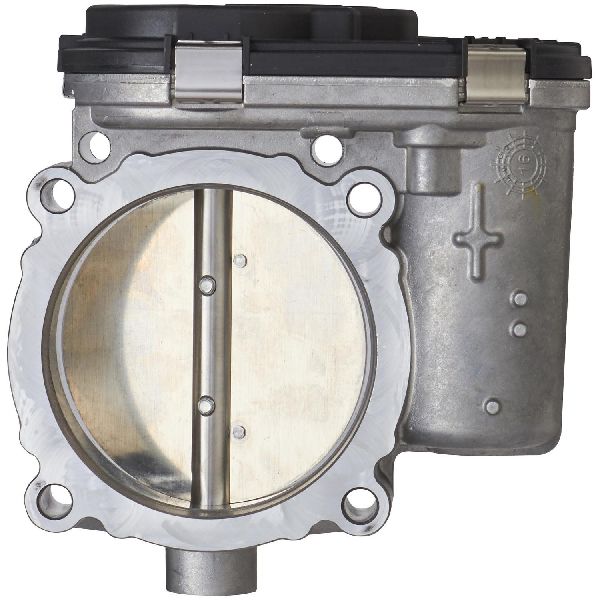
Est. part cost: $50-$400 - Failing Throttle Body ⚪ Low Probability The electronic throttle body can wear over time, or the internal position sensors can fail, causing its reported position to conflict with accelerator pedal signals or other engine data, leading to a torque calculation error.
How to confirm: Monitor throttle position sensor data with a scan tool for erratic readings. Other codes related to the throttle position sensor (like P0122, P0123, P2299) are often present. TSB 18-062-17 lists these codes alongside U1424.
Typical fix: Replacement of the electronic throttle body assembly.
Est. part cost: $150-$400
Rare But Worth Checking
- Damaged Engine Wiring Harness: In some cases, a wiring harness that serves multiple sensors (like knock sensors and oil pressure sensors located under the intake manifold) can become damaged, causing multiple erratic signals that lead to this code.
- Faulty ABS Module: The ABS module reports wheel speed to the network. If the ABS module sends faulty data, it can create a discrepancy with the engine and transmission speed signals, leading the PCM to flag an implausible torque value. This is rare but possible if ABS-related codes are also present.
- Failing PCM or TCM: It is rare for the module itself to fail, but it is possible. This should only be considered after all software updates have been performed and all other potential causes (sensors, wiring) have been ruled out.
Diagnosis Steps
- Connect a professional scan tool and check for any other DTCs accompanying U1424. Pay close attention to codes like P1DD2, P0335/P0340 (crank/cam sensors), and P2299.
- Crucial Step: Check for applicable Technical Service Bulletins (TSBs) for your vehicle's VIN. The most likely solution is a PCM or TCM software update. TSBs #18-073-20, #21-010-17, and #18-027-17 all call for software updates to resolve this code. A dealer can confirm if your software is outdated.
- If other codes are present and software is up-to-date, diagnose the other codes FIRST. A faulty camshaft position sensor (P0340) is a known trigger for U1424. Fixing the sensor may resolve all codes.
- If U1424 is the only code (and software is current), inspect the wiring and connectors at the PCM, TCM, and electronic throttle body for any signs of damage or corrosion.
- Using a scan tool, monitor live data from the accelerator pedal position sensor and throttle position sensors to check for smooth and corresponding operation. Jumpy or non-responsive values point to a failing throttle body.
- As a final step if all else fails, consider a hardware issue with the PCM, but this is highly unlikely.
Parts You'll Likely Need

- Powertrain Control Module (PCM) Reprogramming — This is not a physical part replacement, but a software update. It is the most common and manufacturer-recommended fix for this specific code on this vehicle.
OEM price range: $150-$300
Aftermarket price range: N/A - Electronic Throttle Body
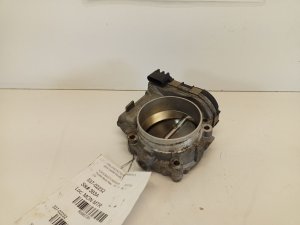
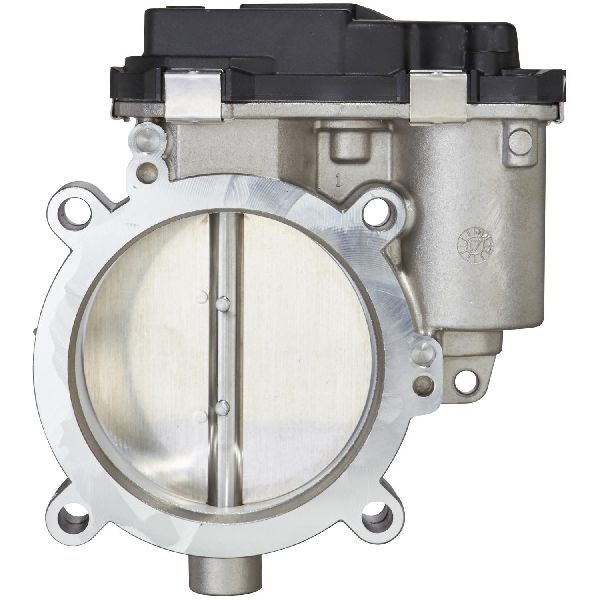
(OEM #3.6L V6: 05184349AF (supersedes 05184349AC, AD, AE); 5.7L/6.4L V8: 53034251AD (supersedes 53034251AB, AC))— If a software update does not resolve the issue, or if other throttle-related codes (P0122, P0222, P2299) are present, a failing throttle body is the next most likely hardware culprit.
Trusted brands: Mopar, Bosch
OEM price range: $250-$400
Aftermarket price range: $150-$300
Related Codes That Often Appear With This One
- P1DD2 — This code means 'Torque Request Signal From TCM Denied'. It often appears with U1424 and indicates the PCM is actively rejecting the transmission's requests due to the implausible data it's receiving. They are almost always set together.
- P0335 / P0339 — 'Crankshaft Position Sensor Circuit'. An issue with the crank sensor can provide incorrect engine speed data, leading to a direct conflict with the torque signal and triggering U1424. TSB 18-073-20 includes this code in its software update.
- P2299 — 'Brake Pedal Position / Accelerator Pedal Position Incompatible'. This can be set by the same software logic flaw that triggers U1424, and TSBs often address both codes with the same update.
- P0456 — 'EVAP System Small Leak'. While seemingly unrelated, this code is frequently listed in the same TSBs for PCM software updates (like 18-073-20) that also fix U1424, indicating a bundled software patch.
Technical Service Bulletins (TSBs) & Recalls

- 18-073-20: Addresses U1424 on 2013-2015 models with a PCM software update, also bundling fixes for P0456, P2299, and P0335.
- 1807120: Mentions U1424 on 2017 models, also related to a PCM software update.
- 2101617: Cites U1424 and poor shifting, fixed by a TCM software update.
- 21-010-17: Points to a TCM software update for 2017 models with 3.6L/3.0L engines to fix U1424 and improve limp-mode shifting.
- 18-027-17: Notes a PCM software update to resolve U1424 and update TPS logic.
- 18-062-17: Superseded bulletin for other models that also lists U1424 as being resolved by a PCM flash.
Platform-Specific Known Issues
- Multiple TSBs exist for the 2013-2017 Chrysler 300 (and related LD/LA platform vehicles) that specifically address U1424 with a PCM or TCM software update. This confirms it's a known manufacturer issue with a defined software fix.
Mechanic-Grade Diagnostic Values
- CAN C Bus Voltage at DLC (OBD-II Port) — expected: Pin 6 (CAN High) to ground should be ~2.7 Volts. Pin 14 (CAN Low) to ground should be ~2.3 Volts. The sum of both should be ~5 Volts.. Failure: If both lines show ~2.5V, the bus may be shorted together. If voltages are 0V or significantly different, there could be a short to ground or an open circuit.
- Generic 2-wire Crank/Cam Sensor Resistance — expected: Typically between 200 and 1,000 Ohms.. Failure: A reading of zero ohms indicates a short circuit within the sensor; an infinite reading indicates an open circuit.
Scan Tool Commands That Help
- wiTECH: Update Controller Software / Reprogram PCM — This is the primary repair procedure cited in multiple TSBs for resolving U1424 when it is caused by a software logic issue. It should be performed after verifying no other primary DTCs are causing the fault.
- wiTECH: Clear all DTCs — After a successful PCM flash, the software will lose communication with other modules, setting false codes. This function is used to clear all such codes from all modules to return the vehicle to a clean state.
Wiring & Ground Locations

- CAN C Bus Wiring — Throughout the engine bay and cabin, connecting major control modules like the PCM, TCM, and ABS module.. The CAN C bus is the high-speed communication network over which the engine torque signal is sent. The wires are a twisted pair to reduce electrical noise interference. Damage to this wiring can directly cause communication codes like U1424.
- Instrument Panel Connectors (C200 series) — Located in the instrument panel and dash area.. These connectors are part of the path for network communication. While not a common failure point for this specific code, a loose or corroded C200-series connector could theoretically interrupt communication between modules.
Real Owner Repair Stories
- YouTube channel 'Eagle Motors' (Dodge Durango with 5.7L HEMI engine (platform mate)) — Check engine light, lack of power, unable to accelerate past 35-40 mph.
❌ Tried (didn't work) Initially suspecting a major transmission problem due to the U1424 and P1DD2 codes.
✅ What actually fixed it The vehicle also had a P0340 (Camshaft Position Sensor) code. Replacing the camshaft position sensor, which was a $25 part, resolved all three codes (P0340, U1424, P1DD2) and restored normal vehicle operation. - DodgeForum.com user 'SHO Rod' (2014 Dodge Durango with 3.6L V6 (platform mate)) — Hesitation, rough running, blinking CEL, limp mode. Codes P0335, U1424, P1DD2, U0140.
❌ Tried (didn't work) The owner cleared the codes and the issue seemed to resolve temporarily, creating diagnostic confusion.
✅ What actually fixed it A forum expert advised that the U1424 and P1DD2 codes were secondary to the P0335 (Crankshaft Position Sensor) code. The expert also suggested that a weak battery could be the root cause, as low voltage during startup can cause module communication errors. The final fix was not posted, but the diagnosis pointed strongly to fixing the primary P0335 code or addressing a weak battery first.
Model Year Variations Within This Range
- 2013-2014 vs 2015-2017: The transmission options changed. 2013-2014 models could be equipped with either the 5-speed NAG1 (W5A580) automatic or the newer ZF 8-speed automatic. From 2015 onward, the ZF 8-speed was standard across most trims. While U1424 can occur with either, the specific software updates in the TSBs may be exclusive to one transmission controller (TCM) or its interaction with the PCM.
Helpful Videos
Used OEM Parts in Stock


New Aftermarket Parts Available


The information in this article is provided for general reference and educational purposes only. Vehicle specifications, procedures, and part compatibility can vary by production date, trim level, and region. Always consult your vehicle's factory service manual and verify part numbers before purchasing or performing repairs. Safety-critical components such as airbags, seat belts, and braking systems should be installed by a qualified professional.
- Chrysler 300:
- 🎬 Helpful Videos
- 🛍️ Shop This Part
- What's Unique About the 2013-2017 Chrysler 300
- Diagnostic Flowchart
- Symptoms You May Notice
- Most Likely Causes
- Rare But Worth Checking
- Diagnosis Steps
- Parts You'll Likely Need
- Related Codes That Often Appear With This One
- Technical Service Bulletins (TSBs) & Recalls
- Platform-Specific Known Issues
- Mechanic-Grade Diagnostic Values
- Scan Tool Commands That Help
- Wiring & Ground Locations
- Real Owner Repair Stories
- Model Year Variations Within This Range
- 🎟️ Get 5% Off