

U1424 on 2015-2016 Chrysler 200: Implausible Engine Torque Signal Fixes
On a 2015-2016 Chrysler 200, code U1424 almost always indicates a software problem in the Powertrain Control Module (PCM). The most common fix is a software update performed by a Chrysler dealership, as specified in TSBs 18-052-16 REV. A (3.6L) and 18-051-16 REV. B (2.4L). This is not a parts replacement. This service typically costs between $100 and $250 and should be the first step before considering any hardware repairs.
- U1424 on your Chrysler 200 is most likely a software bug in the engine's computer.
- Before buying any parts, your first step should be to contact a Chrysler dealer to see if a PCM software update is available.
- If the code persists after an update, the next most likely cause is a failing crankshaft position sensor, especially if code P0335 is also stored.
- Do not let a mechanic replace major components like the transmission without first performing the software update and diagnosing any related sensor codes.
What's Unique About the 2015-2016 Chrysler 200

For this generation of the Chrysler 200, the U1424 code is very frequently a software issue rather than a hardware failure. Chrysler released several Technical Service Bulletins (TSBs) acknowledging that the PCM's original software could misinterpret data, leading to this code and symptoms like stalling. This makes a trip to the dealer for a software check a critical first step, which is different from many other vehicles where a similar code might immediately point to a faulty sensor or wiring.
Diagnostic Flowchart

Tap your situation to follow the diagnostic path that matches what you're seeing on this vehicle.
Symptoms You May Notice

- Check Engine Light (MIL) is on.
- Vehicle may stall, especially at low speeds or when coming to a stop.
- Engine hesitates, runs rough, or has weak acceleration.
- Transmission may not shift properly or may feel stuck in one gear (limp mode).
- Car may be hard to start or may not start at all (no-crank, no-start).
- Service Electronic Throttle Control light may illuminate.
- Traction control light may come on.
- Replacing the transmission when the issue is only a software glitch or a sensor.
- Replacing the throttle body when the root cause is a communication error or software.
- Replacing sensors (like crank or cam) before verifying if a PCM software update is available and performing it first.
Most Likely Causes

- Powertrain Control Module (PCM) Software Requires Update 🔴 High Probability Manufacturer TSBs #18-052-16 REV. A (for 3.6L) and #18-051-16 REV. B (for 2.4L) specifically call out a PCM software reflash as the remedy for this code on these vehicles to correct MIL illumination and other drivability issues.
How to confirm: A Chrysler dealership or a qualified shop with a wiTECH scan tool can check the current software calibration ID against the latest available version from the manufacturer's database.
Typical fix: Reprogramming the PCM with the latest software. The TSB for the 3.6L also notes that the TCM must be updated to the latest software at the conclusion of the repair.
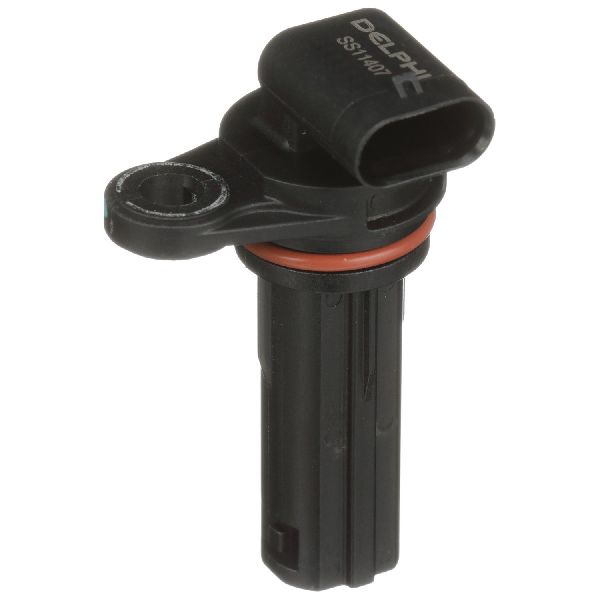
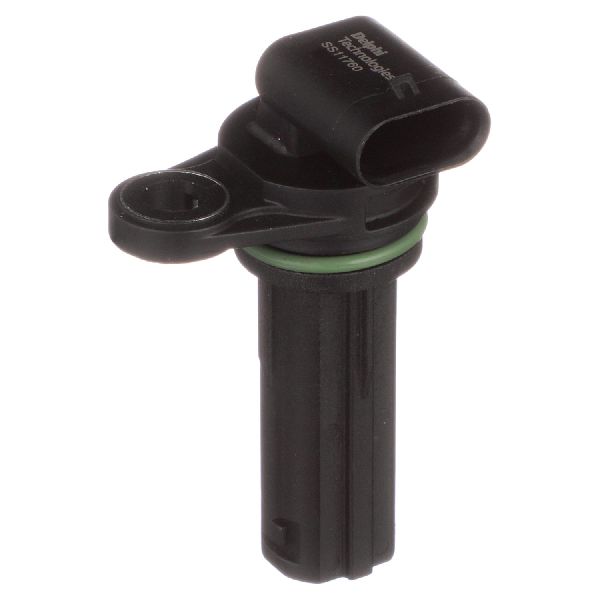
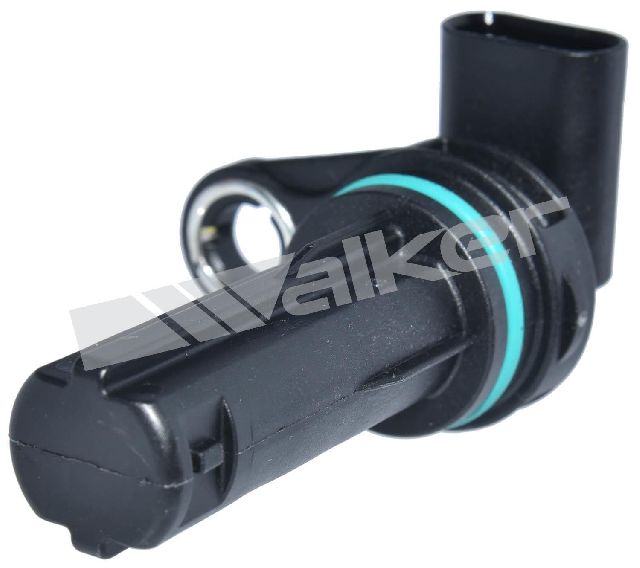
Est. part cost: $0 - Failing Crankshaft Position Sensor 🟡 Medium Probability The crankshaft position sensor provides the primary data for engine speed and position, which is critical for torque calculation. A failing sensor can provide an erratic or missing signal, causing a data conflict. TSBs for both engines list the crank sensor code P0335 alongside U1424 as being addressed by the software update, indicating a close relationship.
How to confirm: Scan for code P0335. If present, especially after a PCM update, test the sensor's circuit and signal. A failing sensor can cause long crank times, stalling, or a no-start condition.
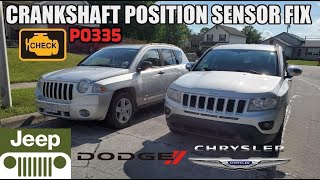
Typical fix: Replace the crankshaft position sensor. 🎬 See this walkthrough for replacing a faulty crankshaft position sensor.
Est. part cost: $25-$70 - Failing Camshaft Position Sensor ⚪ Low Probability Similar to the crank sensor, a faulty camshaft sensor can provide incorrect data to the PCM, leading to calculation conflicts. TSBs and owner forums mention camshaft sensor codes (P0340, P0344) appearing with U1424. In some cases, the tone ring on the camshaft itself can slip, causing a persistent timing error that a new sensor won't fix.
How to confirm: Scan for codes P0340 or P0344. If present, diagnose the corresponding camshaft position sensor and its wiring. If the code returns after sensor replacement, the issue may be mechanical with the camshaft/tone ring.
Typical fix: Replace the faulty camshaft position sensor. In rare cases, the camshaft itself may need replacement.
Est. part cost: $20-$60 - Wiring or Connector Issue ⚪ Low Probability The CAN bus network relies on clean wiring. Any corrosion, damage, or loose pins in connectors for the PCM, TCM, ABS module, or related sensors can corrupt the torque signal. A known issue on some Jeeps involves the PCM connector bolts being too long, preventing a solid connection and causing random stalling.
How to confirm: Visually inspect the wiring harnesses going to the PCM, TCM, and ABS module. Check for corrosion in connectors, especially if the vehicle is in a region with high humidity or road salt. Wiggle test connectors while the engine is running to see if the issue can be reproduced.
Typical fix: Repair the damaged wiring or clean/replace the affected connector.
Est. part cost: $5-$50
Rare But Worth Checking
- Faulty Powertrain Control Module (PCM): If a software update has been performed and all related sensors and wiring have been verified as good, the PCM itself could be failing. This is an expensive last resort.
- Faulty Transmission Control Module (TCM): Code U0402 (Implausible Data Received From TCM) often appears with U1424. If this code is present and a PCM flash doesn't solve the issue, the TCM or its communication line could be the source of the bad data. A dead battery can sometimes cause the TCM to lose its VIN programming, requiring a 'Proxy Re-Alignment' with a high-end scan tool.
- Failing Alternator: A failing alternator can cause extreme voltage fluctuations (both high and low), leading to multiple communication codes, including U1424, and erratic behavior from various modules. One owner reported system voltage spiking to 20V, which destroyed the battery and threw numerous codes.
Diagnosis Steps
- Scan for all DTCs in all modules. Pay close attention to any codes accompanying U1424, such as P0335, U0402, or P0340.
- Contact a Chrysler dealership with your VIN to check for open recalls or applicable TSBs. Specifically ask about TSB #18-052-16 REV. A (for 3.6L) or #18-051-16 REV. B (for 2.4L).
- If a software update is available, have the PCM (and TCM, if recommended by the TSB) reprogrammed. This is the most probable solution and should be done before replacing any parts. A battery charger must be used to maintain stable voltage during the flash process.
- If U1424 returns after the software update, begin diagnosing the other codes that were present. For a P0335, inspect and test the crankshaft position sensor and its wiring.
- For a U0402, inspect the wiring and connectors between the PCM and TCM for any signs of damage or corrosion.
- If no other codes are present and the software is up to date, perform a thorough inspection of the main engine and transmission wiring harnesses for damage, chafing, or loose connectors.
- As a final step, if all else fails, the issue may be an internal failure of the PCM or TCM, which would require replacement and programming.
Parts You'll Likely Need
- PCM Software Update — This is not a physical part, but a service. It is the most common fix for U1424 on this vehicle, as confirmed by multiple manufacturer TSBs.
OEM price range: $150-$300 - Crankshaft Position Sensor
(OEM #68080819AC)— This is the most common hardware failure associated with U1424, especially when code P0335 is also present. The part number 68080819AC is often listed as a camshaft sensor but is used for both crank and cam positions on various FCA vehicles. It has been superseded by 68080819AD.
Trusted brands: Mopar, Bosch, NTK/NGK, Standard Motor Products
OEM price range: $50-$80
Aftermarket price range: $25-$50
Related Codes That Often Appear With This One
- P0335 — A faulty crankshaft position sensor provides bad data to the PCM, which can cause the PCM's torque calculation to conflict with other modules. This code is explicitly mentioned in the TSBs for the U1424 software update.
- U0402 — This code specifically indicates implausible data from the Transmission Control Module (TCM), a common source for the conflicting torque signal that triggers U1424. It is also mentioned in the TSB for the 3.6L engine.
- P0340 / P0344 — These codes point to a fault in the camshaft position sensor circuit, which can also contribute to incorrect engine data and trigger the U1424 code.
- U11E9 — This code indicates a loss of communication with the Active Grille Shutter (AGS) module. One owner reported this code appearing alongside U1424 after a dealership performed recall work on the PCM/TCM.
Technical Service Bulletins (TSBs) & Recalls
- 18-052-16 REV. A: Explicitly states that a PCM software update is the fix for U1424-00, P0335, and U0402 on the 3.6L engine to address MIL illumination. It applies to vehicles built on or before July 7, 2016.
- 18-051-16 REV. B: Mentions a software update for a list of codes including U1424 ('Implausible Engine Torque Signal Received') for the 2.4L engine.
- 18-022-17 REV. A: Also lists U1424-00 with crank (P0335) and cam (P0340) sensor codes as part of a larger list of DTCs addressed by a software update for 2015 models.
- 18-051-16: The original version of the TSB for the 2.4L engine, which also lists U1424 as a code fixed by a PCM reflash.
Platform-Specific Known Issues
- Chrysler issued TSB #18-052-16 REV. A for the 2016 Chrysler 200 with the 3.6L engine (built on or before July 7, 2016) to address U1424-00, P0335, and U0402 by reprogramming the PCM.
- A similar TSB, #18-051-16 REV. B, addresses U1424 on the 2.4L engine, also recommending a software update to fix a list of codes.
- Owners frequently report stalling at low speeds, which is a primary symptom addressed by the PCM software updates.
Mechanic-Grade Diagnostic Values
- CAN C Bus Voltage (Key On, Engine Off) — expected: CAN High (Pin 6 at DLC): ~2.5V. CAN Low (Pin 14 at DLC): ~2.5V. (Recessive state).. Failure: Voltages stuck high, low, or at battery/ground potential indicate a short in the wiring or a faulty module pulling the bus down.
- CAN C Bus Voltage (Engine Running/Data Transmitting) — expected: CAN High: Fluctuates between 2.5V and ~3.5V. CAN Low: Fluctuates between 2.5V and ~1.5V. (Dominant state).. Failure: A lack of fluctuation, or one line mirroring the other, points to a bus failure. The differential voltage between the two lines should be ~2V during transmission.
- Crankshaft Position Sensor Power Supply — expected: 5V or 8V DC reference voltage at the sensor connector with the key on, engine off.. Failure: No voltage indicates a wiring problem from the PCM or a PCM fault. Low voltage could indicate a short or PCM issue.
- Crankshaft Position Sensor Signal (Hall-Effect Type) — expected: A square wave signal switching between 0V and 5V (or 8V) when the engine is cranked. This is best observed with an oscilloscope.. Failure: A missing, erratic, or noisy signal indicates a faulty sensor or a problem with the reluctor wheel.
Hidden / Shadow Codes Worth Checking
- U1424-00: The '-00' suffix is a Failure Type Code used by the manufacturer, often not displayed on basic scanners. It specifies 'No Sub Type Information' but its presence in TSBs like #18-052-16 REV. A confirms the specific fault variant the software update is designed to fix. (see via Dealer-level scan tools like wiTECH or high-end aftermarket scanners that can read OEM-specific fault data.)
Scan Tool Commands That Help
- wiTECH (Dealer Tool) or capable aftermarket scanner (e.g., Autel, ThinkDiag): Proxy Alignment (also called Proxi Configuration or Vehicle Configuration) — This procedure is required after replacing a major control module (like the PCM, TCM, or BCM) to make all modules on the network recognize the new unit. Failure to perform a proxy alignment can cause communication codes like U1424 and a flashing odometer. The function is typically found under 'Body Control Module (BCM)' special functions.
- wiTECH or advanced aftermarket scanner: Network Test / View Vehicle Topology — This function provides a map of all control modules on the CAN bus and shows which ones are communicating. If a module is not responding, it will be flagged here, helping to isolate the source of the bad data causing U1424.
- wiTECH or advanced aftermarket scanner: Clear All DTCs — After performing a software update or a Proxy Alignment, it is critical to clear all fault codes from all modules, not just the PCM. The vehicle should then be shut off and allowed to 'sleep' for several minutes to ensure all modules reset properly.
Wiring & Ground Locations
- Engine Harness Chafe Point 1 — Where the engine wiring harness passes over the ECM/TCM mounting bracket on the driver's side of the engine bay.. Vibrations can cause the harness to rub against the sharp edge of the bracket, potentially shorting CAN bus or sensor wires, leading to communication codes like U1424 and sensor codes like P0335.
- Engine Harness Chafe Point 2 — Where the engine wiring harness can contact the driver's side upper control arm and the shock tower bolt.. Engine roll and movement can press the harness against these components, causing abrasion and short circuits over time. A GM bulletin with a similar issue highlights this as a common area for harness damage.
- PCM Location — On the 2.4L engine, the PCM is located on the right side (passenger side) of the engine bay, near the battery and under-hood fuse block.. Knowing the location is critical for inspecting its connectors for corrosion or damage and for checking the main ground connections, which are typically nearby on the chassis or engine block.
Real Owner Repair Stories
- Reddit user LiamVeritas in r/MechanicAdvice (2015 Chrysler 200 3.6L) — Car goes into limp mode, won't shift. Codes U1424, P0344, P0340 present.
❌ Tried (didn't work) Replacing the fuel cap (for a separate P0457 code)., Replacing the camshaft position sensor (the new sensor still showed 5V, indicating the circuit was likely okay).
✅ What actually fixed it The user replaced the bank 1 exhaust camshaft, which has the tone ring (described as a 'black disk') for the sensor. This implies the tone ring had slipped or was damaged, providing an implausible signal that a new sensor could not fix. - YouTube video by Advanced Level Diagnostics (2014 Chrysler 200 (similar wiring)) — Intermittent stalling, ASD/coil fuse blowing.
❌ Tried (didn't work) Temporarily fixed by replacing the fuse, but the problem returned after 4 months.
✅ What actually fixed it A wiring harness was found to be rubbing against a valve cover bolt, melting the insulation and causing an intermittent short to ground on the coil power supply wire. The fix was to repair the damaged wire and re-route the harness to prevent future contact.
OEM Part Supersession History
68080819AC (also 5033308AB, 68080819AB)→68080819AD— Part revision and consolidation by the manufacturer.
Heads up: The part is listed for both camshaft and crankshaft positions on various FCA vehicles with 2.4L and other engines. Always verify fitment with VIN, but 68080819AD is the correct service replacement for the earlier numbers.
Model Year Variations Within This Range
- 2016 (3.6L Engine): TSB #18-052-16 REV. A specifies a build date cutoff: the PCM/TCM software update applies to vehicles built on or before July 7, 2016. Vehicles built after this date should already have the updated software.
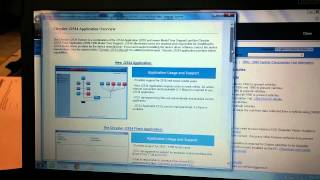
Helpful Videos
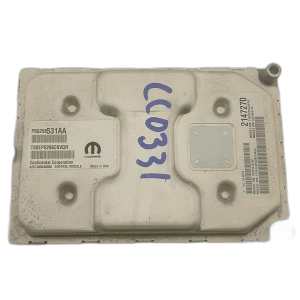
Used OEM Parts in Stock
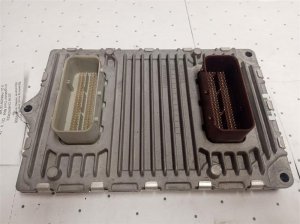


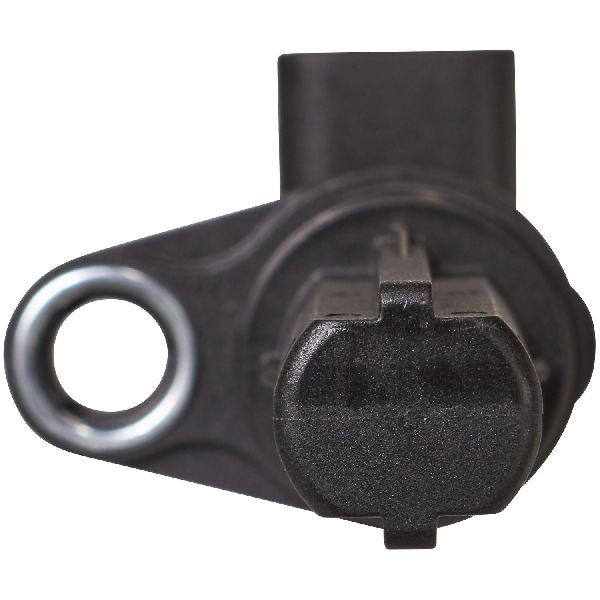
New Aftermarket Parts Available


The information in this article is provided for general reference and educational purposes only. Vehicle specifications, procedures, and part compatibility can vary by production date, trim level, and region. Always consult your vehicle's factory service manual and verify part numbers before purchasing or performing repairs. Safety-critical components such as airbags, seat belts, and braking systems should be installed by a qualified professional.
- Chrysler 200:
- 🎬 Helpful Videos
- 🛍️ Shop This Part
- What's Unique About the 2015-2016 Chrysler 200
- Diagnostic Flowchart
- Symptoms You May Notice
- Most Likely Causes
- Rare But Worth Checking
- Diagnosis Steps
- Parts You'll Likely Need
- Related Codes That Often Appear With This One
- Technical Service Bulletins (TSBs) & Recalls
- Platform-Specific Known Issues
- Mechanic-Grade Diagnostic Values
- Hidden / Shadow Codes Worth Checking
- Scan Tool Commands That Help
- Wiring & Ground Locations
- Real Owner Repair Stories
- OEM Part Supersession History
- Model Year Variations Within This Range
- 🎟️ Get 5% Off