

U1421 on 2014-2015 Ram 2500: Implausible Ignition Key Off Time Fixes
On a 2014-2015 Ram 2500, code U1421 almost always indicates the need for a Powertrain Control Module (PCM) software update from a Ram dealer. It's often a 'ghost' code with no symptoms, and the fix requires dealer-specific tools. Before seeking a reflash, ensure the truck's dual batteries are in perfect health, as low voltage is a known secondary cause.
- U1421 on a 2014-2015 Ram 2500 is almost always a software bug that requires a dealer PCM reflash per TSB #18-037-16 REV. A or #18-045-15 REV A.
- Do not replace any parts before checking for available PCM software updates with a dealer or qualified shop.
- Before any complex diagnosis, thoroughly test BOTH batteries in the dual-battery system. They must be tested separately and replaced as a pair if one is faulty.
- This code is often accompanied by a list of other unrelated codes, all of which are typically resolved by the same software update.
What's Unique About the 2014-2015 Ram 2500
For this specific generation of Ram HD trucks (2500/3500) with the 6.7L Cummins engine, Chrysler (now FCA/Stellantis) issued multiple Technical Service Bulletins (TSBs) acknowledging that U1421 and a host of other codes were being set erroneously. The problem was traced back to bugs in the original PCM software that were overly sensitive. Unlike many codes that point to a failing part, U1421 on these trucks is most often a software problem that was corrected in later updates from the manufacturer, making a PCM reflash the primary repair.
Diagnostic Flowchart
Tap your situation to follow the diagnostic path that matches what you're seeing on this vehicle.
Symptoms You May Notice
- Check Engine Light (MIL) is on
- Code may be present with no other noticeable drivability issues
- The code may appear intermittently, clearing on its own after three consecutive drive cycles without the fault reoccurring, only to return later.
- Replacing sensors or mechanical parts. Since this is a network communication code, the issue lies in the electrical or software domain, not with a physical engine component.
- Replacing only one of the two batteries. In a dual-battery system, a single bad battery can cause system-wide low voltage issues, and replacing just one often leads to a quick failure of the new battery.
Most Likely Causes
- Outdated Powertrain Control Module (PCM) Software 🔴 High Probability Manufacturer TSBs #18-037-16 REV. A (for 2015 models) and #18-045-15 REV. A (for 2014 models) confirm a software update was released specifically to fix U1421 and a long list of other spurious codes.
How to confirm: A Ram dealer or a well-equipped independent shop must connect a scan tool (like wiTECH) to check the current software calibration ID against the latest version available on FCA's servers.
Typical fix: Reprogram (reflash) the PCM with the latest software version. This is not a parts replacement and is typically a 1-hour labor charge at a dealership.
Est. part cost: $0 - Weak or Failing Batteries 🟡 Medium Probability The 6.7L Cummins models use a dual-battery system. Low voltage or a high internal resistance in one or both batteries during startup or shutdown can cause communication glitches between modules, leading to various network codes like U1421. One failing battery can pull the other one down, masking the root cause.
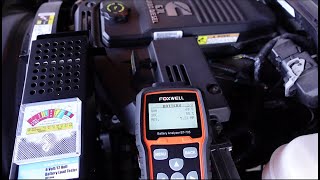
How to confirm: Test both batteries separately. Disconnect them from the vehicle to get an accurate reading. Use a digital multimeter to check resting voltage (should be ~12.6V) and a carbon pile or electronic load tester to check their health and cold cranking amps. Also, verify the alternator is charging correctly (approx. 13.5-14.5V when running).
Typical fix: Replace both batteries at the same time. It is not recommended to replace only one battery in a dual-battery setup.
Est. part cost: $300-$600 for a pair
Rare But Worth Checking
- Failing Control Module (PCM, BCM, or TIPM): If a software update does not resolve the issue and the batteries are healthy, a hardware problem with one of the network modules could be the cause. This is an uncommon and expensive last resort. Diagnosis requires advanced tools to monitor CAN bus traffic. A replacement PCM can cost thousands from a dealer.
- CAN Bus Wiring Issue: An open, short, or corrosion in the vehicle's communication network wiring (CAN B or CAN C) can disrupt signals between the BCM and PCM. This typically requires advanced diagnostics, like using an oscilloscope or multimeter to check for continuity and resistance on the bus wiring harness.
Diagnosis Steps
- Scan for all codes: Check for any other DTCs that may be present. U1421 often appears in a group, which strongly points to the TSB-identified software issue.
- Check Battery Health: This is a critical first step. On 6.7L Cummins models, this means testing BOTH batteries. They must be disconnected from each other and the truck for an accurate load test. A healthy, fully charged battery should read around 12.6 volts. Check for corrosion at the terminals. Even if they test well, if they are over 3-4 years old, consider them suspect. 🎬 Watch: How to decide if your older OEM batteries need replacing.
- Verify Software Version: The most critical step is to determine if the PCM has the latest software. This must be done by a dealer or a shop with access to manufacturer service information via a tool like wiTECH.
- Perform PCM Reflash: If the software is outdated, have the PCM reprogrammed as per the relevant TSB (e.g., #18-037-16 REV. A). The procedure requires a stable power supply to the vehicle and can take up to an hour. After the flash, all DTCs should be cleared.
- Road Test: After the reflash, drive the vehicle through several key cycles (turning it on and off, letting it sit) to confirm that the U1421 code does not return.
- Diagnose Hardware (If Necessary): If the code returns after a reflash, and the batteries are confirmed good, further diagnostics on the CAN network wiring and modules (PCM, BCM, TIPM) are required. This is an advanced step and is rarely necessary for this specific code.
Parts You'll Likely Need
- No parts typically needed — The most common fix is a software update performed by a dealership, not a physical part replacement.
OEM price range: $0
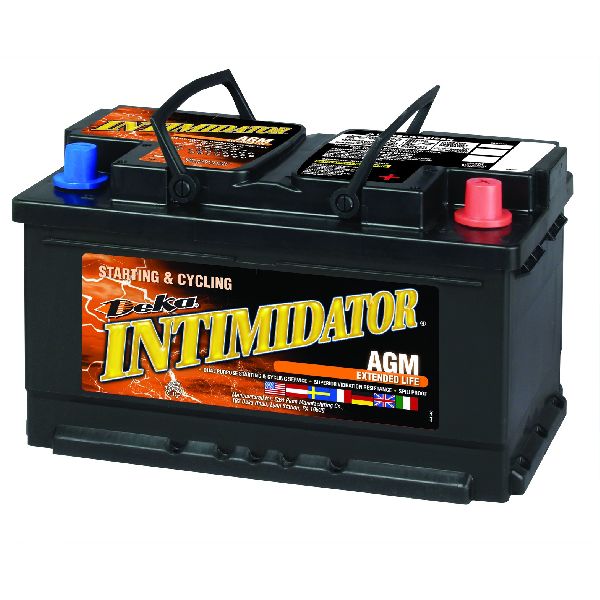
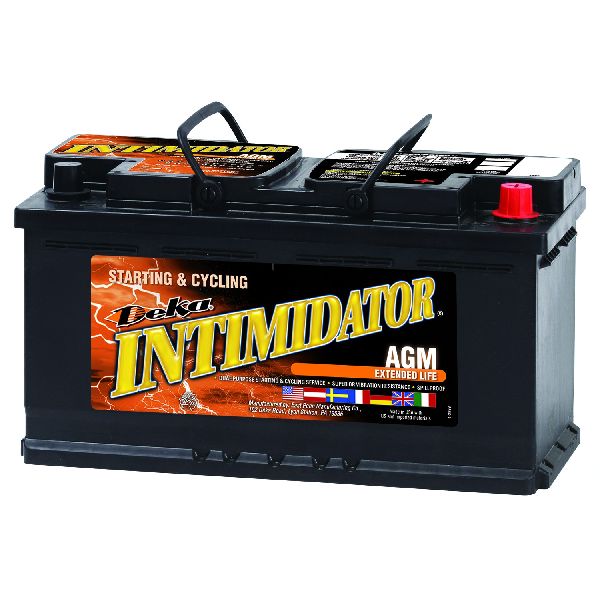
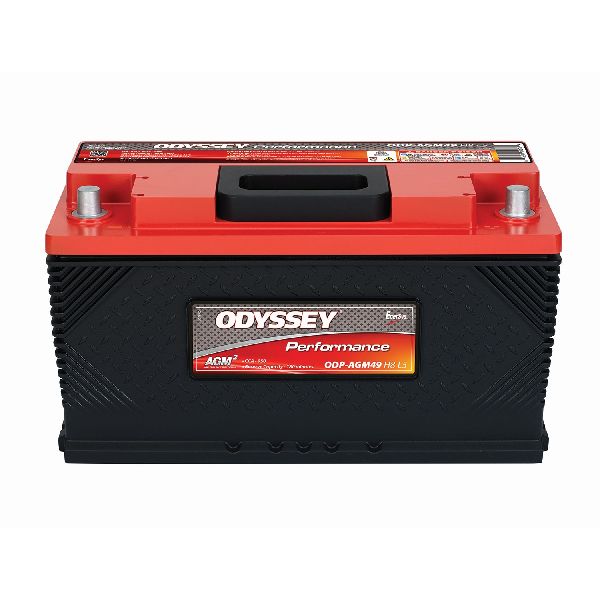
Aftermarket price range: $0 - Group H7 (94R) AGM Batteries (Set of 2)
(OEM #BE0H7AGM (Mopar))— A weak or failing battery is the most common hardware cause. The 6.7L Cummins uses two batteries that should always be replaced as a pair.
Trusted brands: Mopar, Interstate, Odyssey, DieHard
OEM price range: $500-$700 (pair)
Aftermarket price range: $300-$600 (pair)
Related Codes That Often Appear With This One
- P026B — Injection Timing Performance - Addressed by the same PCM software update per TSB #18-037-16 REV. A.
- P040B — EGR Temperature Sensor Circuit Performance - Addressed by the same PCM software update per TSB #18-045-15 REV A.
- P0420 — Catalyst Efficiency Below Threshold - Addressed by the same PCM software update per TSB #18-045-15 REV A.
- P2281 — Air Leak Between MAF And Throttle Body - Addressed by the same PCM software update per TSB #18-037-16 REV. A.
- P218F — Reductant No Flow Detected - Also listed as being fixed by the PCM reflash in TSB #18-037-16 REV. A.
- P242F — Diesel Particulate Filter Restriction - Ash Accumulation - Also listed as being fixed by the PCM reflash in TSB #18-037-16 REV. A.
Technical Service Bulletins (TSBs) & Recalls
- 18-037-16 REV. A: The key TSB for 2015 models that involves reprogramming the PCM to fix U1421 and many other DTCs. It explicitly lists 'U1421 - Implausible Ignition Key Off Time Received' as a condition addressed by the software update.
- 18-045-15 REV A: A similar TSB for 2014 models that also lists U1421 as being resolved by a PCM software update.
- 1807622: Confirms U1421 is addressed by a software update for 2015 models.
- 1805416: Confirms U1421 is addressed by a software update for 2014 models.
Platform-Specific Known Issues
- TSB Software Update Fix: Multiple TSBs, including #18-037-16 REV. A, were issued for 2014-2015 Ram 2500/3500s with the 6.7L Cummins engine to correct a list of false diagnostic codes, with U1421 being one of them. The official fix is a PCM reflash, which also includes other system enhancements.
- Dual Battery System Sensitivity: The dual-battery setup in the Cummins-powered trucks is sensitive to imbalances. An aging or weak battery on one side can cause system-wide voltage drops that trigger network communication faults like U1421. Owners report that replacing a single battery is often a temporary fix, and replacing both is the correct procedure.
Mechanic-Grade Diagnostic Values
- CAN C Bus Resistance — expected: 53.5 to 67 Ohms. Failure: A reading above 67 Ohms indicates an open/high resistance; below 53.5 Ohms indicates a short between the CAN C (+) and (-) circuits. A reading of ~120 Ohms suggests one of the two terminating resistors is missing or has failed.
- Voltage Drop During Cranking (Ground Side) — expected: Less than 0.2 Volts. Failure: A reading above 0.2V between the battery negative post and the engine block indicates a poor ground connection, which should be cleaned and re-tightened.
- Voltage Drop During Cranking (Power Side) — expected: Less than 0.2 Volts. Failure: A reading above 0.2V between the battery positive post and the starter solenoid terminal indicates high resistance in the main power cable or its connections.
- Voltage Drop Between Batteries (Dual System) — expected: Less than 0.2 Volts. Failure: With the engine cranking, a reading above 0.2V between the driver-side battery positive clamp and the passenger-side battery positive post indicates a poor connection at the passenger-side cable eyelet.
Scan Tool Commands That Help
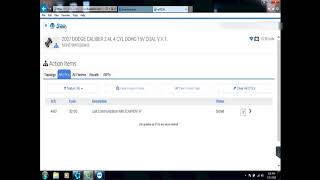
- wiTECH: View ECU Details / Flash Tab — Used to check the current software calibration ID of the PCM and compare it against the available updates listed in the associated TSBs. This is the primary method to confirm if the software update fix is required.
- wiTECH: Vehicle Configuration — After reprogramming a module like the BCM or PCM, this routine should be performed to ensure all vehicle options and settings are correctly recognized by the new software.
- wiTECH: Clear All DTCs — After a module reflash, the application will automatically present all DTCs set during the process. This function should be used to clear them before returning the vehicle to service.
Wiring & Ground Locations
- CAN C Bus Star Connector — This is a central bridge for communication circuits. While its exact location can vary, it is a key diagnostic point for isolating bus faults.. Since U1421 is a communication error between the BCM and PCM, the star connector is a logical place to perform resistance and voltage checks to isolate a faulty leg of the network without having to access each module individually.
- PCM/ECM Ground — A critical ground connection is a Blk/Tan wire that is part of a larger harness passing along the front of the engine, over the alternator, and eventually connecting to the passenger side (auxiliary) battery negative terminal.. Poor grounding for the PCM can cause a variety of erratic issues, including communication faults. Voltage drop tests on this ground path are essential if software and battery issues are ruled out.
- BCM Connector C1 — The Body Control Module (BCM) is typically located in the cabin. Connector C1 is where the CAN IHS (Interior High Speed) bus circuits connect to the BCM.. The BCM sends the 'Ignition Off Time' signal to the PCM. A bad pin or connection at this specific connector could interrupt that signal, directly causing a U1421 code.
Real Owner Repair Stories
- VentureRider Forum User (Dodge Ram with Cummins Engine (year not specified)) — U1421 code present.
❌ Tried (didn't work) Initial diagnostics and searching for causes.
✅ What actually fixed it The owner had installed and then removed 'power adding accessories' and had forgotten to reconnect a wire. Reconnecting the forgotten plug resolved the code.
When the Usual Fixes Don't Work
- While the vast majority of U1421 instances on these trucks are fixed with the TSB software update, some owners have reported the code returning weeks after a reflash. In these cases, the underlying issue is almost always one of the secondary causes: a failing dual-battery system that wasn't properly load-tested, a high-resistance ground connection, or interference from an aftermarket electronic device tied into the CAN bus.
Model Year Variations Within This Range
- 2014 vs 2015: Different Technical Service Bulletins were issued for the PCM reflash. 2014 models are primarily covered by TSB #18-045-15 REV A, while 2015 models are covered by TSB #18-037-16 REV. A. While the root cause and fix are the same, referencing the correct TSB is important when communicating with a dealer.
Helpful Videos
We Have This Part in Stock


The information in this article is provided for general reference and educational purposes only. Vehicle specifications, procedures, and part compatibility can vary by production date, trim level, and region. Always consult your vehicle's factory service manual and verify part numbers before purchasing or performing repairs. Safety-critical components such as airbags, seat belts, and braking systems should be installed by a qualified professional.
- Ram 2500:
- 🎬 Helpful Videos
- 🛍️ Shop This Part
- What's Unique About the 2014-2015 Ram 2500
- Diagnostic Flowchart
- Symptoms You May Notice
- Most Likely Causes
- Rare But Worth Checking
- Diagnosis Steps
- Parts You'll Likely Need
- Related Codes That Often Appear With This One
- Technical Service Bulletins (TSBs) & Recalls
- Platform-Specific Known Issues
- Mechanic-Grade Diagnostic Values
- Scan Tool Commands That Help
- Wiring & Ground Locations
- Real Owner Repair Stories
- When the Usual Fixes Don't Work
- Model Year Variations Within This Range
- 🎟️ Get 5% Off