

OBD-II Code U1408: Implausible Wheel Speed Signal Received
What U1408 means, why it triggers, and how to fix it
- U1408 is a network code indicating the Transmission Control Module is receiving an illogical wheel speed signal, disabling your ABS and increasing emergency stopping distances by up to 20%.
- Always scan for accompanying 'C' (Chassis) codes first; fixing a specific hardware fault like C102B (Right Rear Wheel Speed Sensor) automatically resolves the U1408 symptom code.
- The most common and affordable fix is replacing a faulty wheel speed sensor or repairing a chafed wire harness, costing between $140 and $300 at an independent shop.
- On BMWs, U1408 ignores wheel speed entirely and indicates a stuck-open engine thermostat, while on Chrysler/Dodge vehicles, it frequently points to a failing $400-$800 Totally Integrated Power Module (TIPM).
What Does U1408 Mean?

Code U1408 is a network communication fault indicating the Transmission Control Module (TCM) or Powertrain Control Module (PCM) is receiving an illogical wheel speed signal from the Anti-lock Brake System (ABS) module. The computer compares the speed of all four wheels; if three wheels report 30 MPH and one reports 0 MPH, it flags the data as 'implausible' and triggers a warning light.
Technical definition: The official SAE/ISO definition is most commonly 'Implausible Right Wheel Speed Signal Received' or 'Implausible Brake Signal Received'. This indicates the Transmission Control Module (TCM) detected an irrational signal from the Anti-lock Brake System (ABS) control module regarding wheel speed on the CAN bus network.
Can I Drive With U1408?
Yes, But With Caution. Yes, but only for short distances to a repair facility. Your Anti-lock Braking System (ABS) and traction/stability control are disabled. This increases your stopping distance by 20% or more in emergency situations, especially on wet surfaces, because your wheels will lock up and skid. Your vehicle will often enter 'limp mode,' limiting speed and performance, and will fail a safety inspection. Do not continue driving normally.
Common Causes

- Faulty Wheel Speed Sensor (Very Common) — Located at the wheel hub, this sensor measures wheel rotation speed. It fails internally from age or physical damage from road debris, sending an incorrect signal.
- Damaged Wiring or Connectors (Common) — The sensor's wiring harness frequently suffers from corrosion, chafing, or breaking where it flexes with the suspension, interrupting the signal.
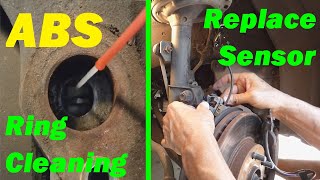
- Damaged or Obstructed ABS Tone Ring (Common) — This notched metal ring provides the reading for the wheel speed sensor. A cracked ring, missing tooth, heavy rust, or metallic debris 🎬 Watch: How to replace sensors and clean the tone ring. obstructs the sensor, causing an implausible signal.
- Faulty Totally Integrated Power Module (TIPM) (Common On Specific Makes) — The TIPM is the central electrical hub on Chrysler, Dodge, and Jeep vehicles. Internal failures cause a cascade of communication errors, including U1408, alongside bizarre issues like the horn blaring or wipers activating randomly.
- Poor Module Ground Connection (Uncommon) — Control modules rely on clean ground connections. A corroded or loose ground for the ABS module introduces electrical noise and communication faults. This is a known issue on 2007-2013 GM trucks at ground location G218.
- Failing ABS Control Module (Less Common) — The ABS module itself fails internally, causing it to send scrambled or incorrect messages onto the vehicle's CAN network.
- Low Battery Voltage (Less Common) — A weak battery or failing alternator causes unpredictable behavior and communication errors between modules, setting a U1408 code even if all ABS components are functional.
- Faulty Steering Angle Sensor (SAS) (Uncommon) — The SAS informs the stability control system of the steering wheel's position. If the SAS data conflicts with the wheel speed data, the ABS module sends implausible data. This happens frequently after a wheel alignment if the sensor is not recalibrated.
Symptoms

- Anti-lock Brake System (ABS) Light On — This is the most direct symptom, indicating the ABS is disabled due to a fault.
- Traction / Stability Control Light On — These systems rely on wheel speed data from the ABS module and are automatically disabled when the ABS system has a fault.
- Check Engine Light On — The TCM or PCM triggers the Check Engine Light when it stops receiving necessary data from the ABS module.
- Vehicle Enters 'Limp Mode' — To protect the drivetrain from missing data, the vehicle limits engine power, RPM, and transmission shifting.
- Erratic Transmission Shifting — The TCM uses wheel speed data for shift timing. Without reliable data, shifting becomes harsh, delayed, or unpredictable.
- Erratic Speedometer Reading — In vehicles where the speedometer relies on ABS data, a faulty signal causes the speedometer to fluctuate, read incorrectly, or drop to zero.
Diagnostic Flowchart
Tap your situation to follow the diagnostic path that matches what you're seeing on this code.
Common Fixes & Costs
- Replace Wheel Speed Sensor
— Parts: $40 - $100, Labor: $100 - $150, ~1 hr book time
(DIY)
Jeep Grand Cherokee (2005-2010, Rear): OEM Mopar: 56044146AB (Alt: Duralast: SU1283)
Dodge Journey (2009-2019, Front): OEM Mopar: 5085822AD (Alt: NTK: AB2036) - Repair Damaged Wiring/Connector — Parts: $10 - $30, Labor: $100 - $200, ~1.5 hr book time (Intermediate)
- Clean or Replace ABS Tone Ring — Parts: $20 - $100, Labor: $150 - $350, ~2.5 hr book time (Intermediate)
- Repair or Replace TIPM (Chrysler/Dodge/Jeep) — Parts: $400 - $1000, Labor: $100 - $200, ~1 hr book time (Professional)
- Replace ABS Control Module — Parts: $200 - $1000, Labor: $150 - $300, ~2 hr book time (Professional)
DIY vs Professional
- Replace Wheel Speed Sensor — Beginner:
- Clean ABS Tone Ring — Beginner:
- Repair Damaged Wiring — Beginner:
- Replace ABS Tone Ring — Beginner:
- Replace TIPM or ABS Module — Beginner:
Used vs. New Parts: Buying Guide
When a used part is worth it: Never buy a used wheel speed sensor. New aftermarket parts are cheap, and used sensors have a high failure rate. Used parts make sense for expensive components like an ABS module or TIPM sourced from a low-mileage vehicle.
Donor-vehicle mileage cap: roughly under 60000 miles for the part to have meaningful remaining life.
Donor quality checklist:
- For electronic modules, verify the part number matches exactly.
- Source parts from regions without heavy road salt use to minimize corrosion risk.
- Ensure the seller offers at least a 30-day warranty.
Decision logic:
- If The part is a wheel speed sensor → Buy a new aftermarket or OEM part. The cost savings of a used sensor are minimal and not worth the risk.
- If The part is an expensive electronic module (ABS, TIPM) and budget is a primary concern → A used or remanufactured module is a viable option, but it requires professional programming.
- If The vehicle is a daily driver where reliability is critical → Favor new OEM or high-quality aftermarket parts with a good warranty.
Warranty tradeoff: Used parts typically have a 30-90 day warranty. Aftermarket new sensors come with a 1-year to limited lifetime warranty. OEM parts carry a 12-month warranty.
Worst-case if a used part fails: $150 - $400 if a used sensor or module fails after installation, primarily due to repeated labor costs.
What Happens If You Wait — Timeline
- Immediate: ABS, Traction Control, and Check Engine lights illuminate. ABS and stability control are disabled. Vehicle braking reverts to standard, non-ABS mode. (MPG impact: 0%% · Added cost: $0, but immediate and significant safety risk is present.)
- 1-4 weeks: The transmission exhibits erratic shifting, harsh engagement, or enters 'limp mode,' limiting speed and RPM. (MPG impact: 5-15% (if in limp mode)% · Added cost: $20-$80 in wasted fuel. Increased stress on drivetrain components from harsh shifting.)
- 1-6 months: Moisture and road salt wick up chafed copper wire under the insulation, spreading corrosion. A simple splice repair becomes a complex harness replacement. (MPG impact: 5-15% (if limp mode continues)% · Added cost: $200-$500. The cost increase of turning a simple wiring pigtail repair into a larger harness section repair.)
- 6+ months: An ignored, intermittently shorting wire damages the driver circuit within a control module (ABS, TCM, TIPM), requiring expensive replacement. (MPG impact: 5-15% (if limp mode continues)% · Added cost: $800 - $2,500+. The cost of turning a sensor fault into a module replacement.)
Cost of Not Fixing It
- Immediate: Loss of ABS, traction control, and stability control. Increased risk of skidding and loss of control during emergency braking. (Added cost: Negligible, but safety risk is high.)
- 1-6 months: Unpredictable transmission shifting if the TCM is in limp mode. Uneven tire wear from altered braking behavior. (Added cost: $0 - $300 for potential tire wear.)
- 6+ months: An ignored wiring issue causes corrosion to spread or a short that damages a control module, turning a $150 repair into a $1,500 repair. (Added cost: $500 - $2500+ if a control module is damaged or an accident occurs.)
Diagnosis Steps

- Scan for All Trouble Codes
Use an advanced OBD-II scanner capable of reading codes from all vehicle modules. U1408 is a secondary code; look for primary 'C' (Chassis) codes like C102B (Right Rear Wheel Speed Sensor Circuit) that pinpoint the exact hardware fault. Always diagnose 'C' codes first.
Tools: Advanced OBD-II Scanner (Beginner) - Analyze Live Data PIDs
View the live data for all four wheel speed sensors simultaneously. Drive the vehicle slowly in a straight line. All four sensors should read within 1-2 MPH of each other. A sensor that reads 0 MPH, drops out intermittently, or shows a wildly different speed is the source of the fault.
Tools: Advanced OBD-II Scanner (Intermediate) - Visually Inspect the Sensor, Wiring, and Tone Ring
Locate the suspect wheel based on live data or 'C' codes. Safely raise the vehicle and remove the wheel. Inspect the wheel speed sensor for cracks. Examine its wiring harness for chafing, melting, or corrosion. Look at the ABS tone ring for cracks, missing teeth, or heavy rust.
Tools: Jack, Jack Stands, Lug Wrench, Flashlight (Intermediate) - Test the Wheel Speed Sensor
Identify the sensor type. Passive sensors (2-wire) are tested with a multimeter set to Ohms; resistance should be 800-2,350 Ohms. Active sensors (2 or 3-wire) require checking for a reference voltage (5V or 12V) at the connector, then using an oscilloscope to view the signal while spinning the wheel.
Tools: Multimeter, Oscilloscope (Intermediate) - Check for Technical Service Bulletins (TSBs)
Search for TSBs related to your vehicle's make, model, year, and the U1408 code. Manufacturers release bulletins for known issues, such as software updates or common wiring problems, saving significant diagnostic time.
Tools: Online TSB Database Access (Beginner) - Inspect Module Power and Ground Connections
If sensors and wiring are good, check the power and ground connections for the ABS module and TIPM/BCM. Use a wiring diagram to locate ground points. Disassemble, clean corrosion until the metal is shiny, and re-secure. A poor ground is a common cause of communication codes.
Tools: Socket Set, Wire Brush, Wiring Diagram (Advanced) - Check CAN Bus Network Voltages
Perform a quick health check at the OBD-II port. With the key on, use a multimeter to measure voltage. Pin 6 (CAN High) should read 2.5-3.5V, and Pin 14 (CAN Low) should read 1.5-2.5V. With the battery disconnected, resistance between Pin 6 and Pin 14 should be 60 Ohms.
Tools: Multimeter, OBD-II Breakout Box (optional) (Advanced) - Test the ABS/TCM/TIPM Module
If all other components are verified good, the fault lies within a control module. This requires a professional-grade scan tool to perform bi-directional tests and confirm if the module is processing inputs correctly. Module replacement is the final step.
Tools: Professional Diagnostic Scan Tool (Professional)
When This Code Triggers (Freeze-Frame Conditions)
- Vehicle Speed: 15-45 mph (Sets during initial acceleration or steady-state driving as the computer compares all four wheel speeds and detects a mismatch.)
- Brake Pedal Status: Off (Detected when brakes are not applied, as the system expects all wheels to rotate at identical speeds.)
- System Voltage: 13.5-14.5V (Normal operating voltage. A low voltage condition (<11.5V) triggers communication faults, but U1408 typically sets under normal electrical conditions.)
- Time Since Start: 2-5 minutes (Flagged shortly after starting a trip once the vehicle reaches a speed where a single sensor's illogical reading becomes obvious.)
Related Codes
- U0121 — 'Lost Communication With Anti-lock Brake System'. Indicates a total loss of signal from the ABS module. Diagnose U0121 first; restoring communication clears U1408.
- C-codes (e.g., C102B) — Chassis codes identify the root cause (e.g., 'Right Rear Wheel Speed Sensor Circuit'). U1408 is just the symptom. Fix the 'C' code first.
- U0002 — 'CAN Bus Off Performance'. A severe network code indicating the entire communication bus is unstable. Address this vehicle-wide network problem before diagnosing U1408.
- U0141 — 'Lost Communication With IPM (TIPM)'. On Chrysler vehicles, this points directly to a TIPM failure. If seen alongside U1408, the TIPM is the culprit.
- P0128 — 'Coolant Thermostat'. On BMWs, seen with U1408, strongly pointing to a stuck-open thermostat.
Climate & Environmental Factors
- Cold Weather (BMW Specific): On BMW models, U1408 means 'Invalid data received from engine coolant temp sensor'. Triggered on cold days (below 40°F) by a thermostat stuck open.
- High Humidity / Road Salt: Accelerates corrosion at wiring connectors for wheel speed sensors and critical chassis ground points, leading to intermittent signals and communication faults.
How to Talk to a Mechanic About This Code
Say this: "I have a U1408 code and my ABS and traction control lights are on. Please start by checking for related chassis 'C' codes and viewing live data from all four wheel speed sensors to identify the problem area."
This signals you understand U1408 is a communication code and the root cause is likely a specific hardware fault. It directs the technician to perform correct initial diagnostic steps rather than quoting an expensive module replacement.
Avoid saying:
- 'My check engine light is on, can you look at it?' (Too vague, invites a broad, expensive diagnostic process).
- 'My car's computer is bad.' (Don't assume a module failure; it's rarely the cause).
- 'Just fix whatever is wrong.' (Gives the shop a blank check to replace parts without approval).
Questions to ask before authorizing the repair:
- Did you find a specific 'C' code, and what does it point to?
- Can you show me the live data graph or readings from the wheel speed sensors?
- If the cause is a bad wire or sensor, can you explain what you found during the visual inspection?
- If you are recommending a module replacement, how did you rule out a sensor, wiring, or ground fault first?
- What is the warranty on this specific repair, covering both parts and labor?
Where to Take It: Dealer vs Independent vs Chain
- Dealer:
Best for: Vehicles under warranty., BMW vehicles, as U1408 indicates a thermostat issue, not a wheel speed problem., Chrysler/Dodge/Jeep vehicles where a TIPM failure is suspected and requires dealer-specific programming.
Downsides: Highest labor rates., Defaults to expensive module replacement instead of wiring or ground repair. (Typical cost: +50% vs. baseline) - Independent Shop:
Best fit for most non-warranty, non-BMW cases. A good independent auto electric specialist accurately diagnoses the root cause, whether it's a sensor, wire, or ground.
Best for: Out-of-warranty vehicles with common causes like a bad wheel speed sensor, wiring damage, or a bad ground., Shops with strong electrical diagnostic skills.
Downsides: Quality varies greatly; look for ASE certifications and good reviews on electrical work., May lack the latest programming tools for module replacement on newer cars. (Typical cost: +0% vs. baseline) - Chain Shop:
Avoid for initial diagnosis. The risk of misdiagnosis is high for a 'U' code. Only use for a simple, pre-diagnosed part replacement.
Best for: Acceptable ONLY if you have already self-diagnosed a specific wheel speed sensor and just need it replaced.
Downsides: Not equipped for complex network or electrical diagnosis., High pressure to upsell; frequently misdiagnoses the issue and sells unnecessary parts. (Typical cost: -10% vs. baseline)
When to Walk Away From the Repair
If the estimated repair cost exceeds 40% of the car's private-party value, sell or trade in the vehicle.
- Car worth $5000, fix is $350: Fix it. This is a routine repair cost and well below the threshold.
- Car worth $4000, fix is $1800: Walk away. The repair cost is 45% of the car's value. This points to an expensive module failure (ABS or TIPM). It is not economical to proceed.
- Car worth $15000, fix is $1800: Fix it. While expensive, the cost is only 12% of the vehicle's value and well within a reasonable repair budget.
What Scan Tool You Need for This Code
Minimum: A scanner that reads and clears codes from the ABS, Airbag (SRS), and Transmission modules, and displays live data for wheel speed sensors.
A basic $20 code reader only checks for engine codes and shows 'No Codes Found' for U1408. It cannot access the ABS module to find the root-cause 'C' codes or display live wheel speed sensor data.
Budget: BlueDriver Pro (~$100) — Connects to a smartphone app, reads/clears ABS codes, and graphs live data from all four wheel speed sensors to identify the faulty wheel.
Mid-range: Foxwell NT510 Elite (~$180) — A dedicated handheld scanner offering OE-level diagnostics for a specific car brand. It provides robust live data, graphs sensor readings, and offers bi-directional controls.
Professional: Autel MaxiCOM MK808BT (~$550) — Offers full-system diagnostics with advanced bi-directional control to test modules directly. Includes specific functions for ABS brake bleeding, SAS calibration, and FCA AutoAuth for newer Chrysler/Dodge/Jeep vehicles.
How to Clear the Code After You Fix It
- Perform the physical repair.
- Use an OBD-II scan tool capable of accessing the ABS/TCM modules to clear the U1408 and any related C-codes.
- Perform a drive cycle to allow the system to verify the repair and set readiness monitors.
Drive cycle (~20 minutes): Start the vehicle from a cold start. Drive at a steady speed of 55 mph for 3-5 minutes. Then, perform stop-and-go city driving to achieve a range of speeds, confirming the new sensor reports correctly.
Readiness monitors affected: This code does not directly affect emissions readiness monitors., However, clearing codes resets all monitors, so a full drive cycle is needed before an emissions test.
Before emissions retest: drive at least 50 miles to fully set monitors.
Watch out for:
- Disconnecting the battery will not clear this code from the ABS or Transmission control modules.
- The code returns immediately if the underlying hardware fault is not fixed.
- Forgetting to clear the code from all relevant modules (ABS, TCM, PCM) after the repair.
Will This Fail Emissions / State Inspection?
Yes — this code typically fails an OBD-II emissions inspection.
- California: An illuminated Check Engine Light is an automatic failure. After repair, drive 50-100 miles to set readiness monitors before re-testing.
- New York: An illuminated Check Engine Light causes an emissions test failure. An illuminated ABS light is grounds for failing the safety portion of the inspection.
- Texas: An illuminated Check Engine Light is an automatic failure. If the code is cleared, you must complete a drive cycle to set readiness monitors.
Most Commonly Affected Vehicles

- Jeep Grand Cherokee (2005-2010) — Often related to failures in the wheel speed sensor circuits or CAN bus communication issues.
- Dodge Journey (2009-2019) — Highly prone to faults within the TIPM, triggering U1408 along with random electrical issues. Wiring harness chafing is also common.
- Jeep Wrangler (JK) (2007-2018) — Exposed wheel speed sensors and wiring are vulnerable to damage from off-roading, water, and debris.
- Dodge / Ram Ram 2500/3500 (2009-2012) — On diesel models with the AS68RC transmission, this points to a communication failure between the ABS module and the TCM.
- Dodge Magnum / Charger (2005-2008) — CAN bus communication errors between the ABS and TCM are a known issue.
- Ford F-150 / Explorer (2004-2014) — Triggered by an uncalibrated Steering Angle Sensor (SAS) sending data that conflicts with wheel speed sensors after an alignment.
- Chevrolet / GMC Silverado / Sierra 1500 (2007-2013) — Frequently caused by a poor ground connection at ground G218, located in the driver's side footwell behind the kick panel.
- Volkswagen Jetta / Golf (2006-2012) — Commonly caused by a faulty ABS wheel speed sensor or a break in the sensor's wiring harness near the connector.
Manufacturer-Specific Notes
- Chrysler / Dodge / Jeep / Ram: The Totally Integrated Power Module (TIPM) is a common failure point causing a flood of 'U' codes. Check for active recalls on your VIN before replacing modules.
- BMW: U1408 means 'Invalid data received from engine coolant temp sensor'. It is almost always caused by a stuck-open thermostat, appearing primarily on cold days with P0128.
- General Motors (Chevrolet / GMC): On 2007-2013 trucks, communication codes are frequently caused by poor ground connections. Inspect ground G218 behind the driver's side A-pillar kick panel.
- Ford: U1408 is often a symptom of an uncalibrated Steering Angle Sensor (SAS) after a wheel alignment. The stability control system compares SAS data with wheel speed data, and a mismatch triggers the code.
Real Owner Stories
2014 Jeep Wrangler JK with multiple dash lights
After light off-roading, the ABS and Traction Control lights came on. Scanner showed U1408 along with C102B (Right Rear Wheel Speed Sensor Circuit).
What they tried:
- Cleared codes, but they returned immediately.
- Visually inspected the right rear wheel area and found the wheel speed sensor wire snagged on a branch, causing an internal break near the connector.
Outcome: Spliced in a new pigtail connector for the sensor harness for $25. After soldering and heat-shrinking, all codes cleared permanently.
Lesson: On off-road vehicles, exposed wiring is highly vulnerable. Always perform a visual inspection of the sensor wiring at all four corners before replacing expensive parts.
2012 Dodge Journey at 115K miles with random electrical issues
ABS, Traction Control, and Check Engine lights on (U1408). The horn honked when turning and wipers activated randomly.
What they tried:
- A local shop diagnosed a bad ABS module and quoted $1,200.
- Owner researched online and found similar stories pointing to the TIPM (Totally Integrated Power Module).
Outcome: Owner sent their original TIPM to a specialized repair service for $450. After reinstalling the rebuilt TIPM, the U1408 code and all electrical gremlins vanished.
Lesson: On Chrysler/Dodge/Jeep products, a flood of communication codes and bizarre electrical behavior points to a failing TIPM, not individual modules.
2015 BMW 328i at 60K miles with Check Engine Light in winter
Check Engine Light appeared only when temperatures dropped below 40°F. Code reader showed U1408. The radiator fan ran on high constantly and the oil temp gauge barely moved.
What they tried:
- Initially suspected a faulty wheel speed sensor based on generic definitions.
- A BMW forum search revealed U1408 means 'Invalid data received from engine coolant temp sensor' and pairs with code P0128.
Outcome: The problem was a thermostat stuck open, preventing the engine from reaching operating temperature. Replacing the thermostat resolved the issue.
Lesson: Always check manufacturer-specific definitions. On a BMW, U1408 has nothing to do with wheel speed and is a classic symptom of a failed thermostat.
2008 GMC Sierra 1500 at 150K miles with intermittent ABS light
ABS and traction control lights flickered over bumps. Code U1408 was stored in the TCM.
What they tried:
- Replaced front wheel speed sensors, but the problem persisted.
- Checked wiring at the wheels and found no visible damage.
Outcome: Owner located ground pack G218 behind the driver's side kick panel and found factory sound-deadening insulation trapped under the terminal. Cleaning the contact point to bare metal fixed the problem permanently.
Lesson: Communication codes without a clear component failure point to a bad ground. On 2007-2013 GM trucks, ground G218 is a known weak point.
How to Prevent This Code From Triggering
- Apply Di-Electric Grease to Connectors (During any brake work or tire rotation) — Unplug accessible connectors and apply di-electric grease. This seals out moisture and prevents pin corrosion that causes intermittent signals.
- Perform Regular Undercarriage Washes (Monthly in winter for regions using road salt) — Regularly washing the underbody prevents corrosive road salt from accumulating and eating away at wiring, connectors, and ground points.
- Inspect and Secure Wiring Harnesses (Annually or during oil changes) — Visually inspect sensor wiring. Ensure it is properly secured in its clips and not rubbing against suspension components to prevent chafing damage.
- Clean Wheel Speed Sensors and Tone Rings (When replacing brake pads) — Brake dust and metallic debris build up on the magnetic tip of the sensor and tone ring teeth. Cleaning with brake cleaner restores a clear signal.
Frequently Asked Questions
What's the difference between a 'U' code and a 'C' code?
A 'C' code (Chassis) points to a specific hardware fault, like 'C102B - Right Rear Wheel Speed Sensor Circuit.' A 'U' code (Network) indicates a communication problem between modules. U1408 is the symptom where one module reports receiving illogical data, while the 'C' code is the root cause.
What is the most common misdiagnosis for U1408?
The most common mistake is immediately replacing an expensive control module like the TCM or ABS module. The actual fault is almost always a simpler hardware issue: a bad wheel speed sensor, a damaged wire, or a cracked tone ring. Always diagnose the accompanying 'C' code first.
Why did the U1408 code appear after I replaced my battery?
A weak or failing battery causes low voltage, leading to random communication faults between modules. The U1408 code was likely stored in memory during one of these low-voltage events. Clear the codes after installing the new battery; if it doesn't return, the old battery was the sole cause.
Can a bad wheel alignment cause a U1408 code?
Yes, indirectly. If the steering angle sensor (SAS) is not correctly recalibrated after an alignment, it sends data that conflicts with the wheel speed sensors. The system flags this conflicting data as implausible, triggering the code.
What is a TIPM on a Dodge and how does it cause U1408?
The TIPM (Totally Integrated Power Module) is the main computer and fuse box for all electronics on most Dodge, Chrysler, and Jeep vehicles. When it fails internally, it corrupts the CAN bus network data. This causes modules like the TCM to receive nonsensical signals and set codes like U1408.
How do you clear the U1408 code?
You must use an advanced OBD-II scanner with ABS and TCM access to clear the code. However, simply clearing the code is not a permanent fix. The code returns immediately if the underlying hardware or communication fault remains unrepaired.
I have a BMW and got code U1408, is it a wheel sensor problem?
No. On BMWs, U1408 means there is a problem with the engine cooling system, not the wheels. It is almost always caused by a thermostat stuck open, which typically triggers code P0128 alongside it.
Key Takeaways
- U1408 is a network code indicating the Transmission Control Module is receiving an illogical wheel speed signal, disabling your ABS and increasing emergency stopping distances by up to 20%.
- Always scan for accompanying 'C' (Chassis) codes first; fixing a specific hardware fault like C102B (Right Rear Wheel Speed Sensor) automatically resolves the U1408 symptom code.
- The most common and affordable fix is replacing a faulty wheel speed sensor or repairing a chafed wire harness, costing between $140 and $300 at an independent shop.
- On BMWs, U1408 ignores wheel speed entirely and indicates a stuck-open engine thermostat, while on Chrysler/Dodge vehicles, it frequently points to a failing $400-$800 Totally Integrated Power Module (TIPM).
Helpful Videos

The information in this article is provided for general reference and educational purposes only. Vehicle specifications, procedures, and part compatibility can vary by production date, trim level, and region. Always consult your vehicle's factory service manual and verify part numbers before purchasing or performing repairs. Safety-critical components such as airbags, seat belts, and braking systems should be installed by a qualified professional.
- 🎬 Helpful Videos
- What Does U1408 Mean?
- Can I Drive With U1408?
- Common Causes
- Symptoms
- Diagnostic Flowchart
- Common Fixes & Costs
- DIY vs Professional
- Used vs. New Parts: Buying Guide
- What Happens If You Wait — Timeline
- Cost of Not Fixing It
- Diagnosis Steps
- When This Code Triggers (Freeze-Frame Conditions)
- Related Codes
- Climate & Environmental Factors
- How to Talk to a Mechanic About This Code
- Where to Take It: Dealer vs Independent vs Chain
- When to Walk Away From the Repair
- What Scan Tool You Need for This Code
- How to Clear the Code After You Fix It
- Will This Fail Emissions / State Inspection?
- Most Commonly Affected Vehicles
- Manufacturer-Specific Notes
- Real Owner Stories
- 2014 Jeep Wrangler JK with multiple dash lights
- 2012 Dodge Journey at 115K miles with random electrical issues
- 2015 BMW 328i at 60K miles with Check Engine Light in winter
- 2008 GMC Sierra 1500 at 150K miles with intermittent ABS light
- How to Prevent This Code From Triggering
- Frequently Asked Questions
- What's the difference between a 'U' code and a 'C' code?
- What is the most common misdiagnosis for U1408?
- Why did the U1408 code appear after I replaced my battery?
- Can a bad wheel alignment cause a U1408 code?
- What is a TIPM on a Dodge and how does it cause U1408?
- How do you clear the U1408 code?
- I have a BMW and got code U1408, is it a wheel sensor problem?
- Key Takeaways
- 🎟️ Get 5% Off