

U1400 on 2017 Chrysler Pacifica: Implausible TPS Signal Causes & Fixes
On a 2017 Pacifica, code U1400, especially with lean codes P0171/P0174, is most often caused by a software glitch. A Technical Service Bulletin (TSB) from Chrysler recommends reprogramming the Powertrain Control Module (PCM) as the primary fix, which typically costs 1-2 hours of shop labor. This is a very common issue for vehicles built before June 29, 2017.
- For a 2017 Pacifica, U1400 is almost always part of a known issue covered by a Technical Service Bulletin (TSB).
- Do not replace any parts until you have checked if your vehicle needs a PCM software update, especially if codes P0171, P0174, and P1D73 are also present.
- If a software update doesn't fix the issue or doesn't apply, the next most likely cause is a vacuum leak, which should be diagnosed with a smoke test.
- Replacing the throttle body should be considered a last resort after software and vacuum leaks have been ruled out.
What's Unique About the 2017-2017 Chrysler PACIFICA
For the 2017 Pacifica, this code is rarely a random event. Chrysler issued specific Technical Service Bulletins (TSBs) acknowledging that U1400 often appears with lean codes (P0171, P0174) and an Active Grill Shutter code (P1D73). This specific cluster of codes is a known software issue on vehicles built before late June 2017, and the official fix is a software update for the Powertrain Control Module (PCM), not necessarily a part replacement. The TSBs essentially adjust the sensitivity of the monitoring software to prevent false positives.
Diagnostic Flowchart
Tap your situation to follow the diagnostic path that matches what you're seeing on this vehicle.
Symptoms You May Notice
- Check Engine Light (Malfunction Indicator Lamp) is on.
- Electronic throttle control warning light (red lightning bolt) may illuminate.
- Engine hesitation or surging during acceleration.
- Rough or unstable idle.
- Engine may stall unexpectedly, especially at low speeds.
- Vehicle may enter a reduced power mode ('limp mode').
- Poor fuel economy due to associated lean conditions.
- Replacing the throttle body without checking for software updates first. This is the most common unnecessary repair for this code cluster.
- Replacing oxygen sensors to fix the accompanying P0171/P0174 codes without first checking for vacuum leaks or applicable TSBs.
- Replacing the PCM when only a software reflash is needed.
Most Likely Causes
- Outdated Powertrain Control Module (PCM) Software 🔴 High Probability Chrysler released TSBs #18-069-17 and #18-002-19 REV A specifically to address this code cluster with a software update on 2017 Pacificas built on or before June 29, 2017. These TSBs confirm the issue and provide the official software-based repair.
How to confirm: A dealer or shop with a wiTECH scan tool must check the current PCM software calibration ID against the latest available updates for the vehicle's VIN. The TSBs list the specific DTCs (U1400, P0171, P0174, P1D73) as the primary condition for the update.
Typical fix: Reprogram (flash) the PCM and sometimes the TCM to the latest software version. TSB #18-069-17 explicitly states the TCM must also be checked and updated.
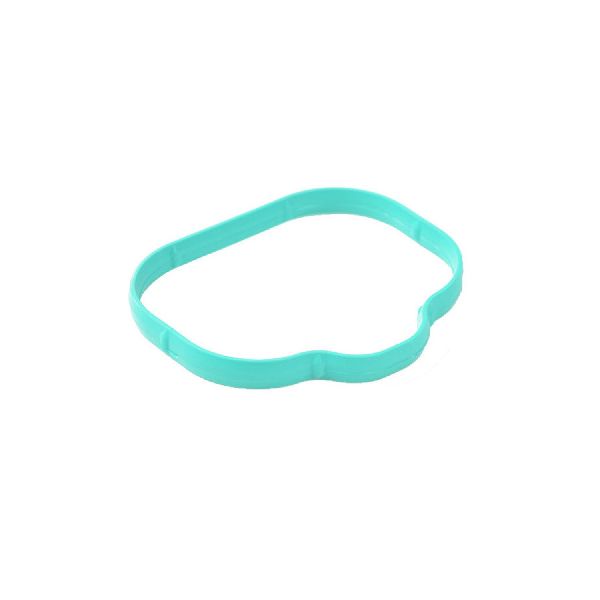
Est. part cost: $0 - Vacuum Leak 🟡 Medium Probability The 3.6L Pentastar engine is known to develop vacuum leaks from failing upper and lower intake manifold gaskets. 🎬 See this walkthrough for removing the intake manifold. A significant leak introduces unmetered air, causing lean conditions (P0171/P0174) that can lead to erratic sensor data and trigger the U1400 code. A Reddit user with a 2017 Pacifica confirmed this exact issue was fixed by replacing cracked intake gaskets.
How to confirm: Perform a smoke test on the intake system. Smoke will visibly escape from the location of the leak, often around the seams of the plastic intake manifold or where it meets the cylinder heads.
Typical fix: Replace the leaking gasket(s), such as the upper and lower intake manifold gaskets. The lower intake gaskets are the most common failure point.
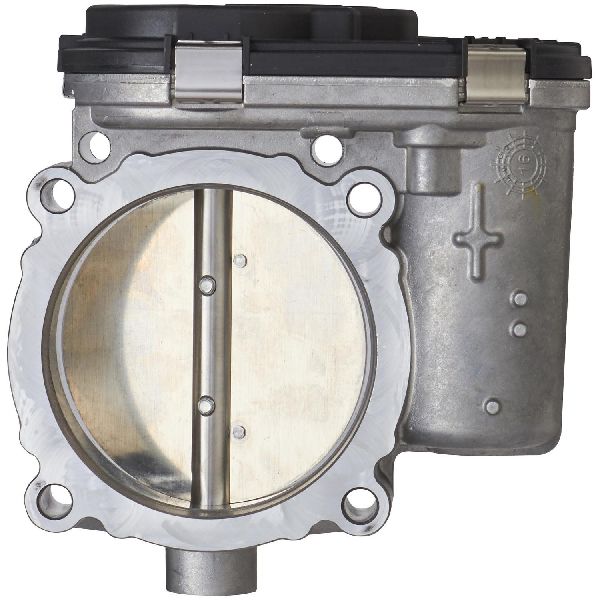
Est. part cost: $40-$100 - Dirty or Faulty Throttle Body ⚪ Low Probability Carbon and grime buildup can cause the throttle plate to stick or move erratically, sending signals the PCM might interpret as implausible. While less common than the software or vacuum leak issues, it remains a possibility.
How to confirm: Visually inspect the throttle body for heavy carbon deposits. Test the throttle position sensor's voltage sweep with a multimeter or advanced scan tool to check for dead spots or glitches.
Typical fix: Clean the throttle body thoroughly with a dedicated cleaner. 🎬 Watch: How to clean the throttle body and PCV valve. If cleaning doesn't resolve the issue or testing shows a fault, replace the entire throttle body assembly.
Est. part cost: $300-$550
Rare But Worth Checking
- Weak or Failing Battery: Low system voltage, especially from a failing auxiliary battery in models with Engine Stop/Start (ESS), can cause a wide range of communication errors across modules, including U1400. TSB #18-002-19 REV A includes updates to improve ESS battery logic and prevent related issues.
- Wiring Harness or Connector Issue: Damage or corrosion on the wiring for the throttle body, PCM, or TCM can corrupt the signal. This should be checked after software and vacuum leaks are ruled out. A visual inspection of the connectors for pushed-out pins or water intrusion is a good practice.
Diagnosis Steps
- Check for Technical Service Bulletins (TSBs). The absolute first step is to determine if TSB #18-069-17 or #18-002-19 REV A applies to your vehicle's VIN and build date (on or before June 29, 2017).
- If a TSB applies, perform the PCM software update. This is the most direct and manufacturer-recommended fix. Ensure the TCM software is also checked and updated as per TSB instructions.
- If no TSB applies or the code returns, scan for all codes in all modules. Pay close attention to P0171 and P0174.
- If lean codes are present, perform a smoke test to find vacuum leaks. Focus on the upper and lower intake manifold gaskets, PCV valve, and associated hoses.
- Inspect the throttle body electrical connector and wiring harness for any signs of damage, corrosion, or loose pins.
- Remove and inspect the throttle body. Clean it with a dedicated throttle body cleaner if significant carbon buildup is present.
- Check battery health and charging system voltage. A healthy battery should be ~12.6V engine off, and the alternator should provide 13.7-14.7V engine on.
- If all else fails, diagnose the CAN bus wiring between the PCM and TCM for continuity and resistance, although this is the least likely cause.
Parts You'll Likely Need
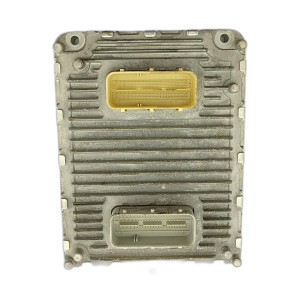
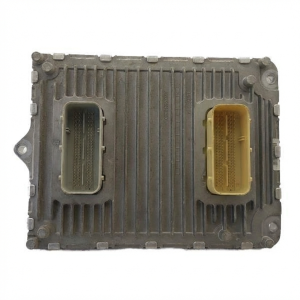
- Powertrain Control Module (PCM) Reprogramming — This is not a physical part, but a software update that is the official fix for the most common cause of U1400 when seen with P0171/P0174, per Chrysler TSBs.
Trusted brands: Mopar (via dealership)
OEM price range: $150-$300 (Labor)
Aftermarket price range: N/A - Intake Manifold Gasket Set
(OEM #68232614AA (Lower), 68217514AB (Upper/Plenum))— If a vacuum leak is diagnosed as the root cause of the accompanying lean codes, these gaskets are the most likely failure point on the 3.6L engine.
Trusted brands: Mopar, Fel-Pro (MS 97204), Mahle (MIS20457)
OEM price range: $60-$100
Aftermarket price range: $30-$60 - Throttle Body Assembly
(OEM #05184349AF (supercedes 5184349AC, 5184349AD, 5184349AE))— Replaced only if it is proven to be faulty through testing after software and vacuum leaks have been ruled out.
Trusted brands: Mopar, Hitachi, Standard Motor Products (S20203)
OEM price range: $450-$550
Aftermarket price range: $250-$400
Related Codes That Often Appear With This One
- P0171 — Indicates a lean fuel condition on Bank 1. It is explicitly mentioned in TSBs #18-069-17 and #18-002-19 REV A alongside U1400 as part of a known software issue.
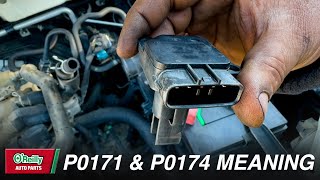
- P0174 — Indicates a lean fuel condition on Bank 2. When seen with P0171, it points to a problem affecting the entire engine, like a software bug 🎬 Watch: Understanding what P0171 and P0174 lean codes mean. or a major vacuum leak.
- P1D73 — An Active Grill Shutter (AGS) performance code. This is the third key code in the TSBs that points towards the need for a PCM software update.
- C121C-00 — Torque Request Signal Denied. TSB #18-002-19 REV A notes that this ABS code can be caused by a conflict in PCM calibration that the software flash corrects.
Technical Service Bulletins (TSBs) & Recalls
- 18-002-19 REV A: Flash: Powertrain Control Module (PCM) Updates, which lists U1400, P0171, P0174, and P1D73 as codes resolved by a software update.
- 18-069-17: Flash: Powertrain Diagnostic and System Enhancements, which also lists the same cluster of codes and prescribes a PCM software update as the fix for vehicles built on or before June 29, 2017.
Platform-Specific Known Issues
- TSB #18-069-17 specifically calls out that on 2017 Pacificas built on or before June 29, 2017, the combination of U1400, P1D73, P0171, and P0174 can be resolved by reprogramming the PCM.
- TSB #18-002-19 REV A is a broader PCM update that also addresses the U1400 code cluster along with many other potential software-related faults, including improvements for the Engine Stop/Start (ESS) system and changing several sensor codes from one-trip to two-trip faults to reduce sensitivity.
Mechanic-Grade Diagnostic Values
- Throttle Position Sensor (TPS) Signal Voltage — expected: Approx. 0.5V to 1.0V at closed throttle, sweeping smoothly to approx. 4.5V - 4.7V at wide-open throttle.. Failure: Voltage is stuck, jumps erratically, or does not match the expected range for the given throttle plate angle.
- PCM 5-Volt Reference at TPS Connector — expected: Approximately 5.0 volts with key on, engine off.. Failure: Voltage is significantly lower than 5.0V, indicating a problem with the PCM or the wiring.
- Ground Circuit Resistance at TPS Connector — expected: Near 0 ohms when measured to a known good ground (e.g., battery negative terminal).. Failure: High resistance (several ohms or Open Line 'OL') indicates a poor or broken ground connection.
- CAN Bus Voltage (at DLC) — expected: Bias voltage of approximately 2.5V on both CAN High and CAN Low lines when the bus is idle. During communication, CAN High should toggle to ~3.5V and CAN Low should toggle to ~1.5V.. Failure: Sawtooth patterns, voltage stuck high or low, or no voltage. A corrupt bus can show peaks over 3.5V.
Scan Tool Commands That Help
- wiTECH 2.0: Flash ECU — Used to perform the software update on the PCM as prescribed by TSBs #18-069-17 and #18-002-19 REV A. This is the primary fix for the common U1400/P0171/P0174 code cluster. Requires a stable power supply of 13.2-13.5V during the procedure.
- wiTECH 2.0 or high-end aftermarket: Throttle Relearn Procedure — This function must be performed after cleaning or replacing the throttle body to recalibrate the home and full-sweep positions. Failure to do so can cause idle and drivability issues. A manual procedure also exists.
- Aftermarket Scan Tool with Bi-Directional Control: 12+8 Security Gateway Adapter — For 2017 and newer Pacificas, full diagnostic access (including bidirectional commands like throttle relearn or actuating solenoids) requires bypassing the security gateway module. A 12+8 adapter cable is connected to the two plugs on the module, located behind the center dash/radio panel, providing a standard OBD-II port for the scan tool.
Wiring & Ground Locations
- Throttle Body Connector — On the electronic throttle body, at the front of the intake manifold.. This 6-pin connector provides power, ground, and signal lines for the integrated throttle position sensors. A loose connection, corrosion, or damaged wire here directly causes TPS-related codes.
- CAN Bus Star Connector — Located under the glove box area.. This is a central hub where multiple CAN bus lines meet. Poor pin retention or corrosion in this connector can corrupt the entire network, causing a flood of communication codes, including U1400. Wiggling wires at this connector while monitoring the CAN signal on an oscilloscope can confirm a fault.
- Main Engine/Transmission Grounds — Multiple points, including a strap from the chassis to the top of the engine/manifold area and from the motor mount to the engine.. A poor ground connection for the PCM or TCM can cause floating reference voltages and lead to implausible sensor readings and communication errors. All grounds should be clean, tight, and free of corrosion.
- PCM Connector C1 — One of the main connectors on the Powertrain Control Module.. This connector contains the specific pins for the TPS signals, 5V reference, and sensor return. A pushed-out pin or corrosion in this specific connector can isolate the fault to the PCM circuit.
"I Checked Everything" — The Actual Cause
- A cracked oil filter housing on the 3.6L Pentastar engine. This is a very common failure point. While it is primarily known for causing oil and coolant leaks, a significant crack can also create a vacuum leak into the engine's crankcase. This introduces unmetered air, leading to lean codes (P0171/P0174) that the PCM struggles to correct, which can indirectly trigger the U1400 implausible data code. This is often missed because the leak is not in the intake tract where a smoke test is typically performed. The fix is to replace the entire oil filter housing assembly, with many recommending an upgraded aluminum aftermarket part over the plastic OEM version.
OEM Part Supersession History
5184349AC, 5184349AD, 5184349AE→05184349AF— Standard design revision and part number consolidation for the 3.6L V6 throttle body assembly.
Model Year Variations Within This Range
- 2017 (built on or before June 29, 2017): Vehicles built before this date are specifically called out in TSB #18-069-17 as being prone to the U1400, P0171, P0174, P1D73 code cluster due to a software issue. The primary fix is a PCM reflash, making diagnosis different for early-build 2017 models versus later ones where a hardware fault might be more likely.
- 2017+: Starting in 2017/2018 models, Chrysler implemented a Secure Gateway Module (SGM/SGW). This requires a special 12+8 adapter cable to allow aftermarket scan tools to perform bidirectional controls and advanced functions. Without this adapter, a non-dealer scan tool is limited to reading codes and basic data, which can prevent a full diagnosis of the U1400 code.
Helpful Videos
Used OEM Parts in Stock



New Aftermarket Parts Available



The information in this article is provided for general reference and educational purposes only. Vehicle specifications, procedures, and part compatibility can vary by production date, trim level, and region. Always consult your vehicle's factory service manual and verify part numbers before purchasing or performing repairs. Safety-critical components such as airbags, seat belts, and braking systems should be installed by a qualified professional.
- Chrysler PACIFICA:
- 🎬 Helpful Videos
- 🛍️ Shop This Part
- What's Unique About the 2017-2017 Chrysler PACIFICA
- Diagnostic Flowchart
- Symptoms You May Notice
- Most Likely Causes
- Rare But Worth Checking
- Diagnosis Steps
- Parts You'll Likely Need
- Related Codes That Often Appear With This One
- Technical Service Bulletins (TSBs) & Recalls
- Platform-Specific Known Issues
- Mechanic-Grade Diagnostic Values
- Scan Tool Commands That Help
- Wiring & Ground Locations
- "I Checked Everything" — The Actual Cause
- OEM Part Supersession History
- Model Year Variations Within This Range
- 🎟️ Get 5% Off