

OBD-II Code U1345: LIN Bus Malfunction — The Ultimate Guide
What U1345 means, why it triggers, and how to fix it like a pro
What Does U1345 Mean?
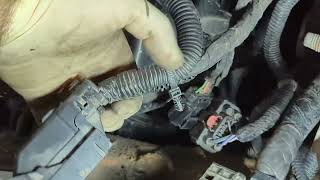
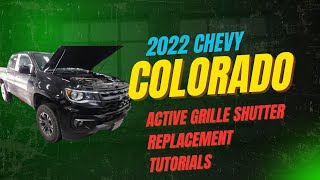
 🎬 Watch: A step-by-step guide to replacing Chevy grille shutters., a common component controlled by the LIN bus." loading="eager" fetchpriority="high" style="max-width:100%;height:auto;border-radius:6px;display:block;box-shadow:0 2px 8px rgba(0,0,0,0.1);" />
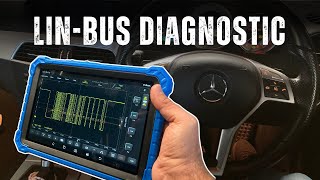
U1345 is a network communication code indicating your car's Engine Control Module (ECM) detected a fault on a specific data line called a Local Interconnect Network (LIN) bus. A LIN bus is a sub-network allowing the ECM to manage sensors and actuators in the engine bay. Think of it as a dedicated party line for specific components; this code means one device on the line isn't communicating, or the line itself is compromised. It almost always appears 🎬 Watch: A deep dive into LIN bus fundamentals and troubleshooting. with other 'U' codes that pinpoint the exact component that went offline.
Technical definition: The official definition of U1345 is most common on General Motors vehicles, defined as 'Engine Control Module LIN Bus 1 Malfunction'. This points to a fault on the LIN bus connecting the ECM to devices like active grille shutters, cooling fans, and the charge air cooler pump. The code sets when the ECM sends a signal on the bus but does not receive the expected response from one or more connected modules.
Can I Drive With U1345?

Yes, But With Caution. You can drive with a U1345 code, but it requires immediate attention. The specific risks depend on which component lost communication. If it is the active grille shutters, driving causes a 5-10% reduction in fuel economy and leads to engine overheating in traffic if the shutters are stuck closed. If it is the charge air cooler pump, continued driving causes significant power loss, engine knocking (detonation), and overheating, risking severe engine damage. In many vehicles, safety systems like ABS and traction control are disabled, increasing the risk of a skid during hard braking.
Common Causes

- Damaged, Chafed, or Pinched Wiring Harness (Very Common) — LIN bus wires route through tight spaces in the engine bay and are highly susceptible to rubbing against radiator supports, engine brackets, or accessory pulleys. Improperly seated factory retainer clips often allow the harness to sag. Over time, this chafing wears through the insulation and causes the wire to short to ground or break entirely, a condition frequently cited in GM Technical Service Bulletins.
- Corroded or Water-Damaged Electrical Connectors (Common) — Connectors for components exposed to the elements, like the active grille shutter actuator or charge air cooler pump, suffer water intrusion if not perfectly sealed. This moisture creates corrosion (green or white crust) on the connector pins, interrupting the data signal. On GM trucks, water in the charge air cooler pump connector is a heavily documented root cause.
- Failed Component on the Network (Common) — The internal electronics of a module connected to the LIN bus fail over time. Common culprits include a faulty active grille shutter actuator, a bad cooling fan control module, 🎬 See how to diagnose a cooling fan LIN bus fault. or a failed charge air cooler pump. The component stops communicating entirely or sends corrupt data that disrupts the entire network.
- Low Battery Voltage or Bad Ground Connection (Less Common) — Communication networks are highly sensitive to system voltage. A weak battery (below 12.4V) or a corroded main engine ground introduces unpredictable electrical noise and communication errors, triggering network codes like U1345.
- Software Glitch or Pending Update (Less Common) — On vehicles like the Chevrolet Bolt EV, communication codes trigger due to a software anomaly within a control module. The code appears without any physical fault, requiring a dealer-performed software update to resolve.
- Aftermarket Part Interference (Rare) — Poorly designed aftermarket electronic accessories, especially HID/LED headlight conversion kits and remote start systems, emit high levels of electromagnetic interference (EMI). This electrical noise disrupts sensitive data signals on the LIN bus.
- Failed Control Module (ECM) (Rare) — The master controller for the bus—typically the Engine Control Module (ECM)—fails internally. This is the absolute last resort after exhaustively testing all wiring, connectors, and peripheral components.
Symptoms
- Remote Start Disabled — As a default safety measure, manufacturers disable the remote start feature when any active 'U' network codes are present.
- Check Engine Light is On (also visible on scanner) — The Malfunction Indicator Lamp (MIL) illuminates as soon as the ECM logs the communication fault for a set number of drive cycles.
- Engine Overheating or Cooling Fans Running Constantly (also visible on scanner) — If the fault affects the cooling fan module, the fans fail to activate in traffic, causing overheating. Conversely, they run at full speed continuously as a fail-safe, even when the engine is cold.
- Reduced Engine Performance and Fuel Economy (also visible on scanner) — If the fault is with the active grille shutters or charge air cooler pump, you experience sluggish acceleration, loss of turbo boost, and a measurable decrease in MPG.
- ABS, Traction Control, and Stability Control Lights On (also visible on scanner) — On makes like Jaguar, a U1345 code is a symptom of an internal ABS module failure, simultaneously disabling the ABS, traction control (TC), and Dynamic Stability Control (DSC) systems.
Common Fixes & Costs
- Repairing a Damaged Wiring Harness — Parts: $10-$30, Labor: $150-$400, ~1.5 hr book time (Intermediate)
- Replacing a Burnt or Corroded Connector Pigtail
— Parts: $30-$80, Labor: $150-$300, ~1.2 hr book time
(Intermediate)
GM Universal Pigtails: OEM Varies by connector type, dealer lookup required. (Alt: ACDelco and Dorman offer pigtail kits.) - Replacing a Failed Active Grille Shutter Assembly
— Parts: $150-$300, Labor: $300-$500, ~2.5 hr book time
(Intermediate)
Chevrolet Silverado 1500 (2019-2022): OEM 84652495, 84735804 (Alt: Dorman 601-387 ($150-$250))
Chevrolet Equinox (2018-2022): OEM 84363184 (Alt: Dorman 601-374 ($120-$200)) - Repairing or Replacing a Failed ABS Module (Jaguar)
— Parts: $150-$700, Labor: $150-$350, ~1.5 hr book time
(Professional)
Jaguar XF, XE, F-Pace (2013+): OEM C2Z22074 (Varies by model) (Alt: Repair services are common; replacement units are typically OEM.) - Replacing a Failed Control Module (ECM/BCM) — Parts: $400-$1200, Labor: $150-$400, ~1.5 hr book time (Professional)
Used vs. New Parts: Buying Guide
When a used part is worth it: For an active grille shutter assembly, a used OEM part from a low-mileage, accident-damaged vehicle is a cost-effective alternative to a new part. Avoid parts from vehicles in the rust-belt due to potential corrosion of the mechanism.
Donor-vehicle mileage cap: roughly under 60000 miles for the part to have meaningful remaining life.
Donor quality checklist:
- Verify the donor vehicle was not scrapped for an engine or cooling system issue.
- Inspect the part for any signs of physical damage, cracks in the plastic, or binding in the shutter linkage.
- Match the part number exactly. Manufacturers use visually identical parts with different internal electronics that are not interchangeable.
Decision logic:
- If The vehicle is less than 5 years old and the new OEM part is under $400 → Buy a new OEM or high-quality aftermarket (e.g., Dorman) part for better reliability and warranty.
- If The vehicle is older, has high mileage, and the new part cost is over $500 → A used part is a reasonable choice, but accept the risk of a shorter lifespan.
- If The failure is a known wear item like the actuator motor → Favor a new part, as a used part has significant wear already.
Warranty tradeoff: Used parts from salvage yards typically come with a 30-90 day warranty covering only the part. New aftermarket parts offer a 1-year to limited lifetime warranty. New OEM parts carry a 1-2 year warranty.
Worst-case if a used part fails: $300-$600 if a used part fails shortly after the warranty period, as you pay for the labor to remove the old part and install another replacement.
What Happens If You Wait — Timeline
- 0-2 weeks: Check Engine Light illuminates and remote start is disabled. No other symptoms are apparent. If the fault is on the active grille shutters, they default to the open position. (MPG impact: 0-5%% · Added cost: $0)
- 2 weeks - 3 months (Cooling System Fault): If the fault is with the cooling fan or the grille shutters are stuck closed, the engine begins to run hot in slow traffic. The temperature gauge climbs higher than normal when idling. (MPG impact: 5-10%% · Added cost: $20-$60 in wasted fuel. Risk of overheating begins.)
- 2 weeks - 3 months (CAC Pump Fault): If the charge air cooler pump is offline, the vehicle feels noticeably sluggish during acceleration or towing. High intake air temperatures cause minor engine knocking (detonation), and the ECU heavily limits turbo boost. (MPG impact: 10-15%% · Added cost: $50-$150 in wasted fuel.)
- 3+ months (Catastrophic Damage): Continued driving with a cooling fault leads to severe overheating, causing a blown head gasket or a warped cylinder head. Continued driving with a CAC pump fault leads to sustained detonation, destroying pistons and connecting rods. (MPG impact: 15-25%% · Added cost: $1,500-$3,500 for a head gasket repair. $5,000-$10,000+ for a complete engine replacement.)
Cost of Not Fixing It
- 0-1 month: Reduced fuel economy by 5-10% if active grille shutters are stuck open. Remote start is disabled. Annoying Check Engine Light. (Added cost: $20-$50 in extra fuel costs.)
- 1-6 months: If the fault is with the active grille shutters stuck closed or a cooling fan, the engine overheats in traffic, leading to warped cylinder heads. If the fault is with the charge air cooler pump, sustained driving causes engine knocking (detonation). (Added cost: $1,500-$5,000+ for head gasket replacement or other engine damage.)
- 6+ months: Continued engine knocking due to a failed charge air cooler pump leads to catastrophic engine failure. If the code is related to an ABS module fault, driving without ABS significantly increases the risk of an accident. (Added cost: $5,000-$15,000 for complete engine replacement, or the cost of an accident.)
Diagnosis Steps

- Scan for All Codes in All Modules
Use a professional-grade OBD-II scanner to read codes from every module (ECM, BCM, ABS, etc.). U1345 is a general network fault code; it almost always accompanies specific codes like U0284 (Grille Shutter) or U0632 (Cooling Fan) that point directly to the failing component or circuit.
Tools: Professional OBD-II Scanner (Beginner) - Perform a Thorough Visual Inspection
Inspect the engine bay wiring harness, focusing on known problem areas. Look for wires rubbing against the radiator support, alternator bracket, A/C lines, and engine block. Follow the harness from the suspect component back toward the ECM, looking for chafing, melting, or pinching.
Tools: Flashlight, Inspection mirror (Beginner) - Inspect Connectors for Damage
Unplug the connector for the component implicated by the other trouble codes. Examine the pins and terminals for corrosion (green/white powder), moisture, or backed-out pins. On GM trucks with a U02A9, check the charge air cooler pump connector for water intrusion.
Tools: Flashlight, Pick tool (Intermediate) - Isolate the Faulty Component
With the engine running and scanner connected, unplug one component on the LIN bus at a time. Clear the codes after unplugging each part. When the faulty part is disconnected, the rest of the network begins communicating normally again, isolating the bad node.
Tools: OBD-II Scanner, Service manual for component locations (Advanced) - Advanced: Scan Tool Live Data Analysis
Use a bi-directional scanner to actively command the suspect component. For an active grille shutter, command it from 0% to 100% and visually confirm movement. If the 'Actual Position' PID does not match the 'Commanded Position' PID, it confirms a fault in the component or its circuit.
Tools: Bi-directional OBD-II Scanner (Advanced) - Test Battery and Ground System
Ensure the battery is fully charged (at least 12.4V engine off). Use a multimeter to perform a voltage drop test on the main chassis and engine grounds. A drop of more than 0.2 volts indicates a poor ground connection causing network errors.
Tools: Multimeter, Battery tender (Intermediate) - Check for a Broken Wire with a Continuity Test
Disconnect the harness from the component and the ECM. Use a wiring diagram to identify the LIN bus wire. Test for continuity from the component connector pin to the corresponding ECM connector pin. A reading of 'OL' (Over Limit) or resistance greater than 3 ohms confirms an open circuit (broken wire).
Tools: Multimeter, Wiring diagram (Advanced) - Pro Tip: LIN Bus Voltage Check with a Multimeter
Set a quality multimeter to 'Peak Min/Max' mode (1ms record). Connect the red lead to the LIN bus wire and the black lead to ground. The voltage must toggle between a maximum near battery voltage (11V-13V) and a minimum of approximately 1V. Stuck high indicates a short to power; stuck low indicates a short to ground.
Tools: High-quality Multimeter with Min/Max function (Professional) - Pro Tip: Waveform Analysis with an Oscilloscope
Back-probe the LIN bus signal wire. A healthy LIN bus shows a clean, sharp square wave. A compromised signal looks distorted, like 'ocean waves,' indicating high resistance or interference. Unplugging the faulty component causes a messy waveform to instantly clean up into a proper square wave.
Tools: Automotive Oscilloscope (Professional)
When This Code Triggers (Freeze-Frame Conditions)
- Engine Coolant Temp: 180-200°F (82-93°C) (The code sets after the engine reaches full operating temperature.)
- RPM: 1500-2500 (Triggers during steady-state cruising or light acceleration when components like grille shutters are active.)
- Engine Load: 30-60% (Moderate engine load during highway driving is a common trigger point as the ECM actively manages efficiency components.)
- Vehicle Speed: 45-65 mph (72-105 kph) (Highway speeds maximize active grille shutter operation, making communication failures instantly detectable.)
How to Clear the Code After You Fix It
- Reconnect the battery if it was disconnected for the repair.
- Use a quality OBD-II scan tool to erase all Diagnostic Trouble Codes (DTCs).
- Perform a complete GM drive cycle to allow the vehicle's readiness monitors to run and complete.
Drive cycle (~20 minutes): Start the engine from a cold start (coolant temp below 122°F) and let it idle for 2-3 minutes. Accelerate to and hold a steady speed of 55 mph for at least 5 minutes. Let the vehicle coast down to 20 mph without using the brakes. Accelerate again to 55-60 mph and hold for another 5 minutes. Decelerate and come to a stop.
Readiness monitors affected: Catalyst (CAT) Monitor, Evaporative System (EVAP) Monitor, Oxygen (O2) Sensor Monitor
Before emissions retest: drive at least 50 miles to fully set monitors.
Watch out for:
- Simply disconnecting the battery clears the code, but it resets all emissions readiness monitors to 'Not Ready', causing an automatic failure at an emissions testing station.
- If the underlying electrical fault is not properly fixed, the code returns almost immediately after being cleared.
- Failing to perform a full drive cycle leaves monitors 'Not Ready', preventing you from passing a smog check.
Will This Fail Emissions / State Inspection?
Yes — this code typically fails an OBD-II emissions inspection.
- California: An active U1345 code is an automatic failure. After repair, you must complete a drive cycle to set all required readiness monitors to 'Ready' before re-testing.
- New York: The NYS DMV inspection includes an OBD-II scan. Any check engine light, including for code U1345, results in an immediate inspection failure.
- Texas: In counties requiring an emissions test, a vehicle with an illuminated Check Engine Light automatically fails the inspection.
Real Owner Stories
2020 Chevy Colorado V6 with U1345 only
Check Engine Light came on just days after purchasing the truck. The only symptom was that the remote start was disabled. Clearing the code made it go away temporarily, but it always returned.
What they tried:
- Took it to a Chevrolet dealer for diagnosis. The dealer charged $250 to identify the problem as the active grille shutters and quoted $500 for labor to replace the assembly.
Outcome: The owner declined the repair, removed the front bumper themselves, and found a burnt electrical connector on the lower right side of the active shutter assembly. They cut out the damaged connector, spliced the wires directly, and the code disappeared permanently. The DIY fix took 2 hours and saved over $700.
Lesson: A single U1345 code without other communication errors often points to a wiring or connector issue. A costly component replacement quote warrants a second look, as the actual fault is often a much cheaper fix like a burnt pigtail.
2022 GMC Sierra 1500 3.0L Duramax with U1345 and U02A9
The Check Engine Light appeared intermittently. The truck went into limp mode (reduced power), especially when towing.
What they tried:
- A dealership initially suspected the charge air cooler (CAC) pump. After replacing the pump, the code returned two weeks later.
Outcome: The root cause, documented in GM TSB 22-NA-252, is water intrusion into the pump's unsealed electrical connector, causing corrosion and communication loss. The proper fix is replacing the connector pigtail and ensuring the new one is sealed.
Lesson: Always check for Technical Service Bulletins (TSBs) related to your specific code. A TSB turns hours of guesswork into a quick, targeted inspection of a known failure point, preventing unnecessary parts replacement.
GMC Truck with U1345 and U0632 (Cooling Fan Fault)
The Check Engine Light was on, and the cooling fans were not operating correctly. The owner was concerned about overheating.
What they tried:
- Using an oscilloscope, a technician observed a distorted, 'ocean wave' signal on the LIN bus wire going to the non-working fan, while the signal to other components was a clean square wave.
Outcome: Wiggling the harness near the fan connector caused the wire to break off completely, revealing it had been internally corroded and hanging on by a thread. The break was right where the harness was secured by a clip. Repairing the single broken wire restored fan function and cleared all codes.
Lesson: Advanced tools like an oscilloscope definitively pinpoint the source of network noise. Physical stress points (like harness clips) are prime locations for wire breaks.
How to Prevent This Code From Triggering
- Apply Dielectric Grease to At-Risk Connectors (During any service where connectors are disconnected, or every 2-3 years in harsh climates.) — Applying dielectric grease to the rubber seals and body of connectors creates a waterproof barrier. This prevents moisture and road salt from causing corrosion, a primary cause of LIN bus communication failures.
- Secure and Protect Wiring Harnesses (Once during ownership, or after any engine bay repair.) — Vibration and contact with sharp metal edges is the #1 cause of wiring failure. Use zip ties to secure loose sections of harness away from moving parts. Add protective wire loom to areas where the harness passes near engine brackets.
- Regularly Clean Debris from Grille Area (Seasonally, especially after winter.) — Leaves, snow, and ice physically block the active grille shutters, causing the motor to strain and fail or breaking the delicate linkage. A simple visual inspection prevents physical damage to the assembly.
Helpful Videos

The information in this article is provided for general reference and educational purposes only. Vehicle specifications, procedures, and part compatibility can vary by production date, trim level, and region. Always consult your vehicle's factory service manual and verify part numbers before purchasing or performing repairs. Safety-critical components such as airbags, seat belts, and braking systems should be installed by a qualified professional.
- 🎬 Helpful Videos
- What Does U1345 Mean?
- Can I Drive With U1345?
- Common Causes
- Symptoms
- Common Fixes & Costs
- Used vs. New Parts: Buying Guide
- What Happens If You Wait — Timeline
- Cost of Not Fixing It
- Diagnosis Steps
- When This Code Triggers (Freeze-Frame Conditions)
- How to Clear the Code After You Fix It
- Will This Fail Emissions / State Inspection?
- Real Owner Stories
- 2020 Chevy Colorado V6 with U1345 only
- 2022 GMC Sierra 1500 3.0L Duramax with U1345 and U02A9
- GMC Truck with U1345 and U0632 (Cooling Fan Fault)
- How to Prevent This Code From Triggering
- 🎟️ Get 5% Off