

U1300 on 2004-2008 Cadillac SRX: Key Stuck & No-Start Causes
On a 2004-2008 SRX, U1300 indicates a communication network failure, often causing the key to get stuck in the ignition. The most likely cause is a wiring problem with the Engine Control Module's (ECM) power feed or data line, as detailed in GM Technical Service Bulletin PIC5460B. This issue is also common on the platform-mate Cadillac CTS.
- U1300 on a 2004-2008 SRX is a serious network communication code, not a simple sensor failure.
- The most common symptoms are the key getting stuck in the ignition and the engine refusing to start.
- Do not immediately replace the ignition switch or ECM. The problem is most often a wiring fault in the power or data circuits going to the ECM, as per GM TSB PIC5460B.
- Diagnosis requires a multimeter to check the Class 2 data line for shorts and to verify power at the ECM.
- This is a complex electrical issue; while DIY is possible, it requires patience and a logical diagnostic approach.
What's Unique About the 2004-2008 Cadillac SRX

The first-generation Cadillac SRX, built on the GM Sigma platform, is particularly known for a distinct and frustrating symptom tied to code U1300: the key becoming stuck in the ignition cylinder. This specific issue is so common that General Motors issued a Technical Service Bulletin (PIC5460B) to guide technicians. The bulletin directly links the stuck key, a no-start condition, and code U1300 to specific wiring circuits connected to the Engine Control Module (ECM)—namely the Ignition 1 Power Feed (CKT 5290) and the Class 2 data line (CKT 1807). This makes the diagnosis more targeted than on other vehicles where U-codes can be more ambiguous. This same issue is also prevalent on its platform-mate, the 2004-2007 Cadillac CTS.
Diagnostic Flowchart

Tap your situation to follow the diagnostic path that matches what you're seeing on this vehicle.
Symptoms You May Notice
- Key is stuck in the ignition lock cylinder
- Engine will not crank or start
- Multiple warning lights on the instrument cluster, or all lights may be off
- Scan tool cannot communicate with some or all modules, especially the ECM
- Charging system warning or low voltage reading (around 12.5V while running)
- "Service Theft System" or "Starting Disabled" message on the instrument panel
- Gear selection indicator lights (next to the shifter) may be off
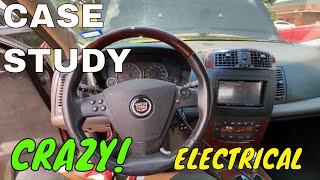
- Replacing the ignition switch or lock cylinder without diagnosing the network. While the symptom is a stuck key, the root cause is often an electrical communication failure, not a mechanical fault in the lock itself. There is a manual key release under the steering column for emergency key removal. 🎬 Watch: How to use the manual key release under the column.
- Replacing the battery or starter without confirming the no-start is caused by the theft deterrent system being activated due to the communication loss.
Most Likely Causes

- Wiring Fault in ECM Power or Data Circuits 🔴 High Probability TSB #PIC5460B specifically identifies the Ignition 1 Power Feed (Circuit 5290) and the Class 2 data line (Circuit 1807, a purple wire) to the ECM as common failure points causing these exact symptoms. The wiring harness can chafe or break where it runs near the engine or underhood fuse block.
How to confirm: With the key on, check for battery voltage at the ECM fuse in the underhood fuse block. Then, verify battery voltage at the ECM connector on the Ignition 1 Power Feed wire. Check the Class 2 data line (purple wire at ECM connector C2, Pin 48) for an open or short to ground between the ECM and the data link connector.
Typical fix: Repair the specific damaged wire or connector. This often involves tracing the harness from the underhood fuse block to the ECM, removing protective coverings, and soldering or splicing the broken wire. 🎬 See a full diagnosis and wiring fix for a stuck key.
Est. part cost: $5-$50 for wiring repair supplies. - Faulty Module on the Class 2 Network 🟡 Medium Probability Any module on the shared data line (e.g., Body Control Module, ABS module, Radio, Instrument Panel Cluster) can fail internally and short the entire network, bringing communication to a halt. Aftermarket radios are a known cause of data bus interference if not installed with the proper adapter.
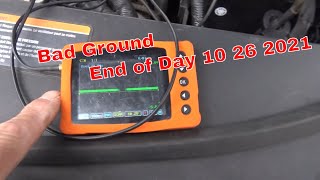
How to confirm: If the Class 2 data line voltage is shorted low or high, unplug modules from the network one by one. When the faulty module is disconnected, the voltage on the data line should return to a normal 0-7V fluctuating pattern. 🎬 Watch: Expert tips for diagnosing the GM Class 2 data line. Common modules to disconnect include the radio, BCM, and ABS control module.
Typical fix: Replace the specific module that is causing the short on the data line. A replacement BCM or ECM will require programming by a dealer or qualified shop.
Est. part cost: $100-$600 depending on the module. - Failed Engine Control Module (ECM) ⚪ Low Probability While less common than wiring issues, the ECM itself can fail, causing both internal logic problems and an inability to communicate, leading to U1300 and a key-stuck condition. TSB PIC5460B notes that if all wiring and relays check out, the ECM is the likely suspect.
How to confirm: This is typically diagnosed by exclusion. If all power, ground, and data line wiring to the ECM tests good, and unplugging other modules does not resolve the network crash, the ECM is the likely suspect.
Typical fix: Replace the Engine Control Module and perform the required security relearn procedure (often a 30-minute key-on procedure).
Est. part cost: $100-$400 for a used or remanufactured ECM.
Rare But Worth Checking
- Corroded Transmission X1 Connector:
Diagnosis Steps
- Connect a scan tool and attempt to communicate with all modules. Note any modules that are not responding, particularly the ECM.
- Check for all stored DTCs, paying close attention to the group of codes listed in TSB PIC5460B (P1629, U1040, U1064, etc.).
- Using a multimeter, check the voltage on the Class 2 data line (Pin 2 of the OBD-II port). A healthy, active bus will show a fluctuating voltage between 0 and 7 volts. A flat line at 0V indicates a short to ground; a steady voltage indicates a short to power.
- Inspect the wiring and connectors at the Engine Control Module (ECM), located at the front of the engine compartment. Look for any signs of damage, corrosion, or looseness.
- Following TSB PIC5460B, verify battery voltage is present on the Ignition 1 Power Feed (CKT 5290) at the ECM connector.
- Test the integrity of the Class 2 data line (CKT 1807, purple wire) between the ECM connector (C2, Pin 48) and the Data Link Connector (Pin 2) for an open or a short.
- If the data line is shorted, begin unplugging modules on the Class 2 network one at a time (e.g., ABS, BCM, Radio) to see if the short is eliminated. The last module unplugged before the network comes back online is the faulty one.
- If all modules are unplugged and the short remains, the fault is in the wiring harness itself.
- If all wiring, powers, and grounds to the ECM are confirmed good, suspect a faulty ECM.
Parts You'll Likely Need

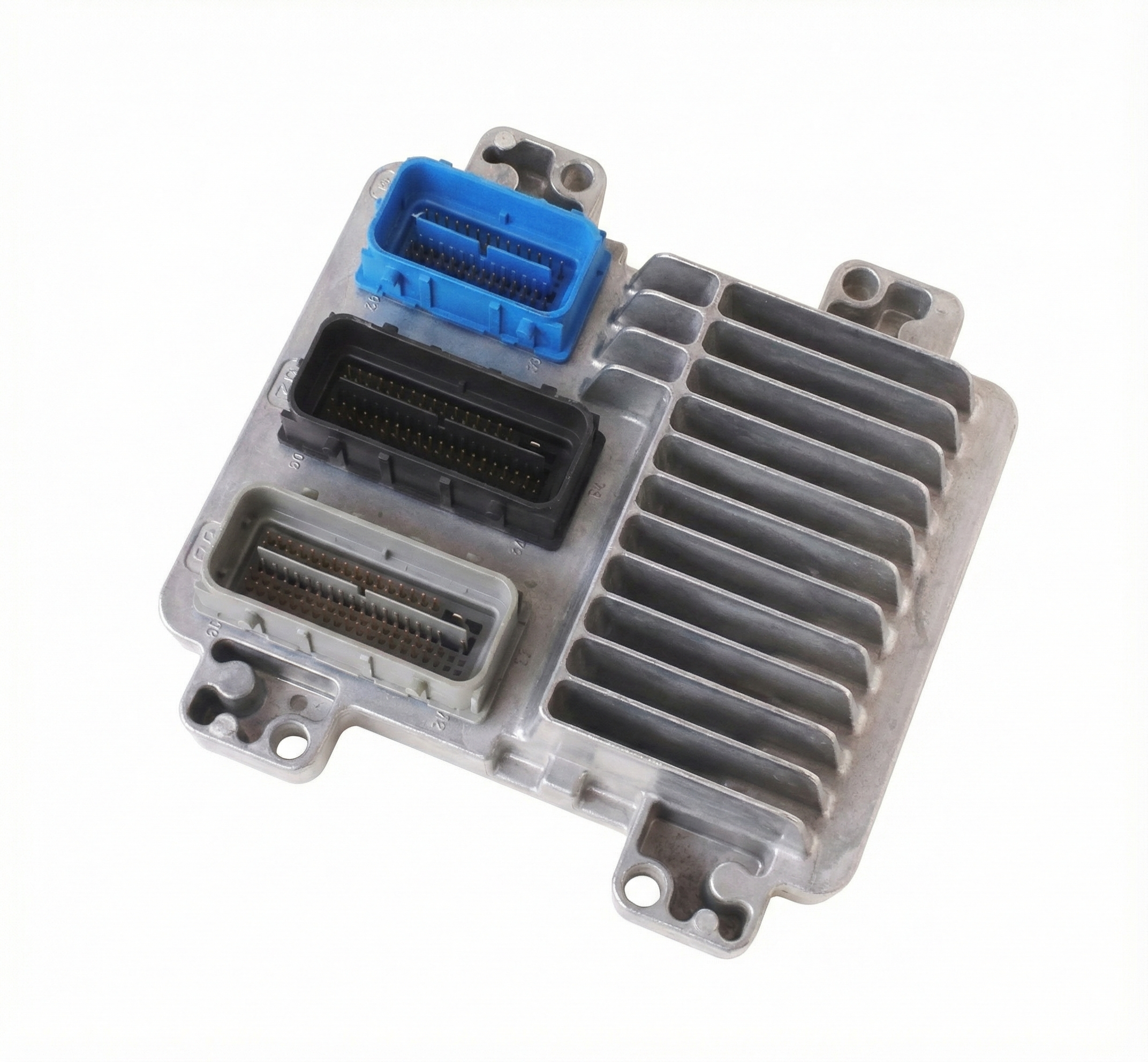
- Engine Control Module (ECM)
(OEM #12651994 (example, verify with VIN))— Replaced only after all wiring and other modules have been ruled out as the cause of the communication failure.
Trusted brands: ACDelco (Remanufactured)
OEM price range: $500-$800
Aftermarket price range: $150-$400
Related Codes That Often Appear With This One
- U1000, U0100 — These are general communication failure codes that are often stored in other modules when the primary fault (like U1300) occurs on the Class 2 network.
- P1629 — This is a theft deterrent system code. It sets when the BCM cannot get the correct password from the ECM due to the communication failure on the Class 2 line, resulting in a no-start.
- U1040, U1064, U1153, U1192 — These codes indicate a loss of communication with specific modules (EBCM, BCM, etc.). They are logged by the ECM when it can no longer hear from other modules on the network, as cited in TSB PIC5460B.
Technical Service Bulletins (TSBs) & Recalls
- PIC5460B: Addresses a no-crank/key-stuck-in-ignition concern with DTCs P0318, P1629, U1040, U1064, U1153, U1192, and U1300, pointing to wiring issues in CKT 5290 or CKT 1807 near the ECM.
- PIC4740E/F (Related): While not for U1300 specifically, this TSB addresses other communication codes (U0100, U0073) on the same platform caused by poor connections at the transmission X1 connector, which can be a contributing factor.
Platform-Specific Known Issues
- Technical Service Bulletin PIC5460B was issued specifically for a condition on the 2004-2009 SRX where a customer cannot remove the key and the engine won't crank, with DTC U1300 and others stored. The bulletin points directly to wiring issues on the Ignition 1 Power Feed (CKT 5290) or the Class 2 data line (CKT 1807) to the ECM.
- The ECM is located in the engine bay at the front of the engine, making it relatively accessible for testing the connectors once the engine cover is removed.
Mechanic-Grade Diagnostic Values
- Class 2 Data Bus Voltage (at DLC Pin 2) — expected: Fluctuating signal between 0V and 7V with key on.. Failure: A flat line at 0V indicates a short to ground. A steady voltage (e.g., >8V) indicates a short to power.
- Ground Point Resistance — expected: Less than 0.1 Ohms between the ground point and the negative battery terminal.. Failure: Higher resistance indicates a poor ground connection, which can cause floating voltages and communication errors.
- ECM Power Feed Voltage (at ECM fuse and connector) — expected: Should be equal to battery voltage (~12.6V with key on, engine off).. Failure: Voltage significantly less than battery voltage indicates a wiring issue, a bad relay, or a problem in the fuse block.
- Engine Block to Battery Negative Terminal — expected: Near 0V potential difference.. Failure: Measuring significant voltage (e.g., >1V) from the engine block to the battery negative terminal indicates a missing or failed main engine ground strap.
Scan Tool Commands That Help
- GM Tech 2: Module Status / Class 2 Network Diagnostics — Use this function to see a list of all modules on the network and their communication status. This helps identify which modules are offline or not responding, which is a key step before beginning physical diagnosis.
- GM Tech 2 or equivalent bidirectional scanner: Security System Relearn — This function must be performed after replacing the Engine Control Module (ECM) or Body Control Module (BCM). It synchronizes the security information between modules. Without this, the vehicle will not start due to a theft deterrent mismatch.
Wiring & Ground Locations

- CKT 1807 — A single purple wire that serves as the Class 2 Serial Data line. It runs between all communicating modules and can be tested at the ECM connector C2 (Blue), Pin 48, and at Pin 2 of the Data Link Connector (DLC).. This is the primary data wire for the network. TSB PIC5460B specifically calls out an open or short in this circuit as a direct cause of U1300.
- CKT 5290 — The Ignition 1 Power Feed circuit to the ECM. It runs from the underhood fuse block to the ECM.. TSB PIC5460B identifies a loss of power on this circuit as a primary cause for the ECM to stop communicating, triggering U1300 and the associated key-stuck/no-crank symptoms.
- ECM (Engine Control Module) — For the 3.6L V6 engine, the ECM is located on the passenger side of the engine, under a plastic cover. For the 4.6L V8 engine, it is located on the left (driver's side) frame rail, below the headlight assembly.. Knowing the physical location is critical for testing the power, ground, and data line connections directly at the module's connectors.
- G101 / G102 — Main engine compartment grounds. G101 is typically at the left rear of the engine bay, and G102 is on the engine itself. Their exact positions can vary slightly by year and engine.. The ECM and other modules rely on these grounds. A loose or corroded ground can cause erratic communication failures and is a common, often overlooked, cause of U-codes.
- Splice Pack (e.g., SP205) — These are small black boxes where multiple Class 2 data wires join. A common location is behind the driver's side kick panel, near the Data Link Connector.. A fault on the bus can be isolated by removing the 'comb' from the splice pack and testing the data line from each module individually, without having to unplug each module at its location.
Real Owner Repair Stories
- Autosphere professional technician article (2006 Cadillac SRX) — Towed in, key stuck in ignition, shifter cannot be moved, code U1300 and B3031 stored.
❌ Tried (didn't work) The diagnostic chart suggested unplugging modules one by one, which is a lengthy process.
✅ What actually fixed it The technician used an oscilloscope to verify the signal on the network. After confirming wiring and other modules were okay, the fault was isolated to a failed Engine Control Module (ECM). Replacing the ECM resolved all issues. - YouTube channel 'Pine Hollow Auto Diagnostics' (2010 Cadillac SRX (newer generation, but demonstrates a critical grounding principle)) — No crank, no start, no check engine light, dead battery upon arrival. After jump starting, found high voltage (~10-12V) on the ECM case itself.
❌ Tried (didn't work) Initial thought was a bad ECM or wiring short.
✅ What actually fixed it The main engine ground strap had failed, causing the entire engine block to be ungrounded. Attaching a jumper cable from the battery negative post directly to the engine block immediately restored the ground path, the check engine light came back on, and the vehicle started normally. - iATN (International Automotive Technicians Network) forum post (2004 Cadillac CTS 3.6L (platform mate with identical issue)) — No start, key will not come out of ignition, code U1300.
❌ Tried (didn't work) Replacing the ECM did NOT fix the problem. The technician could communicate with all modules, but the network short persisted.
✅ What actually fixed it The problem was a short in the wiring harness. Even after disconnecting all modules, the Class 2 data line was still shorted to ground, proving the fault was in the harness itself between the modules.
"I Checked Everything" — The Actual Cause
- In cases of a failed main engine ground, standard diagnostic tests on individual circuits may appear normal. A technician might confirm power at the fuse block and continuity on the data line, but the ECM itself lacks a proper ground reference, causing it to malfunction. The key diagnostic step that finds this is checking for voltage potential between the engine block and the battery's negative terminal; it should be zero. Finding voltage here points directly to a bad ground strap.
OEM Part Supersession History
12581144, 12588472→12592124, 19260507— Standard hardware and software revisions by the manufacturer.
Heads up: Applies to 2004-2006 SRX with 3.6L V6. All replacement ECMs, new or used, must be programmed with the vehicle's VIN to disable the immobilizer and ensure proper function. They are not plug-and-play.12576523→12596050— Standard hardware and software revisions by the manufacturer.
Heads up: Applies to 2004-2006 SRX with 4.6L V8. VIN programming is mandatory upon installation.Not specified→12611568— Part for later model years.
Heads up: Specified for 2007 SRX with 4.6L V8. Using an ECM from a different year or engine type, even if it physically fits, will result in a no-start condition or improper vehicle operation.
Model Year Variations Within This Range
- 2004-2008: The physical location of the Engine Control Module (ECM) is different depending on the engine. For the 3.6L V6, it is on the passenger side of the engine under a cover. For the 4.6L V8, it is on the driver's side frame rail below the headlight.
Helpful Videos


We Have This Part in Stock





The information in this article is provided for general reference and educational purposes only. Vehicle specifications, procedures, and part compatibility can vary by production date, trim level, and region. Always consult your vehicle's factory service manual and verify part numbers before purchasing or performing repairs. Safety-critical components such as airbags, seat belts, and braking systems should be installed by a qualified professional.
- Cadillac SRX:
- 🎬 Helpful Videos
- 🛍️ Shop This Part
- What's Unique About the 2004-2008 Cadillac SRX
- Diagnostic Flowchart
- Symptoms You May Notice
- Most Likely Causes
- Rare But Worth Checking
- Diagnosis Steps
- Parts You'll Likely Need
- Related Codes That Often Appear With This One
- Technical Service Bulletins (TSBs) & Recalls
- Platform-Specific Known Issues
- Mechanic-Grade Diagnostic Values
- Scan Tool Commands That Help
- Wiring & Ground Locations
- Real Owner Repair Stories
- "I Checked Everything" — The Actual Cause
- OEM Part Supersession History
- Model Year Variations Within This Range
- 🎟️ Get 5% Off