

OBD-II Code U1260: A Deep Dive into Network Communication Failures
The Ultimate Guide to Understanding, Diagnosing, and Fixing U1260
- U1260 is a manufacturer-specific network communication code that requires a full-system scanner to identify the failing module.
- On 2017+ Hondas, U1260 indicates a failed auxiliary transmission pump, requiring an $800-$1,100 replacement to restore drivability and prevent CVT damage.
- On 2008-2011 Ford Focus models, U1260 paired with U1900 guarantees a cracked instrument cluster circuit board, best fixed via a $150-$250 mail-in repair service.
- Always test battery cranking voltage before replacing parts; a drop below 9.6V during startup causes modules to fail initialization and triggers false U1260 codes.
What Does U1260 Mean?

U1260 is a network communication code indicating vehicle computer modules cannot exchange data. The practical meaning depends entirely on the manufacturer. For modern Hondas, it points to a loss of communication with the auxiliary transmission fluid pump. On older Fords and Jaguars, it relates to a fault on the SCP data bus, while on a 2008-2011 Ford Focus, it indicates a failed instrument cluster acting as a network gateway.
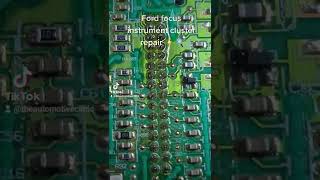
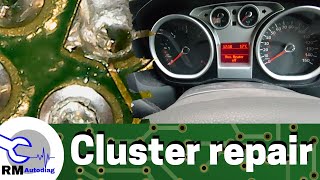
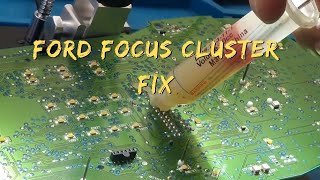
🎬 Watch: How to diagnose and repair a Ford Focus cluster.Technical definition: The official SAE definition for U1260 is "SCP (J1850) Single Ended (+) Circuit Failure," referring to an older, single-wire communication protocol. While relevant for early 2000s vehicles, manufacturers now assign U1260 to specific modern CAN bus faults, such as 'Lost Communication With Auxiliary Transmission Fluid Pump' (Honda) or 'Sensor Supply 1 Voltage Circuit-High' (Ford).
Can I Drive With U1260?

Yes, But With Caution. Driving is possible but strongly discouraged. The vehicle often enters 'limp mode,' limiting speed to 30-50 mph and restricting engine RPM, creating a severe hazard in fast-moving traffic. Continuing to drive with a transmission-related fault (common in Hondas) causes expensive secondary damage. Communication failures also disable critical safety systems like ABS and traction control without warning. Drive only a short, low-speed distance to a repair facility.
Common Causes

- Low or Unstable Battery Voltage (Very Common) — Control modules require stable voltage to operate. A weak battery, failing alternator, or poor ground connection causes voltage to drop below 9.6V during engine cranking. This 'brown out' forces modules to reset or fail initialization, triggering a flurry of false communication codes.
- Damaged or Corroded Wiring/Connectors (Very Common) — Wires in the CAN or SCP data bus are thin and easily damaged by chafing, vibration, or rodents. Connectors exposed to the elements under the vehicle or in door jambs suffer moisture intrusion and corrosion, instantly interrupting delicate digital signals.
- Faulty Instrument Cluster (Ford Focus) (Very Common) — On 2008-2011 Ford Focus models, the instrument cluster serves as a network gateway. Solder joints on the main circuit board crack over time, causing the entire communication network to fail and triggering a cascade of 'U' codes, including U1260, U1900, and U0155.
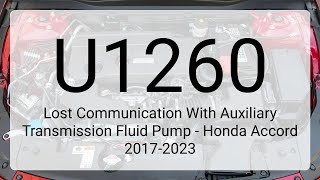
- Failing Auxiliary Transmission/Oil Pump (Honda) (Common) — On modern Honda CR-Vs and Accords with CVTs, the electric auxiliary transmission fluid pump fails electrically, cutting off communication with the TCM. On 2022+ Civics, this code points to a similar failure in the separate electric oil pump. 🎬 See this walkthrough for Honda auxiliary transmission pump issues.
- Corroded Body Control Module (BCM) (Common) — On GM trucks and SUVs, the BCM sits in vulnerable areas like the driver's kick panel. Water leaks from windshield seals or sunroof drains cause severe corrosion on the BCM and its connectors, taking down multiple data networks.
- Faulty PATS Transceiver (Ford) (Less Common) — On Ford Rangers and Explorers, a no-start condition accompanied by a P1260 (Theft Detected) code stems from a communication breakdown between the PATS transceiver (the ring around the ignition switch) and the PCM. This prevents key validation.
- Improperly Installed Aftermarket Accessories (Less Common) — Remote starters, alarms, or stereos improperly tapped into the vehicle's data bus introduce electrical noise or voltage irregularities that corrupt network signals.
- Failed Terminating Resistor or Gateway Module (Rare) — A high-speed CAN bus requires a 120-ohm resistor at each end. If a terminating module fails, total network resistance changes, disrupting communication. Similarly, an internal failure of a dedicated Gateway Module prevents different vehicle networks from talking to each other. 🎬 Watch: A pro guide to testing CAN bus resistance.
Symptoms
- Check Engine Light and Warning Lights — The Check Engine Light illuminates immediately. You will also see 'Transmission Fault,' 'ABS,' 'Traction Control,' or a flashing anti-theft light, as these systems can no longer report their status.
- Engine Won't Start or Stalls — A no-crank or crank-no-start condition occurs if the immobilizer system loses communication with the engine computer (PCM). The engine stalls unexpectedly if a critical module like the BCM fails.
- Erratic or Dead Instrument Gauges (Ford Focus) — The speedometer, tachometer, and other gauges drop to zero, behave erratically, or the digital mileage display shows only dashes. This is the hallmark of Ford instrument cluster failure.
- Harsh Shifting or 'Limp Mode' (Honda) — Failure of the auxiliary pump to communicate forces the transmission into 'limp mode' with reduced power, delayed engagement, and harsh shifting to protect internal components.
- Multiple Unrelated Electrical Failures — Power windows, radio, climate control, and power seats fail simultaneously because their controlling modules are knocked off the network.
- Multiple 'U' Codes Stored (scan-tool only — no driver-felt sign) — A professional scanner reveals U1260 accompanied by a host of other communication codes (like U1900) across multiple modules, confirming a widespread network failure.
Diagnostic Flowchart
Tap your situation to follow the diagnostic path that matches what you're seeing on this code.
Common Fixes & Costs
- Repair Ford Instrument Cluster — Parts: $150-$250 (for a mail-in repair service), Labor: $50-$150 (to remove and reinstall), ~1 hr book time (Intermediate)
- Replace Honda Auxiliary Transmission Pump — Parts: $400-$600 (OEM part), Labor: $300-$500, ~2.5 hr book time (Professional)
- Replace Body Control Module (BCM) — Parts: $300-$600 (New OEM), Labor: $250-$400 (includes mandatory programming), ~1.5 hr book time (Professional)
- Replace Ford PATS Transceiver — Parts: $60-$90, Labor: $50-$150, ~0.8 hr book time (Intermediate)
- Clean or Repair Main Ground Connections — Parts: $0-$15 (for new terminals if needed), Labor: $50-$150, ~0.5 hr book time (Beginner)
- Repair Damaged Wiring Harness — Parts: $20-$100 (for connectors, pins, and wire), Labor: $300-$1,200+, ~4 hr book time (Professional)
Used vs. New Parts: Buying Guide
When a used part is worth it: For a Ford Focus instrument cluster, a mail-in repair service for your original unit is superior to buying used. A used cluster causes an immobilizer conflict requiring expensive reprogramming. For a Honda auxiliary pump, a used part from a low-mileage vehicle is cost-effective but carries risks.
Donor-vehicle mileage cap: roughly under 60000 miles for the part to have meaningful remaining life.
Donor quality checklist:
- Verify the donor vehicle's VIN to ensure it wasn't scrapped for a related failure.
- Match the part number exactly; seemingly identical parts have different internal software.
- Avoid electronic modules from flood-damaged or rust-belt vehicles due to corrosion risk.
Decision logic:
- If The part is a Ford instrument cluster → Use a mail-in repair service for your original unit to avoid programming issues.
- If The part is a BCM or other programmable module → Buy new or professionally remanufactured; a used part may be locked to the donor's VIN.
- If The part is a non-programmable component like the Honda pump → A used part from a reputable salvage yard with a warranty is a viable option.
Warranty tradeoff: Used parts typically have a 30-90 day warranty. Remanufactured parts offer 1-year to lifetime warranties. New OEM parts carry a 1-year warranty.
Worst-case if a used part fails: $500-$1000 if a used programmable module fails or cannot be programmed, requiring repeat labor.
What Happens If You Wait — Timeline
- Immediate: Check Engine Light and warning lights illuminate. The vehicle fails to start or enters 'limp mode' with severely restricted power. A major safety risk is present. (MPG impact: 0-5%% · Added cost: $200+ (for potential towing))
- 1-4 weeks: The fault becomes permanent. On a Honda, continued driving with a faulty auxiliary pump causes accelerated wear on the CVT belt and pulleys due to inadequate fluid pressure. (MPG impact: 5-10%% · Added cost: $500+ (Internal transmission wear begins))
- 1-3 months: The vehicle is unusable for daily driving and automatically fails state emissions inspections. On Hondas, significant mechanical damage to the CVT is guaranteed. (MPG impact: N/A% · Added cost: $3,500-$7,000 (Cost of a replacement transmission))
- 3+ months: The cost of repair maximizes. The vehicle is inoperable and incurs additional damage from sitting, such as seized brake components or further rodent damage. (MPG impact: N/A% · Added cost: $4,000-$8,000+)
Cost of Not Fixing It
- Immediate: Vehicle may not start or stalls in traffic, creating a significant safety hazard. Critical safety systems like ABS are disabled. (Added cost: $200+ (for towing))
- 0-3 months: On Hondas, continued driving with a faulty auxiliary transmission pump leads to CVT belt and pulley damage from insufficient lubrication. (Added cost: $3,500-$7,000 (for transmission replacement))
- Ongoing: The vehicle remains unreliable and fails state emissions inspections, leading to fines and registration issues. (Added cost: $50-$300+ (in fines and re-inspection fees))
Diagnosis Steps
- Verify Battery Health and Grounds
Ensure the battery has a static charge above 12.4 volts. Use a multimeter to check for voltage drops between the battery negative post and the chassis. A drop of more than 0.2 volts indicates a poor ground connection that must be cleaned.
Tools: Multimeter, Socket Set, Wire Brush (Beginner) - Perform a Cranking Voltage Test
Connect a multimeter to the battery terminals and monitor voltage while cranking the engine. Voltage must not drop below 9.6 volts. A lower reading indicates a weak battery causing modules to shut down and log communication codes.
Tools: Multimeter (Beginner) - Perform a Full-System DTC Scan
Use a professional-grade OBD-II scanner to read codes from ALL vehicle modules (ABS, BCM, TCM). Note all 'U' codes and their reporting modules. The combination of codes is a critical clue.
Tools: Advanced OBD-II Scanner (Beginner) - Ford-Specific: Confirm Instrument Cluster Failure
On a 2008-2011 Focus with a no-start and multiple U-codes, tap firmly on the dashboard above the cluster. If gauges flicker or the car starts, it confirms a bad internal connection. Check for 12V power at Pin 32 and ground at Pin 7 of the main cluster connector.
Tools: Your Hand, Multimeter, Trim Removal Tools (Beginner) - Perform a Targeted Visual Inspection
Inspect known problem areas. For a Honda, check the wiring and 4-pin connector at the auxiliary transmission pump. For a GM truck, inspect the BCM for blue/green corrosion. Check all firewall pass-throughs for chafing.
Tools: Flashlight, Trim Removal Tools (Intermediate) - Check CAN Bus Network Resistance
With the battery disconnected, measure resistance between Pin 6 (CAN High) and Pin 14 (CAN Low) at the OBD-II port. A healthy network reads 60 ohms. 120 ohms means a terminating resistor is missing; 0 ohms indicates a short circuit.
Tools: Multimeter (Intermediate) - Pro Tip: Isolate the Faulty Module
If resistance is incorrect, disconnect main network harness connectors one by one, re-checking resistance at the OBD-II port each time. When resistance returns to 60 ohms, the last disconnected module (or its wiring) is the fault source.
Tools: Multimeter, Wiring Diagrams, Trim Removal Tools (Advanced) - Honda-Specific: Test the Auxiliary Pump Circuit
Use a bidirectional scanner to command the auxiliary pump ON. If it doesn't respond, disconnect the pump's 4-pin connector. Check for battery voltage and ground. Use a wiring diagram to check continuity on the signal wires between the pump and TCM.
Tools: Multimeter, Advanced Scanner, Wiring Diagram (Advanced) - Advanced: Check CAN Bus Voltages
With ignition ON and engine OFF, measure DC voltage. CAN High (Pin 6) should be ~2.6V. CAN Low (Pin 14) should be ~2.4V. If both lines show the same voltage, they are shorted together. 0V indicates a short to ground.
Tools: Multimeter (Advanced) - Advanced: Analyze the CAN Bus Waveform
Connect a two-channel oscilloscope to Pin 6 and Pin 14. You should see two mirror-image square waves. A flat line, missing signal, or distorted waveform pinpoints specific circuit problems.
Tools: Automotive Oscilloscope (Advanced)
When This Code Triggers (Freeze-Frame Conditions)
- Vehicle Speed: 0 mph (at startup) or 35-55 mph (during cruise) (Code sets when modules fail to initialize at startup OR when a connection is lost due to vibration at cruise speed.)
- RPM: 0 (Key On Engine Off) or 1500-2500 (Communication failure is detected immediately at key-on, or during steady-state driving.)
- Battery Voltage: 11.8V - 14.5V (The fault occurs if voltage is unstable, but the code is stored when voltage returns to the normal operating range.)
- System Status: N/A (Logged during the initial power-on sequence as modules perform a network integrity check.)
Related Codes
- U1900 — On Ford vehicles, this 'CAN Bus Communication Fault' code pairs with U1260 when the instrument cluster fails. Seeing them together guarantees a cluster diagnosis.
- P1260 — A Ford-specific 'Theft Detected' code. A U1260 network fault prevents the anti-theft 'all clear' signal from reaching the PCM, causing the PCM to set P1260. You must fix the U-code to clear the P-code.
- U0101 — 'Lost Communication with TCM'. On Hondas, this points to a broader TCM problem. If you only have U1260, the problem is isolated to the auxiliary pump's dedicated circuit.
- U1262 — 'SCP Communication Bus Fault'. Suggests the entire J1850 bus is compromised (e.g., wires shorted together) rather than a single-ended failure.
Climate & Environmental Factors
- High Humidity / Salt Exposure: Accelerates corrosion on wiring connectors, module pins, and ground points. Vehicles in coastal regions or areas using winter road salt are significantly more susceptible to open circuits.
- Extreme Temperature Cycles (Thermal Fatigue): Repeated heating and cooling causes microscopic expansion and contraction. Over thousands of cycles, this stress cracks solder joints on circuit boards, directly causing the Ford Focus instrument cluster failure.
How to Talk to a Mechanic About This Code
Say this: "I have a [Year/Make/Model] with a U1260 communication code and the symptoms are [dead gauges/limp mode/etc.]. I know this is a network fault specific to the vehicle. I'd like to book a diagnostic appointment with a technician experienced with electrical and network issues."
This signals you understand it isn't a simple part replacement. It directs the shop to assign their best electrical diagnostician and shows you expect a proper diagnostic process.
Avoid saying:
- 'My check engine light is on, can you look at it?'
- 'Just fix whatever is wrong.'
- 'My car is acting funny.'
Questions to ask before authorizing the repair:
- What specific module logged the U1260 code?
- Did you perform a full system scan and find other 'U' codes?
- What were the results of the CAN bus resistance and voltage tests?
- Before replacing the module, have you confirmed it has good power and ground at the connector?
- Does the estimate include the cost of programming the new module to the vehicle?
Where to Take It: Dealer vs Independent vs Chain
- Dealer:
A strong, albeit expensive, choice. Best for when a specific module needs replacement and programming, or for very new vehicles.
Best for: Vehicles under warranty, Complex electrical issues requiring proprietary scan tools (like Honda HDS), Repairs requiring module programming (e.g., BCM replacement)
Downsides: Highest labor rates, May prefer replacing an entire wiring harness rather than repairing a single wire (Typical cost: +50% vs. baseline) - Independent Shop:
The best value, IF you find the right shop. Ask if they are comfortable diagnosing complex network 'U' codes.
Best for: Out-of-warranty vehicles with known issues (e.g., Ford Focus cluster), Shops explicitly advertising 'electrical diagnosis' with ASE Master Certified technicians
Downsides: General-purpose shops lack advanced scanners for network diagnosis, costing you money in diagnostic time., Quality and expertise vary dramatically. (Typical cost: +0% vs. baseline) - Chain Shop:
AVOID for diagnosis. Use them only if you have already diagnosed a bad battery and need it replaced.
Best for: Simple tasks like battery replacement
Downsides: Technicians are not equipped or trained for in-depth electrical diagnosis., High risk of misdiagnosis, leading to unnecessary part replacement. (Typical cost: -10% vs. baseline)
When to Walk Away From the Repair
If the estimated repair cost exceeds 40-50% of the car's private-party value, seriously consider selling or trading the vehicle.
- Car worth $4000, fix is $1000: Fix it. A BCM or Honda aux pump replacement on a $4k car is well below the 50% threshold.
- Car worth $2500, fix is $1200: Borderline. This is ~48% of the car's value. Get a second opinion before authorizing.
- Car worth $3000, fix is $4500: Walk away. If a wiring issue leads to replacing a transmission ($3500+) and fixing wiring ($1000), the cost exceeds the car's value.
What Scan Tool You Need for This Code

Minimum: A scanner that performs a 'Full System Scan' to read codes from the BCM, TCM, and ABS, not just the engine computer.
A cheap $20 code reader only talks to the Engine Control Module. U1260 is often stored in other modules. Without seeing which module logged the code, diagnosis is impossible.
Budget: BlueDriver Pro (~$100) — Connects via Bluetooth and performs a full system scan to identify the failing module. Reads freeze-frame data.
Mid-range: Innova 5610 or Foxwell NT-series (~$350) — Bidirectional tools allow you to command specific modules, like telling the Honda auxiliary pump to turn on, instantly confirming if the pump is dead.
Professional: Autel MaxiCOM MK808 / Launch X431 series (~$500-1200) — Provides full, dealer-level diagnostics. Performs advanced functions like module programming, necessary for replacing a BCM.
Rent vs buy: Auto parts store loaner tools are basic code readers and insufficient for this code. A mid-range bidirectional scanner is a powerful investment for DIYers. For a one-time fix, pay a professional shop for their diagnostic time.
How to Clear the Code After You Fix It
- Reconnect the battery if it was disconnected for the repair.
- Use an OBD-II scan tool to perform a 'Clear All DTCs' command.
- Perform a complete drive cycle to allow readiness monitors to run.
Drive cycle (~30 minutes): Start with a cold engine. Idle for 2-3 minutes with electrical loads on. Accelerate to 55 mph and hold steady for 5-10 minutes. Decelerate to 20 mph without braking, then accelerate back to 55 mph. Drive in stop-and-go city traffic for 5-10 minutes. Allow the vehicle to cool completely.
Readiness monitors affected: Comprehensive Component Monitor, Misfire Monitor
Before emissions retest: drive at least 50 miles to fully set monitors.
Watch out for:
- Disconnecting the battery clears the code but resets all readiness monitors, causing an automatic emissions test failure.
- If the underlying fault is not fixed, the code returns almost immediately.
- Readiness monitors will not run if the fuel tank is nearly full or empty; aim for 35-85% full.
Will This Fail Emissions / State Inspection?
Yes — this code typically fails an OBD-II emissions inspection.
- California: An illuminated Check Engine Light is an automatic failure. The vehicle must be driven through a complete drive cycle to set readiness monitors before a re-test.
- New York: A vehicle with a U1260 code fails the OBD-II portion of the annual inspection. Only one readiness monitor is allowed to be 'Not Ready'.
- Texas: In counties requiring emissions testing, an active U1260 code results in a failed test.
Most Commonly Affected Vehicles

- Honda CR-V (2017-2022) — Prone to U1260 for 'Lost communication with the auxiliary transmission fluid pump'. The issue is almost always the pump itself or its wiring.
- Ford Focus (2008-2011) — Infamous for cracked solder joints on the instrument cluster circuit board, causing a total network shutdown. Accompanied by codes U1900 and U0155.
- Honda Accord (2017-2023) — Shares the same CVT and auxiliary transmission pump communication issue as the CR-V.
- Honda Civic (2022-2024) — The code definition changes to 'Lost Communication With Electric Oil Pump', a distinct but similar component failure.
- Chevrolet Silverado (2007-2013) — Highly susceptible to water intrusion from leaking windshield seals, causing corrosion on the Body Control Module (BCM).
- Ford Ranger (2001-2011) — Presents with a P1260 (Theft Detected) code caused by a U1260 network fault between the PATS transceiver antenna and the PCM.
- Jaguar XK8 / XKR (1997-2006) — Relates to a failure on the SCP network. A common symptom is the failure of the automatic seat/steering wheel entry/exit memory function.
- Fiat Various Models (2000-2010) — U1260 refers directly to the original SAE definition of a fault on the J1850 SCP communication bus. Diagnosis involves checking the single-wire data bus for shorts.
Manufacturer-Specific Notes
- Honda: U1260 almost exclusively means 'Lost Communication with the Auxiliary Transmission Fluid Pump' (or Electric Oil Pump). Diagnosis must immediately focus on the pump's dedicated 4-wire circuit.
- Ford: Meaning is highly context-dependent. On a Focus, it means a bad cluster. On a Ranger, it means check the PATS transceiver. You must use a scanner that reads manufacturer-specific definitions.
- Jaguar: Points to a problem on the slower SCP data bus connecting body modules. A fault in the seat module, door module, or their wiring is the common cause.
Real Owner Stories
2009 Ford Focus at 115K miles with classic cluster failure
Car suddenly wouldn't start. All dashboard gauges were dead, mileage showed dashes, and the anti-theft light flashed rapidly. Multiple 'U' codes were present, including U1900 and U1260.
What they tried:
- Jump-started the battery with no effect.
- Performed the 'tap test' found on forums. Tapping firmly on the dashboard above the cluster caused the gauges to flicker and the car to start intermittently, confirming the diagnosis.
Outcome: The owner removed the instrument cluster (a 30-minute job) and mailed it to a specialist repair service for $180. The service repaired the cracked solder joints. After reinstallation, the car started perfectly. No reprogramming was needed because the original cluster was repaired.
Lesson: On a 2008-2011 Focus with these exact symptoms, the instrument cluster is the culprit. A mail-in repair of your original cluster is the most cost-effective fix, avoiding expensive dealer reprogramming.
2018 Honda CR-V at 85K miles with limp mode
While driving on the highway, the check engine light, transmission warning, and VSA light illuminated. The car entered 'limp mode' with reduced power and harsh shifting.
What they tried:
- A generic code reader showed U1260, 'Lost Communication with Auxiliary Transmission Fluid Pump.'
- An independent shop inspected the 4-pin connector at the pump and found no visible damage.
Outcome: The shop used an advanced scanner to command the pump on; it did not respond. They confirmed power and ground at the connector, proving an internal pump failure. The auxiliary pump was replaced with an OEM part for $950. This resolved all issues.
Lesson: On a modern Honda with U1260, the issue is almost always electrical (the pump or its wiring), not a catastrophic internal transmission failure. Diagnosis must focus immediately on the auxiliary pump circuit.
2008 Chevy Silverado at 140K miles with multiple electrical gremlins
The driver's side floor carpet was damp after heavy rain. Soon after, the radio acted erratically, power locks failed, and the truck occasionally wouldn't start. A scan revealed multiple communication codes.
What they tried:
- Dried out the carpet, but problems worsened.
- Removed the driver's side kick panel to inspect the Body Control Module (BCM).
Outcome: The BCM and its connectors were covered in blue-green corrosion. Cleaning the pins failed to resolve the permanent no-start issue. The BCM was replaced and programmed at a dealership for $1,100. The water leak was traced to a cracked door jamb seam seal and repaired.
Lesson: On GM trucks, water leaks destroy the BCM. If you experience strange electrical problems, check for damp carpets immediately. Catching it early saves the module.
2006 Ford Ranger with a no-start and misdiagnosis
The truck cranked but wouldn't start, and the anti-theft light flashed rapidly. A mechanic found code P1260 ('Theft Detected').
What they tried:
- The mechanic unsuccessfully tried reprogramming the key.
- Replaced the Powertrain Control Module (PCM), costing $800, but the problem remained.
Outcome: A second shop used an advanced scanner and found a U1260 code stored in the PATS module, indicating a communication failure. They diagnosed a faulty PATS transceiver ring. Replacing the $75 transceiver resolved the communication fault, cleared the P1260 code, and allowed the truck to start.
Lesson: Do not confuse P1260 and U1260. A U1260 communication fault causes a P1260 theft code. Always perform a full system scan to check for 'U' codes before replacing expensive computers.
How to Prevent This Code From Triggering
- Perform Regular Battery Maintenance (Every 6 months) — Stable voltage is critical for all control modules. Clean battery terminals and ensure tight connections. A weak battery dropping below 9.6V during cranking causes modules to reset and log communication faults.
- Clean Sunroof and Cowl Drains Annually (Once per year) — Debris clogs drain tubes, causing water to overflow into the cabin. This water drips directly onto sensitive electronics like the BCM, causing catastrophic corrosion.
- Apply Dielectric Grease to Connectors (Whenever a connector is disconnected) — Dielectric grease blocks moisture and oxygen from reaching metal pins, preventing the corrosion that causes most wiring-related U-codes.
- Protect Wiring from Rodents (Ongoing) — Rodents chew on soy-based wire insulation, exposing copper wires and causing shorts. Keep the vehicle area clean and use rodent-repellent tape on vulnerable harnesses.
- Secure Loose Wiring Harnesses (During any under-hood service) — Broken factory clips allow wiring harnesses to rub against moving parts or sharp edges. This chafing wears through insulation and causes short circuits.
Frequently Asked Questions
What's the difference between P1260 and U1260 on a Ford?
P1260 is a Powertrain code for 'Theft Detected,' while U1260 is a Network code for 'Communication Circuit Failure.' A U1260 network fault often causes a P1260 because the anti-theft signal cannot reach the engine computer. You must fix the U-code to clear the P-code.
How do you test a CAN bus with a multimeter?
Disconnect the battery and set your multimeter to Ohms. Probe Pin 6 (CAN High) and Pin 14 (CAN Low) on the OBD-II port. A healthy network reads 60 ohms; 120 ohms indicates an open circuit, and 0 ohms means the wires are shorted together.
I replaced a module but the U1260 code came back. What now?
The problem is likely the wiring harness, not the module itself. Re-check the network resistance and perform a thorough visual inspection of the wiring between the failing modules. Look for pinch points, chafing, or hidden corrosion inside connectors.
Can a bad battery cause a U1260 code?
Yes. If battery voltage drops below 9.6 volts during engine cranking, computer modules fail to initialize correctly. This triggers a cascade of false communication codes as modules come online at different times.
I have a Honda with a U1260 code. Does this mean my transmission is failing?
No. On a Honda, U1260 points to an electrical communication problem with the external auxiliary fluid pump, not an internal mechanical failure. The fix requires repairing the wiring or replacing the bolt-on pump.
Why do I have so many 'U' codes along with U1260 on my Ford Focus?
The instrument cluster acts as a central gateway for the communication network. When its internal circuit board fails, it disrupts the entire network. This causes dozens of modules to report communication failures simultaneously.
What does SCP (J1850) mean?
SCP (Standard Corporate Protocol) is an older communication standard used by Ford, Jaguar, and Fiat before the adoption of the CAN bus. It often used a single wire for communication. The 'Single Ended' part of the U1260 definition refers to this single-wire architecture.
Can a bad ground wire really cause this code?
Absolutely. Every module requires a clean power source and a solid ground path to function. A loose or corroded ground strap creates unpredictable voltage differences, corrupting data signals and triggering U1260.
Key Takeaways
- U1260 is a manufacturer-specific network communication code that requires a full-system scanner to identify the failing module.
- On 2017+ Hondas, U1260 indicates a failed auxiliary transmission pump, requiring an $800-$1,100 replacement to restore drivability and prevent CVT damage.
- On 2008-2011 Ford Focus models, U1260 paired with U1900 guarantees a cracked instrument cluster circuit board, best fixed via a $150-$250 mail-in repair service.
- Always test battery cranking voltage before replacing parts; a drop below 9.6V during startup causes modules to fail initialization and triggers false U1260 codes.
Helpful Videos
![How To Test CAN BUS With A Multimeter [CAN Bus Resistance Check] Mechanic Mindset](https://img.youtube.com/vi/JPE42HSJxAk/mqdefault.jpg)


The information in this article is provided for general reference and educational purposes only. Vehicle specifications, procedures, and part compatibility can vary by production date, trim level, and region. Always consult your vehicle's factory service manual and verify part numbers before purchasing or performing repairs. Safety-critical components such as airbags, seat belts, and braking systems should be installed by a qualified professional.
- 🎬 Helpful Videos
- What Does U1260 Mean?
- Can I Drive With U1260?
- Common Causes
- Symptoms
- Diagnostic Flowchart
- Common Fixes & Costs
- Used vs. New Parts: Buying Guide
- What Happens If You Wait — Timeline
- Cost of Not Fixing It
- Diagnosis Steps
- When This Code Triggers (Freeze-Frame Conditions)
- Related Codes
- Climate & Environmental Factors
- How to Talk to a Mechanic About This Code
- Where to Take It: Dealer vs Independent vs Chain
- When to Walk Away From the Repair
- What Scan Tool You Need for This Code
- How to Clear the Code After You Fix It
- Will This Fail Emissions / State Inspection?
- Most Commonly Affected Vehicles
- Manufacturer-Specific Notes
- Real Owner Stories
- 2009 Ford Focus at 115K miles with classic cluster failure
- 2018 Honda CR-V at 85K miles with limp mode
- 2008 Chevy Silverado at 140K miles with multiple electrical gremlins
- 2006 Ford Ranger with a no-start and misdiagnosis
- How to Prevent This Code From Triggering
- Frequently Asked Questions
- What's the difference between P1260 and U1260 on a Ford?
- How do you test a CAN bus with a multimeter?
- I replaced a module but the U1260 code came back. What now?
- Can a bad battery cause a U1260 code?
- I have a Honda with a U1260 code. Does this mean my transmission is failing?
- Why do I have so many 'U' codes along with U1260 on my Ford Focus?
- What does SCP (J1850) mean?
- Can a bad ground wire really cause this code?
- Key Takeaways
- 🎟️ Get 5% Off