

OBD-II Code U1223: Lost Communication With a Control Module
What U1223 means, why it triggers, and how to fix it
- Code U1223 triggers when a control module—most frequently the ABS/VDC unit—stops sending data over the vehicle's Controller Area Network (CAN) bus.
- Before replacing a $1,000+ control module, test the battery voltage (must be >12.4V) and inspect the wiring harness for corrosion or chewed wires.
- Driving with U1223 disables your Anti-lock Brakes (ABS) and Electronic Stability Control (ESC), increasing emergency stopping distances by up to 45 feet.
- Do not replace any parts until you use a full-system bi-directional scanner to pinpoint exactly which of the vehicle's modules is offline.
- Expect to pay $150 to $450 for professional diagnosis, as finding a single broken wire in a complex harness often takes 1 to 3 hours of labor.
What Does U1223 Mean?

Your car is made up of many small computers called modules that talk to each other over a network. Code U1223 means that one or more modules stopped receiving signals from another specific module. Most often, the module that has gone silent is the Anti-lock Brake System (ABS) or Vehicle Dynamics Control (VDC) module, which is a critical safety component.
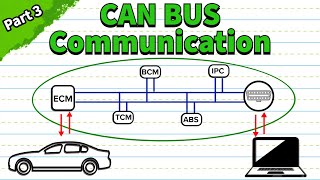
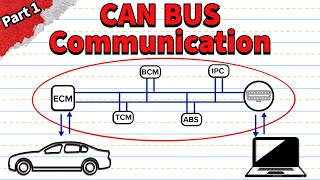
Technical definition: The official SAE/ISO definition for the U-code range is broad, but U1223 is universally used by manufacturers to indicate a 'Lost Communication' or 'No-Receive Data' error on the vehicle's Controller Area Network (CAN) bus. 🎬 Watch this simple explanation of how CAN bus communication works. The specific module that is offline varies by manufacturer but most commonly refers to the ABS/VDC Control Module, which is often a terminating module on the high-speed CAN bus.
Can I Drive With U1223?
Yes, But With Caution. You can drive, but critical safety systems like Anti-lock Brakes (ABS) and traction/stability control are disabled. This significantly increases the risk of losing control in an emergency stop or on slippery surfaces. In hard braking, stopping distance without ABS increases by over 45 feet, and you lose the ability to steer while braking, making it impossible to avoid a secondary obstacle.
Common Causes

- Low Battery Voltage or Blown Fuses (Very Common) — Control modules require a steady voltage (above 12.0V) to work correctly. A weak battery causes communication to drop out during engine cranking. A blown fuse cuts module power entirely and is a frequently overlooked cause.
- Wiring or Connector Problems (Very Common) — The network wires (CAN bus) corrode, break, or suffer rodent damage. Connector pins loosen or corrode, especially on modules exposed to weather near the wheels or firewall. Internal wire rot occurs without visible external damage.
- Poor Main Ground Connections (Very Common) — All modules need a solid ground connection to the chassis. A loose, frayed, or corroded main engine, body, or module ground strap introduces electrical noise and causes intermittent communication failures.
- Faulty ABS/VDC Control Module (Common) — The ABS or VDC computer fails internally due to heat, vibration, or age. This prevents it from communicating with other modules on the network, triggering the U1223 code.
- Control Module Software Glitch (Common) — Hardware is often fine, but the software contains a bug. On newer vehicles, a software update (a 'flash') from the dealer is required to fix communication issues that falsely trigger a U1223 code.
- Faulty Totally Integrated Power Module (TIPM) (Less Common) — On many Chrysler, Dodge, and Jeep vehicles (2007-2014), the TIPM acts as a central gateway and fuse box. It is prone to internal failures that cause bizarre electrical issues and a flood of communication codes.
- Aftermarket Device Interference (Less Common) — Poorly installed remote starters, alarms, or aftermarket stereos create electrical noise that disrupts vehicle network communication.
- Failed Terminating Resistor (Rare) — The CAN bus network requires a 120-ohm resistor at each end to function. If one of these resistors fails, it disrupts communication for the entire network, causing widespread U-codes.
Symptoms

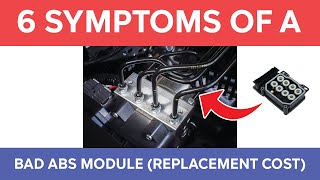
- ABS and Traction Control Lights On 🎬 Watch: Common symptoms of a failing ABS control module. — Because the ABS/VDC module is often the one that stopped talking, its warning lights illuminate immediately.
- Multiple Unrelated Warning Lights — A network failure causes a 'Christmas tree' effect on the dashboard, with many different system lights (4x4, Brake, Check Engine) turning on at once.
- Erratic Gauge Behavior or 'NO BUS' Message — The instrument cluster behaves erratically, with gauges dropping to zero. On Dodge/Chrysler/Jeep products, the digital odometer displays 'NO BUS', indicating a total loss of communication.
- Poor Engine Performance — On makes like Subaru, communication loss with the VDC module forces the engine into a reduced-power 'limp mode' as a safety precaution.
- Vehicle Will Not Start — If the communication loss involves a security-related module like the ignition or body control module, the engine cranks but does not start.
Diagnostic Flowchart
Tap your situation to follow the diagnostic path that matches what you're seeing on this code.
Common Fixes & Costs
- Replace Weak Battery and Clean Terminals — Parts: $150-$350, Labor: $0-$75, ~0.5 hr book time (DIY)
- Repair Damaged Wiring or Connector — Parts: $5-$50, Labor: $150-$450, ~2.0 hr book time (Intermediate)
- Clean or Repair Main Chassis/Module Ground — Parts: $1-$20, Labor: $75-$150, ~1.0 hr book time (DIY)
- Replace Faulty ABS/VDC Control Module — Parts: $500-$1500, Labor: $150-$300, ~1.5 hr book time (Professional)
- Perform Control Module Software Update — Parts: $0, Labor: $150-$250, ~1.0 hr book time (Professional)
- Replace or Repair Faulty TIPM — Parts: $200-$700, Labor: $100-$250, ~1.0 hr book time (Intermediate)
Used vs. New Parts: Buying Guide
When a used part is worth it: A used ABS/VDC module is a budget-friendly option for older, high-mileage vehicles where the cost of a new module is prohibitive. It makes sense if you verify the donor vehicle's history and have access to professional-level scan tools for reprogramming.
Donor-vehicle mileage cap: roughly under 100000 miles for the part to have meaningful remaining life.
Donor quality checklist:
- Match the part number on the module EXACTLY. Different trim levels or model years have incompatible modules, even if they look identical.
- Source the part from a reputable seller that offers at least a 30-day warranty.
- Avoid parts from vehicles in 'Rust Belt' regions or flood-damaged cars, as corrosion is a primary failure mode.
Decision logic:
- If The original module can be repaired/rebuilt by a reputable service → choose rebuilding. It is cost-effective and avoids the need for VIN programming.
- If Vehicle is newer or has lower mileage and the budget allows → buy a new OEM part. It offers the best reliability and warranty.
- If Vehicle is over 150K miles and the part is for a common failure-prone model → a used part is a viable risk, but be prepared for potential programming costs and a shorter lifespan.
Warranty tradeoff: Used parts typically have a 30-90 day warranty that covers the part only, not labor. Remanufactured modules carry a 1-year to lifetime warranty. New OEM parts carry a 1-2 year warranty.
Worst-case if a used part fails: $300-$800 if a used module is dead on arrival or fails shortly after installation, covering repeat labor costs and the price of another part.
What Happens If You Wait — Timeline
- 0-1 month: Code is set, ABS and Stability Control lights are on. Vehicle safety is compromised (loss of ABS/ESC), but no physical damage is occurring. (MPG impact: 0%% · Added cost: $0)
- 1-4 months: If the fault triggers 'limp mode' (common in Subaru), engine power is reduced. This leads to a noticeable drop in fuel economy and poor drivability. (MPG impact: 5-15%% · Added cost: $50-$200 in wasted fuel)
- 4-12 months: An unresolved intermittent electrical issue causes repeated voltage spikes or drops, permanently damaging the internal electronics of an otherwise good computer (e.g., the ECM or BCM). (MPG impact: 5-15% (if in limp mode)% · Added cost: $500-$1500 (potential cost to replace a damaged module that was not the original fault))
- 12+ months: Long-term driving in limp mode damages emissions components like the catalytic converter due to inefficient combustion. An unfixed wiring issue allows corrosion to spread deeper into a harness, turning a simple connector repair into a full harness replacement. (MPG impact: 10-20%% · Added cost: $1200-$3000+)
Cost of Not Fixing It
- Immediate: Loss of Anti-lock Brakes (ABS) and Electronic Stability Control (ESC), increasing the risk of a loss-of-control crash by over 50%, especially in adverse weather. (Added cost: N/A (Safety Risk))
- 0-3 months: On some vehicles (e.g., Subaru), the fault forces the engine to run in 'limp mode' with poor performance, leading to a 5-10% decrease in fuel economy. (Added cost: $50-$150)
- 3+ months: Long-term driving in limp mode damages emissions components like the catalytic converter due to inefficient combustion. (Added cost: $1200-$2800)
Diagnosis Steps

- Check Battery, Fuses, and Grounds
Ensure the battery is fully charged (above 12.4 volts) and load test it. Visually inspect all fuses in the interior and under-hood fuse boxes, especially those labeled 'ABS', 'VDC', or 'ESC'. Inspect the main battery and chassis ground connections for corrosion and tightness.
Tools: Multimeter, Fuse puller, Wire brush (Beginner) - Scan for All Module Codes
Use a high-quality OBD-II scanner that communicates with all vehicle modules (ABS, BCM, ECM, etc.). See which modules report the U1223 code and, more importantly, which module is not responding at all. The offline module is the source of the problem.
Tools: Bi-directional OBD-II Scanner (Intermediate) - Perform a Visual Inspection
Look for obvious damage to wiring harnesses around the offline module, wheel wells, and under the dashboard. Check for rodent damage, corrosion on connectors, or wires rubbing against sharp metal edges. Check for poor pin tension in connectors.
Tools: Flashlight, Terminal pin tension kit (optional) (Beginner) - Check Power and Ground at the Offline Module
Using a wiring diagram, identify the power and ground wires at the connector of the module that is not communicating. With the key on, use a multimeter to verify the module receives proper battery voltage and has a solid ground connection (less than 1 ohm of resistance to chassis ground).
Tools: Multimeter, Vehicle-specific wiring diagram (Intermediate) - Check CAN Bus Resistance 🎬 See how to test CAN bus resistance with a multimeter.
With the battery disconnected, use a multimeter to check the resistance between the two CAN bus wires (CAN High and CAN Low). At the OBD-II port (Pin 6 and Pin 14), you should measure approximately 60 ohms. A reading of 120 ohms means one terminating resistor is offline. A reading near 0 ohms indicates a short between the two wires.
Tools: Multimeter, Vehicle-specific wiring diagram (Advanced) - Perform a Ground Voltage Drop Test
With the module plugged in and the key on, set your multimeter to a low DC Volts scale. Place the red lead on the module's ground pin (by back-probing) and the black lead on a clean chassis ground. A reading above 0.1V (100mV) indicates a poor ground connection that needs cleaning.
Tools: Multimeter, Back-probe kit (Advanced) - Check CAN Bus Voltages (Key On)
Reconnect the battery and turn the key to 'ON' (engine off). At the OBD-II port, measure DC voltage from Pin 6 (CAN High) to ground and Pin 14 (CAN Low) to ground. A healthy bus shows CAN High around 2.6V-3.5V and CAN Low around 2.4V-1.5V when communicating. If one line is at 0V or battery voltage, it indicates a short.
Tools: Multimeter (Advanced) - Analyze the CAN Waveform
For definitive diagnosis, use an oscilloscope to view the CAN High and CAN Low signals at the OBD-II port. A good waveform shows clean, symmetrical square waves mirroring each other. Issues like noise from interference or incorrect voltages are clearly visible on a scope but invisible to a multimeter.
Tools: Oscilloscope (Professional)
When This Code Triggers (Freeze-Frame Conditions)
- Engine Coolant Temp: 180-200°F (The fault often appears after the vehicle is fully warmed up and has been running for some time.)
- RPM: 1500-2500 (The code is frequently set during steady-state driving, such as cruising on the highway, rather than during aggressive acceleration or deceleration.)
- Engine Load: 20-50% (Corresponds to light-to-moderate throttle input typical of maintaining speed on a level road, where vibrations and electrical loads are consistent.)
- Vehicle Speed: 35-65 mph (The loss of communication often happens at constant highway speeds, indicating the fault relates to vibration or thermal stress over time.)
Related Codes
- U0121 — This is a more specific code for 'Lost Communication With Anti-Lock Brake System (ABS) Control Module'. U1223 is often the code set by other modules listening for the ABS module, while U0121 is set by a primary module like the ECM.
- U0122 — Means 'Lost Communication With Vehicle Dynamics Control Module'. Since ABS and VDC are usually in the same computer, this is functionally the same as U0121. The diagnostic approach is identical.
- P0600 — Means 'Serial Communication Link Malfunction'. On Subarus, seeing P0600 along with U1223 strongly points toward a major wiring harness problem affecting multiple systems rather than an isolated module failure.
- U0001 — Indicates a general network-wide failure on the High Speed CAN Bus. If you have this code with U1223, it suggests a major wiring problem affecting the entire vehicle, like a short in the main CAN bus wires.
Climate & Environmental Factors
- High Humidity & Road Salt: Moisture and salt from 'Rust Belt' regions accelerate the corrosion of wiring, connector pins, and chassis ground points, creating high resistance or open circuits.
- Extreme Cold: Cold temperatures make wire insulation brittle and prone to cracking. It also reduces battery efficiency, leading to low voltage on startup which triggers communication codes.
- Extreme Heat: High ambient and under-hood temperatures increase electrical resistance in wiring and accelerate the thermal degradation of electronic components inside control modules.
How to Talk to a Mechanic About This Code
Say this: "I have a U1223 code and my ABS/VDC lights are on. I've already checked the battery and fuses, which are good. I'd like to book a diagnostic appointment to identify which module is offline and test its power, ground, and communication lines."
This signals that you understand the code is for a communication failure, not a specific part. It directs the technician to perform a logical diagnosis (find the offline module and check its circuit) rather than guessing and replacing expensive parts like the ABS module prematurely.
Avoid saying:
- 'Just fix my ABS light.'
- 'My car has a U1223, please replace the ABS module.'
- 'My dashboard is lit up like a Christmas tree, just fix it.'
Questions to ask before authorizing the repair:
- Which specific module was not communicating on the network?
- Did you perform a voltage and ground resistance test at that module's connector? What were the readings?
- Did you check the CAN bus resistance? What was the reading in ohms?
- Can you show me the damaged wire or corroded connector before you repair it?
- If a module needs to be replaced, does the new one require programming and is that included in the quote?
Where to Take It: Dealer vs Independent vs Chain
- Dealer:
Recommended for TSBs or warranty work. For out-of-warranty vehicles, a specialized independent shop is more cost-effective.
Best for: Vehicles under warranty., Very new vehicles (2021+) where a software update (TSB) is a likely fix., Complex European brands (BMW, Mercedes) with proprietary network protocols.
Downsides: Highest labor rates, often 1.5-2x more than independent shops., May prefer to replace an entire wiring harness for a high cost rather than perform a targeted wire repair. (Typical cost: +50% vs. baseline) - Independent Shop:
Best overall fit. An experienced independent technician is most likely to find the root cause (e.g., bad wire, ground) cost-effectively. Seek out a shop that explicitly advertises electrical diagnosis.
Best for: Out-of-warranty vehicles, especially common domestic and Japanese models (Subaru, Dodge, Ford)., Shops that specialize in automotive electrical diagnostics.
Downsides: Quality and diagnostic capability vary widely. Look for ASE certifications and positive reviews mentioning electrical or diagnostic work. (Typical cost: +0% vs. baseline) - Chain Shop:
AVOID for diagnosis and repair. Their business model is not suited for the time-consuming, methodical diagnosis that U1223 requires.
Best for: Initial, simple checks like battery testing or code scanning (often free).
Downsides: Technicians are often not equipped or trained for complex network diagnostics., High pressure to sell parts leads to misdiagnosis and unnecessary replacement of expensive modules. (Typical cost: -10% vs. baseline)
When to Walk Away From the Repair
If the estimated repair cost for a U1223 code exceeds 50% of the vehicle's private-party market value, sell the vehicle as-is or trade it in.
- Car worth $5000, fix is $2800: Walk away. The repair cost is too high relative to the car's value. The risk of other age-related failures is also high.
- Car worth $15000, fix is $1800: Fix it. The repair cost is well within a reasonable percentage of the car's value and restores critical safety features.
- Car worth $3000, fix is $800: Borderline. This is a judgment call. If the car is otherwise in excellent condition, the repair may be worthwhile. Get a second opinion before proceeding.
What Scan Tool You Need for This Code

Minimum: A scanner that reads codes from ALL vehicle modules (ABS, BCM, SRS, etc.), not just the engine computer. A basic $20 engine code reader is useless for U1223.
A basic code reader only checks the Engine Control Module (ECM). U1223 is a network code, and you need to see which other modules are setting the code and, crucially, which module is not responding at all. This requires a full-system scanner.
Budget: BlueDriver Pro (~$119) — Performs a full system scan to see fault codes from the ABS, BCM, and other modules. It helps identify which modules are reporting the U1223, which is the first step in knowing where to look.
Mid-range: Foxwell NT510 Elite (~$150) — Offers full system diagnostics and live data streaming from all modules. Crucially, it provides bi-directional control (active tests) to command modules and components, helping to verify if a module is truly offline or just has a sensor issue.
Professional: Autel MaxiCOM MK808S (~$450) — Provides full bi-directional control and OE-level diagnostics. Its key feature for U-codes is the ability to display a network topology map (on some vehicles), visually showing which modules are online and which are offline, dramatically speeding up diagnosis.
Rent vs buy: For a one-time diagnosis, some auto parts stores rent out full-system scanners. However, given the intermittent nature of U1223, buying a mid-range scanner is often a good investment, as you may need to re-scan the vehicle multiple times during wiggle tests or after repairs.
How to Clear the Code After You Fix It
- Reconnect the battery if it was disconnected for the repair.
- Use a quality OBD-II scan tool to clear all Diagnostic Trouble Codes (DTCs) from all modules.
- Perform a complete drive cycle to allow the vehicle's onboard diagnostics to run their self-tests and set the readiness monitors.
Drive cycle (~30 minutes): Start the vehicle from a cold start (sitting for 8+ hours). Let it idle for 2-3 minutes. Drive in mixed city conditions (stop-and-go) for 10-15 minutes. Drive at a steady highway speed (55-60 mph) for 10 minutes. Allow the vehicle to cool down completely.
Readiness monitors affected: Comprehensive Component Monitor, Misfire Monitor
Before emissions retest: drive at least 50 miles to fully set monitors.
Watch out for:
- Simply disconnecting the battery clears the code from some modules, but it resets all readiness monitors to 'Not Ready', causing an automatic emissions test failure.
- The code returns immediately or intermittently if the root cause of the communication failure (e.g., a corroded wire, bad ground) is not properly fixed.
Will This Fail Emissions / State Inspection?
Yes — this code typically fails an OBD-II emissions inspection.
- California: An illuminated ABS light is cause for a safety inspection failure. Any U-code present in the OBD-II system leads to a smog check failure. All required readiness monitors must be set to 'Ready'.
- New York: The NYS vehicle safety inspection requires the ABS warning light to perform a self-check at startup and then turn off. If the light stays on due to code U1223, the vehicle fails the safety inspection.
- Texas: In counties requiring emissions testing, the OBD-II test fails if any diagnostic trouble codes command the Malfunction Indicator Lamp (MIL) or other warning lights on.
Most Commonly Affected Vehicles
- Subaru Outback, Legacy, Forester, Impreza (2005-2016) — Extremely common for the VDC/ABS module to fail or have connection issues, often displaying 'Er HC' on the odometer. Dealer replacement cost exceeds $1500. Some models suffer from parasitic battery drain from the Data Communication Module (DCM), leading to low voltage and this code.
- Jeep Grand Cherokee, Grand Wagoneer (2021-2022) — On these models, U1223 often means 'Lost Communication with Wireless Charging Pad Module' and is caused by a software glitch. The fix is a dealer-performed BCM update per TSB S2108000004 REV. B or 08-050-22 REV B.
- Dodge / Ram 1500 / 2500 (2010-2018) — Prone to general CAN bus failures that display 'NO BUS' on the instrument cluster. This is often caused by corroded wires in the main harness near the PCM or a faulty ground connection.
- Ford F-150, Escape, Mustang (2010-2025) — U-codes on these Fords relate to wiring damage. Common problem areas include water intrusion causing corrosion in the Body Control Module (BCM) connectors in the passenger kick panel and broken wires in the door jamb harnesses.
- BMW 3-Series, X3, X5 (2004-2015) — Network issues frequently appear as a trio of 4x4, ABS, and Brake warning lights, pointing to the transfer case module (VTG) or the ABS/DSC module itself.
- Hyundai Elantra, Sonata, Tucson (2010-2019) — A 'Christmas tree' dash with communication codes traces to a simple blown ABS-related fuse in the under-hood fuse box before suspecting a major module failure.
- Chevrolet / GMC Silverado, Sierra, Tahoe, Yukon (2007-2013) — Communication issues on these trucks trace to a wiring problem in the harness that runs to the fuel pump control module or the ABS module, which are exposed to the elements.
- Chrysler / Dodge Various models with TIPM (2007-2014) — Vehicles equipped with a Totally Integrated Power Module (TIPM) are highly susceptible to internal failures that cause widespread network faults and a variety of U-codes.
Manufacturer-Specific Notes
- Subaru: U1223 almost always points to the VDC/ABS module. A unique symptom is the 'Er HC' message appearing in the odometer. The code forces the engine into limp mode and makes the cooling fans run constantly.
- FCA (Jeep, Dodge, Chrysler): In newer Jeeps, U1223 flags a non-critical part like the wireless phone charger, fixable with a software update. In older Dodge/Ram trucks, it causes a 'NO BUS' message on the dash, pointing to a wiring, ground, or PCM connection issue.
- Ford: Communication codes frequently trace back to water intrusion and corrosion in connectors, particularly the main Body Control Module (BCM) connectors located in the passenger-side footwell kick panel.
- Nissan: On some Nissan models, U1223 defines as 'Air Bag Warning System Light Malfunction' and points to an issue with the Steering Angle Sensor (SAS) control module or its communication with the instrument cluster.
Real Owner Stories
2013 Subaru Outback at 110K miles - The 'Easy' Fix
ABS, VDC, and 'Er HC' lights appeared on the dash intermittently, especially on cold, damp mornings. No other performance issues.
What they tried:
- Checked fuses, all were good.
- Took to an independent shop that suspected a faulty VDC/ABS module, quoting $1,800 for replacement.
- Owner decided to try cleaning grounds first after reading forums.
- Disconnected battery, located the main ground strap near the ABS module, unbolted it, and sanded the contact point on the chassis and the terminal itself until shiny. Re-attached securely.
Outcome: Code U1223 cleared and did not return. Total cost was under $5 for sandpaper and 30 minutes of labor. The high-resistance ground connection was the sole cause of the intermittent communication loss.
Lesson: Always check and clean the simple, high-probability failure points like grounds and battery connections before condemning an expensive control module, especially for intermittent electrical faults.
2011 Dodge Ram 1500 at 155K miles - The Misdiagnosis
Vehicle intermittently failed to start, displaying 'NO BUS' on the odometer. When it did run, the dash lit up with multiple warnings.
What they tried:
- Replaced the battery, but the problem persisted.
- A shop diagnosed a failed Powertrain Control Module (PCM) and replaced it for $1,200. The issue returned within a week.
- A second, more experienced electrical shop spent hours tracing the CAN bus wiring.
- They found a section of the main wiring harness under the driver's side door sill plate that was corroded from water entry. Several CAN bus wires were green and brittle.
Outcome: The second shop bypassed the damaged section by soldering in new wires and sealing the harness. The 'NO BUS' error was resolved permanently. The original PCM was likely fine.
Lesson: A 'NO BUS' or widespread communication failure is very often a wiring problem, not a module failure. Replacing modules without confirming the integrity of their power, ground, and data lines is a costly gamble.
2022 Jeep Grand Cherokee at 15K miles - The Unusual Cause
The wireless phone charger stopped working, and a scan revealed code U1223. No other symptoms or warning lights were present.
What they tried:
- Owner scheduled a dealer appointment, suspecting a faulty charging pad (Part #68487354AC, approx $60).
- Dealer service department checked for Technical Service Bulletins (TSBs) related to the code.
- Found TSB 08-050-22 REV B, which indicated the U1223 code for the wireless charger was caused by a software bug in the Body Control Module (BCM).
Outcome: The dealer performed a software update ('flash') on the BCM as per the TSB. The repair was covered under warranty and took about an hour. The code was resolved, and the charger functioned correctly.
Lesson: On newer vehicles, always check for TSBs before starting repairs. A seemingly hardware-related code is often a known software issue that has a simple, no-parts-needed fix.
How to Prevent This Code From Triggering
- Apply Dielectric Grease to Connectors (Whenever a connector is disconnected) — Dielectric grease is non-conductive and seals out moisture and oxygen, preventing corrosion on the metal pins of critical connectors, especially those exposed to weather like the ABS module connector.
- Perform Periodic Ground Cleaning (Every 30,000 miles or 2 years) — Key chassis and engine ground connections develop corrosion over time, increasing resistance and causing intermittent communication faults. Disconnecting, cleaning with a wire brush, and re-securing them ensures a solid connection.
- Protect Wiring from Rodents (As needed, especially if parking outdoors) — Rodents are attracted to the soy-based insulation on modern wiring. Using rodent-repellent tape on harnesses or placing peppermint oil-soaked cotton balls in the engine bay deters them from chewing wires and causing open circuits.
- Ensure Battery Health (Test annually after 3 years of age) — A healthy battery maintains stable voltage (>12.4V at rest). Weak batteries cause voltage drops during startup, which is a primary cause of modules dropping offline and setting communication codes.
- Secure Wiring Harnesses (During any under-hood or under-car service) — Ensure harnesses are properly clipped into their retainers and are not rubbing against sharp metal edges or hot exhaust components. Vibration causes a wire to chafe through its insulation over time, leading to a short circuit.
Frequently Asked Questions
Is it safe to drive with code U1223?
You can drive the vehicle, but it is not recommended for long distances or in bad weather. Your anti-lock brakes and stability control will not work, significantly increasing stopping distances in an emergency.
Why is the diagnosis for U1223 so expensive?
U1223 points to a communication breakdown, not a specific broken part. Finding a single broken wire or loose pin in a harness with hundreds of wires takes a technician many hours of labor.
Can a weak battery really cause this code?
Yes. Modern vehicle computers are extremely sensitive to voltage drops. When you start the car, a weak battery's voltage drops so low that it causes modules to temporarily shut down and lose communication.
I replaced the ABS module, but the code came back. What now?
This means the module was not the problem. The most common cause is a wiring or connector issue. You must diagnose the circuit completely (power, ground, and network lines) before replacing expensive modules.
What is the 'Christmas tree' effect on my dashboard?
This occurs when many different warning lights (ABS, Brake, 4x4, Check Engine) illuminate at once. It is a classic symptom of a network communication failure where multiple control modules cannot talk to each other.
What is a common misdiagnosis for U1223?
A common mistake is immediately replacing the module that sets the code, rather than diagnosing the module that is offline. For example, the Engine Control Module (ECM) stores code U1223 because it cannot hear the ABS module. The problem is in the circuit for the ABS module, requiring a full-system scan to verify.
The code is intermittent. What should I check?
Intermittent communication issues are caused by poor connections. With the vehicle running, carefully wiggle wiring harnesses and connectors related to the offline module. If the warning lights flicker or the code appears, you found the area of the fault.
Why does my dash say 'NO BUS'?
This message means the instrument cluster lost all communication on the data bus with the main computer (PCM). It is frequently caused by a bad ground connection or a corroded wire in the harness between the PCM and the cluster.
Can an aftermarket stereo or remote starter cause U1223?
Yes. If an aftermarket device is improperly tapped into the vehicle's CAN bus wires, it creates electrical noise that disrupts communication between modules and sets U-codes.
Key Takeaways
- Code U1223 triggers when a control module—most frequently the ABS/VDC unit—stops sending data over the vehicle's Controller Area Network (CAN) bus.
- Before replacing a $1,000+ control module, test the battery voltage (must be >12.4V) and inspect the wiring harness for corrosion or chewed wires.
- Driving with U1223 disables your Anti-lock Brakes (ABS) and Electronic Stability Control (ESC), increasing emergency stopping distances by up to 45 feet.
- Do not replace any parts until you use a full-system bi-directional scanner to pinpoint exactly which of the vehicle's modules is offline.
- Expect to pay $150 to $450 for professional diagnosis, as finding a single broken wire in a complex harness often takes 1 to 3 hours of labor.
Helpful Videos
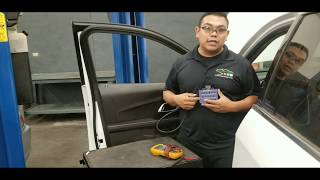
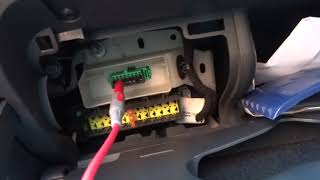
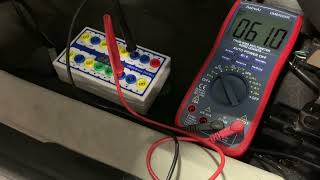

The information in this article is provided for general reference and educational purposes only. Vehicle specifications, procedures, and part compatibility can vary by production date, trim level, and region. Always consult your vehicle's factory service manual and verify part numbers before purchasing or performing repairs. Safety-critical components such as airbags, seat belts, and braking systems should be installed by a qualified professional.
- 🎬 Helpful Videos
- What Does U1223 Mean?
- Can I Drive With U1223?
- Common Causes
- Symptoms
- Diagnostic Flowchart
- Common Fixes & Costs
- Used vs. New Parts: Buying Guide
- What Happens If You Wait — Timeline
- Cost of Not Fixing It
- Diagnosis Steps
- When This Code Triggers (Freeze-Frame Conditions)
- Related Codes
- Climate & Environmental Factors
- How to Talk to a Mechanic About This Code
- Where to Take It: Dealer vs Independent vs Chain
- When to Walk Away From the Repair
- What Scan Tool You Need for This Code
- How to Clear the Code After You Fix It
- Will This Fail Emissions / State Inspection?
- Most Commonly Affected Vehicles
- Manufacturer-Specific Notes
- Real Owner Stories
- 2013 Subaru Outback at 110K miles - The 'Easy' Fix
- 2011 Dodge Ram 1500 at 155K miles - The Misdiagnosis
- 2022 Jeep Grand Cherokee at 15K miles - The Unusual Cause
- How to Prevent This Code From Triggering
- Frequently Asked Questions
- Is it safe to drive with code U1223?
- Why is the diagnosis for U1223 so expensive?
- Can a weak battery really cause this code?
- I replaced the ABS module, but the code came back. What now?
- What is the 'Christmas tree' effect on my dashboard?
- What is a common misdiagnosis for U1223?
- The code is intermittent. What should I check?
- Why does my dash say 'NO BUS'?
- Can an aftermarket stereo or remote starter cause U1223?
- Key Takeaways
- 🎟️ Get 5% Off