

OBD-II Code U1200: Vehicle Communication Network Malfunction
What U1200 means, why it triggers, and how to fix it
- Code U1200 indicates a total communication breakdown on the vehicle's Controller Area Network (CAN) bus, disabling data sharing between computers.
- Always test the 12V battery first; voltage drops below 12.4V account for a massive percentage of false module failure codes.
- Do not replace a $1,000+ control module without first verifying the CAN bus resistance reads exactly 60 ohms at the OBD-II port.
- Stop driving immediately when U1200 triggers; critical safety systems like ABS disable instantly and the engine stalls unpredictably.
What Does U1200 Mean?

Trouble code U1200 means the computers (modules) in your vehicle stopped talking to each other. Your car relies on a Controller Area Network (CAN) bus to share information between the engine computer, anti-lock brakes, and instrument cluster. This code indicates a physical or electrical breakdown on that communication line.
Technical definition: The SAE/ISO defines a U-code as a 'Network/Communication' fault. U1200 most commonly indicates a 'Class 2 Communication Malfunction' or a general 'CAN Bus Communication Error'. On older Fords, it defines 'SCP (J1850) Invalid or Missing Data'. On specific models, it points to distinct failures: 'Steering wheel sensor error' (Mitsubishi), 'invalid data' (Peugeot/Citroën), or 'Lost Communication with Power Inverter Module' (Fiat 500e).
Can I Drive With U1200?
Yes, But With Caution. Driving is highly discouraged. You risk a sudden loss of motive power (stalling), especially in EVs like the Fiat 500e where this code is critical. Safety systems like ABS, traction control, and airbags disable instantly, increasing accident risk. Continued driving causes unpredictable behavior, such as the transmission shifting into neutral at highway speeds. Ignoring the issue presents a severe safety hazard.
Common Causes

- Low or Unstable Battery Voltage (Very Common) — Communication modules are highly sensitive to voltage drops. A weak battery, failing alternator, or loose battery cable causes modules to power down and drop off the network, triggering a U-code.
- Damaged or Corroded Wiring and Connectors (Very Common) — Wires in the CAN bus network chafe, cut, or corrode. Water leaking from clogged sunroof drains or bad window seals frequently pools under carpets, corroding hidden wiring harness connectors and shorting out the network.
- Failing Control Module (ECU, ABS, BCM, Gateway) (Common) — Any single computer module on the network can fail internally and stop communicating, or send corrupt data that crashes the whole system. This includes the Engine Control Unit (ECU), Anti-lock Brake System (ABS), Body Control Module (BCM), or the central CAN Gateway.
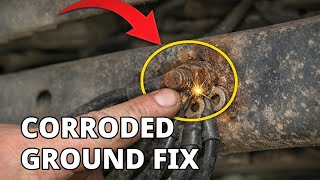
- Bad Ground Connection (Common) — A corroded or loose ground strap creates a floating voltage potential. This disrupts the sensitive 2.5-volt reference needed for CAN communication, causing widespread network errors.
- Aftermarket Device Interference (Common) — Poorly installed remote starters, alarms, stereo systems, or plug-in OBD-II insurance trackers interfere with the CAN bus. These devices introduce electrical noise or short the data lines.
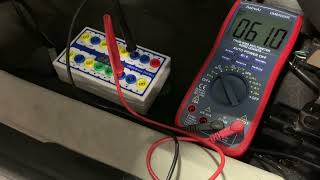
- Faulty Terminating Resistor (Less Common) — The CAN bus network requires a 120-ohm resistor at each end to prevent signal reflections. If a module housing one of these resistors fails, network resistance jumps to 120 ohms (instead of the correct 60 ohms), halting communication. 🎬 Watch: How to test CAN bus resistance with a multimeter
- Software or Programming Issues (Less Common) — A communication problem is sometimes caused by a software glitch within a module. Manufacturers release software updates (TSBs) to patch these bugs, a frequent fix for Honda and Fiat models.
Symptoms

- Multiple Warning Lights on Dash — The Check Engine, ABS, Traction Control, and Airbag lights illuminate simultaneously because their respective modules cannot communicate.
- Engine Stalling or No-Start — The engine stalls while driving or refuses to crank because the engine computer loses contact with the immobilizer or fuel pump control module.
- Erratic or Dead Gauges — The speedometer, tachometer, and temperature gauges drop to zero, freeze, or sweep erratically.
- Transmission Stuck in Gear — The transmission enters 'limp mode' and locks into a single gear, or shifts harshly because the Transmission Control Module (TCM) loses engine data.
- Loss of Interior Features — Power windows, radio, climate control, and power locks stop working intermittently or altogether.
- No Communication with Scan Tool (scan-tool only — no driver-felt sign) — A diagnostic scanner fails to connect to specific modules or the entire vehicle, confirming a total network crash.
Diagnostic Flowchart
Tap your situation to follow the diagnostic path that matches what you're seeing on this code.
Common Fixes & Costs
- Replacing the 12V Battery — Parts: $150-$350, Labor: $50-$100, ~0.5 hr book time (DIY)
- Repairing Damaged Wiring or Connectors — Parts: $5-$50, Labor: $160-$860, ~2.5 hr book time (Intermediate)
- Replacing a Failed Control Module (e.g., ABS, BCM) — Parts: $400-$1,200, Labor: $150-$300, ~1.5 hr book time (Professional)
- Replacing the TIPM (Dodge/Ram/Jeep) — Parts: $500-$1,500, Labor: $100-$250, ~1.0 hr book time (Intermediate)
- Replacing a Failed Engine Control Unit (ECU/PCM) — Parts: $500-$2,000, Labor: $150-$500, ~2.0 hr book time (Professional)
- Replacing a Failed Power Inverter Module (Fiat 500e) — Parts: $2,500-$7,500, Labor: $500-$1,500, ~5.0 hr book time (Professional)
Used vs. New Parts: Buying Guide
When a used part is worth it: Used control modules (ECU, BCM, ABS) are viable when the vehicle is older (10+ years), the budget is tight, and the part is sourced from a reputable vendor offering an exact part number match.
Donor-vehicle mileage cap: roughly under 100000 miles for the part to have meaningful remaining life.
Donor quality checklist:
- Verify the part number on the used module is identical to the original.
- Purchase from a specialist recycler who tests electronics and offers a minimum 30-day warranty.
- Avoid buying 'as-is' from scrapyards; programming and immobilizer issues make the part unusable.
Decision logic:
- If The part is a high-failure item with known internal flaws (e.g., TIPMs, Fiat PIMs). → Buy a new OEM or professionally remanufactured unit; the used part likely has the same defect.
- If The vehicle is less than 10 years old and the part cost is under $800. → Buy a new or remanufactured part to get a longer warranty and the latest software updates.
- If The part requires complex security programming (immobilizer, VIN coding). → Ensure the seller offers cloning services or factor in the cost of dealer programming ($150-$300).
Warranty tradeoff: Used parts typically have a 30-90 day functional warranty. New aftermarket parts offer 1 year to lifetime warranties. New OEM parts carry a 1-2 year warranty.
Worst-case if a used part fails: $300-$800 if a used module fails after installation, covering repeat labor costs and towing.
What Happens If You Wait — Timeline
- 0-1 month: Intermittent fault. The U1200 code appears and disappears. You notice an occasional flicker of a warning light or a gauge behaving oddly. (MPG impact: 0%% · Added cost: $0)
- 1-3 months: Persistent fault. Warning lights stay on. Vehicle features stop working. The vehicle occasionally hesitates or shifts hard. (MPG impact: 0-5%% · Added cost: $100-$300 (Towing fee if the vehicle stalls).)
- 3-6 months: Critical system failure. Safety systems are disabled. The engine stalls unpredictably. The vehicle enters 'limp mode' with severely reduced power. (MPG impact: 5-15%% · Added cost: $500-$2000 (Cost if a secondary module is damaged by electrical feedback).)
- 6+ months: Cascading failure and masking. The vehicle is unreliable and fails to start. The network fault masks other serious diagnostic codes, leading to severe mechanical damage. (MPG impact: 15-25%+% · Added cost: $3,000-$8,000+ (Cost of unaddressed engine or transmission damage).)
Cost of Not Fixing It
- Immediate: Unpredictable stalling, loss of power, and failure of safety systems (ABS, Traction Control, Airbags). The vehicle becomes undrivable. (Added cost: Potential for accidents or towing fees ($100-$300).)
- 1-3 months: Continued electrical stress on other modules due to network instability. A module sending erratic data causes cascading failures. (Added cost: $500-$2000+ if a secondary module (like a BCM or Instrument Cluster) is damaged by electrical feedback.)
- 3+ months: A persistent network issue masks other serious diagnostic trouble codes. A critical engine fault occurs, but the driver is not alerted. (Added cost: $3,000 - $8,000+ for complete engine or transmission replacement due to unaddressed secondary faults.)
Diagnosis Steps
- Check the Battery and Charging System
Use a multimeter to check battery voltage. It must read above 12.4 volts with the engine off and between 13.7 and 14.7 volts running. A weak battery is the easiest and most common cause of communication codes.
Tools: Multimeter (Beginner) - Perform a Visual Inspection
Inspect all visible wiring harnesses for damage, corrosion, or loose connections. Check under the vehicle, behind the dashboard, and around the main fuse box. Disconnect any aftermarket accessories plugged into the OBD-II port or wired into the dash.
Tools: Flashlight (Beginner) - Scan All Modules
Use an advanced OBD-II scanner to read codes from all modules (ABS, BCM, TCM), not just the engine. Note which modules do not respond to the scan tool. An unresponsive module is your primary suspect.
Tools: Advanced OBD-II Scanner (Intermediate) - Check CAN Bus Resistance
Disconnect the battery. Use a multimeter to measure resistance between Pin 6 (CAN High) and Pin 14 (CAN Low) on the OBD-II port. A healthy network reads exactly 60 ohms. A reading of 120 ohms means a terminating resistor is missing or the circuit is open. A reading near 0 ohms indicates a short.
Tools: Multimeter (Intermediate) - Test CAN Bus Voltages
Reconnect the battery and turn the key ON. Check voltage at the OBD-II port. In the idle state, both CAN High and CAN Low sit at 2.5 volts. When communicating, CAN High jumps to 3.5 volts and CAN Low drops to 1.5 volts. Wires stuck at 0V or 12V indicate a short to ground or power.
Tools: Multimeter, Back-probe kit (Advanced) - Isolate the Faulty Module
If resistance or voltage is incorrect, unplug modules one by one from the network. When the multimeter reading returns to normal after unplugging a specific module, that module (or its connector) is the source of the short. Use a wiring diagram to locate splice packs.
Tools: Multimeter, Vehicle-specific wiring diagram, Basic hand tools (Advanced) - Perform a Network Wake-Up Test
Monitor CAN bus voltages while cycling the key off and opening/closing the driver's door. Voltages should stabilize as the car 'goes to sleep'. Voltage spikes indicate a module is failing to power down, keeping the network active and draining the battery.
Tools: Multimeter (Professional) - Analyze the Signal with an Oscilloscope
Connect oscilloscope probes to CAN High (Pin 6) and CAN Low (Pin 14). A healthy signal shows clean, mirror-image square waves. Look for noisy patterns (interference), rounded waves (failing resistor), or distorted waveforms caused by a module sending corrupt data.
Tools: Oscilloscope, Back-probe kit (Professional)
When This Code Triggers (Freeze-Frame Conditions)
- Event Time: Varies (The code sets immediately upon key-on or during the initial network 'handshake' between modules.)
- Module Voltage: 11.5 - 12.5V (Fault triggers during low voltage events, such as engine cranking with a weak battery.)
- Network Status: Bus Off / Error Active (The ECU logs this code when it detects the CAN bus is down or has entered an error state.)
- Vehicle Speed: 0 mph or Varies (The fault occurs while parked or while driving, leading to gauge failure or stalling.)
Related Codes
- U0073 — Control Module Communication Bus 'A' Off. Nearly identical to U1200, indicating a major failure of the primary high-speed CAN bus requiring checks of wiring and terminating resistors.
- U0100 — Lost Communication With ECM/PCM. If U0100 appears with U1200, the fault lies specifically with the Engine Control Module or its direct wiring.
- U0121 — Lost Communication With Anti-Lock Brake System (ABS) Module. If U0121 is the primary companion code, the ABS module itself or its connector is the culprit.
- U0140 — Lost Communication With Body Control Module (BCM). If accompanied by erratic interior lights or dead power windows, the BCM is the prime suspect.
Climate & Environmental Factors
- Humidity and Moisture: High humidity accelerates corrosion on connector pins and circuit boards. Water intrusion from leaky seals or clogged sunroof drains directly shorts out connectors, causing immediate communication failure.
- Road Salt and Corrosion: In the 'Salt Belt', under-vehicle wiring harnesses and ABS modules suffer severe corrosion. Salt spray wicks into connectors and eats away copper wiring, causing open circuits.
- Extreme Temperatures: Extreme heat or cold causes weakened solder joints on circuit boards to fail. Thermal expansion makes a marginal connection open up, dropping the module off the network until temperatures stabilize.
How to Talk to a Mechanic About This Code
Say this: "I have a U1200 network communication code and other related U-codes. I'd like to book a diagnostic appointment. Please start by checking the battery, grounds, and CAN bus resistance before recommending any module replacements."
This signals you understand the logical diagnostic process. It directs the technician to check the cheapest-to-fix causes first, preventing an immediate upsell to an expensive module replacement.
Avoid saying:
- 'My check engine light is on.' (Too vague, invites a costly exploratory process)
- 'The car is acting weird, just fix it.' (Gives the shop a blank check)
- 'I think it needs a new computer.' (Never suggest the most expensive fix first)
Questions to ask before authorizing the repair:
- What was the CAN bus resistance reading at the OBD-II port?
- Which specific modules, if any, were not communicating with your scan tool?
- Did you check for power and ground at the connector of the module you are recommending for replacement?
- If you're recommending a module replacement, is programming required and is that included in the quote?
Where to Take It: Dealer vs Independent vs Chain
- Dealer:
Recommended for specific known issues or if the vehicle is under warranty. Necessary if a software flash is the confirmed fix.
Best for: Vehicles under warranty., Complex, manufacturer-specific issues (e.g., Fiat 500e PIM, VW CAN Gateway)., Repairs requiring proprietary software updates or programming.
Downsides: Highest labor rates., Defaults to expensive module replacement instead of detailed wiring diagnostics. (Typical cost: +50% vs. baseline) - Independent Shop:
Best fit for most U1200 scenarios. Seek out an ASE-certified shop with a reputation for solving tough electrical problems.
Best for: Out-of-warranty vehicles., Diagnosing common causes like wiring, battery, and ground faults., Shops specializing in automotive electrical diagnostics.
Downsides: Quality varies greatly; must find a shop with strong electrical skills., Lacks expensive, dealer-level programming tools for the newest vehicles. (Typical cost: +0% vs. baseline) - Chain Shop:
AVOID for U1200 diagnosis and repair. Their business model is not suited for in-depth electrical troubleshooting.
Best for: Simple, unrelated repairs like tires or oil changes., Confirming the battery is healthy.
Downsides: Technicians are not equipped or trained for complex network diagnostics., High risk of misdiagnosis, leading to unnecessary parts replacement. (Typical cost: -10% vs. baseline)
When to Walk Away From the Repair
If the estimated repair cost exceeds 50% of the car's current private-party value, seriously consider selling or trading in the vehicle.
- Car worth $7000, fix is $800: Fix it. This repair is well below the 50% threshold and restores significant functionality.
- Car worth $4000, fix is $2200: Borderline. The repair cost is over 50% of the car's value. Get a second opinion and evaluate the car's overall condition before proceeding.
- Car worth $6000, fix is $7500: Walk away. The repair cost dramatically exceeds the vehicle's value. The car is a total loss from an economic standpoint.
What Scan Tool You Need for This Code

Minimum: A scanner that performs a 'full system scan' to read codes from the ABS, BCM, SRS, TCM, and other control modules.
A basic $20 code reader only talks to the Engine Control Unit. Diagnosing a U1200 code requires knowing the status of the entire vehicle network, which a cheap reader cannot provide.
Budget: BlueDriver Pro (~$120) — Connects to your smartphone and performs a full-system scan, identifying which modules report communication faults. Reads freeze-frame and live data.
Mid-range: Foxwell NT680 Pro / Autel MaxiCOM MK808 (~$300-500) — Handheld tablet scanners offering full system diagnostics and bidirectional controls. Allows you to actively test components and see manufacturer-specific data.
Professional: Launch X431 series / Autel MaxiSys MS906 (~$800-1500) — Provides full bidirectional control and ECU coding functions, necessary if you need to replace and configure a new control module.
Rent vs buy: You can borrow a basic OBD-II reader from auto parts stores to confirm the code. However, loaner tools lack the all-module scan capability required for a U1200. Buying at least a budget pick is highly recommended.
How to Clear the Code After You Fix It
- Reconnect the battery if it was disconnected for the repair.
- Use a professional OBD-II scan tool to clear the U1200 code from all modules.
- Perform a complete drive cycle to allow all system readiness monitors to run.
Drive cycle (~20 minutes): A generic drive cycle includes a cold start (sit for 6+ hours), 2-3 minutes of idling, 10-15 minutes of mixed city/highway driving (including speeds of 55 mph for several minutes), and coming to a complete stop before shutdown.
Readiness monitors affected: Comprehensive Component Monitor, Misfire Monitor, Fuel System Monitor
Before emissions retest: drive at least 50 miles to fully set monitors.
Watch out for:
- Using a basic code reader that only clears codes from the ECU, leaving the fault active in the ABS or BCM.
- Not fixing the root cause, causing the code to return immediately.
- Disconnecting the battery clears the code but resets all readiness monitors, guaranteeing an emissions test failure.
Will This Fail Emissions / State Inspection?
Yes — this code typically fails an OBD-II emissions inspection.
- California: A U1200 code causes an automatic failure of the smog check. The underlying communication issue prevents readiness monitors from setting.
- New York: An active U1200 code results in an emissions test failure. The vehicle cannot be inspected until the fault is repaired and the drive cycle is completed.
- Texas: In counties requiring emissions testing, a vehicle with a U1200 code automatically fails the OBD-II portion of the inspection.
Most Commonly Affected Vehicles
- Ford F-150, Focus, Mondeo (2005-2015) — Often related to corroded wiring harnesses near the driver's side sill plate, or issues with the instrument cluster acting as a gateway.
- Chevrolet / GMC Silverado / Sierra (2007-2014) — Prone to communication issues stemming from a failed ABS module or Body Control Module (BCM).
- Dodge / Ram / Jeep Ram, Grand Cherokee, 300 (2006-2016) — Frequently suffer U-codes due to failures in the Totally Integrated Power Module (TIPM), causing random electrical behavior and no-start conditions.
- Nissan Altima, Maxima, Murano, Pathfinder, Sentra (2005-2015) — Commonly affected by CAN communication circuit faults tracing to the IPDM (Intelligent Power Distribution Module) or ABS actuator.
- Volkswagen Golf, Passat, Jetta, Touran (2008-2018) — U-codes frequently point to a failure in the CAN Gateway module located behind the dashboard, often triggered after installing an aftermarket radio.
- Subaru Legacy, Outback, Forester (2008-2018) — Communication codes appear after a major electrical event like an alternator failure. The Body Integrated Unit (BIU) is a common failure point.
- Fiat 500e (2013-2015) — U1200 specifically points to 'Lost Communication with Power Inverter Module (PIM)'. This critical issue costs upwards of $7,500 to repair.
- Peugeot / Citroën Various with BlueHDi engines (2015-2020) — U1200 relates to invalid data from the AdBlue system. It indicates a failing AdBlue tank/pump assembly, a widespread and costly problem.
Manufacturer-Specific Notes
- Ford: On older SCP (J1850) models, U1200 points to the instrument cluster. On newer CAN bus Fords, check for corrosion in the wiring harness in the driver-side footwell and sill plate area.
- GM: Defines U1200 as 'Loss of serial communications for class 2 devices'. The issue traces to a faulty ABS module, BCM, or damaged wiring under the driver's seat.
- Chrysler/Dodge/Jeep: U-codes are frequently caused by an internal failure of the Totally Integrated Power Module (TIPM). Perform a 'soft reset' by disconnecting the battery for 30 minutes before replacing it.
- Nissan: Nissan issues multiple TSBs for CAN issues. Technicians use the 'CAN Diag Support Monitor' function in the CONSULT scan tool to identify the non-communicating module.
- Honda: Communication issues are often caused by a software glitch in the Body Control Module (BCM). TSB 20-039 updates the BCM software to fix a setting mismatch.
- Fiat: On the 500e EV, U1200 means 'Lost Communication with Power Inverter Module (PIM)'. This known failure point is extremely expensive to repair, often totaling the car.
- Peugeot/Citroën: U1200 is a companion code to AdBlue system faults. If seen with an 'Anti-Pollution Fault' warning, the AdBlue tank pump assembly requires replacement.
Real Owner Stories
2008 Chevy Silverado with ~150K miles
ABS and Brake lights were on, speedometer was erratic, and transmission shifted hard. Codes U0121 and U1200 were present.
What they tried:
- Cleaned the main engine-to-chassis ground strap and the ground point on the frame.
- Visually inspected the wiring harness leading to the ABS module.
Outcome: The problem was a failed Electronic Brake Control Module (EBCM/ABS module). Replacing and programming the module resolved all symptoms.
Lesson: When U0121 (Lost Communication with ABS) appears with U1200, the ABS module itself is the primary suspect.
2013 Dodge Avenger with 98K miles
Car would not start, multiple warning lights illuminated, and the scan tool could not communicate with most modules.
What they tried:
- Replaced the battery.
- Checked all fuses.
- Disconnected an aftermarket remote starter.
Outcome: The issue was a faulty Totally Integrated Power Module (TIPM). Replacing the TIPM with a remanufactured unit brought all modules back online.
Lesson: On Chrysler/Dodge/Jeep vehicles, widespread electrical issues triggering communication codes point directly to a failed TIPM.
2016 Peugeot 308 BlueHDi
Vehicle displayed an 'Anti-Pollution Fault' with a mileage countdown to a no-start condition, accompanied by codes U1200 and P20E8.
What they tried:
- Cleared the codes, but they returned immediately.
- Refilled the AdBlue tank.
Outcome: The fault was a failed AdBlue pump/tank assembly. The U1200 code triggered because the engine ECU received invalid data from the faulty AdBlue module.
Lesson: On Peugeot/Citroën diesels, U1200 is a secondary code pointing to a primary failure in the AdBlue system.
Ford Focus with intermittent no-start
Car intermittently failed to start with no crank. Gauges acted erratically. U1200 code stored.
What they tried:
- Replaced the battery and cleaned main ground connections.
- Shop suspected a faulty ECU.
Outcome: Water intrusion from a clogged sunroof drain corroded a wiring harness connector under the carpet near the sill plate. Repairing the wires fixed the problem.
Lesson: Intermittent electrical faults changing with weather are often caused by hidden water leaks. Check common areas for water intrusion before replacing modules.
How to Prevent This Code From Triggering
- Periodically clean and tighten battery terminals and main ground straps. (Every 12 months or during oil change.) — Prevents low voltage and high resistance, a primary cause of module malfunction and communication codes.
- Apply dielectric grease to major electrical connectors. (When a connector is disconnected for any repair.) — Seals out moisture and oxygen, preventing pin corrosion that leads to open circuits on the CAN bus.
- Keep sunroof drains and cowl drains clear of debris. (Every 6-12 months, especially in the fall.) — Prevents water from overflowing into the cabin and corroding hidden wiring harnesses or ground points.
- Ensure regular, longer drives. (At least one 20-30 minute drive per week.) — Short trips prevent the alternator from fully recharging the battery. An undercharged battery stresses electronic modules.
- Be cautious with aftermarket electronics. (During installation.) — Improperly tapping into CAN bus wires disrupts the network. Use high-quality, vehicle-specific wiring adapters.
Frequently Asked Questions
Can a bad battery cause a U1200 code?
Yes. A weak battery provides unstable voltage, causing electronic modules to malfunction and lose communication. Always check the battery first.
What is the most common misdiagnosis for a U1200 code?
Replacing an expensive control module when the actual problem is a bad ground or broken wire. Thorough technicians always rule out wiring and voltage issues before condemning a computer.
Can aftermarket accessories cause a U1200 code?
Yes. Poorly installed remote starters, alarms, or stereos introduce electrical noise or short the CAN bus network. Disconnect recently installed accessories to see if the fault clears.
Can weather affect a U1200 code?
Yes. High humidity accelerates corrosion in connectors, while extreme temperature swings cause weak solder joints to fail intermittently. Water intrusion from clogged sunroof drains frequently shorts out hidden wiring.
Is it expensive to fix a U1200 code?
It ranges widely. A simple wiring repair or new battery costs $150 to $350, while replacing major control modules costs $800 to over $7,500.
What are the CAN bus wires?
The CAN bus uses a twisted pair of wires, known as CAN High and CAN Low. Twisting them protects against electrical interference. You identify them by looking for this specific twisted pair in the wiring harnesses.
Can I fix a U1200 code myself?
You can replace a dead battery or fix an obvious broken wire. However, diagnosing complex network faults requires an advanced scanner, multimeter, and wiring diagrams. Module replacement requires professional programming.
Will clearing the code fix the problem?
No. Clearing the code only turns off the check engine light temporarily. The code returns immediately when the modules try to communicate and fail.
What is a CAN Gateway Module?
A CAN Gateway is a central computer acting as a router for your car's multiple networks. It translates messages between high-speed and low-speed systems. If it fails, large sections of the car stop communicating.
Can a bad ground cause a U1200 code?
Yes. Control modules rely on a solid ground connection for a stable voltage reference. A loose or corroded ground causes the module to malfunction and disrupt the entire network.
Key Takeaways
- Code U1200 indicates a total communication breakdown on the vehicle's Controller Area Network (CAN) bus, disabling data sharing between computers.
- Always test the 12V battery first; voltage drops below 12.4V account for a massive percentage of false module failure codes.
- Do not replace a $1,000+ control module without first verifying the CAN bus resistance reads exactly 60 ohms at the OBD-II port.
- Stop driving immediately when U1200 triggers; critical safety systems like ABS disable instantly and the engine stalls unpredictably.
Helpful Videos
![How To Test CAN BUS With A Multimeter [CAN Bus Resistance Check] Mechanic Mindset](https://img.youtube.com/vi/JPE42HSJxAk/mqdefault.jpg)

The information in this article is provided for general reference and educational purposes only. Vehicle specifications, procedures, and part compatibility can vary by production date, trim level, and region. Always consult your vehicle's factory service manual and verify part numbers before purchasing or performing repairs. Safety-critical components such as airbags, seat belts, and braking systems should be installed by a qualified professional.
- 🎬 Helpful Videos
- What Does U1200 Mean?
- Can I Drive With U1200?
- Common Causes
- Symptoms
- Diagnostic Flowchart
- Common Fixes & Costs
- Used vs. New Parts: Buying Guide
- What Happens If You Wait — Timeline
- Cost of Not Fixing It
- Diagnosis Steps
- When This Code Triggers (Freeze-Frame Conditions)
- Related Codes
- Climate & Environmental Factors
- How to Talk to a Mechanic About This Code
- Where to Take It: Dealer vs Independent vs Chain
- When to Walk Away From the Repair
- What Scan Tool You Need for This Code
- How to Clear the Code After You Fix It
- Will This Fail Emissions / State Inspection?
- Most Commonly Affected Vehicles
- Manufacturer-Specific Notes
- Real Owner Stories
- 2008 Chevy Silverado with ~150K miles
- 2013 Dodge Avenger with 98K miles
- 2016 Peugeot 308 BlueHDi
- Ford Focus with intermittent no-start
- How to Prevent This Code From Triggering
- Frequently Asked Questions
- Can a bad battery cause a U1200 code?
- What is the most common misdiagnosis for a U1200 code?
- Can aftermarket accessories cause a U1200 code?
- Can weather affect a U1200 code?
- Is it expensive to fix a U1200 code?
- What are the CAN bus wires?
- Can I fix a U1200 code myself?
- Will clearing the code fix the problem?
- What is a CAN Gateway Module?
- Can a bad ground cause a U1200 code?
- Key Takeaways
- 🎟️ Get 5% Off