

OBD-II Code U1197: Security Key Not Talking to Engine Computer
What U1197 means, why it triggers, and how to fix it
- Code U1197 causes a hard no-start or dangerous mid-drive stalling, making the vehicle unsafe to drive until repaired.
- On Dodge, Chrysler, and Jeep vehicles, a faulty Totally Integrated Power Module (TIPM) or a burnt $20 run/start relay is the root cause in over 80% of cases.
- A flashing red security light on the dashboard during a failed start attempt is the primary visual symptom of this communication failure.
- Never replace the expensive PCM or WIN module without first verifying the PCM receives a full 12 volts and solid ground, as power starvation triggers this code.
What Does U1197 Mean?

Code U1197 means the anti-theft system (Wireless Ignition Node [WIN] or Radio Frequency Hub [RFH]) did not receive the required 'seed response' from the engine computer (PCM). Because the computers cannot verify the key, the anti-theft system disables the engine to prevent theft.
Technical definition: Security Seed Response Not Received From ECM/PCM. This Diagnostic Trouble Code (DTC) sets in the security module when it does not receive the expected security message from the Engine Control Module/Powertrain Control Module (ECM/PCM) after the key turns to the RUN position. This code takes up to three failed start attempts to set.
Can I Drive With U1197?

No — Do Not Drive. This code causes a no-start or intermittent stalling condition. Do not drive the vehicle. If the fault occurs while driving, the engine shuts off, resulting in a sudden loss of power steering and brakes, which causes crashes.
Common Causes

- Defective Run/Start Relay (Very Common) — The run/start relay, which powers the PCM, fails internally. When this relay burns out or sticks, the PCM never wakes up to answer the security request. In many cases, the relay becomes extremely hot to the touch before failing completely.
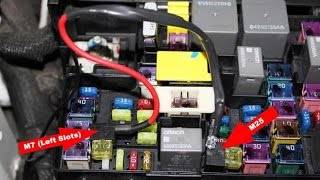
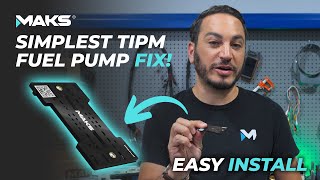
- Faulty Totally Integrated Power Module (TIPM) (Very Common) — On Dodge, Chrysler, and Ram vehicles, the TIPM (main fuse box) is a primary failure point. Internal relays soldered to the circuit board fail from heat and vibration, cutting power to the PCM 🎬 Watch: A 3-minute guide to installing a fuel pump relay bypass and breaking communication with the security system.
- Low Battery Voltage or Weak Battery (Common) — A weak battery or corroded terminals provide enough power for dashboard lights, but not enough for computer modules to communicate during the high-draw startup sequence. This voltage drop triggers random communication codes, including U1197.
- Damaged Wiring, Grounds, or CAN Bus Harness (Common) — Corroded grounds, loose battery cables, or melted CAN bus wires interrupt the communication signal between the PCM and the security module. Wiring looms resting on hot coolant pipes or sharp chassis edges chafe and short out the network.
- Faulty Powertrain Control Module (PCM) (Less Common) — The PCM itself fails due to internal software glitches or hardware degradation. It becomes unable to send the required security signal even with perfect power and ground connections. Only suspect the PCM after verifying its power supply.
- Faulty Aftermarket Remote Starter (Less Common) — Improperly installed aftermarket remote start systems interfere with the factory anti-theft communication pathway. These systems tap into the CAN bus lines, and a fault blocks the PCM from receiving the security request.
- Defective Wireless Ignition Node (WIN) / RF Hub (Rare) — The module that reads the key fob fails, preventing it from sending the initial security request to the PCM. A bad WIN usually sets its own unique DTCs alongside U1197.
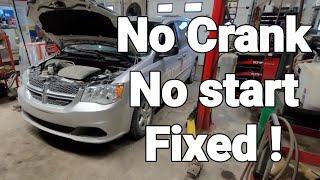
- Missing Fuses or Relays (Vandalism) (Rare) — Vehicles towed in for a U1197 no-start are occasionally missing critical relays from the TIPM. This happens during battery thefts where thieves also steal easily accessible relays, instantly cutting power to the PCM. 🎬 See how missing or stolen relays cause a no-start condition
Symptoms

- Engine will not crank or start — You turn the key, the dashboard lights up, but the engine makes no attempt to crank, or you only hear a single click from the starter relay.
- Flashing security light — A red dot or key symbol on the dashboard blinks rapidly, indicating the anti-theft system is actively blocking the engine start because it cannot verify the key.
- Intermittent no-start condition — The vehicle starts normally sometimes and fails completely at other times. This indicates a failing temperature-sensitive relay or a loose ground connection.
- Engine stalls while driving — The communication loss occurs while the engine is running, shutting the vehicle off unexpectedly. This points directly to a failing TIPM or run/start relay cutting power to the PCM.
- 'No Bus' message on the instrument cluster — If the PCM loses power entirely, the instrument cluster displays a 'No Bus' message, indicating a total loss of communication with the engine computer.
Diagnostic Flowchart
Tap your situation to follow the diagnostic path that matches what you're seeing on this code.
Common Fixes & Costs
- Replace the Run/Start Relay — Parts: $15-$35, Labor: $0-$150, ~0.5 hr book time (DIY)
- Repair or Replace the Totally Integrated Power Module (TIPM) — Parts: $250-$1,200, Labor: $150-$400, ~2.0 hr book time (Intermediate)
- Repair Damaged Wiring or Connectors — Parts: $20-$100, Labor: $300-$1,200, ~4.0 hr book time (Professional)
- Replace the Wireless Ignition Node (WIN) / RF Hub — Parts: $200-$700, Labor: $150-$300, ~1.5 hr book time (Professional)
- Replace the Powertrain Control Module (PCM) — Parts: $500-$1,300, Labor: $150-$400, ~1.8 hr book time (Professional)
DIY vs Professional
- Replace the Run/Start Relay — Beginner:
Tools: Pliers or relay puller. - Replace the Totally Integrated Power Module (TIPM) — Beginner:
Tools: 10mm and 13mm sockets, flathead screwdriver. - Repair Damaged Wiring or Connectors — Beginner:
Tools: Multimeter, wiring diagrams, soldering iron, heat shrink. - Replace the Powertrain Control Module (PCM) — Beginner:
Tools: Socket set, bi-directional scan tool with programming capabilities. - Replace the Wireless Ignition Node (WIN) / RF Hub — Beginner:
Tools: Trim removal tools, screwdrivers, immobilizer programming scan tool.
Used vs. New Parts: Buying Guide
When a used part is worth it: Never buy a used WIN module. For a TIPM, a professionally rebuilt unit from a specialist is superior to a used junkyard part.
Donor-vehicle mileage cap: roughly under 75000 miles for the part to have meaningful remaining life.
Donor quality checklist:
- For a TIPM, choose a rebuilt unit from a company that replaces all common failure-prone relays.
- Ensure the part number matches your original module exactly.
- Avoid used security modules (WIN), as they are VIN-locked and require complex reprogramming.
Decision logic:
- If The faulty part is the TIPM → Buy a professionally rebuilt TIPM from a reputable specialist rather than a used junkyard part to ensure upgraded internal relays.
- If The faulty part is the WIN security module → Use a mail-in repair service for your original module to avoid complex dealer programming. A new module is the next best choice.
- If Budget is the absolute top priority → A used TIPM might work, but expect it to fail eventually or require dealer configuration.
Warranty tradeoff: Junkyard parts offer 30-90 days. Rebuilt modules from specialists offer 1-year to lifetime warranties. New OEM parts carry a 1-2 year warranty.
Worst-case if a used part fails: $400-$800 if a used module fails, requiring repeat labor and another replacement part.
What Happens If You Wait — Timeline
- First Occurrence: Vehicle experiences an intermittent no-start. It starts after several tries. The security light flashes during the failed attempt. (MPG impact: 0%% · Added cost: $0)
- Days to Weeks: No-start incidents increase. The vehicle stalls unexpectedly while driving, creating a severe safety risk and requiring a tow. (MPG impact: 0%% · Added cost: $100-$300 (towing and diagnostic fees).)
- Weeks to a Month: The intermittent failure becomes a permanent no-start condition. Repeated start attempts deeply discharge and permanently damage the battery. (MPG impact: N/A (undrivable)% · Added cost: $150-$250 (battery replacement).)
- 1+ Months: The vehicle remains undrivable. The root cause (e.g., faulty TIPM) requires replacement. Costs escalate if the owner shotgunned parts like a new PCM in failed diagnostic attempts. (MPG impact: N/A (undrivable)% · Added cost: $500-$2000+ (required repair plus wasted parts).)
Cost of Not Fixing It
- Immediate: Vehicle is unreliable. If the fault occurs while driving, the engine stalls, causing a sudden loss of power steering and brakes. (Added cost: $75-$300+ (towing and diagnostics).)
- 1-3 Weeks: Continued intermittent no-start issues damage the battery from repeated cranking attempts and deep discharging. (Added cost: $150-$250 (replacement battery).)
- 1+ Months: The vehicle becomes completely undrivable. The failing TIPM or relay dies completely, forcing the necessary repair. (Added cost: $500-$2000+ (eventual required repair).)
Diagnosis Steps

- Check the Battery
Verify the battery holds at least 12.4 volts and passes a load test without dropping below 9.6V. Clean and tighten all terminals. A weak battery causes widespread communication errors during startup.
Tools: Multimeter, battery terminal cleaner, battery load tester (Beginner) - Inspect Fuses and Swap Run/Start Relay
Locate the 'Run/Start' relay in the TIPM and swap it with an identical non-critical relay (like the horn). If the vehicle starts, replace the relay. Check all fuses related to the PCM and security system.
Tools: Owner's manual, fuse puller or pliers (Beginner) - Scan for Other Codes in ALL Modules
Use a full-system OBD-II scanner. Code U0100 strongly suggests a power supply issue to the PCM. Codes in the ABS or Airbag modules indicating a loss of communication confirm the PCM is offline.
Tools: OBD-II Scanner (full-system capability) (Intermediate) - [PRO TIP] Test Power and Ground Pins at the PCM
With the key in 'RUN', use a multimeter to verify the PCM receives battery voltage (+12V) on its ignition-run circuits and has solid grounds (less than 0.1V). Lack of power here proves the problem is upstream (TIPM, relay, wiring), meaning the PCM is perfectly fine.
Tools: Multimeter, vehicle-specific wiring diagram, back-probe kit (Advanced) - [PRO TIP] Check Fuel Pump Command and Pressure
Test the TIPM's overall health. Turn the key to 'RUN' without starting. The fuel pump must prime for 1-2 seconds. If it does not prime, the TIPM's internal fuel pump relay failed, strongly suggesting the entire TIPM requires replacement.
Tools: Fuel pressure gauge, quiet environment to listen for pump (Advanced) - Inspect Wiring and Connectors
Visually inspect the wiring harness between the PCM and the TIPM. Look for corrosion, loose pins, or wiring looms resting on hot exhaust components. Check the main ground connections on the engine block.
Tools: Flashlight, mirror (Intermediate) - [PRO TIP] Test the CAN Bus Network Integrity
At the OBD-II port, check resistance between Pin 6 (CAN High) and Pin 14 (CAN Low) with the battery disconnected; it must be exactly 60 ohms. With the key on, CAN High should read ~2.5-3.5V and CAN Low ~1.5-2.5V.
Tools: Multimeter or Oscilloscope, wiring diagram (Advanced) - Check for Technical Service Bulletins (TSBs)
Search for TSBs related to no-start conditions, WIN modules, or TIPMs for your specific VIN. Dealers often have software updates that resolve communication glitches without replacing hard parts.
Tools: Online TSB database or dealer inquiry (Intermediate) - Isolate the Faulty Module
If all wiring, power, and grounds test perfectly, use a bi-directional scan tool to monitor data streams and perform active tests to determine if the PCM or the WIN/RFH module failed internally.
Tools: Advanced bi-directional scan tool (Professional)
When This Code Triggers (Freeze-Frame Conditions)
- Engine RPM: 0 (The fault logs during the key-on, engine-off sequence before the engine cranks.)
- Vehicle Speed: 0 mph (The vehicle is stationary when the failed communication attempt occurs.)
- Module Voltage: 11.5-12.6V (Indicates the battery voltage available to the security module at the time of the fault.)
- Engine Coolant Temp: Ambient to 210°F (The fault occurs on both cold starts and hot restarts.)
Related Codes
- U0100 — Means 'Lost Communication With ECM/PCM'. Having both U0100 and U1197 proves the PCM is completely offline due to a bad relay or TIPM. U1197 sets because the security module didn't get a reply; U0100 sets because all other modules can't hear the PCM.
- B1A28 — Means 'ECU Mismatch'. Indicates the modules ARE communicating, but the security data doesn't match. This happens if a module was replaced without proper VIN programming.
- P0513 — Means 'Invalid Immobilizer Key'. Set by the PCM when it rejects the key's transponder. P0513 implicates the key itself; U1197 implicates the PCM's power supply.
- C2205 — Means 'Steering Angle Sensor - Internal'. An example of unrelated codes that appear alongside U1197 during a major TIPM communication breakdown.
Climate & Environmental Factors
- High Temperature: Heat destroys the internal relays soldered into the TIPM. High ambient engine bay temperatures combined with electrical current deform the internal contact springs, causing failure.
- Humidity and Moisture: Moisture and road salt spray cause corrosion on the TIPM's external connectors and internal circuit board, creating short circuits and communication failures.
How to Talk to a Mechanic About This Code
Say this: "My car has a no-start condition with a flashing security light, and my scanner shows code U1197. I understand the cause is often the TIPM, the run/start relay, or a power supply issue to the PCM. Can you please start the diagnosis by checking for power and ground at the PCM and testing the run/start relay before quoting a new computer?"
This directs the shop to check the less expensive, high-failure-rate items first (relays, power supply) before assuming an expensive module (PCM, WIN) failed, preventing misdiagnosis.
Avoid saying:
- 'My car won't start, can you fix it?'
- 'The little red light is blinking.'
- 'I think I need a new computer.'
Questions to ask before authorizing the repair:
- If you recommend a PCM replacement, did you first confirm it has 12-volt power and a good ground at the main connector?
- If the TIPM needs replacement, is the quote for a new OEM, a rebuilt unit, or a used part?
- Does the replacement module require programming, and is that cost included in this estimate?
Where to Take It: Dealer vs Independent vs Chain
- Dealer:
Choose a dealer if the repair requires programming a new PCM or WIN module, or if a TSB/recall applies.
Best for: Vehicles under warranty, Repairs covered by a recall (WIN module or TIPM relay), Complex jobs requiring module programming.
Downsides: Highest labor rates, Defaults to replacing an entire module when a simpler repair suffices. (Typical cost: +50% vs. baseline) - Independent Shop:
Best fit for most owners. An experienced independent technician checks the relay and TIPM first.
Best for: Out-of-warranty vehicles, Diagnosing common failures like the TIPM or run/start relay.
Downsides: Diagnostic capabilities vary. Ensure the shop owns advanced scan tools capable of full-system communication. (Typical cost: +0% vs. baseline) - Chain Shop:
AVOID for this code. U1197 requires specific diagnostic procedures beyond the scope of a typical chain shop.
Best for: Simple maintenance like oil changes, tires, and brakes.
Downsides: Technicians lack specialized training for complex electrical diagnostics., High pressure to sell parts leads to misdiagnosis. (Typical cost: -10% vs. baseline)
When to Walk Away From the Repair
If the estimated repair cost exceeds 50% of the car's private-party value, sell or trade it in.
- Car worth $3500, fix is $1800: Walk away. The repair cost is over 50% of the vehicle's value.
- Car worth $8000, fix is $1200: Fix it. The repair cost is well below the 50% threshold.
- Car worth $4000, fix is $300: Fix it. A low-cost repair for a failing relay is an easy decision.
What Scan Tool You Need for This Code
Minimum: A scanner that reads manufacturer-specific codes from ALL vehicle modules (TIPM, WIN/RFH, ABS, BCM).
A basic $20 code reader only checks the engine for generic 'P' codes. It cannot see the 'U' (network) codes in the security module or TIPM.
Budget: BlueDriver Pro Scan Tool (~$100) — Reads enhanced codes from all modules on Chrysler/Dodge vehicles, including the TIPM and RFH.
Mid-range: AlfaOBD with OBDLink MX+ Adapter (~$150) — Offers near dealer-level diagnostics. Reads all modules and performs bi-directional tests and programming functions.
Professional: Autel MaxiCOM MK808 / MK906BT (~$500-1200) — Provides full-system diagnostics, bi-directional control to test components, and performs advanced module programming.
Rent vs buy: For a one-time fix, a shop's diagnostic fee is cheaper than buying a capable scanner. Auto parts store rental scanners are too basic for this code.
How to Clear the Code After You Fix It
- Fix the underlying mechanical or electrical fault.
- Reconnect the battery if disconnected.
- Use an OBD-II scan tool to erase U1197 from all modules.
- Perform the Chrysler drive cycle to run readiness monitors.
Drive cycle (~25 minutes): Cold start and idle for 5 minutes. Drive at a steady 40-60 mph for 8 minutes. Stop and idle for 3 minutes. Drive above 20 mph for 2 minutes. Turn ignition off and sit for 10 minutes.
Readiness monitors affected: Comprehensive Component Monitor, Catalyst Monitor, Evaporative System Monitor, Oxygen Sensor Monitor
Before emissions retest: drive at least 50 miles to fully set monitors.
Watch out for:
- Clearing the code without fixing the root cause (like a bad relay) causes it to return immediately.
- Disconnecting the battery clears the code temporarily but resets all emissions monitors to 'Not Ready', failing state inspections.
Will This Fail Emissions / State Inspection?
Yes — this code typically fails an OBD-II emissions inspection.
- California: A U-series code illuminating the MIL or security light results in an automatic failure. All readiness monitors must be 'Ready'.
- New York: A U1197 code causes an immediate failure. The vehicle cannot be registered until repaired and cleared.
- Texas: In emissions-testing counties, a U1197 code fails the OBD inspection.
Most Commonly Affected Vehicles
- Dodge Grand Caravan (2008-2020) — Extremely common due to high rates of TIPM and WIN module failure. 2008-2010 models are subject to WIN module Recall 14V-373.
- Chrysler Town & Country (2008-2016) — Shares the problematic TIPM/WIN modules with the Grand Caravan. Subject to WIN module Recall 14V-373 for 2008-2010 models.
- Ram 1500 (2009-2012) — Prone to this code from TIPM, run/start relay, and WIN module issues.
- Jeep Grand Cherokee (2011-2013) — Stalling symptoms are caused by the TIPM's internal fuel pump relay (Recall 15V-115), which cuts power and disrupts PCM communication.
- Dodge Durango (2011-2013) — Subject to Recall 15V-115 for the failure-prone fuel pump relay inside the TIPM.
- Dodge Charger (2008-2010) — Often caused by a faulty run/start relay located in the underhood fuse box.
- Ram 2500/3500 (2010-2012) — Failures are frequently linked to blown fuses or faulty PCM run/start circuits within the TIPM.
Manufacturer-Specific Notes
- Dodge/Chrysler/Ram/Jeep: U1197 is overwhelmingly caused by a power delivery issue to the PCM originating from the Totally Integrated Power Module (TIPM) or its run/start relay. Always suspect the TIPM before the PCM.
- Mitsubishi: U1197 is defined as 'Coding data unavailable'. It sets when a module doesn't receive proper programming information from the ETACS-ECU at startup, pointing to a CAN bus issue.
- Chevrolet/GM: U1197 refers to a general 'Class 2 Serial Data Communication' problem. It means a specific module stopped talking on the older network protocol, which manifests in various ways beyond a no-start.
Real Owner Stories
2013 Dodge Grand Caravan with intermittent no-start
Vehicle intermittently failed to crank. Tightening loose battery cables temporarily fixed it, but the problem returned the next day. Wiggling the cables sometimes worked.
What they tried:
- Tightening battery cables
- Trying both key fobs
- Scanning for codes, revealing U1197
Outcome: A failing Totally Integrated Power Module (TIPM) caused the issue. The intermittent nature made it hard to diagnose, but a technician confirmed the TIPM dropped power during a live no-start event.
Lesson: Intermittent no-starts temporarily fixed by touching the battery indicate a failing TIPM, not just a connection issue. The TIPM is highly sensitive to slight voltage changes.
Dodge Charger towed in for a no-crank condition
Vehicle towed to a shop with a no-crank condition, a dead battery, and a flashing security light.
What they tried:
- Replaced the dead battery, but the no-crank persisted.
- Scanned codes P2067 and U1197.
- Inspected fuses and relays in the underhood fuse box.
Outcome: The Run/Start relay was extremely hot to the touch. Swapping this relay with an identical one from the fuse box immediately solved the problem, and the engine started.
Lesson: Always check simple components first. A hot relay is a major red flag. Swapping a suspicious relay with a known-good one is a fast, free diagnostic step.
2012 Ram 1500 with recurring electrical issues after major repairs
After a dealer installed a new engine, the truck suffered numerous electrical problems, culminating in a total no-crank situation with a fully charged battery.
What they tried:
- Touching positive and negative battery cables together (hard reset) temporarily allowed the truck to start.
- Dealer replaced multiple parts over three months without success.
- Pulled a continuously clicking relay in the fuse box.
Outcome: The root cause was a forgotten ground connection. When the engine was reinstalled, a critical engine ground strap was left loose, causing widespread electrical chaos and communication drops.
Lesson: If U1197 appears immediately after major engine or transmission work, inspect all engine and chassis ground straps before replacing any modules.
2012 Dodge Grand Caravan with U1197 and U0100 after previous shop repairs
A van arrived at a second shop with a no-crank condition and codes U1197 and U0100. A previous shop had already replaced the TIPM, PCM, and WIN module.
What they tried:
- Checked all powers, grounds, and CAN circuits to the PCM; all tested good.
- Oscilloscope showed a flat line on the CAN bus.
- Noticed fuse M33 only had 0.6V with the key on because the PCM was not grounding the run/start relay.
Outcome: The evidence proved the newly installed PCM was either faulty or incorrectly programmed by the first shop. The PCM was failing to command its own power relays.
Lesson: Codes U1197 and U0100 together confirm the PCM is offline. Even if parts are brand new, they can be faulty or programmed incorrectly. Always verify the PCM commands its own relays.
How to Prevent This Code From Triggering
- Install an external fuel pump relay kit (Once, proactively) — For vehicles with known TIPM issues (2011-2013 Grand Cherokee/Durango), installing the external relay kit bypasses the failure-prone internal relay, preventing stalling and U1197 codes.
- Clean battery terminals and main ground connections (Every 1-2 years) — Corrosion creates voltage drops that disrupt module communication during the high-current demand of startup, leading to network codes.
- Apply dielectric grease to major electrical connectors (When disconnected for service) — A thin layer of dielectric grease on TIPM and PCM connector seals prevents moisture intrusion and corrosion, stopping short circuits.
- Replace the battery every 4-5 years (Every 4-5 years) — An aging battery drops voltage excessively under starting load, causing modules to fail their startup communication sequence before the battery is weak enough to cause a slow crank.
Frequently Asked Questions
Can I just replace the battery to fix a U1197 code?
While a weak battery causes this code, it is not the primary reason. If your battery is over 4 years old or drops below 9.6V on a load test, replace it. However, the root cause is usually in the TIPM or a related relay.
What is a TIPM and why does it fail?
The TIPM (Totally Integrated Power Module) is the main fuse and relay box in Chrysler, Dodge, and Ram vehicles. Its internal fuel pump and power relays are soldered directly to the circuit board. These relays fail from heat and repeated use, triggering the U1197 code.
My security light is flashing. Does that mean someone tried to steal my car?
Not usually. A flashing security light with a U1197 code indicates an internal communication failure between your car's computers. The system assumes a theft is in progress because it cannot verify the key due to the PCM being offline.
What's the most common misdiagnosis for U1197?
The most common mistake is replacing the expensive PCM or WIN module without confirming they have proper power and ground. Code U1197 means the security module did not receive a message from the PCM. This almost always happens because the PCM never received power from the TIPM to send the message.
Can a bad key fob cause a U1197 code?
It is highly unlikely. Code U1197 specifically indicates the PCM did not respond to the security request. A bad key fob sets different codes, like P0513 (Invalid Immobilizer Key), which means the modules are communicating but rejecting the key.
Is it cheaper to repair my TIPM or WIN module than replace it?
Yes, mail-in repair services fix the common internal faults of your original module for a fraction of the cost of new parts. This approach is cheaper and avoids the expensive dealer programming required when installing a new module.
Can I use a TIPM from a junkyard?
Avoid used junkyard TIPMs. A used TIPM contains different configuration options from its original vehicle and causes unpredictable electrical problems. Purchase a professionally rebuilt and warrantied unit instead.
Can I bypass the U1197 code to start my car?
No, you cannot bypass the security code. While some use a TIPM relay bypass cable to temporarily fix a fuel pump issue, this does not solve the underlying communication failure. The engine will not crank until the modules communicate properly.
Key Takeaways
- Code U1197 causes a hard no-start or dangerous mid-drive stalling, making the vehicle unsafe to drive until repaired.
- On Dodge, Chrysler, and Jeep vehicles, a faulty Totally Integrated Power Module (TIPM) or a burnt $20 run/start relay is the root cause in over 80% of cases.
- A flashing red security light on the dashboard during a failed start attempt is the primary visual symptom of this communication failure.
- Never replace the expensive PCM or WIN module without first verifying the PCM receives a full 12 volts and solid ground, as power starvation triggers this code.
Helpful Videos

The information in this article is provided for general reference and educational purposes only. Vehicle specifications, procedures, and part compatibility can vary by production date, trim level, and region. Always consult your vehicle's factory service manual and verify part numbers before purchasing or performing repairs. Safety-critical components such as airbags, seat belts, and braking systems should be installed by a qualified professional.
- 🎬 Helpful Videos
- What Does U1197 Mean?
- Can I Drive With U1197?
- Common Causes
- Symptoms
- Diagnostic Flowchart
- Common Fixes & Costs
- DIY vs Professional
- Used vs. New Parts: Buying Guide
- What Happens If You Wait — Timeline
- Cost of Not Fixing It
- Diagnosis Steps
- When This Code Triggers (Freeze-Frame Conditions)
- Related Codes
- Climate & Environmental Factors
- How to Talk to a Mechanic About This Code
- Where to Take It: Dealer vs Independent vs Chain
- When to Walk Away From the Repair
- What Scan Tool You Need for This Code
- How to Clear the Code After You Fix It
- Will This Fail Emissions / State Inspection?
- Most Commonly Affected Vehicles
- Manufacturer-Specific Notes
- Real Owner Stories
- 2013 Dodge Grand Caravan with intermittent no-start
- Dodge Charger towed in for a no-crank condition
- 2012 Ram 1500 with recurring electrical issues after major repairs
- 2012 Dodge Grand Caravan with U1197 and U0100 after previous shop repairs
- How to Prevent This Code From Triggering
- Frequently Asked Questions
- Can I just replace the battery to fix a U1197 code?
- What is a TIPM and why does it fail?
- My security light is flashing. Does that mean someone tried to steal my car?
- What's the most common misdiagnosis for U1197?
- Can a bad key fob cause a U1197 code?
- Is it cheaper to repair my TIPM or WIN module than replace it?
- Can I use a TIPM from a junkyard?
- Can I bypass the U1197 code to start my car?
- Key Takeaways
- 🎟️ Get 5% Off