

U1192 on 2004-2008 Cadillac SRX: Theft System Communication Fault Causes and Fixes
U1192 indicates the Engine Control Module (ECM) has lost communication with the Vehicle Theft Deterrent (VTD) module, causing a no-start or a key stuck in the ignition. The most common cause is a wiring fault in the power or data circuits leading to the ECM, as identified in GM Technical Service Bulletin #PIC5460B. Inspecting the Class 2 data wire (CKT 1807) and Ignition 1 power feed (CKT 5290) is the first step.
- U1192 is a serious communication code on your SRX that will likely prevent it from starting.
- Before assuming an expensive module has failed, thoroughly inspect the wiring going to the Engine Control Module (ECM) as outlined in TSB #PIC5460B, as this is a very common failure point.
- Symptoms like a stuck key, no-start, and a 'Service Theft System' message are all directly related to this fault.
- Repair is not simple and is best left to a professional with GM-specific diagnostic tools to avoid replacing expensive parts unnecessarily.
- If the ECM is replaced, a security relearn procedure is mandatory for the car to start.
What's Unique About the 2004-2008 Cadillac SRX
The first-generation Cadillac SRX is built on the GM Sigma platform, which uses GM's single-wire Class 2 data bus to link its modules. Unlike modern multi-wire CAN networks, a single break or short in this wire can disrupt communication for multiple components. Technical Service Bulletin #PIC5460B specifically identifies a pattern on the SRX and its platform-mate, the CTS, where compromised power (CKT 5290) or data wires (CKT 1807) leading to the ECM are a frequent cause of code U1192 and related symptoms. This makes a targeted wiring inspection a critical first step before suspecting module failure.
Diagnostic Flowchart
Tap your situation to follow the diagnostic path that matches what you're seeing on this vehicle.
Symptoms You May Notice
- No-crank or no-start condition.
- Engine starts and immediately stalls.
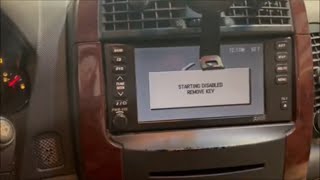
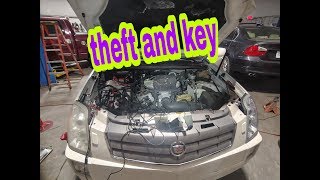
- Key is stuck in the ignition lock cylinder. 🎬 See how to fix a stuck key and service theft message.
- "Service Theft System" message on the driver information center or radio display.
- Security indicator light is on or flashing.
- Multiple warning lights on the instrument panel.
- Power windows, radio, and other accessories may not work or may be intermittent.
- Inability to communicate with the ECM using a standard scan tool.
- Replacing the ignition switch without diagnosing the network. While a bad ignition switch can cause starting problems, it typically won't set a U1192 communication code.
- Replacing the battery. While a low battery can cause a host of electrical issues and codes, it is not the root cause of a specific communication failure like U1192 if the vehicle has sufficient voltage to power up modules.
- Replacing the starter motor. A no-crank symptom might point to the starter, but in this case, the starter is not receiving the command to engage due to the security system communication failure.
Most Likely Causes
- ECM Power or Data Circuit Wiring Fault 🔴 High Probability As per TSB #PIC5460B, the Ignition 1 Power Feed (Circuit 5290) or the Class 2 data line (Circuit 1807, often a tan or purple wire) to the ECM are known weak points on this platform that can develop an open or short. The harness can chafe or break near the ECM or underhood fuse block.
How to confirm: With a multimeter, check for battery voltage at the ECM fuse in the underhood fuse block. Then, following TSB #PIC5460B, verify continuity and check for shorts to ground/power on the specified power (CKT 5290) and data (CKT 1807) wires between the fuse block and the ECM connectors. The Class 2 data wire is typically found at Pin 58 of the C1 ECM connector on 3.6L models.
Typical fix: Repair the damaged section of the wiring harness. This may involve soldering in a new piece of wire and protecting it with heat shrink tubing and loom.
Est. part cost: $5-$25 - Failed Engine Control Module (ECM) 🟡 Medium Probability The ECM for the 3.6L V6 is known for a high failure rate. Internal failures on a data circuit can stop it from communicating with other modules, like the VTD. TSB #PIC5460B lists a faulty ECM as the final possible cause if all wiring and relays check out.
How to confirm: After confirming all power, ground, and data wires to the ECM are intact and have proper voltage/signal, the ECM becomes the primary suspect. This is a process of elimination and is best confirmed by a professional.
Typical fix: Replace the Engine Control Module. The new or refurbished ECM must be programmed to the vehicle's VIN and a security relearn procedure (often called a Passlock relearn) must be performed.
Est. part cost: $150-$400 - Failed Vehicle Theft Deterrent (VTD) / Passlock Module ⚪ Low Probability The code specifically indicates a loss of communication from this module. While less common than wiring or ECM issues, an internal failure of the VTD module itself can cause it to stop broadcasting on the network. The VTD module's function is to read the key and send a password to the ECM.
How to confirm: Using a GM-specific scan tool (like a Tech 2), a technician can attempt to communicate directly with the VTD module. If the module is unresponsive but its power and ground circuits are good, the module has likely failed.
Typical fix: Replace the VTD module. This may also require a security relearn procedure to sync with the ECM.
Est. part cost: $100-$250
Rare But Worth Checking
- Poor Connection at Underhood Fuse Block: Corrosion or loose terminals at the fuse block can interrupt power or data signals to the ECM. It's a simple but crucial check. Some owners have found success by cleaning and reseating fuses and relays.
- Faulty Powertrain or Ignition Relay: TSB #PIC5460B mentions that an intermittent relay could cause these symptoms. Swapping a suspect relay with a known good one of the same type is an easy diagnostic step.
- Corrosion at Transmission X1 Connector: A related TSB for the platform-mate CTS (#PIC4740E) notes that multiple communication codes can be caused by a bad connection at the 16-way transmission X1 connector, which is exposed to the elements. This is worth inspecting if other causes are ruled out.
Diagnosis Steps
- Check Battery Voltage: Ensure the battery is fully charged (above 12.4V) and terminals are clean and tight.
- Scan for All Codes: Use a high-quality scanner capable of reading manufacturer-specific codes from all modules (ECM, BCM, VTD, etc.). Note all 'U' codes present, as they must be diagnosed first.
- Inspect Underhood Fuse Block: Check all fuses related to the ECM, PCM, and Ignition (often labeled 'ECM' or 'IGN'). Look for any signs of corrosion or loose connections. Swap the starter/powertrain relay with a known-good one.
- Follow TSB #PIC5460B: This is the most critical step. Measure voltage at the ECM fuse. If correct, proceed to check the integrity of the Ignition 1 Power Feed (CKT 5290) and the Class 2 data line (CKT 1807, often a tan or purple wire) running to the ECM for opens, shorts to ground, or shorts to power.
- Check Data Line Activity: If equipped, use an oscilloscope on Pin 2 of the Diagnostic Link Connector (DLC) to observe the Class 2 data signal. It should be a fluctuating square wave between 0 and 7 volts. A flat line at 0V or a steady voltage above 7V indicates a shorted wire or a faulty module pulling the network down.
- Isolate Modules: If the network is down, a technician may unplug modules one by one (starting with the most likely culprits like the ECM) to see if the data signal returns, which would identify the faulty module.
- Verify ECM Function: If all wiring, power, and grounds to the ECM are confirmed good, but it still won't communicate, the ECM is the likely point of failure.
Parts You'll Likely Need
- Engine Control Module (ECM)
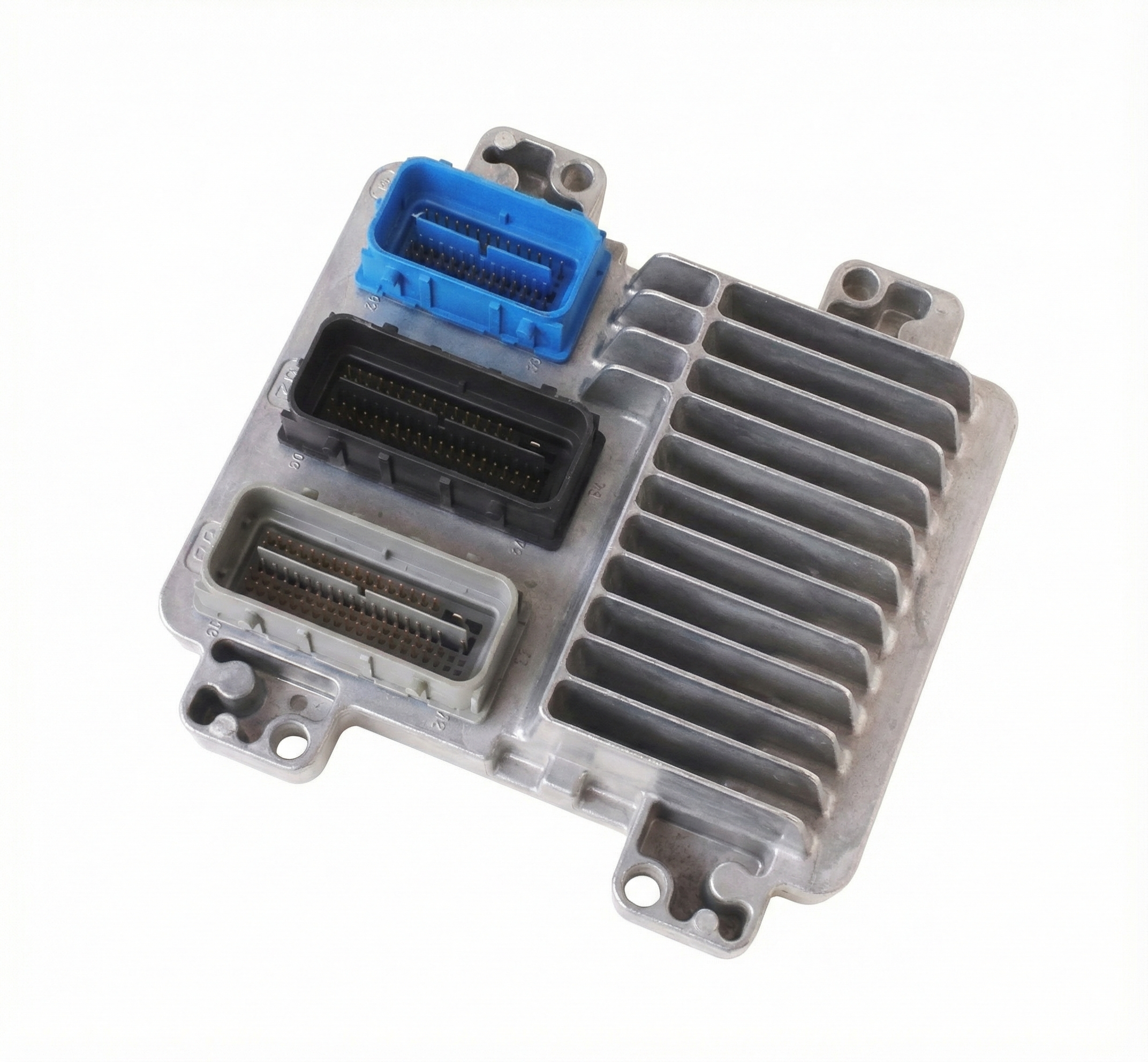
(OEM #12592124 (Interchangeable with 12581144, 19260507 for 3.6L V6))— This is a common module to fail that causes this specific set of symptoms and codes, but only after wiring issues have been ruled out. Several vendors note this part has a high failure rate.
Trusted brands: ACDelco (OEM), Cardone, Flashmasters, Module Experts
OEM price range: $300-$500
Aftermarket price range: $150-$400 - Wiring Harness Repair Supplies — If the common wiring fault from TSB #PIC5460B is found, you will need wire, solder, and heat shrink to perform a durable repair.
OEM price range: $10-$25
Aftermarket price range: $10-$25
Related Codes That Often Appear With This One
- U0100 — This is a general code for 'Lost Communication with ECM'. It often appears with more specific 'U' codes like U1192, indicating the ECM is the module that has gone offline.
- P1629 — This GM-specific code relates to a 'Theft Deterrent System-Cranking Signal Malfunction'. It is often set alongside U1192 because the ECM did not receive the correct security password from the VTD module.
- U1000 — This is a general Class 2 Communication Malfunction code. It indicates a problem on the data bus but doesn't specify which module is at fault. It is frequently stored in various modules when a primary module like the ECM goes offline.
- P0318, U1040, U1064, U1153, U1300 — These codes are all listed in TSB #PIC5460B as being commonly stored in the ECM along with U1192, pointing to the specific wiring and communication failure pattern on this vehicle.
Technical Service Bulletins (TSBs) & Recalls
- PIC5460B: Addresses a no-crank or key-stuck-in-ignition concern accompanied by a cluster of communication codes (U1192, U0100, P1629, etc.). It guides technicians to inspect the Ignition 1 Power Feed (CKT 5290) and Class 2 data line (CKT 1807) to the ECM for opens or shorts.
Platform-Specific Known Issues
- TSB #PIC5460B directly links a no-crank/stuck key condition with code U1192 to a potential open or short in the Ignition 1 Power Feed (CKT 5290) or the Class 2 data line (CKT 1807) to the ECM.
Mechanic-Grade Diagnostic Values
- Class 2 Serial Data Line Voltage (Pin 2 at DLC) — expected: A fluctuating square wave switching between approximately 0V (inactive) and +7V (active).. Failure: A line that is stuck at 0V, stuck at a constant voltage (e.g., 10-12V), or shows no activity, indicates a short to ground, short to power, or a module pulling the bus down.
- Battery Voltage (Engine Off) — expected: ~12.6V. Failure: Below 12.4V. Low voltage can cause unpredictable communication errors between modules.
- Alternator Output (Engine Running) — expected: ~13.7V - 14.7V. Failure: Voltage near battery voltage (~12.6V) or below while running indicates a failing alternator, which can starve modules of required power.
Scan Tool Commands That Help
- GM Tech 2: F0: Diagnostics -> Vehicle ID -> Powertrain -> Data Display -> VTD Data — To view the live status of the Vehicle Theft Deterrent system. Look for parameters like 'VTD System Status' and 'ECM Authentication Status' to see if the ECM and VTD are communicating and validating correctly.
- GM Tech 2: F1: Service Programming System (SPS) — This function is required after replacing the ECM to program it with the vehicle's VIN and correct software. It often requires a connection to GM's TIS2Web service to download the latest calibration.
- GM Tech 2 / Manual Relearn: VTD Relearn Procedure (Passlock/Passkey III) — After replacing the ECM or BCM, the new module must learn the key's transponder value. This is often a 30-minute procedure involving cycling the key and waiting for the security light to turn off.
Wiring & Ground Locations
- ECM (3.6L V6) — At the top front of the engine, under plastic covers.. This is the primary module setting the U1192 code. All power, ground, and data wires related to the fault terminate here.
- ECM (4.6L V8) — On the left front frame rail, under the left headlamp assembly. Access may require removing the front bumper.. This is the primary module setting the U1192 code. Its location makes it more susceptible to damage from front-end impacts or moisture.
- VTD Module — The Vehicle Theft Deterrent (VTD) function is integrated into another module, typically the Body Control Module (BCM) or a dedicated Theft Deterrent Module (TDM). The BCM is usually located behind the glove box or in the center console area.. This is the module the ECM has lost communication with. Checking its connections is a secondary step after verifying ECM wiring.
- G100 / G102 / G112 — Main engine grounds located on the engine block, often at the rear or side of the cylinder heads.. A poor engine block ground can cause a voltage differential between modules, disrupting Class 2 communication and preventing the starter from engaging.
- G105 — Located at the right side of the engine compartment, near the battery.. This is a primary ground point for the underhood fuse block and several front-end modules.
- G200 — Located behind the left kick panel, inside the passenger compartment.. This grounds several interior modules, including the Dash Integration Module (DIM), which is part of the Class 2 network.
- Splice Pack SP200 — Located under the right side of the dash, behind the glove box.. This is a junction point where the Class 2 data wires from multiple modules meet. Corrosion or a poor connection here can take down the entire network.
Real Owner Repair Stories
- YouTube video by 'schrodingers cat' (Cadillac with a no-crank condition, likely a CTS or SRX with a rear-mounted battery.) — No-crank, no-start. Voltage at the underhood fuse block was only 2 volts, while the battery in the rear was fully charged.
❌ Tried (didn't work) Initially suspected a bad positive battery cable running from the rear to the front of the car.
✅ What actually fixed it The main engine block ground cable was completely broken off where it should have attached to the engine block. The engine was not properly grounded to the chassis, causing a massive voltage drop under load and preventing the starter and other electronics from functioning. Reattaching the ground cable resolved the issue.
OEM Part Supersession History
12581144→12592124— Standard part revision for reliability improvements or component changes.
Heads up: These parts are generally interchangeable for the 3.6L V6, but the replacement ECM must be programmed with the vehicle's specific VIN and software calibration to function.
Model Year Variations Within This Range
- 2007-2008: The 2007 model year introduced a significant interior refresh with a completely redesigned dashboard, center console, and instrument panel, known as the 'cut-and-sew' interior. V8 models received a new 6-speed automatic transmission, replacing the previous 5-speed. While the underlying Class 2 data architecture remained, these changes could affect the location of some interior modules and connectors compared to 2004-2006 models.
Helpful Videos

Used OEM Parts in Stock




New Aftermarket Parts Available

The information in this article is provided for general reference and educational purposes only. Vehicle specifications, procedures, and part compatibility can vary by production date, trim level, and region. Always consult your vehicle's factory service manual and verify part numbers before purchasing or performing repairs. Safety-critical components such as airbags, seat belts, and braking systems should be installed by a qualified professional.
- Cadillac SRX:
- 🎬 Helpful Videos
- 🛍️ Shop This Part
- What's Unique About the 2004-2008 Cadillac SRX
- Diagnostic Flowchart
- Symptoms You May Notice
- Most Likely Causes
- Rare But Worth Checking
- Diagnosis Steps
- Parts You'll Likely Need
- Related Codes That Often Appear With This One
- Technical Service Bulletins (TSBs) & Recalls
- Platform-Specific Known Issues
- Mechanic-Grade Diagnostic Values
- Scan Tool Commands That Help
- Wiring & Ground Locations
- Real Owner Repair Stories
- OEM Part Supersession History
- Model Year Variations Within This Range
- 🎟️ Get 5% Off