

OBD-II Code U1192: Lost Communication With Vehicle Security/ABS Module
What U1192 means, why it triggers, and how to fix it
- Code U1192 indicates a network failure where the main computer loses contact with the ABS module (Ford/Chrysler) or the Vehicle Theft Deterrent module (GM) for more than 2 seconds.
- On 1999-2007 GM vehicles, U1192 triggers a security lockout that disables the fuel pump, causing a crank-no-start or immediate stall condition.
- Inspect the wiring harness and ground connections before buying parts; chafed wires account for over 50% of U1192 communication failures.
- Driving with U1192 disables Anti-lock Brakes (ABS) and Electronic Stability Control (ESC), increasing emergency stopping distances by up to 25% on wet roads.
- Check aftermarket remote starters and alarms immediately; poor wire splices into the vehicle's data bus cause voltage drops that knock modules offline.
What Does U1192 Mean?

Code U1192 means your vehicle's main computer lost its communication link with another critical module. This is usually the Anti-lock Brake System (ABS) module or, on General Motors vehicles, the Vehicle Theft Deterrent (VTD) or Passlock module. When a module stops sending expected data over the network for a few seconds, the computer sets this code.
Technical definition: U1192 is a manufacturer-specific network communication code indicating a loss of communication with a specific control module. The Powertrain Control Module (PCM) sets this code when it stops receiving expected 'state of health' messages from the ABS or VTD module on the vehicle's data network (e.g., GM Class 2 serial data or CAN bus) for 2 to 5 seconds.
Can I Drive With U1192?
Yes, But With Caution. You can drive the vehicle, but critical safety systems like Anti-lock Brakes (ABS) and Electronic Stability Control (ESC) are disabled. This increases stopping distances on slippery surfaces by over 25% and removes automatic skid correction. Drive with extreme caution, avoiding hard braking. On many GM vehicles, this code triggers a security lockout, causing a no-start or start-and-stall condition that makes the vehicle undrivable.
Common Causes

- Damaged Wiring, Connectors, or Grounds (Very Common) — Data bus wires and ground straps frequently fray, break, or corrode due to weather exposure and vibration. A loose or corroded ground connection at the ABS module or PCM is the leading cause of intermittent communication failures.
- Faulty Passlock Sensor or Ignition Switch (GM) (Common) — On GM vehicles, U1192 specifically points to a loss of communication with the anti-theft system. This is routinely caused by a failing Passlock sensor inside the ignition lock cylinder, leading directly to a no-start condition.
- Failing ABS Control Module (Common) — The ABS module fails internally due to cracked solder joints or circuit board degradation. This severs network communication and frequently causes the ABS pump motor to run constantly, draining the battery.
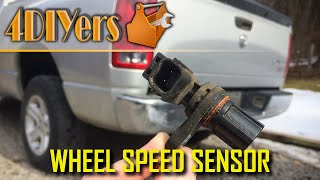
- Faulty Wheel Speed Sensor (Common) — A damaged wheel speed sensor or its wiring harness sends erratic data that overwhelms or confuses the ABS module, causing it to drop off the network and trigger a U1192 code in the PCM.
- Low Battery Voltage (Less Common) — Modern data networks require stable voltage. A weak battery or failing alternator causes electronic modules to power down or malfunction, temporarily dropping them off the communication bus.
- Improperly Installed Aftermarket Accessories (Less Common) — Aftermarket remote starters or alarms spliced poorly into the vehicle's ignition or data bus wiring disrupt network signals, causing modules to drop offline.
Symptoms

- No-Start or Start-and-Stall (GM Vehicles) — The Passlock system prevents the engine from starting or shuts off the fuel injectors immediately after starting.
- ABS and Traction Control Lights On — The Anti-lock Brake System and Electronic Stability Control warning lights illuminate permanently on the dashboard.
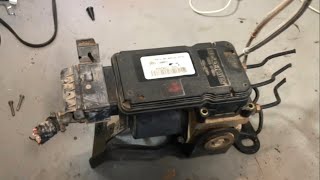
- ABS Pump Runs Continuously — An internal ABS module failure causes the pump motor to run constantly, even with the ignition off, rapidly draining the battery. 🎬 Watch: How to replace an ABS module with a stuck pump motor.
- Service Theft System Message — A security or anti-theft warning message appears on the driver information center.
- Check Engine Light On — The Malfunction Indicator Lamp illuminates, though on some GM vehicles, U1192 only triggers the security or ABS lights.
Diagnostic Flowchart

Tap your situation to follow the diagnostic path that matches what you're seeing on this code.
Common Fixes & Costs
- Repairing Damaged Wiring or Grounds — Parts: $10-$50, Labor: $150-$500, ~2.5 hr book time (Intermediate)
- Replacing Ignition Switch or Passlock Sensor (GM)
— Parts: $70-$250, Labor: $150-$350, ~2 hr book time
(Intermediate)
Chevrolet Silverado (2003-2006): OEM GM 88965342 (Alt: Dorman 924-713)
Cadillac SRX (2004-2009): OEM GM 15261531 (Alt: ACDelco D1457C) - Replacing a Wheel Speed Sensor
— Parts: $50-$190, Labor: $100-$150, ~1 hr book time
(DIY)
Jeep Wrangler (JK, 2007-2018): OEM Mopar 68003281AC (Alt: Bosch ALS1932)
Ford F-150 (2009-2014): OEM Motorcraft BRAB-288 (Alt: Dorman 970-020) - Repairing the ABS Control Module (Mail-in Service) — Parts: $150-$350, Labor: $100-$250, ~1.2 hr book time (Intermediate)
- Replacing the ABS Control Module (New OEM)
— Parts: $800-$1200, Labor: $150-$300, ~2 hr book time
(Professional)
Ford F-150 (2011-2012): OEM Ford BL3Z-2C405-J (Alt: Cardone Remanufactured)
Dodge Ram 1500 (2012): OEM Mopar 68142314AC (Alt: Dorman 499-796)
Used vs. New Parts: Buying Guide
When a used part is worth it: A used ABS module saves 50% or more compared to a new OEM unit, making it practical for older vehicles where a new part exceeds the car's value.
Donor-vehicle mileage cap: roughly under 80000 miles for the part to have meaningful remaining life.
Donor quality checklist:
- Match the part number exactly; different trim levels use different modules.
- Purchase from a seller offering at least a 30-day warranty.
- Inspect the connector pins for green corrosion before installation.
Decision logic:
- If The fix is a mail-in repair of your original module → Choose this option. It is cost-effective and bypasses the need for VIN programming.
- If The vehicle is newer or has low mileage → Purchase a new OEM part or a high-quality remanufactured unit with a warranty.
- If Budget is the primary concern on an older vehicle → Buy a used module, but factor in the cost of professional VIN programming.
Warranty tradeoff: Used parts carry a 30-90 day warranty. Remanufactured parts offer 1-year warranties. New OEM parts carry 1-2 year warranties.
Worst-case if a used part fails: $400-$800. If a used module fails, you pay for labor and programming a second time.
What Happens If You Wait — Timeline
- Immediate: Code sets. GM vehicles experience a no-start condition. Other vehicles lose ABS and stability control. (MPG impact: 0%% · Added cost: $75-$200 for towing.)
- 1-7 days: If the ABS pump runs continuously, the battery deeply discharges overnight, permanently reducing its lifespan. (MPG impact: 0%% · Added cost: $150-$350 for a replacement battery.)
- 1 week - 3 months: Intermittent wiring shorts become persistent faults. The risk of an accident increases significantly without ABS/ESC. (MPG impact: 0%% · Added cost: $0, but severe safety risk.)
- 3+ months: A persistent short circuit on the data bus feeds incorrect voltage into other modules, causing cascading network failures. (MPG impact: 0%% · Added cost: $500-$2000+ for additional module replacement.)
Cost of Not Fixing It
- Immediate: GM vehicles will not start, requiring a tow. All vehicles lose ABS and stability control, compromising safety. (Added cost: $75-$200 (towing))
- 1-7 days: If a failed ABS module causes the pump to run constantly, it deeply discharges and permanently damages the battery. (Added cost: $150-$350 (new battery))
- 3+ months: An unresolved electrical short on the data bus feeds incorrect voltage into other control modules, causing cascading network failures. (Added cost: $500-$2000+)
Diagnosis Steps
- Read All Codes from All Modules
Use an advanced OBD-II scanner to read codes from the ABS, BCM, PCM, and VTD modules. A basic code reader only sees the PCM and will miss the root-cause C-codes (chassis codes) stored in the ABS module.
Tools: Advanced OBD-II Scanner (Beginner) - Check Battery Voltage and Health
Verify the battery is fully charged and terminals are tight. Use a multimeter to confirm voltage is above 12.4V with the engine off and 13.7V-14.7V while running. Low voltage causes unpredictable communication drops.
Tools: Digital Multimeter (Beginner) - Inspect Wiring, Connectors, and Grounds
Visually inspect the wiring harness routing to the ABS or VTD module. Look for chafing, melting, or corrosion. Verify all module ground connections are tight and free of rust.
Tools: Flashlight, Inspection Mirror, Wire Brush (Intermediate) - Check Related Fuses
Test all fuses related to the ABS, anti-theft (VTD), Body Control Module (BCM), and PCM. A blown fuse takes a module completely offline.
Tools: Test Light or Multimeter (Beginner) - Test Wheel Speed Sensors
If C-codes are present, disconnect the suspect wheel speed sensor and measure resistance across its pins (typically 800-2500 Ohms). Set the multimeter to AC Volts, spin the wheel, and verify it generates >100mV.
Tools: Digital Multimeter, Jack and Jack Stands (Advanced) - Targeted TSB Wiring Inspection (GM)
For GM vehicles exhibiting a no-start (e.g., Cadillac SRX), follow TSB #PIC5460B. Check the Ignition 1 Power Feed (CKT 5290) and Class 2 data line (CKT 1807) at the ECM connector for opens or shorts.
Tools: Digital Multimeter, TSB Documentation (Advanced) - Inspect Aftermarket Accessories
Locate any aftermarket remote starters or alarms. Inspect their wiring for poor-quality 'quick splices' tapping into ignition or data bus wires. Disconnect them to see if communication restores.
Tools: Flashlight, Wire Cutters (Intermediate) - Check Fuel Pressure (GM No-Start)
If diagnosing a GM no-start with U1192/P1626, connect a fuel pressure gauge. With the key on, engine off, pressure should jump to spec (e.g., 55-62 PSI). Zero pressure confirms the VTD system disabled fuel delivery.
Tools: Fuel Pressure Gauge (Advanced) - Test CAN Bus Network Resistance
With the battery disconnected, measure resistance between OBD-II Pin 6 (CAN-High) and Pin 14 (CAN-Low). A healthy network reads 60 ohms. 120 ohms indicates a broken wire; 0 ohms indicates a short.
Tools: Digital Multimeter (Advanced) - Verify Network Activity with an Oscilloscope
Connect an oscilloscope to the data line (e.g., Pin 2 for GM Class 2). A healthy network shows a clean 0-7V square wave. A flat line at 0V indicates a short to ground.
Tools: Oscilloscope (Professional)
When This Code Triggers (Freeze-Frame Conditions)
- Vehicle Speed: 0 mph (Key-On, Engine-Off. The code sets immediately if the module fails its initial self-test upon startup.)
- Time Since Start: > 2 seconds (The code triggers when the PCM fails to receive the module's 'state of health' message for a few seconds.)
- Module Voltage: < 9.5V or > 15.5V (Low battery voltage or an alternator overcharge causes modules to drop offline and set communication codes.)
Related Codes
- U0121 — The generic SAE code for 'Lost Communication With ABS Control Module'. On Ford and Chrysler, it is functionally identical to U1192. On GM, U0121 points to the ABS, while U1192 points to the Passlock system.
- P1626 — GM code for 'Theft Deterrent System Fuel Enable Signal Lost'. It pairs directly with U1192 during a no-start condition, confirming the VTD module is blocking fuel delivery.
- C-codes (e.g., C102A, C0035) — Chassis codes identify the specific root-cause fault, such as a bad wheel speed sensor. A sensor fault causes the ABS module to drop offline, triggering the U1192 symptom code in the PCM.
- U1000 — GM code for 'Class 2 Data Link Malfunction'. Seeing U1192 alongside U1000 indicates a network-wide short circuit rather than a single failed module.
Climate & Environmental Factors
- Road Salt and High Humidity: Salt and moisture accelerate corrosion in wiring harnesses and ground points located in wheel wells or on the undercarriage, creating high resistance that blocks communication.
- Extreme Cold: Sub-zero temperatures cause micro-fractures in the solder joints of ABS and VTD circuit boards, leading to intermittent failures that disappear once the module warms up.
- Off-Road Use and Rough Roads: Constant vibration causes wiring harnesses to chafe against the frame, wearing through the insulation and shorting the data bus to ground.
How to Talk to a Mechanic About This Code
Say this: "I have a U1192 communication code and my ABS light is on. Please start by checking for related TSBs, and verify power, grounds, and wiring integrity at the ABS module before recommending a module replacement. I also need you to scan all modules for chassis codes."
This signals you understand U1192 is an electrical fault and that wiring issues are the most common cause. It directs the shop to perform a proper diagnosis instead of jumping to an expensive module replacement.
Avoid saying:
- 'My ABS light is on, just fix it.'
- 'I think I need a new ABS computer.'
- 'Just do whatever you think is best.'
Questions to ask before authorizing the repair:
- What specific tests did you perform to condemn the faulty part?
- Did you find any broken wires, corroded connectors, or bad grounds?
- Are there any Technical Service Bulletins (TSBs) for this issue?
- If the ABS module needs replacement, does the quote include VIN programming?
- Can you show me the damaged wiring or failed part?
Where to Take It: Dealer vs Independent vs Chain
- Dealer:
A safe choice if module programming is necessary, but the most expensive option for out-of-warranty wiring repairs.
Best for: Vehicles under warranty, Complex GM Passlock security issues, Repairs requiring proprietary module programming
Downsides: Labor rates average $150-$250/hour with premium OEM parts pricing., Technicians are incentivized to replace whole assemblies rather than repair wiring. (Typical cost: +50% vs. baseline) - Independent Shop:
Best overall fit for out-of-warranty vehicles. Seek a shop specializing in automotive electrical diagnostics to accurately trace wiring faults.
Best for: Out-of-warranty vehicles., Diagnosing wiring, grounds, and sensor faults., Shops specializing in automotive electrical diagnostics.
Downsides: Diagnostic skill varies; vet the shop's reputation for electrical work., May lack proprietary tools for programming new modules. (Typical cost: +0% vs. baseline) - Chain Shop:
Avoid for diagnosing U1192. The risk of misdiagnosis and unnecessary module replacement is extremely high.
Best for: Simple, high-volume jobs like tires and oil changes.
Downsides: Technicians lack specialized training for complex network diagnostics., Business model incentivizes replacing parts over time-consuming electrical tracing. (Typical cost: -10% vs. baseline)
When to Walk Away From the Repair
If the repair cost exceeds 50% of the vehicle's private-party value, seriously consider selling or trading it in.
- Car worth $3500, fix is $1500: Walk away. A $1500 ABS module replacement is not economical on a $3500 car.
- Car worth $15000, fix is $1200: Fix it. The repair cost is well under the threshold and restores critical safety systems.
- Car worth $5000, fix is $400: Fix it. A wiring repair or wheel speed sensor replacement is low enough to justify the repair.
What Scan Tool You Need for This Code

Minimum: A scanner that reads codes from ALL vehicle modules, including ABS, BCM, and SRS. A basic engine-only reader is insufficient.
A $20 code reader only sees the U1192 in the engine computer. It cannot read the crucial C-codes stored in the ABS module that reveal the actual root cause.
Budget: BlueDriver Pro (~$120) — Connects to your smartphone and reads codes from the ABS and SRS modules, allowing you to see the specific chassis codes required for diagnosis.
Mid-range: Autel MaxiCOM MK808S (~$350) — Offers full-system diagnostics and bidirectional controls. This allows you to perform the 'automated bleed' function required after replacing an ABS module.
Professional: Launch X431 CRP919XBT (~$500) — Adds advanced ECU coding functions necessary to program a new ABS module to the vehicle's VIN.
Rent vs buy: Auto parts store loaner tools are basic code readers and will not read ABS codes. Buying a budget scanner like the BlueDriver is mandatory for DIY diagnosis.
How to Clear the Code After You Fix It
- Reconnect the battery if disconnected during repair.
- Use an advanced OBD-II scan tool to clear codes from all modules (PCM, ABS, BCM).
- Perform the GM Passlock relearn procedure if the ignition switch or VTD module was replaced.
- Perform a full drive cycle to reset emissions readiness monitors.
Drive cycle (~20 minutes): Start the engine cold (below 122°F), idle for 3 minutes, drive in stop-and-go city traffic for 10 minutes, and maintain a steady 55-60 mph on the highway for 10 minutes.
Readiness monitors affected: Catalyst (CAT), Evaporative (EVAP) System, Oxygen (O2) Sensor
Before emissions retest: drive at least 50 miles to fully set monitors.
Watch out for:
- Clearing the code without fixing the hardware fault causes the code to return immediately.
- Disconnecting the battery resets all readiness monitors, requiring a full drive cycle before passing an emissions test.
- Failing to perform the mandatory GM Passlock security relearn results in a continued no-start condition.
Will This Fail Emissions / State Inspection?
Yes — this code typically fails an OBD-II emissions inspection.
- California: An illuminated ABS light fails the visual inspection. The vehicle fails the OBD-II test if any fault codes are present.
- New York: An illuminated ABS warning light is grounds for failing the mandatory safety inspection.
- Texas: In emissions-testing counties, an active Check Engine Light or stored trouble code causes an automatic failure.
Most Commonly Affected Vehicles
- Chevrolet / GMC Silverado, Sierra, Suburban, Astro (1999-2007) — U1192 almost exclusively relates to the Passlock anti-theft system. It is caused by a faulty ignition switch housing or wiring, requiring a security relearn after repair.
- Cadillac SRX, CTS, DeVille (2002-2009) — Commonly caused by a wiring fault near the ECM (TSB #PIC5460B). Inspect the Ignition 1 Power and Class 2 Data wires for chafing.
- Buick / GMC / Saturn Enclave, Acadia, Outlook (2007-2016) — Prone to water leaks from clogged sunroof drains that drip onto the instrument panel fuse block, causing corrosion and communication codes.
- Dodge / Ram 1500 (2009-2018) — Frequently triggered by a failing Totally Integrated Power Module (TIPM) or damaged wheel speed sensor wiring.
- Jeep Wrangler (JK) (2007-2018) — Highly susceptible to wheel speed sensor failures and wiring damage due to off-road exposure.
- Ford F-150 (2009-2014) — U1192 indicates ABS module failure, which often presents as the ABS pump running continuously and draining the battery.
- Chrysler / Dodge Town & Country, Grand Caravan (2008-2016) — Known for wiring harness issues leading to the rear wheel speed sensors.
- Other Manufacturers Various (1996-Present) — While predominantly a GM/Ford/Chrysler code, other brands use generic code U0121 for identical ABS communication loss symptoms.
Manufacturer-Specific Notes
- General Motors: U1192 almost always points to the Vehicle Theft Deterrent (VTD) or Passlock system, not the ABS. The failure is usually in the ignition lock cylinder or its wiring, resulting in a crank-no-start.
- Ford: U1192 is a direct communication error with the ABS module. A failed module frequently causes the ABS pump to run continuously with the key off. Replacement modules require VIN programming.
- Chrysler / Dodge / Jeep: U1192 is the manufacturer-specific version of U0121. It is often triggered by a faulty Totally Integrated Power Module (TIPM) disrupting network voltage, rather than a failed ABS module.
Real Owner Stories
2005 Cadillac SRX with No-Start
The vehicle intermittently cranked without starting, and displayed a 'Service Theft System' message.
What they tried:
- Replaced the battery and starter, which did not resolve the issue.
- Scanned the vehicle and found U1192 alongside U1000 and P1629.
Outcome: Following GM TSB #PIC5460B, a technician found a chafed Class 2 data wire near the ECM. Repairing the wire for $350 resolved all codes and the no-start condition.
Lesson: On GM vehicles with a no-start and U1192, the cause is frequently a wiring fault, not a failed anti-theft module. Always check TSBs before replacing parts.
2011 Ford F-150 with a Dead Battery
The battery died overnight. After jump-starting, a humming noise came from the engine bay with the key off.
What they tried:
- Replaced the battery, but the new one also died.
- Pulled the 40A ABS pump fuse, which stopped the humming and the parasitic draw.
Outcome: The ABS pump ran continuously due to an internal short in the ABS module. The owner used a mail-in repair service for $250, avoiding a $1,200 dealer replacement.
Lesson: If your battery drains and you hear a hum from the engine bay, pull the ABS fuse to save the battery. A mail-in repair service is highly cost-effective.
2011 Dodge Ram 1500 with Multiple Warning Lights
The ABS and traction control lights illuminated, and cruise control stopped working.
What they tried:
- Replaced the rear wheel speed sensor, but the U1192 code returned.
- Inspected the wiring harness running along the frame rail to the rear axle.
Outcome: The harness rubbed against a bracket, wearing through the insulation. Splicing in new wires fixed the short circuit and permanently cleared the codes.
Lesson: Perform a thorough visual inspection of wiring harnesses in exposed areas before replacing sensors or modules.
How to Prevent This Code From Triggering
- Apply Dielectric Grease to Connectors (During any repair) — Applying non-conductive dielectric grease to ABS and wheel speed sensor connectors prevents moisture intrusion, a primary cause of communication failures.
- Clean and Secure Ground Connections (Annually) — Cleaning chassis and engine ground straps with a wire brush ensures the stable voltage reference required for network communication.
- Clear Sunroof Drains (Annually) — Clearing drains prevents water from overflowing onto interior fuse blocks or the BCM, avoiding severe electrical shorts.
- Secure Wiring Harnesses (During oil changes) — Using zip ties to secure loose harnesses away from sharp edges and exhaust components prevents chafing and melted wires.
Frequently Asked Questions
What are the most common mistakes when diagnosing U1192?
The biggest mistake is replacing an expensive module before performing thorough wiring and ground checks. Technicians often find the true cause is a broken wire, corroded ground, or a bad connector. Always use an advanced scanner to read codes from all modules, not just the engine computer.
My car has a U1192 and an aftermarket remote starter. Are they related?
Yes. Improperly installed aftermarket remote starters and alarms frequently cause network communication codes. Poor splices into the vehicle's data bus or ignition wiring create voltage drops that knock modules offline.
Can I fix a U1192 code myself?
You can handle simple fixes like checking fuses, inspecting for obvious wire damage, or replacing a wheel speed sensor. Diagnosing a faulty module or repairing a complex wiring harness requires an advanced scanner and multimeter. If the fix requires module programming, you must take the vehicle to a professional.
How much does it cost to fix U1192?
A simple wiring repair costs $150 to $500, while a wheel speed sensor replacement averages $150 to $340. The most expensive fix is a full ABS module replacement at a dealer, costing $1,100 to $1,500. A mail-in module repair service is a cost-effective alternative, typically running $250 to $600 including labor.
Will clearing the code fix the problem?
No. Clearing the code only turns the warning lights off temporarily. Because U1192 is a hard fault indicating a physical communication loss, the code returns immediately once the computer fails to detect the module.
My car won't start and has a U1192 code. What's wrong?
On General Motors vehicles, U1192 indicates a failure in the Passlock anti-theft system. This failure prevents the fuel system from receiving security clearance, causing a crank-no-start or an immediate stall.
Can a bad ground wire cause code U1192?
Yes. A loose, corroded, or broken ground connection for the PCM, BCM, or ABS module is a primary cause of communication codes. Modules require a stable ground reference to transmit data properly.
What is the GM Passlock relearn procedure?
The Passlock relearn procedure resynchronizes the security components by cycling the ignition key to 'ON' for 10 minutes, then 'OFF', and repeating this three times. This procedure only works if the underlying hardware or wiring problem is already repaired. It will not fix a broken wire or a faulty ignition switch.
Key Takeaways
- Code U1192 indicates a network failure where the main computer loses contact with the ABS module (Ford/Chrysler) or the Vehicle Theft Deterrent module (GM) for more than 2 seconds.
- On 1999-2007 GM vehicles, U1192 triggers a security lockout that disables the fuel pump, causing a crank-no-start or immediate stall condition.
- Inspect the wiring harness and ground connections before buying parts; chafed wires account for over 50% of U1192 communication failures.
- Driving with U1192 disables Anti-lock Brakes (ABS) and Electronic Stability Control (ESC), increasing emergency stopping distances by up to 25% on wet roads.
- Check aftermarket remote starters and alarms immediately; poor wire splices into the vehicle's data bus cause voltage drops that knock modules offline.
Helpful Videos


The information in this article is provided for general reference and educational purposes only. Vehicle specifications, procedures, and part compatibility can vary by production date, trim level, and region. Always consult your vehicle's factory service manual and verify part numbers before purchasing or performing repairs. Safety-critical components such as airbags, seat belts, and braking systems should be installed by a qualified professional.
- 🎬 Helpful Videos
- What Does U1192 Mean?
- Can I Drive With U1192?
- Common Causes
- Symptoms
- Diagnostic Flowchart
- Common Fixes & Costs
- Used vs. New Parts: Buying Guide
- What Happens If You Wait — Timeline
- Cost of Not Fixing It
- Diagnosis Steps
- When This Code Triggers (Freeze-Frame Conditions)
- Related Codes
- Climate & Environmental Factors
- How to Talk to a Mechanic About This Code
- Where to Take It: Dealer vs Independent vs Chain
- When to Walk Away From the Repair
- What Scan Tool You Need for This Code
- How to Clear the Code After You Fix It
- Will This Fail Emissions / State Inspection?
- Most Commonly Affected Vehicles
- Manufacturer-Specific Notes
- Real Owner Stories
- 2005 Cadillac SRX with No-Start
- 2011 Ford F-150 with a Dead Battery
- 2011 Dodge Ram 1500 with Multiple Warning Lights
- How to Prevent This Code From Triggering
- Frequently Asked Questions
- What are the most common mistakes when diagnosing U1192?
- My car has a U1192 and an aftermarket remote starter. Are they related?
- Can I fix a U1192 code myself?
- How much does it cost to fix U1192?
- Will clearing the code fix the problem?
- My car won't start and has a U1192 code. What's wrong?
- Can a bad ground wire cause code U1192?
- What is the GM Passlock relearn procedure?
- Key Takeaways
- 🎟️ Get 5% Off