

OBD-II Code U1175: Lost Communication with Ignition Switch
What U1175 means, why it triggers, and how to fix it
- Code U1175 indicates a critical communication failure where a computer module loses the ignition switch status signal over the CAN bus network.
- Do not drive with an active U1175 code, as it carries a high risk of sudden engine stalling at highway speeds or a complete failure to restart.
- On Chrysler, Dodge, and Jeep vehicles, a faulty Totally Integrated Power Module (TIPM) causes over 50% of U1175 cases.
- Accurate diagnosis requires testing the CAN bus network resistance at the OBD-II port, which must read exactly 60 Ohms to rule out a physical wiring short or open.
What Does U1175 Mean?

U1175 is a communication error code indicating a specific computer module (like the electronic shifter or body control module) lost the ignition switch status message. Without knowing if the key is in the 'On,' 'Off,' or 'Start' position, modules power down unexpectedly, causing widespread electrical failures.
Technical definition: Defined primarily by Chrysler, Dodge, and Jeep as 'Lost Ignition Status Message.' It triggers when a module fails to receive the ignition status over the CAN C bus from the controlling module, such as the Totally Integrated Power Module (TIPM) or Wireless Ignition Node (WIN).
Can I Drive With U1175?
No — Do Not Drive. Driving is not recommended. The primary risk is a sudden, uncommanded engine stall, which is extremely dangerous at highway speeds. You also risk the vehicle failing to restart, leaving you stranded. Tow the vehicle to a safe diagnostic location.
Common Causes

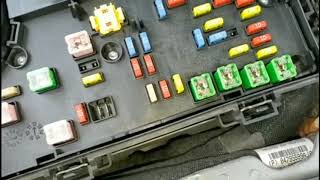
- Faulty Totally Integrated Power Module (TIPM) (Very Common) — On Dodge, Jeep, and Chrysler vehicles, the TIPM (fuse box/computer) is the primary failure point. 🎬 See this guide on TIPM problems, resets, and replacement facts Internal corrosion or failing relays disrupt communication signals, triggering U1175.
- Failing Ignition Switch / Wireless Ignition Node (WIN) (Common) — Worn internal contacts in the mechanical ignition switch or keyless WIN module prevent the initial key position signal from broadcasting to the network.
- CAN Bus Wiring Faults (Common) — Chafed, corroded, or broken CAN bus wires block the ignition message. This happens frequently where harnesses flex, rub against the frame, or endure high heat.
- Faulty Gateway Module (Instrument Cluster / BCM) (Common) — The instrument cluster or Body Control Module routes data to other computers. Cracked solder joints or internal shorts interrupt this data flow.
- Low Battery Voltage or Poor Grounds (Less Common) — A weak battery (dropping below 9.6V during crank) or corroded chassis grounds starve modules of the voltage required to maintain network communication.
- Improperly Installed Aftermarket Electronics (Less Common) — Incorrectly wired aftermarket radios or alarms tapped directly into CAN lines corrupt data signals and crash the network.
Symptoms

- Vehicle Will Not Start or Stalls — The engine cranks but fails to start, or stalls unexpectedly while driving due to missing ignition status data.
- Check Engine Light is On — The Malfunction Indicator Lamp (MIL) illuminates immediately upon detecting the communication loss.
- Instrument Cluster Goes Blank — The entire dashboard goes dark, gauges sweep randomly, or the 'No Bus' message appears.
- Erratic Gear Shifter Behavior — The gear indicator displays incorrectly, or the transmission locks in Park because the Electronic Shift Module (ESM) lacks ignition confirmation.
- Service 4WD / Traction Lights On — Network failures disable secondary safety systems, triggering ABS, traction control, or 4WD warning lights.
Diagnostic Flowchart

Tap your situation to follow the diagnostic path that matches what you're seeing on this code.
Common Fixes & Costs
- Repair or Replace the TIPM
— Parts: $300-$1200, Labor: $100-$250, ~1.5 hr book time
(Professional)
2011 Dodge Durango / Jeep Grand Cherokee: OEM Mopar 68244852AA (Alt: Dorman 599-980) - Replace the Ignition Switch / WIN Module
— Parts: $50-$300, Labor: $100-$250, ~1.5 hr book time
(Intermediate)
2011-2013 Jeep Grand Cherokee: OEM Mopar 68105739AC (Alt: Dorman 601-082) - Repair CAN Bus Wiring or Grounds — Parts: $10-$50, Labor: $250-$1000+, ~3.0 hr book time (Professional)
- Replace a Faulty Gateway Module (Cluster / BCM) — Parts: $200-$1000, Labor: $150-$300, ~2.0 hr book time (Professional)
Used vs. New Parts: Buying Guide
When a used part is worth it: For purely mechanical parts like a basic ignition switch, a used part is acceptable. For complex electronic modules like a TIPM, WIN, or Instrument Cluster, a professionally remanufactured unit with a warranty is required.
Donor-vehicle mileage cap: roughly under 60000 miles for the part to have meaningful remaining life.
Donor quality checklist:
- Match the part number EXACTLY. Superseded parts have different internal software.
- Verify the donor vehicle's VIN to ensure compatibility.
- Favor remanufacturers who offer a warranty and pre-purchase testing.
Decision logic:
- If The part is a complex electronic module (TIPM, WIN, BCM, Cluster) → Buy a remanufactured unit with a warranty. The risk of a used module failing or having programming conflicts is high.
- If The part is a simple mechanical switch and the vehicle is over 10 years old → A used part is a reasonable, budget-conscious choice.
Warranty tradeoff: Used parts have a 30-90 day warranty. Remanufactured modules offer a 1-year or lifetime warranty. New OEM parts carry a 1-2 year manufacturer's warranty.
Worst-case if a used part fails: $300-$800 for diagnostic time, repeat labor, and a replacement part if a used module fails.
What Happens If You Wait — Timeline
- 0-1 month: Intermittent Check Engine Light with U1175. You notice a single, brief electrical quirk, like a gauge flicker or a momentary 'Service 4WD' light. (MPG impact: 0%% · Added cost: $0)
- 1-4 months: The Check Engine Light stays on. Electrical gremlins become frequent: wipers activate on their own, the radio cuts out, or the cluster flickers. (MPG impact: 0-1%% · Added cost: $0)
- 4-8 months: The vehicle becomes unreliable. Stalling at stoplights or crank-no-start situations become common, requiring multiple key cycles to start. (MPG impact: 1-3%% · Added cost: $75-$250)
- 8+ months: Catastrophic failure is imminent. The vehicle stalls frequently at highway speeds. A faulty TIPM causes the fuel pump to run continuously, burning it out. (MPG impact: 5-10%% · Added cost: $500-$2000+)
Cost of Not Fixing It
- Immediate: High risk of sudden engine stall while driving, creating a major safety hazard. Vehicle fails to restart, leaving you stranded. (Added cost: $75-$250 for a tow truck.)
- Weeks to Months: Intermittent electrical problems cause premature wear on other components. A faulty TIPM causes the fuel pump to run continuously, burning it out. (Added cost: $300-$700 for a new fuel pump, plus labor.)
- Long-Term: A persistent network fault masks other serious diagnostic trouble codes, preventing alerts for engine-damaging 'P' codes. (Added cost: Thousands in engine or transmission damage if a critical failure goes undetected.)
Diagnosis Steps
- Scan All Modules for Codes
Use an advanced OBD-II scanner to read codes from all modules (BCM, TIPM, ABS). Note which module is setting U1175. A flood of 'U' codes points to a central network failure.
Tools: Advanced OBD-II Scanner (Intermediate) - Check Battery, Grounds, and Fuses
Verify battery resting voltage is 12.6V and doesn't drop below 9.6V during cranking. Inspect and clean the main battery-to-chassis and engine-to-chassis ground straps.
Tools: Multimeter, wire brush (Beginner) - Inspect the TIPM (Chrysler/Dodge/Jeep)
Remove the TIPM and inspect the underside connectors for green or white corrosion indicating water intrusion.
Tools: Basic hand tools, flashlight (Intermediate) - Perform a Comprehensive Visual Inspection
Check wiring harnesses for chafing or melting near the steering column, under the TIPM, and along the firewall.
Tools: Flashlight, inspection mirror (Beginner) - Test CAN Bus Network Resistance
With the battery disconnected, measure resistance between Pin 6 (CAN High) and Pin 14 (CAN Low) on the OBD-II port. It must read exactly 60 ohms. 120 ohms means an open circuit; 0 ohms means a short.
Tools: Multimeter (Advanced) - Monitor Live Data PIDs
Monitor 'Ignition Switch Position' on an advanced scanner. If the PID value doesn't change when you turn the key, but CAN resistance is 60 ohms, the ignition switch/WIN is faulty.
Tools: Advanced OBD-II Scanner (Advanced) - Perform a Module Isolation Test
If CAN resistance is 0 or 120 ohms, disconnect major modules one at a time. When resistance returns to 60 ohms, the last disconnected module contains the internal fault.
Tools: Multimeter, wiring diagram, basic hand tools (Advanced) - Check Fuel Pump Relay Circuit
Connect a fuel pressure gauge. Turn the key to 'On'. Pressure should jump to 55-65 PSI. If it doesn't, suspect the TIPM's internal fuel pump relay.
Tools: Fuel pressure gauge (Advanced) - Scope the CAN Bus Waveform
Connect an oscilloscope to Pins 6 and 14. CAN High should pulse from 2.5V to 3.5V; CAN Low from 2.5V to 1.5V. Messy signals indicate wiring interference or a corrupted module.
Tools: Oscilloscope (Professional)
When This Code Triggers (Freeze-Frame Conditions)
- Vehicle Speed: 0 mph (at startup) or 35-60 mph (while driving) (Triggers immediately upon key-on if a module is offline, or during steady-state driving when a message is expected but not received.)
- Battery Voltage: 11.8-12.5V (pre-start) or 13.5-14.5V (engine running) (A low voltage reading points toward a weak battery or charging system issue as the root cause of the communication failure.)
- Engine Coolant Temp: Ambient temperature (cold start) or 180-210°F (warmed up) (Failures are often temperature-dependent, occurring only when cold (cracked solder joints) or hot (failing electronic components).)
Related Codes
- U0140 — 'Lost Communication with Body Control Module.' The BCM relies on the ignition status message. Diagnose shared network wiring and grounds if both codes are present.
- U0141 — 'Lost Communication with Front Control Module A'. On Chrysler products, this is the TIPM. Seeing U0141 alongside U1175 confirms the TIPM is the root cause.
- U0100 — 'Lost Communication with ECM/PCM.' This code takes priority. If the main engine computer is offline, diagnose its power and grounds before investigating U1175.
- U0001 — 'High-Speed CAN Communication Bus.' Indicates a physical wiring failure (short or open) on the main CAN bus, rather than a specific module failure.
Climate & Environmental Factors
- High Humidity / Salt Belt Regions: High humidity in coastal or salt belt areas accelerates corrosion on TIPM circuit boards and wiring connectors, causing intermittent shorts.
- Extreme Cold: Freezing temperatures contract materials, fracturing weak solder joints inside instrument clusters and TIPMs, creating open circuits.
- Heat Cycles: Repeated engine heat cycles degrade internal relays and solder joints within the TIPM over time.
How to Talk to a Mechanic About This Code
Say this: "I have a U1175 code, indicating a 'Lost Ignition Status Message'. The car intermittently stalls and has electrical issues. I need a diagnostic for a CAN bus network fault. Please test network integrity and inspect the TIPM or instrument cluster before recommending module replacement."
This signals you understand the code is a complex network issue. It directs the technician toward a logical diagnostic process (checking the network first) and away from blindly replacing the module that set the code.
Avoid saying:
- 'My check engine light is on, can you look at it?'
- 'The car is doing weird electrical stuff.'
- 'Just fix whatever is wrong, I need it back today.'
Questions to ask before authorizing the repair:
- What were the results of the CAN bus resistance and voltage tests?
- Which module did your scan tool identify as the source of the fault?
- How did you rule out a wiring or connector problem as the cause?
- Will the recommended repair require module programming, and is that included in the labor estimate?
Where to Take It: Dealer vs Independent vs Chain
- Dealer:
A strong option if the issue is a known TSB requiring a software flash or if the vehicle is a late-model Chrysler/Jeep/Dodge requiring TIPM programming.
Best for: Vehicles under warranty., Repairs requiring a mandatory software update or proprietary programming tools.
Downsides: Highest labor rates., Defaults to replacing expensive modules (like a TIPM) rather than performing detailed wiring repairs. (Typical cost: +50% vs. baseline) - Independent Shop:
Best overall fit. An ASE-certified shop with a strong reputation for electrical work is more likely to trace and repair a wiring fault, saving you from buying a costly module.
Best for: Out-of-warranty vehicles where cost is a major factor., Shops specializing in electrical diagnostics.
Downsides: Shop quality and diagnostic skill vary widely., May lack the latest manufacturer-specific programming tools. (Typical cost: +0% vs. baseline) - Chain Shop:
AVOID for diagnosis. A U1175 code is far beyond the scope of a typical chain shop.
Best for: Simple jobs like battery replacement or fuse checks.
Downsides: Technicians lack specialized training for complex network diagnostics., High pressure to sell parts leads to misdiagnosis. (Typical cost: -10% vs. baseline)
When to Walk Away From the Repair
If the estimated repair cost for the U1175 fault exceeds 40-50% of your car's private-party value, seriously consider selling or trading in the vehicle.
- Car worth $4000, fix is $1800: Walk away. The repair cost is 45% of the car's value. It is not a sound financial decision to invest this much into an older vehicle for an electrical issue.
- Car worth $15000, fix is $1200: Fix it. The repair cost is only 8% of the vehicle's value. The car has significant value worth preserving.
What Scan Tool You Need for This Code
Minimum: A scanner that reads manufacturer-specific 'U' codes from ALL vehicle modules (BCM, TIPM, ABS, Cluster), not just the engine computer.
A basic $20-$50 code reader only checks the engine computer (PCM) for generic 'P' codes. It will not see the U1175 code stored in the Body Control Module or Shifter Module.
Budget: BlueDriver Pro Scan Tool (~$100) — Reads and clears enhanced 'U' codes from all modules on many domestic and import brands. Provides freeze-frame data essential for initial diagnosis.
Mid-range: Foxwell NT510 Elite (~$150) — Provides full OE-level diagnostics for all systems. Offers bidirectional control to command modules directly, pinpointing if a module is bad or just not receiving a signal.
Professional: Autel MaxiCOM MK808BT (~$450-900) — Offers full bidirectional control, ECU coding, and network topology mapping. Visually shows the entire CAN bus network, highlighting offline modules to speed up diagnosis.
Rent vs buy: Buying a mid-range scanner is more cost-effective than paying for a single diagnostic hour at a shop ($150+). Basic rental scanners from auto parts stores cannot read the necessary modules for this code.
How to Clear the Code After You Fix It
- Reconnect the battery if it was disconnected for the repair.
- Use a professional OBD-II scan tool to clear the U1175 code from all modules.
- Perform a complete drive cycle to allow all readiness monitors to run.
Drive cycle (~20 minutes): Start the engine from a cold start. Idle for 3 minutes. Drive for 7 minutes in stop-and-go city traffic. Drive for 7 minutes at a steady highway speed (55-60 mph). Allow the vehicle to cool down completely.
Readiness monitors affected: Evaporative System (EVAP), Catalyst (CAT), Oxygen Sensor (O2)
Before emissions retest: drive at least 50 miles to fully set monitors.
Watch out for:
- Disconnecting the battery will not clear the code from all modules and resets readiness monitors.
- The code returns immediately if the underlying electrical or network fault is not repaired.
- Basic code readers only clear the PCM, leaving the code active in the BCM or TIPM.
Will This Fail Emissions / State Inspection?
Yes — this code typically fails an OBD-II emissions inspection.
- California: An active 'U' code causes an automatic failure. All readiness monitors must be 'Ready', which is prevented by a network communication fault.
- New York: The NYS inspection includes an OBD-II scan. A Malfunction Indicator Lamp and a stored 'U' code result in a failed inspection.
Most Commonly Affected Vehicles
- Dodge Durango (2011-2017) — Highly prone to TIPM failures. 2011-2013 models have a recall for an external fuel pump relay bypass to fix stalling and communication issues.
- Jeep Grand Cherokee (2011-2017) — Shares electrical architecture with the Durango and suffers identical TIPM and electronic shifter module (ESM) failures.
- Dodge Ram 1500/2500/3500 (2006-2012) — Notorious for TIPM-related electrical gremlins causing erratic wipers, lights, and fuel pump failures.
- Chrysler Town & Country / Dodge Grand Caravan (2008-2016) — Instrument cluster failure due to cracked internal solder joints is the primary cause of U1175 on these minivans.
- Chrysler 300 / Dodge Charger (2008-2014) — Failures in the Electronic Shifter Module (ESM) and the Wireless Ignition Node (WIN) frequently trigger this code.
Manufacturer-Specific Notes
- Chrysler/Dodge/Jeep/Ram: U1175 almost exclusively means 'Lost Ignition Status Message' and points directly to a failing TIPM. A recall (NHTSA #15V-115) exists for 2011-2013 Durango/Grand Cherokee models to bypass the internal fuel pump relay.
- Dodge (with CVT): On older Caliber, Avenger, or Journey models with a Jatco CVT, U1175 means 'Vehicle Speed Sensor CVT (Secondary Speed Sensor)' failure, requiring transmission diagnostics.
- Ford: On pre-2004 Ford vehicles, U1175 refers to 'SCP (J1850) Invalid or Missing Data for Primary ID,' indicating a fault on the older J1850 network.
How to Prevent This Code From Triggering
- Periodically clean main ground points (Every 2-3 years, or if corrosion is visible) — Corrosion on ground straps creates high resistance, starving modules of stable voltage and causing unpredictable communication errors.
- Keep the TIPM / Fuse Box dry (During/after every car wash or heavy rain) — Moisture is a primary cause of TIPM failure. Ensure the TIPM cover is securely latched and cowl drains are clear.
- Maintain a healthy battery (Every oil change) — A weak battery causes modules to malfunction and lose communication. Clean terminals and load-test the battery regularly.
Frequently Asked Questions
Can a bad battery cause a U1175 code?
Yes. A weak battery dropping below 9.6V during cranking starves computer modules of power. This causes them to drop offline and lose communication, triggering U1175.
What is a TIPM and why does it fail?
The Totally Integrated Power Module (TIPM) is the combined main computer and fuse box in many Chrysler, Dodge, and Jeep vehicles. It fails due to internal relay degradation and circuit board corrosion caused by moisture and heat cycles.
My scanner says U1175 was set by the ESM. Is it bad?
Not necessarily. The module setting the code is simply reporting that it failed to receive an expected message. The actual fault usually lies with the sending module (like the ignition switch) or the wiring in between.
What is a CAN bus twisted pair?
The main CAN bus network wires (CAN High and Low) are twisted together at a specific rate to cancel out electromagnetic interference. If these wires become untwisted or are repaired improperly, the resulting electrical noise corrupts communication signals.
I have multiple 'U' codes along with U1175. Where do I start?
Start by testing the CAN bus resistance at the OBD-II port, which should read 60 ohms. A single shorted wire or faulty gateway module causes all other modules to report errors simultaneously. Address physical network faults before replacing any parts.
I recently installed an aftermarket radio and got a U1175. Are they related?
Yes. Incorrectly tapping into CAN bus wires for power or ground corrupts the data signals between modules. Completely disconnect the aftermarket device to see if the code and symptoms disappear.
What's the difference between a U-code and a P-code?
P-codes (Powertrain) indicate malfunctions within the engine, transmission, or emissions systems. U-codes (Network) indicate communication failures between the various computer modules across the vehicle's network.
Key Takeaways
- Code U1175 indicates a critical communication failure where a computer module loses the ignition switch status signal over the CAN bus network.
- Do not drive with an active U1175 code, as it carries a high risk of sudden engine stalling at highway speeds or a complete failure to restart.
- On Chrysler, Dodge, and Jeep vehicles, a faulty Totally Integrated Power Module (TIPM) causes over 50% of U1175 cases.
- Accurate diagnosis requires testing the CAN bus network resistance at the OBD-II port, which must read exactly 60 Ohms to rule out a physical wiring short or open.
Helpful Videos

The information in this article is provided for general reference and educational purposes only. Vehicle specifications, procedures, and part compatibility can vary by production date, trim level, and region. Always consult your vehicle's factory service manual and verify part numbers before purchasing or performing repairs. Safety-critical components such as airbags, seat belts, and braking systems should be installed by a qualified professional.
- 🎬 Helpful Videos
- What Does U1175 Mean?
- Can I Drive With U1175?
- Common Causes
- Symptoms
- Diagnostic Flowchart
- Common Fixes & Costs
- Used vs. New Parts: Buying Guide
- What Happens If You Wait — Timeline
- Cost of Not Fixing It
- Diagnosis Steps
- When This Code Triggers (Freeze-Frame Conditions)
- Related Codes
- Climate & Environmental Factors
- How to Talk to a Mechanic About This Code
- Where to Take It: Dealer vs Independent vs Chain
- When to Walk Away From the Repair
- What Scan Tool You Need for This Code
- How to Clear the Code After You Fix It
- Will This Fail Emissions / State Inspection?
- Most Commonly Affected Vehicles
- Manufacturer-Specific Notes
- How to Prevent This Code From Triggering
- Frequently Asked Questions
- Can a bad battery cause a U1175 code?
- What is a TIPM and why does it fail?
- My scanner says U1175 was set by the ESM. Is it bad?
- What is a CAN bus twisted pair?
- I have multiple 'U' codes along with U1175. Where do I start?
- I recently installed an aftermarket radio and got a U1175. Are they related?
- What's the difference between a U-code and a P-code?
- Key Takeaways
- 🎟️ Get 5% Off