

U1141 on 2021 Chrysler 300: Lost ESP Torque Request Message Causes and Fixes
This code indicates a communication failure with the Electronic Stability Program (ESP) module. On the 2021 Chrysler 300 and its platform mates (Dodge Charger/Challenger), this is most frequently caused by a software glitch that requires a dealer-installed update, as outlined in Technical Service Bulletin 18-013-22. Other causes include a failing ABS module, low battery voltage, or wiring issues.
- U1141 is a network communication code, not a sensor or mechanical failure code.
- The most probable cause for a 2021 Chrysler 300 is a software issue that a Chrysler dealer can fix with a PCM update per a TSB.
- If software is not the issue, the next most likely causes are a failing ABS module or a weak battery.
- Driving is possible, but your ABS and stability control systems are likely inactive, so exercise caution.
- This is not a typical DIY repair; professional diagnosis with proper tools is recommended.
What's Unique About the 2021-2021 Chrysler 300
For the 2021 Chrysler 300 (LX Platform) with the 3.6L engine built on or before October 14, 2021, this code is specifically addressed by manufacturer Technical Service Bulletin (TSB) 18-013-22. This bulletin acknowledges that a software logic issue can cause U1141 and a host of other communication codes simultaneously. The official fix is a software reflash of the Powertrain Control Module (PCM), making a software issue a more likely cause on this specific model year than a random hardware failure.
Diagnostic Flowchart
Tap your situation to follow the diagnostic path that matches what you're seeing on this vehicle.
Symptoms You May Notice
- ABS warning light is on
- Traction Control/ESP/ESC warning light is on
- Check Engine Light may be illuminated
- Cruise control may be inoperative
- In some cases, the transmission may enter a limp mode, stuck in a single gear
- Loss of Engine Start/Stop (ESS) functionality
- Replacing wheel speed sensors. While a faulty wheel speed sensor can trigger ABS lights, it typically sets a specific sensor code (e.g., C0031-C0038), not a module communication code like U1141.
Most Likely Causes
- Software Glitch Requiring PCM Update 🔴 High Probability TSB 18-013-22 was issued specifically for 2021 3.6L models built before Oct 14, 2021, listing U1141 as a code resolved by a PCM software update. This is the most common and well-documented cause for this specific vehicle.
How to confirm: A Chrysler dealer or a well-equipped independent shop can verify if TSB 18-013-22 is open for your vehicle's VIN. They use a wiTECH scan tool to check the current software calibration and apply the update.
Typical fix: Reprogramming the PCM with the latest software version. The TSB specifies that a battery charger must be used to keep voltage between 13.2 and 13.5 volts during the flash process to prevent failure.
Est. part cost: $0 - Failing ABS/ESP Module 🟡 Medium Probability The ABS module is the source of the missing message. Internal electronic failure can prevent it from communicating on the CAN bus. This is a known failure point on some Chrysler platforms.
How to confirm: Using an advanced scan tool, a technician will check for other ABS-specific codes (like C2200 for internal failure) and attempt to communicate directly with the module. If it's unresponsive and its power and ground connections are verified as good, the module is likely faulty.
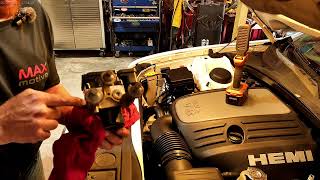
Typical fix: Replacement and programming of the ABS control module. 🎬 See this walkthrough for replacing the ABS module
Est. part cost: $450-$620 - Low Battery Voltage or Failing Battery 🟡 Medium Probability Modern vehicles with complex electronic networks are highly sensitive to system voltage. A weak or failing battery, often located in the trunk on this platform, can cause random communication faults between modules before causing a no-start condition.
How to confirm: Test the battery voltage with the engine off (should be >12.4V) and while running (should be 13.7-14.7V). A proper load test is required to confirm the battery's health, as it can show good voltage but fail under load.
Typical fix: Recharge or replace the vehicle's battery. Ensure the new battery is correctly registered with the vehicle's system if required.
Est. part cost: $150-$350 - Wiring or Connector Issue ⚪ Low Probability The CAN bus network relies on a 'twisted pair' of wires. Damage from chafing, corrosion at a connector, or a poor pin connection at the ABS module can disrupt communication. On some Chrysler/Dodge vehicles, the harness has been known to rub against hot coolant pipes or other engine components, causing interference or shorts.
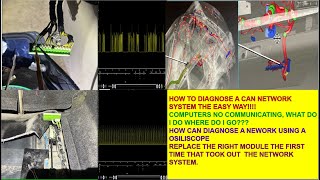
How to confirm: Visually inspect the wiring harness to the ABS module for any signs of damage, melting, or corrosion. A technician can perform a CAN bus resistance test at the OBD-II port (should be ~60 ohms) and check for continuity on the specific bus wires. 🎬 Watch: Professional tips for diagnosing CAN bus network faults
Typical fix: Repairing the damaged section of the wiring harness, cleaning/replacing the affected connector, or re-routing the harness away from heat sources.
Est. part cost: $20-$200
Rare But Worth Checking
- Another Failing Module on the Network:
Diagnosis Steps
- Check for TSBs: First, have a dealer or qualified shop check if TSB 18-013-22 applies to your vehicle's VIN. This is the most likely and simplest fix for 2021 3.6L models.
- Scan All System Modules: Use an advanced scan tool (like Chrysler's wiTECH) to read codes from all modules. Note all 'U' (network) codes and which modules are not communicating.
- Test Battery and Charging System: Ensure the battery voltage is above 12.4V with the engine off and that the alternator is charging correctly (13.7-14.7V) when running. Perform a load test on the battery to confirm its health.
- Inspect ABS Module Connector and Harness: Visually inspect the wiring harness and connector at the ABS/ESP module (located in the engine bay) for any signs of corrosion, damage, loose pins, or chafing against other components.
- Verify CAN Bus Integrity: A technician can measure the resistance between pins 6 and 14 of the OBD-II port (with the battery disconnected). A reading of approximately 60 ohms indicates the main network wiring is likely intact. A reading of 120 ohms suggests an open circuit or a problem with a terminating resistor.
- Attempt Direct Communication & Check Status Bits: Use the scan tool to try and communicate directly with the ABS/ESP module. A technician can also monitor the 'allow ESP torque request' status bit; if the request is not being sent, it points towards the ABS module, whereas if it's sent but ignored, it could point to the PCM.
- Isolate Modules (Advanced): If a network-wide issue is suspected, a technician may need to disconnect modules one by one from the CAN bus STAR connector to isolate a module that is broadcasting noise.
Parts You'll Likely Need
- ABS Control Module / ESP Module
(OEM #68258644AA, 68500121AC (verify by VIN))— If the module fails internally, it cannot send the required torque request message. This is the most common hardware failure for this code after software issues are ruled out.
Trusted brands: Mopar (OEM)
OEM price range: $450-$620
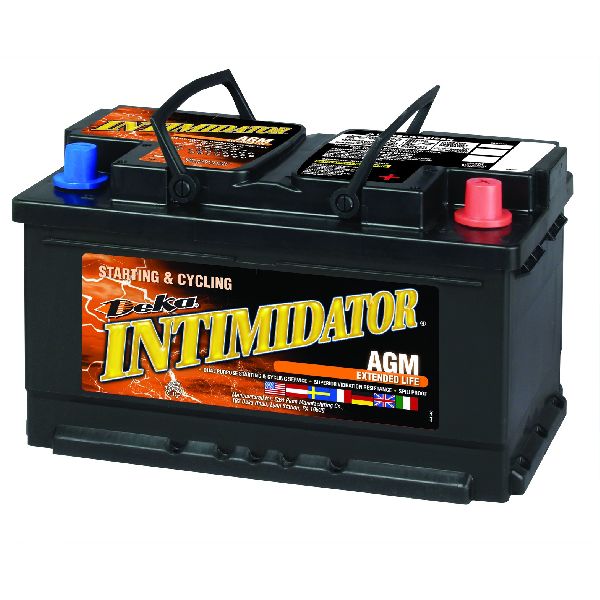
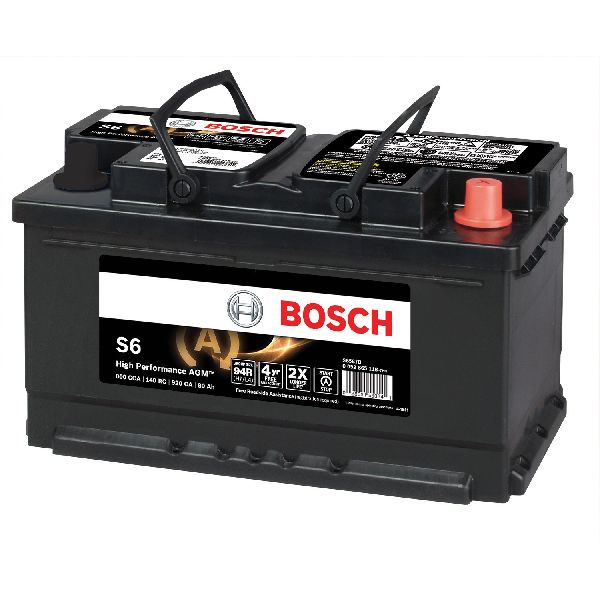
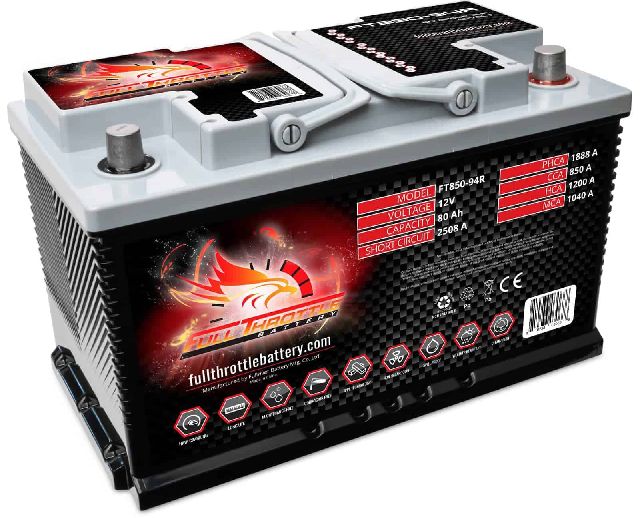
Aftermarket price range: $300-$500 (rebuilt) - Automotive Battery — Low system voltage from a weak or failing battery is a frequent cause of various network communication codes, including U1141. The battery is located in the trunk.
Trusted brands: Mopar (OEM), Interstate, DieHard
OEM price range: $200-$350
Aftermarket price range: $150-$250
Related Codes That Often Appear With This One
- U110A — Lost Communication With SCM-CAN-C. Often set together due to a network-wide communication issue or the software glitch addressed by TSB 18-013-22.
- U1110 — Lost Vehicle Speed Message. This data is sent by the ABS module, so a communication loss with that module would also cause this code. Also listed in TSB 18-013-22.
- U1120 — Lost Wheel Distance Message. Another piece of data originating from the ABS/ESP system, also listed in TSB 18-013-22.
- U11BC — Lost Brake Switch Message. This code is also listed in the same TSB, indicating a common software-related cause.
- C2200 — Anti-Lock Brake Module Internal Failure. If this code is present with U1141, it strongly points to a failed ABS module as the root cause, rather than a software or wiring issue.
Technical Service Bulletins (TSBs) & Recalls
- 1801322
Platform-Specific Known Issues
- PCM Software Update via TSB 18-013-22: For 2021 Chrysler 300 models with a 3.6L engine built on or before October 14, 2021, a specific TSB exists to resolve U1141 and many other 'U' codes with a simple PCM software update. This should be the first diagnostic check.
Mechanic-Grade Diagnostic Values
- CAN Bus Network Resistance — expected: ~60 Ohms. Failure: A reading of ~120 Ohms indicates an open in the bus or a faulty terminating resistor/module. A reading near 0 Ohms indicates a short between the CAN High and CAN Low wires.
- ABS Module Fused B+ Circuit Voltage — expected: Should be equal to battery voltage (>12.4V with key on, engine off).. Failure: Low or no voltage indicates an open circuit, blown fuse, or wiring issue between the power source and the ABS module.
- ABS Module Ground Circuit Integrity — expected: Less than 1.0 Ohm of resistance between the ground pin at the ABS connector and a known good chassis ground.. Failure: High resistance (OL) indicates an open or corroded ground connection, which can cause intermittent module operation.
- Battery Voltage During PCM Flash — expected: Must be maintained between 13.2 and 13.5 volts.. Failure: Voltage dropping below 13.2V or climbing above 13.5V can cause the flash process to fail or corrupt the module.
Scan Tool Commands That Help
- wiTECH: Network Topology / View All DTCs — This is the first step to see which modules are communicating on the network and which are not. A U1141 code will often be accompanied by communication loss codes from other modules, which helps determine if the fault is isolated to the ABS module or is a network-wide problem.
- wiTECH: ABS Module 'Miscellaneous Functions' — After replacing an ABS module, several routines must be run from this menu, including 'Brake Pedal Calibration' and 'Longitudinal G-Sensor Calibration'. Failure to perform these can cause the new module to not function correctly.
- wiTECH: Reprogram ECU / Flash Module — Used to perform the software update specified in TSB 18-013-22. The tool guides the technician through the process, including prompts to maintain battery voltage.
- wiTECH: Proxy Alignment Procedure (in BCM) — This function must be run after replacing or reprogramming certain modules (like the ABS/BSM) to ensure all modules on the network recognize the new or updated configuration. Failure to do so can cause persistent communication codes.
Wiring & Ground Locations
- STAR Connector (Gateway Connector) — On 2018+ models, can be found behind the glove box, behind the OBD-II port area, or in the trunk near the battery/spare tire. Technicians disconnect modules here one-by-one to isolate a faulty module that may be bringing down the entire network.. This is the central hub for the CAN bus network. A fault in any module connected to it can cause communication loss codes, including U1141. It is a critical access point for advanced network diagnostics.
- G100 — At the left front of the engine compartment.. This is a primary engine bay ground point. A loose or corroded connection here can affect multiple systems, including the ABS module, leading to communication faults.
- G105 — Located at the rear of the engine.. Another critical engine ground. Poor contact at this location can introduce electrical noise and intermittent faults for various engine and chassis modules.
- ABS Module Fuses — In the underhood fuse box (Power Distribution Center). On similar models, these are often fuses F5, F6, F36, and F39.. The ABS module has multiple power feeds. A blown fuse will cause the module to stop communicating entirely, directly leading to a U1141 code.
Real Owner Repair Stories
- Online Mechanic Tips YouTube Channel (2017 Dodge Charger (same platform)) — No crank, no start, no communication with any modules on the CAN C / IHS bus (all modules showing red in wiTECH).
❌ Tried (didn't work) Replacing the battery., Checking battery sensor., Checking power and ground at the RF Hub module.
✅ What actually fixed it The Electronic Power Steering (EPS) module connector had failed due to water intrusion and corrosion. Unplugging the EPS module at the STAR connector restored communication to the rest of the vehicle. The final fix was to cut out the corroded connectors for the EPS module and splice in new ones. - carquestions YouTube Channel (Dodge vehicle (similar CAN bus architecture)) — Intermittent hesitation, limp mode, multiple 'U' codes for lost communication with ABS, throttle control, etc.
❌ Tried (didn't work) Initial diagnosis suggested replacing the TIPM (fuse box/module)., Cleaning the throttle body.
✅ What actually fixed it The twisted-pair CAN bus wiring harness was physically resting against a hot metal coolant pipe in the engine bay. While the wires were not melted through, the electromagnetic interference (EMI) from the pipe was disrupting network communication. Moving the harness away from the pipe and securing it resolved the intermittent faults.
Model Year Variations Within This Range
- 2021 models built on or before October 14, 2021: These vehicles are specifically called out in TSB 18-013-22 as potentially having a software logic issue in the PCM that causes code U1141. Models built after this date should have the updated software from the factory, making a software glitch a less likely cause.
Helpful Videos
Used OEM Parts in Stock

New Aftermarket Parts Available


The information in this article is provided for general reference and educational purposes only. Vehicle specifications, procedures, and part compatibility can vary by production date, trim level, and region. Always consult your vehicle's factory service manual and verify part numbers before purchasing or performing repairs. Safety-critical components such as airbags, seat belts, and braking systems should be installed by a qualified professional.
- Chrysler 300:
- 🎬 Helpful Videos
- 🛍️ Shop This Part
- What's Unique About the 2021-2021 Chrysler 300
- Diagnostic Flowchart
- Symptoms You May Notice
- Most Likely Causes
- Rare But Worth Checking
- Diagnosis Steps
- Parts You'll Likely Need
- Related Codes That Often Appear With This One
- Technical Service Bulletins (TSBs) & Recalls
- Platform-Specific Known Issues
- Mechanic-Grade Diagnostic Values
- Scan Tool Commands That Help
- Wiring & Ground Locations
- Real Owner Repair Stories
- Model Year Variations Within This Range
- 🎟️ Get 5% Off