

OBD-II Code U1126: Lost Communication With ABS Control Module
What U1126 means, why it triggers, and how to fix it
- Code U1126 indicates a total communication failure with the ABS module, disabling anti-lock brakes and increasing emergency stopping distances by up to 30%.
- Before replacing a $1,000+ ABS module, test the battery for a minimum of 12.4 volts and inspect the main wiring harness for chafing or corrosion.
- You can safely drive to a repair shop, but limit speeds to under 45 mph in wet conditions since electronic skid prevention and traction control are completely disabled.
- Check manufacturer Technical Service Bulletins (TSBs) first; GM trucks frequently trigger this code due to a specific chafed wire under the driver's door sill plate (TSB #21-NA-149).
What Does U1126 Mean?

U1126 means your car's main computer network (the CAN bus) lost its connection to the anti-lock brake (ABS) control module. When the ABS module stops communicating, the system flags this code and immediately disables ABS and traction control features.
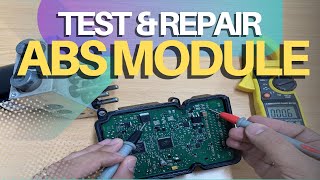
🎬 Watch: A breakdown of how lost ABS communication affects your car.Technical definition: U1126 is a manufacturer-specific network communication code indicating a loss of communication on the Controller Area Network (CAN) bus with the Anti-lock Brake System (ABS) or Electronic Stability Program (ESP) control module.
Can I Drive With U1126?
Yes, But With Caution. Yes, but drive with extreme caution. Your Anti-lock Braking System (ABS) and Traction/Stability Control are completely disabled. Wheels lock up during hard braking, increasing stopping distances by 20-30% on wet or gravel surfaces. You have no electronic assistance to prevent skids. Drive directly to a repair shop and avoid highway speeds or hazardous weather.
Common Causes

- Damaged or Corroded Wiring/Connectors (Very Common) — Wires leading to the ABS module or wheel speed sensors endure harsh conditions. Chafing, road salt corrosion, or loose connector pins interrupt the communication signal and trigger the code.
- Low Battery Voltage (Common) — A weak battery causes widespread electronic network drops. Control modules require a stable voltage to operate; if voltage drops below 12 volts during startup, the ABS module fails to initialize and drops off the network.
- Poor Module Ground Connection (Common) — A corroded or loose ground connection for the ABS module interrupts communication. On GM trucks, a specific bad ground point (G218) is a well-documented cause of network codes.
- Faulty ABS Control Module (Common) — The internal electronics of the ABS module fail due to age, heat, vibration, or internal short circuits, causing it to go offline permanently.
- Defective Wheel Speed Sensor (Less Common) — A faulty wheel speed sensor sends erratic data. While this typically sets a specific sensor code (like C003A), a severe short in the sensor overloads the ABS module and knocks it off the communication network.
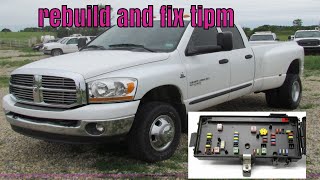
- Faulty Intermediary Module (e.g., BCM, TIPM) (Less Common) — Communication from the ABS module routes through the Body Control Module (BCM) or Totally Integrated Power Module (TIPM) on certain vehicles. 🎬 See how to remove and reset a TIPM if it's blocking signals. A fault within this intermediary module blocks the signal.
- Software Anomaly (Less Common) — A software glitch causes the module to stop communicating temporarily, often after a battery disconnect or jump start. A dealer software update resolves this permanently.
- Faulty Clock Spring (Rare) — The clock spring connects the steering wheel's electronics to the car. If it breaks, the ABS module loses required steering angle data, leading to a communication fault on Toyota and Lexus models.
Symptoms

- ABS Light On — The amber ABS warning light on your dashboard illuminates immediately.
- Traction/Stability Control Light On — The Traction Control System (TCS) or Electronic Stability Control (ESC/ESP) light illuminates, as these systems require the ABS module to function.
- Service StabiliTrak / AdvanceTrac Message — GM and Ford vehicles display a 'Service StabiliTrak' or 'Service AdvanceTrac' warning on the driver information center.
- Loss of Power Steering Assist — Ford models frequently disable electric power steering assist when ABS communication is lost, making the steering wheel extremely heavy to turn.
- Check Engine Light On — A communication failure with a critical safety module triggers the main Check Engine Light on most modern vehicles.
- Brake Warning Light On — A red brake warning light illuminates, indicating a general fault in the braking system.
Diagnostic Flowchart
Tap your situation to follow the diagnostic path that matches what you're seeing on this code.
Common Fixes & Costs
- Repairing Wiring Harness — Parts: $10-$50, Labor: $150-$600, ~2.5 hr book time (Professional)
- Replacing a Wheel Speed Sensor
— Parts: $50-$150, Labor: $100-$200, ~1.2 hr book time
(DIY)
Ford F-150 (2015-2017, Front): OEM BL3Z-2C204-B (Alt: {'Motorcraft': 'W0133-2068070', 'Delphi': 'SS20930', 'Standard Motor Products': 'ALS2696'}) - Cleaning or Repairing Ground Connection — Parts: $5-$20, Labor: $100-$200, ~1 hr book time (Intermediate)
- Replacing the ABS Control Module
— Parts: $800-$1,500, Labor: $150-$400, ~1.5 hr book time
(Professional)
Ram 1500 (2014-2016): OEM 68228991AC, 68292756AA (Alt: {'Cardone (Reman)': 'Various', 'Bosch': 'Various'}) - Replacing the Clock Spring
— Parts: $100-$300, Labor: $150-$300, ~1.5 hr book time
(Intermediate)
Chevrolet Silverado (2016): OEM 23381965 (Alt: {'Dorman': '525-041', 'Standard Motor Products': 'CBL1109'})
Used vs. New Parts: Buying Guide
When a used part is worth it: A used or remanufactured ABS module is a cost-effective option for older, high-mileage vehicles where a new OEM part is prohibitively expensive or discontinued.
Donor-vehicle mileage cap: roughly under 100000 miles for the part to have meaningful remaining life.
Donor quality checklist:
- Verify the part number on the module EXACTLY matches your original part.
- Purchase from a reputable seller offering a 30-90 day warranty.
- Avoid parts from flood or fire-damaged vehicles.
- Inspect the module for external damage, corrosion, or opened casings.
Decision logic:
- If Vehicle is less than 10 years old and part is available new → Favor a new or professionally remanufactured part for better warranty and reliability.
- If Vehicle is older, has high mileage, and the new part costs more than 25% of the vehicle's value → A warrantied used module is a reasonable choice.
- If The repair requires programming to the vehicle's VIN → Ensure you have access to a mechanic willing to program a used module, as dealerships often refuse.
Warranty tradeoff: Used parts typically come with a 30-90 day part-only warranty. Remanufactured parts offer a 1-year to lifetime warranty. New OEM parts carry the manufacturer's 1-year warranty.
Worst-case if a used part fails: 400-1000 if the used part is faulty, requiring repeat labor for installation and programming.
What Happens If You Wait — Timeline
- 0-1 month: ABS, Traction Control, and Check Engine lights illuminate. Safety systems are disabled, increasing stopping distance and risk of skidding in emergencies. (MPG impact: 0%% · Added cost: $0)
- 1-4 months: Driver becomes accustomed to disabled safety features. Intermittent loss of electric power steering begins on some models. Uneven tire wear starts if braking habits cause frequent wheel lock-ups. (MPG impact: 0%% · Added cost: $50-$250 (Potential for uneven tire wear))
- 4-12 months: Cascading failures begin. The lack of wheel speed data causes the Transmission Control Module (TCM) to exhibit harsh shifting or enter 'limp mode'. The Power Steering Control Module (PSCM) defaults to 'no assist' mode. (MPG impact: 0-5% (If transmission is in limp mode)% · Added cost: $500-$2000+ (Cost of misdiagnosing and replacing a perfectly good TCM or power steering rack))
- 12+ months: The root cause (e.g., a wiring short) damages other modules on the CAN bus network. Resale value is significantly diminished. The eventual repair becomes highly complex. (MPG impact: 0-5%% · Added cost: $1500-$4000+ (Cost of replacing multiple modules due to electrical damage))
Cost of Not Fixing It
- Immediate: Loss of anti-lock braking, traction control, and stability control, increasing the risk of skidding and accidents. Stopping distances increase. (Added cost: 0)
- 1-6 months: Continued driving without ABS leads to uneven tire wear as wheels lock and drag during hard braking. The driver becomes accustomed to the lack of safety features. (Added cost: 200-800)
- 6+ months: An ignored ABS fault causes other modules that rely on its data (like power steering or transmission control) to function erratically or fail, leading to complex repairs. Resale value plummets. (Added cost: 500-2500+)
Diagnosis Steps
- Check Battery and Fuses
Ensure the battery is fully charged. Use a multimeter to verify at least 12.4 volts with the engine off and over 13.7 volts with the engine running. Locate the ABS module fuses in the owner's manual and use a test light to confirm power on both sides of each fuse.
Tools: ['Multimeter', 'Test light'] - Scan for All Codes
Use an advanced OBD-II scanner to read codes from all modules (ABS, BCM, PCM). Note all active and pending codes. Multiple 'U' codes indicate a wider network problem, whereas a solitary U1126 points directly to the ABS circuit.
Tools: ['Advanced OBD-II scanner'] - Inspect ABS Module Wiring and Grounds
Locate the ABS module in the engine bay. Inspect the wiring harness and connector for green/white corrosion, chafed wires, or loose pins. Trace the main ground wire from the module to the chassis and ensure it is tight and rust-free.
Tools: ['Flashlight', 'Wire brush'] - Inspect Wheel Speed Sensor Wiring
Trace the wiring from each wheel hub back into the vehicle. Look for visible breaks, chafing, or corrosion where the wire clips to the frame or suspension components.
Tools: ['Jack and jack stands', 'Flashlight'] - Check Power and Ground at the ABS Module
Disconnect the ABS module connector. Use a multimeter and a vehicle-specific wiring diagram to verify the module receives battery voltage on the power pins and has less than 0.1 ohms of resistance on the ground pins.
Tools: ['Multimeter', 'Vehicle-specific wiring diagram'] - Test CAN Bus Network Resistance
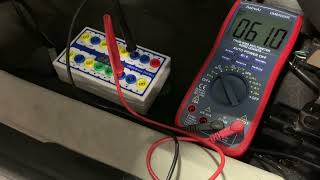
Disconnect the battery. At the OBD-II port, measure resistance between Pin 6 (CAN High) and Pin 14 (CAN Low). A healthy network reads 60 ohms. A reading of 120 ohms indicates a broken wire or unplugged module; 0 ohms indicates a short.
Tools: ['Multimeter'] - PRO TIP: Test CAN Bus Voltage
Reconnect the battery and turn the ignition ON. Check DC voltage at the OBD-II port. CAN High (Pin 6) to ground should be ~2.6V to 2.7V. CAN Low (Pin 14) to ground should be ~2.4V to 2.2V. Readings stuck at 0V, 2.5V, or 12V indicate a hard wiring short.
Tools: ['Multimeter'] - Isolate the Module
If the CAN bus tests faulty, disconnect other modules on the network one by one. If disconnecting a specific module (like the BCM) causes the 60-ohm resistance reading to return to normal, that module is shorting the network.
Tools: ['Multimeter', 'Wiring diagram'] - PRO TIP: Scope Test the CAN Signal
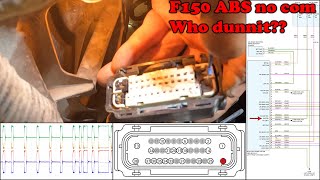
Connect an oscilloscope to Pins 6 and 14. A healthy CAN bus signal shows a mirror-image square wave pattern. Distortion, noise, or flat-lining on the waveform indicates a network problem a multimeter cannot detect.
Tools: ['Oscilloscope'] - Advanced: Test Wheel Speed Sensor Resistance
For passive (2-wire) sensors, disconnect the sensor and measure resistance across its pins. A good reading is typically 800 to 2,500 ohms. Infinite resistance or zero ohms indicates a failed sensor.
Tools: ['Multimeter', 'Vehicle-specific service manual'] (Advanced) - Advanced: Test Wheel Speed Sensor AC Voltage Output
For passive sensors, connect a multimeter set to AC Volts across the sensor pins. Spin the wheel by hand at one revolution per second. It must generate a minimum of 0.25V AC. No voltage indicates a bad sensor or damaged tone ring.
Tools: ['Multimeter (AC Volts)', 'Jack and jack stands'] (Advanced)
When This Code Triggers (Freeze-Frame Conditions)
- Vehicle Speed: 15-45 mph (During transition or steady state driving)
- RPM: 1200-2500 (Normal operating range, not high-revving)
- System Voltage: 13.5-14.5 V (Normal charging system voltage; rules out low voltage as initial cause)
- Time Since Engine Start: 5-15 minutes (Occurs after the vehicle runs long enough for all modules to initialize and begin communicating)
Related Codes
- U0121 — This is the generic SAE version of the exact same fault: 'Lost Communication With Anti-Lock Brake System (ABS) Control Module'. The diagnostic process is identical.
- U0126 — Means 'Lost Communication with Steering Angle Sensor Module'. The ABS module relies on steering angle data; if it loses this connection, it sets a U1126 code and shuts down.
- U0415 / U0418 — These mean 'Implausible Data Received From ABS Module'. With U0415, the module is online but sending nonsensical data (often due to a bad wheel speed sensor). With U1126, the module is completely offline.
- C003A — A wheel speed sensor-specific code ('Right Rear Wheel Speed Sensor'). If this appears alongside U1126, a severe sensor short likely knocked the entire ABS module offline.
Climate & Environmental Factors
- Road Salt / High Humidity: Road salt creates a highly corrosive brine that attacks wiring harnesses, connectors, and ground points. This solution seeps into wire insulation and connector seals, causing corrosion that breaks the circuit and leads to communication failures.
- Extreme Heat: Sustained high temperatures in the engine bay accelerate the aging of electronic components within the ABS module. This leads to internal solder joint fractures, causing the module to stop communicating.
- Vibration and Off-Road Use: Constant vibration from rough roads causes wiring harnesses to chafe against the vehicle's frame. It stresses connectors and ground points, leading to intermittent or total loss of connection.
How to Talk to a Mechanic About This Code
Say this: "I have a U1126 code and my ABS and traction control lights are on. I'd like to book a diagnostic appointment. Based on my research, this is often a wiring, ground, or battery issue rather than a failed module. Can you please start by testing the battery, checking for TSBs, and inspecting the ABS module's power, ground, and communication wires before quoting a module replacement?"
This signals you are an informed customer. It directs the technician to follow a logical, cost-effective diagnostic path, focusing on the most common and cheapest-to-fix failures first.
Avoid saying:
- 'My ABS light is on, can you just fix it?'
- 'I think I need a new ABS module.'
- 'Just do whatever it takes to get the light off.'
Questions to ask before authorizing the repair:
- What were the results of the CAN bus resistance and voltage tests?
- Did you find good power and ground at the ABS module connector?
- If you are recommending a module replacement, what specific tests did you perform to rule out a wiring or sensor issue?
- Does the replacement module require programming, and is that included in the quote?
- What is the warranty on the parts and labor for this repair?
Where to Take It: Dealer vs Independent vs Chain
- Dealer:
A safe but expensive choice. Best if you suspect a complex module issue and want a one-stop solution with a warranty.
Best for: Vehicles under warranty., Complex, manufacturer-specific electrical issues where TSBs are critical., Repairs requiring guaranteed access to module programming and security functions.
Downsides: Highest labor rates and part costs., Unwilling to diagnose or program customer-supplied or used parts. (Typical cost: +50% vs. baseline) - Independent Shop:
Best fit for most cases. An experienced independent technician excels at tracing wiring faults. Ask if they have the tools to program an ABS module for your specific vehicle.
Best for: Out-of-warranty vehicles where cost is a major factor., Diagnosing common wiring and ground faults., Shops with a strong reputation for electrical and diagnostic work.
Downsides: Shop quality and diagnostic equipment vary widely., May lack the expensive, dealer-level tools to program a new module. (Typical cost: +0% vs. baseline) - Chain Shop:
AVOID for initial diagnosis. Their business model is not suited for methodical electrical testing. Only use them if you are 100% certain the fix is a simple part like a battery.
Best for: Simple, related jobs like battery replacement or a single wheel speed sensor replacement if the diagnosis is already certain.
Downsides: Not equipped for complex network diagnostics like U1126., High pressure to sell parts leads to misdiagnosis., Technician skill is highly variable. (Typical cost: -10% vs. baseline)
When to Walk Away From the Repair
If the estimated repair cost for the ABS system exceeds 40-50% of your car's private-party market value, seriously consider selling the car as-is or trading it in.
- Car worth $4000, fix is $2000: Walk away. A $2000 repair on a $4000 car is rarely a good investment, especially as other age-related repairs loom.
- Car worth $15000, fix is $1800: Fix it. The repair cost is well within a reasonable percentage of the car's value and restores a critical safety system.
- Car worth $3000, fix is $350: Fix it. An inexpensive wiring or sensor repair is always worth doing to maintain the vehicle's safety and value.
What Scan Tool You Need for This Code

Minimum: A scanner that reads codes from ALL vehicle systems, including ABS, SRS, and the BCM. A basic engine-only code reader will not see the U1126 code.
A $20 engine code reader is blind to the ABS module. You need a tool that communicates with the entire vehicle network to see the U1126 code, view live data from wheel speed sensors, and clear the code after repair.
Budget: BlueDriver Pro (~$100) — Connects to your smartphone and reads/clears enhanced codes from the ABS system. It allows you to view live data to check if wheel speed sensors are reporting correctly. It is not bidirectional.
Mid-range: Foxwell NT510 Elite (~$180) — A powerful handheld scanner offering full-system diagnostics and bidirectional controls. It reads codes, graphs live data, and performs the automated ABS bleed procedure required after replacing a module.
Professional: Autel MaxiCOM MK808 / MK808BT (~$450-600) — A professional-grade tablet scanner with extensive vehicle coverage. It performs full-system scans, executes service functions like ABS bleeding, and handles module programming/coding on a wide range of vehicles.
Rent vs buy: Auto parts stores offer free loaner scanners, but they are typically basic engine code readers that CANNOT diagnose ABS issues. For a complex issue like U1126, pay a professional for diagnosis or buy a capable scanner if you plan to do regular maintenance.
How to Clear the Code After You Fix It
- Ensure all connectors are secure and the battery is reconnected.
- Use a compatible OBD-II scan tool to erase the U1126 code from the ABS and other relevant modules.
- Perform the specific drive cycle recommended by the manufacturer, which includes reaching certain speeds and braking.
Drive cycle (~20 minutes): A typical drive cycle involves a cold start, followed by mixed city and highway driving to allow the vehicle's computer to run self-tests. This includes several minutes of steady driving above 40 mph and some stop-and-go traffic.
Readiness monitors affected: Comprehensive Component Monitor (CCM), Misfire Monitor
Before emissions retest: drive at least 50 miles to fully set monitors.
Watch out for:
- Disconnecting the battery does not clear the code from the ABS module's memory on modern vehicles.
- The code reappears immediately if the underlying electrical fault is not fixed.
- A basic engine code reader cannot communicate with the ABS module to clear the code.
Will This Fail Emissions / State Inspection?
Yes — this code typically fails an OBD-II emissions inspection.
- California: An illuminated Check Engine Light due to a 'U' code is an automatic failure. All readiness monitors must be set to 'Ready'.
- New York: While an ABS light alone does not cause a failure, a related Check Engine Light will. Proposed legislation aims to make an illuminated ABS light an automatic failure.
- Texas: In counties requiring emissions testing, an illuminated Check Engine Light causes an automatic OBD failure.
Most Commonly Affected Vehicles
- Chevrolet / GMC Silverado, Sierra, Tahoe, Suburban (2014-2020) — A pinched or chafed wiring harness under the driver-side door sill plate or behind the instrument panel near the parking brake triggers this code. GM issued multiple Technical Service Bulletins (TSBs) for this exact failure.
- Ford F-150, F-250/F-350 Super Duty (2011-2022) — Presents with 'Service AdvanceTrac' and 'Hill Descent Control Fault' messages. The cause is frequently a failed front ABS wheel speed sensor or brittle sensor wiring.
- Dodge / Chrysler / Jeep Grand Caravan, Nitro, Wrangler, Ram (2007-2018) — Known for issues with the Totally Integrated Power Module (TIPM) and engine bay wiring harnesses chafing against A/C lines, causing communication drops.
- Ford Focus, C-Max (2012-2018) — Water intrusion into electronic modules and wiring causes communication failures with the ABS and power steering systems.
- Ford Ranger (2012-2019) — Wiring for the rear wheel speed sensors breaks internally from suspension movement, causing ABS and stability control faults.
- BMW 3-Series, 5-Series, X3, X5 (2006-2015) — U1126 points to a loss of communication with the DSC (Dynamic Stability Control) module. This results from internal module failure or corrosion on the suspension ride height sensor.
- Toyota RAV4, LS430 (2006-2018) — Often defined as 'Lost Communication with Steering Angle Sensor' (U0126) and caused by a failure of the sensor inside the clock spring assembly.
- Nissan Altima, Sunny, Patrol (2000-2006) — Related to the throttle control motor relay circuit, leading to a no-acceleration condition alongside the ABS fault due to corrosion in the relay socket.
Manufacturer-Specific Notes

- Chevrolet / GMC: For 2014+ trucks and SUVs, a U0121/U1126 is frequently caused by a pinched wire under the driver's door sill plate. See TSB #08-07-30-021F for specific locations to inspect before replacing parts.
- Ford: On trucks and SUVs, the 'Service AdvanceTrac' message almost always accompanies this code. The root cause is typically a faulty front wheel speed sensor or brittle wiring, not the ABS module itself.
- Chrysler / Dodge / Jeep / Ram: Before replacing the expensive ABS module or TIPM, inspect the main wiring harness near the engine and behind the driver-side front wheel. Chafing on A/C lines is a primary cause of CAN bus failures.
- BMW: U1126 refers to a communication loss with the DSC module. Before condemning the module, inspect and lubricate the ball joints on the front and rear suspension ride height sensors, as seizure causes this fault.
Real Owner Stories
2015 Ram 1500 at 105K miles - The Wiring Gremlin
Traction control light came on intermittently, then stayed solid with ABS and Check Engine lights. Scanner showed U1126, U0126, and U0415.
What they tried:
- Replaced the 5-year-old battery - no change.
- Replaced the steering angle sensor based on the U0126 code - codes returned immediately.
- Shop suspected a faulty ABS module but performed wiring checks first.
Outcome: A technician found the main wiring harness in the engine bay rubbing against an A/C line bracket. The insulation on two CAN bus wires wore through, causing a short. The wires were repaired and rerouted. Total cost was $350 for diagnostic labor and repair. All codes cleared.
Lesson: Multiple communication codes appearing at once point to a single wiring or ground problem affecting the whole network. Inspect harnesses in known chafe spots before replacing expensive components.
2013 Ford Focus at 80K miles - The Simple Fix
'Power Steering Fault Service Required' message appeared, steering became very heavy. ABS and traction control lights were on. Code U1126 was present along with a power steering code U3000.
What they tried:
- Restarting the car fixed it temporarily, but the problem became persistent.
- Checked battery voltage with a multimeter; it read a low 12.1V.
- Cleaned the battery terminals.
Outcome: Replaced the original battery with a new AGM battery. All warning lights cleared and power steering function returned to normal. Total cost was $220 for a new battery and 15 minutes of DIY labor.
Lesson: On Ford models with Electric Power Assisted Steering (EPAS), a weak battery is a primary cause for a cascade of warning lights, including ABS and power steering faults. Test the battery's health as the very first step.
2016 GMC Sierra 1500 at 95K miles - The Known TSB Issue
'Service StabiliTrak' message appeared on the dash, along with ABS and traction control lights. The only code was U0121.
What they tried:
- Owner suspected a bad wheel speed sensor.
- Searched forums for 'GMC U0121' and found GM Technical Service Bulletin (TSB) #21-NA-149.
Outcome: Following the TSB, the owner removed the driver's side sill plate and found two pinched and corroded wires. They repaired the wires using a splice kit and waterproof heat shrink. The repair took 2 hours and cost $20. The code cleared.
Lesson: Always search for Technical Service Bulletins (TSBs) related to your code. Manufacturers document common failures, and following the TSB saves hundreds of dollars in diagnostic time.
How to Prevent This Code From Triggering
- Clean and Protect Main Ground Points (Every 2-3 years or during battery replacement) — Ground straps corrode, creating high resistance that destabilizes the electrical system. Cleaning contact points to bare metal and applying dielectric grease ensures modules have a stable reference voltage.
- Apply Dielectric Grease to Critical Connectors (When servicing related components (e.g., brake job)) — Connectors for the ABS module and wheel speed sensors are exposed to moisture. Applying dielectric grease seals out moisture and prevents pin corrosion.
- Perform Regular Visual Harness Inspections (Annually, or during oil changes) — Vibration causes wiring harnesses to rub against engine components. Inspecting known problem areas catches chafing before the wire's insulation is breached.
- Keep Wheel Speed Sensors and Tone Rings Clean (During tire rotations or brake service) — Brake dust and metallic debris on the magnetic tip of a wheel speed sensor corrupt the signal sent to the ABS module. Cleaning with brake cleaner restores a clear signal.
- Maintain Brake Fluid Health (Flush every 2-3 years, per manufacturer recommendation) — Contaminated brake fluid damages the sensitive seals and valves within the ABS hydraulic unit, leading to the eventual replacement of the entire ABS module assembly.
Frequently Asked Questions
What does the 'U' in U1126 stand for?
The 'U' stands for 'User Network'. It signifies a communication network failure between the vehicle's computer modules. This differs from 'P' (Powertrain), 'B' (Body), or 'C' (Chassis) codes.
Can a bad battery really cause this code?
Yes. A weak battery provides unstable voltage during engine cranking. Sensitive electronic modules like the ABS controller fail to initialize correctly in low-voltage situations, triggering a communication loss code.
What is the most common misdiagnosis for U1126?
The most common misdiagnosis is replacing the $1,000+ ABS control module before thoroughly testing the wiring and grounds. Technicians frequently discover a simple, inexpensive wiring fault was the actual culprit after a new module fails to fix the problem.
Is it safe to drive with the ABS and Traction Control lights on?
Your standard hydraulic brakes still function, but you lack anti-lock capabilities. Wheels lock up and skid during a panic stop, significantly increasing stopping distances. Drive cautiously directly to a repair shop and avoid aggressive driving.
My scanner shows a U0121 code, not U1126. Is it the same thing?
Yes. U0121 is the standardized, generic OBD-II code for 'Lost Communication with ABS Module'. U1126 is a manufacturer-specific code for the exact same fault, requiring the identical diagnostic process.
Can I fix a U1126 code myself?
You can easily perform simple fixes like checking fuses, cleaning battery terminals, or replacing a bolt-on wheel speed sensor. However, diagnosing wiring harnesses or programming a new ABS module requires professional-level tools and expertise. Stop DIYing and visit a shop if basic multimeter tests don't reveal the issue.
Why did my power steering stop working with the ABS light?
Modern vehicles with electric power steering (EPS) rely on wheel speed data from the ABS module to calculate steering assist. When the ABS module goes offline, the EPS module loses this critical data and defaults to a heavy-steering fail-safe mode.
Key Takeaways
- Code U1126 indicates a total communication failure with the ABS module, disabling anti-lock brakes and increasing emergency stopping distances by up to 30%.
- Before replacing a $1,000+ ABS module, test the battery for a minimum of 12.4 volts and inspect the main wiring harness for chafing or corrosion.
- You can safely drive to a repair shop, but limit speeds to under 45 mph in wet conditions since electronic skid prevention and traction control are completely disabled.
- Check manufacturer Technical Service Bulletins (TSBs) first; GM trucks frequently trigger this code due to a specific chafed wire under the driver's door sill plate (TSB #21-NA-149).
Helpful Videos
![How To Test CAN BUS With A Multimeter [CAN Bus Resistance Check] Mechanic Mindset](https://img.youtube.com/vi/JPE42HSJxAk/mqdefault.jpg)

The information in this article is provided for general reference and educational purposes only. Vehicle specifications, procedures, and part compatibility can vary by production date, trim level, and region. Always consult your vehicle's factory service manual and verify part numbers before purchasing or performing repairs. Safety-critical components such as airbags, seat belts, and braking systems should be installed by a qualified professional.
- 🎬 Helpful Videos
- What Does U1126 Mean?
- Can I Drive With U1126?
- Common Causes
- Symptoms
- Diagnostic Flowchart
- Common Fixes & Costs
- Used vs. New Parts: Buying Guide
- What Happens If You Wait — Timeline
- Cost of Not Fixing It
- Diagnosis Steps
- When This Code Triggers (Freeze-Frame Conditions)
- Related Codes
- Climate & Environmental Factors
- How to Talk to a Mechanic About This Code
- Where to Take It: Dealer vs Independent vs Chain
- When to Walk Away From the Repair
- What Scan Tool You Need for This Code
- How to Clear the Code After You Fix It
- Will This Fail Emissions / State Inspection?
- Most Commonly Affected Vehicles
- Manufacturer-Specific Notes
- Real Owner Stories
- 2015 Ram 1500 at 105K miles - The Wiring Gremlin
- 2013 Ford Focus at 80K miles - The Simple Fix
- 2016 GMC Sierra 1500 at 95K miles - The Known TSB Issue
- How to Prevent This Code From Triggering
- Frequently Asked Questions
- What does the 'U' in U1126 stand for?
- Can a bad battery really cause this code?
- What is the most common misdiagnosis for U1126?
- Is it safe to drive with the ABS and Traction Control lights on?
- My scanner shows a U0121 code, not U1126. Is it the same thing?
- Can I fix a U1126 code myself?
- Why did my power steering stop working with the ABS light?
- Key Takeaways
- 🎟️ Get 5% Off