

U1120 on 2021 Dodge Challenger: Lost Wheel Distance Message Explained
Code U1120 on a 2021 Dodge Challenger means 'Lost Wheel Distance Message.' This is a network communication error, often caused by a faulty ABS module, a wiring issue in the CAN C bus, or a weak/badly connected battery or blown fuse. Diagnosis requires a professional scan tool to check network communication and is often accompanied by code U0121.
- U1120 is a network code meaning the ABS module has stopped sending wheel distance data.
- The most common causes are a failed ABS module or a damaged wiring harness.
- This is not a DIY-friendly repair; it requires advanced diagnostic tools to accurately pinpoint the fault.
- Driving with this code is not recommended as safety systems like ABS and stability control will be disabled.
- Always check for other communication codes, especially U0121, as they can help confirm the diagnosis.
What's Unique About the 2021-2021 Dodge CHALLENGER
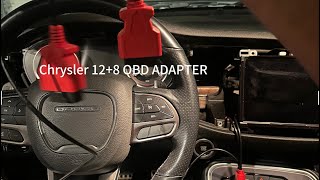
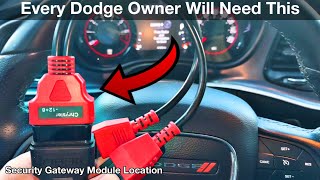
The 2021 Dodge Challenger is built on the Chrysler LA platform and utilizes a complex Controller Area Network (CAN bus) to manage its various performance and safety systems. A failure in one part of this network can have a cascading effect. A key diagnostic feature on this platform is the 'Star Connector,' a central hub where multiple modules connect to the network. Technicians can use this connector to systematically unplug modules to isolate which one is bringing the network down. The provided NHTSA TSB #1801122 lists U1120 alongside a host of other 'Lost Communication' codes, which suggests that a single point of failure—like the ABS module or a specific wiring harness—can trigger multiple network-related DTCs simultaneously on this platform. A critical feature on 2018 and newer models is the Security Gateway Module (SGM), which prevents unauthorized access via the OBD-II port. To perform advanced diagnostics like clearing codes or running bidirectional tests, a technician must use a bypass cable (commonly a 12+8 adapter) to connect directly to the Star Connector, bypassing the SGM.
🎬 Watch: How to locate and bypass the Security Gateway Module.Diagnostic Flowchart
Tap your situation to follow the diagnostic path that matches what you're seeing on this vehicle.
Symptoms You May Notice
- Check Engine Light illuminated
- ABS warning light on
- Traction Control/ESP/BAS light on
- Brake warning light on
- Speedometer may not work or is erratic
- Possible no-crank/no-start condition in severe cases where the ABS module brings down the entire network.
- Stiff brake pedal feel, especially on push-to-start vehicles where brake pedal input is required for starting.
- Replacing individual wheel speed sensors. While a faulty wheel speed sensor can cause ABS issues, it usually sets a specific C-code (e.g., C100A). A U1120 code points to a module-level communication failure, not typically a single sensor.
Most Likely Causes
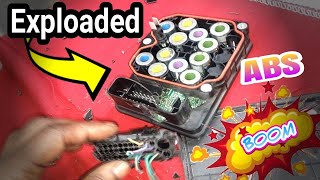
- Faulty Anti-Lock Brake (ABS) Module 🔴 High Probability The ABS module is the source of the wheel distance message. Internal failure of the module is a common cause for it to stop broadcasting data on the CAN network. This can happen due to failed solder joints or electronic components on the module's circuit board.
How to confirm: Use a high-level scan tool to perform a network topology scan. A failed ABS module will often show as 'offline' or 'not communicating' in the topology map. If the module is offline and its power, ground, and fuses are good, the module itself is the likely culprit. Look for code U0121 (Lost Communication With Anti-Lock Brake Module) which almost always accompanies U1120 when the module fails.
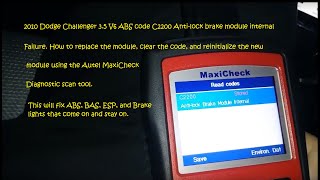
Typical fix: Replace the ABS module. The new module is VIN-specific and will require programming ('ABS Initialization' procedure) to the vehicle using a capable scan tool. Alternatively, the original module can be sent to a specialist service for rebuilding.
Est. part cost: $300-$800 - CAN C Bus Wiring Issue 🟡 Medium Probability Wiring harnesses, particularly in the engine bay or wheel wells, are susceptible to damage from heat, vibration, or road debris. A short or open in the twisted pair of CAN C wires (often white/light green for CAN H and white/light blue for CAN L) will disrupt communication.
How to confirm: Visually inspect the wiring harness leading to the ABS module for any signs of damage, corrosion, or chafing. Pay close attention to the area in the driver's side wheel well where debris can cause damage. A technician would perform a resistance check between CAN H and CAN L at the OBD-II port (pins 6 and 14); a healthy network should read approximately 60 ohms. Readings of 120 ohms suggest an open circuit or a disconnected module, while 0 ohms indicates a short circuit. In one documented case on a Challenger, bent pins on the ABS module connector itself were the cause.
Typical fix: Repair the damaged section of the wiring harness. In severe cases, the connector or a portion of the harness may need to be replaced.
Est. part cost: $10-$250 - Low Battery Voltage or Blown Fuse ⚪ Low Probability Modern vehicle electronics are highly sensitive to voltage. A weak battery, corroded terminals, or a failing alternator can cause random communication codes. Additionally, the ABS module has dedicated fuses (often multiple) in the engine bay fuse box (TIPM) that can blow or, in some cases, be missing entirely after other service work.
How to confirm: Test the battery with a multimeter; it should be above 12.4V with the engine off. Check that battery terminals are clean and tight. Crucially, check all fuses related to the ABS system. In a documented case on a similar Dodge platform, a single missing 30A fuse (Fuse #34) for the ABS module caused U1120 and related codes.
Typical fix: Charge or replace the battery. Clean or tighten battery terminals. Replace any blown or missing fuses.
Est. part cost: $150-$350
Rare But Worth Checking
- Faulty Powertrain Control Module (PCM): While it's possible for the receiving module (PCM) to be the cause of the fault, it is much less common than the sending module (ABS) or the wiring in between. This should only be considered after all other possibilities have been exhausted.
- Faulty Star Connector: The star connector itself, which joins the network wires, can fail internally. A technician found that a capacitor inside the connector went out of spec, causing the entire network to crash intermittently after a specific mileage was driven. This is a rare and difficult-to-diagnose failure.
- Water Intrusion via Ground Wire: In an unusual failure mode seen on other FCA platforms, water can enter a poorly sealed ground wire eyelet on the strut tower and wick its way down the *inside* of the wire insulation, corroding the ABS connector pins from within. This is extremely difficult to spot with just a visual inspection of the harness exterior.
Diagnosis Steps
- Connect a professional-grade OBD-II scanner capable of reading manufacturer-specific codes and viewing network topology from all modules. For 2018+ models, connect via a 12+8 Security Gateway Module bypass cable to enable full functionality.
- Check for all present DTCs. Pay close attention to U0121, as its presence strongly points to the ABS module or its circuits.
- Check battery voltage (should be >12.4V) and inspect battery terminals for corrosion or looseness.
- Check all fuses related to the ABS system in the engine bay fuse box (TIPM). On some models, there are as many as four. A missing or blown fuse (e.g., a 30A fuse at position 34 on some platforms) can be a simple fix.
- Using the scan tool, attempt to communicate directly with the ABS module. If communication fails or the module shows as 'offline' in a topology view, this confirms a major fault with the module or its primary circuits. The wiTECH 'Loss of Comm Test' can be used to check for intermittent module response.
- If the ABS module is offline, inspect the wiring harness and connector at the ABS module for physical damage, corrosion, or bent/backed-out pins. In one case, the connector was physically destroyed.
- Test the power and ground circuits at the ABS module connector with a multimeter to ensure the module is receiving proper power. Check grounds G100/G101 in the engine compartment and G300 under the B-pillar.
- With the battery disconnected, measure the resistance between Pin 6 (CAN-H) and Pin 14 (CAN-L) at the OBD-II port. A healthy CAN C bus should read ~60 ohms. A reading of ~120 ohms indicates an open circuit or a terminating resistor is offline. A reading near 0 ohms indicates a short between the two wires.
- With the key on, engine off, measure voltage. CAN H (Pin 6 to ground) should be ~2.7V and CAN L (Pin 14 to ground) should be ~2.3V. If both read ~2.5V, the wires may be shorted together.
- If the resistance is incorrect, you can use the Star Connector (often located behind the glove box) to isolate the fault. Unplug modules one by one from the Star Connector and re-measure resistance until the 60-ohm reading returns. The last module unplugged (or its wiring) is the source of the fault.
- If power and ground are present, and the CAN bus wiring tests good up to the module, but the module remains offline, the ABS module itself is the most likely culprit and requires replacement or rebuilding. A 'ABS Initialization' procedure must be performed with a scan tool after replacement.
Parts You'll Likely Need
- Anti-Lock Brake (ABS) Control Module
(OEM #68258644AA, 68399772AD, 68420215AA (multiple exist, verify by VIN))— This module is the source of the 'wheel distance message.' Internal failure is the most common reason for it to stop broadcasting this data on the vehicle's network, often causing a no-start condition.
Trusted brands: Mopar
OEM price range: $400-$800
Aftermarket price range: $250-$500 (Remanufactured)
Related Codes That Often Appear With This One
- U0121 — This code means 'Lost Communication With Anti-Lock Brake Module.' Since the ABS module is the source of the wheel distance message, if it goes offline entirely, both U0121 and U1120 will likely set. This is the most common companion code.
- U1110 — This code means 'Lost Vehicle Speed Message.' Both the wheel distance and vehicle speed messages originate from the ABS module, so they often fail together when the module or its communication line has a fault.
- U1141 — This code for 'Lost ESP Torque Request Message' was cited in the same TSB (#1801122) as U1120, indicating they can be triggered by the same underlying network fault.
Technical Service Bulletins (TSBs) & Recalls
- 1801122: Mentions U1120 - Lost Wheel Distance Message in a list of potential communication codes related to various control modules.
Platform-Specific Known Issues
- As noted in NHTSA TSB #1801122, code U1120 can appear with a cluster of other communication codes, pointing to a broader network or module failure rather than an isolated issue.
- A failed ABS module on this platform can pull the entire CAN C bus down, leading to a no-crank/no-start condition, which can be misdiagnosed as a battery or starter issue.
- Diagnosis often involves interacting with the Star Connector, a central wiring junction point for the CAN bus, to isolate the faulty module or circuit branch.
- Models from 2018 onward are equipped with a Security Gateway Module (SGM) that requires a special bypass adapter for any diagnostic tool to perform functions beyond reading codes, such as clearing faults or initializing a new module.
Mechanic-Grade Diagnostic Values
- CAN C Bus Voltage (Key On, Engine Off) — expected: CAN High (Pin 6 to Ground): ~2.7 Volts. CAN Low (Pin 14 to Ground): ~2.3 Volts. Total should be ~5.0V.. Failure: If both wires read ~2.5V, they may be shorted together. If one wire reads 0V, it may be shorted to ground. If one reads above 6.0V, it may be shorted to power.
- CAN C Bus Resistance (Battery Disconnected) — expected: ~60 Ohms between Pin 6 and Pin 14 of the OBD-II port.. Failure: A reading of ~120 Ohms indicates an open circuit or a missing terminating resistor (often a disconnected module). A reading near 0 Ohms indicates a short circuit between the CAN High and Low wires.
Scan Tool Commands That Help
- wiTECH (or equivalent high-end scanner): Loss of Comm Test — Use this test when a module is suspected of being intermittently offline. It continuously pings all modules on the network and flags any that fail to respond, helping to catch intermittent faults that a simple code scan might miss.
- wiTECH (or equivalent high-end scanner): ABS Initialization — This routine is required after replacing the ABS control module. It configures the new module to the vehicle's specific options and VIN, allowing it to communicate correctly with other systems.
- wiTECH: Flash ABS Module — Used to update the module's software to correct known bugs or improve performance, as instructed by a Technical Service Bulletin (TSB). Requires a stable power supply (13.2V-13.5V) during the process.
Wiring & Ground Locations
- ABS Module — In the engine compartment, on the driver's side, next to the windshield washer fluid reservoir.. This is the source of the 'Lost Wheel Distance Message'. All power, ground, and communication wires terminate here.
- Star Connector / CAN C Diagnostic Port — Typically located behind the dash. One common location is behind the glove box. It may be a green connector for the powertrain CAN bus.. This is the central junction for the CAN bus. It's used to isolate network faults by disconnecting branches one by one. It's also the connection point for the SGM bypass cable on 2018+ models.
- G100 / G101 — G100 is at the left front of the engine compartment; G101 is at the right front of the engine compartment.. These are primary engine compartment grounds. A poor connection here can cause issues for multiple modules, including the ABS.
- Security Gateway Module (SGM) — Located behind the instrument cluster trim panel.. On 2018+ models, this module blocks advanced diagnostic commands from the OBD-II port. It must be bypassed with a special cable at the Star Connector to perform fixes.
Real Owner Repair Stories
- YouTube channel 'Global Commerce CA' (2014 Dodge Avenger (similar platform)) — Multiple dashboard lights on (ABS, etc.) after throttle body service. Codes U0121, U1120, U1110 present.
❌ Tried (didn't work) Visual inspection of the ABS connector and harness showed no issues.
✅ What actually fixed it The 30-amp fuse for the ABS module (Fuse #34 in the TIPM) was missing. Installing a new fuse restored communication and cleared all codes and warning lights. - YouTube channel 'Online Mechanic Tips' (Dodge Challenger (year not specified, modern body style)) — No-crank, no-start condition. Multiple communication codes including U1120, U1110, U0129, U11BC.
❌ Tried (didn't work) The battery had already been replaced by someone else, which did not solve the no-crank issue.
✅ What actually fixed it A scan tool topology map showed the ABS module was offline. Upon unplugging the connector, the technician discovered bent and broken pins on the ABS module itself, and the connector was physically destroyed. The root cause was a catastrophic failure of the module/connector. The fix required replacing the ABS module and splicing in a new pigtail connector for the harness. - YouTube channel 'Back40 Bandit' (Dodge Ram 1500 (similar CAN architecture)) — ABS and other warning lights on, speedometer not working. Codes U1110 and U1120.
❌ Tried (didn't work) Checked all fuses in the TIPM.
✅ What actually fixed it The owner discovered that road debris had penetrated the plastic wheel well liner and physically struck the ABS module's wiring harness, breaking one of the wires off the connector. The fix was to repair the broken wire.
Model Year Variations Within This Range
- 2018-2021: Introduction of the Security Gateway Module (SGM). Standard OBD-II port access is limited to reading codes. To clear codes, perform initializations, or run bidirectional tests, a 12+8 pin bypass cable must be used to connect the scan tool directly to the Star Connector, bypassing the SGM.
Helpful Videos
We Have This Part in Stock


The information in this article is provided for general reference and educational purposes only. Vehicle specifications, procedures, and part compatibility can vary by production date, trim level, and region. Always consult your vehicle's factory service manual and verify part numbers before purchasing or performing repairs. Safety-critical components such as airbags, seat belts, and braking systems should be installed by a qualified professional.
- Dodge CHALLENGER:
- 🎬 Helpful Videos
- 🛍️ Shop This Part
- What's Unique About the 2021-2021 Dodge CHALLENGER
- Diagnostic Flowchart
- Symptoms You May Notice
- Most Likely Causes
- Rare But Worth Checking
- Diagnosis Steps
- Parts You'll Likely Need
- Related Codes That Often Appear With This One
- Technical Service Bulletins (TSBs) & Recalls
- Platform-Specific Known Issues
- Mechanic-Grade Diagnostic Values
- Scan Tool Commands That Help
- Wiring & Ground Locations
- Real Owner Repair Stories
- Model Year Variations Within This Range
- 🎟️ Get 5% Off