

U1120 on 2021 Chrysler 300: 'Lost Wheel Distance Message' Causes and Fixes
This code indicates a communication failure between the ABS module and the Powertrain Control Module (PCM). The most common causes are faulty wiring to the ABS module or a failed ABS module itself. Expect repair costs to range from a simple wiring fix to a more expensive module replacement.
- U1120 is a network communication code, not a simple sensor failure.
- Diagnosis should focus on the communication link between the ABS module and the rest of the vehicle.
- Always check for other codes, especially U0121 and U1110, as they provide critical diagnostic context.
- Thoroughly inspect the wiring and connector at the ABS module before condemning the module itself.
- This repair is best left to professionals with advanced diagnostic equipment due to the complexity of CAN bus networks.
What's Unique About the 2021-2021 Chrysler 300
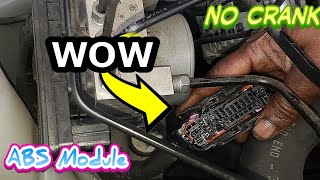
On the Chrysler 300 and its related LX platform vehicles (Dodge Charger, Challenger), the ABS module is the central hub for calculating and broadcasting vehicle speed and distance data. When this module or its communication line fails, it can trigger a cascade of warning lights and system shutdowns. In some cases, it can even lead to a no-crank situation 🎬 Watch: Troubleshooting a no-crank condition caused by ABS module failure. because other critical modules can't verify that the vehicle is stationary or receive necessary data to operate. The issue is often accompanied by other communication codes like U0121, pointing towards a network problem 🎬 See how to fix U0121 no communication codes on Chrysler platforms. rather than a single component failure.
Diagnostic Flowchart
Tap your situation to follow the diagnostic path that matches what you're seeing on this vehicle.
Symptoms You May Notice
- ABS warning light on
- Traction Control/ESP/BAS light on
- Check Engine Light on
- Speedometer is inaccurate or does not work
- Vehicle may enter 'limp mode' with reduced power and harsh shifting
- In some cases, a no-start or no-crank condition
- Brake pedal feels stiff, especially on push-to-start models, as the system can't verify brake application
- Replacing a wheel speed sensor without checking for other ABS or communication codes first.
- Replacing the PCM when the issue is actually with the ABS module or the wiring between them.
- Replacing the ABS module multiple times without thoroughly testing the CAN bus wiring for shorts or opens.
Most Likely Causes
- Damaged Wiring or Connectors to ABS Module 🔴 High Probability The wiring harness leading to the ABS module, often located in the driver-side front wheel well, is exposed to road debris, moisture, and corrosion. This can damage the sensitive CAN bus wires (a twisted pair) or cause pins in the connector to corrode or bend.
How to confirm: Visually inspect the entire wiring harness going to the ABS module for any signs of physical damage, chafing, or corrosion at the connector. A technician will unplug the connector (with the battery disconnected) and check for bent or corroded pins. A multimeter is used to check for continuity and to measure resistance between the CAN high and CAN low pins, which should be 60 ohms with the module disconnected and the rest of the network asleep.
Typical fix: Repair the damaged section of the wiring harness or replace the connector pigtail. In cases of severe corrosion, the entire body harness may need replacement.
Est. part cost: $25-$150 - Faulty ABS Control Module 🟡 Medium Probability Internal electronic failure of the ABS module can prevent it from broadcasting messages on the CAN network. This is a known issue on the LX platform, sometimes due to internal solder joint failure or component failure on the circuit board.
How to confirm: After confirming the wiring and power/ground to the module are good, use a high-level scan tool to attempt direct communication with the ABS module. If the module does not respond ('no comms'), it has likely failed. Another diagnostic step is to unplug the ABS module and see if communication with other modules on the network is restored.
Typical fix: Replace the ABS control module. The new module must be programmed to the vehicle's VIN and configuration, often requiring dealer-level software (wiTECH) to perform a 'Proxy Configuration Alignment'.
Est. part cost: $300-$800 - Low Battery Voltage or Poor Grounds ⚪ Low Probability Modern vehicles are highly sensitive to voltage fluctuations. A weak battery or poor ground connection can cause unpredictable communication errors between modules, leading to a flurry of 'U' codes.
How to confirm: Test the battery voltage with a multimeter (should be ~12.6V with engine off, ~14V with engine running) and perform a load test. Check and clean the main battery terminals and chassis ground points, especially the main ground strap to the engine block.
Typical fix: Recharge or replace the battery. Clean or repair ground connections.
Est. part cost: $0-$250
Rare But Worth Checking
- Faulty Wheel Speed Sensor: While a faulty wheel speed sensor typically sets a specific sensor code, it can sometimes send corrupt data that disrupts the ABS module's ability to communicate, indirectly causing a U1120 code.
- Faulty Powertrain Control Module (PCM): In rare instances, the receiving module (PCM) can be the source of the fault, unable to process the incoming message from the ABS module. This is less common than a failure of the sending module or wiring. TSB 18-013-22 involves a PCM software update to improve communication robustness.
- Faulty TIPM or Star Connector/CAN Bus Hub: The Totally Integrated Power Module (TIPM) or a central network junction point (Star Connector) can fail, causing widespread communication issues across the entire CAN bus, which would include the loss of the ABS module messages.
Diagnosis Steps
- Connect a full-system OBD-II scanner capable of reading Chrysler-specific codes from all modules (e.g., wiTECH).
- Perform a full network scan and check for any other active or stored DTCs. Pay close attention to codes like U0121 or U1110. Diagnose these codes first.
- Check and verify battery voltage is stable and passes a load test (12.4V+ engine off, 13.5-14.5V engine on).
- Using the scan tool, attempt to communicate directly with the ABS module. Check the network topology view to see if the ABS module is shown as offline (often highlighted in red).
- If the module is offline, locate the ABS module in the driver-side front wheel well. Disconnect the battery. Visually inspect the electrical connector and nearby wiring for corrosion, moisture, bent pins, or physical damage.
- Test the power and ground circuits at the ABS module connector to ensure it's receiving proper power.
- If power and ground are good, test the CAN C bus circuit. With the battery disconnected, measure the resistance between the two CAN wires at the ABS connector. The reading should be approximately 60 ohms if the network is intact. A reading of 120 ohms suggests an open circuit, and a reading below 60 ohms suggests a short.
- If all wiring tests pass and the module has power but still won't communicate, the ABS module is the most likely failed component.
Parts You'll Likely Need
- ABS Control Module
(OEM #68341606AC, 68291563AA, 68500121AC (Note: Part numbers are highly VIN-specific; always verify with a dealer))— This module is responsible for generating and sending the wheel distance message. Internal failure is a common cause for this code when wiring is confirmed to be intact.
Trusted brands: Mopar
OEM price range: $350-$800
Aftermarket price range: $300-$600 - ABS Module Connector Pigtail — The connector itself can corrode or have wires break at the back, interrupting communication. Replacing the pigtail is often easier than repairing individual pins.
Trusted brands: Mopar, Dorman
OEM price range: $50-$100
Aftermarket price range: $25-$50
Related Codes That Often Appear With This One
- U1110 — This code means 'Lost Vehicle Speed Message' and is often set alongside U1120 because both messages originate from the ABS module and are lost simultaneously due to the same communication failure.
- U0121 — This code means 'Lost Communication With Anti-Lock Brake System Module'. It is a more general code indicating the ABS module is offline and is a primary indicator that the ABS module itself or its wiring is the root cause of U1120.
Technical Service Bulletins (TSBs) & Recalls
- 18-013-22 / 1801222: A PCM software update that addresses a large group of communication codes, including U1120, to prevent unnecessary MIL illumination and loss of features like ABS/TCS.
Platform-Specific Known Issues
- A Chrysler Technical Service Bulletin (TSB 18-013-22, also listed as 1801222 for Dodge) addresses a wide range of communication DTCs, including U1120. The fix involves reprogramming the Powertrain Control Module (PCM) with updated software to improve communication stability. This should be considered if no physical faults are found in the wiring or ABS module.
- Owners on forums report that a failed ABS module can cause a no-start condition. A workaround sometimes mentioned is to unplug the main connector to the ABS module, which can take it off the network and allow the vehicle to start, though with all ABS/Traction functions disabled.
Mechanic-Grade Diagnostic Values
- CAN C Bus Resistance — expected: ~60 Ohms. Failure: 120 Ohms indicates an open circuit or unplugged terminating resistor. ~0 Ohms indicates a short between CAN High and CAN Low wires.
- CAN C Bus Voltage (Key On, Engine Off, Idle State) — expected: CAN High: ~2.5V, CAN Low: ~2.5V. Failure: Voltages that are stuck high (5V), low (0V), or do not mirror each other during communication indicate a bus fault.
- CAN C Bus Voltage (Dominant State / Communicating) — expected: CAN High: rises to ~3.5V, CAN Low: drops to ~1.5V. Failure: Waveform does not show a ~2V differential between high and low lines, or shows significant noise/corruption (sawtooth patterns).
- ABS Module Power Supply at Connector — expected: 12V+ at fused B(+) pins.. Failure: No voltage indicates a blown fuse (check TIPM) or a break in the power wire.
- ABS Module Ground at Connector — expected: Near 0 Ohms resistance to chassis ground.. Failure: High resistance indicates a corroded or broken ground wire.
Scan Tool Commands That Help
- wiTECH: Proxy Configuration Alignment (PROXI) — This is a mandatory procedure after replacing the ABS module. It aligns the new module with the vehicle's existing network configuration. Failure to perform this can result in the new module not functioning correctly and setting communication codes.
- wiTECH: Network Test / View Topology — Used as a primary diagnostic step to get a visual map of all modules on the CAN bus. It will show which modules are active (communicating) and which are inactive (offline), quickly identifying if the ABS module is the source of the network disruption.
- wiTECH: ABS Initialization — After a PROXI alignment, this routine may be required. It can include functions like Brake Pedal Calibration and Longitudinal G-Sensor Calibration to ensure all aspects of the stability control system are working correctly with the new module.
Wiring & Ground Locations
- CAN-C Star Connector / Hub — On the 2011+ Chrysler 300, a primary Star Connector is located in the trunk on the driver's side, behind the liner near the battery. Another may be located behind the passenger side kick panel.. This is a central junction for the high-speed CAN-C bus. Corrosion or a bad connection here can take down the entire network, causing U1120 and many other communication codes.
- ABS Module Ground — The main ground wires for the ABS module are typically large gauge black wires that terminate at a chassis ground point near the module in the driver's side front wheel well area or directly to the frame rail.. A poor ground connection prevents the module from powering up correctly, leading to a total loss of communication (U0121) and the subsequent U1120 from other modules.
- ABS Module Connector CAN-C Pins — On the 46-pin connector for the ABS module, the CAN-C High wire is typically at Pin 3 (often Yellow/Light Green) and CAN-C Low is at Pin 18 (often Yellow).. These are the specific pins to test for the 60-ohm resistance and to check voltage with a multimeter or oscilloscope when diagnosing the communication failure directly at the module.
- ABS Module Power and Ground Pins — On the 46-pin connector, fused battery power is supplied to pins 2 and 31. Main grounds are located at pins 16 and 45.. Before condemning the module, a technician must verify that these pins are receiving proper voltage and have a solid ground connection. A failure here will cause a 'no communication' condition.
Real Owner Repair Stories
- 2CarPros Forum User (Chrysler/Dodge/Jeep with no-start) — Vehicle would not start, but would when jumped initially. Eventually, jumping no longer worked. Brake pedal was very stiff. Codes U1110 and U1120 were present.
❌ Tried (didn't work) Replacing the battery.
✅ What actually fixed it The diagnostic advice was to unplug the main electrical connector from the ABS module. If the vehicle then starts, it confirms the ABS module was internally shorted and pulling the entire CAN network down, preventing other modules (like the ignition and PCM) from communicating. The fix is to replace the ABS module. - YouTube video - Online Mechanic Tips (Chrysler/Jeep/Dodge/Ram vehicle) — No crank, no start condition with ABS lights on. Codes U0121, U1110, U1120 present.
❌ Tried (didn't work) Initial assumption of a bad TIPM (fuse box).
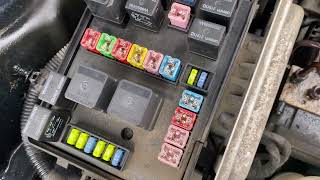
✅ What actually fixed it The problem was a blown 25A fuse for the ABS module in the front fuse box (TIPM). Replacing the fuse restored communication with the ABS module and resolved all the codes and the no-start condition. - Turbo Diesel Register Forum User (2015 Ram 3500 (similar CAN architecture)) — Cruise control not working, multiple warning lights.
✅ What actually fixed it Upon inspection, a pin on the main ABS module connector was found to be visibly burnt. The solution was to replace both the ABS module and the connector pigtail to repair the damage from the electrical short/overheating.
Helpful Videos
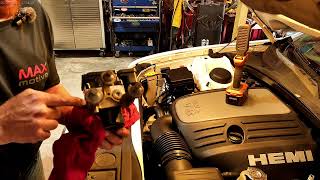
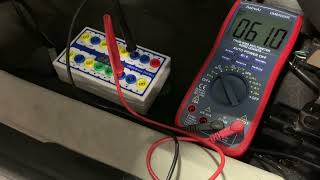
![How To Test CAN BUS With A Multimeter [CAN Bus Resistance Check] Mechanic Mindset](https://img.youtube.com/vi/JPE42HSJxAk/mqdefault.jpg)
We Have This Part in Stock


The information in this article is provided for general reference and educational purposes only. Vehicle specifications, procedures, and part compatibility can vary by production date, trim level, and region. Always consult your vehicle's factory service manual and verify part numbers before purchasing or performing repairs. Safety-critical components such as airbags, seat belts, and braking systems should be installed by a qualified professional.
- Chrysler 300:
- 🎬 Helpful Videos
- 🛍️ Shop This Part
- What's Unique About the 2021-2021 Chrysler 300
- Diagnostic Flowchart
- Symptoms You May Notice
- Most Likely Causes
- Rare But Worth Checking
- Diagnosis Steps
- Parts You'll Likely Need
- Related Codes That Often Appear With This One
- Technical Service Bulletins (TSBs) & Recalls
- Platform-Specific Known Issues
- Mechanic-Grade Diagnostic Values
- Scan Tool Commands That Help
- Wiring & Ground Locations
- Real Owner Repair Stories
- 🎟️ Get 5% Off