

U1110 on 2021 Dodge Charger: Causes and Fixes for Lost Vehicle Speed Message
This code means your car's computer (PCM) has lost the vehicle speed signal, usually broadcast by the ABS module. This often triggers ABS, stability control, and check engine warning lights, and may cause shifting problems. The most common causes are a faulty ABS module, damaged wiring to the module, a blown fuse, or a bad ground connection. Diagnosis by a professional is recommended due to the complexity of network issues.
- U1110 on a 2021 Charger means the vehicle speed signal from the ABS module is lost.
- This will disable safety systems like ABS and stability control, and may cause shifting problems.
- The most likely causes are a bad ABS module or damaged wiring/connector at the module.
- Always check for other codes like U0121 and U1120, as they confirm the problem is centered around the ABS system.
- Due to the complexity of CAN bus diagnostics, professional service with the right scan tools is strongly recommended.
What's Unique About the 2021-2021 Dodge CHARGER
On modern Dodge platforms like the 2021 Charger, dozens of electronic modules communicate constantly over the CAN bus. The vehicle speed signal is one of the most critical pieces of shared data. A Technical Service Bulletin (TSB 18-012-22) for this model year groups U1110 with several other communication loss codes, suggesting that a single fault in the ABS or stability control system can create a cascade of error codes. This makes it crucial to diagnose the entire network rather than focusing on a single module, as a downed ABS module can cause issues ranging from a no-start condition to erratic shifting.
Diagnostic Flowchart
Tap your situation to follow the diagnostic path that matches what you're seeing on this vehicle.
Symptoms You May Notice
- Check Engine Light is on
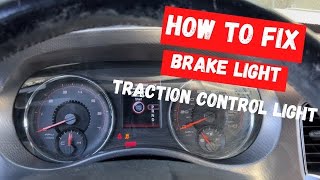
- ABS warning light is on
- ESP/BAS or traction control light is on
- Speedometer may not work or may be inaccurate
- Transmission may shift erratically or go into 'limp mode'
- Noticeable decrease in fuel economy
- Cruise control may be inoperative
- Replacing a wheel speed sensor. While a faulty wheel speed sensor can cause ABS issues, it typically sets a specific sensor code (e.g., C0031-C0040). It's less likely to cause a U1110 communication code unless it contributes to a total ABS module failure.
- Replacing the PCM. The PCM is the module that *reports* it didn't get the message. The problem is more often with the module that was supposed to *send* the message (the ABS module) or the wiring in between.
Most Likely Causes
- Faulty Anti-Lock Brake (ABS) Module 🔴 High Probability The ABS module is a central communication hub. Internal failure of the module's electronics or power supply is a common cause for it to stop communicating on the network, triggering a U1110 in other modules.
How to confirm: A technician will use a high-level scan tool to check for communication with the ABS module. If the module is powered and grounded but does not communicate or shows internal fault codes (like C2200), it has likely failed. If the ABS module is offline, it will often show as 'red' or 'offline' in a network topology view on a professional scan tool.
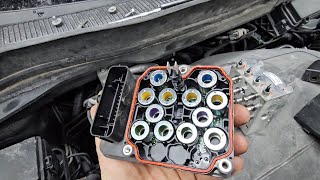
Typical fix: Replace the ABS module and program the new module to the vehicle. This often requires a dealer or specialized shop with Mopar-specific software like wiTECH. 🎬 See this time-saving trick for replacing the ABS module
Est. part cost: $400-$800 - Damaged Wiring or Corroded Connector 🟡 Medium Probability The wiring harness leading to the ABS module, often located in the driver-side front wheel well, is exposed to moisture, road debris, and vibration. This can lead to corrosion, chafing, or broken wires, especially at the main connector (C135 or C335).
How to confirm: Visually inspect the wiring harness and connector pins for the ABS module. Look for green/white corrosion, bent pins, or physically broken wires. A multimeter can be used to check for continuity and proper voltage/ground at the connector. The CAN C bus wires (often a twisted pair) should show a bias voltage of around 2.5V.
Typical fix: Repair the damaged section of the wiring harness or replace the connector pigtail. Clean any corrosion from the connector pins. In a documented case on YouTube, a technician found severely bent and damaged pins inside the ABS connector itself 🎬 Watch: How to fix no communication with the ABS module, which required connector replacement.
Est. part cost: $20-$150 - Low Battery Voltage or Poor Ground Connection 🟡 Medium Probability Modern vehicles are highly sensitive to voltage. A weak battery or a corroded/loose ground strap can cause unpredictable communication errors between modules. A loose battery terminal or a low battery condition has been documented as the root cause for a cascade of communication codes, including U1110.
How to confirm: Test the battery's state of charge (should be at least 12.6V with engine off) and health. Inspect the main battery terminals and chassis ground connections for tightness and corrosion. A voltage drop test on the ground side can confirm a poor connection.
Typical fix: Replace the battery if it fails testing. Clean or replace corroded ground straps and terminals. Ensure battery terminals are tight.
Est. part cost: $5-$250 - Blown ABS Fuse ⚪ Low Probability An electrical surge or a short in the ABS pump can cause a fuse to blow, cutting power to the module and taking it offline.
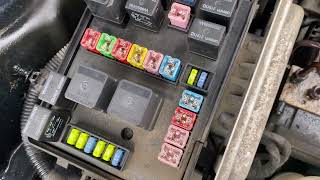
How to confirm: Check the fuses for the ABS module. On a Dodge Charger, there are multiple fuses in the front fuse box (TIPM) related to the ABS and traction control systems, often labeled F5, F6, F36, and F39. A YouTube video on a Dodge Avenger with identical codes (U0121, U1110, U1120) found the issue was a single missing 30A fuse for the ABS module.
Typical fix: Replace the blown fuse. If the fuse blows again immediately, it indicates a short circuit in the wiring or the ABS module that needs to be diagnosed.
Est. part cost: $1-$10
Rare But Worth Checking
- Faulty Powertrain Control Module (PCM): It is rare for the receiving module (PCM) to be the sole cause of the problem when the sending module (ABS) is functioning correctly. This should only be considered after all other possibilities, especially the ABS module and wiring, have been thoroughly ruled out. Sometimes, a PCM software update is required to fix communication glitches, as noted in various Mopar TSBs.
Diagnosis Steps
- Connect a professional OBD-II scanner capable of reading all vehicle modules, not just the PCM.
- Check for any other 'U' codes, especially U0121 (Lost Communication with ABS) and U1120 (Lost Wheel Distance Message). 🎬 Watch: A deep dive into diagnosing the U0121 fault code Their presence strongly points to an ABS system fault.
- Attempt to communicate directly with the ABS module using the scan tool. If communication fails, the module is offline. Proceed to check its power, grounds, and fuses.
- Inspect the fuses for the ABS module, typically located in the front fuse box (TIPM). On a Charger, these can include F5, F6, F36, and F39.
- Visually inspect the ABS module connector (often C135) and its wiring harness for any signs of physical damage, corrosion, or loose connections. Pay close attention to the area in the driver's side wheel well.
- If fuses are good and the wiring appears intact, use a multimeter to verify that the ABS module is receiving proper battery voltage and has a solid ground at its connector.
- Check the CAN bus wiring at the ABS connector. The two CAN wires should be a twisted pair. You should measure approximately 60 ohms of resistance between them (with the battery disconnected) and a bias voltage of ~2.5V on each (with the battery connected, ignition on).
- If power, ground, and CAN bus integrity are confirmed at the connector, and the module still won't communicate, the ABS module is the most likely culprit.
- If the ABS module communicates but the U1110 code persists in the PCM, the issue may be a more complex CAN bus wiring problem between the ABS module and the PCM, or a PCM software issue requiring an update.
Parts You'll Likely Need
- ABS Control Module
(OEM #68435852AF, 68258644AA, P68500121AC)— This module is the most common point of failure for this code, as it is responsible for generating and sending the vehicle speed signal. Multiple part numbers exist depending on the vehicle's specific options (e.g., adaptive cruise control). Part number 68435852AF is the electronic module itself, while 68258644AA is often the attached hydraulic control unit.
Trusted brands: Mopar, Bosch
OEM price range: $600-$900
Aftermarket price range: $350-$600 - ABS Module Connector Pigtail — If the failure is due to corrosion or physical damage at the connector, replacing the pigtail is the standard repair. This is common due to its location in the wheel well.
Trusted brands: Mopar, Dorman
OEM price range: $50-$100
Aftermarket price range: $20-$60
Related Codes That Often Appear With This One
- U0121 — U0121 means 'Lost Communication with ABS Control Module'. This code is more general and almost always appears with U1110, as the loss of the entire module (U0121) naturally includes the loss of its specific messages like vehicle speed (U1110).
- U1120 — U1120 means 'Lost Wheel Distance Message'. This is another piece of data broadcast by the ABS module, and its loss points to the exact same root causes as U1110. They frequently appear together.
- U0594 — Mentioned in TSB #1801222, this code for 'Implausible Data Received From HCP' (Hybrid Control Processor) suggests a wider network issue, often originating from the ABS/stability system.
Technical Service Bulletins (TSBs) & Recalls
- Bulletin #1801222 (2021 POWER TRAIN, dated 2022-01-20): Mentions U1110 - Lost Vehicle Speed Message as part of a group of communication-related DTCs that can set together.
- Bulletin #21-005-21 (for Chrysler 300, a platform mate): Also lists U1110 and other communication codes that can be fixed by a PCM software update.
Platform-Specific Known Issues
- A known Technical Service Bulletin (TSB 18-012-22) for the 2021 Dodge Charger lists U1110 'Lost Vehicle Speed Message' among a cluster of communication codes. This indicates a recognized pattern where a fault, often in the stability control system, can cause multiple modules to report communication errors.
- A similar TSB for the related Chrysler 300 (TSB 21-005-21) also lists U1110 as a code that can be resolved by a PCM software update, highlighting that this can sometimes be a software glitch rather than a hardware failure.
- Owners on forums report that a loose battery terminal can cause these specific ABS/Traction/ESP lights to appear suddenly, which should be the first and easiest check.
Mechanic-Grade Diagnostic Values
- CAN C Bus Resistance — expected: Approximately 60 Ohms (measured between CAN High and CAN Low pins at the DLC or a module connector with the battery disconnected).. Failure: A reading of ~120 Ohms indicates one of the two terminating resistors is offline. A reading of 0 Ohms indicates a short between the two CAN lines.
- CAN C Bus Voltage — expected: Approximately 2.5V on both CAN High and CAN Low lines relative to ground (Key On, Engine Off). CAN High should jump to ~3.5V and CAN Low should drop to ~1.5V during communication.. Failure: Voltages that are stuck high, low, or at 0V indicate a short to power, short to ground, or an open circuit.
Scan Tool Commands That Help
- wiTECH (Mopar Dealer Tool): ABS Initialization — This function is required after replacing the ABS module to make it communicate with the rest of the vehicle's network. It may also be required after a software flash.
- wiTECH (Mopar Dealer Tool): Brake Pedal Calibration / Longitudinal G-Sensor Calibration — These are miscellaneous functions found under the ABS module icon that may need to be run after reprogramming the module to ensure all sensor inputs are correctly calibrated.
- wiTECH (Mopar Dealer Tool): View Network Topology — Used during initial diagnosis to get a high-level view of the vehicle network. Modules that are not communicating (the likely source of the U-code) will appear in red, immediately focusing diagnosis.
- CDA6 (Engineering Software): ECU Uninitialize / Clear VIN — This is an advanced, non-dealer function used to 'virginize' a used ABS module. It clears the stored VIN and initialization status, allowing the used part to be programmed into a different vehicle, which is normally blocked by standard tools.
Wiring & Ground Locations
- Connector C135 (ABS Module) — Plugged into the ABS control module, typically located in the driver's side front of the engine bay, near the wheel well.. This is the main data and power connector for the module. Key pins to test are Pin 12 (CAN-C High) and Pin 13 (CAN-C Low) for network signals, Pin 1 and Pin 25 for battery power (fused), and Pin 24 and Pin 47 for ground.
- Main Engine/Chassis Grounds — Multiple locations, including a primary ground strap from the engine block to the chassis, and various smaller ground points on the inner fenders and firewall.. A poor ground connection can cause low voltage at a module, leading to unpredictable communication failures. A corroded or loose main ground can cause a cascade of 'U' codes.
- Star Connectors (CAN Bus Junctions) — Located behind dash panels and in various wiring harnesses. They act as hubs where multiple CAN bus wires join together.. An internal failure, such as a cracked solder joint within a star connector, can interrupt communication for all modules connected to it, causing widespread network codes including U1110.
Real Owner Repair Stories
- ALLDATA Tech-Assists Case Study (Jeep (similar FCA platform)) — No-crank, flickering lights, strange shifter behavior, and a host of communication codes including U1110, U0101, U0418.
❌ Tried (didn't work) Wiggling wires and reseating connectors had no effect., Replacing an auxiliary battery.
✅ What actually fixed it The initial issue was loose bolts on the main fuse box. When the issue returned, the final root cause was found to be cracked solder joints inside the CAN bus star connectors, discovered only after a 'bump test' on the steering column and close inspection with a magnifying glass. - NHTSA Document (FCA Vehicle) — No start, vehicle stalls, multiple communication codes including U0121, U1110, U1120.
❌ Tried (didn't work) Initial diagnosis was inconclusive.
✅ What actually fixed it The document states that all the fault codes set were determined to be the result of a low battery condition. Once the battery/charging system issue was resolved, the communication codes were cleared.
"I Checked Everything" — The Actual Cause
- In a documented case on a similar FCA vehicle, multiple communication codes including U1110 kept appearing despite all modules and wiring seeming to test okay. A technician performed a 'bump test' (hitting the steering column) which temporarily fixed the issue. This led to inspecting the CAN bus star connectors (network junctions) under a magnifying glass, which revealed cracked internal solder joints. The connectors themselves were the point of failure, a fault that standard continuity and voltage tests would miss.
OEM Part Supersession History
68435852AA, 68435852AB, 68435852AC, 68435852AD, 68435852AE→68435852AF— Part has been updated by the manufacturer for improved reliability or to consolidate inventory.
Heads up: The newest part number (68435852AF) is the correct service replacement for all previous versions.
Helpful Videos
We Have This Part in Stock



The information in this article is provided for general reference and educational purposes only. Vehicle specifications, procedures, and part compatibility can vary by production date, trim level, and region. Always consult your vehicle's factory service manual and verify part numbers before purchasing or performing repairs. Safety-critical components such as airbags, seat belts, and braking systems should be installed by a qualified professional.
- Dodge CHARGER:
- 🎬 Helpful Videos
- 🛍️ Shop This Part
- What's Unique About the 2021-2021 Dodge CHARGER
- Diagnostic Flowchart
- Symptoms You May Notice
- Most Likely Causes
- Rare But Worth Checking
- Diagnosis Steps
- Parts You'll Likely Need
- Related Codes That Often Appear With This One
- Technical Service Bulletins (TSBs) & Recalls
- Platform-Specific Known Issues
- Mechanic-Grade Diagnostic Values
- Scan Tool Commands That Help
- Wiring & Ground Locations
- Real Owner Repair Stories
- "I Checked Everything" — The Actual Cause
- OEM Part Supersession History
- 🎟️ Get 5% Off