

U1064 on 2004-2007 Cadillac CTS: Loss of Communication Causes and Fixes
On a 2004-2007 Cadillac CTS, code U1064 means a loss of communication with the Body Control Module (BCM). This often causes a no-crank/no-start condition and may be due to a faulty Engine Control Module (ECM), a common issue for this platform. Before replacing the ECM, TSB #PIC5460B advises checking the ECM's power and data line wiring. A replacement ECM is the most frequent fix after wiring is confirmed good.
- U1064 on a 2004-2007 CTS indicates a communication failure between the Engine Control Module (ECM) and Body Control Module (BCM).
- The most common symptoms are severe: the engine will not crank or start, and the key may become trapped in the ignition.
- Despite the code pointing to the BCM, a failed ECM is a very common root cause for this specific problem on this vehicle.
- Diagnosis is complex and requires professional tools. Do-it-yourself repair is not recommended as replacement modules require programming.
- Before replacing any expensive modules, always verify battery voltage and check all related fuses and wiring for obvious damage.
What's Unique About the 2004-2007 Cadillac CTS

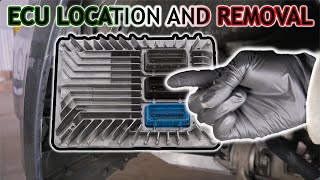
The first-generation Cadillac CTS, built on the GM Sigma platform, is known for experiencing communication failures that lead to a 'no-crank, no-start' condition, often accompanied by the key getting stuck in the ignition and a 'SERVICE THEFT SYSTEM' message. While U1064 points to a communication loss with the BCM, a very common point of failure on these specific vehicles is actually the Engine Control Module (ECM) itself. The ECM, located behind the driver-side front wheel well liner, can fail internally, causing it to stop communicating on the network. This triggers a cascade of 'U' codes in other modules, including U1064, as they can no longer hear the ECM.
Diagnostic Flowchart
Tap your situation to follow the diagnostic path that matches what you're seeing on this vehicle.
Symptoms You May Notice
- No-crank, no-start condition.
- Key stuck in the ignition lock cylinder.
- Multiple warning lights on the instrument cluster, such as the security light.
- "SERVICE THEFT SYSTEM" message on the driver information ce 🎬 Watch: How to reset or disable the Cadillac theft system.nter.
- Scan tool cannot communicate with the ECM, but may communicate with other modules.
- Erratic behavior of electronic components like power locks, windows, and interior lights.
- Fuel gauge does not move or sweep when the key is turned to the 'ON' position, a key indicator of no communication with the ECM.
- Replacing the ignition switch. While a faulty ignition switch can cause a no-start, it typically doesn't generate a U1064 communication code.
- Replacing the starter. A bad starter will result in a no-crank, but all vehicle electronics will usually power on normally, and communication codes will not be present.
Most Likely Causes

- Failed Engine Control Module (ECM) 🔴 High Probability This is a well-documented, common failure point on first-generation Cadillac CTS models, leading to a host of communication codes. Multiple owner forums and diagnostic videos confirm this as the primary culprit after wiring is checked. 🎬 Watch: A detailed explanation of how a bad ECM causes no-start.
How to confirm: After verifying all powers, grounds, and the integrity of the communication line to the ECM per TSB #PIC5460B, the inability of a scan tool to communicate with it points to internal failure. A technician may use an oscilloscope to confirm a good 7V data signal is reaching the ECM, but the module isn't responding, confirming it's the point of failure.
Typical fix: Replace the Engine Control Module (ECM) and have it programmed to the vehicle's VIN.
Est. part cost: $200-$400 - Wiring Harness Damage or Corrosion 🟡 Medium Probability TSB #PIC5460B specifically calls out the Ignition 1 Power Feed (CKT 5290) and the Class 2 Serial Data line (CKT 1807) as potential points of failure. These wires can become chafed, broken, or corroded, particularly in the engine bay or at the ECM connector, which is located in the vulnerable driver's side wheel well area.
How to confirm: Visually inspect the wiring harness between the ECM, BCM, and the data link connector. Check for continuity and shorts on the Class 2 data line (CKT 1807, typically a purple wire) and verify battery voltage on the Ignition 1 feed (CKT 5290, typically a pink wire) at the ECM connector.
Typical fix: Repair the damaged section of the wiring harness.
Est. part cost: $10-$100 - Failed Body Control Module (BCM) 🟡 Medium Probability The BCM is the central hub for many body electronics and can fail, causing it to stop communicating on the network. While possible, on this platform, the ECM is a more frequent cause of this specific set of symptoms. Note that the CTS uses a 'Dash Integration Module' and a 'Rear Integration Module' rather than a single BCM.
How to confirm: A professional scan tool will be unable to communicate with the BCM. A technician will verify the BCM has proper power and ground before condemning the module. If the scan tool can talk to the ECM but not the BCM, the BCM or its wiring is suspect.
Typical fix: Replace the Body Control Module (BCM) and program it to the vehicle.
Est. part cost: $250-$500 - Poor Power or Ground Connections ⚪ Low Probability
How to confirm: Check for low battery voltage (below 12.4V). Inspect and clean the main battery terminals, chassis grounds, and the specific power/ground connections at both the ECM and BCM. A bad ground at the ECM can cause a no-communication scenario.
Typical fix: Clean or repair ground straps and power connections. Charge or replace the battery if it's weak.
Est. part cost: $5-$200
Rare But Worth Checking
- Faulty Underhood Fuse Block / Mega Fuse:
Diagnosis Steps
- Check Battery Health: Ensure the battery has a full charge (at least 12.4V) and that terminals are clean and tight. Low voltage can cause random communication errors.
- Attempt to Communicate with All Modules: Use a professional scan tool to perform a full network scan. Note which modules are communicating and which are not. Inability to talk to the ECM is a major clue.
- Check Fuses: Inspect all fuses related to the ECM, BCM, and ignition systems, particularly the ECM fuse in the under-hood fuse block as mentioned in TSB #PIC5460B.
- Check Class 2 Data Line at DLC: Using a multimeter, check for voltage at Pin 2 of the Data Link Connector (DLC). A healthy, idle Class 2 bus should show a fluctuating voltage around 7V. If it's stuck at 0V or 12V, a module or wire is shorted.
- Follow TSB #PIC5460B: Verify Power and Ground at the ECM. Using a wiring diagram, confirm the ECM receives battery voltage on the Ignition 1 Power Feed (CKT 5290) and has solid ground connections. Then, check for continuity on the Class 2 data line (CKT 1807) between the BCM and ECM.
- Inspect ECM and BCM Connectors: Disconnect and inspect the main connectors at both the Engine Control Module and Body Control Module for any signs of corrosion, moisture, or bent/backed-out pins.
- Professional Diagnosis: If all wiring, powers, and grounds to the ECM are confirmed good, but it still won't communicate, the ECM has failed internally. This is the most common outcome for this specific issue on the CTS.
Parts You'll Likely Need
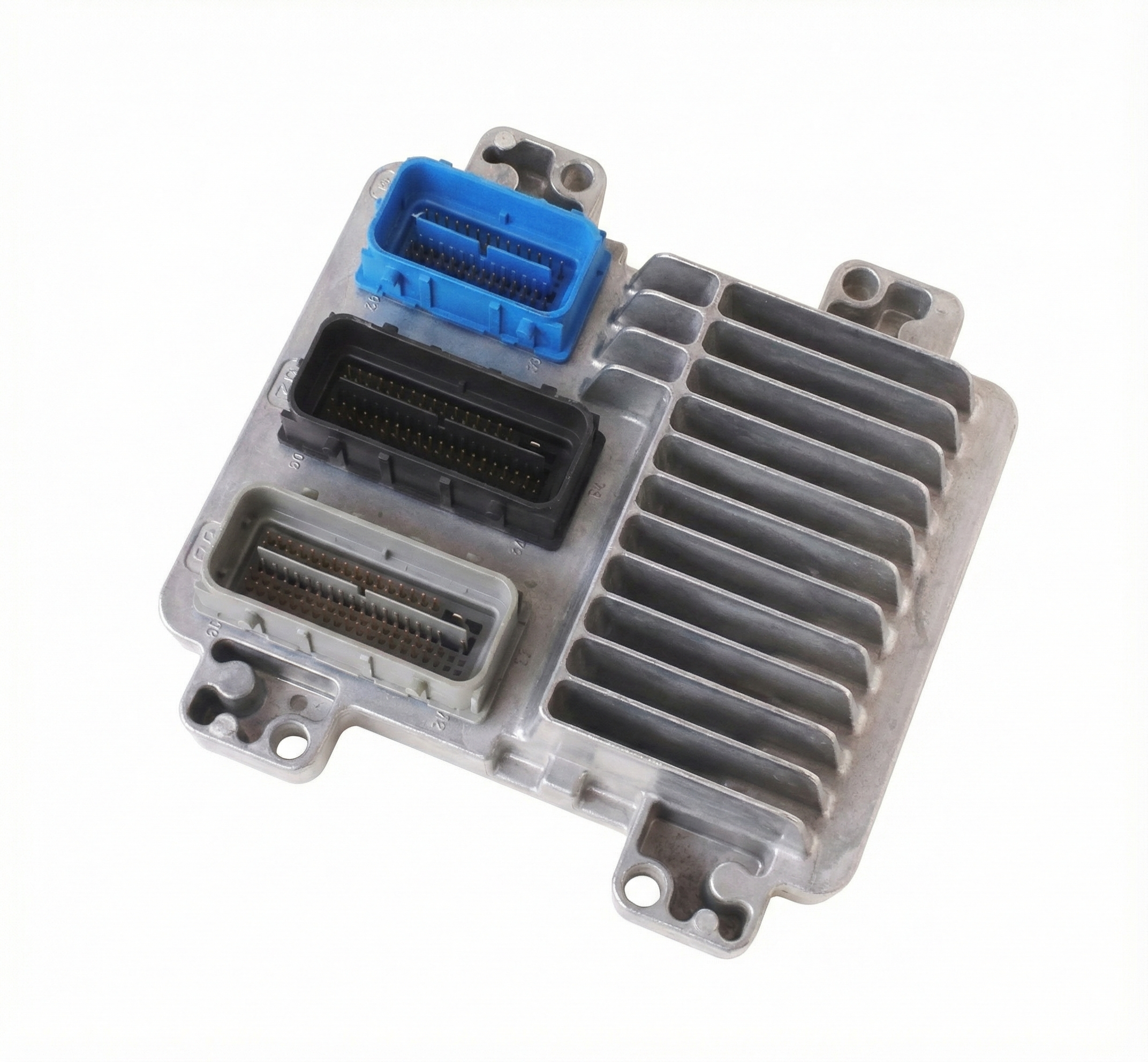
- Engine Control Module (ECM)
(OEM #12600607 (supercedes 12592124, 12588472, 12581144, among others - verify by VIN))— This is the most frequent cause of U1064 and related no-start issues on the 2004-2007 CTS. The original module fails internally.
Trusted brands: ACDelco (GM Original Equipment), Cardone (Remanufactured)
OEM price range: $300-$500
Aftermarket price range: $200-$400 - Body Control Module (BCM)
(OEM #15870719 (verify by VIN))— If the ECM is proven to be good, the BCM is the next most likely module to have failed, as the code directly names it as the source of lost communication. Note this may be called a Dash Integration Module or Rear Integration Module.
Trusted brands: ACDelco (GM Original Equipment), Dorman (Remanufactured)
OEM price range: $350-$550
Aftermarket price range: $250-$450
Related Codes That Often Appear With This One
- U1000 — This is a general Class 2 Communication Malfunction code, often set in multiple modules when a primary module like the ECM goes offline.
- P1629 — Indicates the Theft Deterrent Fuel Enable Signal was not received from the BCM, which directly causes a no-start condition. This is cited in TSB #PIC5460B.
- U0100 — A generic code for 'Lost Communication with ECM/PCM'. Other modules will set this code when the ECM stops talking. This is also mentioned in TSB #PIC5460B.
- U1300 — Another Class 2 Data Link Low or High code, indicating a problem on the communication circuit. It's listed alongside U1064 in TSB #PIC5460B.
Technical Service Bulletins (TSBs) & Recalls
- PIC5460B: Mentions that a no-crank or key-stuck-in-ignition concern may be accompanied by U1064 and other codes, and advises checking specific ECM power and data circuits.
Platform-Specific Known Issues
- A known issue involves internal failure of the Engine Control Module (ECM), leading to a no-crank condition and a flood of communication codes, including U1064. This is a very common final diagnosis in owner forums.
- Technical Service Bulletin #PIC5460B links U1064 with a no-crank or key-stuck-in-ignition concern, but directs technicians to first check the Ignition 1 Power Feed (CKT 5290) and Class 2 Data Line (CKT 1807) wiring to the ECM before replacing the module.
Mechanic-Grade Diagnostic Values

- Class 2 Serial Data Line Voltage — expected: A fluctuating signal with a nominal voltage of 7V when active, toggling to 0V (ground).. Failure: Stuck at 0V (short to ground), stuck at 12V (short to power), or a static, non-fluctuating voltage.
- CAN Bus Network Resistance — expected: Approximately 60 ohms between Pin 6 and Pin 14 of the DLC with all modules connected.. Failure: 120 ohms may indicate one of the two terminating modules (e.g., ECM or TCM) is disconnected or internally open. A reading near 0 ohms indicates a short between the CAN High and CAN Low wires.
Scan Tool Commands That Help
- Tech2 / GDS2 or equivalent professional scanner: Isolate Modules at Splice Pack — When the entire Class 2 network is down (no communication with multiple modules), a technician can physically disconnect the splice pack comb (e.g., JX205) and use a jumper to connect the scan tool to one module at a time. This helps identify which specific module is shorting the data bus and bringing the network down.
- Tech2 / GDS2 or equivalent professional scanner: Request Module Status / Full Network Scan — This is the first step to see which modules are reporting as 'Active' and which are not communicating. A generic reader might only show a U0100 code, but a professional tool will show the cascade of 'U' codes in all surviving modules, pointing to a network-wide failure originating from one offline module.
Wiring & Ground Locations

- G103 — On the cowl at the left (driver's) rear of the engine compartment, above the brake booster.. This is a critical ground point for the Body Control Module (BCM/Dash Integration Module), Instrument Panel Cluster (IPC), and the Data Link Connector (DLC). A poor connection here can cause widespread communication codes and may prevent a scan tool from connecting properly.
- G101 / G104 — Engine block grounds. G101 is at the lower front of the engine block; G104 is on the rear of the driver's side cylinder head.. These are primary grounds for the Engine Control Module (ECM). A loose or corroded ground here can prevent the ECM from powering on, causing a total loss of communication (U0100, U1064, etc.) and a no-start condition.
- BCM / DIM / RIM — The CTS does not have a single BCM. It uses a Dash Integration Module (DIM) under the glove box and a Rear Integration Module (RIM) under the rear deck on the passenger side.. U1064 specifically names the BCM. Technicians must know they are looking for one of these two modules when diagnosing wiring or module failure, not a single BCM in a typical location.
- Splice Pack JX205 — Typically located behind the driver's side kick panel, near the floor.. This is a central junction for the Class 2 data bus. It provides a single access point for a technician to disconnect all modules from the network and test them individually to find one that is shorted or malfunctioning.
Real Owner Repair Stories
- Jabo The Mechanic, YouTube (2004-2007 Cadillac CTS (specific year not stated, applies to generation)) — No-crank, no-start, no communication with the ECM. A key diagnostic symptom was the fuel gauge not sweeping up when the key was turned to the 'ON' position.
❌ Tried (didn't work) The video focuses on direct diagnosis, but implies that simply checking fuses is not enough.
✅ What actually fixed it The ultimate fix was a failed ECM. The video stresses the importance of first checking all ECM power feeds and, critically, the ground wire that bolts to the side of the engine block before condemning the ECM. - Jake Stansberry, YouTube (2004 Cadillac CTS 3.6L V6) — Intermittent no-crank, no-start. Traction control light would turn on, fuel gauge wouldn't move, and the key would get stuck in the ignition.
❌ Tried (didn't work) The previous owner had already replaced the ECM, but the problem persisted.
✅ What actually fixed it This was not a root cause fix, but a practical bypass. The owner ran two wires from the starter relay socket in the underhood fuse box into the cabin, connected to a momentary push-button. When the car failed to start with the key, turning the key to 'ON' and then pressing the button would manually crank and start the engine. This bypasses the failed communication path that prevents the starting command.
OEM Part Supersession History
12581144, 12588472, 12592124→12600607 (and others, always verify by VIN)— Internal component revisions and software updates to address reliability issues.
Heads up: Remanufactured ECMs for this platform have a reputation for being unreliable or dead on arrival. Some forum members report needing to try multiple units before getting a good one, suggesting quality control issues with remanufactured parts.
Model Year Variations Within This Range
- 2004-2007: The ECM location can vary. On V6 models like the 2.8L, it may be located on top of the engine under the plastic cover. On V8 CTS-V models, it is often found under the radiator. This is in addition to the common GM location behind the driver's side wheel well liner.
- 2004-2005 vs 2006-2007: For the CTS-V, the engine changed from the 5.7L LS6 V8 to the 6.0L LS2 V8 in 2006. The 2006-2007 models also received an upgraded, stronger rear differential and added steering wheel audio controls.
Helpful Videos
Used OEM Parts in Stock



New Aftermarket Parts Available



The information in this article is provided for general reference and educational purposes only. Vehicle specifications, procedures, and part compatibility can vary by production date, trim level, and region. Always consult your vehicle's factory service manual and verify part numbers before purchasing or performing repairs. Safety-critical components such as airbags, seat belts, and braking systems should be installed by a qualified professional.
- Cadillac CTS:
- 🎬 Helpful Videos
- 🛍️ Shop This Part
- What's Unique About the 2004-2007 Cadillac CTS
- Diagnostic Flowchart
- Symptoms You May Notice
- Most Likely Causes
- Rare But Worth Checking
- Diagnosis Steps
- Parts You'll Likely Need
- Related Codes That Often Appear With This One
- Technical Service Bulletins (TSBs) & Recalls
- Platform-Specific Known Issues
- Mechanic-Grade Diagnostic Values
- Scan Tool Commands That Help
- Wiring & Ground Locations
- Real Owner Repair Stories
- OEM Part Supersession History
- Model Year Variations Within This Range
- 🎟️ Get 5% Off