

OBD-II Code U1064: Loss of Communication with Body Control Module (BCM)
The Ultimate Guide to What U1064 Means, Why It Triggers, and How to Fix It for Good
- Code U1064 indicates the Powertrain Control Module (PCM) has lost network communication with the Body Control Module (BCM), disabling critical systems like the immobilizer and interior electronics.
- Test the battery and inspect the BCM ground wires first, as voltage drops below 12.4V cause over 80% of spurious communication codes.
- Expect severe drivability issues, including a no-start condition, parasitic battery drains exceeding 50mA, or a key trapped in the ignition cylinder.
- Never replace the $500+ BCM without first isolating the Class 2 data line to rule out a shorted factory radio or aftermarket alarm pulling the network down.
- Leave BCM replacement to professionals with OEM-level scan tools, as a new module requires VIN-specific programming and security relearns to start the engine.
What Does U1064 Mean?

U1064 indicates the Powertrain Control Module (PCM) has lost network communication with the Body Control Module (BCM). The BCM is the central command for your car's body functions, managing power windows, door locks, interior lights, the anti-theft system, and dashboard warning lights. When this communication link severs, these features malfunction, warning lights illuminate randomly, and the engine immobilizer prevents the car from starting.
Technical definition: The SAE J2012 definition for U1064 is "Loss of Communications with BCM". This diagnostic trouble code (DTC) sets when a primary control module fails to receive the BCM's 'State of Health' (SOH) message on the Class 2 serial data circuit within a 2-second timeframe. This indicates a breakdown in the communication network, not necessarily a failed module.
Can I Drive With U1064?
Yes, But With Caution. You can physically drive with this code, but doing so is highly risky. The BCM controls critical systems, including the immobilizer and exterior lighting. You will likely experience sudden stalling, headlights failing at night, or the anti-theft system engaging and permanently immobilizing the vehicle. Continuing to drive with a faulty BCM also creates parasitic draws that destroy the alternator and battery.
Common Causes

- Weak or Faulty Battery/Alternator (Very Common) — Low system voltage is the primary trigger for communication codes. The BCM requires a stable 12V+ to operate. A dying battery or failing alternator causes voltage drops during startup, forcing the module offline before cranking issues become noticeable.
- Corroded or Loose BCM Grounds (Very Common) — A corroded or loose BCM ground wire removes the module's operating reference. Typically located under the dashboard or on a kick panel, a poor ground creates high resistance, causing erratic electrical behavior and triggering U1064. 🎬 Watch: How to find and repair faulty electrical grounds.
- Water Intrusion (Common) — Clogged sunroof drains or degraded windshield seals allow water to drip directly onto the BCM. This moisture causes pin corrosion and internal short circuits, severing network communication.
- Another Faulty Module on the Network (Common) — A different module on the same data line (e.g., factory radio, ABS controller, or door module) shorts internally, pulling the entire network voltage down and silencing the BCM.
- Damaged Wiring or Connectors (Common) — The Class 2 data wire (often a single purple wire on GM vehicles) chafes, pinches, or breaks, physically severing the network connection between modules. 🎬 Watch: Troubleshooting GM Class 2 network communication codes.
- Faulty Body Control Module (BCM) (Less Common) — The BCM itself fails due to internal circuit board degradation or voltage spikes, permanently stopping its status broadcasts.
- Faulty Ignition Switch (Less Common) — A worn ignition switch causes momentary power loss to the BCM, dropping it offline just long enough to trigger a communication fault without other obvious symptoms.
- Improperly Installed Aftermarket Accessories (Less Common) — Incorrectly wired remote starters, alarms, or stereos introduce electrical noise or short the communication circuit, crashing the data network.
Symptoms

- No-Start or No-Crank Condition — The engine refuses to crank because the BCM controls the immobilizer system. If the PCM does not receive the security 'all clear' signal, it disables the starter and fuel injectors.
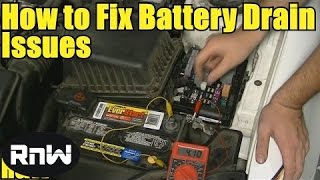
- Parasitic Battery Drain — A faulty BCM fails to command other modules to 'sleep' when the car turns off. This creates a continuous power draw that drains a healthy battery overnight.
- Malfunctioning or Erratic Electronics — BCM-controlled features fail intermittently. Power windows stop moving, door locks cycle independently, interior lights flicker, and the radio cuts out.
- Multiple, Erratic Warning Lights — The Check Engine, ABS, Airbag, Security, and Battery lights illuminate randomly. A communication failure forces the PCM to turn these lights on as a default safety measure.
- Key Stuck in Ignition — The BCM sends the signal to the ignition interlock solenoid to release the key in Park. When communication drops, the signal never sends, trapping the key in the cylinder.
Diagnostic Flowchart

Tap your situation to follow the diagnostic path that matches what you're seeing on this code.
Used vs. New Parts: Buying Guide
When a used part is worth it: A used BCM is only viable if you possess professional tools to 'clone' the original module's data. For standard DIYers, a used BCM will trigger the immobilizer and brick the vehicle.
Donor-vehicle mileage cap: roughly under 60000 miles for the part to have meaningful remaining life.
Donor quality checklist:
- Part number must be an exact match.
- Verify the donor vehicle did not have flood damage.
- Confirm the part is 'unlocked' or reset by the seller.
Decision logic:
- If The vehicle is your daily driver and reliability is critical → Buy a new or professionally remanufactured BCM. It provides a clean slate for programming and includes a warranty.
- If You are a professional with module cloning tools → A used BCM is a cost-effective option.
- If You are a DIYer with a standard scan tool → Do not buy a used BCM. You will pay for the part, fail to start the car, and require a $150 tow to a dealership for programming.
Warranty tradeoff: Used BCMs offer a 30-90 day part-only warranty. New OEM or remanufactured BCMs include a 1-year to lifetime warranty.
Worst-case if a used part fails: $600-$1200 if a used BCM fails or cannot be programmed, factoring in the wasted part cost, repeat labor, towing, and dealership programming fees.
What Happens If You Wait — Timeline
- 0-1 month: Intermittent issues begin. A 'History' code U1064 stores. You experience a single, random event like a door lock cycling or a slow-crank start on a cold morning. (MPG impact: 0%% · Added cost: $0)
- 1-4 months: Symptoms become frequent and a 'Current' code sets. The vehicle occasionally refuses to start. A parasitic draw begins weakening the battery. (MPG impact: 0-2%% · Added cost: $150-$200 in diagnostic fees.)
- 4-8 months: A hard failure occurs. The parasitic draw drains the battery overnight, requiring frequent jump-starts. The constant draining and recharging cycle destroys the battery and alternator. (MPG impact: 2-5%% · Added cost: $300-$600 for a new battery and alternator.)
- 8+ months: Cascading electrical failure. Unstable voltage from the failing BCM corrupts software in the PCM and ABS modules. The vehicle is completely immobilized. (MPG impact: 5-10%% · Added cost: $1000-$2500 for replacing multiple modules and extensive diagnostic labor.)
Related Codes
- U1000 — A generic Class 2 Communication Failure code. Seeing U1000 alongside U1064 strongly suggests a network-wide problem, such as a shorted data wire or faulty splice pack.
- U1016 — The reciprocal code for 'Loss of Communication with PCM'. Seeing both U1064 and U1016 points directly to a wiring issue between the two modules.
- P1626 — Theft Deterrent Fuel Enable Signal Lost. The PCM sets this when it fails to receive the security handshake from the BCM due to the U1064 communication loss.
- B1000 — ECU Malfunction. If B1000 is present with a 'Current' status alongside U1064, it confirms the BCM has failed internally and requires replacement.
Climate & Environmental Factors
- High Humidity / Heavy Rain: Increases water intrusion risk. Clogged drains allow water to drip directly onto the BCM, causing rapid corrosion and short circuits.
- Cold Weather: Reduces battery cranking power. A weak battery drops below the required voltage threshold during a cold start, triggering a U1064 code.
- Road Salt (Winter Climates): Corrosive brine accelerates the degradation of ground points and wiring connectors, creating high resistance that severs network communication.
How to Talk to a Mechanic About This Code
Say this: "I have a U1064 communication code and electrical symptoms. Please start by load-testing the battery and checking the main BCM power and ground connections before proceeding with a deeper network diagnosis."
This directs the technician to check the most common and least expensive causes first, preventing them from immediately recommending a $800 BCM replacement without proper validation.
Avoid saying:
- 'Just fix the U1064 code'
- 'My car's acting weird, can you look at it?'
- 'I think I need a new BCM'
Questions to ask before authorizing the repair:
- What were the exact voltage results of the battery and charging system tests?
- Did you physically inspect the BCM connectors and ground points for corrosion?
- If recommending a BCM replacement, how did you rule out a shorted module on the data line?
- Is the replacement BCM new or remanufactured, and does the quote include programming?
Where to Take It: Dealer vs Independent vs Chain
- Dealer:
Best for: Vehicles under warranty, Complex electrical issues involving Technical Service Bulletins (TSBs), When a replacement BCM requires proprietary online programming
Downsides: Highest labor rates ($150-$250/hr), Defaults to replacing entire modules rather than repairing wiring (Typical cost: +50% vs. baseline) - Independent Shop:
Excellent fit, provided the shop specializes in electrical diagnostics and possesses OEM-level scan tools.
Best for: Out-of-warranty vehicles where cost is a factor, Diagnosing common U1064 causes like batteries, grounds, and wiring faults
Downsides: May lack expensive, brand-specific programming tools for module replacement (Typical cost: +0% vs. baseline) - Chain Shop:
AVOID. A U1064 code requires a diagnostic specialist, which falls outside the business model of quick-lube and chain repair shops.
Best for: Purchasing and installing a new battery
Downsides: Technicians lack training for complex network diagnostics, High risk of misdiagnosis and unnecessary parts replacement (Typical cost: -10% vs. baseline)
When to Walk Away From the Repair
If the estimated repair cost for the U1064 fault exceeds 50% of your car's private-party value, sell or trade the vehicle. For cars over 150,000 miles, lower this threshold to 30-40%.
- Car worth $3000, fix is $1800: Walk away. The repair cost is 60% of the car's value. Sell it 'as-is' to a mechanic or junk buyer.
- Car worth $10000, fix is $1200: Fix it. The repair is 12% of the vehicle's value and restores critical reliability.
- Car worth $5000, fix is $2500: Borderline. At 50% of the car's value, get a second opinion. Consider the car's overall condition before authorizing.
What Scan Tool You Need for This Code

Minimum: A scanner capable of reading manufacturer-specific 'U' (Network) and 'B' (Body) codes, and displaying code status (Current vs. History).
A basic $20 code reader only scans generic 'P' (Powertrain) codes and will not detect a U1064 network fault. Without BCM access, you cannot differentiate a real fault from a harmless history code.
Budget: BlueDriver Pro (~$90) — Reads and clears enhanced codes (ABS, Airbag, BCM). It displays if the U1064 is 'Current' or 'History', providing the absolute minimum data needed to start diagnosing.
Mid-range: Foxwell NT510/NT530 Elite (~$180) — Provides live data from the BCM. You can monitor module voltage, observe data line activity, and access basic bidirectional controls to test BCM functionality directly.
Professional: Autel MaxiCOM MK808S (~$500) — Offers full bidirectional control and network topology mapping. You can command individual modules to respond, isolating offline components instantly.
Rent vs buy: Buy. Free rental scanners from auto parts stores lack the software to read BCM or network codes. Diagnosing U1064 requires purchasing a capable tool.
Will This Fail Emissions / State Inspection?
Yes — this code typically fails an OBD-II emissions inspection.
- California: An illuminated Check Engine Light is an automatic failure. After repairs, all required readiness monitors must be set to 'Ready', requiring 50-100 miles of driving.
- New York: The NYVIP3 inspection fails any vehicle with an illuminated Check Engine Light. Most 2001+ vehicles are allowed only one 'Not Ready' monitor to pass.
- Texas: In the 17 emissions-testing counties, an illuminated Check Engine Light is an automatic failure. The vehicle must complete a drive cycle to set monitors before re-inspection.
Most Commonly Affected Vehicles
- Chevrolet Corvette (C5) (1997-2004) — U1064 frequently stores as a 'History' (H) code. GM service bulletins confirm this is a normal software function and should be ignored unless active symptoms exist.
- Chevrolet Trailblazer / GMC Envoy (2002-2009) — Highly prone to network failures. A single faulty module (commonly the factory radio or driver door module) shorts the entire Class 2 data line.
- Ford F-150 (2004-2008) — U1064 points to an internal failure of the Smart Junction Box (SJB), which houses integrated electronic circuits that disrupt communication when they fail.
- Cadillac SRX / CTS (2004-2008) — Frequently linked to a no-start condition and a key stuck in the ignition. GM TSB PIC5460B points to a wiring fault in the ECM power circuits before condemning the BCM.
- Chevrolet Impala / Monte Carlo (2000-2005) — Known to cause stalling and starting issues due to BCM communication loss. The ignition switch is a known weak point that triggers this code.
- GMC Sierra / Chevrolet Silverado (1999-2007) — Caused by a bad connection at the under-hood fuse block or corrosion at the BCM connectors. Parasitic battery drain is a common symptom.
- Chevrolet Colorado / GMC Canyon (2004-2012) — Triggered by poor connections or corrosion at the BCM connectors located under the driver's side dashboard, often due to cabin water leaks.
- Honda Odyssey (2011-2017) — UNIQUE: U1064 indicates a 'Loss of Communication between the Seat Heater Control Unit and the Climate Control Unit', not the main BCM.
- Chrysler / Dodge / Jeep Various Models (2005-2014) — A failing Totally Integrated Power Module (TIPM) cuts power to the BCM, triggering U1064 alongside multiple other communication codes.
Manufacturer-Specific Notes
- General Motors (GM): On early 2000s GM vehicles, U1064, U1016, and U1096 frequently store as 'History' (H) codes. This is a normal result of modules waking up at different speeds and requires no action.
- GMC: On specific GMC trucks, U1064 defines as 'Steering Phase Z Circuit Short to Ground'. This points to a steering angle sensor wiring issue, not a general communication loss.
- Honda: On the 2011-2017 Odyssey, U1064 indicates a communication failure between the Climate Control Unit and the Seat Heater Control Unit, a non-critical fault.
- Chrysler/Dodge/Jeep: The Totally Integrated Power Module (TIPM) acts as both a fuse box and a control module. Internal TIPM relay failures cut power to the BCM, triggering U1064.
Real Owner Stories
2002 Chevy Impala with starting issues
Vehicle intermittently failed to start, displaying code U1064. Battery connections tested perfectly.
What they tried:
- Tested battery voltage and cleaned terminals.
Outcome: The problem traced to a faulty ignition switch. Replacing the switch resolved the momentary power loss to the BCM, clearing the U1064 code and restoring reliable starting.
Lesson: On early 2000s GM models, a failing ignition switch causes a micro-second power drop to the BCM, triggering a communication fault before any physical symptoms appear.
2005 GMC Envoy with multiple 'U' codes and random electrical issues
Vehicle logged U1064 alongside a dozen other communication codes. The radio cycled on and off, and door locks actuated randomly.
What they tried:
- Replaced the BCM, which did not fix the issue.
Outcome: Using a professional scanner, the technician unplugged modules one by one from the Class 2 splice pack. Disconnecting the factory radio restored communication to all other modules. The radio had an internal short pulling down the entire network.
Lesson: Never replace the BCM when multiple 'U' codes are present. A single shorted module on the data line crashes the entire network. Isolate modules at the splice pack to find the true culprit.
2001 Corvette Z06 with persistent 'History' code
Owner repeatedly cleared a U1064 'H' (History) code for over a year, but it always returned without causing drivability issues.
What they tried:
- Repeatedly clearing the code with a scan tool.
- Disconnecting the battery to reset modules.
Outcome: A Corvette specialist confirmed that intermittent U1064 history codes are a normal software function on C5 Corvettes. Modules wake up at slightly different speeds, logging a temporary fault.
Lesson: Ignore 'History' (H) communication codes on early 2000s GM vehicles unless accompanied by active symptoms. Chasing these codes wastes time and money on a normal manufacturer quirk.
How to Prevent This Code From Triggering
- Perform Regular Battery Maintenance (Every 6 months) — Cleaning battery terminals prevents voltage drops that trigger communication faults. A healthy battery is the primary defense against electrical gremlins.
- Clear Sunroof and Cowl Drains (Annually) — Clearing drains prevents water from backing up into the cabin and dripping onto the BCM, eliminating the risk of corrosion and short circuits.
- Apply Dielectric Grease to Connectors (When connectors are disconnected) — Applying dielectric grease to BCM harness seals blocks moisture and prevents pin corrosion, ensuring a reliable long-term connection.
- Avoid Improper Jump-Starting (As needed) — Incorrectly connecting jumper cables causes massive voltage spikes that permanently fry sensitive electronics like the BCM.
- Ensure Professional Installation of Electronics (During installation) — Professionals integrate aftermarket alarms and stereos without tapping into the Class 2 data line, preventing network crashes.
Frequently Asked Questions
Can a bad battery really cause a U1064 code?
Yes. A weak battery is the most common cause of communication codes. Electronic modules require stable voltage to communicate, and a momentary drop during startup forces them offline. Always test the battery before replacing parts.
What is the difference between a 'Current' and 'History' U1064 code?
A 'Current' code means the fault is actively happening right now. A 'History' code means the fault occurred previously but is no longer active. On many GM vehicles, a U1064 history code is a normal software quirk and requires no action unless symptoms exist.
I cleared the code and it came right back. What does that mean?
An immediately returning code signifies a 'hard' fault, such as a broken wire, blown fuse, or completely failed module. The problem is actively present and not an intermittent glitch. You must perform physical diagnostics to find the root cause.
What is the most common mistake when diagnosing U1064?
The most expensive mistake is immediately replacing the Body Control Module (BCM) without testing the network. The actual cause is usually a weak battery, a corroded ground wire, or another shorted module on the data line. Always rule out power and wiring issues first.
Can I replace the BCM myself?
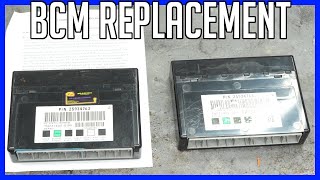
You can physically install the module, but the vehicle will not start until it is professionally programmed. The new BCM requires dealer-level software to sync with your car's VIN and immobilizer system. Towing the vehicle to a shop for programming negates most DIY savings.
My mechanic says my battery light is on because of the alternator, but the code is U1064. Is that right?
Not necessarily. The BCM controls the dashboard battery warning light. If the PCM loses communication with the BCM, it turns the light on as a default safety measure, even if the alternator is charging perfectly.
What is a parasitic draw and how does it relate to U1064?
A parasitic draw occurs when an electrical component drains the battery while the vehicle is off. A faulty BCM causes this by failing to command other modules to 'sleep'. This constant drain kills the battery overnight and frequently accompanies a U1064 code.
Key Takeaways
- Code U1064 indicates the Powertrain Control Module (PCM) has lost network communication with the Body Control Module (BCM), disabling critical systems like the immobilizer and interior electronics.
- Test the battery and inspect the BCM ground wires first, as voltage drops below 12.4V cause over 80% of spurious communication codes.
- Expect severe drivability issues, including a no-start condition, parasitic battery drains exceeding 50mA, or a key trapped in the ignition cylinder.
- Never replace the $500+ BCM without first isolating the Class 2 data line to rule out a shorted factory radio or aftermarket alarm pulling the network down.
- Leave BCM replacement to professionals with OEM-level scan tools, as a new module requires VIN-specific programming and security relearns to start the engine.
Helpful Videos



The information in this article is provided for general reference and educational purposes only. Vehicle specifications, procedures, and part compatibility can vary by production date, trim level, and region. Always consult your vehicle's factory service manual and verify part numbers before purchasing or performing repairs. Safety-critical components such as airbags, seat belts, and braking systems should be installed by a qualified professional.
- 🎬 Helpful Videos
- What Does U1064 Mean?
- Can I Drive With U1064?
- Common Causes
- Symptoms
- Diagnostic Flowchart
- Used vs. New Parts: Buying Guide
- What Happens If You Wait — Timeline
- Related Codes
- Climate & Environmental Factors
- How to Talk to a Mechanic About This Code
- Where to Take It: Dealer vs Independent vs Chain
- When to Walk Away From the Repair
- What Scan Tool You Need for This Code
- Will This Fail Emissions / State Inspection?
- Most Commonly Affected Vehicles
- Manufacturer-Specific Notes
- Real Owner Stories
- 2002 Chevy Impala with starting issues
- 2005 GMC Envoy with multiple 'U' codes and random electrical issues
- 2001 Corvette Z06 with persistent 'History' code
- How to Prevent This Code From Triggering
- Frequently Asked Questions
- Can a bad battery really cause a U1064 code?
- What is the difference between a 'Current' and 'History' U1064 code?
- I cleared the code and it came right back. What does that mean?
- What is the most common mistake when diagnosing U1064?
- Can I replace the BCM myself?
- My mechanic says my battery light is on because of the alternator, but the code is U1064. Is that right?
- What is a parasitic draw and how does it relate to U1064?
- Key Takeaways
- 🎟️ Get 5% Off