

OBD-II Code U1055: Instrument Panel Communication Failure
What U1055 means, why it triggers, and how to fix it
- Code U1055 indicates a broken communication link between the main computer and the dashboard, disabling critical safety gauges like the speedometer.
- Always test the battery first; a resting voltage below 12.2V is the leading cause of false U1055 communication errors.
- For 2004-2010 Ford Focus and 2003-2007 GM trucks, U1055 almost always points to cracked solder joints inside the cluster, which costs $150-$300 to professionally rebuild.
- Never install a replacement instrument cluster without budgeting $100-$250 for professional programming, as the vehicle's anti-theft system will prevent the engine from starting.
- Check for Technical Service Bulletins (TSBs) before replacing parts; 2021-2022 Honda and Acura models fix this code with a free 30-minute dealership software update.
What Does U1055 Mean?

U1055 is a manufacturer-specific trouble code indicating your car's main computer lost communication with the Instrument Panel Cluster (IPC). The IPC is your dashboard—the gauges, warning lights, and screens showing speed, fuel, and engine status. When this link breaks, the dashboard goes dark or becomes erratic.
Technical definition: The SAE/OBD-II generic equivalent is U0155, 'Lost Communication With Instrument Panel Control (IPC) Module'. Code U1055 specifically means the IPC is not receiving or transmitting messages on the vehicle's CAN or SCP bus network. Other modules log this code when they stop receiving the IPC's expected data stream.
Can I Drive With U1055?
Yes, But With Caution. The vehicle will likely run, but driving is unsafe. You lose the speedometer, fuel gauge, and critical warning lights. On some vehicles, this failure causes intermittent stalling or a no-start condition. Ignoring the issue leads to severe network communication failures, disabling other critical modules.
Common Causes

- Weak or Dead Battery (Very Common) — Computer modules require stable voltage. A weak battery (under 12.2V), failing alternator, or corroded terminals causes communication to drop out intermittently.
- Blown Instrument Panel Fuse (Very Common) — The instrument panel relies on a dedicated fuse. If it blows, the cluster loses power and drops off the network. A fuse that blows repeatedly indicates an underlying wiring short.
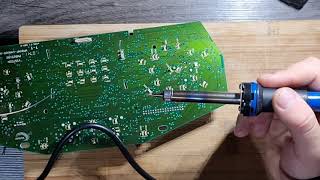
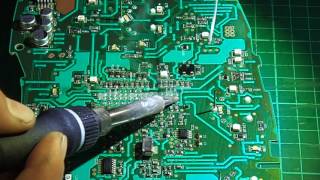
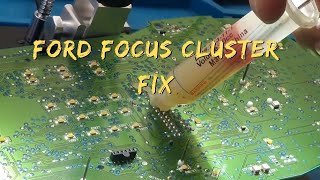
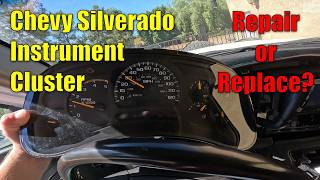
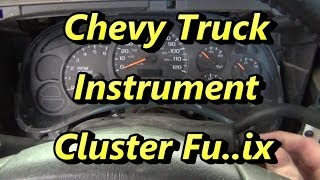
- Faulty Instrument Panel Cluster (IPC) (Common) — Internal circuit boards, microprocessors, or stepper motors fail from age, 🎬 See this walkthrough for repairing a Chevy Silverado dashboard. heat, or cracked solder joints. This is the primary failure point on 2000s-era Ford and GM vehicles. 🎬 Watch: How to resolder and repair a Ford instrument cluster.
- Aftermarket Device Interference (Common) — Improperly installed remote starters, alarms, or stereos interfere with the CAN bus network. These devices introduce electrical noise or draw excess power, disrupting module communication.
- Corroded or Loose Wiring Connectors (Common) — The main connector on the back of the instrument cluster loosens or corrodes from vibration and moisture. This interrupts power and data flow.
- CAN Bus Network Fault (Less Common) — A short circuit or broken wire in the CAN bus harness prevents modules from communicating. Water intrusion from leaking windshields or sunroofs often causes these shorts.
- Faulty Gateway Module (BCM) (Rare) — The Body Control Module (BCM) routes messages to the instrument cluster. If the BCM fails, the cluster stops receiving data, triggering U1055.
Symptoms

- Dashboard display and gauges are dead or erratic — The entire dashboard goes dark, flickers, or gauges (speedometer, fuel) stick at zero while driving.
- Vehicle will not start or stalls — On vehicles where the cluster is part of the anti-theft system (PATS), a cluster failure triggers the immobilizer, preventing the engine from starting.
- Multiple warning lights illuminate — The dashboard lights up with ABS, airbag, and check engine lights simultaneously, or fails to illuminate any lights during startup.
- Check Engine Light is on — The Malfunction Indicator Lamp (MIL) illuminates on the dash, prompting the code scan.
- No audible click from turn signals — Exterior turn signals work, but the dashboard produces no clicking sound because the IPC generates the audio.
- Multiple 'U' codes stored (scan-tool only — no driver-felt sign) — A scan tool reveals U0100, U0121, or U0140 alongside U1055, indicating a network-wide crash.
Diagnostic Flowchart
Tap your situation to follow the diagnostic path that matches what you're seeing on this code.
Common Fixes & Costs
- Replace Blown Fuse — Parts: $1-$10, Labor: $0, ~0.1 hr book time (DIY)
- Clean or Secure Battery Terminals — Parts: $5-$15, Labor: $0, ~0.2 hr book time (DIY)
- Repair/Rebuild Instrument Cluster — Parts: $0, Labor: $150-$300 (mail-in service), ~1.5 hr book time (Professional)
- Replace Instrument Panel Cluster
— Parts: $500-$1000, Labor: $150-$300 (plus programming), ~1.2 hr book time
(Professional)
Ford Focus (2004-2011): OEM 4S4Z-10849-BA (Alt: Dorman (various))
Ford F-150 (2004-2008): OEM 4L3Z-10849-GC (Alt: Dorman (599-300))
Chevrolet/GMC Trucks (2003-2007): OEM 15908653 (Alt: Dorman (599-337)) - Repair Wiring or Connector — Parts: $10-$50, Labor: $150-$450, ~2.5 hr book time (Intermediate)
DIY vs Professional
- Replace Blown Fuse / Clean Battery Terminals — Beginner:
Tools: Fuse puller, socket set, battery terminal cleaning brush. - Repair Wiring or Connector — Beginner:
Tools: Multimeter, trim removal tools, wire strippers, soldering iron, heat shrink tubing. - Repair/Rebuild Instrument Cluster (DIY Soldering) — Beginner:
Tools: Soldering station, desoldering tool, flux, magnification tools. - Replace Instrument Cluster — Beginner:
Tools: Trim removal tools, socket set/screwdrivers.
Used vs. New Parts: Buying Guide
When a used part is worth it: A used cluster from a salvage yard is rarely a good idea. It carries the mileage of the donor car, has the same internal flaws, and prevents the car from starting without expensive programming. It only makes sense if you send BOTH your original and the used donor cluster to a programming service to clone your data.
Donor-vehicle mileage cap: roughly under 50000 miles for the part to have meaningful remaining life.
Donor quality checklist:
- Match part numbers exactly.
- For a repair service, your original cluster is the 'donor'.
- If buying a 'remanufactured' cluster, ensure it comes from a reputable source replacing common failure components with a warranty.
Decision logic:
- If The failure is a common, known issue (e.g., Ford Focus solder joints, GM stepper motors) → Send your original cluster for repair/rebuild. This is the most cost-effective option, requiring no additional programming.
- If Your original cluster is physically destroyed or non-repairable → Buy a new or professionally remanufactured cluster and have it programmed to your vehicle by a dealer or specialist.
- If Budget is the absolute top priority and you accept the risks → Purchase a used cluster, budget for professional programming ($100-$300), and accept it may have a short lifespan.
Warranty tradeoff: Used/Salvage: No warranty or 30-day max. Remanufactured/Repaired: 1-year to lifetime warranty. New OEM: 1-year parts warranty, requires dealer installation for labor coverage.
Worst-case if a used part fails: $300-600 if a used part is DOA, covering the part cost plus non-refundable programming and labor fees.
What Happens If You Wait — Timeline
- 0-1 month: Intermittent issue. Gauges flicker or drop to zero occasionally. Check Engine Light comes on and goes off. No-start condition happens rarely. (MPG impact: 0%% · Added cost: $0)
- 1-3 months: Fault becomes frequent. The cluster is dead for longer periods. The vehicle fails to start more often. An intermittent short in the cluster causes a parasitic battery drain. (MPG impact: 0%% · Added cost: $100-$250 (Towing cost from being stranded))
- 3-6 months: The fault is persistent. The cluster is dead constantly. The car is unreliable. The parasitic drain shortens the battery's life, requiring a replacement. (MPG impact: 0%% · Added cost: $350-$550 (Towing + new battery))
- 6+ months: Cascading failures. A persistent internal short causes voltage irregularities that damage other sensitive modules on the CAN bus, such as the BCM or ECM. (MPG impact: 0%% · Added cost: $1000-$2500+ (Cluster replacement + potential BCM/ECM replacement and programming))
Cost of Not Fixing It
- Immediate: Unsafe driving conditions. No speedometer, fuel gauge, or warning lights. Potential for no-start or stalling, leaving you stranded. (Added cost: Towing ($100-$250))
- 1-6 months: Continued driving causes cascading electronic issues. An intermittent short in the cluster drains the battery, requiring a replacement. (Added cost: $150-$300 (New Battery))
- 6+ months: Heat and vibration cause a small crack in a circuit board to worsen, making the cluster unrepairable and forcing a full replacement. A persistent network fault damages other connected modules. (Added cost: $800-$1500+ (Full cluster replacement and potential module damage))
Diagnosis Steps

- Check Battery and Charging System
Test the battery with a multimeter. A healthy resting voltage is 12.2-12.6V. Anything below 12.0V is discharged and causes communication codes. Engine-running voltage must be 13.7-14.7V.
Tools: Multimeter (Beginner) - Inspect Instrument Cluster Fuses
Locate the fuse box using the owner's manual. Pull the fuse labeled IPC, CLUSTER, or METERS and verify it is intact.
Tools: Fuse puller or needle-nose pliers (Beginner) - Scan for All Trouble Codes
Use an OBD-II scanner to check for all codes. Multiple 'U' codes (U0100, U0121) point to a network-wide problem. Diagnose shared power/ground issues before replacing the cluster.
Tools: OBD-II Scanner (Beginner) - Disconnect Aftermarket Devices
Temporarily disconnect aftermarket remote starters, alarms, or stereos. These are frequent sources of CAN bus interference. If the fault clears, the aftermarket device is the culprit.
Tools: Flashlight, trim removal tools (Intermediate) - Test for Power and Ground at the Cluster
Remove the instrument cluster and test for battery voltage and ground at the main connector pins using a wiring diagram. Load the circuit with a headlamp bulb; bright illumination confirms the circuit carries sufficient current.
Tools: Multimeter, headlamp bulb, trim removal tools, vehicle-specific wiring diagram (Advanced) - Test CAN Bus Network Resistance
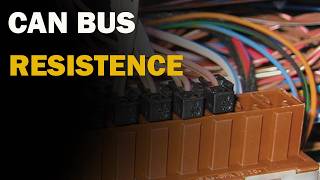
With the battery disconnected, measure resistance between CAN High (Pin 6) and CAN Low (Pin 14) at the OBD-II port. A healthy network reads 60 ohms. 120 ohms indicates an open circuit; 0 ohms indicates a short.
Tools: Multimeter, vehicle-specific wiring diagram (Advanced) - Pro Tip: Test CAN Bus Voltage (Key On, Engine Off)
Test voltage at the OBD-II port. CAN High (Pin 6) averages 2.7V, and CAN Low (Pin 14) averages 2.3V (totaling ~5V). A line stuck at 0V or 12V indicates a short to ground or power.
Tools: Multimeter (Advanced) - Pro Tip: Isolate the Faulty Module
If CAN bus resistance is 120 or 0 ohms, unplug modules on the network one by one. When resistance returns to 60 ohms, the last unplugged module (or its wiring branch) is the short.
Tools: Multimeter, vehicle-specific wiring diagram (Advanced)
When This Code Triggers (Freeze-Frame Conditions)
- Vehicle Speed: 0 mph (At startup or during initial key-on cycle)
- Engine RPM: 0 or 700-900 RPM (During key-on engine-off test, or at idle shortly after starting.)
- System Voltage: < 12.0V or > 15.0V (During a low voltage event from a weak battery or a faulty alternator.)
- Engine Coolant Temp: Varies (Fault occurs at any temperature, but is often logged during the initial power-up sequence before the engine is warm.)
Related Codes
- U0100 — Lost Communication with ECM/PCM. If many 'U' codes appear with U0100, the fault is network-wide. If only U0100 and U1055 are present, the faulty cluster is dragging down the CAN bus.
- U0121 — Lost Communication with ABS Control Module. On Ford vehicles, this is a direct symptom of the U1055 cluster failure. The IPC acts as a gateway for the ABS module. Fixing the cluster resolves both codes.
- U0140 — Lost Communication With Body Control Module (BCM). The BCM acts as a gateway. If BCM-controlled functions (power windows, locks) are inoperative, the BCM is suspect. If they work but the dash is dead, the IPC is the culprit.
- B1359 — Ignition Run/Acc Circuit Failure. This Ford-specific code often accompanies U1055. It indicates a problem with the ignition switch signal reaching the instrument cluster, preventing it from powering on.
Climate & Environmental Factors
- High Humidity: Accelerates corrosion on electrical connectors and printed circuit boards (PCBs) inside the instrument cluster. This increases electrical resistance, leading to communication failure.
- Temperature Fluctuations (Hot/Cold Cycles): Causes expansion and contraction of electronic components, stressing solder joints. Over time, this creates microscopic cracks at the main connector pins, a primary failure cause in Ford and GM clusters.
- Coastal/Winter Climates (Salt): Airborne salt combines with humidity to create a highly corrosive environment, significantly increasing the rate of corrosion on exposed electronic connections.
How to Talk to a Mechanic About This Code
Say this: "I have a U1055 code, and my instrument panel is dead. I verified the battery voltage is 12.4V and the IPC fuses are intact. I need a diagnostic appointment to test the CAN bus network and confirm if the fault is internal to the cluster or a wiring issue."
This signals you've done basic homework and guides the technician toward a specific, logical diagnostic path. It discourages them from starting with expensive, unrelated suggestions.
Avoid saying:
- 'My dashboard is acting weird.' (too vague)
- 'My check engine light is on, can you just fix it?' (invites expensive guessing)
- 'A guy online said it's the cluster, just replace it.' (prevents proper diagnosis that could find a cheaper wiring issue)
Questions to ask before authorizing the repair:
- What were the results of the CAN bus resistance and voltage tests?
- Did you test for power and ground at the instrument cluster connector itself?
- If the recommendation is to replace the cluster, can you confirm the failure is internal to the cluster and not a wiring or connector issue?
- If a new cluster is needed, does the estimate include the cost of programming it to my vehicle?
Where to Take It: Dealer vs Independent vs Chain
- Dealer:
Recommended only if a known TSB applies or if the vehicle is under warranty. Otherwise, an independent shop is more cost-effective.
Best for: Vehicles under warranty., Newer vehicles (2020+) where a software update (TSB) is the likely fix (e.g., Honda, some GM models)., Complex programming of a replacement module is required.
Downsides: Highest labor rates., More likely to recommend a full cluster replacement ($800+) over a repair of the original unit. (Typical cost: +50% vs. baseline) - Independent Shop:
Best fit for most U1055 scenarios, especially on out-of-warranty vehicles. They are more likely to work with you on a cost-effective repair.
Best for: Out-of-warranty vehicles, especially those with known cluster issues (e.g., 2004-2010 Ford Focus, 2003-2007 GM Trucks)., Diagnosing network wiring and connector faults., Vehicles where a cluster repair/rebuild is the preferred, cost-effective option.
Downsides: Shop quality and diagnostic skill vary greatly; look for a shop specializing in electrical diagnostics. (Typical cost: +0% vs. baseline) - Chain Shop:
AVOID for U1055 diagnosis and repair. While they can test a battery, they are not equipped for the network-level diagnostics this code requires.
Best for: Confirming battery and fuse status only.
Downsides: Technicians generally lack the specialized training for complex network diagnostics., High pressure to upsell parts; may misdiagnose the issue and recommend unnecessary replacements., Unlikely to have the tools or expertise for module programming or repair. (Typical cost: -10% vs. baseline)
When to Walk Away From the Repair
If the estimated repair cost exceeds 40% of the car's private-party value, sell the car as-is instead of repairing it.
- Car worth $3500, fix is $1500: Borderline. The repair is ~43% of the car's value. Get a second opinion, and consider selling it as a 'mechanic special'.
- Car worth $10000, fix is $1200: Fix it. The repair cost is well below the threshold and restores critical safety functions.
- Car worth $2000, fix is $1400: Walk away. The repair cost is 70% of the car's value. It is not a sound financial decision to proceed with the repair.
What Scan Tool You Need for This Code

Minimum: A code reader that reads manufacturer-specific 'U' (network) codes, not just generic 'P' (powertrain) codes. It must display live data.
A basic $20 code reader only shows powertrain codes or fails to connect if the network is down. It won't see the U1055 code stored in other modules or provide live network data.
Budget: BlueDriver Pro (~$100) — Reads and clears enhanced 'U' codes, shows live data, and provides freeze frame data to confirm the presence of U1055.
Mid-range: Foxwell NT510 Elite / Innova 5610 (~$150-250) — Offers deeper system access and bidirectional controls. This allows a skilled DIYer to command specific modules or view manufacturer-specific data streams to isolate a network fault.
Professional: Autel MaxiCOM MK808 / Launch X431 CRP919XBT (~$450-700) — Provides full bidirectional control and ECU coding/programming, which is necessary if you replace the instrument cluster with a new one.
Rent vs buy: If you just want to confirm the code, auto parts stores scan it for free. For actual diagnosis (live data, network tests), you need your own tool. Buying a budget pick like BlueDriver is a good investment.
How to Clear the Code After You Fix It
- Fix the underlying hardware or wiring issue.
- Reconnect the battery if it was disconnected for the repair.
- Use an OBD-II scan tool to clear all diagnostic trouble codes.
- Perform a drive cycle to allow the vehicle's readiness monitors to run their self-tests.
Drive cycle (~20 minutes): A universal drive cycle involves a cold start, idling for 2-3 minutes, followed by mixed city and highway driving. This includes steady-state cruising at 55 mph for 5-10 minutes and stop-and-go traffic.
Readiness monitors affected: Not directly applicable to 'U' codes., Readiness monitors relate to emissions systems. While clearing a U1055 clears these monitors, U1055 is a network code, not an emissions code.
Before emissions retest: drive at least 50 miles to fully set monitors.
Watch out for:
- Disconnecting the battery does not clear the code from all modules and resets all readiness monitors, guaranteeing an emissions test failure.
- The code returns immediately if the root cause (e.g., bad solder joint, wiring short) is not fixed.
- Failing to complete a full drive cycle leaves readiness monitors incomplete, causing an emissions test failure.
Will This Fail Emissions / State Inspection?
Yes — this code typically fails an OBD-II emissions inspection.
- California: An illuminated Check Engine Light is an automatic failure. Clearing the code resets all emissions readiness monitors, causing a failure until a drive cycle is completed.
- New York: Any 'U' code illuminating the Malfunction Indicator Lamp (MIL) causes an automatic failure. The inoperative dashboard also fails the safety inspection.
- Texas: In emissions-testing counties, an illuminated Check Engine Light is an automatic fail. A recently cleared code rejects the test due to incomplete readiness monitors.
Most Commonly Affected Vehicles
- Ford Focus (2004-2010) — An extremely common failure of the instrument cluster's circuit board due to bad solder joints causes this code, often accompanied by a no-start condition and U0121.
- Ford F-150 (2004-2008) — Prone to instrument cluster failures and wiring issues that trigger communication codes.
- Chevrolet / GMC Silverado, Sierra, Tahoe, Suburban (2003-2007) — Known for bad solder joints and faulty stepper motors (part number X27.168) within the instrument cluster, leading to communication loss and dead gauges.
- Chevrolet / GMC Equinox, Acadia (2018-2019) — GM issued TSB 18-NA-070 for a software anomaly causing the Side Object Sensor Module to falsely log a U0155. The fix is a software update.
- Honda / Acura Accord, Odyssey, HR-V, ILX, MDX (2021-2022) — TSBs 21-021 (Honda) and 21-011 (Acura) address a software glitch setting U0155 after an EVAP test. The fix is a free PGM-FI software update.
- Hyundai i10 / Grand i10 (2011-2020) — This code often points to an internal failure of the instrument cluster's main processor, requiring cluster replacement.
- Volkswagen Passat, Jetta, Golf (2010-2015) — U0155 is triggered by intermittent faults in the instrument cluster, often related to temperature changes or internal logic errors.
- Dodge / Chrysler / Jeep Various (2007-2014) — Failures in the Totally Integrated Power Module (TIPM) cause a wide range of communication codes, including U1055 equivalents.
Manufacturer-Specific Notes
- Ford: On the Focus, this code is a classic sign of internal instrument cluster failure due to cracked solder joints, causing a no-start condition. Repairing the cluster costs $150-$250, far cheaper than replacement.
- General Motors (GM): On 2003-2007 trucks, the failure is almost always internal to the cluster, caused by faulty stepper motors and bad solder joints. On 2018-2019 Equinox/Acadia models, TSB 18-NA-070 fixes a false U0155 with a software update.
- Chrysler / Dodge / Jeep: Network communication codes frequently trace back to an internal failure of the Totally Integrated Power Module (TIPM), a combination fuse box and control module.
- Honda / Acura: Per TSB 21-021 and 21-011, this code sets falsely on 2021-2022 models due to a software mismatch. The corrective action is a free PGM-FI software update under the emissions warranty.
Real Owner Stories
2007 Ford Focus, 110K miles - Intermittent No-Start
Car randomly failed to start with a flashing immobilizer light. Gauges died while driving. Codes U1055, U0121, and B1359 were present.
What they tried:
- Replaced the battery - no change.
- Checked all fuses related to the instrument panel and ignition - all were good.
Outcome: Owner found forum posts describing identical symptoms caused by cracked solder joints on the instrument cluster. They removed the cluster, re-soldered the main connector pins, and resolved the problem for under $10.
Lesson: On specific Ford Focus models, a no-start with U1055 is almost certainly the common cluster solder joint failure. A DIY repair is possible for those with soldering skills.
2005 Chevy Silverado, 150K miles - Gauges Dead, then Battery Drain
All gauges dropped to zero intermittently. The cluster went completely dark, and the truck's battery died every morning.
What they tried:
- Replaced the alternator, assuming it was failing to charge the battery - the problem persisted.
- A mechanic quoted $700 for a new instrument cluster plus programming.
Outcome: The owner sent the original cluster to a mail-in repair service for $180. The service replaced stepper motors and re-soldered the main power connectors. After reinstalling, all symptoms disappeared without programming.
Lesson: A dead cluster causing a battery drain points to an internal short circuit. Repairing the original cluster is more cost-effective than replacing it.
2021 Honda Accord, 15K miles - Check Engine Light On
The check engine light came on, but the car drove perfectly fine. The dashboard and all gauges worked normally.
What they tried:
- Took the car to an independent shop, which scanned U0155 and quoted several hours of labor to check the CAN bus wiring.
Outcome: The owner took the car to a Honda dealership. The dealer referenced TSB 21-021 and performed a PGM-FI software update. The repair took 30 minutes and was covered under warranty.
Lesson: Always check for Technical Service Bulletins (TSBs) before authorizing expensive diagnostics on newer vehicles. A software update is often the fix.
How to Prevent This Code From Triggering
- Perform regular battery and terminal maintenance (Every 6 months) — Ensures stable voltage for all modules. Clean, tight terminals prevent voltage drops that trigger communication faults.
- Apply dielectric grease to critical connectors (During any related repair) — Applied to the connector housing, dielectric grease seals out moisture, preventing corrosion that causes high resistance and communication dropouts.
- Inspect for and fix water leaks promptly (Annually or after windshield replacement) — Water from leaking windshield seals or sunroof drains drips onto fuse boxes and connectors, causing corrosion and shorts.
- Avoid frequent, very short trips (Daily habit) — Short trips prevent the alternator from fully recharging the battery, leading to a chronically undercharged state that stresses electronic modules.
- Be cautious with aftermarket electronics (During installation) — Improperly installed remote starters introduce electrical noise or short the CAN bus. If network issues appear after an install, the new device is the suspect.
Frequently Asked Questions
Can a weak battery really cause my whole dashboard to stop working?
Yes. Modern vehicle computers need stable voltage to communicate. A weak battery providing less than 12.2 volts causes voltage to drop unexpectedly, leading to communication errors like U1055. It is the most common cause and should always be checked first.
I installed a remote starter and now my dash is acting up. Could that be the cause?
Absolutely. Aftermarket devices that tap into the vehicle's wiring are a frequent cause of network communication faults. They introduce electrical noise or create a voltage drain that disrupts the CAN bus. Disconnect the aftermarket device to see if the problem disappears.
My mechanic wants to replace the BCM, but the code is for the instrument cluster. Is that correct?
The Body Control Module (BCM) acts as a gateway, routing messages between modules. A failing BCM prevents the instrument cluster from communicating, triggering U1055. Verify if other BCM-specific functions (power locks, interior lights) are failing to confirm a BCM fault.
Is it cheaper to repair my instrument cluster or replace it?
Repairing is almost always cheaper. A specialized service fixes common internal faults for $150-$300, while a full replacement from the dealer costs $800-$1200 after mandatory programming.
If I replace the instrument cluster myself, will it just work?
No. On modern cars, a new instrument cluster must be professionally programmed to the vehicle's VIN, mileage, and security system. If it is not programmed, the car will not start.
I've heard about fixing the solder joints on my Ford cluster myself. Is this a good idea?
While DIYers have successfully re-soldered connector pins on Ford clusters, it is an advanced repair carrying a high risk of permanent damage. It requires precision soldering on a delicate circuit board. A professional mail-in repair service is a safer option.
What does 'Lost Communication with Instrument Panel Cluster' actually mean?
It means the instrument panel has stopped sending or receiving data from the vehicle's internal CAN bus network. Other modules can no longer talk to the dashboard, causing gauges to fail.
Can I check the CAN bus myself?
Yes, with a multimeter. Measure the resistance between pins 6 and 14 on the OBD-II port with the battery disconnected; it should be 60 ohms. Interpreting the results requires technical knowledge of the network.
Key Takeaways
- Code U1055 indicates a broken communication link between the main computer and the dashboard, disabling critical safety gauges like the speedometer.
- Always test the battery first; a resting voltage below 12.2V is the leading cause of false U1055 communication errors.
- For 2004-2010 Ford Focus and 2003-2007 GM trucks, U1055 almost always points to cracked solder joints inside the cluster, which costs $150-$300 to professionally rebuild.
- Never install a replacement instrument cluster without budgeting $100-$250 for professional programming, as the vehicle's anti-theft system will prevent the engine from starting.
- Check for Technical Service Bulletins (TSBs) before replacing parts; 2021-2022 Honda and Acura models fix this code with a free 30-minute dealership software update.
Helpful Videos
![How To Repair Chevy Truck Dash Cluster - [RYOBI SOLDER IRON]](https://img.youtube.com/vi/yMz1He0CXW8/mqdefault.jpg)
![How To Test CAN BUS With A Multimeter [CAN Bus Resistance Check] Mechanic Mindset](https://img.youtube.com/vi/JPE42HSJxAk/mqdefault.jpg)


The information in this article is provided for general reference and educational purposes only. Vehicle specifications, procedures, and part compatibility can vary by production date, trim level, and region. Always consult your vehicle's factory service manual and verify part numbers before purchasing or performing repairs. Safety-critical components such as airbags, seat belts, and braking systems should be installed by a qualified professional.
- 🎬 Helpful Videos
- What Does U1055 Mean?
- Can I Drive With U1055?
- Common Causes
- Symptoms
- Diagnostic Flowchart
- Common Fixes & Costs
- DIY vs Professional
- Used vs. New Parts: Buying Guide
- What Happens If You Wait — Timeline
- Cost of Not Fixing It
- Diagnosis Steps
- When This Code Triggers (Freeze-Frame Conditions)
- Related Codes
- Climate & Environmental Factors
- How to Talk to a Mechanic About This Code
- Where to Take It: Dealer vs Independent vs Chain
- When to Walk Away From the Repair
- What Scan Tool You Need for This Code
- How to Clear the Code After You Fix It
- Will This Fail Emissions / State Inspection?
- Most Commonly Affected Vehicles
- Manufacturer-Specific Notes
- Real Owner Stories
- 2007 Ford Focus, 110K miles - Intermittent No-Start
- 2005 Chevy Silverado, 150K miles - Gauges Dead, then Battery Drain
- 2021 Honda Accord, 15K miles - Check Engine Light On
- How to Prevent This Code From Triggering
- Frequently Asked Questions
- Can a weak battery really cause my whole dashboard to stop working?
- I installed a remote starter and now my dash is acting up. Could that be the cause?
- My mechanic wants to replace the BCM, but the code is for the instrument cluster. Is that correct?
- Is it cheaper to repair my instrument cluster or replace it?
- If I replace the instrument cluster myself, will it just work?
- I've heard about fixing the solder joints on my Ford cluster myself. Is this a good idea?
- What does 'Lost Communication with Instrument Panel Cluster' actually mean?
- Can I check the CAN bus myself?
- Key Takeaways
- 🎟️ Get 5% Off