

U1040 on 2004-2008 Cadillac SRX: Diagnosing Loss of EBCM Communication
U1040 on a 2004-2008 SRX means the Electronic Brake Control Module (EBCM) is not communicating. This often causes a no-start condition or a key stuck in the ignition. The most common causes are bad wiring, poor ground connections, or a faulty EBCM, not a bad starter or ignition switch.
- U1040 on a 2004-2008 SRX is a critical code, often causing a no-start condition.
- The problem is a loss of communication with the brake module (EBCM), not a faulty starter.
- Always diagnose the cheapest and most likely causes first: check the battery, EBCM fuses, the main EBCM connector for corrosion, and the EBCM ground strap.
- A professional scan tool is essential for proper diagnosis to confirm which modules are offline.
- If the EBCM module must be replaced, it will likely require programming to the vehicle.
What's Unique About the 2004-2008 Cadillac SRX
For the first-generation Cadillac SRX, this code is particularly serious. A GM Technical Service Bulletin (TSB PIC5460B) directly links U1040 to severe symptoms like the engine not cranking or the key getting stuck in the ignition. The issue is often rooted in the vehicle's Class 2 data bus wiring (Circuit 1807), its Ignition 1 power feed (Circuit 5290), or ground points, which can become intermittent over time, rather than a simple component failure.
Diagnostic Flowchart
Tap your situation to follow the diagnostic path that matches what you're seeing on this vehicle.
Symptoms You May Notice
- Engine will not crank or start.
- Key is stuck in the ignition lock cylinder.
- ABS warning light is on.
- Traction Control or Stabilitrak warning light is on.
- "Service Stability System" message on the Driver Information Center (DIC).
- Brake warning light is on.
- Intermittent electrical issues, such as the climate control or radio being delayed on startup or not working at all.
- Relays clicking under the hood with dash lights flashing.
- Scan tool cannot communicate with the EBCM.
- Replacing the starter or starter relay. A no-crank caused by a network fault will not be fixed by replacing starter components. The click heard is often the starter solenoid receiving a signal, but the ECM is preventing the start due to the communication loss.
- Replacing the ignition switch. While a bad switch can cause a no-start, the presence of a U1040 code points to a communication problem that should be diagnosed first. A technician on Reddit specifically linked the stuck key symptom to a data circuit failure in a control module, not the ignition switch itself.
- Replacing the Engine Control Module (ECM). While TSB PIC5460B mentions the ECM, the code U1040 specifically implicates the EBCM as the module that is offline. The ECM is setting the code because it can't hear from the EBCM.
Most Likely Causes
- Damaged Wiring or Poor Connection at EBCM 🔴 High Probability Vibration, heat, and age can cause terminals in the main EBCM connector to loosen, corrode, or wires in the harness to break. The Class 2 serial data line is a single wire (Circuit 1807), making it a vulnerable single point of failure.
How to confirm: Visually inspect the main connector at the EBCM for corrosion (green or white powder) or backed-out pins. Check for continuity on the power, ground, and serial data wires (often a dark green wire) between the EBCM and the data link connector. Wiggle the harness while checking for intermittent connections.
Typical fix: Clean the connector terminals with electrical contact cleaner or replace individual terminals. In severe cases, a connector pigtail or wiring harness section may need to be replaced.
Est. part cost: $10-$100 - Bad EBCM Ground Connection 🟡 Medium Probability Ground points on the frame or engine block are exposed to the elements and can rust, creating high resistance that prevents the module from operating correctly. A bad block ground can cause a no-crank even if the battery is good.
How to confirm: Locate the EBCM ground point. Wiring diagrams for the 2004 SRX show ground G104 located at the right front of the engine compartment. Disassemble, clean all contact surfaces to bare metal, and re-secure the ground wire. Perform a voltage drop test on the ground circuit; it should be less than 0.2 volts with the key on.
Typical fix: Clean or repair the ground connection point and terminal.
Est. part cost: $0-$10 - Failed Electronic Brake Control Module (EBCM) 🟡 Medium Probability Internal electronic components, particularly the solder joints on the circuit board, can fail from heat cycles and age, causing the module to stop communicating entirely.
How to confirm: This is a process of elimination. If power, ground, and the communication line to the module all test good with no voltage drops or high resistance, the EBCM itself is the likely culprit.
Typical fix: Replace or repair the EBCM. Replacement with a new or used unit requires programming to the vehicle's VIN with a professional scan tool. Alternatively, many owners use a mail-in repair service (like ABSFixer or Cardone) to have their original module remanufactured, which is often more cost-effective and doesn't require programming.
Est. part cost: $200-$600 (Remanufactured/Repair), $800-$1200 (New) - Low Battery Voltage or Failing Alternator ⚪ Low Probability Modules on the Class 2 network are sensitive to voltage. A weak or failing battery can cause random communication dropouts as modules power cycle unexpectedly during cranking or operation.
How to confirm: Test the battery with a multimeter. It should read ~12.4V or higher with the engine off and ~13.7-14.7V with the engine running. Perform a load test to confirm battery health, as surface voltage can be misleading.
Typical fix: Recharge or replace the battery. Diagnose the charging system if voltage is low while running.
Est. part cost: $150-$300
Rare But Worth Checking
- Faulty Main/Powertrain Relay or Fuse Block Connection: TSB PIC5460B notes that an intermittent relay or a poor connection at the underhood fuse block can interrupt power to the ECM, causing widespread communication codes, including U1040. The underhood junction block itself can corrode internally.
- Shorted Sensor Wiring: A separate TSB (PIT4056G) for other GM vehicles notes that a short-to-ground in the 5V reference circuit for the Yaw Sensor or Steering Wheel Angle Sensor can pull down the EBCM's internal circuitry, causing it to go offline and set a U0121 (a similar code). While not specific to the SRX, this is a plausible cause if the main power, ground, and data lines test good.
Diagnosis Steps
- Check the battery. Ensure it is fully charged and passes a load test. Low voltage can cause numerous communication errors.
- Scan all modules. Use a professional scan tool to perform a full network scan. Note all modules that are not communicating. If only the EBCM is offline, focus there. If multiple modules are offline, suspect a network-wide wiring issue or a problem with the splice pack (SP205).
- Inspect EBCM Fuses and Relays. Check the underhood fuse block for any fuses labeled 'EBCM' or 'ABS'. Swap the ABS relay with an identical one (like the horn relay) to test for a faulty relay.
- Inspect the EBCM Connector and Ground. Disconnect the battery. Locate the EBCM (it is attached to the ABS hydraulic block and has several metal brake lines). 🎬 Watch: How to remove the EBCM from the ABS block Unplug its main electrical connector and inspect for any signs of corrosion, moisture, or bent pins. Locate and clean the main ground wire for the EBCM (G104, at the right front of the engine bay).
- Test Power and Ground at the Connector. With the key on, use a multimeter to verify that the EBCM connector has battery voltage on its power pins and a good ground (less than 0.2 ohms of resistance to the negative battery terminal). Perform a voltage drop test on both power and ground circuits to ensure they can carry a load.
- Test the Class 2 Serial Data Line. With the EBCM disconnected, check the Class 2 communication wire (typically a dark green wire, Circuit 1807) for shorts to power or ground. You can also check for fluctuating voltage (0-7V) on this wire at Pin 2 of the Data Link Connector (DLC) with a multimeter when the network is active, though an oscilloscope is more accurate.
- If all wiring, power, and grounds test good, the EBCM is the most likely failed component and should be sent for repair or replaced.
Parts You'll Likely Need
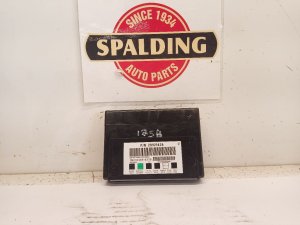
- Electronic Brake Control Module (EBCM)
(OEM #89060339 (ACDelco, for 2005-2006 models, verify by VIN))— If wiring and connections are good, the module's internal electronics have likely failed. This is the most common high-cost repair for this code. Sending the original unit for repair is a popular and reliable option.
Related Codes That Often Appear With This One
- U1000 / U0100 — These are general communication failure codes. U1000 is a Class 2 communication malfunction, and U0100 is a loss of communication with the ECM. They often appear with U1040, indicating a widespread network problem originating from the EBCM or shared wiring.
- U1064, U1153, U1192, U1300 — These are other 'Loss of Communication' codes for different modules (BCM, HVAC, etc.). Seeing them together with U1040 strongly suggests a fault with the shared Class 2 network wiring or a central power/ground issue affecting multiple modules.
- P1629 — This code relates to the Theft Deterrent System. The system may not receive the correct 'all clear' signal from other modules due to the network being down, leading to a no-start condition as a security measure.
- C056D — This code indicates an internal hardware fault within the EBCM. If you see this code along with U1040, it significantly increases the probability that the EBCM itself has failed and needs to be repaired or replaced.
Technical Service Bulletins (TSBs) & Recalls
- PIC5460B: Addresses a no-crank or key-stuck concern potentially caused by wiring issues in the Class 2 data line or power feeds, which can store code U1040.
- PIT4056G: While for different models, it provides relevant insight that a shorted sensor (like Yaw or Steering Angle) can pull down the EBCM's internal voltage, causing a loss of communication.
Platform-Specific Known Issues
- TSB PIC5460B: No Crank / Key Stuck: This TSB directly addresses a no-crank or key-stuck-in-ignition concern accompanied by code U1040. It instructs technicians to investigate the Ignition 1 power feed (CKT 5290) and the Class 2 data line (CKT 1807) to the ECM for opens or shorts, as this is a known failure pattern.
- Forum Experience: Key Stuck in Ignition: A Reddit thread in r/Cadillac discusses a 2007 SRX with a stuck key. A user identifying as a 35-year Cadillac tech states the likely cause is a failed data circuit in a module (like the EBCM or ECM), which prevents the ignition from receiving the signal to release the key. This corroborates that the symptom is network-related, not a mechanical failure of the ignition cylinder.
Mechanic-Grade Diagnostic Values
- Class 2 Serial Data Bus Voltage (Oscilloscope) — expected: A toggling square wave between 0V (recessive) and approximately 7V (dominant).. Failure: Bus stuck high (e.g., constant 7V or 12V) or stuck low (constant 0V or near 0V). A voltage that doesn't return to near-zero (e.g., bottoms out at 287mV) can also indicate a problem.
- Class 2 Serial Data Bus Voltage (Multimeter) — expected: A fluctuating voltage, often between 1V and 5V, but this is not a reliable test.. Failure: A steady 0V, 7V, or 12V indicates a shorted bus. However, a multimeter is too slow to properly diagnose data bus issues.
- EBCM Ground Circuit Voltage Drop (Key-On) — expected: Less than 100mV (0.1V).. Failure: Voltage significantly higher than 0.1V indicates high resistance in the ground circuit, which can cause the module to malfunction.
- Engine Block to Chassis Ground Voltage Drop (During Cranking) — expected: Less than 0.2V.. Failure: A high voltage reading (e.g., several volts) indicates a poor engine block ground strap. This can cause the starter to have insufficient ground, leading to a no-crank, while also causing bizarre electrical issues in modules grounded to the engine.
Scan Tool Commands That Help
- GM Tech 2: Module Communication Status / Network Scan — This is the first step to see which modules are reporting online and which are not. If only the EBCM is offline, it points towards a module-specific power, ground, or wiring issue. If multiple modules are offline, it suggests a network-wide wiring problem (like at SP205) or a power issue affecting several modules.
- GM Tech 2: Option Configuration / EBCM Programming — After replacing the EBCM, the new module must be programmed with the vehicle's specific configuration (VIN, tire size, options). Failure to do so can result in a C0551 'Option Configuration Error' code and improper ABS/Traction Control function.
Wiring & Ground Locations
- G104 — At the right front of the engine compartment, on the frame rail.. This is a primary ground point for the Electronic Brake Control Module (EBCM). Corrosion or looseness at this location can cause high resistance, preventing the EBCM from powering on and communicating.
- G105 — At the right side of the engine compartment, near the battery.. This is another critical ground point in the engine bay. Wiring diagrams show it serves the Dash Integration Module (DIM), which is involved in network communication.
- SP205 (Splice Pack) — Located under the driver's side of the dashboard, often near the steering column. It's a black connector with multiple dark green wires (Class 2 data) entering it and a 'comb' that connects them all.. This is the central junction for the Class 2 data bus. Multiple modules connect here. Corrosion inside SP205 or a broken wire leading to it can take down the entire network or specific segments, causing widespread communication codes including U1040.
- Underhood Fuse Block (UBEC) — Right side of the engine compartment, near the firewall.. This block contains the primary fuses and relays for the EBCM and ECM. Internal corrosion or poor terminal connections within the block itself can interrupt power to the EBCM, causing it to drop off the network.
Real Owner Repair Stories
- CadillacForums user (2006 Cadillac SRX) — No crank, no start, key stuck in ignition, multiple 'U' codes including U1040.
❌ Tried (didn't work) Replacing the battery, Checking all fuses, Inspecting wiring at the EBCM
✅ What actually fixed it The underhood fuse block (UBEC) was internally corroded. Wiggling the main harness connected to the fuse block would sometimes allow the car to start. Replacing the entire underhood fuse block resolved all communication issues and the no-start condition. - ScannerDanner (YouTube) (Cadillac (unspecified model, but demonstrates a common GM issue)) — No crank, various electrical issues, dead battery.
❌ Tried (didn't work) Initial voltage tests at the fuse box showed low voltage, suggesting a bad power cable from the battery.
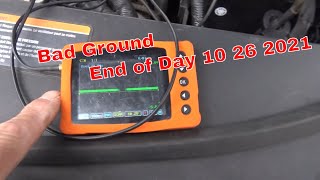
✅ What actually fixed it The main engine block ground strap was bad. The engine block itself had high voltage relative to the chassis. This caused a massive voltage drop under load (like trying to crank) and starved modules grounded to the engine. The test that found it was measuring voltage from the positive battery post to the engine block, which showed low voltage, versus measuring from the positive post to the chassis/strut tower, which showed full battery voltage.
OEM Part Supersession History
89060339→This part number appears to be the primary replacement for the specified years, with no direct supersession listed under ACDelco. However, it is critical to verify by VIN.— N/A
Heads up: Part number 89060339 is listed for 2005-2006 Cadillac SRX models. It may also fit 2004 and 2007 models, but using the wrong EBCM can cause a C0551 'Option Configuration Error' even if it physically connects. Always confirm the part number with the vehicle's VIN before ordering.
Model Year Variations Within This Range
- 2007-2009: The 2007 model year received a significant interior refresh, including a redesigned dashboard, center console, and instrument cluster. While the underlying Class 2 network architecture is similar, the Dash Integration Module (DIM) and other interior modules are different. This could lead to variations in diagnosing network issues originating from inside the cabin.
- 2004-2006 vs 2007-2009: Fuse box layouts and some relay assignments changed starting in the 2007 model year. For example, power outlet fuse locations were different. When diagnosing power supply issues to the EBCM, it is crucial to use the correct wiring diagram for the specific model year.
Helpful Videos

We Have This Part in Stock



The information in this article is provided for general reference and educational purposes only. Vehicle specifications, procedures, and part compatibility can vary by production date, trim level, and region. Always consult your vehicle's factory service manual and verify part numbers before purchasing or performing repairs. Safety-critical components such as airbags, seat belts, and braking systems should be installed by a qualified professional.
- Cadillac SRX:
- 🎬 Helpful Videos
- 🛍️ Shop This Part
- What's Unique About the 2004-2008 Cadillac SRX
- Diagnostic Flowchart
- Symptoms You May Notice
- Most Likely Causes
- Rare But Worth Checking
- Diagnosis Steps
- Parts You'll Likely Need
- Related Codes That Often Appear With This One
- Technical Service Bulletins (TSBs) & Recalls
- Platform-Specific Known Issues
- Mechanic-Grade Diagnostic Values
- Scan Tool Commands That Help
- Wiring & Ground Locations
- Real Owner Repair Stories
- OEM Part Supersession History
- Model Year Variations Within This Range
- 🎟️ Get 5% Off