

U1040 on 2004-2007 Cadillac CTS: No Start, ABS Light Causes and Fixes
U1040 on a first-gen Cadillac CTS means the brake control module (EBCM) isn't communicating, often causing a no-start condition. The most common fix is inspecting and cleaning a bad ground connection (specifically G103 or G104) for the EBCM. If that fails, the EBCM wiring harness may be damaged, or the module itself may need repair or replacement.
- U1040 on a 2004-2007 CTS is a critical code that will likely prevent your car from starting.
- Before spending any money, the first step should always be to locate, remove, and thoroughly clean the EBCM ground connection.
- Carefully inspect the EBCM wiring harness for any signs of rubbing or damage, especially near the transmission.
- This code rarely appears alone. The presence of other 'U' codes confirms a network communication problem.
- If wiring and grounds are good, the EBCM itself has likely failed and will need to be repaired or replaced.
What's Unique About the 2004-2007 Cadillac CTS
On this first-generation Cadillac CTS, a U1040 code is notorious for causing a severe no-crank or no-start condition, which can be alarming. The EBCM is a critical node on the Class 2 network, and its 'State of Health' message is required by the ECM and BCM to allow the startup sequence to proceed. When this message is lost, the system can prevent the starter relay from engaging as a safety measure. This is highlighted in GM Technical Service Bulletin #PIC5460B, which directly links this code to no-start scenarios.
Diagnostic Flowchart
Tap your situation to follow the diagnostic path that matches what you're seeing on this vehicle.
Symptoms You May Notice
- Engine will not crank or start.
- ABS warning light is illuminated.
- Traction Control (TCS) or StabiliTrak warning light is illuminated.
- 'Service Stability System' message may appear on the Driver Information Center (DIC).
- Key may become stuck in the ignition cylinder.
- Multiple other communication 'U' codes (like U1000, U1064) are often stored along with U1040.
- Replacing the starter motor because of the 'no crank' symptom. The starter is usually fine; it's just not receiving the command to engage from the network.
- Replacing the battery without proper testing. While low voltage can cause communication issues, it's often not the root cause of a persistent U1040.
- Replacing the ignition switch. While a faulty switch can cause a no-start, it typically presents different codes and symptoms.
Most Likely Causes
- Poor EBCM Ground Connection 🔴 High Probability GM vehicles of this era are known for having ground points that can corrode or loosen over time, interrupting module communication. A GM TSB for similar platforms directly links EBCM communication loss to a bad ground on the frame.
How to confirm: Locate and inspect ground points G104 (often on the driver's side of the engine near the firewall or on the right body rail near the headlamp) and G103 (on the cowl, above the brake booster). G103 is a major ground for many communication modules. Inspect for rust, corrosion, or looseness. A voltage drop test on the ground circuit from the EBCM connector to the chassis would provide a definitive test.
Typical fix: Disconnect the battery, then unbolt the ground wire(s). Thoroughly clean the wire terminal, the bolt, and the chassis mounting point with a wire brush until shiny metal is exposed. Re-secure the connection tightly and consider applying a dielectric grease or protective coating.
Est. part cost: $0-$10 - Damaged or Corroded EBCM Wiring Harness 🟡 Medium Probability A GM service bulletin for other models notes that the wiring harness to the EBCM can rub against chassis or transmission components, causing wires to chafe and short out. Rodent damage is also a possibility in the engine bay.
How to confirm: Visually inspect the entire wiring harness that runs to the EBCM, paying close attention to areas where it passes near sharp metal edges or hot components. Disconnect and inspect the main EBCM connector for green/white corrosion or backed-out pins. With a multimeter, check for continuity on the Class 2 data line (often a purple wire) between the EBCM connector and the DLC/ECM.
Typical fix: If chafed wires are found, they must be repaired by soldering and heat-shrinking. The harness should then be re-routed or protected with loom to prevent future damage. A corroded connector may need to be cleaned or replaced with a pigtail kit like ACDelco PT1522.
Est. part cost: $10-$80 - Failed Electronic Brake Control Module (EBCM) 🟡 Medium Probability Internal electronic components, particularly solder joints on the circuit board, can crack or fail over time due to heat cycles and vibration, leading to a total loss of communication.
How to confirm: This is typically diagnosed by exclusion. If power (12V), ground (less than 0.1V drop), and the Class 2 data line are all verified to be good going *into* the module, but the module still won't communicate with a scan tool, the module itself is condemned.
Typical fix: The EBCM is replaced or repaired. Many owners opt to send their original module to a specialist repair service, which is often cheaper and avoids the need for programming. Alternatively, a used or remanufactured unit can be installed, but it may require professional programming to the vehicle's VIN.
Est. part cost: $150-$650
Rare But Worth Checking
- Failed Engine Control Module (ECM): In some documented cases, even with a good data signal reaching the ECM, the ECM itself is unable to process the communication, causing it to report faults with other modules. This is rare and should only be considered after all other possibilities are exhausted.
Diagnosis Steps
- Perform a full vehicle scan with a capable scan tool. Note all modules that are reporting 'Loss of Communication' codes. A long list of 'U' codes points to a network-wide problem.
- Check fuses related to the ABS, EBCM, ECM, and BCM in both the underhood and rear fuse blocks.
- Locate and inspect ground G103 (on the cowl above the brake booster) and G104 (driver's side of the engine/frame). Clean them thoroughly regardless of appearance as a primary step.
- Disconnect the battery. Disconnect the main electrical connector at the EBCM. Inspect for any corrosion, moisture, or damaged/pushed-out pins.
- With the key on, use a multimeter to verify battery voltage (12V+) at the power pin and a good ground (near 0V) at the ground pin of the EBCM connector.
- Probe the Class 2 Serial Data wire at the EBCM connector (often a purple wire). With the key on, you should see a fluctuating voltage between 0V and 7V. If it's stuck at 0V or high voltage (e.g., 10V+), there is a short on the data line.
- If a capable scan tool (like a GM Tech 2) is available, attempt to communicate directly with the EBCM. If the tool cannot see the module, it confirms the communication loss.
- If all wiring, connectors, powers, and grounds are confirmed to be good, the EBCM is the most likely failed component.
Parts You'll Likely Need
- Electronic Brake Control Module (EBCM)
(OEM #89060294)— This module is the source of the communication loss, often due to internal electronic failure after wiring and grounds are ruled out. Note: This OEM part is listed as discontinued by GM, making remanufactured units or repair services the most common solution.
Trusted brands: ACDelco (OEM, Discontinued), Dorman (Remanufactured), Module Repair Services (e.g., UpFix, Circuit Board Medics)
OEM price range: $500-$700 (If found)
Aftermarket price range: $200-$400 (Remanufactured) - EBCM Connector Pigtail
(OEM #ACDelco PT1522)— If the main harness connector at the module is damaged by corrosion or heat, it must be cut out and replaced with a new pigtail to ensure a solid connection.
Trusted brands: ACDelco, Duralast, Standard Motor Products
OEM price range: $60-$80
Aftermarket price range: $30-$50
Related Codes That Often Appear With This One
- P1629 — Relates to the Theft Deterrent System. The ECM may not receive the proper 'OK' signal if communication with other modules is down.
- U1064 — Loss of communication with the Body Control Module (BCM). Its presence with U1040 indicates a wider network problem.
- U1192 — Loss of communication with the Vehicle Stability Enhancement System (VSES). This is directly related to the EBCM.
- U1000 — A general Class 2 Communication Malfunction code. This is often set in multiple modules when one module stops talking.
Technical Service Bulletins (TSBs) & Recalls
- PIC5460B: Addresses a no crank concern or key stuck in ignition with U1040 and other communication codes stored, pointing to a network communication failure.
- 04-05-25-002E: While for GM trucks/SUVs, this TSB is highly relevant as it details diagnosing and fixing EBCM communication loss (DTC U1041) caused by a poor EBCM ground connection on the frame, corroborating the most common cause.
Platform-Specific Known Issues
- A known issue, referenced in a GM TSB for other platforms, involves the EBCM wiring harness rubbing through on a frame rail or transmission component, causing a direct short on the communication line.
- The first-generation CTS is particularly sensitive to EBCM communication loss, frequently resulting in a complete no-start condition, as documented in TSB PIC5460B.
Mechanic-Grade Diagnostic Values
- Class 2 Serial Data Line Voltage — expected: Fluctuating voltage between 0V and 7V with key on.. Failure: Voltage is stuck at 0V (short to ground) or stuck high, e.g., above 8V (short to power). A reading over 10V often points to an internal short within a module on the network.
- EBCM Ground Circuit Voltage Drop — expected: Less than 100mV (0.1V). Failure: Voltage reading is higher than 100mV, indicating high resistance in the ground path.
Scan Tool Commands That Help
- GM Tech 2: Module Communication Status Check — From the main diagnostics menu, select the vehicle, then navigate to each module (EBCM, BCM, ECM, etc.) to see which ones are communicating. For U1040, you would attempt to connect to the EBCM. Failure to connect confirms the fault.
- GM Tech 2: Steering Angle Sensor Calibration — This function is required after replacing the EBCM to calibrate the new module with the steering position sensor, which is essential for StabiliTrak/Traction Control operation.
- GM Tech 2: Yaw Rate Sensor Calibration — Also required after EBCM replacement. This calibrates the sensor that detects vehicle rotation, which is another critical input for the stability control system.
Wiring & Ground Locations
- G103 — Located on the cowl in the engine compartment, above the brake booster on the driver's side.. This is a major ground point for multiple modules that use the Class 2 data line, including the Body Control Module (BCM), Instrument Panel Cluster (IPC), and the Data Link Connector (DLC) itself. Corrosion here can cause widespread communication failures.
- G104 — Located on the right body rail, near the right headlamp assembly.. This is a primary engine compartment ground. While G103 is more directly linked to interior modules, G104 can be a ground point for engine bay modules like the EBCM.
- EBCM Connector — At the Electronic Brake Control Module, which is located at the right front corner of the engine compartment, attached to the ABS hydraulic block.. This is the main connection point for the module. All power, ground, and data line tests must be performed here to confirm if the fault is in the wiring going to the module or the module itself. It is a 38-pin connector.
- Class 2 Serial Data Wire — A purple wire found at Pin 2 of the Data Link Connector (under the driver's side dash) and at the corresponding pin in the EBCM harness connector.. This is the specific wire that carries the communication signal. It can be probed to check for correct voltage activity, shorts to ground, or shorts to power.
Real Owner Repair Stories
- YouTube comment on a ground cleaning video (1999 Chevy Silverado (similar GM Class 2 architecture)) — ABS and Brake lights would come on after 5 minutes of driving and stay on.
❌ Tried (didn't work) Living with the problem for 2 years; received a shop quote of ~$500 to replace the brake module.
✅ What actually fixed it The owner cleaned the EBCM ground connection as shown in the video, and the lights did not return. - YouTube video and Ross-Tech documentation (Various VW/Audi models, but principle applies to GM Class 2) — Multiple communication codes, inability for scan tool to communicate with modules.
❌ Tried (didn't work) Diagnosing individual modules.
✅ What actually fixed it An improperly installed aftermarket radio was wired directly to the vehicle's diagnostic bus (K-Line for VW, Class 2 for GM). Disconnecting the problematic wire from the aftermarket radio's harness immediately restored communication.
"I Checked Everything" — The Actual Cause
- A common diagnostic pattern for this code is that all wiring, power, and ground tests at the EBCM connector appear normal. However, the module still won't communicate. The actual cause, in this case, is often an internal failure of the EBCM itself, where it shorts the Class 2 data line to voltage. A technician found over 10 volts on the data line, which should normally be around 7V. By disconnecting modules one by one at a network splice pack, he isolated the EBCM as the source of the excess voltage that was crashing the entire network.
OEM Part Supersession History
89060294→None (Discontinued)— End of life for the part.
Heads up: This part is confirmed discontinued, making remanufactured units or repair services the primary option.89047798→89060339— Part revision or update by the manufacturer.
Heads up: While this part number also fits the 2004-2007 CTS, it is critical to match the original part number from the failed module. Furthermore, GM modules from this era often have a 3-letter broadcast code (e.g., HAW, HFW) printed on the label. Installing a module with a different broadcast code, even with a matching part number, can result in a communication failure as the vehicle expects different software.
Model Year Variations Within This Range
- 2004-2007: While the Class 2 communication architecture is consistent across this generation, multiple EBCM part numbers were used (e.g., 89060294, 89060339). The correct module can depend on the specific engine (V6 vs. V8) and installed options. Always verify the part number on the original module before ordering a replacement.
Used OEM Parts in Stock


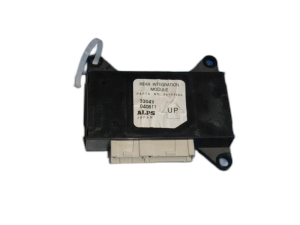
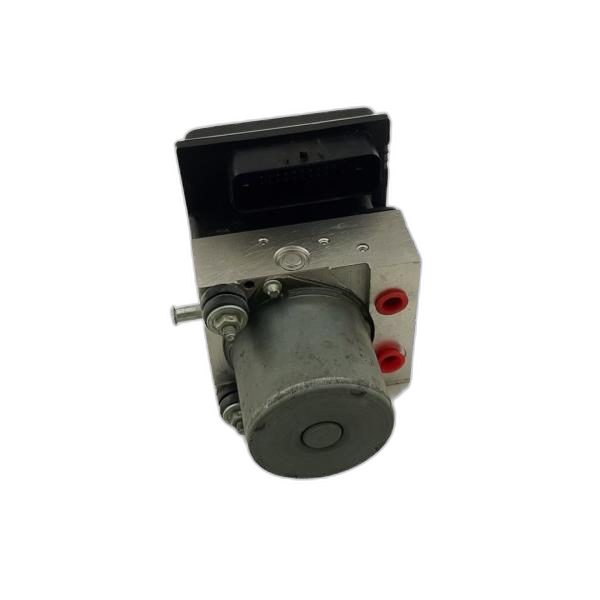
New Aftermarket Parts Available



The information in this article is provided for general reference and educational purposes only. Vehicle specifications, procedures, and part compatibility can vary by production date, trim level, and region. Always consult your vehicle's factory service manual and verify part numbers before purchasing or performing repairs. Safety-critical components such as airbags, seat belts, and braking systems should be installed by a qualified professional.
- Cadillac CTS:
- 🛍️ Shop This Part
- What's Unique About the 2004-2007 Cadillac CTS
- Diagnostic Flowchart
- Symptoms You May Notice
- Most Likely Causes
- Rare But Worth Checking
- Diagnosis Steps
- Parts You'll Likely Need
- Related Codes That Often Appear With This One
- Technical Service Bulletins (TSBs) & Recalls
- Platform-Specific Known Issues
- Mechanic-Grade Diagnostic Values
- Scan Tool Commands That Help
- Wiring & Ground Locations
- Real Owner Repair Stories
- "I Checked Everything" — The Actual Cause
- OEM Part Supersession History
- Model Year Variations Within This Range
- 🎟️ Get 5% Off