

OBD-II Code U1017: Lost Communication with Control Module
The Ultimate 2026 Guide to Diagnosing and Fixing U1017 Network Faults
- U1017 is a network communication failure, meaning at least one control module has stopped sending data on the CAN bus.
- Test your battery first; a voltage drop below 12.0V during cranking is the number one cause of U1017.
- Expect multiple warning lights and a potential 'limp mode' that locks the transmission in 2nd or 3rd gear.
- Do not drive with an active U1017 code, as it disables critical safety systems like Anti-lock Brakes (ABS) and Electronic Stability Control (ESC).
- Diagnosis requires a full-system OBD-II scanner capable of reading all modules (ABS, BCM, TCM) to identify which specific computer is offline.
What Does U1017 Mean?

U1017 is a generic network communication code indicating that one of your vehicle's essential computers (control modules) unexpectedly stopped communicating on the vehicle's data network. Your car uses a Controller Area Network (CAN bus) to allow modules like the Engine Control Module (ECM), ABS module, and Body Control Module (BCM) to constantly share information. When one module fails to send or receive messages for a specified period, the active modules log a U1017 code.
Technical definition: The official SAE/OBD-II definition for code U1017 is "Lost Communication with [Module Name]" or, on older Ford models, "SCP (J1850) Invalid or Missing Data for Primary Id". It sets when a control module fails to receive a periodic status message from another specific module on the data bus for a predetermined amount of time, indicating a fault in the communication network, the silent module's power/ground circuit, or the module itself.
Can I Drive With U1017?
Yes, But With Caution. Driving is possible, but strongly discouraged. This code signifies that critical safety systems like the Anti-lock Braking System (ABS) and Electronic Stability Control (ESC) are disabled. In an emergency stop or on slippery roads, your wheels will lock up, leading to a loss of steering control and a significantly increased crash risk. Continuing to drive also forces the transmission into 'limp mode,' causing poor performance and long-term strain on internal clutches. The underlying electrical fault frequently causes unexpected stalling.
Common Causes

- Low Battery Voltage or Failing Alternator (Very Common) — Control modules require a stable voltage above 12.0V to function. A weak battery, loose terminals, or a failing alternator causes voltage drops during startup or operation, forcing modules to reset or fail to communicate, triggering a flood of U-codes.
- Damaged, Corroded, or Shorted Wiring/Connectors (Very Common) — The CAN bus wiring harness frequently suffers damage from chassis chafing, engine heat, or rodent activity. Connectors exposed under the vehicle (like the ABS module) corrode from moisture, causing a complete loss of connection.
- Blown Fuse for a Control Module (Common) — Each module is protected by specific fuses. If a fuse blows due to a short circuit or overload, the module loses power and disappears from the network, causing other modules to report a loss of communication.
- Faulty Control Module (Common) — Any module on the network can fail internally. The ABS module is a frequent culprit, especially on VW, Audi, BMW, and GM models. The Body Control Module (BCM) or Powertrain Control Module (PCM) also fail internally.
- Poor Ground Connections (Common) — A loose, broken, or heavily corroded ground strap for a specific module or a main chassis ground creates high resistance, leading to floating voltages and communication errors across the entire network.
- Faulty CAN Bus Terminating Resistor (Less Common) — The CAN bus network relies on two 120-ohm terminating resistors at opposite ends of the network. If one resistor fails, the total network resistance changes from 60 ohms to 120 ohms, instantly disrupting communication. 🎬 Watch: How to test CAN bus resistance with a multimeter
- Improperly Installed Aftermarket Accessories (Less Common) — Poorly installed remote starters, alarms, or stereos tapped directly into the vehicle's CAN wiring introduce electrical noise, create shorts, or draw excessive power, crashing the communication network.
- Software Glitches or Corrupted Data (Rare) — A software bug within a module causes it to stop communicating. This requires a software update (re-flash) from the dealership, which was the prescribed fix for a major VW/Audi ABS module recall.
Symptoms

- Multiple Warning Lights Illuminated — Expect a 'Christmas tree' effect on the dashboard. The Check Engine, ABS, Traction Control (ESC/VSC), Airbag, and Brake warning lights illuminate simultaneously because their respective modules cannot communicate.
- Vehicle Enters 'Limp Mode' — The transmission locks into a single gear (usually 2nd or 3rd) and refuses to shift. This occurs when the Transmission Control Module (TCM) loses communication with the Engine Control Module (ECM) and enters self-preservation mode.
- Vehicle Will Not Start or Stalls — The engine refuses to crank, or starts and immediately stalls. This happens when the ECM loses communication with the immobilizer system or other critical modules required for engine operation.
- Erratic or Non-Functional Gauges — The speedometer, tachometer, fuel gauge, or temperature gauge drops to zero, sweeps back and forth, or freezes entirely, pointing to a communication failure with the instrument panel cluster.
- Intermittent or Total Loss of Electrical Features — Features controlled by the BCM fail, including power windows, radio, climate control, interior lights, or the horn.
Common Fixes & Costs
- Replacing a Weak or Dead Battery — Parts: $150-$400, Labor: $25-$75, ~0.5 hr book time (DIY)
- Repairing Damaged Wiring or Connectors — Parts: $20-$100, Labor: $250-$1200+, ~2.5 hr book time (Professional)
- Replacing a Faulty Control Module (ABS, BCM, etc.) — Parts: $300-$1200, Labor: $150-$500, ~2 hr book time (Professional)
- Repairing/Remanufacturing an ABS Module — Parts: $200-$500 (Service Cost), Labor: $150-$300 (R&R Labor), ~1.5 hr book time (Professional)
- Reprogramming or Updating Module Software — Parts: $0, Labor: $150-$400, ~1 hr book time (Professional)
Used vs. New Parts: Buying Guide
When a used part is worth it: A used control module makes sense for older vehicles where new OEM parts are cost-prohibitive or backordered. It restores functionality for budget-conscious DIY repairs, provided you have programming access.
Donor-vehicle mileage cap: roughly under 100000 miles for the part to have meaningful remaining life.
Donor quality checklist:
- Verify the part number matches exactly.
- Source from a reputable seller offering a 30-90 day warranty.
- Visually inspect the module for corrosion, water damage, or physical impact.
Decision logic:
- If The original module can be repaired/remanufactured → Choose remanufacturing; it avoids VIN programming and is highly reliable.
- If Vehicle is less than 10 years old and the part is under $500 new → Buy new OEM or high-quality aftermarket for peace of mind.
- If Vehicle is over 15 years old and budget is the primary concern → A used part is an acceptable risk if it has a warranty and you have programming tools.
Warranty tradeoff: Used parts carry a 30-90 day warranty. Remanufactured units offer 1-year to lifetime warranties. New aftermarket parts offer 1-3 years, while new OEM parts have the shortest warranty unless dealer-installed.
Worst-case if a used part fails: $300-$800 if a used part fails after installation, covering repeat labor and a replacement module.
Cost of Not Fixing It
- Immediate: Loss of critical safety features like Anti-lock Brakes (ABS) and Electronic Stability Control (ESC), significantly increasing crash risk. (Added cost: N/A)
- 0-3 months: If forced into 'limp mode,' continued driving causes excessive wear on transmission clutches due to being stuck in a high gear at low speeds. (Added cost: $2000-$5000 (Transmission rebuild/replacement))
- Ongoing: The vehicle fails to start intermittently or stalls unexpectedly. A failing alternator overworks and destroys the battery. (Added cost: $250-$800 (Tow bill, new battery/alternator))
Diagnosis Steps

- Verify Battery and Charging System Health
Use a multimeter to check battery voltage with the engine off; it must be above 12.4V. A reading below 12.0V is discharged and causes U-codes. Start the engine and check voltage again; it must be between 13.7V and 14.7V. Fix any battery or alternator issues before proceeding.
Tools: Multimeter, Battery Terminal Cleaner (Beginner) - Check All Network-Related Fuses
Consult your owner's manual to locate the fuse boxes. Systematically check every fuse related to the control modules, including ABS, BCM, ECM, TCM, and Instrument Cluster. A single blown fuse takes a module offline and triggers this code.
Tools: Fuse Puller or Pliers, Owner's Manual (Beginner) - Perform a Thorough Visual Inspection
Inspect the wiring harnesses leading to the ABS module, BCM, and ECM. Look for green corrosion, chafed wires, and connectors that are loose or full of water, especially after recent deep water driving.
Tools: Flashlight, Inspection Mirror (Beginner) - Scan All Modules for Codes
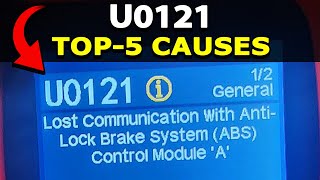
Use a full-system OBD-II scanner to communicate with all vehicle modules. Note which modules respond and which do not. A module that fails to respond is your primary suspect. Codes like U0121 (ABS) or U0140 (BCM) pinpoint the silent module.
Tools: Advanced OBD-II Scanner (Intermediate) - Test CAN Bus Resistance
Disconnect the negative battery terminal. Set your multimeter to Ohms (Ω). At the OBD-II port, measure resistance between Pin 6 (CAN High) and Pin 14 (CAN Low). A healthy network reads exactly 60 Ω. A reading of 120 Ω indicates a missing terminating resistor or broken circuit. A reading near 0 Ω indicates a short.
Tools: Multimeter, OBD-II Port Pinout Diagram (Advanced) - Pro Tip: Test CAN Bus Voltages (Key On)
Reconnect the battery and turn the ignition 'On' (engine off). Set the multimeter to DC Volts. Ground the black probe. Probe Pin 6 (CAN High); you must see 2.6V-2.7V. Probe Pin 14 (CAN Low); you must see 2.3V-2.4V. Deviations like 0V or 12V indicate a hard short to ground or power.
Tools: Multimeter, OBD-II Port Pinout Diagram (Advanced) - Pro Tip: Isolate the Faulty Component
If network resistance is incorrect (0Ω or 120Ω), isolate the fault by disconnecting one module at a time and re-testing resistance at the OBD-II port. Start with the ABS and Instrument Cluster. When resistance returns to 60Ω after unplugging a module, that module or its immediate wiring is the culprit.
Tools: Multimeter, Vehicle-Specific Module Location Guide (Professional) - Advanced: Analyze Live Data from Key Modules
If communication is intermittent, view live data from suspect modules. For example, if U0121 is present, monitor all four wheel speed sensors while driving. A sensor reading 0 MPH indicates a fault with that sensor or wiring, causing the ABS module to drop offline.
Tools: Advanced OBD-II Scanner with Live Data (Advanced) - Pro Tip: Use an Oscilloscope for Intermittent Faults
Connect a dual-channel oscilloscope to Pins 6 and 14. A healthy CAN bus shows two clean, mirror-image square wave patterns. CAN High toggles between 2.5V and 3.5V; CAN Low toggles between 2.5V and 1.5V. Distorted signals or flat-lining provide definitive visual proof of a network short.
Tools: Automotive Oscilloscope, Back-Probes (Professional)
When This Code Triggers (Freeze-Frame Conditions)
- System Voltage: 10-18V (Ignition ON, engine running or off.)
- Communication Status: No Response (A specific module fails to send its status message for a set period (e.g., 1.5 seconds).)
- Vehicle Speed: 0 - 70+ mph (The fault occurs at any speed, becoming apparent when a system needs data from the silent module.)
Related Codes
- U0121 — Lost Communication With Anti-Lock Brake System (ABS) Control Module. The most common companion code to U1017. If present, the fault lies with the ABS module, its power, ground, or wiring.
- U0140 — Lost Communication With Body Control Module (BCM). If other modules set a U0140, they cannot hear the BCM. If your scanner cannot talk to the BCM but talks to others, the BCM is the problem.
- U0100 — Lost Communication With ECM/PCM. A critical code pointing to a network-wide power or ground issue. If only the TCM sets a U0100, the problem is isolated to the ECM or the wiring between the two.
- U0073 — Control Module Communication Bus 'A' Off. Indicates the entire CAN bus network is down, caused by a short-circuit in the CAN wires, failure of both terminating resistors, or a major power/ground failure.
Climate & Environmental Factors
- Cold Weather: Low temperatures drop a battery's effective cranking amps, causing low voltage during startup and triggering communication codes. It also causes materials in solder joints to contract, creating open circuits in marginal connections.
- High Humidity / Road Salt: Moisture and salt drive corrosion on wiring, connector pins, and module circuit boards. Modules mounted in exposed locations, like the ABS module on trucks, are highly susceptible to water intrusion.
How to Clear the Code After You Fix It
- Fix the underlying hardware or wiring fault
- Reconnect the battery if disconnected
- Use a professional OBD-II scan tool to clear the U1017 code from ALL modules
- Perform a complete drive cycle to allow system monitors to run
Drive cycle (~25 minutes): Start with a cold engine. Idle for 3 minutes. Accelerate to 55 mph and hold steady for 5 minutes. Decelerate to 20 mph without braking, then accelerate back to 55 mph. Hold steady for 5 minutes. Decelerate to a stop.
Readiness monitors affected: Comprehensive Component Monitor, Misfire Monitor
Before emissions retest: drive at least 100 miles to fully set monitors.
Watch out for:
- Disconnecting the battery does not clear this code permanently; it returns immediately if the fault remains.
- Using a basic code reader only clears codes from the ECM, leaving the U1017 in the BCM or TCM.
- Failing to drive the vehicle long enough after repair prevents readiness monitors from setting, causing an automatic emissions failure.
Will This Fail Emissions / State Inspection?
Yes — this code typically fails an OBD-II emissions inspection.
- California: An illuminated Check Engine Light results in an automatic smog check failure. The U1017 code must be resolved and monitors set to 'Ready'.
- New York: NYVIP3 inspections check OBD-II for all 1996+ vehicles. An active U-code illuminating the check engine light causes an automatic failure.
- Texas: In emissions-testing counties, an illuminated Check Engine Light is an automatic failure. Drive 50-100 miles post-repair to reset monitors.
Most Commonly Affected Vehicles
- Ford Focus, Fiesta, Kuga, Transit (2011-2018) — Often related to instrument cluster failure or TCM communication loss. Ford issued Customer Satisfaction Program 14M02, extending the TCM warranty to 10 years/150,000 miles. 🎬 See how to diagnose Ford Focus TCM communication and starting issues
- General Motors (Chevrolet, GMC) Cruze, Silverado, Sierra, Equinox (2008-2017) — BCM and EBCM/ABS communication issues are common. Water intrusion into the EBCM connector is a known issue on trucks.
- Chrysler (Dodge, Jeep, Ram) Grand Cherokee, Ram 1500/2500, 300C (2004-2014) — Frequently linked to corrosion in the wiring harness leading to the exposed ABS module.
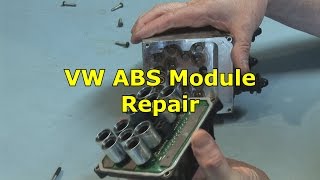
- Volkswagen/Audi Golf, Jetta, GTI, A3, A6 (2009-2016) — Caused by internal failure of the ABS control module due to a poor ground solder connection. A major recall (NHTSA 16V913) was issued for 2009-2010 models. 🎬 Watch this DIY guide for VW/Audi ABS module replacement and coding
- Nissan Altima, Sentra, Pathfinder, X-Trail (2006-2017) — Communication issues arise between the TCM and ECM, leading to limp mode or starting problems.
- Hyundai Elantra, Santa Fe, Tucson (2007-2019) — Triggered by faulty wheel speed sensors or cracked ABS tone rings, causing the ABS module to send erratic data or drop offline.
- Kia Sportage, Sorento, Ceed, Rio (2008-2018) — Similar to Hyundai, caused by cracked ABS tone rings or faulty wheel speed sensors leading to ABS communication faults.
- Subaru Outback, Forester, Impreza (2010-2019) — CAN system communication codes trigger due to issues within the ABS or Body Integrated Unit (BIU).
- BMW 3-Series, 5-Series, X5 (2006-2015) — Related to the internal failure of the DSC (Dynamic Stability Control) / ABS module. Specialized services repair the electronic portion for a fraction of new unit costs.
Manufacturer-Specific Notes

- Ford: For 2011-2015 Fiesta/Focus models, codes U0100 and U0101 link to a faulty Transmission Control Module (TCM). Ford extended the TCM warranty to 10 years/150,000 miles. On 2012-2014 Focus models, the HS-CAN circuit frequently shorts to ground under the front passenger seat.
- Audi/Volkswagen: Overwhelmingly linked to internal ABS control module failure on 2009-2010 models. Recall 45F2 (NHTSA 16V913) updates software to detect bad internal grounds. Even post-recall, modules fail, but VW extended the warranty for specific fault codes.
- Chevrolet/GMC: On Silverado and Sierra trucks, water damage to the Electronic Brake Control Module (EBCM) connector is a known failure point, especially if the vehicle launches boats or drives through high water.
Frequently Asked Questions
Can a bad battery cause code U1017?
Yes. A weak battery causing low voltage (below 12.0V) during engine cranking is the most frequent trigger for this code. Modules are sensitive to voltage and drop offline, causing communication faults. Always test the battery first.
How much does it cost to fix a U1017 code?
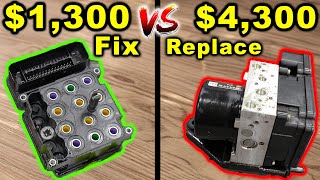
Costs vary dramatically based on the root cause. A battery replacement is $150-$400, while diagnosing and repairing a corroded wire costs $300-$800. A full ABS module replacement at a dealership exceeds $1,500, but remanufacturing services reduce this to $500-$800.
My ABS and traction lights came on after changing my battery. What should I do?
This is common, as low voltage during the swap stores 'hard' faults in the ABS module. Drive the vehicle for 10 minutes to see if the lights clear automatically. If they remain, use a full-system OBD-II scanner to clear the codes.
Can I clear the U1017 code and keep driving?
You can clear the code, but it returns instantly if the root cause remains. Driving without ABS and stability control is a significant safety risk during emergency maneuvers. It is highly discouraged.
What is the most common mistake when diagnosing U1017?
The most common mistake is immediately replacing an expensive control module without performing foundational electrical checks. Always verify battery voltage, charging system output, and check all related fuses and grounds first.
Can U1017 cause my transmission to go into limp mode?
Yes. The Transmission Control Module (TCM) requires data like engine speed and wheel speed from the ECM and ABS module. If it loses communication, it defaults to 'limp mode' (stuck in one gear) as a safety precaution.
What is the difference between U1017 and a P-code or B-code?
P-codes relate to the powertrain, B-codes to body electronics, and C-codes to the chassis. U-codes are unique because they indicate a communication failure between these systems on the CAN bus network.
Key Takeaways
- U1017 is a network communication failure, meaning at least one control module has stopped sending data on the CAN bus.
- Test your battery first; a voltage drop below 12.0V during cranking is the number one cause of U1017.
- Expect multiple warning lights and a potential 'limp mode' that locks the transmission in 2nd or 3rd gear.
- Do not drive with an active U1017 code, as it disables critical safety systems like Anti-lock Brakes (ABS) and Electronic Stability Control (ESC).
- Diagnosis requires a full-system OBD-II scanner capable of reading all modules (ABS, BCM, TCM) to identify which specific computer is offline.
Helpful Videos
![How To Test CAN BUS With A Multimeter [CAN Bus Resistance Check] Mechanic Mindset](https://img.youtube.com/vi/JPE42HSJxAk/mqdefault.jpg)



The information in this article is provided for general reference and educational purposes only. Vehicle specifications, procedures, and part compatibility can vary by production date, trim level, and region. Always consult your vehicle's factory service manual and verify part numbers before purchasing or performing repairs. Safety-critical components such as airbags, seat belts, and braking systems should be installed by a qualified professional.
- 🎬 Helpful Videos
- What Does U1017 Mean?
- Can I Drive With U1017?
- Common Causes
- Symptoms
- Common Fixes & Costs
- Used vs. New Parts: Buying Guide
- Cost of Not Fixing It
- Diagnosis Steps
- When This Code Triggers (Freeze-Frame Conditions)
- Related Codes
- Climate & Environmental Factors
- How to Clear the Code After You Fix It
- Will This Fail Emissions / State Inspection?
- Most Commonly Affected Vehicles
- Manufacturer-Specific Notes
- Frequently Asked Questions
- Can a bad battery cause code U1017?
- How much does it cost to fix a U1017 code?
- My ABS and traction lights came on after changing my battery. What should I do?
- Can I clear the U1017 code and keep driving?
- What is the most common mistake when diagnosing U1017?
- Can U1017 cause my transmission to go into limp mode?
- What is the difference between U1017 and a P-code or B-code?
- Key Takeaways
- 🎟️ Get 5% Off