

U1013 on 2012-2016 Ford Focus Electric: Network Faults and Fixes
This code indicates a serious network communication problem, often related to the Powertrain Control Module (PCM). On the Focus Electric, it frequently appears with other codes and causes a flashing gear selector. The most common fix is a dealership software update as outlined in Ford's Technical Service Bulletin TSB 16-0129. In some cases, the PCM itself may need replacement.
- U1013 on a 2012-2016 Focus Electric is a serious network fault that makes the vehicle unsafe to drive.
- The most likely cause is a software glitch in the Powertrain Control Module (PCM), which is addressed by Ford TSB 16-0129.
- Key symptoms are a flashing gear selector (PRNDL) and a potential no-start condition.
- Before attempting expensive repairs, ensure the 12V accessory battery is in excellent health.
- This issue requires professional diagnosis with a Ford-specific scan tool to determine if a PCM reprogram or replacement is necessary.
What's Unique About the 2012-2016 Ford FOCUS ELECTRIC

Unlike its gasoline counterpart which suffered from widespread issues with the DPS6 transmission's control module (TCM), the Focus Electric has a different powertrain architecture without the DPS6 transmission. However, it shares a similar diagnostic pattern where a cluster of U-codes, including U1013, points towards a central control module issue. For the Focus Electric, the problem is specifically addressed by TSB 16-0129, which points to a PCM software issue causing symptoms like a flashing gear selector, rather than the mechanical transmission faults seen in the standard Focus. While the TSB covers both gasoline and electric models, the root component differs.
Diagnostic Flowchart

Tap your situation to follow the diagnostic path that matches what you're seeing on this vehicle.
Symptoms You May Notice

- Flashing PRNDL/S gear selector on the instrument cluster.
- Vehicle may not start or fails to crank.
- Intermittent loss of power while driving.
- Check Engine Light or Wrench Light is illuminated.
- "Hill Start Assist Not Available" message in the instrument cluster.
- "Parking Aid Malfunction/Service Required" message.
- Message "Transmission not in Park" even when the lever is in Park.
- Replacing the gear selector assembly. While the flashing PRNDL is a key symptom, the fault is almost always in the network communication to the PCM, not the shifter itself.
- Replacing the Transmission Control Module (TCM). While U1013 is linked to TCM failure on the gasoline Focus with the DPS6 transmission, the TSB for the Focus Electric points more directly to a PCM software issue. The Focus Electric does not use the problematic DPS6 transmission or its external TCM.
Most Likely Causes
- Powertrain Control Module (PCM) Software Issue 🔴 High Probability Ford issued TSB 16-0129 specifically to address this condition, indicating it's a recognized software problem in a range of Focus and Fiesta vehicles, including the Electric model. The bulletin outlines a procedure to reprogram the PCM to resolve the communication errors.
How to confirm: A Ford dealer or qualified shop must check if the vehicle's PCM calibration is outdated using the Ford IDS tool. The presence of U1013 along with U0100, U0101, and/or P0606 is a strong confirmation, as listed in the TSB.
Typical fix: Reprogram the PCM to the latest software version using the Ford Integrated Diagnostic System (IDS). TSB 16-0129 notes this takes approximately 0.6 labor hours.
Est. part cost: $0 - Failing Powertrain Control Module (PCM) 🟡 Medium Probability If a software update does not resolve the issue, the module's internal hardware may be failing, a condition that can be exacerbated by heat and vibration over time. The TSB service procedure includes steps to replace the TCM/PCM if reprogramming is unsuccessful or certain conditions are met.
How to confirm: If codes return immediately after a successful software update and all wiring and network integrity tests pass, the module itself is the likely culprit. This is a diagnosis of exclusion.
Typical fix: Replace the PCM and program the new module to the vehicle's VIN and specific configuration. This must be done with a dealership-level tool.
Est. part cost: $800-$1226 - Low 12V Battery Voltage ⚪ Low Probability Like all modern cars, the Focus Electric's numerous control modules are sensitive to voltage. A weak 12V battery can cause sporadic communication errors across the network, sometimes mimicking module failure. TSBs for this issue explicitly state to resolve any low voltage concerns before replacing modules.
How to confirm: Test the 12V battery with a digital multimeter and a load tester. Voltage should be above 12.4V at rest and hold steady under load. Check for related low-voltage DTCs like U3003.
Typical fix: Recharge or replace the 12V accessory battery. Some owners on forums like MyFocusElectric.com note the importance of starting with a known-good 12V battery before deeper diagnosis.
Est. part cost: $150-$300
Rare But Worth Checking
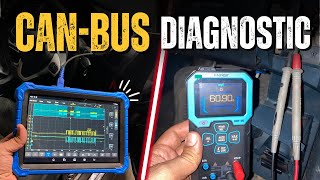
- Wiring Harness or Connector Fault: Although less common than module issues, chafed wiring or corrosion in a connector for the PCM or another key module can disrupt the CAN bus network and trigger this code. 🎬 Watch: A mechanic explains how CAN-BUS networks function and communicate. A common diagnostic step is to check for 60 ohms of resistance across pins 6 and 14 of the OBD-II port to verify the integrity of the main communication circuit.
Diagnosis Steps
- Verify the health of the 12V accessory battery. Ensure it is fully charged and passes a load test before proceeding. Low voltage can cause numerous, misleading communication codes.
- Connect a Ford-compatible scan tool (like FORScan or Ford IDS) and check for DTCs in all modules. Confirm the presence of U1013, U0100, U0101, and/or P0606.
- Check for TSB 16-0129 applicability. If the symptoms and codes match, the primary repair is to reprogram the PCM with the latest calibration. This requires a dealership-level tool. 🎬 See how to perform module programming at home using FORScan.
- If reprogramming does not fix the issue or is not applicable, perform a CAN bus network integrity test. Check for approximately 60 Ohms of resistance between Pin 6 (CAN-High) and Pin 14 (CAN-Low) 🎬 Watch: Diagnosing CAN Bus shorts and opens on a Ford platform. at the OBD-II port with the 12V battery disconnected. This verifies the termination resistors are intact.
- Inspect the wiring and connectors at the PCM for any signs of physical damage, corrosion, moisture intrusion, or loose pins.
- If the software is current and the wiring is intact, suspect a faulty PCM. Replacement and programming are required.
Parts You'll Likely Need
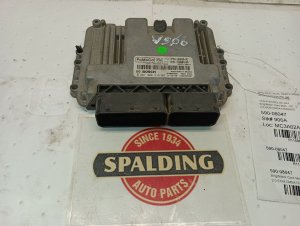
- Powertrain Control Module (PCM)
(OEM #EM5A-12A650-EB (Example for 2014, Varies by VIN))— If a software update doesn't resolve the communication errors, the module itself is the next most likely point of failure.
Trusted brands: Motorcraft, Duralast (Remanufactured)
OEM price range: $1000-$1250
Aftermarket price range: $200-$800 (Remanufactured)
Related Codes That Often Appear With This One
- U0100 — Indicates 'Lost Communication With ECM/PCM'. It frequently appears with U1013 as part of the fault pattern described in TSB 16-0129.
- U0101 — Indicates 'Lost Communication with TCM'. This code is also listed in TSB 16-0129 as part of the same underlying issue, even on the Electric model where the 'TCM' functions are integrated differently.
- P0606 — Indicates 'ECM/PCM Processor Fault'. This code can be triggered when the PCM receives illogical data from another module, causing it to flag an internal error. It is also cited in TSB 16-0129.
Technical Service Bulletins (TSBs) & Recalls

- TSB 16-0129: Addresses intermittent no-start, loss of power, and flashing gear selector light accompanied by DTCs U0100, U0101, U1013, and/or P0606. The procedure involves reprogramming or, if needed, replacing the control module (PCM/TCM). This TSB is the primary diagnostic path for this set of symptoms.
Platform-Specific Known Issues
- The primary documented issue is covered by TSB 16-0129, where a PCM software fault causes a cluster of communication codes (U0100, U0101, U1013, P0606) and a flashing gear selector display. The fix is often a simple reprogram.
- Owners on the MyFocusElectric.com forum have discussed various electrical gremlins, often advising to check the 12V battery first and ensure all connectors are secure before assuming a major component has failed.
Mechanic-Grade Diagnostic Values

- HS-CAN Bus Voltage (Key On, Vehicle Off, Recessive State) — expected: CAN High: ~2.5V to Ground, CAN Low: ~2.5V to Ground. Failure: Significant deviation from 2.5V on either line indicates a potential short to power or ground.
- HS-CAN Bus Voltage (Key On, Vehicle Off, Dominant State) — expected: CAN High: ~3.5V to Ground, CAN Low: ~1.5V to Ground. Failure: Inability for the lines to switch to these voltages during communication indicates a bus or transceiver fault.
- HS-CAN Bus Average Voltage (Multimeter) — expected: CAN High: ~2.6V, CAN Low: ~2.4V. Failure: Readings outside this approximate range can indicate a bus that is stuck high or low.
- HS-CAN Bus Network Resistance — expected: ~60 Ω (measured between Pin 6 and Pin 14 of OBD-II port with 12V battery disconnected). Failure: A reading of ~120 Ω suggests an open circuit or a fault in one of the two terminating resistors. A reading near 0 Ω indicates a short between the CAN High and CAN Low wires.
Scan Tool Commands That Help
- Ford IDS (or equivalent like FORScan): Programmable Module Installation (PMI) — This function is required when replacing the Powertrain Control Module (PCM). It downloads configuration data from the old module (if possible) and uploads it, along with As-Built data, to the new module to ensure it communicates correctly with the rest of the vehicle.
- Ford IDS (or equivalent): Network Test / Self-Test — This command polls all modules on the network to see which ones are communicating. It's a critical first step to see if the PCM is offline or if multiple modules are not responding, which could indicate a network-wide wiring problem rather than a single module failure.
Wiring & Ground Locations
- G104 — Left front of the motor compartment.. This is a primary ground point for components in the engine/motor bay. A poor connection at G104 can cause intermittent electrical issues for multiple systems, including the PCM, leading to communication faults.
- C175B / C175E — These are the main electrical connectors for the Powertrain Control Module (PCM), located at the front of the left front wheelwell.. All power, ground, and CAN bus network signals for the PCM pass through these connectors. Technicians must test for correct voltage and resistance at the pins of these connectors (e.g., HS-CAN pins) to isolate a fault between the vehicle wiring and the PCM itself.
- Main Chassis Grounds — Key grounds are located on the chassis underneath the airbox, in front of the 12V battery.. Corrosion or looseness at the main chassis ground points can create floating voltages and unstable communication between modules, mimicking a module failure. Cleaning these grounds is a low-cost diagnostic step.
Model Year Variations Within This Range
- 2015-2016: The 2015 model year introduced a significant mid-cycle refresh with restyled front/rear ends and a redesigned interior, including a new center console, center control panel, and updated MyFord Touch system. While the core powertrain was unchanged, these interior electrical changes could lead to differences in wiring harnesses, connector locations, and part numbers for modules located inside the cabin compared to the 2012-2014 models.
Helpful Videos
We Have This Part in Stock



The information in this article is provided for general reference and educational purposes only. Vehicle specifications, procedures, and part compatibility can vary by production date, trim level, and region. Always consult your vehicle's factory service manual and verify part numbers before purchasing or performing repairs. Safety-critical components such as airbags, seat belts, and braking systems should be installed by a qualified professional.
- Ford FOCUS ELECTRIC:
- 🎬 Helpful Videos
- 🛍️ Shop This Part
- What's Unique About the 2012-2016 Ford FOCUS ELECTRIC
- Diagnostic Flowchart
- Symptoms You May Notice
- Most Likely Causes
- Rare But Worth Checking
- Diagnosis Steps
- Parts You'll Likely Need
- Related Codes That Often Appear With This One
- Technical Service Bulletins (TSBs) & Recalls
- Platform-Specific Known Issues
- Mechanic-Grade Diagnostic Values
- Scan Tool Commands That Help
- Wiring & Ground Locations
- Model Year Variations Within This Range
- 🎟️ Get 5% Off