

U1013 on 2014-2016 Ford Fiesta: Transmission Communication Fault Causes & Fixes
On a 2014-2016 Ford Fiesta, code U1013 almost always indicates a failing Transmission Control Module (TCM) for the DPS6 automatic transmission. This is a very common and well-documented problem. The fix is to replace and program the TCM. Owners should check for eligibility under Ford's Customer Satisfaction Program 14M02, which extended warranty coverage for this specific part to 10 years/150,000 miles and may offer a one-time replacement even if those limits are exceeded.
- U1013 on a 2014-2016 Fiesta is a serious code that almost certainly points to a problem with the Transmission Control Module (TCM).
- Symptoms are severe and can include a no-start condition, sudden loss of power, or getting stuck in gear, making the vehicle unsafe to drive.
- The standard professional repair is to replace the TCM with a new or remanufactured unit and program it to the vehicle.
- Before replacing the TCM, it is crucial to verify the battery is in good health, as low voltage can sometimes mimic module failures.
- Owners should contact a Ford dealership with their VIN to check for any applicable warranty extensions or customer satisfaction programs related to the DPS6 transmission.
What's Unique About the 2014-2016 Ford FIESTA

The 2014-2016 Ford Fiesta uses the DPS6 dual-clutch automatic transmission, which is notorious for control module failures. Unlike many other vehicles where a U-code might suggest a simple wiring issue, on this specific platform, code U1013 is a very strong indicator of an impending or current internal failure of the Transmission Control Module (TCM). Ford has issued multiple Technical Service Bulletins (TSBs) and a warranty extension program (14M02) acknowledging this exact issue, often recommending TCM replacement as the direct solution when U1013 is present with codes like U0100, U0101, and/or P0606.
Diagnostic Flowchart

Tap your situation to follow the diagnostic path that matches what you're seeing on this vehicle.
Symptoms You May Notice

- Intermittent loss of power or transmission engagement while driving
- Transmission fails to engage or gets stuck in gear
- Harsh, delayed, or erratic shifting
- Vehicle will not start (no-crank condition)
- Flashing gear selector light (PRNDL/S) on the instrument cluster
- Check Engine Light is on
- "Hill Start Assist Not Available" message in the information display
- "Parking Aid Malfunction/Service Required" message
- Replacing the transmission shift actuators. While these can also fail on the DPS6, they typically produce different codes (like P090B or P0901). If U1013 is present, the TCM is the more likely culprit.
- Replacing the entire transmission assembly when only the external TCM has failed.
Most Likely Causes

- Faulty Transmission Control Module (TCM) 🔴 High Probability The DPS6 transmission's TCM is known for widespread failures due to internal electrical circuit failures, often attributed to poor solder joints on the circuit board that degrade from heat and vibration. The module's location on the transmission exposes it to harsh conditions.
How to confirm: Scan for codes U0100, U0101, and P0606, which are often present with U1013. If these codes are present, Ford's own Technical Service Bulletins direct the technician to replace the TCM. A dealership can confirm eligibility for replacement under warranty program 14M02.
Typical fix: Replace the Transmission Control Module and program the new unit to the vehicle.
Est. part cost: $300-$900 - Poor Electrical Connection or Grounding 🟡 Medium Probability The TCM is mounted externally on the transmission, exposing its connectors to vibration and the elements. Additionally, some owners have reported that poor factory grounding points on the chassis (due to paint overspray) can cause intermittent electrical issues that may damage the TCM over time. TSBs have been issued for similar models addressing poor grounds causing transmission issues.
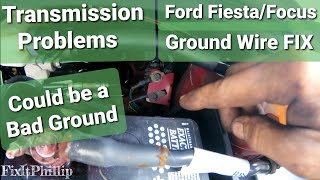
How to confirm: Visually inspect the two large electrical connectors on the TCM for any signs of corrosion, backed-out pins, or harness damage. Locate, clean, and tighten the main chassis ground points near the battery and below the airbox. 🎬 Watch: How to clean and fix poor ground connections.
Typical fix: Clean the connector terminals and apply dielectric grease. Clean chassis grounding points to bare metal and re-secure. If the connector or harness is damaged, it will require repair or replacement.
Est. part cost: $5-$50 - Low Battery Voltage ⚪ Low Probability Modern vehicles are highly sensitive to voltage. A weak or failing battery can cause unpredictable communication errors between modules. Ford TSBs specifically instruct technicians to resolve any low voltage DTCs (like U3003) *before* replacing the TCM.
How to confirm: Test the battery's state of charge and health with a multimeter or battery tester. Voltage should be above 12.4V with the engine off. Check for other low-voltage codes like U3003.
Typical fix: Charge or replace the vehicle's 12V battery.
Est. part cost: $150-$250
Diagnosis Steps
- Read all Diagnostic Trouble Codes (DTCs) from all vehicle modules using a capable OBD-II scanner (like FORScan for advanced diagnostics). Pay close attention to codes stored in the PCM, TCM, and ABS modules.
- Check the battery and charging system. Ensure battery voltage is above 12.4V and the alternator is charging correctly. TSB 16-0044 specifically states to resolve low voltage issues (DTC U3003) before proceeding.
- Check your vehicle's VIN with a Ford dealer or online to see if it is covered by Customer Satisfaction Program 14M02 for a free TCM replacement.
- Locate the Transmission Control Module (TCM) on the driver's side of the transmission, under the battery housing. 🎬 See this walkthrough on how to replace the TCM.
- Carefully inspect the two large electrical connectors and the wiring harness going to the TCM. Look for any signs of damage, corrosion, or loose connections. Check and clean chassis ground points near the battery.
- Consult the relevant Technical Service Bulletin (TSB 16-0129 or 16-0044). If codes U1013, U0100, U0101, or P0606 are present, the official Ford procedure is to replace the TCM.
- If the TCM is replaced, the new module must be programmed to the vehicle, and the TCM adaptive learn strategy must be performed using a diagnostic tool like Ford's IDS or FORScan.
Parts You'll Likely Need
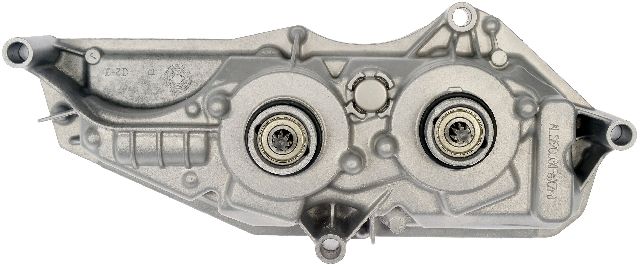
- Transmission Control Module (TCM)
(OEM #AE8Z-7Z369-F)— This is the component that fails internally, causing the communication breakdown indicated by code U1013. Ford's own service bulletins mandate its replacement when this and related codes are found. This part number supersedes previous versions AE8Z-7Z369-B and AE8Z-7Z369-D.
Trusted brands: Motorcraft (OEM)
OEM price range: $700-$1000
Aftermarket price range: $250-$500 (for remanufactured or cloned units)
Related Codes That Often Appear With This One
- U0100 — This code means 'Lost Communication With ECM/PCM'. It frequently appears with U1013 as they both indicate a severe communication breakdown with the transmission controls.
- U0101 — This code means 'Lost Communication with TCM'. It is a direct confirmation that other modules cannot talk to the Transmission Control Module.
- P0606 — This code indicates an internal processor fault within a control module, often logged in the PCM when it detects fatal errors from the TCM. TSBs group this code with U1013 as a reason to replace the TCM.
- U3003 — This code indicates 'Battery Voltage'. A weak battery can cause network communication failures, and TSBs advise checking for this code and resolving any voltage issues before replacing modules.
Technical Service Bulletins (TSBs) & Recalls
- TSB 16-0129: Supersedes 16-0044. Addresses no start, loss of power, and flashing PRNDL with DTCs U0100, U0101, U1013, and/or P0606, recommending TCM replacement as the primary fix.
- TSB 16-0044: An earlier version of the bulletin covering the same DPS6 transmission issues (no start, no engagement, loss of power) with the same set of DTCs, including U1013. It specifically mentions checking for and resolving low voltage code U3003 before replacing the TCM.
Platform-Specific Known Issues
- The DPS6 transmission in the 2011-2016 Fiesta and 2012-2016 Focus was the subject of multiple lawsuits and customer satisfaction programs due to high failure rates of the clutches, seals, and Transmission Control Module.
- Ford issued Customer Satisfaction Program 14M02, which extended the warranty on the TCM to 10 years or 150,000 miles. A later update to this program also offers a one-time replacement of the TCM through June 30, 2025, for vehicles that have already exceeded the time or mileage limits. Owners should always check with a Ford dealer for eligibility.
Mechanic-Grade Diagnostic Values
- CAN Bus Network Resistance — expected: ~60 Ohms between CAN High and CAN Low pins at the OBD-II port (with battery disconnected).. Failure: A reading of ~120 Ohms indicates an open circuit or a fault in one of the two terminating resistors (often in the PCM or Instrument Cluster). A reading near 0 Ohms indicates a short between the CAN High and CAN Low wires.
- CAN Bus Voltage (MS-CAN) — expected: With key on, engine off, CAN High should fluctuate around 2.7V and CAN Low should fluctuate around 2.3V, mirroring each other.. Failure: Voltages that are stuck high, stuck low, or do not mirror each other indicate a network fault, short, or open circuit.
- Voltage drop from positive battery terminal to chassis grounds — expected: Less than 0.5 Volts.. Failure: A voltage drop greater than 0.5V indicates a poor ground connection that needs to be cleaned and tightened.
Scan Tool Commands That Help
- FORScan: TCM - Transmission Control Module Reset — Used after installing a new or used TCM to clear its memory. This is a necessary first step before performing the adaptive learning procedure.
- FORScan / Ford IDS: TCM Adaptive Learning (includes Shift Drum and Clutch System Adaptive Learn) — This is a mandatory procedure after replacing the TCM or clutches. It allows the module to learn the physical touch points and positions of the shift forks and clutches. Failure to perform this can result in harsh shifting, no engagement, or further damage.
- Ford IDS: Reset KAM (Keep Alive Memory) for TCM — This is a deeper reset than a standard code clear. It erases the learned adaptive shift strategy tables. It is critical to perform this before starting the road-test relearn procedure to ensure the transmission adapts correctly to the new module or repairs.
Wiring & Ground Locations
- Main Chassis Grounds — Located under the airbox, near the driver's side strut tower. There are typically two 10mm bolts securing multiple ground wires to the chassis. These are notorious for having paint underneath, causing a poor connection.. The TCM and other critical modules rely on these grounds. A poor connection here can cause intermittent communication faults, voltage fluctuations, and a wide range of electronic issues, including the U1013 code.
- Battery-to-Chassis Ground — The main negative battery cable connects to a stud on the chassis frame rail, typically near the battery with a 13mm nut.. This is the primary ground path for the entire vehicle's electrical system. Corrosion or looseness here can cause system-wide low voltage and communication errors.
- C175T — This is one of the two large electrical connectors on the Transmission Control Module (TCM) itself.. This connector carries the power, ground, and communication network lines for the TCM. Checking for power, ground, and CAN bus signals at the pins of this connector is a key diagnostic step to determine if the fault is in the wiring or the module itself.
Real Owner Repair Stories
- Big Ben's Cars & Cycles YouTube Comment (2014 Ford Focus (platform mate)) — Shuddering, skipping gears, and would occasionally not go into reverse.
❌ Tried (didn't work) Took to a Ford dealership who diagnosed a completely shot clutch for $4000. Vehicle had a previous PCM and clutch replacement in 2016.
✅ What actually fixed it The owner watched a video about cleaning the chassis grounds under the airbox, performed the ground cleaning procedure, and reported that the transmission now "works better than ever" and "shifts beautifully". - Reddit user u/ITNetworkEng on r/FordFocus (Ford Focus with over 150k miles (platform mate)) — Transmission became extremely rough, dropped shifts, and reverse would not work sometimes.
❌ Tried (didn't work) Dealer had previously performed TSBs before 100k miles.
✅ What actually fixed it The user cleaned the main chassis ground points. They reported that "so far results are promising" with better shifting initially, though some issues returned after 10 minutes of driving, suggesting the grounds were a contributing factor but the TCM or clutches may have already sustained damage.
OEM Part Supersession History
AE8Z-7Z369-B, AE8Z-7Z369-D→AE8Z-7Z369-F— The original TCM design used compliant pin connections for critical components which could loosen over time. Later and remanufactured versions often feature soldered connections for improved durability and reliability.
Heads up: While all are for the DPS6, using the latest 'F' revision is highly recommended as it is the most updated version designed to address the known failure points.
Helpful Videos
We Have This Part in Stock


The information in this article is provided for general reference and educational purposes only. Vehicle specifications, procedures, and part compatibility can vary by production date, trim level, and region. Always consult your vehicle's factory service manual and verify part numbers before purchasing or performing repairs. Safety-critical components such as airbags, seat belts, and braking systems should be installed by a qualified professional.
- Ford FIESTA:
- 🎬 Helpful Videos
- 🛍️ Shop This Part
- What's Unique About the 2014-2016 Ford FIESTA
- Diagnostic Flowchart
- Symptoms You May Notice
- Most Likely Causes
- Diagnosis Steps
- Parts You'll Likely Need
- Related Codes That Often Appear With This One
- Technical Service Bulletins (TSBs) & Recalls
- Platform-Specific Known Issues
- Mechanic-Grade Diagnostic Values
- Scan Tool Commands That Help
- Wiring & Ground Locations
- Real Owner Repair Stories
- OEM Part Supersession History
- 🎟️ Get 5% Off