

U1010 on 2007-2014 Nissan Versa: CAN Communication Faults and Fixes
The U1010 code on a 2007-2014 Nissan Versa indicates an internal error within a control module, preventing it from communicating on the vehicle's network. This is often related to the ABS or another key module. Diagnosis involves checking fuses, wiring, and grounds before suspecting a failed module.
- U1010 on your Nissan Versa means a specific electronic module has an internal fault and can't communicate.
- Before replacing any expensive parts, always check the simple things first: ensure the battery is fully charged and test the charging system.
- Inspect, clean, and tighten all major ground connections under the hood. This is a common and cheap fix for Nissan communication codes.
- The ABS module is a common culprit for this code, but it should only be replaced after verifying its power, ground, and wiring are intact.
- This is a complex electrical issue; professional diagnosis is highly recommended to avoid costly misdiagnosis.
What's Unique About the 2007-2014 Nissan VERSA
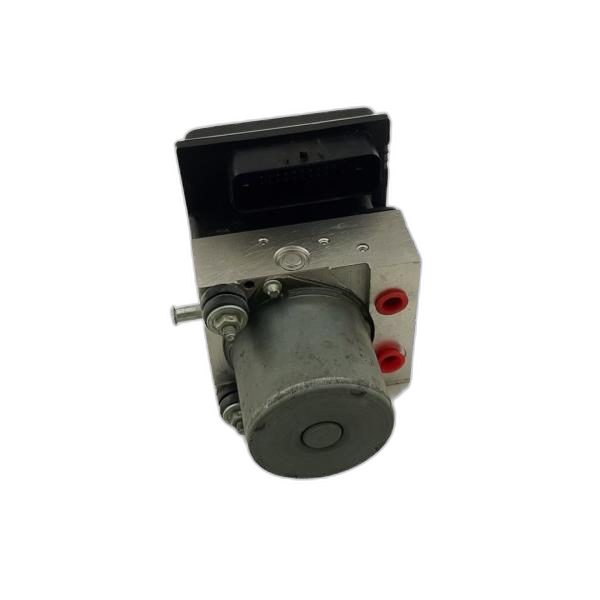
The 2007-2014 Nissan Versa, spanning two generations on the Nissan B platform, relies heavily on CAN bus communication for systems like the ABS, transmission (especially the CVT), and engine controls. While U1010 points to a module's internal fault, issues like poor ground connections are a known weakness on various Nissan models of this era, which can mimic a module failure by causing voltage irregularities that trigger communication codes. Always checking grounds is a critical first step on these vehicles before condemning an expensive module. The ABS module, in particular, integrates the electronic controller and the hydraulic pump into a single assembly, making it a critical and costly point of failure.
Diagnostic Flowchart
Tap your situation to follow the diagnostic path that matches what you're seeing on this vehicle.
Generation note: This range covers the first generation (C11; 2007-2012 sedan, 2007-2013 hatchback) and the start of the second generation (N17; 2012-2014 sedan). While the U1010 code's meaning is consistent, the physical location of modules, grounds, and wiring harnesses may differ. For example, ABS module part numbers are highly specific to the year and trim. No specific generation-related causes for this code are commonly documented, but wiring and ground locations should always be verified with a model-year specific service manual.
Symptoms You May Notice
- Check Engine Light is on
- ABS warning light is on.
- Traction Control or VDC/SLIP light is on.
- Transmission may not shift correctly or may enter 'limp mode' (stuck in one gear).
- Vehicle may crank but not start.
- Scan tool may be unable to communicate with the specific faulty module (e.g., ABS, TCM).
- Inaccurate or non-functional speedometer.
- Brake pedal feels hard or unresponsive.
- Radiator fan runs constantly when the key is on.
- Replacing the Transmission Control Module (TCM) when the ABS module is the actual cause of the network disruption that is causing the TCM to log communication faults.
- Replacing a control module when the root cause is a simple corroded ground wire, a failing battery, or a blown fuse.
- Replacing a wheel speed sensor, which would typically set a C-code, not a U-code for total module communication loss.
Most Likely Causes
- Failed ABS Control Module 🔴 High Probability The ABS module is a very common point of failure for communication codes on this platform. Its electronic components can fail from heat, vibration, and age, leading to internal communication breakdowns.
How to confirm: After confirming good power, ground, and CAN bus wiring to the module, if it still fails to communicate and sets a U1010, the module itself is the likely culprit. A professional scan tool will show the ABS module as offline, while other modules report U-codes (like U0121) for lost communication with the ABS.
Typical fix: Replace the ABS control module and pump assembly, followed by VIN programming and a specialized brake bleeding procedure. Alternatively, send the original module to a specialist for repair and rebuilding.
Est. part cost: $300-$1200 - Poor Ground Connections 🟡 Medium Probability Nissan issued technical bulletins for various models in this era regarding poor or corroded ground connections causing CAN communication codes. These connections, often located in the engine bay near the battery or under the dash, can degrade over time.
How to confirm: Locate the main ground points for the ECM, BCM, and the suspect module (e.g., ABS unit) using a service manual. Disconnect the battery, then unbolt, clean all contact surfaces to bare metal, and securely re-tighten the ground connections. Perform a voltage drop test on the ground circuit.
Typical fix: Cleaning and tightening ground connections.
Est. part cost: $0-$10 - Low Battery Voltage or Failing Alternator 🟡 Medium Probability All modern vehicles are sensitive to low voltage. Control modules can behave erratically and fail to communicate properly if system voltage drops below a stable threshold (typically under 10V), often triggering network codes.
How to confirm: With the engine off, a healthy battery should read at least 12.4V. With the engine running, the alternator should produce a charging voltage between 13.7V and 14.7V. Test the battery under load.
Typical fix: Recharge or replace the battery, or replace the alternator if it is not charging correctly.
Est. part cost: $100-$400 - Damaged Wiring or Corroded Connectors ⚪ Low Probability Wiring harnesses, particularly the CAN bus wires, can be susceptible to damage from chafing, impact, or rodents. The main connector at the suspect module (e.g., ABS) is also a point of potential corrosion or pin failure.
How to confirm: Visually inspect the wiring harness leading to the non-communicating module for any signs of damage. Unplug the connector and check for green or white corrosion on the pins. Perform a continuity and resistance test on the CAN High and CAN Low wires between the module and the OBD-II port.
Typical fix: Repair the damaged section of the wiring harness or clean/replace the corroded connector.
Est. part cost: $10-$150
Rare But Worth Checking
- Blown Fuse for Control Module:
Diagnosis Steps
- Connect a professional scan tool and perform a full system scan. Identify which module is reporting the U1010 code (this is the suspect) and which other modules are reporting 'lost communication' codes (e.g., U1000, U0121).
- Check and record battery voltage with the engine off (should be >12.4V) and running (should be 13.7V-14.7V) to rule out power supply issues.
- Inspect all fuses related to the suspect module (e.g., ABS, VDC) in both the interior and engine compartment fuse boxes (IPDM E/R).
- As per Nissan TSB NTB10-066A, always diagnose communication codes first. Locate, disconnect, clean, and re-secure the main engine and chassis ground connections. Pay close attention to grounds near the battery tray and under the airbox.
- Locate the module that is not communicating (often the ABS module). Inspect its main electrical connector for corrosion, moisture, or pushed-out pins.
- Using a wiring diagram, verify that the module is receiving proper battery voltage and has a solid ground connection directly at its connector pins using a multimeter.
- With the battery disconnected, measure the resistance between the CAN High (Pin 6) and CAN Low (Pin 14) pins at the vehicle's OBD-II port. A healthy network should read approximately 60 ohms. If it reads 120 ohms, there is likely a break in the circuit or a terminating resistor (often in the ABS or ECM) is offline. 🎬 Watch this guide to learn how to troubleshoot CAN bus faults.
- If power, ground, and network resistance are all confirmed to be good, the module that is setting the U1010 code has likely failed internally and requires replacement or repair.
Parts You'll Likely Need
- ABS Control Module / Pump
(OEM #47660-EM30A, 47660-EM36B (Gen 1); 47660-ZN93B, 47660-3BB0A (Gen 2) - Always verify by VIN)— This is the most frequent source of the U1010 code on this platform when wiring and grounds are confirmed to be good.
Trusted brands: Nissan (OEM), Bosch, ATE
OEM price range: $600-$1000
Aftermarket price range: $300-$800 - ABS Module Repair Service — A cost-effective alternative to buying a new or used module. Specialists can repair the internal electronic faults of your original unit, which avoids the need for VIN programming.
Related Codes That Often Appear With This One
- U1000 — U1000 is a general CAN communication failure code. Other modules on the network will log a U1000 🎬 Watch: Troubleshooting U1000 and CAN bus codes on a Versa. when they cannot hear from the module that has the internal U1010 fault.
- U0121 — This code specifically means 'Lost Communication With Anti-Lock Brake System (ABS) Control Module'. It often appears in the ECM or TCM when the ABS module is the one that has failed and set the U1010.
- U0101 — This code means 'Lost Communication with TCM'. If the TCM is the module with the internal U1010 fault, other modules (like the ECM and ABS) will log U0101.
Technical Service Bulletins (TSBs) & Recalls
- NTB10-066A / NTB10-066B: Defines U1010 as an internal module error and mandates that communication codes be diagnosed first. It confirms that a module reporting U1000 is usually healthy, but is seeing an error elsewhere.
- NTB10-145B: Provides a diagnostic flowchart for when U1000 is stored in the ABS/VDC unit, reinforcing the need for proper CAN system diagnosis before replacing the actuator.
- NTB05-038: Although for older models, it established the principle that excess resistance in ground connections is a known cause for Nissan CAN codes like U1000/U1010, a problem that persists in this era.
Platform-Specific Known Issues
- ABS Module Failure is Prevalent: The integrated ABS pump and control module is the most commonly cited point of failure for a U1010 code on the 2007-2014 Versa. Symptoms often include the ABS and traction control lights, and sometimes a non-functional speedometer, as the ABS module processes wheel speed data.
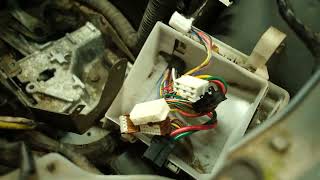
- Intermittent Crank-No-Start: In some cases, a failing module on the CAN bus can prevent the car from starting. A user on YouTube with a 2007 Versa traced a U1000/U1010 crank-no-start issue to a bad pin connection at the IPDM (Intelligent Power Distribution Module), which is a central hub for the CAN network.
Mechanic-Grade Diagnostic Values
- CAN Bus Network Resistance — expected: Approximately 60 Ω. Failure: A reading of 120 Ω indicates an open circuit or a missing terminating resistor (i.e., a module is offline). A reading near 0 Ω indicates a short between CAN High and CAN Low wires.
- CAN High (CAN-H) Voltage to Ground — expected: Approx. 2.5V (recessive state) to 3.5V (dominant state). Failure: Voltage stuck high, low, or at 0V indicates a short or open circuit.
- CAN Low (CAN-L) Voltage to Ground — expected: Approx. 2.5V (recessive state) to 1.5V (dominant state). Failure: Voltage stuck high, low, or at 0V indicates a short or open circuit.
- Minimum System Operating Voltage — expected: Above 10V. Failure: If system voltage drops below 10V, various control modules may stop communicating, generating U-codes.
Scan Tool Commands That Help
- Nissan CONSULT-II / CONSULT-III Plus: CAN Diagnostic Support Monitor — This is a primary function used to see a live list of all CAN modules and their communication status (transmitting/receiving). It quickly identifies which module is offline.
- Nissan CONSULT-II / CONSULT-III Plus: Self-Diagnosis — To pull codes from a specific control unit, such as the ABS actuator and electric unit, to see if it has logged the U1010 internally.
- Manual Procedure (No Scan Tool): IPDM E/R Auto Active Test (Self-Test) — If the IPDM (engine bay fuse box) is suspected of failure. With the ignition ON (engine off), press the driver's door jamb switch 10 times within 20 seconds. The IPDM will cycle outputs like wipers, headlights, and fans, confirming its basic processing functions are working.
Wiring & Ground Locations
- Data Link Connector (DLC) — Under the driver's side dashboard.. This is the primary access point for network diagnosis. CAN High is Pin 6, and CAN Low is Pin 14. Resistance and voltage tests are performed here to check the health of the entire network.
- IPDM E/R (Intelligent Power Distribution Module Engine Room) — In the engine compartment, typically next to the battery.. This is not just a fuse box; it's a control module on the CAN network. It contains the ECM relay and other critical power relays. A failure within the IPDM can cause a U1010 and a no-start condition.
- ABS Module Connector — On the ABS pump/module assembly in the engine bay.. This is the main connector for the most commonly failed module. Technicians must test for solid power (on at least two pins) and ground (on at least two pins) directly at this connector to rule out a wiring issue before condemning the module.
- Chassis Grounds — Key locations are in the engine bay near the battery and under the airbox, as well as in the trunk area for rear components.. Corroded or loose grounds are a common cause of intermittent CAN communication faults on Nissans of this era. Cleaning these contact points is a critical and low-cost diagnostic step.
Real Owner Repair Stories
- Reddit user on r/MechanicAdvice (2014 Nissan Xterra (similar platform)) — U1010 code present, vehicle would not crank or start.
❌ Tried (didn't work) Scanning for codes.
✅ What actually fixed it The user discovered that physically touching the starter relay inside the IPDM (engine bay fuse box) would allow the truck to start and run normally. This pointed to a failure within the IPDM or a faulty relay, not another module on the network. - Nissan Forum user 'rhillman75' (1997 Infiniti QX4 (older, but demonstrates a relevant diagnostic trap)) — Speedometer and odometer not working, a common symptom associated with ABS/VSS failure.
❌ Tried (didn't work) Replacing two different ECU computers., Replacing two different speedometer heads., Replacing the Vehicle Speed Sensor (VSS) assembly.
✅ What actually fixed it The final cause was a single broken tooth on the small, separate plastic gear that drives the VSS. The new VSS did not come with this gear. The gear itself was a $10 part, while over $600 was spent on misdiagnosis.
"I Checked Everything" — The Actual Cause
- In a case where the speedometer was inoperative (a symptom often linked to ABS module failure and U-codes), extensive electronic diagnosis including replacing ECUs and the Vehicle Speed Sensor (VSS) did not solve the problem. The actual cause was a purely mechanical failure: a single broken tooth on the inexpensive, separate plastic gear that drives the VSS. This is often missed because the electronic sensor itself tests good and the replacement part may not include the gear.
OEM Part Supersession History
47660-ZN92A→47660-ZN93B— Part revision or update by manufacturer.
Heads up: Applies to second generation (N17) Versa sedan. Using the wrong part number can lead to system incompatibility.47660-9MD1B→47660-3WC1B— Part revision or update by manufacturer.
Heads up: Specific to the Versa Note hatchback model. Highlights the importance of matching part numbers not just by year, but by body style.47660-9KK3A, 47660-9KL3A→47660-9KS3A— Part revision or update by manufacturer.
Heads up: For second generation Versa sedans with CVT. Always verify by VIN as programming is required.
Model Year Variations Within This Range
- 2007-2013 (C11, Gen 1) vs 2012-2014 (N17, Gen 2): The ABS module part numbers are completely different between the first and second generations and are not interchangeable. For example, 47660-EM30A is for Gen 1, while 47660-3BB0A is for Gen 2.
- 2011-2014 (N17, Gen 2): The CAN bus on the second generation (N17 platform) operates at a 500k baud rate. While this is a common speed, diagnostic tools must be set correctly to communicate with the network.
Helpful Videos

We Have This Part in Stock



The information in this article is provided for general reference and educational purposes only. Vehicle specifications, procedures, and part compatibility can vary by production date, trim level, and region. Always consult your vehicle's factory service manual and verify part numbers before purchasing or performing repairs. Safety-critical components such as airbags, seat belts, and braking systems should be installed by a qualified professional.
- Nissan VERSA:
- 🎬 Helpful Videos
- 🛍️ Shop This Part
- What's Unique About the 2007-2014 Nissan VERSA
- Diagnostic Flowchart
- Symptoms You May Notice
- Most Likely Causes
- Rare But Worth Checking
- Diagnosis Steps
- Parts You'll Likely Need
- Related Codes That Often Appear With This One
- Technical Service Bulletins (TSBs) & Recalls
- Platform-Specific Known Issues
- Mechanic-Grade Diagnostic Values
- Scan Tool Commands That Help
- Wiring & Ground Locations
- Real Owner Repair Stories
- "I Checked Everything" — The Actual Cause
- OEM Part Supersession History
- Model Year Variations Within This Range
- 🎟️ Get 5% Off