

U1010 on 2005-2009 Nissan Quest: Internal Module Failure Causes and Fixes
U1010 on a 2005-2009 Nissan Quest means a specific control module has an internal error and can't communicate. Before replacing any expensive computers, always check for simpler causes like a weak battery, blown fuses, or corroded ground connections, which are common culprits for network codes. The Intelligent Power Distribution Module (IPDM) is a particularly high-failure item on this platform and can cause this code.
- U1010 means a specific module has an internal failure, but the actual cause is often simpler.
- Always start your diagnosis with the easiest and most common fixes: test the battery and clean all major ground connections.
- The Intelligent Power Distribution Module (IPDM) in the engine bay is a known weak point and should be investigated before replacing more expensive modules.
- A professional scan tool is necessary to correctly identify which module is failing.
- Do not replace any control module unless you have definitively ruled out issues with its power, ground, and wiring.
What's Unique About the 2005-2009 Nissan QUEST
The 2005-2009 Nissan Quest (V42 generation), built on the FF-L platform, relies heavily on its CAN network for all major functions. While the U1010 code officially points to a failed module, these vehicles are exceptionally sensitive to electrical system health. Issues like poor ground connections or a failing Intelligent Power Distribution Module (IPDM)—the vehicle's smart fuse box—are notorious for disrupting the network and causing a module to falsely report an internal error. Therefore, a thorough check of the basic electrical system, especially the IPDM and key ground points, is critical on the Quest before condemning an expensive control module.
Diagnostic Flowchart
Tap your situation to follow the diagnostic path that matches what you're seeing on this vehicle.
Symptoms You May Notice
- Check Engine Light is on
- Vehicle enters 'limp mode' with reduced engine power
- Harsh or erratic transmission shifting
- Vehicle may not start (crank-no-start condition)
- ABS, Traction Control, or other warning lights are illuminated
- Gauges on the instrument cluster may not work correctly
- Loss of communication with the scan tool for one or more modules
- Engine stalls unexpectedly while driving
- Electrical accessories (wipers, lights, A/C) behave erratically
- Immediately replacing the ECM or TCM without first checking battery voltage, ground connections, and the IPDM. The IPDM is a very frequent cause of network communication faults on this platform and should be a primary suspect.
Most Likely Causes
- Low Battery Voltage or Poor Ground Connections 🔴 High Probability Nissan vehicles of this era are known to be sensitive to voltage drops and corroded grounds, which can cause a variety of communication errors. Key grounds are located on the steering member assembly under the dash and from the engine to the firewall.
How to confirm: Test the battery voltage; it should be ~12.6V with the engine off and 13.7-14.7V while running. Inspect and clean the main battery terminals, chassis grounds, and engine-to-body ground straps. Pay special attention to the ground strap from the transmission to the chassis and the main engine grounds.
Typical fix: Charge or replace the battery. Disassemble, clean all corroded ground connection points with a wire brush until they are shiny metal, and re-secure them tightly.
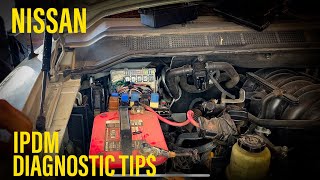
Est. part cost: $0-$250 - Faulty Intelligent Power Distribution Module (IPDM) 🔴 High Probability The IPDM, which is the main fuse and relay box in the engine bay, is a well-documented, high-failure part on many Nissan platforms from this period, including the Quest. Internal relay failures can cut power to other modules, causing communication loss that perfectly mimics a failed module.
How to confirm: A quick diagnostic test is to swap the ECM relay inside the IPDM with an identical relay (like the one for the fog lights). If the problem changes or resolves, the relay or IPDM is likely faulty. An IPDM self-test can also be performed (on some models, by pressing the driver's door switch 10 times) to check its outputs.
Typical fix: Replace the entire IPDM assembly. Nissan advises against replacing the internal relays. The IPDM is typically plug-and-play and does not require programming if the part number is an exact match.
Est. part cost: $150-$400 - Failed Control Module (TCM, BCM, ABS, etc.) 🟡 Medium Probability
How to confirm: This is the 'official' cause of a U1010. After confirming the battery, grounds, and IPDM are good, use an advanced scan tool to see which module is offline or reporting the internal fault. For example, if the scan tool cannot communicate with the TCM, and the TCM has power and ground, that module is the primary suspect.
Typical fix: Replace the failed module. Note that many modules, especially the ECM and BCM, will require programming by a dealer or qualified shop to work with the vehicle's keys and other systems.
Est. part cost: $200-$1500 - Damaged CAN Bus Wiring or Connectors ⚪ Low Probability
How to confirm: Visually inspect the wiring harnesses for any signs of chafing, rodent damage, or corrosion, particularly around the engine bay and under the dashboard. A multimeter can be used to check for 60 ohms of resistance across the CAN High and CAN Low pins (usually pins 6 and 14) at the OBD-II port with the battery disconnected. A reading of 120 ohms indicates an open circuit (or a terminating module is disconnected), while 0 ohms indicates a short.
Typical fix: Repair the damaged section of the wiring harness and clean or replace any corroded connectors.
Est. part cost: $5-$100
Diagnosis Steps
- Check and record any and all trouble codes present. Prioritize diagnosis of the U1010 code first, as recommended by Nissan TSB NTB10-066A.
- Test the battery and charging system. Ensure battery voltage is above 12.4V with the engine off. Low voltage is a common cause of communication faults.
- Inspect all major power and ground connections. Clean the battery terminals and follow the main negative cable to its chassis connection point. Specifically check the engine-to-firewall and transmission-to-chassis ground straps for corrosion or looseness.
- Check all fuses related to control modules (ECM, TCM, BCM, ABS) in both the interior fuse panel and the IPDM in the engine bay.
- If possible, swap the ECM relay in the IPDM with an identical relay (e.g., fog lamp relay) to rule out a simple relay failure. This is a common, effective field test.
- Using an advanced scan tool, perform a full network scan to see which module(s) are not communicating. The module that is offline is the primary suspect for the U1010 fault.
- If a module is identified as the culprit, inspect its wiring connector for corrosion, moisture, or bent pins.
- With the connector unplugged, use a multimeter to verify the module is receiving proper power and has a good ground connection at the connector itself.
- If power, ground, and wiring to the module are confirmed to be good, the module itself has likely failed internally and requires replacement.
Parts You'll Likely Need
- Intelligent Power Distribution Module (IPDM)
(OEM #284B7-ZE03A (or superseding part numbers like 284B7-ZE03B))— This 'smart fuse box' is a common failure point on Nissans of this era and can cause widespread communication issues that mimic a failed module. It is a primary suspect for U1010.
Trusted brands: Nissan (OEM), Hitachi, Standard Motor Products
OEM price range: $250-$400
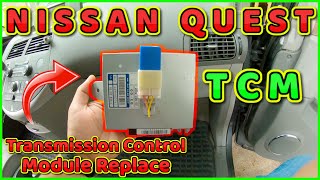
Aftermarket price range: $150-$300 - Transmission Control Module (TCM) — The TCM is a common module to fail and set a U1010, often causing severe shifting problems or limp mode. On the Quest, it is located behind the glove box. 🎬 See this walkthrough on how to replace the Quest TCM.
OEM price range: $800-$1200
Aftermarket price range: Varies (often requires repair service) - Body Control Module (BCM)
(OEM #284B1-ZM73B, 284B1-ZM02B (Part number is specific to vehicle options and production date, must match original))— The BCM controls many body and electrical functions and its failure can disrupt the entire CAN network. It requires programming upon replacement.
OEM price range: $500-$800
Aftermarket price range: $200-$400
Related Codes That Often Appear With This One
- U1000 — U1000 is a general CAN communication circuit failure. The U1010 code from a specific failing module is often the root cause that triggers the U1000 code in all other modules on the network because they can no longer hear the faulty module.
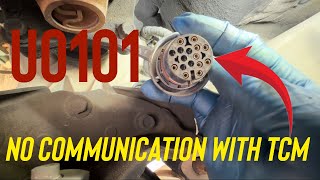
- U0101 — This code means 'Lost Communication with TCM'. If the Transmission Control Module (TCM) is the one that has failed and set the U1010, other modules will log a U0101 because they can no longer hear from it.
Technical Service Bulletins (TSBs) & Recalls
- NTB10-066A: States that communication codes like U1010 should always be diagnosed first and can indicate a module with an internal issue. Also provides basic CAN diagnostic checks like checking for 60-ohm resistance.
- NTB13-027a: Provides a detailed CAN communication diagnostic flowchart and explicitly defines U1010 as 'Module has internal Issues', advising replacement of the module setting the DTC after other diagnostics are complete.
Platform-Specific Known Issues
- Real-World Diagnosis: U1010 leading to Limp Mode: An owner on the Carjunky Forum reported their 2007 Quest would intermittently enter limp mode, particularly under hard acceleration. The code was U1010, indicating a loss of communication between the ECU and transmission. After sending the ECU for testing (which came back fine), the issue persisted. This points towards a potential intermittent failure in the TCM or the wiring between the modules, a cla
Mechanic-Grade Diagnostic Values
- CAN Bus Network Resistance — expected: Approximately 60 Ω. Failure: A reading of ~120 Ω indicates an open circuit or a terminating module is offline. A reading near 0 Ω indicates a short between CAN High and CAN Low wires.
- CAN High Voltage — expected: Approximately 2.6V. Failure: Significant deviation from 2.6V can indicate a short to power or ground, or a faulty module pulling the voltage down.
- CAN Low Voltage — expected: Approximately 2.4V. Failure: Significant deviation from 2.4V can indicate a short to power or ground, or a faulty module pulling the voltage down.
Scan Tool Commands That Help
- Nissan CONSULT-III / CONSULT-III plus: Self Diagnosis (All Systems) — This is the initial step to perform a network-wide 'roll call'. It will show which modules are communicating and which are offline, helping to pinpoint the source of the U1010 code.
- Nissan CONSULT-III / CONSULT-III plus: Reprogramming / Configuration — This function is required after replacing a major control module such as the ECM, BCM, or TCM to configure it to the vehicle's VIN and specific options.
- Nissan CONSULT-III / CONSULT-III plus: Active Test — Allows the technician to command specific components to operate, such as relays within the IPDM. This can be used to verify the functionality of the IPDM's outputs to other modules.
Wiring & Ground Locations
- Transmission Control Module (TCM) — Located behind the glove box assembly on the passenger side of the dashboard.. The TCM is a common module to fail and set a U1010 code, causing limp mode and shifting issues. Knowing its physical location is essential for checking its connector for corrosion and verifying it has proper power and ground before replacement.
- OBD-II Data Link Connector (DLC) — Under the driver's side dashboard, to the left of the steering column.. This is the primary access point for testing the entire CAN bus network. Pins 6 (CAN-H) and 14 (CAN-L) are used for resistance and voltage checks of the communication lines.
- Intelligent Power Distribution Module (IPDM E/R) — In the engine compartment, typically a black box with fuses and relays located near the battery.. The IPDM powers many other control modules. A failure within the IPDM can cut power to the TCM or BCM, causing them to go offline and trigger a U1010 code. Its location makes it susceptible to heat and potential water intrusion.
OEM Part Supersession History
284B7-ZE03A→284B7-ZE03B, and others— Revisions to address internal component reliability.
Heads up: When replacing the IPDM, the part number must be an exact match to the original unit to ensure proper function of all vehicle systems.
Helpful Videos
Used OEM Parts in Stock

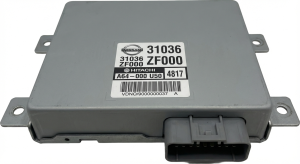
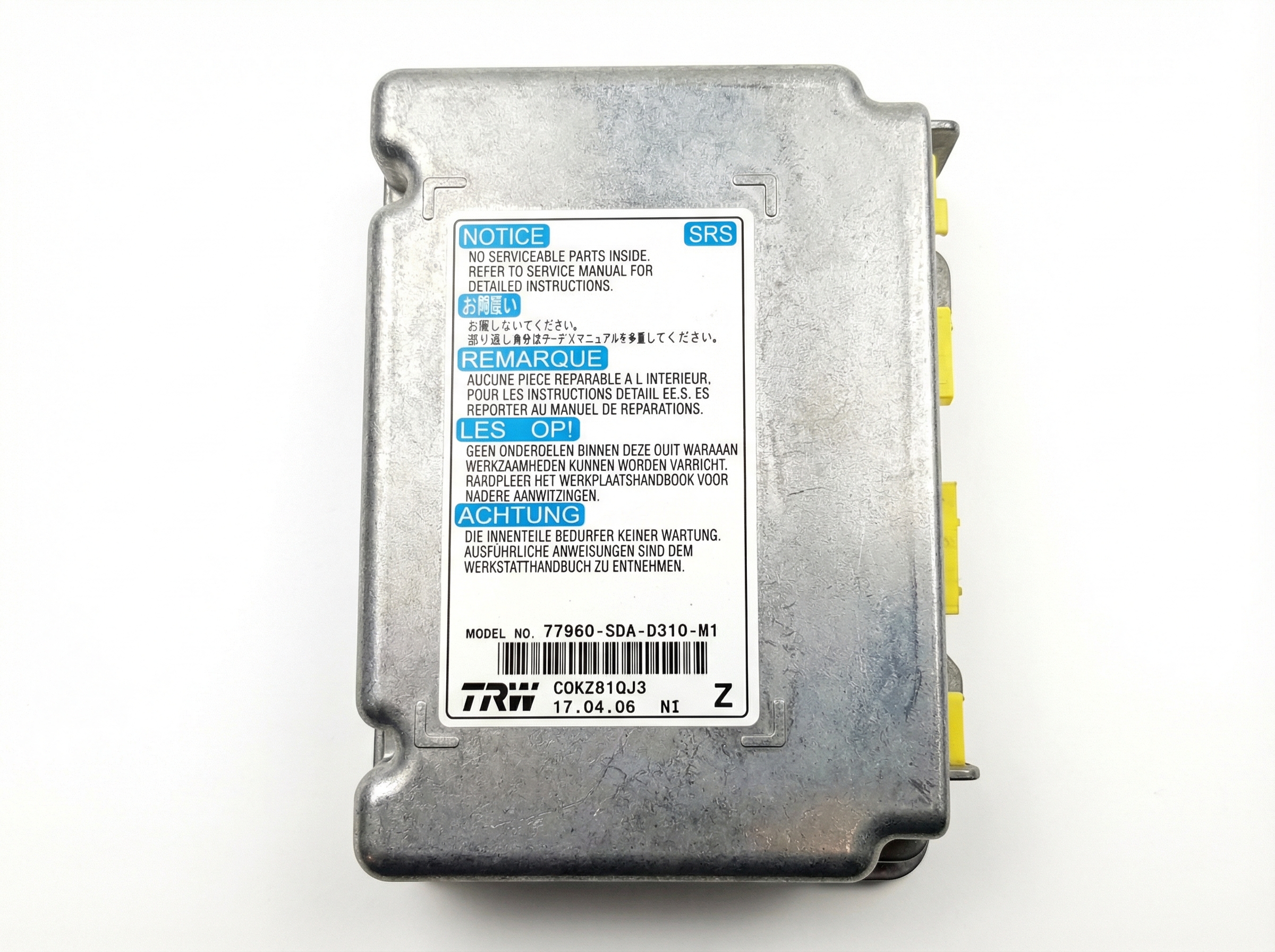


New Aftermarket Parts Available
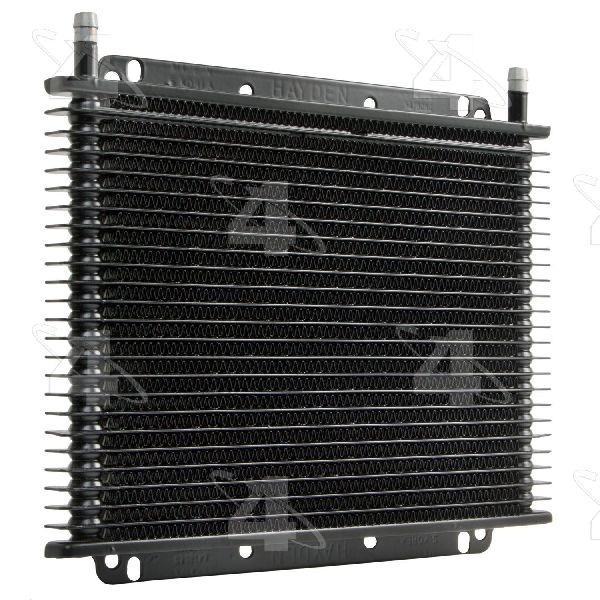

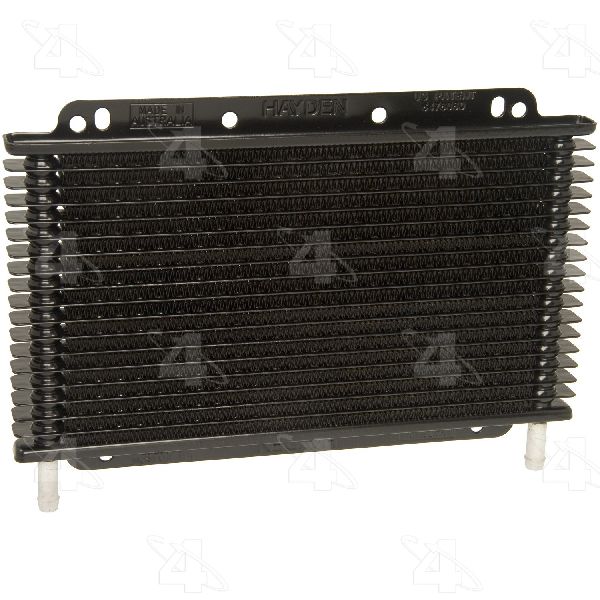

The information in this article is provided for general reference and educational purposes only. Vehicle specifications, procedures, and part compatibility can vary by production date, trim level, and region. Always consult your vehicle's factory service manual and verify part numbers before purchasing or performing repairs. Safety-critical components such as airbags, seat belts, and braking systems should be installed by a qualified professional.
- Nissan QUEST:
- 🎬 Helpful Videos
- 🛍️ Shop This Part
- What's Unique About the 2005-2009 Nissan QUEST
- Diagnostic Flowchart
- Symptoms You May Notice
- Most Likely Causes
- Diagnosis Steps
- Parts You'll Likely Need
- Related Codes That Often Appear With This One
- Technical Service Bulletins (TSBs) & Recalls
- Platform-Specific Known Issues
- Mechanic-Grade Diagnostic Values
- Scan Tool Commands That Help
- Wiring & Ground Locations
- OEM Part Supersession History
- 🎟️ Get 5% Off