

U1010 on 2009-2014 Nissan Murano: Internal Module Failure Causes and Fixes
U1010 on a Nissan Murano indicates a control module has an internal failure, most commonly the ABS control module. However, before replacing any expensive computers, you must first check for a weak battery and corroded ground connections, as these are very common issues that can falsely trigger this code.
- U1010 means a specific control module believes it has failed internally.
- ALWAYS check the battery, its terminals, and the main chassis ground connections before any other step. These are the most common and cheapest fixes.
- This code requires professional diagnosis with a high-end scan tool to avoid replacing the wrong, expensive part.
- If a module replacement is necessary, it will likely need to be programmed to your vehicle's VIN.
What's Unique About the 2009-2014 Nissan MURANO
For the second-generation Murano and other Nissans of this era built on the Nissan D platform, the Controller Area Network (CAN) is highly sensitive to system voltage. Many communication codes, including U1010, are often triggered not by an actual module failure, but by a weak battery or, most notoriously, corroded ground points. While the U1010 code points directly at a failed module, experienced technicians and owner forums frequently find that addressing these basic electrical issues resolves the problem without expensive module replacement. The ABS control module is a particularly common point of failure on these vehicles that will set a U1010 code.
Diagnostic Flowchart
Tap your situation to follow the diagnostic path that matches what you're seeing on this vehicle.
Symptoms You May Notice
- Check Engine Light is on
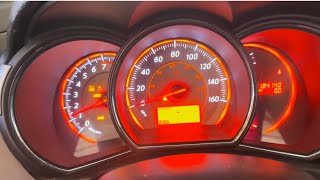
- ABS, VDC, and/or SLIP warning lights are illuminated
- Transmission may not shift correctly or may be stuck in one gear (limp mode)
- Vehicle may not start or could stall intermittently
- Erratic behavior from gauges or other electronics
- Brake pedal feels soft or goes to the floor with little effect
- Speedometer may not work
- Immediately replacing the control module that logged the code without first testing the battery, grounds, and fuses. These basic electrical issues are a more frequent cause of the fault.
- Replacing wheel speed sensors. While a bad wheel speed sensor can cause ABS/VDC/SLIP lights, it will typically set a specific sensor code (like C1105-C1108), not a U1010 internal module fault.
Most Likely Causes
- Weak or Failing Battery 🔴 High Probability Nissan's control modules are sensitive to low voltage, especially during engine cranking. A voltage drop below 10V can cause modules to temporarily go offline and set false communication codes. Forum users on NICOclub have reported bizarre electrical behavior and multiple communication codes that were resolved simply by replacing an aging battery.
How to confirm: Test the battery with a multimeter; a healthy resting battery should be ~12.6V. During cranking, the voltage should not drop below 10V. For a definitive result, have the battery load-tested at an auto parts store.
Typical fix: Replace the 12V battery.
Est. part cost: $150-$300 - Poor Ground Connections 🔴 High Probability Nissan TSBs and owner forums frequently cite corroded or loose main ground connections as a root cause for communication codes. The main ground strap connecting the negative battery terminal to the chassis and then to the transmission housing is a common failure point. Corrosion at these points creates resistance and unstable voltage for multiple modules.
How to confirm: Visually inspect the main battery ground cable and other chassis ground points for corrosion or looseness. Perform a voltage drop test on the ground circuit to check for high resistance; there should be close to zero voltage between the negative battery post and a clean chassis point.
Typical fix: Disconnect, clean all contact surfaces of the ground terminals and chassis with a wire brush until they are shiny, and re-tighten securely. Replace the ground strap if it is excessively corroded.
Est. part cost: $10-$50 - Failed Control Module (ABS, TCM, BCM, etc.) 🟡 Medium Probability This is the direct definition of the code. The ABS control module is a very common culprit on the Murano and related Nissan models. A recall for the 2009 Murano (NHTSA 18V916) addressed an issue where brake fluid could cause internal ABS valve failures, highlighting the sensitivity of this component. If power and grounds are good, the module setting the code has likely failed internally.
How to confirm: This requires an advanced scan tool to perform a CAN system self-test. The test will show which module is not communicating or is reporting the internal U1010 fault. The module's power and ground pins must be tested directly at its connector before condemning the module.
Typical fix: Replace the faulty control module. This often requires programming the new module to the vehicle with a factory-level scan tool. Some companies offer a repair service for the original module, which can be cheaper and avoids programming.
Est. part cost: $200-$1500+ - Blown Fuse or Faulty IPDM (Intelligent Power Distribution Module) ⚪ Low Probability The IPDM acts as a smart fuse and relay box. A failure within the IPDM can cut power to one or more control modules, causing them to drop off the network. TSB NTB13-027C notes that high-level fuses like 'Ignition 1' or 'Elec B' power multiple modules and can cause widespread CAN issues if blown.
How to confirm: Check all fuses related to the non-communicating module in both the interior fuse box and the IPDM under the hood. The ABS system typically has two high-amperage fuses 🎬 Watch: A quick guide to checking your ABS fuses. in the IPDM (e.g., 30A and 40A) that supply power to the pump motor and control unit.
Typical fix: Replace the blown fuse or the faulty IPDM.
Est. part cost: $1-$400
Rare But Worth Checking
- Damaged CAN Wiring Harness: Physical damage from an accident, rodent, or chafing can cause a short or open in the CAN bus wires. This is difficult to diagnose and usually requires an oscilloscope to check the network signal and resistance measurements at the OBD-II port (should be ~60 ohms with the battery disconnected).
Diagnosis Steps
- Check Battery Health: Start by fully charging and load-testing the battery. Ensure terminal connections are clean and tight. A weak battery is the most common cause.
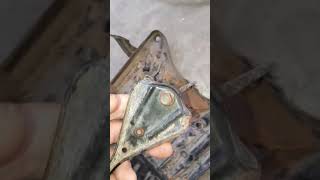
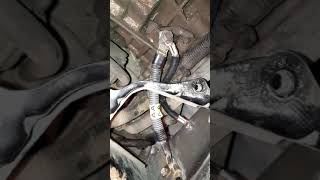
- Inspect Ground Connections: Visually inspect and clean the main chassis and engine ground points. Pay special attention to the ground strap that runs from the battery to the chassis and then to a bolt on the transmission housing 🎬 Watch: How to find and fix the main ground cable., as it's a known problem area. Clean all contact points to bare metal.
- Check Fuses: Inspect all fuses related to the vehicle's control modules (ECM, TCM, BCM, ABS) in both the interior and under-hood fuse panels (IPDM). The ABS system has dedicated high-amperage fuses in the IPDM that must be checked.
- Perform CAN System Diagnosis: Use a Nissan-compatible advanced scan tool (like CONSULT) to run a full system scan and identify which specific module is storing the U1010 code. This is critical, as it's often the ABS module.
- Verify Power and Ground at the Module: Once the suspect module is identified (e.g., the ABS module), use a multimeter to confirm it is receiving proper battery voltage and has a good ground connection directly at its electrical connector.
- Inspect CAN Wiring: If power and ground are good, inspect the CAN wiring to the module for any visible damage. Advanced diagnosis involves checking for ~60 ohms of resistance across pins 6 and 14 of the OBD-II port (with the battery disconnected).
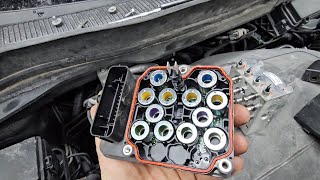
- Replace the Module: If all previous steps pass, the control module that set the U1010 code has an internal fault and needs to be replaced. Note that the new module will likely require programming to the vehicle. Consider sending the original module for repair 🎬 See this pro tip for replacing the ABS module faster. as a cost-effective alternative.
Parts You'll Likely Need
- 12V Battery — A weak battery is the most common trigger for false communication codes on this vehicle.
Trusted brands: Interstate, DieHard, Duralast
OEM price range: $200-$350
Aftermarket price range: $150-$300 - ABS Control Module / Actuator Assembly
(OEM #47660-1AA6C (supercedes 47660-1AA6B))— If basic electrical checks pass, the U1010 code often correctly indicates an internal failure of the ABS module, a common failure point on this platform.
Trusted brands: Genuine Nissan, Bosch, Cardone (remanufactured)
OEM price range: $1000-$1500+
Aftermarket price range: $300-$900 (often remanufactured or from a repair service) - Battery Ground Cable/Strap
(OEM #24080-JA00B (example, verify by VIN))— The original ground straps are prone to corrosion, causing high resistance and a wide range of electrical faults including communication codes.
Trusted brands: Genuine Nissan, Standard Motor Products
OEM price range: $40-$80
Aftermarket price range: $25-$60
Related Codes That Often Appear With This One
- U1000 — U1000 is a general CAN communication failure code. It often appears alongside U1010, where U1000 indicates the network disruption and U1010 is the specific internal fault reported by a module affected by that disruption.
- U0101 — This code means 'Lost Communication with TCM'. If the Transmission Control Module (TCM) is the one failing and setting the U1010 code, other modules will log U0101 because they can no longer hear from it.
- C1109 — This code often means 'Abnormal Battery Voltage' and is frequently stored in the ABS module. It can appear with U1010 when a weak battery or poor ground is the root cause of the communication failure.
Technical Service Bulletins (TSBs) & Recalls
- NTB10-066A: Defines U1010 as a module with internal errors and establishes the rule to always diagnose communication codes first.
- NTB13-027C: Provides a detailed diagnostic flowchart for CAN communication issues, confirming that a U1010 code points to a module issue after power and grounds are verified. It also highlights the sensitivity to low voltage.
Platform-Specific Known Issues
- 2009 Murano ABS Actuator Recall (NHTSA 18V916): A recall was issued for the 2009 Murano because a zinc coating on an internal ABS component could react with brake fluid, creating a gel that causes valves to stick. This could lead to a soft pedal and increased pedal travel. While this recall doesn't directly mention U1010, it establishes a history of internal ABS module problems for this model year.
Mechanic-Grade Diagnostic Values
- CAN Bus Network Resistance — expected: ~60 Ohms. Failure: A reading of ~120 Ohms indicates a missing or failed terminating resistor. A reading significantly less than 60 Ohms suggests a short between the CAN High and CAN Low wires.
- ABS Module Power Supply Voltage — expected: Battery Voltage (~12.6V with key on, engine off). Failure: Voltage significantly below battery voltage indicates a wiring issue, a bad fuse, or a faulty IPDM.
- ABS Module Ground Circuit Continuity — expected: Near 0 Ohms. Failure: High resistance (more than a few ohms) or an open circuit (OL) indicates a corroded or broken ground connection.
Scan Tool Commands That Help
- Nissan CONSULT-III Plus: Diagnosis (All Systems) / Self Diagnosis — This is the primary function to identify which specific control module (e.g., ABS, TCM, BCM) has logged the U1010 internal fault code. This is the first step after reading the code with a generic scanner.
- Nissan CONSULT-III Plus: ST ANGLE SENSOR ADJUSTMENT — This calibration is mandatory after the ABS actuator has been replaced. The steering angle sensor data is critical for the Vehicle Dynamic Control (VDC) system to function.
- Nissan CONSULT-III Plus: DECEL G SEN CALIBRATION — This calibration for the G-sensor (deceleration sensor) is mandatory after replacing the ABS actuator. It ensures the VDC and ABS systems have an accurate baseline for vehicle motion.
Wiring & Ground Locations
- Main Engine/Transmission Ground — A bolt on the transmission housing where the main negative battery cable and other ground wires attach. Located below and behind the battery tray area.. This is a primary ground point for multiple systems. Corrosion here creates high resistance, leading to unstable voltage and causing communication faults like U1010.
- Chassis Grounds under Battery Tray — On the chassis frame rail, directly underneath the battery and its plastic tray.. These grounds are susceptible to corrosion from battery fumes or leaks. A poor connection here can affect the ECM and other critical modules located nearby.
- IPDM E/R (Intelligent Power Distribution Module Engine Room) — In the engine compartment, typically near the battery.. This module is the main power distribution hub. It contains the high-amperage fuses (e.g., 40A, 30A) that supply power to the ABS pump motor and control unit. A failure inside the IPDM or a blown fuse here will cut power to the ABS module.
Real Owner Repair Stories
- YouTube user Lopez (2009 Nissan Murano) — ABS, Brake, VDC, and AWD lights all illuminated on the dashboard.
❌ Tried (didn't work) The initial computer scan showed a left front sensor issue and a battery voltage problem.
✅ What actually fixed it Upon visual inspection, the wire for the front left ABS wheel speed sensor was found to be completely severed. Replacing the damaged sensor and its wiring harness resolved all the warning lights. - YouTube user THE MOOSE'S WRENCH (2003/2004 Nissan Murano (similar platform and issue)) — Battery not charging properly, suspecting a parasitic draw or bad alternator.
❌ Tried (didn't work) Testing showed the alternator was working correctly and charging the battery.
✅ What actually fixed it The owner discovered the main ground wire under the battery tray was broken off from its connection point. Repairing this ground connection was the solution to the electrical problem.
OEM Part Supersession History
47660-1AA6B→47660-1AA6C— Part revision by the manufacturer, likely to improve reliability or address known failure modes.
Heads up: Any replacement ABS module, whether new, used, or superseded, is NOT plug-and-play. It must be programmed to the vehicle's VIN and configured for its specific options (e.g., AWD/FWD) using Nissan's CONSULT-III Plus software. Repairing the original module is the only way to avoid this mandatory programming.
Model Year Variations Within This Range
- 2010-2014: Nissan issued a voluntary service campaign (P0A08) for these model years to flush the original DOT 3 brake fluid and replace it with DOT 4, plus inspect the ABS actuator. This was done to prevent the brake fluid gelling issues that led to a recall on 2009 models. This may reduce the likelihood of ABS actuator failure on later models that have had the service performed.
Helpful Videos
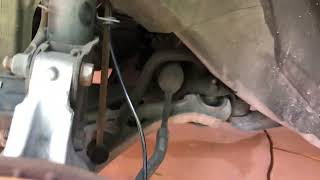
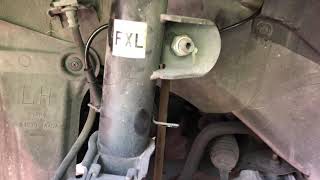
Used OEM Parts in Stock


New Aftermarket Parts Available

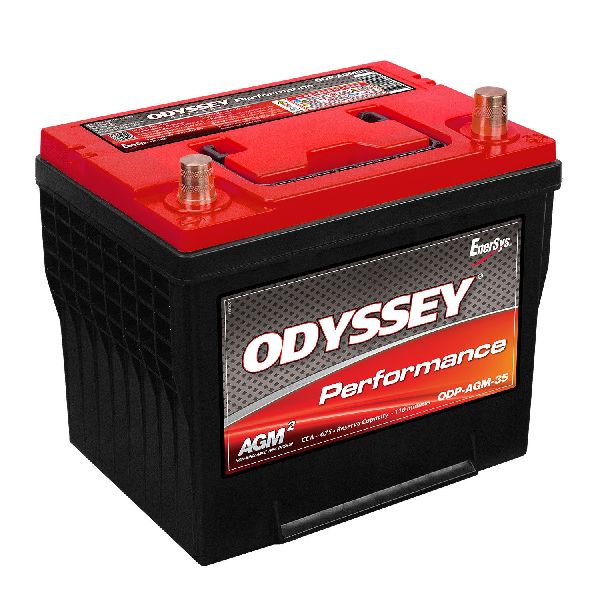

The information in this article is provided for general reference and educational purposes only. Vehicle specifications, procedures, and part compatibility can vary by production date, trim level, and region. Always consult your vehicle's factory service manual and verify part numbers before purchasing or performing repairs. Safety-critical components such as airbags, seat belts, and braking systems should be installed by a qualified professional.
- Nissan MURANO:
- 🎬 Helpful Videos
- 🛍️ Shop This Part
- What's Unique About the 2009-2014 Nissan MURANO
- Diagnostic Flowchart
- Symptoms You May Notice
- Most Likely Causes
- Rare But Worth Checking
- Diagnosis Steps
- Parts You'll Likely Need
- Related Codes That Often Appear With This One
- Technical Service Bulletins (TSBs) & Recalls
- Platform-Specific Known Issues
- Mechanic-Grade Diagnostic Values
- Scan Tool Commands That Help
- Wiring & Ground Locations
- Real Owner Repair Stories
- OEM Part Supersession History
- Model Year Variations Within This Range
- 🎟️ Get 5% Off