

U1010 on 2005-2012 Nissan Maxima: Internal Module Error Causes and Fixes
On a 2005-2012 Nissan Maxima, U1010 indicates an internal failure within a control module, most commonly the ABS control unit. This is not a wiring issue. The fix is typically replacing the faulty module, which can be costly, so thorough diagnosis to rule out wiring or power issues is critical before replacement. Sending the original module for repair is a cost-effective alternative.
- U1010 means a control module has failed internally, not that there is a simple wiring problem between modules.
- The ABS control module is a very common cause for this code on Nissan vehicles.
- Always check the battery and charging system first, as low voltage can trigger false communication codes.
- This is not a simple DIY fix. Professional diagnosis with an advanced scan tool is required to avoid replacing expensive parts unnecessarily.
- For 2005-2008 models, always inspect the rear ABS sensor mounts for corrosion (TSB NTB07-016b) before replacing the ABS module.
- Sending the failed module to a repair service is a much cheaper alternative to buying a new one and avoids the need for reprogramming.
What's Unique About the 2005-2012 Nissan MAXIMA
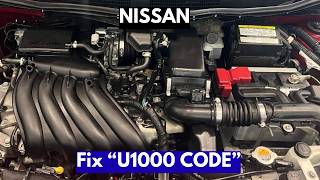
This vehicle range spans the sixth and seventh generations of the Maxima, both of which rely heavily on CAN bus communication. Nissan has issued specific Technical Service Bulletins (TSBs) that instruct technicians to always diagnose communication codes like U1010 first, before addressing any other DTCs. 🎬 Watch: A basic explanation of Nissan U1000 and U1010 codes. This highlights the sensitivity of the network and the importance of a structured diagnostic approach. On this platform, the ABS module (also called the ABS Actuator or HECU) is a very frequent point of failure leading to a U1010 code, often causing a cascade of ABS, VDC, and SLIP warning lights.
Diagnostic Flowchart
Tap your situation to follow the diagnostic path that matches what you're seeing on this vehicle.
Generation note: This range covers the end of the 6th generation (2005-2008) and the start of the 7th generation (2009-2012). While the U1010 code's meaning is consistent, module locations and specific part numbers for components like the ABS unit differ significantly between these generations. For example, 6th gen models have a known issue with corrosion buildup on rear ABS sensor mounts that can mimic module failure, as detailed in TSB NTB07-016b.
Symptoms You May Notice
- Check Engine Light is on
- ABS, VDC, and SLIP warning lights are all illuminated simultaneously
- Transmission may enter 'limp mode' or exhibit harsh shifting
- Scan tool may be unable to communicate with the specific faulty module
- In some cases, there may be no noticeable drivability symptoms, only warning lights
- Brakes may lock up during hard braking due to disabled ABS
- ABS pump motor may run erratically or continuously, even with the car off, potentially draining the battery
- Replacing sections of the CAN bus wiring harness. The U1010 code points to an internal module fault, not necessarily a wiring issue between modules, which is more characteristic of a U1000 code.
- Replacing wheel speed sensors. While faulty wheel speed sensors can cause the ABS/VDC/SLIP lights to come on, they typically set specific sensor-related codes (e.g., C1105). U1010 specifically indicates the control unit itself has an internal error. A technician confirmed that even with a bad aftermarket sensor causing noise, the primary code pointing to the module itself was separate.
Most Likely Causes
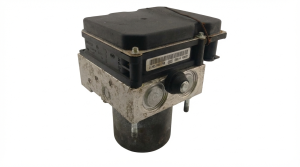
- Faulty ABS Control Module (HECU) 🔴 High Probability The ABS module (also called a Hydraulic Electronic Control Unit or HECU) is a complex component that is a common failure point on this platform. Internal electronic failures are frequent, causing the module to fail its self-test and broadcast the U1010 code.
How to confirm: Use an advanced scan tool to confirm the U1010 code is stored in the ABS module. Before condemning the module, verify it has stable power and clean ground connections at the large multi-pin connector. The large pins on the connector are typically for power and ground. Also, rule out issues with wheel speed sensors, as a faulty sensor can sometimes cause erratic behavior, though U1010 points directly to the module itself.
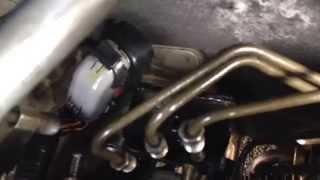
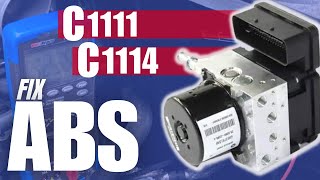
Typical fix: Replace the ABS control module and pump assembly. 🎬 See this walkthrough for swapping the ABS actuator yourself. The new or used module must be programmed to the vehicle's VIN. Afterward, a specialized scan tool must be used to perform an 'ABS Bleed' procedure to cycle the pump and remove trapped air. A more affordable option is to remove the module and send it to a specialized repair service, which typically costs $100-$300 and does not require reprogramming.
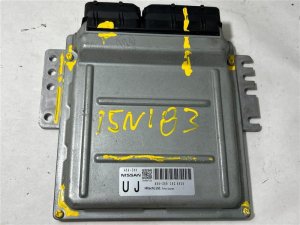
Est. part cost: $400-$1200 - Faulty Engine Control Module (ECM) 🟡 Medium Probability
How to confirm: An advanced scan tool will show the U1010 code originating from the ECM. This diagnosis should only be made after ruling out all power, ground, and charging system issues. An older TSB for the 2004-2006 Maxima specifically addresses cleaning ECM ground connections to resolve U1000/U1010 codes.
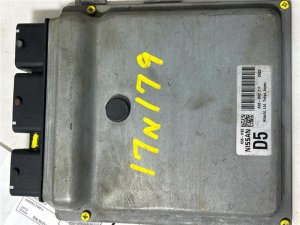
Typical fix: Replace the Engine Control Module. The new module must be programmed to the vehicle's VIN and immobilizer system.
Est. part cost: $300-$900 - Low Battery Voltage or Failing Alternator 🟡 Medium Probability Control modules require a stable voltage to operate and communicate correctly. Low voltage during startup or operation can cause modules to fail self-tests and set communication codes. Nissan TSBs emphasize checking the battery and charging system before diagnosing CAN codes, noting that modules may stop communicating below 10V.
How to confirm: Test the battery's state of charge and health with a digital battery tester. With the engine running, measure the alternator's output voltage at the battery terminals; it should typically be between 13.5 and 14.5 volts. A Reddit user with a 2010 Maxima traced similar U-codes to a failing alternator and damaged wiring harness.
Typical fix: Recharge or replace the battery. Replace the alternator if its output is low.
Est. part cost: $150-$400 - Poor Power or Ground Connection to a Module ⚪ Low Probability
How to confirm: Visually inspect the main ground connections on the engine block, transmission, and chassis for corrosion or looseness. Key ground points are located near the battery tray, on the transmission housing, and behind the headlights. At the connector of the suspect module (e.g., ABS or ECM), use a multimeter and wiring diagram to verify a stable 12V power supply and a solid ground connection (less than 0.1V on the ground wire). TSB NTB10-066A specifically instructs technicians to check these connections.
Typical fix: Clean or repair the corroded ground connection. Repair the damaged power or ground wire in the harness.
Est. part cost: $5-$50
Rare But Worth Checking
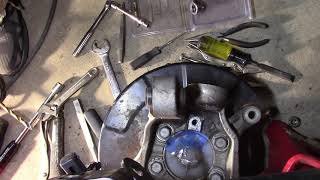
- Corrosion on rear wheel hub/knuckle assembly (6th Gen): For 2005-2008 models, TSB NTB07-016b describes how rust buildup where the rear ABS sensor mounts can push the sensor out of alignment, causing ABS/VDC/SLIP lights. While this typically sets sensor codes, it has been discussed in forums as a precursor to module issues and is a critical check before replacing the expensive ABS unit.
Diagnosis Steps
- Connect an advanced OBD-II scanner that can communicate with all vehicle modules (ABS, BCM, ECM, TCM, etc.). The Nissan CONSULT tool is the factory-level scanner.
- Perform a full system scan and identify which specific module is storing the U1010 code. This is your primary suspect.
- Check and record any other DTCs present, but follow Nissan's procedure to diagnose the U1010 code first.
- Check the battery voltage and test the charging system. Ensure the battery is fully charged (above 12.5V) and the alternator is functioning correctly (13.5-14.5V when running).
- Inspect all fuses related to the module that set the code (e.g., ECM, ABS fuses). For the ABS module, there are typically two high-amperage fuses (e.g., 30A and 40A) in the under-hood fuse box.
- Visually inspect the wiring harness and connector at the suspect module. Look for any signs of corrosion, moisture, or physical damage.
- Following a wiring diagram, use a multimeter to confirm the suspect module is receiving proper battery voltage and has a solid ground connection at its connector. Check for voltage drop on the ground side. The large pins on the ABS connector are for power and ground.
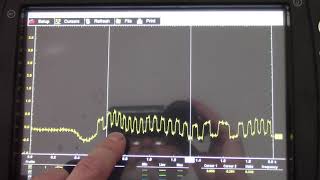
- With the ignition off, measure the resistance between the CAN High and CAN Low pins at the DLC (pins 6 and 14). A healthy network should read approximately 60 ohms. A reading of 120 ohms indicates a missing termination resistor, while a reading around 40-45 ohms could suggest an extra resistor or a module issue.
- For 6th Gen (2005-2008) models, inspect the rear wheel speed sensor mounting surfaces for rust and corrosion per TSB NTB07-016b before condemning the ABS module.
- If power and ground are confirmed to be good, and the CAN bus resistance is correct, the evidence strongly points to an internal failure of the control module itself. At this point, the module should be replaced or sent for repair.
Parts You'll Likely Need
- ABS Control Module and Pump Assembly
(OEM #Varies by year/options. Ex: 47660-ZK40A (2007-2008), 47660-9N11C (2009 w/ VDC), 47660-9N61C (2009 w/o VDC). Always match the number on your original part.)— This is the most common module to fail and set a U1010 code, as indicated by numerous forum discussions and repair resources.
Trusted brands: Bosch (OEM supplier), Hitachi, Advics
OEM price range: $800-$1500
Aftermarket price range: $400-$900 - Engine Control Module (ECM)
(OEM #Varies by year. Ex: 23710-9N00A (2009).)— TSBs confirm that the ECM can store this code, indicating an internal fault.
Trusted brands: Hitachi (OEM supplier), Bosch
OEM price range: $700-$1200
Aftermarket price range: $300-$600
Related Codes That Often Appear With This One
- U1000 — A module that is failing internally (setting a U1010) can disrupt the entire CAN network, causing other modules to log a U1000 'CAN Communication Circuit' fault. TSBs instruct to diagnose the U1010 first.
- C1111 — This code for 'ABS Actuator / Pump Motor Fault' can appear alongside a U1010 if the internal failure is related to the pump motor circuit within the ABS module assembly.
- C1110 — This is a general 'Controller Failure' code for the ABS system and is often seen with U1010 when the ABS module is the source of the fault.
Technical Service Bulletins (TSBs) & Recalls
- NTB10-066B: CAN COMMUNICATION CODES – DIAGNOSTIC TIPS & GUIDELINES. This TSB defines U1010 as an internal module error and is the primary diagnostic document.
- NTB07-016b: This TSB is for 6th generation (2004-2008) Maximas and addresses ABS/VDC/SLIP lights caused by corrosion at the rear wheel speed sensor mounts, a key diagnostic step before replacing the ABS module on these years.
- NTB10-145B: While focused on U1000 codes stored in the ABS unit, this TSB provides a detailed diagnostic flowchart for CAN issues related to the ABS system and references NTB10-066 for other codes like U1010.
Platform-Specific Known Issues
- Nissan TSB NTB10-066B (supercedes NTB10-066A) explicitly defines U1010 as 'Module has internal errors' and provides guidelines
Mechanic-Grade Diagnostic Values
- CAN Bus Network Resistance — expected: Approximately 60 Ω. Failure: 120 Ω indicates a missing terminating resistor or a break in the bus. ~40 Ω indicates a third resistor or module fault. 0 Ω indicates a direct short between CAN High and CAN Low.
- ABS Module Power Supply Pins Voltage — expected: Battery Voltage (approx. 12.6V with key on, engine off). Failure: Low or no voltage indicates a blown fuse or an open in the power supply wire.
- ABS Module Ground Pins Voltage Drop — expected: Less than 0.1 V. Failure: Voltage reading higher than 0.1V indicates a poor ground connection (high resistance).
- OEM Rear Wheel Speed Sensor Resistance (6th Gen) — expected: Approximately 4.3 Mega-ohms (MΩ). Failure: Significantly different readings, such as 0.43 MΩ found on cheap aftermarket sensors, indicate a faulty or incorrect part.
Scan Tool Commands That Help
- Nissan CONSULT-III: SELF-DIAG RESULTS — To read and erase diagnostic trouble codes from specific control units like the ABS module. This is the first step to identify which module is logging the U1010.
- Nissan CONSULT-III: DATA MONITOR — To view live input/output data from the ABS actuator and control unit, such as wheel speed sensor readings, to verify if the module is receiving correct data before condemning it.
- Nissan CONSULT-III: CAN DIAG SUPPORT MNTR — To read the results of the transmit/receive diagnosis for CAN communication, helping to determine if a module is truly offline or if there's a network-wide problem.
- Nissan CONSULT-III: FUNCTION TEST — To command the ABS module to perform an automated self-test of its components (valves, pump motor) to confirm an internal electrical or mechanical malfunction.
Wiring & Ground Locations
- Main Battery Ground Cable Assembly — Connects from the negative battery terminal to a point on the chassis/body near the battery tray, and then continues to a bolt on the top of the transmission housing.. A corroded or loose main ground connection on the transmission can cause unstable voltage for multiple control units, including the TCM and ECM, leading to communication codes like U1010.
- Engine Room Harness Grounds (e.g., E13) — There are several key ground points in the engine bay. Common locations are behind each headlight assembly and below the airbox.. The ABS module and other critical components rely on these chassis grounds. Corrosion at these points, especially in the area near the washer fluid reservoir, can interrupt the ground path and cause module errors.
- ABS Module Connector — The main electrical connector on the ABS actuator and electric unit (control unit).. This is the single point for all power, ground, and communication lines to the module. The four largest pins are typically the main power and ground feeds, which must be verified before condemning the module.
Real Owner Repair Stories
- Maxima.org forum user (2007 Nissan Maxima) — ABS, Slip, and TCS lights were on. Initially had a C1105 (rear right sensor) code.
❌ Tried (didn't work) Replaced both rear hub bearings and both rear ABS sensors with cheap aftermarket parts. This caused the car to go into limp mode and set new codes (C1102, C1124)., Replaced the ABS actuator (solenoid assembly) with a used part, which did not solve the issue.
✅ What actually fixed it The user discovered the cheap aftermarket ABS sensors had incorrect resistance (0.43 MΩ vs OEM spec of ~4.3 MΩ). After reinstalling the cleaned original OEM sensors and properly aligning them, the problem was solved. The initial C1124 solenoid code was likely triggered by the faulty sensor data, not a bad actuator. - Maxima.org forum user (2007 Maxima SL, 120k miles) — ABS light on, car would not accelerate properly (limp mode). Dealer diagnosed a non-responsive ABS controller and bad speed sensors.
❌ Tried (didn't work) Replaced the ABS module and speed sensors based on the dealer's initial diagnosis. This did not fix the problem.
✅ What actually fixed it The root cause was severe corrosion on the rear knuckle where the ABS sensor mounts, as described in TSB NTB07-016b. The drain path was completely plugged with rust. The final fix was to remove the rear hub, thoroughly clean the corrosion from the knuckle, and install a new hub and brakes. This restored communication and resolved the codes.
OEM Part Supersession History
47660-9N11C→This part number is listed as discontinued by multiple Nissan parts dealers.— End of life for the part.
Heads up: This part is for 2009-2011 Maxima models without the Sport Package. It is not interchangeable with modules for cars with the Sport Package. Due to its discontinued status, sourcing a good used or rebuilt unit by matching the original part number is the most common repair path.
Model Year Variations Within This Range
- 2005-2008 (6th Generation): These models are highly susceptible to corrosion buildup on the rear steering knuckle where the ABS sensor mounts, as detailed in TSB NTB07-016b. This issue is a common cause of ABS/VDC/SLIP lights and can be misdiagnosed as a failed ABS module. The fix involves cleaning the knuckle and grinding a drainage notch.
- 2009-2012 (7th Generation): The main ground cable assembly (Part # 24080-JA10A) is shared with the 2007-2013 Altima and has a specific routing path from the battery to the chassis and then to the transmission. Failure or corrosion of this specific cable is a known issue that can cause widespread electrical problems.
Helpful Videos


We Have This Part in Stock




The information in this article is provided for general reference and educational purposes only. Vehicle specifications, procedures, and part compatibility can vary by production date, trim level, and region. Always consult your vehicle's factory service manual and verify part numbers before purchasing or performing repairs. Safety-critical components such as airbags, seat belts, and braking systems should be installed by a qualified professional.
- Nissan MAXIMA:
- 🎬 Helpful Videos
- 🛍️ Shop This Part
- What's Unique About the 2005-2012 Nissan MAXIMA
- Diagnostic Flowchart
- Symptoms You May Notice
- Most Likely Causes
- Rare But Worth Checking
- Diagnosis Steps
- Parts You'll Likely Need
- Related Codes That Often Appear With This One
- Technical Service Bulletins (TSBs) & Recalls
- Platform-Specific Known Issues
- Mechanic-Grade Diagnostic Values
- Scan Tool Commands That Help
- Wiring & Ground Locations
- Real Owner Repair Stories
- OEM Part Supersession History
- Model Year Variations Within This Range
- 🎟️ Get 5% Off